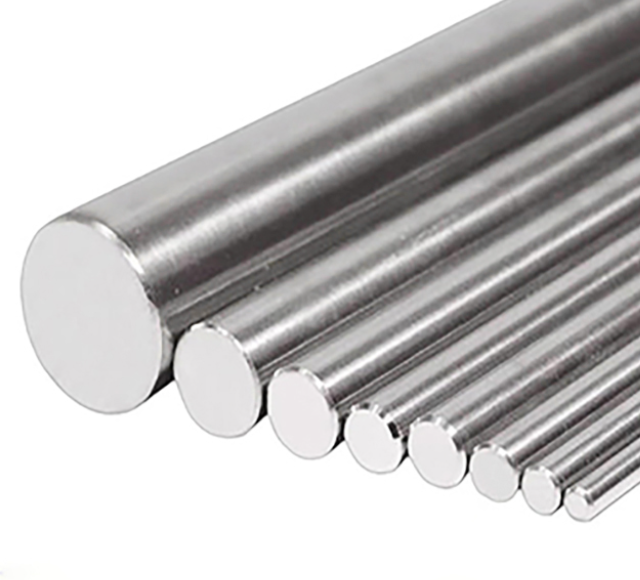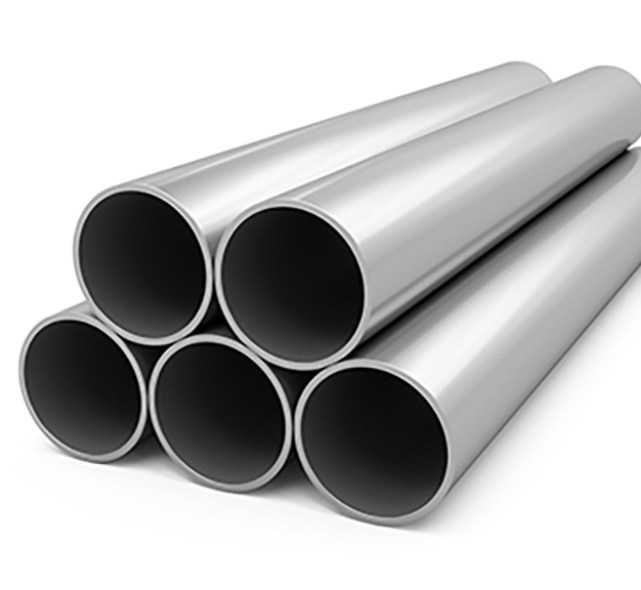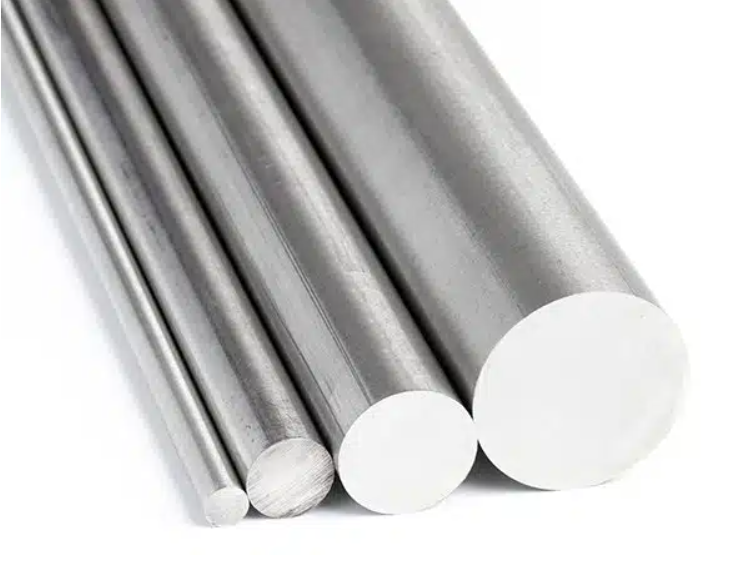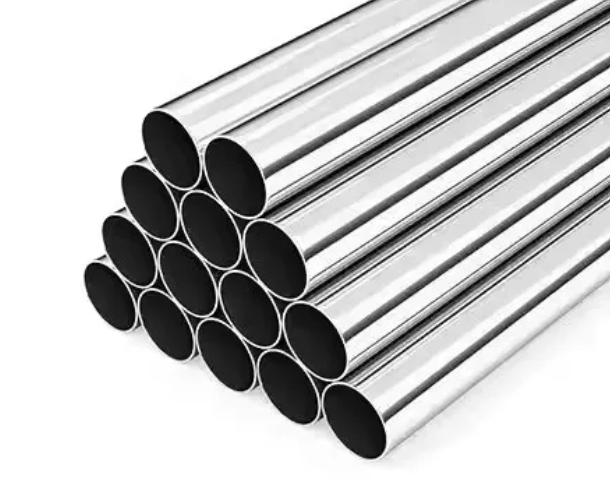

Alloy grade names are useful for communication, but they are not complete purchase specifications. Two materials may share a trade name, common grade name, or UNS designation and still differ in product form, governing standard, revision, manufacturing route, heat treatment, dimensions, mechanical requirements, testing, certification, or approved application.
Quick answer: alloy grade names should not be treated as automatically interchangeable across ASTM, ASME, AMS, EN, ISO, DIN, JIS, GB, or customer standards. A substitution is acceptable only after the original and proposed requirements have been compared line by line and approved by the responsible buyer, engineer, end user, or design authority.
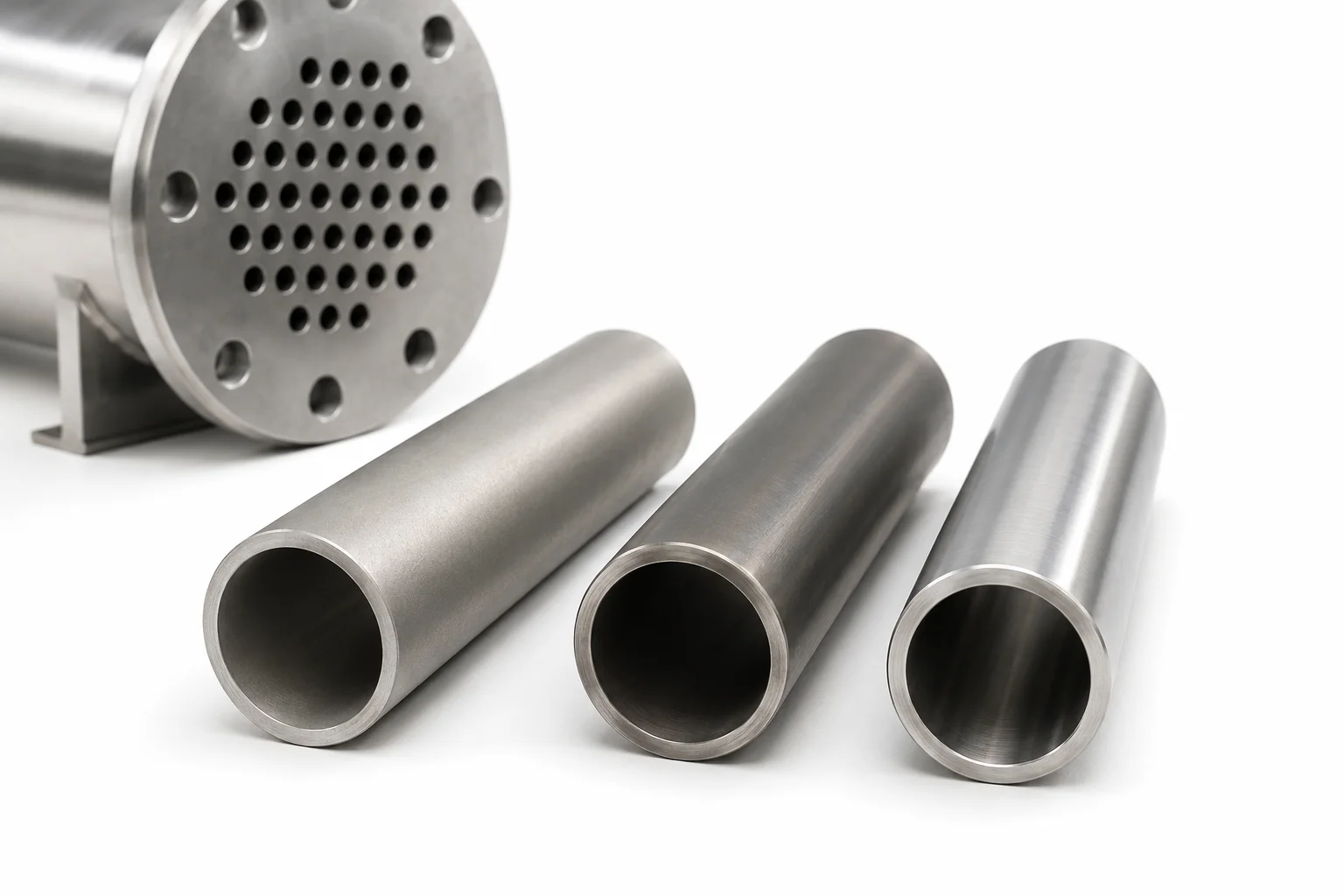
For nickel alloy tubes, nickel alloy bars, titanium alloy tubes, and titanium alloy bars, responsible procurement normally requires confirmation of the exact alloy identity, product standard, product form, material condition, dimensions, tests, inspection documents, traceability, and service conditions.
At-a-Glance Answer: When Are Alloy Grades Interchangeable?
| Situation | Interchangeability Direction | What Must Be Confirmed |
|---|---|---|
| Same trade name only | Not sufficient | UNS number, chemistry, product form, standard, condition, and tests |
| Same UNS number under different standards | Possibly, but not automatic | Standard scope, revision, properties, dimensions, testing, and certification |
| Same chemistry range but different condition | Often not interchangeable | Heat treatment, cold work, strength, hardness, ductility, and microstructure |
| Same alloy supplied as tube and bar | Not interchangeable as product specifications | Correct tube, pipe, bar, billet, forging, sheet, or plate standard |
| ASTM and ASME specifications with similar designations | Contract-dependent | Code edition, adopted specification, supplementary requirements, and design approval |
| ASTM and EN/DIN/JIS/GB grades described as “equivalent” | Requires a detailed cross-standard review | Full chemistry, properties, product form, tolerances, testing, and documents |
| Supplier confirms commercial equivalence | Not final approval | Buyer, end user, engineer, or design authority must approve substitution |
| Original specification explicitly permits alternatives | Potentially acceptable | All listed conditions and approval requirements must be satisfied |
Buyer Takeaway
“Equivalent,” “similar,” and “interchangeable” are not the same conclusion:
- Similar means the materials share some characteristics.
- Equivalent may mean chemistry is close or a cross-reference table links the grades.
- Interchangeable means the proposed material satisfies the complete technical, contractual, regulatory, and application requirements of the original material.
Only the last conclusion is sufficient for procurement substitution.
What Does an Alloy Name Actually Tell You?
A material may be described by several identifiers:
| Identifier Type | Examples | What It Usually Tells You | What It Does Not Fully Define |
|---|---|---|---|
| Trade name | Inconel, Hastelloy, Monel | Commercial alloy family or registered product name | Complete standard, product form, condition, and tests |
| Common alloy name | Alloy 625, Alloy C276, Nickel 200 | Common industry identification | Exact procurement requirements |
| UNS number | N06625, N10276, N02200, R56400 | Standardized alloy identification based primarily on composition family | Product shape, dimensions, heat treatment, inspection, and application approval |
| Titanium grade number | Grade 2, Grade 5, Grade 9 | Alloy family within a titanium product specification | Whether the material is tube, bar, plate, forging, medical, or aerospace approved |
| National or regional designation | W.Nr., EN, DIN, JIS, GB grade | Identification used within another standards system | Automatic equivalence to an ASTM, AMS, or customer specification |
| Product specification | ASTM B444, ASTM B446, ASTM B338, ASTM B348 | Product form, grade scope, condition, testing, and acceptance requirements | Finished-component design approval |
| Customer drawing or project specification | OEM drawing, EPC specification, approved material list | Project-specific dimensions, tests, documents, and approval rules | Nothing may be substituted unless the document permits it |
The SAE Unified Numbering System provides a consistent identification system for commercially established metals and alloys. However, a UNS number identifies the alloy; it does not independently define the complete purchased product.
Example: UNS N06625
A buyer specifying only UNS N06625 has identified Alloy 625 chemistry, but the supplier still needs to know whether the requirement is for:
- Cold-worked seamless pipe or tube
- Welded pipe or tube
- Rod or bar
- Forging or forging stock
- Plate, sheet, or strip
- Annealed or solution-annealed condition
- Standard or special dimensions
- Hydrostatic, nondestructive electric, ultrasonic, hardness, or other testing
- EN 10204 3.1, 3.2, CoC, or customer documentation
- Pressure, chemical, marine, aerospace, or high-temperature service
A quotation can therefore be correct by alloy name and still be unusable for the project.
Four Levels of Alloy “Equivalence”
Cross-reference tables often create confusion because they use one word—equivalent—for several different relationships.
Level 1: Same Alloy Identity
The materials have the same UNS number or substantially matching chemistry.
This is only the first screening level. It does not confirm product form, condition, properties, testing, or approval.
Level 2: Similar Product Requirements
The standards cover the same general product form and contain compatible chemistry, mechanical, dimensional, and testing requirements.
A clause-by-clause comparison is still required because tolerances, test frequency, acceptance criteria, or revisions may differ.
Level 3: Contractual Substitution
The purchase specification, drawing, end user, or engineering authority permits the proposed material after technical review.
This is the level needed before the supplier changes the ordered standard.
Level 4: Application Interchangeability
The substituted material is suitable for the actual pressure, temperature, corrosion, fatigue, fabrication, regulatory, and service conditions.
This conclusion may require design calculations, corrosion data, qualification tests, welding review, or customer approval beyond the material certificate.
Buyer Takeaway
A cross-reference chart can support Level 1 screening. It cannot independently establish Levels 3 or 4.
What Can Differ Across Alloy Standards?
Different standards can define substantially different purchase requirements even when the grade name appears similar.
| Specification Item | What May Differ | Procurement Consequence |
|---|---|---|
| Chemical limits | Major elements, residuals, carbon, oxygen, nitrogen, sulfur, trace elements | Grade identity, weldability, corrosion, temperature capability, and acceptance may change |
| Product form | Tube, pipe, rod, bar, billet, forging, plate, sheet, wire | The wrong standard may be technically irrelevant to the ordered product |
| Manufacturing route | Seamless, welded, hot worked, cold worked, drawn, forged, rolled | Affects defects, properties, dimensions, inspection, and cost |
| Material condition | Annealed, solution annealed, aged, cold worked, stress relieved | Changes strength, ductility, hardness, residual stress, and microstructure |
| Mechanical properties | Tensile, yield, elongation, hardness, reduction of area, impact | Determines whether the material meets load and fabrication requirements |
| High-temperature requirements | Creep, stress rupture, oxidation, heat-treatment stability | Important for elevated-temperature components |
| Corrosion requirements | Intergranular, pitting, crevice, SCC, media-specific tests | May control chemical, marine, or chloride service |
| Dimensions and tolerances | OD, ID, wall, diameter, ovality, straightness, length | Affects fit, machining yield, assembly, and price |
| Surface condition | Pickled, bright annealed, ground, peeled, polished, descaled | Influences cleanliness, corrosion, fatigue, and machining |
| Test methods | UT, ET, hydrostatic, pneumatic, PMI, hardness, tensile | Defines what was actually verified |
| Test frequency | Per heat, lot, size, length, order, or individual piece | Changes confidence, cost, and documentation |
| Acceptance criteria | Reference notch, sensitivity, allowable discontinuity, rejection rules | “Tested” does not mean the same acceptance level |
| Inspection documents | CoC, MTR/MTC, EN 10204 3.1 or 3.2 | Changes who validates results and what evidence is supplied |
| Standard revision | Current versus older edition | Clauses, grades, limits, and acceptance rules may have changed |
| Supplementary requirements | Additional tests, tighter tolerances, special marking | A base-standard certificate may not satisfy the order |
| Approved-source requirements | Named mill, laboratory, process, or supplier | Technically compliant material may still be contractually unacceptable |
Why Product Form Is One of the Most Important Differences
The same alloy can follow different standards because each product form is manufactured, tested, and used differently.
Current Product-Standard Examples
| Product and Alloy | Example Standard | Scope Direction |
|---|---|---|
| Alloy 625 seamless pipe and tube | ASTM B444-23 | Cold-worked seamless pipe and tube, including specified heat-treated grades and product testing |
| Alloy 625 rod and bar | ASTM B446-24 | Hot- and cold-worked rod and bar under specified conditions |
| Precipitation-hardening nickel bar and forging stock | ASTM B637-25 | Rod, bar, forgings, and forging stock for moderate- or high-temperature service |
| Titanium condenser and heat-exchanger tube | ASTM B338-17(2021) | Seamless and welded titanium tubes for condensers, evaporators, and heat exchangers |
| Titanium alloy bar and billet | ASTM B348/B348M-25 | Annealed titanium and titanium-alloy bars and billets |
These examples show why a matching alloy designation does not make a bar standard interchangeable with a tube standard.
Practical Example: Titanium Grade 5
Titanium Grade 5, Ti-6Al-4V, and UNS R56400 identify the alloy. They do not prove that the product is:
- ASTM B348 bar
- ASTM B265 plate
- ASTM B381 forging
- AMS4928 aerospace bar
- An approved medical product
- A finished fastener qualified to an aerospace procurement specification
For standard Grade 5 bar requirements, buyers can review the Titanium Grade 5 Bar product page, but a product page does not replace the controlling purchase specification or customer approval.
Why Heat Treatment and Manufacturing Condition Matter
Similar chemistry can produce different performance when processing history changes.
| Condition or Route | Typical Effect | Buyer Question |
|---|---|---|
| Annealed | Often improves ductility and reduces residual effects of prior working | Is the required strength and forming capability achieved? |
| Solution annealed | Establishes a specified metallurgical condition in many corrosion-resistant alloys | Is the temperature, cooling route, and certificate traceable? |
| Age hardened | Increases strength in precipitation-hardening alloys | Are aging time, temperature, and final properties controlled? |
| Cold worked | Can increase strength and hardness while reducing remaining ductility | Is the amount of cold work defined and acceptable? |
| Stress relieved | Reduces residual stress while retaining part of the cold-worked strength | Is the process required by the tube or aerospace specification? |
| Hot worked | Affects grain structure, surface, properties, and dimensional route | Is the final condition and reduction controlled? |
| Seamless | Produced without a longitudinal weld | Does the application or specification require seamless construction? |
| Welded | Includes a controlled longitudinal weld and weld-related inspection | Is welded construction permitted and appropriately tested? |
| Ground or peeled | Changes surface condition and dimensional control | What machining allowance and surface acceptance apply? |
Example: Titanium Grade 9 Tube
Titanium Grade 9, Ti-3Al-2.5V, or UNS R56320 may be supplied under different tube specifications. A heat-exchanger tube standard and an aerospace hydraulic-tubing standard do not become interchangeable merely because the alloy is the same. Buyers reviewing this material can compare the application boundary in the Titanium Grade 9 tube product page and the Grade 9 aerospace hydraulic tubing guide.
ASTM, ASME, AMS, EN, ISO, DIN, JIS, and GB Do Different Jobs
The standards systems often overlap, but they do not have identical purposes.
| Standards System | Common Procurement Role | Important Boundary |
|---|---|---|
| ASTM | Material, product, test, dimensional, and workmanship specifications | The exact product standard and active revision must be confirmed |
| ASME | Boiler, pressure-vessel, and piping code rules, including adopted material specifications | Code edition, allowable stresses, and adopted specification may control |
| SAE AMS | Aerospace material and process specifications | Material source, revision, testing, processing, and customer approval may be stricter |
| EN | European material and product standards | Grade designation, condition, dimensions, and inspection documents may differ from ASTM |
| ISO | International standards covering materials, testing, management, and conformity assessment | An ISO management certificate is not a batch material certificate |
| DIN | German national standards and adopted European standards | A historical DIN designation may not equal the current EN purchase requirement |
| JIS | Japanese industrial standards | Chemistry, product scope, and test requirements require comparison |
| GB / GB/T | Chinese national and recommended standards | A Chinese grade cross-reference must be checked against the complete requested standard |
| Customer or project specification | Final project-specific acceptance requirements | Often overrides general commercial assumptions |
ASTM and ASME Are Not Automatically the Same Purchase Requirement
An ASME material designation may adopt an ASTM specification under an SB number, but pressure-code compliance also depends on the governing ASME Code edition, listed material, allowable stresses, heat treatment, product form, and project requirements. A supplier should not change ASTM to ASME—or the reverse—without reviewing the purchase order and design authority requirements.
“DIN Equivalent” or “EN Equivalent” Is Not Enough
A table may link a W.Nr. or EN designation to an ASTM or UNS alloy based on similar chemistry. Buyers still need to compare:
- Product form
- Delivery condition
- Mechanical properties
- Dimensional standard
- Testing and sampling
- Inspection certificate
- Supplementary requirements
- Standard revision
Examples of Common Interchangeability Errors
Error 1: Alloy 625 Tube and Bar Treated as the Same Order
ASTM B444 and ASTM B446 can both include UNS N06625, but they govern different product forms and different requirements. A bar certificate cannot certify seamless tubing.
Error 2: Titanium Grade 5 Bar Treated as Medical Grade 23
Grade 5 and Grade 23 are both Ti-6Al-4V families, but Grade 23 has tighter interstitial limits and a separate UNS designation. They should not be substituted without checking the governing specification and application.
Error 3: Nickel 200 and Nickel 201 Combined as “Pure Nickel”
Nickel 200, UNS N02200, and low-carbon Nickel 201, UNS N02201, have different carbon limits and elevated-temperature selection boundaries. Review the separate Nickel 200 Bar page and Nickel 201 Bar page rather than ordering only “99% pure nickel bar.”
Error 4: A Generic Grade Name Used Instead of a Product Standard
“C276,” “625,” “Grade 2,” or “Grade 5” may identify an alloy family, but the order still lacks product form, condition, size, tolerance, test scope, and documentation.
Error 5: Material Certificate Treated as Application Approval
An MTR/MTC demonstrates the reported material results and compliance within the named specification. It does not prove corrosion resistance in every process, fatigue life in a finished component, pressure-code approval, medical approval, or aerospace-program acceptance.
Error 6: ISO 9001 Treated as Product Certification
ISO 9001 relates to a quality-management system. It does not replace heat-specific chemistry, mechanical test results, dimensional inspection, NDT records, or project qualification.
How Should Buyers Review a Proposed Alloy Substitution?
A substitution review should be documented rather than based on a salesperson’s statement that two grades are “the same.”
Step-by-Step Interchangeability Workflow
| Step | Review Item | Required Output |
|---|---|---|
| 1 | Original drawing, standard, revision, grade, and UNS number | Controlled original requirement |
| 2 | Proposed grade, UNS number, standard, and revision | Clearly identified alternative |
| 3 | Product form and manufacturing route | Tube, pipe, bar, forging, plate, seamless, welded, hot/cold worked |
| 4 | Chemical-composition comparison | Side-by-side major, minor, and residual limits |
| 5 | Material condition and heat treatment | Confirmed annealed, solution annealed, aged, CWSR, or other condition |
| 6 | Mechanical-property comparison | Tensile, yield, elongation, hardness, reduction of area, impact if required |
| 7 | Dimensional and surface comparison | Tolerances, wall basis, straightness, ovality, finish, roughness |
| 8 | Test and inspection comparison | Methods, coverage, calibration, frequency, and acceptance criteria |
| 9 | Documentation comparison | MTR/MTC, CoC, EN 10204 certificate, inspection reports, traceability |
| 10 | Service-environment review | Temperature, pressure, chemistry, chlorides, fatigue, creep, wear, vibration |
| 11 | Fabrication and joining review | Welding, forming, machining, heat treatment, cleaning, repair |
| 12 | Regulatory and end-user approval | Written acceptance by the responsible authority |
| 13 | First-article or validation testing | Required when material change affects design or risk |
| 14 | Purchase-order revision and change control | Approved alternative recorded before supply |
Low-Risk vs High-Risk Substitutions
A simple dimensional blank for a noncritical prototype may require less review than:
- Pressure-retaining piping
- Heat-exchanger tubing
- Aerospace hydraulic tubing
- Medical implants
- Nuclear components
- Chemical-process equipment
- Marine systems
- Fatigue-critical fasteners
- High-temperature rotating parts
The consequence of failure should determine the depth of review.
What Service Conditions Must Be Compared?
Material equivalence on paper may fail in real service if application conditions differ.
| Application Factor | Why It Matters |
|---|---|
| Continuous and peak temperature | Strength, creep, oxidation, graphitization, or phase stability may control |
| Pressure and wall design | Product standard and allowable stress must support the design |
| Chemical composition of the medium | Corrosion depends on concentration, impurities, pH, and oxidizing potential |
| Chlorides and seawater | Pitting, crevice corrosion, SCC, deposits, and biofouling may control |
| Fluorides | Can be particularly limiting for titanium materials |
| Reducing acids | Different nickel and titanium grades may perform very differently |
| Flow and solids | Erosion, abrasion, and mass transfer can change corrosion rate |
| Crevices and deposits | Local chemistry can differ from bulk process chemistry |
| Cyclic loading and vibration | Fatigue response depends on condition, surface, joints, and geometry |
| High-temperature loading | Creep and stress rupture may be more important than room-temperature tensile strength |
| Welding and forming | Heat-affected zones, cold work, residual stress, and contamination matter |
| Galvanic contact | The complete material couple and electrolyte must be reviewed |
| Cleaning and maintenance chemicals | Short exposure can still damage an otherwise suitable material |
| Failure consequence | Determines inspection, approval, and validation depth |
Pitting, crevice corrosion, stress-corrosion cracking, fatigue, and creep are different damage mechanisms. A material suitable for one mechanism is not automatically suitable for the others.
Testing Scope Must Be Compared, Not Just the Word “Tested”
Statements such as “100% tested,” “UT passed,” or “PMI included” are incomplete without technical details.
Testing Comparison Checklist
| Test or Inspection | Details to Confirm |
|---|---|
| Chemical analysis | Heat or product analysis, elements reported, method, and limits |
| Tensile test | Specimen orientation, temperature, frequency, and acceptance values |
| Hardness | Scale, location, frequency, and whether it is an acceptance requirement |
| Ultrasonic testing | Standard, calibration block, reference reflector, coverage, sensitivity, and acceptance |
| Eddy-current testing | Calibration, artificial defect, scan coverage, frequency, and rejection criteria |
| Hydrostatic test | Pressure, duration, medium, calculation basis, and acceptance |
| Pneumatic or leak test | Pressure, gas, sensitivity, safety procedure, and acceptance |
| PMI | Method capability, elements identified, coverage, and reporting |
| Dimensional inspection | Instrument, sampling, temperature, tolerance basis, and uncertainty |
| Surface inspection | Lighting, magnification, defect limits, and sampling |
| Corrosion testing | Actual test standard, solution, temperature, duration, and acceptance |
| Third-party inspection | Inspector, hold points, witness points, and report responsibility |
A proposed substitute with fewer tests or weaker acceptance criteria is not fully equivalent merely because the alloy name matches.
What Documents Should Buyers Request?
Documents should be linked to the actual heat, lot, size, and product supplied.
| Document | What It Supports | Important Limitation |
|---|---|---|
| MTR / MTC | Heat-specific chemistry, mechanical results, condition, and standard | Does not independently prove application suitability |
| Certificate of Conformance | Supplier statement of order conformity | May not include specific test results |
| Heat-number record | Connection between material, certificate, labels, and packing list | Traceability must remain intact after cutting and processing |
| EN 10204 3.1 certificate | Manufacturer-validated specific inspection results | Requirements must be stated before production |
| EN 10204 3.2 certificate | Additional validation by authorized or buyer-designated parties | Parties and scope must be agreed |
| PMI report | Alloy identity screening or verification | Method limitations and coverage matter |
| UT / ET / pressure report | Evidence of specified nondestructive or pressure testing | Must state standard and acceptance basis |
| Dimensional report | Evidence of specified measurements | Sampling may not mean every piece was measured |
| Heat-treatment record | Furnace cycle and traceability | Does not replace final mechanical-property verification when required |
| Third-party inspection report | Independent witness or verification | Only covers the agreed inspection scope |
| Packing list and marking record | Quantity, size, heat distribution, and shipment identity | Must correspond to the physical shipment |
For independent laboratories, ISO/IEC 17025:2017 addresses competence, impartiality, and consistent laboratory operation. Buyers should also confirm that the laboratory’s accredited scope covers the actual test method being ordered.
Supplier Responsibilities vs Buyer Approval
| Topic | Supplier Can Support | Buyer, Engineer, or End User Must Decide |
|---|---|---|
| Material identity | Confirm grade, UNS number, trade name, and available standards | Approve the required grade |
| Cross-standard comparison | Prepare chemistry, property, form, and test comparison | Approve or reject substitution |
| Product form | Offer tube, pipe, bar, billet, forging, or cut blank | Confirm the design-required form |
| Material condition | Explain available annealed, solution-annealed, aged, or cold-worked conditions | Confirm required properties and fabrication route |
| Dimensions and finish | Review manufacturing capability and inspection | Confirm functional tolerances |
| Testing | Arrange agreed methods and reports | Define mandatory scope and acceptance |
| Traceability | Maintain heat and lot records | Define document retention and approval |
| Third-party inspection | Coordinate inspection | Nominate authority and hold points |
| Application data | Identify missing technical inputs | Approve corrosion, pressure, fatigue, and temperature suitability |
| Commercial offer | Confirm MOQ, lead time, processing, packing, and logistics | Approve budget and schedule |
| Change control | Notify buyer of proposed changes | Authorize changes in writing |
A responsible supplier should explain the differences instead of issuing an unsupported “equivalent” statement.
RFQ Checklist for Cross-Standard Alloy Procurement
Provide the following information before asking a supplier to confirm equivalence:
- Original alloy grade and UNS number
- Original product standard and revision
- Proposed alternative standard, if already identified
- Product form: tube, pipe, bar, billet, forging, plate, sheet, wire, or machined part
- Seamless, welded, hot-worked, cold-worked, or forged route
- Material condition and heat treatment
- OD, ID, wall, diameter, cross-section, length, and tolerance
- Minimum-wall or average-wall basis where applicable
- Surface condition and roughness
- Quantity, unit, prototype demand, and annual demand
- Operating and peak temperature
- Pressure, load, fatigue cycles, vibration, and wear
- Process media, concentration, pH, chlorides, fluorides, impurities, and flow
- Welding, forming, machining, cleaning, and post-processing requirements
- Chemical, mechanical, dimensional, NDT, pressure, corrosion, or special tests
- MTR/MTC, CoC, EN 10204 3.1 or 3.2 requirements
- Heat and lot traceability
- Approved mill, laboratory, process, or third-party requirements
- End-user or engineering approval procedure
- Destination, Incoterms, packaging, marking, and required delivery date
Example Equivalence Review Request
Please compare the originally specified material and the proposed alternative. Provide a clause-by-clause comparison of grade and UNS number, product form, standard revision, chemistry, material condition, mechanical properties, dimensions, manufacturing route, testing, acceptance criteria, inspection documents, and traceability. Identify every difference and do not proceed with substitution until written engineering approval is issued.
Red Flags in “Equivalent Alloy” Quotations
Be cautious when a quotation:
- Lists only a trade name without a UNS number
- Uses several grades in one title, such as Nickel 200 / Nickel 201
- Mixes tube, bar, plate, and forging standards as “equivalent”
- Does not state the standard edition
- Calls ASTM and AMS materials automatically interchangeable
- Uses generic datasheet properties instead of the ordered condition
- Promises “100% NDT” without a method or acceptance basis
- Offers EN 10204 3.1 after production without confirming traceability
- Claims all listed certifications apply to every batch
- Uses a management-system certificate as material approval
- States corrosion resistance without medium, concentration, temperature, or impurities
- Claims a supplier can approve the buyer’s design substitution
- Changes the source mill, process, or heat treatment without written notice
- Provides certificates that cannot be linked to physical material markings
FAQ: Alloy Grade Names and Standard Interchangeability
Are alloy grade names interchangeable across different standards?
Not automatically. Buyers must compare the complete standard, product form, condition, chemistry, properties, dimensions, testing, documents, and service requirements.
Is the same UNS number enough to approve a substitution?
No. The same UNS number supports alloy identity, but product standards can still differ in manufacturing route, condition, properties, tolerances, testing, and inspection.
Are trade names such as Inconel or Hastelloy complete specifications?
No. They are useful commercial identifiers, but a purchase order should normally use a generic alloy designation, UNS number, product standard, condition, size, tests, and documentation.
Can ASTM and ASME material specifications be substituted?
Possibly, but only after reviewing the controlling ASME Code edition, adopted material specification, product form, allowable-stress rules, supplementary requirements, and design approval.
Can ASTM and EN grades be treated as equivalents?
Only after a detailed comparison. A similar chemistry table does not confirm equal mechanical properties, product condition, dimensions, testing, or certificate requirements.
Does an MTR or MTC prove that two materials are interchangeable?
No. It confirms reported results and compliance within the certificate’s stated scope. Engineering or end-user approval is still needed for substitution.
Does ISO 9001 prove that the product meets an ASTM or AMS standard?
No. ISO 9001 concerns the supplier’s quality-management system. Batch-specific product compliance requires the relevant material tests, inspection, and traceability.
Can a supplier approve an alloy substitution?
A supplier can prepare a technical comparison and provide evidence. Final approval normally belongs to the buyer, engineer, end user, design authority, or regulator.
Why does the standard revision matter?
A revision may change grade scope, clauses, test requirements, acceptance criteria, terminology, or referenced standards. The purchase order should identify the required edition.
Is a material cross-reference chart useful?
Yes, as an initial screening tool. It should not be treated as final procurement approval.
What is the safest way to order an alloy?
State the grade, UNS number, exact product standard and revision, product form, condition, dimensions, tests, documents, traceability, application requirements, and substitution rules.
How Emily PIPE Supports Alloy Standard Review
Emily PIPE supplies nickel alloy tubes, nickel alloy bars, titanium alloy tubes, and titanium alloy bars for international industrial projects.
For quotation and preliminary standard review, our team can help organize:
- Grade and UNS identification
- ASTM, ASME, EN, ISO, AMS, DIN, JIS, GB, or customer requirements
- Tube, pipe, bar, billet, and machining-blank product forms
- Seamless, welded, hot-worked, cold-worked, and annealed conditions
- Dimensions, tolerances, surface finish, and machining allowance
- MTR/MTC and heat-number traceability
- UT, ET, PMI, hydrostatic, hardness, tensile, and dimensional inspection
- EN 10204 3.1 or project-specific documentation
- Third-party inspection coordination
- Marking, heat separation, export packing, and shipment documents
Our review can identify differences and missing procurement information, but the buyer, engineer, end user, or design authority remains responsible for approving a material substitution.
Conclusion
Alloy grade names, trade names, and UNS numbers are useful identifiers, but none of them alone establishes full interchangeability.
Before approving a replacement, compare the complete specification:
- Alloy identity and chemistry
- Product form and manufacturing route
- Standard and revision
- Material condition and heat treatment
- Mechanical properties
- Dimensions and surface condition
- Testing methods and acceptance criteria
- Inspection documents and traceability
- Fabrication requirements
- Service environment and failure consequence
- End-user, engineering, or regulatory approval
For a project-specific review, send the original requirement, proposed alternative, grade, UNS number, standard revision, product form, dimensions, condition, application environment, testing scope, certificate requirement, quantity, and delivery schedule to emilymetalsh@163.com.