
How Do Biofouling and Stagnation Increase Corrosion Risk in Titanium Tubes?
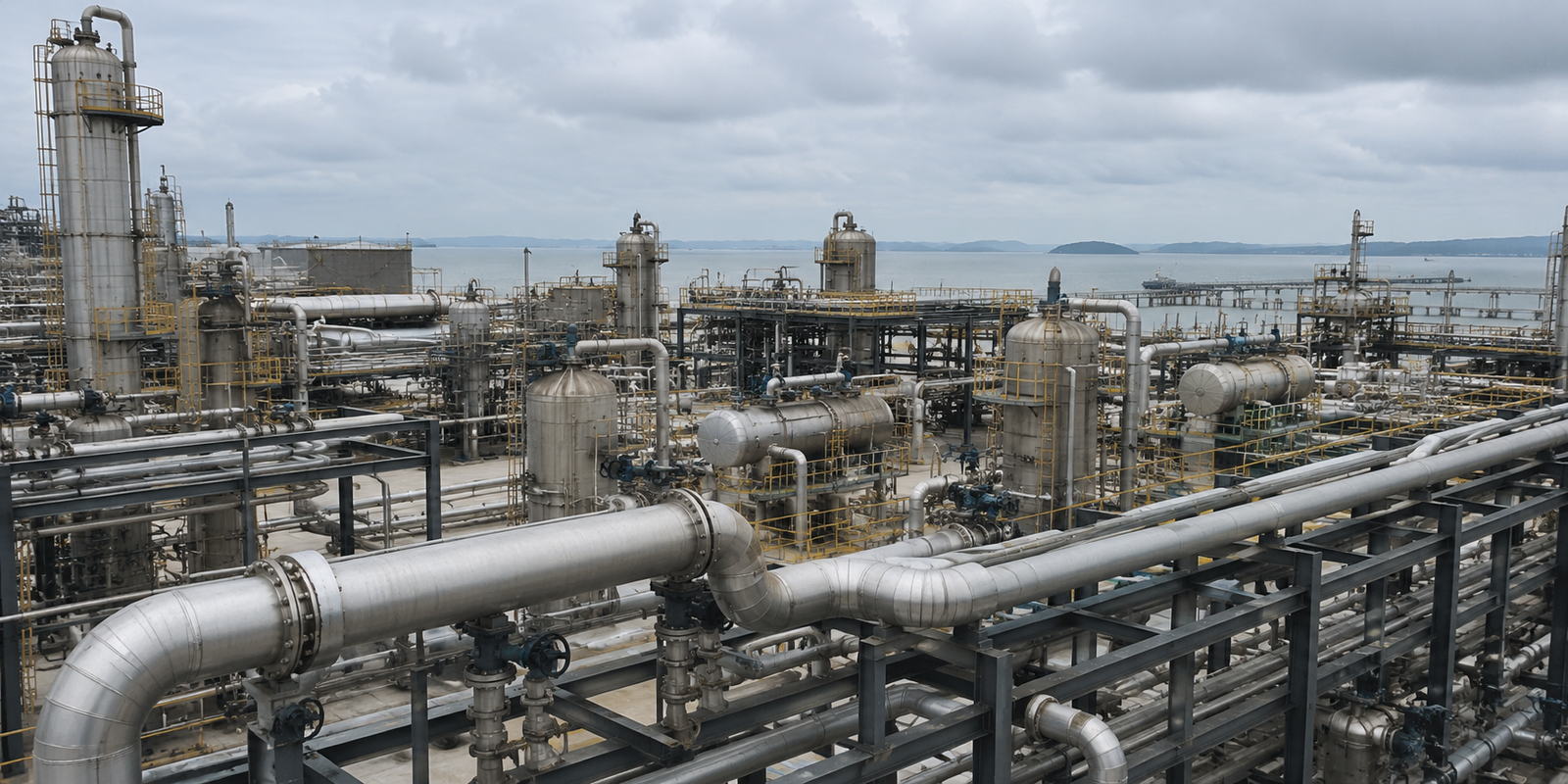
Image credit: Taprogge GmbH / Wikimedia Commons, CC BY-SA 3.0. The image shows biofouling in a condenser tube pattern; the tube alloy is not identified.
Biofouling and stagnant water do not automatically cause titanium tube corrosion.
Titanium normally maintains a stable TiO₂ passive film in oxygenated seawater, and biological growth may reduce heat transfer or restrict flow without causing measurable metal attack.
Corrosion risk rises when biofouling or stagnation combines with tight crevices, elevated temperature, low local pH, reducing species, aggressive process contaminants, deposit accumulation, or prolonged shutdown conditions.
The material decision should therefore be based on the complete local environment—not on the presence of biofouling alone.
Biofouling and Corrosion Are Not the Same Problem
Biofouling is the attachment and growth of microorganisms, algae, shells, slime, or other biological material on a wetted surface.
Its immediate effects may include:
- Reduced heat transfer
- Increased pressure drop
- Restricted tube flow
- Deposit retention
- More frequent cleaning
- Blocked tube entrances
These are operating problems, but they do not prove that the titanium is corroding.
A 2025 natural seawater study exposed Grade 2 titanium to stagnant seawater at 25°C for 16 weeks. Biofilms formed, but the titanium maintained a protective TiO₂ film, showed increasing corrosion resistance, and developed no significant pitting under the tested conditions.
The correct conclusion is:
Biofouling can alter the surface environment, but additional chemical, thermal, or geometric conditions are normally required before serious titanium corrosion develops.
When Can a Biofilm Increase Titanium Corrosion Risk?
A biofilm can create a localized environment that differs from the surrounding water.
Possible changes include:
- Lower oxygen concentration
- Different pH
- Retention of chloride or process contaminants
- Accumulation of acidic metabolites
- Sulfide generation
- Deposit formation
- Restricted chemical transport
- Changes in surface potential
Oxygen depletion alone does not prove that titanium will depassivate.
However, if the local environment becomes sufficiently acidic or reducing, the passive film may become less stable.
A laboratory study involving Pseudomonas aeruginosa found that the bacterial biofilm increased the measured corrosion activity of pure titanium and produced shallow localized pits. The result demonstrates that titanium MIC is possible, but it does not establish that all marine biofilms cause the same damage.
The microbial species, exposure time, temperature, nutrient supply, water chemistry, and surface condition must all be considered.
Why Stagnation Is an Operating Risk
Stagnation affects titanium tubes mainly because it allows local conditions to change without continuous renewal by the bulk fluid.
Risk may increase during:
- Long equipment shutdowns
- Standby operation
- Blocked tubes
- Dead legs
- Partially drained systems
- Low-flow tube-sheet areas
- Gasketed or deposited crevices
- Repeated wet-and-dry cycles
- Storage with untreated process water
Stagnation may allow:
- Biological growth
- Solids to settle
- Cleaning chemicals to remain trapped
- Dissolved species to concentrate
- Local pH to change
- Reducing conditions to develop
A titanium tube operating continuously in clean ambient seawater may behave very differently from the same tube left for several months in warm, contaminated, stagnant water.
Which Conditions Create the Highest Risk?
| Condition | Effect on Titanium Tube Risk |
|---|---|
| Ambient clean seawater with open surfaces | Usually low corrosion risk |
| Biofouling without tight crevices | Mainly a heat-transfer and flow problem |
| Tight gasket, deposit, or tube-sheet crevice | Creates a restricted local environment |
| Elevated metal temperature | Can reduce the crevice-corrosion margin |
| Low local pH | Can destabilize titanium passivity |
| Acidic fluoride contamination | Can attack the titanium passive film |
| Sulfides or reducing metabolites | Can alter local electrochemistry and hydrogen uptake |
| Long stagnant shutdown | Encourages biological growth and chemical concentration |
| Poor drainage | Retains aggressive liquid after shutdown |
| Galvanic coupling or cathodic charging | May affect local potential and hydrogen absorption |
| Incompatible cleaning chemical | Can create more severe conditions than normal operation |
The controlling risk is usually a combination of several factors rather than one isolated variable.
Grade 2, Grade 7, or Grade 12?
Titanium Grade 2
Grade 2 is commercially pure titanium and is widely considered for seawater condensers and heat exchangers.
It is a reasonable starting candidate when:
- Water temperature is moderate.
- The system remains oxygenated.
- Crevices are controlled.
- Biofouling is regularly removed.
- Shutdown water is drained or treated.
- Fluoride and reducing-acid contamination are absent.
Grade 2 should not be approved from seawater chloride concentration alone.
Temperature, pH, crevice geometry, cleaning chemicals, and shutdown conditions remain important.
Titanium Grade 7
Grade 7 is commercially pure titanium with a palladium addition.
The palladium promotes cathodic reactions that help titanium remain passive under more aggressive crevice conditions.
A study of near-anaerobic high-temperature seawater found crevice corrosion on Grade 2 at 80°C under its test conditions, while Grade 7 showed no crevice corrosion up to 200°C in the same program.
This result does not create universal temperature limits, but it shows why Grade 7 may be considered for:
- Hot seawater
- Low-oxygen crevices
- Difficult-to-clean joints
- Severe stagnant conditions
- Higher-consequence equipment
Titanium Grade 12
Grade 12 contains nickel and molybdenum and is designed to provide greater resistance to crevice corrosion than commercially pure titanium in selected environments.
A Grade 12 crevice-corrosion study found significantly reduced crevice propagation compared with Grade 2 in neutral sodium-chloride solution at temperatures up to 120°C.
Grade 12 is not immune.
Separate testing has identified Grade 12 crevice corrosion in hot, low-pH concentrated brines. It should therefore be treated as an improved candidate—not a universal solution.
Preliminary Grade Selection
| Service Condition | Starting Grade |
|---|---|
| Clean, moderate-temperature seawater | Grade 2 |
| Controlled cooling water with limited shutdowns | Grade 2 |
| Warm seawater with credible crevice risk | Grade 7 or Grade 12 |
| Low-oxygen hot seawater | Grade 7 often deserves review |
| Tight crevices and difficult cleaning | Grade 7 or Grade 12 |
| Acidic fluoride contamination | No grade should be approved without specific data |
| Strongly reducing process water | Project-specific testing required |
| Unknown biofilm and shutdown chemistry | No final grade selection yet |
The strongest titanium grade is not automatically the most corrosion-resistant grade.
Grade 5, for example, provides higher mechanical strength but should not be assumed to offer better crevice-corrosion resistance than Grades 2, 7, or 12.
ASTM B338 Does Not Qualify Biofouling Service
ASTM B338-17(2026) covers seamless and welded titanium and titanium alloy tubes intended for condensers, evaporators, and heat exchangers.
It controls requirements such as:
- Chemical composition
- Tensile properties
- Tube dimensions
- Flattening
- Reverse flattening for applicable welded tubes
- Electromagnetic or ultrasonic testing
- Hydrostatic or pneumatic testing
- Workmanship
It does not establish:
- Biofouling resistance
- Crevice-corrosion temperature
- Compatibility with stagnant process water
- Resistance to acidic fluoride
- Suitability for a cleaning chemical
- Shutdown corrosion performance
- Long-term tube-to-tubesheet joint performance
Product-standard compliance and service qualification are separate requirements.
Surface Cleaning and Service Cleaning Must Be Distinguished
ASTM B600-22 provides guidance for descaling and cleaning titanium surfaces during production and fabrication.
It addresses shop soils, heat-treatment scale, oxides, and foreign surface contaminants.
It is not an operating procedure for removing biological growth from an installed condenser.
The equipment owner should separately define:
- Water-treatment program
- Mechanical cleaning method
- Biocide or oxidant use
- Chemical-cleaning solution
- Cleaning temperature
- Exposure duration
- Rinsing procedure
- Shutdown preservation
The cleaning process must be compatible with the selected titanium grade, welds, tube sheet, gaskets, and other connected materials.
What Testing Is More Representative?
A useful corrosion test should reproduce the most severe credible local condition.
| Test Variable | Required Information |
|---|---|
| Water source | Seawater, brackish water, river water, or process water |
| Temperature | Normal, maximum, and shutdown |
| Chemistry | Chloride, pH, fluoride, sulfide, oxidants, and contaminants |
| Oxygen | Normal and minimum dissolved oxygen |
| Biology | Natural biofilm, selected organisms, or sterile control |
| Flow | Normal flow and stagnation cycle |
| Crevice | Representative gasket, deposit, or tube-sheet geometry |
| Tube condition | Final grade, weld, surface, and cold work |
| Cleaning | Actual chemical and mechanical method |
| Duration | Long enough to establish mature biofilm or local chemistry |
| Evaluation | Maximum pit or crevice depth, oxide condition, and hydrogen where relevant |
For deep-sea applications, ISO 23226:2020 provides guidelines for field corrosion testing, while ISO 5668:2023 addresses simulated deep-sea laboratory environments.
These standards do not replace a test designed around the actual heat exchanger or cooling-water system.
What Should Buyers Include in the RFQ?
| RFQ Category | Required Information |
|---|---|
| Equipment | Condenser, evaporator, cooler, or heat exchanger |
| Water source | Seawater, brackish, river, treated, or process water |
| Temperature | Normal, maximum, minimum, and shutdown |
| Chemistry | Chloride, pH, fluoride, sulfide, oxidants, and contaminants |
| Biological conditions | Fouling history, organisms, and water treatment |
| Flow | Normal, minimum, maldistribution, and stagnant periods |
| Shutdown | Duration, drainage, flushing, and preservation method |
| Crevices | Tube sheet, gasket, deposits, supports, and joints |
| Cleaning | Mechanical and chemical cleaning procedure |
| Material | Grade and UNS designation |
| Standard | ASTM B338-17(2026) or project specification |
| Tube type | Seamless, welded, or welded and cold worked |
| Dimensions | OD, wall, length, tolerance, and quantity |
| Surface | Inside and outside surface requirements |
| Fabrication | Straight, U-bend, coil, or tube-to-tubesheet joint |
| Testing | Product NDT and service-specific corrosion testing |
| Documentation | MTC, heat treatment, dimensions, NDT, and test reports |
| Approval authority | Heat-exchanger designer or corrosion engineer |
A request stating only:
“Need Grade 2 titanium tubes for seawater.”
does not provide enough information to evaluate biofouling, stagnation, or crevice-corrosion risk.
Frequently Asked Questions
Does biofouling always corrode titanium tubes?
No. Biofouling often reduces heat-transfer performance without causing measurable titanium corrosion. Risk increases when the biofilm contributes to an aggressive occluded environment.
Is oxygen depletion enough to cause titanium corrosion?
Not necessarily. Titanium can remain passive under low-oxygen conditions. Temperature, pH, crevice geometry, reducing species, and contaminants determine whether depassivation occurs.
Is Grade 7 always better than Grade 2?
Grade 7 generally offers a greater crevice-corrosion margin, but its additional cost may not be justified in moderate, well-controlled seawater service.
Is Grade 12 immune to stagnant seawater corrosion?
No. Grade 12 may suppress crevice propagation compared with Grade 2 in selected conditions, but it can still corrode in sufficiently hot, acidic, or concentrated crevices.
Does a smoother surface prevent biofouling?
A controlled surface may improve cleanability or delay adhesion in some systems. It cannot prevent biological growth caused by untreated water, low flow, or long shutdowns.
Does ASTM B338 prove corrosion resistance?
No. It verifies the ordered tube product. Biofouling, stagnation, crevice corrosion, and cleaning compatibility require separate engineering review.
Can factory eddy-current testing detect future MIC?
No. Factory NDT can detect specified manufacturing discontinuities. It cannot predict biological growth or corrosion that may develop after installation.
What information is most important for quotation?
Provide the titanium grade, tube dimensions, water chemistry, temperature, flow, shutdown conditions, cleaning method, testing, NDT, and documentation requirements.
Conclusion
Biofouling and stagnation should not be treated as automatic proof that titanium tubes will corrode.
The main questions are:
- Does a tight crevice or deposit form?
- Does the local pH fall?
- Is the metal temperature elevated?
- Are fluoride, sulfide, or reducing contaminants present?
- How long does water remain stagnant?
- Can the system be drained and cleaned?
- Does the selected grade have representative evidence?
Grade 2 remains a practical candidate for many controlled seawater heat exchangers.
Grade 7 or Grade 12 may provide a larger crevice-corrosion margin where temperature, stagnation, or occluded geometry is more severe.
For titanium tube enquiries, buyers should provide the grade, ASTM standard, dimensions, tube type, water chemistry, temperature, shutdown cycle, surface, testing, NDT, documentation, and quantity.
Emily PIPE can review whether the requested titanium tube grade, dimensions, supplied condition, surface, inspection, certification, and packaging requirements are technically manufacturable.
Final corrosion approval, biofouling control, water treatment, cleaning procedure, and heat-exchanger design should remain with the equipment designer and responsible materials or corrosion engineer.