
How Should Buyers Select Materials for Ammonia Cracking Equipment?
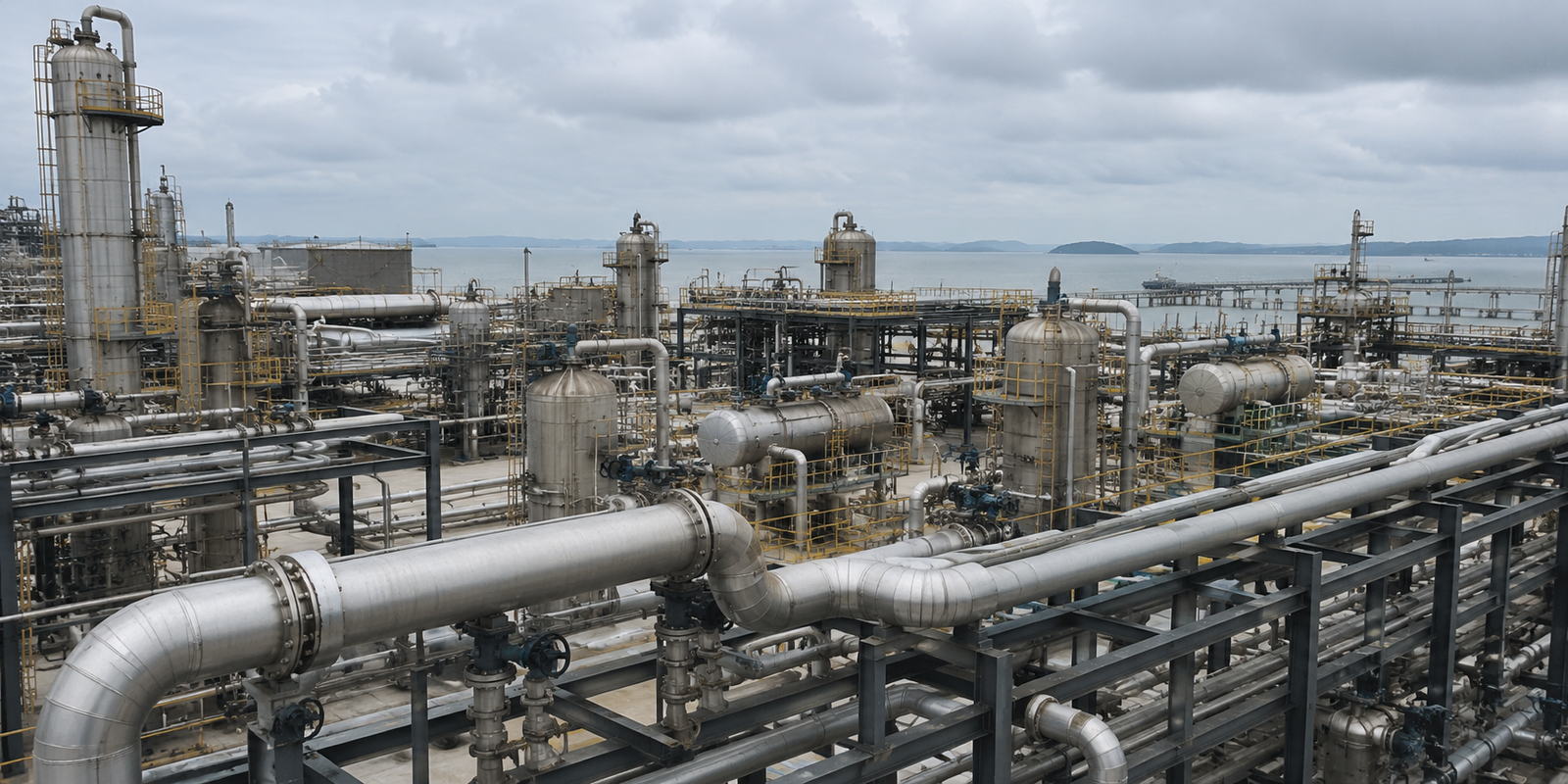
Image credit: Hanno Böck, Wikimedia Commons, CC0. The image shows a steam methane reformer rather than an ammonia cracker; both may use externally heated tubular-reactor arrangements.
Materials for ammonia cracking equipment should be selected by equipment zone rather than from one universal alloy ranking.
The ammonia-rich hot zone is primarily controlled by nitridation, creep, thermal cycling, and oxide-scale stability. After ammonia has decomposed, the cracked-gas outlet contains mainly hydrogen and nitrogen, so the material review shifts toward creep strength, hydrogen partial pressure, residual ammonia, and the applicable pressure-design code.
A product standard alone does not prove suitability for either zone.
Which Damage Mechanism Controls Each Equipment Zone?
| Equipment Zone | Main Exposure | Primary Material Risks |
|---|---|---|
| Ammonia preheater and hot inlet | NH₃-rich gas and rising temperature | Nitridation, thermal cycling, weld attack |
| Catalyst or reactor tube hot zone | High metal temperature, NH₃, H₂ and N₂ | Creep, nitridation, oxide-scale failure |
| Hot cracked-gas outlet | H₂/N₂-rich gas with residual NH₃ | Creep, hydrogen compatibility, residual nitridation |
| Cooler and downstream piping | Lower-temperature hydrogen-rich gas | Gaseous hydrogen effects, pressure cycling, weld quality |
| Supports and external furnace parts | Heat, combustion atmosphere and mechanical loading | Oxidation, creep, thermal fatigue |
The gas composition and tube-metal temperature must be defined separately for each location.
Why Is Nitridation Critical in the Hot Zone?
Ammonia can dissociate at a hot metal surface and supply reactive nitrogen.
Nitrogen may diffuse into the alloy and react with nitride-forming elements such as:
- Chromium
- Aluminum
- Titanium
- Vanadium
Possible consequences include:
- Hard, brittle surface layers
- Chromium nitride precipitation
- Loss of surface ductility
- Cracking during thermal cycling
- Scale spallation
- Reduced repair weldability
- Crack propagation into the base metal
A 2026 review of alloy solutions for ammonia cracking explains that nickel generally improves nitridation resistance, while chromium has a dual role: it can support protective oxide formation but can also form chromium nitrides after nitrogen penetrates the surface.
Therefore, chromium content alone cannot rank ammonia-cracking alloys.
Why the Protective Oxide Film Matters
The material surface may form an oxide film before or during operation.
A stable film can reduce contact between ammonia and the underlying alloy. However, its protection depends on:
- Oxide composition
- Preoxidation procedure
- Surface preparation
- Temperature
- Thermal cycling
- Gas impurities
- Mechanical strain
- Scale adhesion
A high-temperature ammonia study found that controlled preoxidation reduced nitridation of several heat-resistant cast alloys at 900°C.
The same study also found that scale spallation reduced protection.
Preoxidation should therefore be treated as a qualified process—not as a substitute for selecting a suitable base material.
Creep Must Be Evaluated at the Tube-Metal Temperature
The reactor-tube wall may operate at a different temperature from the measured process gas.
Long-term pressure and external heating can cause:
- Tube expansion
- Bowing
- Local bulging
- Grain-boundary cavitation
- Creep cracking
- Creep rupture
Room-temperature tensile strength does not establish high-temperature design life.
The buyer should define:
- Normal tube-metal temperature
- Maximum tube-metal temperature
- Internal pressure
- External furnace temperature
- Design life
- Allowable stress
- Startup and shutdown cycles
- Local hot spots
- Required creep or stress-rupture data
The material should be assessed at the actual design temperature and time—not by a generic maximum-temperature statement.
Which Alloys May Be Screened?
The following are screening candidates rather than automatic selections.
| Alloy | Possible Starting Role | Main Limitation |
|---|---|---|
| Alloy 600 / UNS N06600 | High-nickel candidate where nitridation resistance is important and stress is moderate | Long-term creep strength may limit severe high-temperature pressure service |
| Alloy 601 / UNS N06601 | Heat-resistant candidate where oxidation and surface-scale behaviour are important | Aluminum and chromium nitride formation still require ammonia testing |
| Alloy 800H / UNS N08810 | Candidate where higher-temperature creep strength is required | Nitridation resistance must be verified for the actual NH₃ exposure |
| Alloy 800HT / UNS N08811 | Controlled-composition and grain-size candidate for long-term elevated-temperature service | Product condition and design-code applicability must be confirmed |
| Alloy 617 / UNS N06617 | High-temperature candidate for creep-controlled equipment | Ammonia-specific nitridation data and weld performance remain necessary |
| Alloy 625 / UNS N06625 | Candidate for selected moderate-temperature tubes and fittings | Long exposure may cause phase precipitation, loss of ductility, and nitrided surface cracking |
| Heat-resistant cast alloys | Possible choice for large externally heated reactor tubes | Cast tube data cannot be transferred directly to wrought seamless tubing |
No alloy should be selected solely because it contains more nickel, chromium, or molybdenum.
Why Alloy 625 Is Not a Universal Ammonia-Cracker Material
Alloy 625 offers useful strength, fabrication characteristics, and broad corrosion resistance.
However, long-term ammonia-cracker service has shown important limitations.
A study of an Alloy 625 ammonia cracker tube after 100,000 hours found substantial microstructural changes, increased strength, and reduced ductility and toughness after service around 600°C.
A more recent Alloy 625 failure investigation identified a hard chromium-nitride surface layer and cracking after prolonged ammonia exposure.
These findings do not prohibit Alloy 625.
They show that its suitability depends on:
- Temperature
- Exposure time
- Stress
- Residual ammonia
- Component geometry
- Heat treatment
- Weld condition
- Inspection strategy
How Should Hydrogen Risk Be Evaluated?
Hydrogen-related risks should not all be grouped under one term.
High-Temperature Hydrogen Attack
HTHA is mainly a concern for carbon and low-alloy steels exposed to sufficiently high hydrogen partial pressure and temperature.
It involves hydrogen reacting with carbides to form methane, resulting in decarburization, voids, and cracking.
For steel pressure parts, the responsible engineer should evaluate the applicable hydrogen-service guidance and design code.
Gaseous Hydrogen Embrittlement
Gaseous hydrogen may reduce ductility, fatigue resistance, or fracture resistance in susceptible materials, particularly in cooler, highly stressed components.
The risk depends on:
- Material family
- Strength
- Cold work
- Temperature
- Hydrogen pressure
- Stress concentration
- Pressure cycling
- Weld condition
Hydrogen Permeation
Hydrogen may diffuse through a metal wall without producing immediate cracking.
Permeation is a system-design and containment issue and should not be treated as proof that the alloy has become embrittled.
Product Standards Do Not Qualify Ammonia Service
Relevant seamless tube standards may include:
- ASTM B167-23 for Alloy 600, Alloy 601, Alloy 617, and other heat-resistant nickel alloys
- ASTM B407-22 for Alloy 800H, Alloy 800HT, and related nickel–iron–chromium alloys
- ASTM B444-23 for Alloy 625 and related alloys
These standards can verify requirements such as:
- Chemical composition
- Supplied heat-treatment condition
- Tensile properties
- Grain size where applicable
- Dimensions
- Hydrostatic or nondestructive testing
- Workmanship
They do not establish:
- Nitridation rate
- Creep life in an ammonia cracker
- Oxide-scale stability
- Hydrogen-service compatibility
- Welded-component performance
- Suitable tube-metal temperature
- Expected equipment life
Service qualification remains a separate engineering requirement.
What Testing Is More Representative?
A useful ammonia-exposure program should reproduce the actual operating zone.
| Test Variable | Required Information |
|---|---|
| Gas composition | NH₃, H₂, N₂, H₂O and impurities |
| Residual ammonia | Normal and maximum |
| Temperature | Gas and specimen-metal temperature |
| Pressure | Total pressure and hydrogen partial pressure |
| Duration | Sufficient for nitrogen ingress and scale development |
| Cycling | Startup, shutdown, and thermal excursions |
| Surface | Production finish and qualified preoxidation where applicable |
| Specimens | Parent tube, weld metal, and heat-affected zone |
| Stress | Unstressed and representative stressed specimens |
| Evaluation | Mass change, nitrogen depth, hardness, cracking, and ductility |
| Acceptance | Project-defined maximum attack and mechanical-property loss |
Short oxidation tests in air cannot prove nitridation resistance in hot ammonia.
What Buyers Should Include in the RFQ
| RFQ Category | Required Information |
|---|---|
| Equipment location | Preheater, reactor tube, hot outlet, cooler, or piping |
| Gas composition | NH₃, H₂, N₂, water, oxygen, sulfur, and hydrocarbons |
| Temperature | Normal and maximum gas and tube-metal temperatures |
| Pressure | Operating, design, and hydrogen partial pressure |
| Operating cycle | Continuous, startup frequency, and shutdown duration |
| Design life | Required operating hours |
| Material | Exact alloy and UNS designation |
| Product standard | ASTM, ASME, EN, or project specification |
| Tube condition | Annealed, solution annealed, grain-size-controlled, or other |
| Dimensions | OD, wall, length, tolerance, and quantity |
| Creep requirement | Applicable data, test, or design-code basis |
| Ammonia test | Gas, temperature, duration, surface, and acceptance |
| Welding | Procedure, filler, heat input, and weld testing |
| NDT | Eddy current, UT, hydrostatic, PT, or project method |
| Documentation | MTC, heat treatment, grain size, NDT, and test reports |
| Approval authority | Reactor designer or responsible materials engineer |
A request stating only:
“Need high-temperature nickel alloy tubes for an ammonia cracker.”
does not provide enough information for reliable material selection or quotation.
Frequently Asked Questions
Which alloy is best for ammonia cracking tubes?
There is no universal best alloy. Alloy 600 may offer useful nitridation resistance, while Alloy 800H, 800HT, or 617 may provide stronger creep capability. Actual ammonia-exposure data are still required.
Is Alloy 625 suitable?
It may be suitable in selected conditions, but long-term service studies show that microstructural embrittlement and nitrided surface cracking can occur.
Is more chromium always better?
No. Chromium can support protective oxide formation, but it is also a strong nitride-forming element after nitrogen penetrates the oxide.
Is more nickel always better?
Higher nickel generally improves nitridation resistance in austenitic alloys, but creep strength, oxidation, welding, cost, and other alloying elements must also be evaluated.
Can API hydrogen limits select the reactor-tube alloy?
Hydrogen-service guidance is relevant to susceptible steel sections. It does not replace ammonia-nitridation testing or nickel-alloy creep assessment.
Does ASTM B167 or B407 prove suitability?
No. These standards verify the supplied tube product, not its service life in an ammonia cracking reactor.
Should the weld be tested separately?
Yes. Weld metal, heat-affected zones, oxide condition, residual stress, and geometry may behave differently from the parent tube.
What information is most important for quotation?
Provide the equipment zone, gas composition, tube-metal temperature, pressure, design life, alloy, dimensions, condition, testing, NDT, and documentation requirements.
Conclusion
Ammonia cracking equipment should be divided into material-selection zones.
- The ammonia-rich hot zone is controlled mainly by nitridation, creep, and oxide-scale stability.
- The hot cracked-gas outlet requires creep and hydrogen-environment review.
- Cooler downstream components require a separate gaseous-hydrogen assessment.
A reliable specification should combine:
- Exact equipment location
- Gas composition
- Tube-metal temperature
- Pressure and design life
- Alloy and supplied condition
- Creep evidence
- Representative ammonia-exposure testing
- Weld and NDT requirements
For nickel-alloy tube enquiries, buyers should provide the alloy, UNS designation, product standard, OD, wall thickness, length, condition, gas composition, temperature, testing, NDT, documentation, and quantity.
Emily PIPE can review whether the requested tube grade, dimensions, supplied condition, surface, inspection, certification, and packaging requirements are technically manufacturable.
Final alloy selection, creep design, hydrogen assessment, nitridation qualification, and reactor approval should remain with the equipment designer and responsible materials engineer.