
| Item | Details | ||||||||||||||||||||||
|---|---|---|---|---|---|---|---|---|---|---|---|---|---|---|---|---|---|---|---|---|---|---|---|
| Executive Standards and Scope |
1. Primary Product Standard: ASTM B348/B348M-25 — Standard Specification for Titanium and Titanium Alloy Bars and Billets. 2. Material Designation: Titanium Grade 5, Ti-6Al-4V, UNS R56400. 3. ASTM Product Scope: Annealed titanium-alloy bars and billets supplied according to the applicable edition of ASTM B348/B348M and the purchase order. 4. Aerospace Option: SAE AMS4928X may be reviewed when annealed Ti-6Al-4V bars, wire, forgings, rings, drawn shapes, or forging stock are specifically required by an aerospace drawing or procurement specification. 5. Specification Boundary: ASTM B265 applies to sheet, strip, and plate; ASTM B381 applies to forgings; neither should be listed as the governing standard for an ASTM B348 bar order. 6. Contract Review: Grade, product form, standard edition, size, condition, tolerances, inspection, documentation, marking, and customer-specific requirements should be confirmed before production. |
||||||||||||||||||||||
| Material Grade and Product Forms |
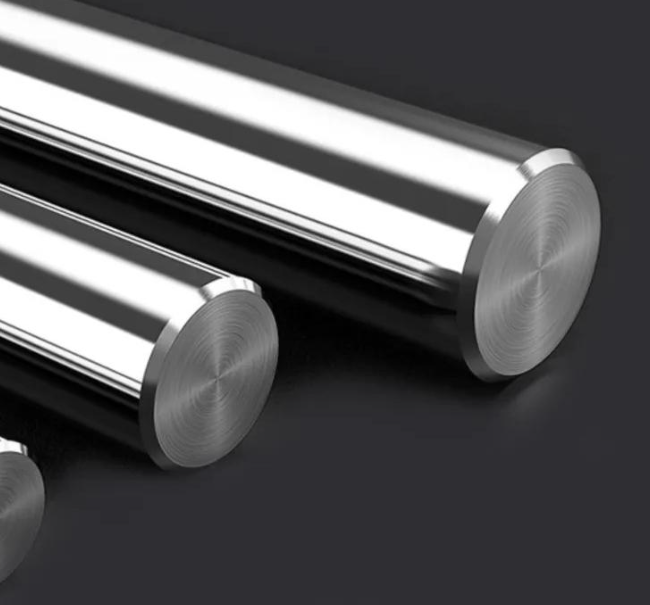
1. Grade: Titanium Grade 5. 2. UNS Designation: UNS R56400. 3. Nominal Alloy: Ti-6Al-4V, an alpha-beta titanium alloy containing approximately 6% aluminum and 4% vanadium. 4. Product Forms: Round bar, rod, billet, cut-to-length pieces, machining blanks, and drawing-controlled solid components within the confirmed supply range. 5. Supply Condition: Annealed under ASTM B348/B348M unless another condition is governed by a separate agreed specification. 6. Grade Boundary: Grade 5 should not be represented as Grade 23 ELI. Grade 23 has tighter interstitial limits and is a separate material designation. |
||||||||||||||||||||||
| Chemical Composition (Weight %) |
Reference limits for standard Ti-6Al-4V / Grade 5. The current purchase specification and heat-specific MTR/MTC control final acceptance.
Intentional additions, residual-element reporting, and heat analysis shall follow the governing standard. |
||||||||||||||||||||||
| Mechanical Properties (Annealed Reference) |
For annealed ASTM B348 Grade 5 bar below the applicable size threshold, commonly referenced minimum room-temperature values include:
Actual requirements vary with diameter or thickness, specimen orientation, product form, condition, standard edition, and customer specification. Heat-specific tensile results should be reported on the MTR/MTC. Fatigue strength, creep, fracture toughness, impact energy, and elevated-temperature properties should not be presented as universal acceptance values unless they are specifically required and tested. |
||||||||||||||||||||||
| Typical Physical and Thermal Properties |
Typical values only; these are not ASTM B348 product-acceptance limits.
Physical properties can vary with composition, texture, direction, heat treatment, temperature, and thermomechanical history. |
||||||||||||||||||||||
| Grade 5 vs Grade 23 ELI |
|
||||||||||||||||||||||
| ASTM B348 vs AMS4928 |
|
||||||||||||||||||||||
| Size, Length, and Dimensional Tolerances |
1. Project-specific diameters, lengths, and machining blanks can be reviewed according to material availability, manufacturing route, quantity, condition, surface finish, and tolerance. 2. Diameter, length, straightness, out-of-roundness, cut-end condition, and surface requirements shall follow the governing standard unless tighter values are agreed in writing. 3. Tighter tolerances require a feasibility review covering bar size, length, finish, machining allowance, measurement method, inspection frequency, uncertainty, yield, cost, and lead time. 4. Buyers should provide a finished-part drawing or machining allowance where dimensional control is critical. 5. Peeled, turned, ground, or polished bars should be evaluated separately because achievable tolerance and surface condition vary by process. |
||||||||||||||||||||||
| Surface Finish and Value-Added Processing |
Available options can include, subject to feasibility confirmation: 1. Descaled, sandblasted, pickled, peeled, rough-turned, centerless-ground, or polished finishes. 2. Saw cutting and fixed-length preparation. 3. Facing, chamfering, deburring, drilling, threading, turning, milling, and CNC machining. 4. Customer-specific marking, heat separation, and packing. 5. First-article dimensional inspection when agreed. Surface roughness must be defined by parameter, method, measurement direction, sampling plan, and acceptance limit. |
||||||||||||||||||||||
| Heat Treatment and Microstructure |
1. ASTM B348 Grade 5 bar is generally supplied in the annealed condition. 2. Annealing, stress relief, solution treatment, and aging can significantly change strength, ductility, fatigue behaviour, fracture toughness, residual stress, and microstructure. 3. Heat-treatment temperatures and times should follow a qualified procedure matched to section size, original condition, target properties, equipment capability, and final component requirements. 4. Generic heat-treatment cycles should not be copied into a purchase order without review. 5. Reheating, forging, welding, or machining may alter the properties reported for the original mill product and can require final-part verification. |
||||||||||||||||||||||
| Forging, Hot Working, and Cold Working |
1. Grade 5 can be hot forged and hot formed, but process temperature, reduction, strain rate, finishing temperature, and cooling practice must be controlled. 2. Cold forming is more limited than for commercially pure titanium or Grade 9 and depends on condition, geometry, tooling, strain path, and bend radius. 3. A universal forging temperature, reduction ratio, bend radius, or cold-work percentage should not be promised without process qualification. 4. First-article trials and final-property verification are appropriate for new forging, heading, rolling, or forming routes. |
||||||||||||||||||||||
| Machining Guidance |
1. Ti-6Al-4V requires rigid workholding, sharp tools, controlled speed, suitable feed, and adequate coolant. 2. Low thermal conductivity can concentrate heat near the cutting edge and accelerate tool wear. 3. Machining allowance should consider bar tolerance, straightness, scale removal, chucking, distortion, and the final inspection method. 4. Threads, small radii, deep holes, thin sections, and fatigue-sensitive surfaces may require additional process planning and inspection. 5. Finished-part machining parameters should be qualified by the component manufacturer rather than treated as universal Grade 5 settings. |
||||||||||||||||||||||
| Welding and Joining |
1. Grade 5 can be welded using qualified titanium procedures when surfaces and shielding are properly controlled. 2. Heated titanium requires effective protection from oxygen, nitrogen, hydrogen, moisture, oil, and other contamination. 3. Weld properties depend on joint design, filler selection, heat input, shielding, base-metal condition, contamination control, and post-weld processing. 4. Mechanical fastening, brazing, diffusion bonding, or another joining route must be validated for the actual component. 5. ASTM B348 bar certification does not approve a finished welded assembly. |
||||||||||||||||||||||
| Corrosion and Service Limits |
Ti-6Al-4V offers useful general corrosion resistance in many environments, including seawater exposure, but it should not be described as corrosion-proof. Actual performance depends on temperature, pH, reducing acids, fluorides, deposits, crevices, galvanic contact, stress, surface condition, and service chemistry. Compared with unalloyed titanium, Grade 5 may provide lower corrosion resistance in some chemical environments. Where corrosion rather than strength controls material selection, another titanium grade or nickel alloy may be more appropriate. Material suitability must be confirmed against the actual service environment and governing design requirements. |
||||||||||||||||||||||
| Typical Application Screening |
Grade 5 bar can be evaluated for: 1. Aerospace structural and engine-related machined components where the required material specification permits Grade 5. 2. Industrial fasteners, shafts, pins, fittings, connectors, brackets, and high-strength machining blanks. 3. Marine and offshore hardware where strength, weight, corrosion, fatigue, wear, and galvanic conditions are reviewed. 4. Power-generation and energy components subject to project-specific temperature, stress, and inspection requirements. 5. High-performance automotive and motorsport components after static, fatigue, impact, wear, and vehicle-level validation. 6. Sporting equipment and precision-engineered parts where Ti-6Al-4V is specified. 7. Selected heat-exchanger support hardware, shafts, fasteners, or machined components; Grade 5 bar should not be confused with ASTM B338 heat-exchanger tubing. Application examples are screening references and do not replace component or customer approval. |
||||||||||||||||||||||
| Inspection and Quality Control |
Inspection can be arranged according to the governing standard and purchase order, including: 1. Chemical composition and tensile-property verification. 2. Diameter, length, straightness, surface, and other agreed dimensional inspection. 3. Positive Material Identification when specified. 4. Ultrasonic testing when the method, calibration, coverage, sensitivity, reference standard, and acceptance criteria are defined. 5. Hardness, microstructure, macrostructure, or additional testing when contractually required. 6. Third-party inspection at agreed witness or hold points. A statement such as “100% NDT” is incomplete unless the exact method, scope, sensitivity, and acceptance criteria are stated. |
||||||||||||||||||||||
| Documentation and Traceability |
Documentation can include: 1. Heat-specific Material Test Certificate showing chemistry, mechanical properties, condition, and standard. 2. Heat and lot identification linked to labels, packing list, and inspection reports. 3. EN 10204 3.1 documentation when contractually required. 4. Dimensional, PMI, UT, hardness, or third-party inspection reports when ordered. 5. Certificate of Conformance and customer-specific release documents when agreed. 6. Aerospace documentation, approved-source status, or AMS compliance only when the exact requirements have been reviewed and confirmed. |
||||||||||||||||||||||
| Packaging and Marking |
1. Bars can be bundled, wrapped, or packed in export wooden cases according to diameter, length, quantity, finish, and transport method. 2. Ground or polished bars can receive separators and additional surface protection. 3. Moisture-resistant wrapping, secure supports, and end protection can be added when required. 4. Different heats, lots, sizes, grades, and conditions can be separated and clearly identified. 5. Labels can include Titanium Grade 5, Ti-6Al-4V, UNS R56400, standard, condition, size, heat number, lot number, quantity, and purchase-order reference. |
||||||||||||||||||||||
| Why Choose Emily PIPE |
1. More than 20 years of alloy-material production and export experience. 2. Supply support for standard and project-specific titanium bar requirements. 3. Review of grade, standard, size, condition, tolerance, finish, machining, inspection, documentation, and packing before quotation. 4. Heat and lot traceability according to agreed purchase requirements. 5. PMI, dimensional, surface, mechanical, ultrasonic, and third-party inspection support when specified and technically applicable. 6. Cutting, grinding, machining coordination, marking, and export packaging services subject to feasibility confirmation. 7. Direct communication for drawings, application conditions, delivery requirements, and technical clarification. |
||||||||||||||||||||||
| RFQ Information Required |
For an accurate quotation, please provide: 1. Titanium Grade 5 / Ti-6Al-4V / UNS R56400 confirmation. 2. ASTM B348/B348M, AMS4928, or another governing specification and revision. 3. Bar diameter or cross-section, length, quantity, and unit of measurement. 4. Annealed or other specification-controlled condition. 5. Diameter, length, straightness, out-of-roundness, surface, roughness, and machining requirements. 6. Required machining allowance or finished-component drawing. 7. Chemical, mechanical, dimensional, PMI, UT, hardness, microstructure, or third-party inspection requirements. 8. MTR/MTC, EN 10204 3.1, CoC, AMS, aerospace, or customer-specific documentation. 9. Loading, temperature, environment, fatigue, wear, joining, and failure consequence when technical review is requested. 10. Destination, Incoterms, packing, marking, and required delivery date. |
||||||||||||||||||||||
| Buyer Questions |
What is Titanium Grade 5 bar? Is Grade 5 the same as Grade 23? Does ASTM B348 automatically meet AMS4928? Can custom dimensions and machining be supplied? Can Grade 5 bar be used for aerospace components? Which documents are available? |
||||||||||||||||||||||
Packaging
Export packaging is selected according to bar diameter, length, quantity, finish, and transport method. Available controls can include bundling, waterproof wrapping, separators, wooden cases, end protection, heat separation, secure supports, and clear product identification.
Get Consultation & Quote
Send the grade, ASTM B348/B348M or AMS specification, size, length, quantity, condition, tolerance, surface finish, machining requirements, inspection documents, destination, and delivery date to emilymetalsh@163.com.