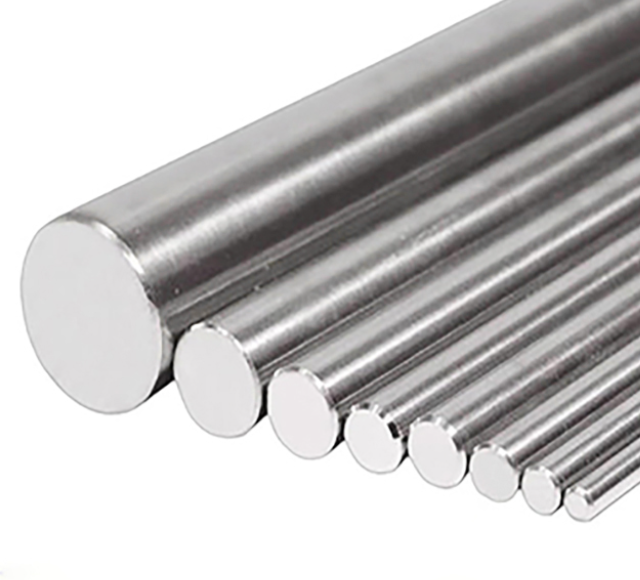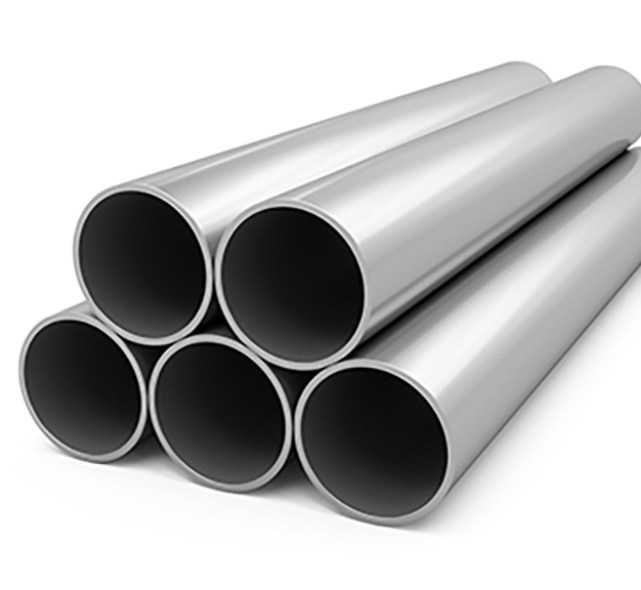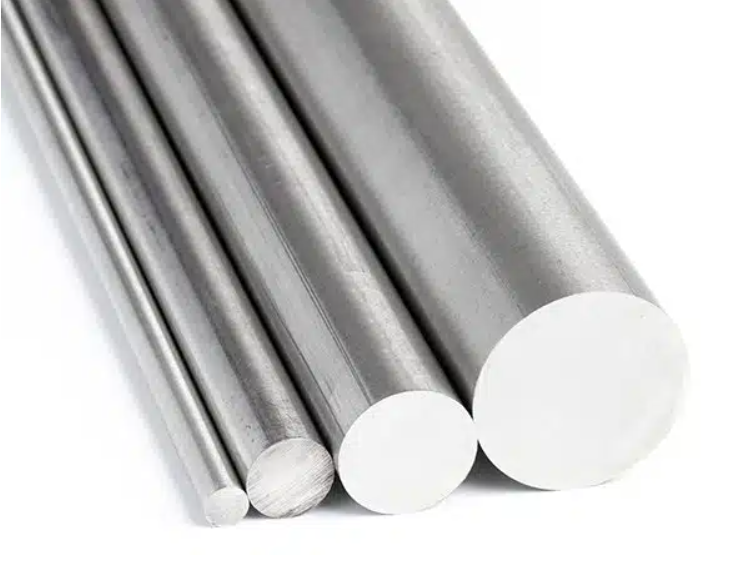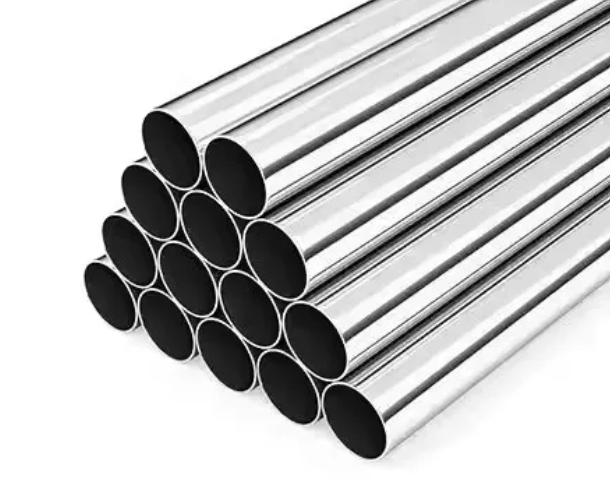

Aerospace hydraulic tubing is not selected by alloy name alone. A tube may be made from Titanium Grade 9 and still be unsuitable for an aircraft hydraulic system if the required material condition, dimensional controls, pressure qualification, surface quality, cleanliness, inspection, traceability, or customer approval is missing.
Quick answer: Titanium Grade 9—Ti-3Al-2.5V, UNS R56320—is widely specified for aerospace hydraulic tubing because it combines low density, useful strength, cold-forming capability, weldability, and corrosion resistance. The decisive procurement question is not simply whether the tube is Grade 9, but whether it complies with the required aerospace specification—such as AMS4943, AMS4944, AMS4945, or AS5620—and with the aircraft or OEM drawing, condition, dimensions, pressure class, inspection plan, and qualification controls.
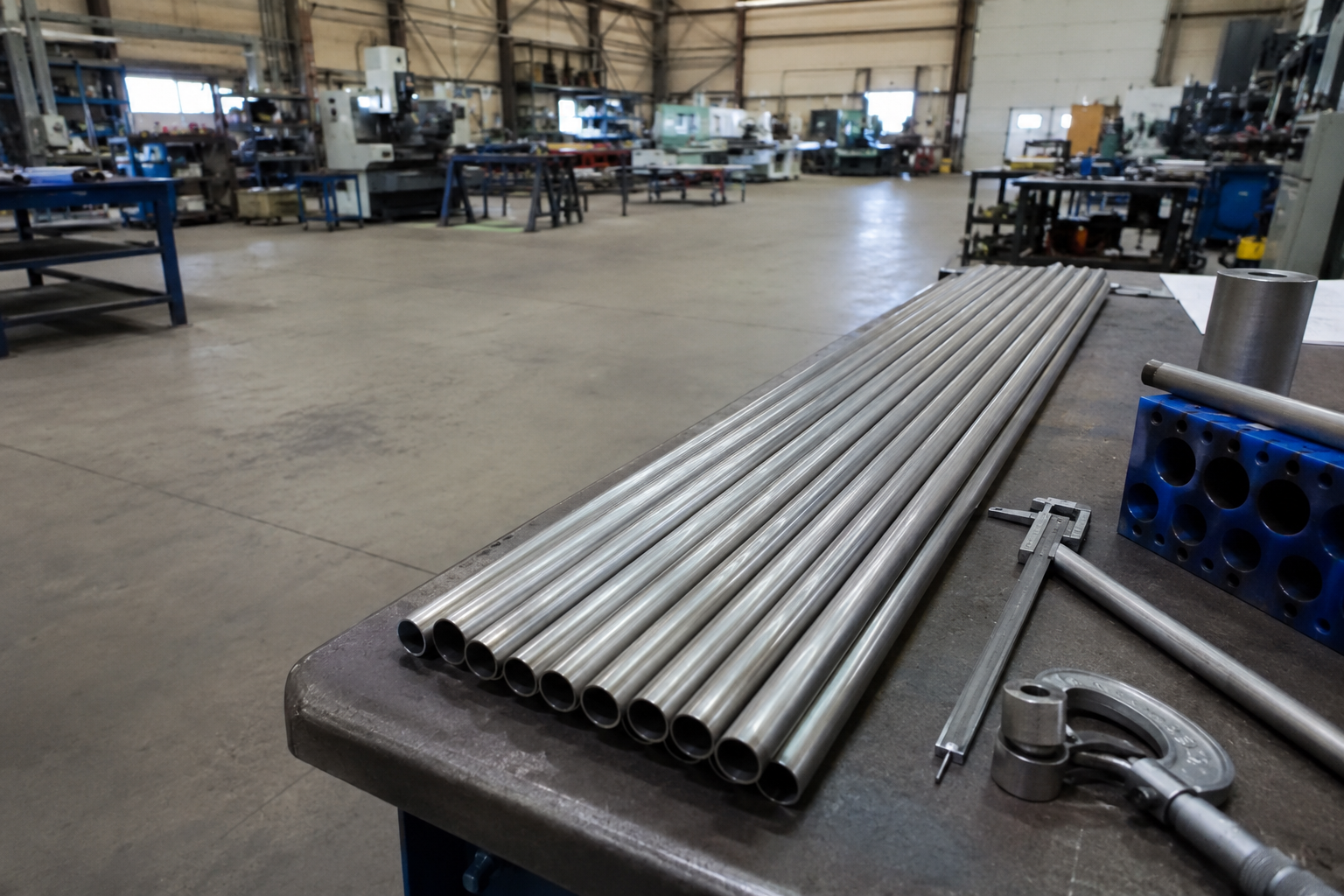
SAE International publishes several specifications for Ti-3Al-2.5V seamless tubing. SAE AMS4943 covers annealed seamless tubing, SAE AMS4944 covers cold-worked and stress-relieved seamless hydraulic tubing, and SAE AMS4945 adds controlled contractile strain-ratio requirements. SAE AS5620 addresses qualification testing and control for Ti-3Al-2.5V hydraulic tubing up to the pressure and temperature limits stated in that document.
At-a-Glance Buyer Answer
| Buyer Question | Practical Answer |
|---|---|
| Is Titanium Grade 9 suitable for aerospace hydraulic tubing? | It is a well-established alloy family for this application, but suitability depends on the specified AMS/AS standard, material condition, tube geometry, pressure requirement, manufacturing route, and customer approval. |
| Is every Grade 9 tube aerospace grade? | No. Grade, UNS number, and chemistry alone do not establish aerospace hydraulic-tubing compliance. |
| What is the key alloy designation? | Titanium Grade 9, Ti-3Al-2.5V, UNS R56320. |
| Which standards matter most? | AMS4943, AMS4944, AMS4945, AS5620, and the applicable aircraft, OEM, or customer drawing. |
| Can ASTM B338 replace an AMS hydraulic-tubing specification? | Normally no. ASTM B338 is primarily for condenser, evaporator, and heat-exchanger tubes. |
| Does AS5620 mean every Grade 9 tube can operate at 5080 psi? | No. The tube must be produced, qualified, and controlled in accordance with the applicable AS5620 requirements and the final system design. |
| What should buyers verify first? | Standard edition, condition, dimensions, pressure class, qualification status, inspection, cleanliness, traceability, and approved manufacturing route. |
| What should be sent with an RFQ? | Grade, UNS number, exact specification, condition, OD, wall, length, tolerances, pressure requirements, forming needs, inspection, documents, quantity, and delivery schedule. |
Buyer Takeaway
The commercial description “Titanium Grade 9 tube” is only the beginning. Aerospace acceptance depends on a complete and traceable specification package.
What Is Titanium Grade 9 / Ti-3Al-2.5V?
Titanium Grade 9 is commonly identified as Ti-3Al-2.5V or UNS R56320. It is an alpha-beta titanium alloy containing nominal additions of approximately 3% aluminum and 2.5% vanadium.
Common descriptions include:
- Titanium Grade 9
- Ti-3Al-2.5V
- Ti-3-2.5
- 3Al-2.5V titanium tubing
- UNS R56320
Material Position
| Titanium Material | General Engineering Position |
|---|---|
| Commercially pure titanium grades | High ductility and corrosion resistance with lower strength. |
| Titanium Grade 9 / Ti-3Al-2.5V | Intermediate strength with particularly useful tube-forming capability. |
| Titanium Grade 5 / Ti-6Al-4V | Higher strength but generally more demanding for extensive cold forming into thin-wall tubing. |
The main reason Grade 9 appears repeatedly in aircraft hydraulic-tubing specifications is the balance between performance and manufacturability. A stronger alloy is not automatically better when the tube must also be drawn, bent, flared, routed, joined, inspected, and qualified.
Procurement Boundary
“Grade 9” identifies the alloy family. It does not independently define:
- Seamless or welded construction
- Annealed or cold-worked condition
- Stress relief
- Contractile strain-ratio control
- OD and wall tolerances
- Pressure qualification
- Surface acceptance
- Cleanliness
- Nondestructive testing
- Lot release documentation
- Aircraft or OEM approval
Why Is Grade 9 Used in Aerospace Hydraulic Tubing?
1. Low Density and Useful Specific Strength
Aircraft hydraulic systems may contain long tubing runs, multiple branches, bends, fittings, and supports. Reducing tube mass can contribute to system-level weight control, provided pressure, fatigue, routing, and qualification requirements remain satisfied.
Grade 9 is not selected simply because titanium is light. It is selected when the tube design can use the alloy’s combination of density, strength, wall geometry, and manufacturing condition without compromising reliability.
2. Higher Strength Than Commercially Pure Titanium
Grade 9 offers higher strength than common commercially pure titanium grades. This may support thinner or more highly loaded tubing designs, but allowable dimensions and pressure capability must still come from the governing standard and approved engineering analysis.
3. Cold-Forming Capability
Hydraulic tubing often requires:
- Drawing to controlled dimensions
- Straightening
- Routing bends
- Flaring
- End forming
- Assembly into complex installations
Ti-3Al-2.5V is valued because it can provide higher strength than commercially pure titanium while retaining useful cold-forming capability. Actual bendability depends on material condition, diameter, wall thickness, tooling, bend radius, strain path, surface quality, and the applicable process qualification.
4. Weldability Under Controlled Conditions
Grade 9 can be welded using qualified titanium procedures. However, titanium welding requires strict contamination control and effective inert-gas shielding. Weldability should never be interpreted as permission to use an uncontrolled general-purpose welding process.
5. Corrosion Resistance
Titanium forms a protective passive surface film and performs well in many atmospheric, moisture, and chloride-containing environments. Aerospace hydraulic service still requires compatibility review for the actual fluid, temperature, cleaning chemicals, galvanic contacts, clamps, fittings, and possible contamination.
6. Availability Under Aerospace Specifications
The alloy is supported by several SAE aerospace standards that distinguish:
- Annealed seamless tubing
- Cold-worked and stress-relieved tubing
- Controlled contractile strain-ratio tubing
- Qualification and production-control requirements for higher-pressure hydraulic service
This specification framework is a major reason Grade 9 is commercially important in aerospace tubing.
Grade 9 Is an Alloy Designation, Not a Complete Purchase Specification
A technically complete order must answer more than “Which grade?”
| Required Decision | Why It Matters |
|---|---|
| Exact standard and edition | Different standards control different conditions, properties, tests, and acceptance requirements. |
| Material condition | Annealed and cold-worked/stress-relieved tubing have different property and forming directions. |
| Tube construction | Aerospace hydraulic specifications commonly focus on seamless tubing. |
| OD, ID, and wall basis | Pressure capability, fit-up, mass, and forming depend on geometry. |
| Minimum or average wall | The wall basis affects manufacturing and acceptance. |
| Pressure requirement | Working, proof, burst, impulse, and qualification pressures are not interchangeable. |
| Bending and flaring | Forming requirements affect condition, tolerances, and process qualification. |
| Surface condition | Scratches, laps, dents, pickup, and contamination may affect fatigue and acceptance. |
| Cleanliness | Internal contamination can affect hydraulic-system reliability. |
| Inspection and NDT | Methods, coverage, calibration, sensitivity, and acceptance criteria must be defined. |
| Traceability | Tubes must be linked to heat, lot, certification, and release documentation. |
| Approved source or process | Aerospace customers may restrict suppliers, mills, laboratories, and special processes. |
Buyer Takeaway
Two tubes with the same Grade 9 chemistry can have very different suitability, value, and approval status.
Which Aerospace Standards Should Buyers Confirm?
Standards Comparison
| Standard | General Scope | Material Condition / Control Direction | Buyer Use |
|---|---|---|---|
| SAE AMS4943 | Ti-3Al-2.5V seamless tubing. | Annealed. | Review when annealed Grade 9 seamless tubing is specified. |
| SAE AMS4944 | Ti-3Al-2.5V seamless hydraulic tubing. | Cold worked and stress relieved. | Review where higher-strength hydraulic tubing in CWSR condition is required. |
| SAE AMS4945 | Ti-3Al-2.5V seamless hydraulic tubing. | Controlled contractile strain ratio, cold worked and stress relieved. | Review where the drawing requires controlled forming response in addition to CWSR condition. |
| SAE AS5620 | Ti-3Al-2.5V hydraulic tubing qualification and production control. | Cold worked and stress relieved, with pressure/temperature and qualification controls defined by the standard. | Review for systems governed by AS5620 and its qualification framework. |
| ASTM B338 | Seamless and welded titanium tubes for condensers, evaporators, and heat exchangers. | Industrial heat-transfer tube requirements. | Useful for the correct industrial application, but normally not a substitute for an aerospace hydraulic-tubing specification. |
| Customer/OEM drawing | Project-specific requirements. | May add dimensions, inspection, cleanliness, marking, qualification, or approved-source controls. | Treat as controlling when contractually required. |
The titles and scopes of the SAE standards should be checked against the latest contractually required edition. Do not assume that a tube supplied under one designation automatically meets another.
Important Standard Boundary
ASTM B338 covers titanium tubes for surface condensers, evaporators, and heat exchangers. It may include Grade 9 as a material option, but it does not by itself establish compliance with AMS4943, AMS4944, AMS4945, or AS5620.
Buyer Takeaway
The correct question is not “Is this ASTM or AMS material better?” The correct question is “Which specification governs this aircraft component?”
Annealed vs CWSR vs Controlled Contractile Strain Ratio
Material condition is one of the most important ordering variables.
| Condition | General Direction | Procurement Implication |
|---|---|---|
| Annealed | Lower residual cold work and generally greater forming latitude, depending on size and specification. | Confirm whether the final system requires annealed properties or a higher-strength CWSR condition. |
| Cold Worked and Stress Relieved (CWSR) | Strength is increased through controlled cold work, followed by stress relief. | Manufacturing reduction, heat treatment, properties, and traceability must follow the governing specification. |
| Controlled Contractile Strain Ratio, CWSR | Adds control of contractile strain behavior to the CWSR tubing route. | Often relevant where bending/forming response and consistency are tightly controlled. |
Why the Difference Matters
Changing the condition may affect:
- Tensile and yield properties
- Remaining ductility
- Bend and flare response
- Springback
- Residual stress
- Fatigue behavior
- Tube dimensions after processing
- Heat-treatment records
- Qualification status
A buyer should never accept “equivalent condition” without engineering and customer approval.
What Does AS5620 Actually Mean?
SAE AS5620 addresses Ti-3Al-2.5V cold-worked and stress-relieved hydraulic tubing, including qualification testing and production control, up to the pressure and temperature limits stated in the standard.
The frequently quoted 35,000 kPa / 5080 psi value should not be used as a blanket working-pressure claim for every Grade 9 tube.
Actual system capability depends on:
- AS5620 compliance and qualification status
- Tube OD and wall thickness
- Minimum-wall basis
- Material condition
- Dimensional tolerances
- Fittings and joints
- Bend geometry
- Temperature
- Pressure cycling
- Proof, burst, and impulse requirements
- Installation stresses
- Aircraft design approval
Pressure Terms Buyers Should Separate
| Pressure Term | Meaning |
|---|---|
| Working pressure | Normal allowable operating pressure defined by the system design. |
| Proof pressure | A specified verification pressure above normal operation. |
| Burst pressure | Pressure at which rupture occurs under defined test conditions. |
| Impulse pressure | Repeated pressure cycling used to assess fatigue and system durability. |
| Qualification limit | A standard or program requirement used to qualify a product or design. |
Buyer Takeaway
Material strength, tubing specification, and system pressure rating are related—but they are not the same thing.
Why Does Fatigue Performance Matter?
Aircraft hydraulic tubing is exposed to cyclic loads rather than a single static pressure event.
Potential fatigue contributors include:
- Repeated hydraulic pressure cycles
- Airframe and engine vibration
- Installation preload
- Tube-support spacing
- Bend strain
- Local wall thinning
- Ovality
- Scratches and tool marks
- Fitting loads
- Thermal expansion
- Poorly controlled repairs
- Surface contamination or damage
Fatigue-Control Checklist
| Control | Why It Matters |
|---|---|
| Correct material condition | Mechanical response depends on the specified processing route. |
| Controlled surface quality | Surface discontinuities may become fatigue initiation sites. |
| Dimensional consistency | Wall and ovality influence local stress. |
| Qualified bending | Excessive thinning, flattening, wrinkling, or tooling damage may reduce reliability. |
| Correct fittings | Misalignment and assembly load can introduce local stress. |
| Support and routing design | Unsupported vibration or poor clamp placement can increase cyclic loading. |
| Pressure qualification | Static and cyclic tests verify different aspects of performance. |
| Traceable manufacturing records | Qualification is meaningful only when production remains under control. |
Buyer Takeaway
Fatigue cannot be confirmed from a generic Grade 9 datasheet. It is a tube-system and process-control issue.
How Do Bending, Flaring, and Routing Affect the Purchase Specification?
A straight tube that passes material testing may still fail during installation if the forming requirements were not defined in advance.
Forming Information to Provide
- Tube OD and wall thickness
- Material condition
- Minimum bend radius
- Bend angle
- Number and sequence of bends
- Required ovality after bending
- Permitted wall thinning
- Flaring or beading requirement
- End-fitting method
- Heat treatment after forming, if any
- First-article or representative forming trial
- Acceptance criteria after forming
Common Forming Risks
| Risk | Possible Consequence |
|---|---|
| Too-small bend radius | Excessive thinning, flattening, wrinkling, or cracking. |
| Incorrect tooling | Surface scoring, pickup, local deformation, or dimensional variation. |
| Wrong material condition | Unacceptable springback or insufficient forming margin. |
| Poor lubrication or contamination control | Surface damage or cleanliness problems. |
| Unqualified heat input | Altered properties or loss of approved condition. |
| Uncontrolled end forming | Cracking, poor fitting engagement, or leak risk. |
Grade 9’s formability is valuable, but it does not eliminate the need for a controlled and validated forming process.
Welding and Joining Requirements
Titanium can react with oxygen, nitrogen, and hydrogen when heated. Welding therefore requires:
- Clean joint surfaces
- Removal of oil, moisture, fingerprints, and embedded contamination
- High-purity inert shielding gas
- Effective torch, trailing, and backside shielding as required
- Qualified welding parameters
- Controlled heat input
- Appropriate filler or autogenous procedure
- Weld-color and surface review
- Required visual or nondestructive examination
- Defined repair limits
Joining Methods to Review
| Joining Method | Key Review Point |
|---|---|
| Fusion welding | Shielding, cleanliness, heat input, joint design, and procedure qualification. |
| Brazing | Filler compatibility, temperature, corrosion, and aerospace approval. |
| Mechanical fittings | Tube preparation, torque, alignment, sealing, and fatigue performance. |
| Flaring | Material condition, geometry, surface quality, and tooling. |
| Orbital or automated welding | Program control, purge, repeatability, and qualification. |
Buyer Takeaway
“Weldable” is a material characteristic. “Accepted welded aircraft tube assembly” is a qualified manufacturing result.
Corrosion and Fluid Compatibility
Titanium Grade 9 offers useful corrosion resistance, but aerospace hydraulic buyers should not describe it as universally corrosion-proof.
Review should include:
- Hydraulic-fluid chemistry
- Operating and transient temperature
- Moisture and condensation
- Salt or chloride exposure
- Cleaning agents
- Paint strippers or maintenance chemicals
- Galvanic contact with aluminum, steel, copper alloys, or other metals
- Clamps and insulating materials
- Crevice geometry
- Surface contamination
- Long-term storage environment
Corrosion Review Table
| Condition | Procurement Question |
|---|---|
| Hydraulic fluid | Has compatibility been demonstrated at operating and peak temperature? |
| Chloride or marine exposure | Are deposits, crevices, and galvanic couples controlled? |
| Cleaning chemicals | Are concentration, temperature, and exposure duration compatible? |
| Galvanic coupling | Is the less-noble adjoining material protected? |
| Clamps and supports | Can trapped moisture or fretting develop? |
| Welded areas | Has contamination and shielding quality been verified? |
Material selection should be based on the complete system environment, not a general corrosion-resistance statement.
Dimensions and Tolerances Buyers Must Define
Core Dimensional Requirements
| Requirement | Why It Matters |
|---|---|
| Outside diameter | Controls fitting compatibility, routing, and installation. |
| Inside diameter | Influences flow area and may be critical for specific fittings. |
| Wall thickness | Drives pressure capability, mass, and forming response. |
| Minimum or average wall | Changes the acceptance basis and design margin. |
| Ovality | Affects fittings, bending, stress distribution, and inspection. |
| Straightness | Important for routing, machining, and automated assembly. |
| Length | Fixed, random, or cut lengths affect yield and handling. |
| End condition | Square cut, deburred, capped, or prepared ends may be required. |
| Surface roughness | May affect cleanliness, fatigue, flow, and acceptance. |
| Internal cleanliness | Critical where particles, oils, or residues cannot be tolerated. |
Tolerance Warning
Do not add extremely tight custom tolerances to an RFQ without checking:
- Whether they are functionally required
- Whether they are achievable in the specified condition
- Measurement method and uncertainty
- Sampling frequency
- Effect on yield, cost, and lead time
- Whether customer approval is required
How Should Buyers Verify Tube Quality?
Recommended Documentation and Inspection Matrix
| Document or Inspection | What It Should Confirm |
|---|---|
| Material Test Report / Certificate | Heat-specific chemistry, mechanical properties, condition, and specification. |
| Certificate of Conformance | Order and specification conformity, subject to customer requirements. |
| Heat and lot traceability | Link between physical tubes, test records, labels, and release documents. |
| Dimensional report | OD, ID or wall, length, ovality, straightness, and agreed tolerances. |
| Surface inspection | Dents, scratches, laps, pits, discoloration, and contamination. |
| Nondestructive examination | Method, calibration, coverage, sensitivity, reference standard, and acceptance criteria. |
| Pressure-test record | Test method, pressure, duration, medium, and acceptance result when required. |
| Cleanliness record | Internal particle, oil, residue, or cleaning controls where specified. |
| Heat-treatment record | Time, temperature, equipment, and traceability for the required condition. |
| First-article inspection | Drawing-level verification when contractually required. |
| Third-party or customer witness record | Evidence of agreed inspection hold points. |
| Packing and marking record | Protection, caps, labels, heat separation, and shipment identity. |
NDT Boundary
A statement such as “100% NDT” is incomplete unless it defines:
- NDT method
- Tube surfaces or volume covered
- Calibration standard
- Reference discontinuity
- Sensitivity
- Scan direction
- Acceptance criteria
- Operator and equipment qualification
- Reporting requirement
Certificate Boundary
EN 10204 3.1 may be requested in some international procurement packages, but aerospace customers may instead or additionally require a Certificate of Conformance, specific AMS test reports, approved release documentation, or customer-defined forms. The purchase order should control.
Supplier Qualification and Aerospace Approval
Aerospace procurement may require more than a quality-management certificate.
Possible controls include:
- Approved mill or source
- Customer-approved distributor
- AS9100 or AS9120 status where required
- Approved special-process suppliers
- Qualified testing laboratory
- Frozen or controlled manufacturing process
- First-article inspection
- Source inspection
- Customer deviation approval
- Records-retention requirements
- Counterfeit-material prevention controls
- Full chain-of-custody traceability
The IAQG 9100 standard defines aerospace quality-management requirements, but a QMS certificate does not replace product-specific qualification, batch test results, or customer source approval.
Similarly, ISO/IEC 17025 supports laboratory competence, but the scope of accreditation must cover the actual test method required.
Important Buyer Check
Ask the supplier to distinguish clearly between:
- Can quote the material
- Can manufacture or source to the named standard
- Can provide the required tests and documents
- Is approved for the specific aerospace program
- Can support first-article and production qualification
- Can maintain the approved process for repeat orders
These are not interchangeable claims.
How Should Buyers Compare Cost and Lead Time?
Grade 9 aerospace tubing should not be compared only by price per kilogram.
Total Procurement Cost Factors
| Cost Factor | Why It Matters |
|---|---|
| Raw tubing price | Depends on size, condition, standard, lot quantity, and material availability. |
| Qualification cost | Samples, testing, documentation, and approval may be substantial. |
| Drawing and process review | Custom dimensions or forming requirements need engineering work. |
| Yield loss | Tight tolerances, surface controls, and testing can reduce production yield. |
| NDT and inspection | Aerospace release may require specialized methods and reports. |
| Cleanliness and packaging | Additional controls increase handling requirements. |
| Approved-source restrictions | May limit available mills or processors. |
| Lead time | Special sizes and controlled processes require planning. |
| Repeatability | A stable approved process may be more valuable than the lowest initial price. |
| Rejection risk | A lower-cost noncompliant tube may have no usable value for the project. |
Buyer Takeaway
The lowest quotation is not the lowest project cost if the material cannot pass document review, forming trials, qualification, or customer approval.
Purchase Decision Flow
Step 1: Confirm the Governing Requirement
Identify whether the project calls for AMS4943, AMS4944, AMS4945, AS5620, or a customer/OEM specification.
Step 2: Confirm Condition and Geometry
Define annealed or CWSR condition, OD, wall basis, length, tolerances, straightness, and surface requirements.
Step 3: Confirm System Requirements
Provide pressure, temperature, cycling, fluid, fitting, bend, flare, routing, and cleanliness requirements.
Step 4: Confirm Qualification Status
Determine whether the material requires approved-source status, first-article testing, customer witness, or a frozen process.
Step 5: Confirm Inspection and Documents
Define MTR/MTC, CoC, NDT, dimensional report, pressure testing, cleanliness, heat-treatment records, and marking.
Step 6: Confirm Commercial Conditions
State quantity, prototype or production status, delivery schedule, Incoterms, destination, packaging, and repeat demand.
RFQ Checklist for Titanium Grade 9 Aerospace Hydraulic Tubing
| RFQ Item | What to Specify |
|---|---|
| Application | Aircraft hydraulic, fuel, pneumatic, instrumentation, or other controlled system. |
| Material | Titanium Grade 9 / Ti-3Al-2.5V / UNS R56320. |
| Specification | AMS4943, AMS4944, AMS4945, AS5620, or customer/OEM drawing. |
| Edition | Required revision or contract-controlled issue. |
| Condition | Annealed, CWSR, controlled contractile strain ratio, or drawing-defined. |
| Tube construction | Seamless and any manufacturing-route restrictions. |
| OD and wall | Include unit, wall basis, and tolerance. |
| ID | State if it is a controlled dimension. |
| Length | Straight, random, fixed, coil, or drawing-controlled. |
| Pressure | Working, proof, burst, impulse, and temperature requirement where applicable. |
| Forming | Bend radius, flare, bead, expansion, routing, or end-forming requirements. |
| Surface | External and internal surface condition, roughness, and permitted imperfections. |
| Cleanliness | Oil, particles, moisture, residues, caps, and clean-packing requirements. |
| Inspection | Dimensional, visual, NDT, pressure, mechanical, and laboratory tests. |
| Documents | MTR/MTC, CoC, heat-treatment record, inspection reports, and traceability. |
| Quality approvals | Approved source, AS9100/AS9120, laboratory scope, or customer approval if required. |
| Marking and packing | Heat/lot marking, labels, tube separation, caps, and export packing. |
| Quantity | Samples, prototype lot, production lot, annual demand, and release schedule. |
| Delivery | Required date, destination, Incoterms, and shipment method. |
Example RFQ
We require Titanium Grade 9 / Ti-3Al-2.5V seamless hydraulic tubing for an aerospace program. Specification: AMS4945 or AS5620, subject to drawing approval. Condition: controlled contractile strain ratio, cold worked and stress relieved. Size: OD 6.35 mm × wall 0.41 mm × fixed length 3000 mm. Please confirm the governing revision, UNS R56320, dimensional tolerances, minimum-wall basis, material traceability, heat-treatment records, NDT, pressure testing, internal cleanliness, Certificate of Conformance, MTR/MTC, first-article support, approved-source status, MOQ, lead time, and export packing.
Common Mistakes Buyers Should Avoid
1. Ordering Only by “Grade 9”
Alloy identity does not establish aerospace hydraulic-tubing compliance.
2. Treating ASTM B338 as an Automatic AMS Substitute
ASTM B338 addresses condenser, evaporator, and heat-exchanger tubes. It should not replace a required aerospace hydraulic standard without written approval.
3. Ignoring Material Condition
Annealed and CWSR tubes have different strength, forming, and qualification directions.
4. Quoting AS5620 Pressure as a Universal Rating
The 35,000 kPa / 5080 psi scope does not convert every Grade 9 tube into an approved system component.
5. Leaving Wall Basis Undefined
Minimum wall and average wall are not interchangeable.
6. Ignoring Bend and Flare Requirements
A tube may meet the material specification but fail the intended forming process.
7. Accepting “100% NDT” Without Details
The method, sensitivity, reference standard, coverage, and acceptance criteria must be stated.
8. Assuming a QMS Certificate Approves the Product
AS9100, AS9120, or ISO 9001 supports the management system but does not replace product qualification and lot release.
9. Ignoring Surface and Cleanliness
Scratches, embedded contamination, particles, oil, or poor end protection may make tubing unacceptable.
10. Selecting Only by Price
Nonconforming or unapproved tubing may be unusable even when the material chemistry is correct.
FAQ: Titanium Grade 9 Aerospace Hydraulic Tubing
1. What is Titanium Grade 9?
Titanium Grade 9 is Ti-3Al-2.5V, commonly identified as UNS R56320. It is an alpha-beta titanium alloy valued for its balance of strength, low density, formability, weldability, and corrosion resistance.
2. Why is Grade 9 used for aircraft hydraulic tubing?
It provides a useful combination of low mass, higher strength than commercially pure titanium, cold-forming capability, and availability under dedicated aerospace tubing specifications.
3. Which standards apply to Grade 9 hydraulic tubing?
Common standards include SAE AMS4943, AMS4944, AMS4945, and AS5620. The controlling aircraft, OEM, or customer drawing may add further requirements.
4. What is the difference between AMS4943 and AMS4944?
AMS4943 covers annealed seamless Ti-3Al-2.5V tubing, while AMS4944 covers seamless hydraulic tubing in the cold-worked and stress-relieved condition.
5. What is the difference between AMS4944 and AMS4945?
AMS4945 adds controlled contractile strain-ratio requirements to cold-worked and stress-relieved seamless hydraulic tubing. The exact requirement must be confirmed from the controlling specification.
6. Does AS5620 approve any Grade 9 tube for 5080 psi service?
No. The tube must comply with the applicable AS5620 qualification and production-control requirements, and the final aircraft hydraulic system must be designed and approved for the service.
7. Can ASTM B338 tubing be used in an aerospace hydraulic system?
Only when explicitly permitted by the customer or governing design authority. ASTM B338 is primarily an industrial condenser, evaporator, and heat-exchanger tube standard.
8. Can Grade 9 tubing be bent and flared?
It can be suitable for controlled cold forming, but the bend radius, wall, condition, tooling, surface quality, and process qualification must be reviewed.
9. What inspection documents should buyers request?
The package may include an MTR/MTC, Certificate of Conformance, heat and lot traceability, dimensional report, NDT records, pressure-test report, heat-treatment record, cleanliness record, and first-article documentation when required.
10. Does Emily PIPE’s standard Grade 9 product page automatically mean aerospace approval?
No. The Titanium Grade 9 tube product page describes supply and customization capabilities. Aerospace compliance, approved-source status, inspection, documentation, and qualification must be reviewed separately for each RFQ.
11. What information should be sent for quotation?
Send the exact standard and revision, grade, UNS number, condition, OD, wall, length, tolerance, pressure and temperature requirements, forming details, inspection plan, documents, quality approvals, quantity, destination, and required delivery date.
Conclusion
Titanium Grade 9 is important in aerospace hydraulic tubing because it offers a practical balance of low density, useful strength, cold-forming capability, weldability, and corrosion resistance.
Its value, however, depends on specification discipline. A tube should not be selected or approved only because it is described as Ti-3Al-2.5V or UNS R56320. Buyers must confirm the governing AMS or AS standard, material condition, tube dimensions, wall basis, pressure qualification, fatigue and forming requirements, surface condition, cleanliness, inspection, traceability, and customer approval.
For serious aerospace applications, the purchase order should clearly distinguish among AMS4943, AMS4944, AMS4945, and AS5620 and should identify all drawing-level and program-level requirements before production.
Emily PIPE supplies titanium alloy tubes and other nickel and titanium alloy product forms for international industrial projects. For a project-specific review, send your Titanium Grade 9 specification, revision, condition, dimensions, pressure and temperature requirements, forming details, inspection documents, approval requirements, quantity, and delivery schedule to emilymetalsh@163.com.