
How to Select Alloy Materials for Vacuum and Space Equipment
“Vacuum-compatible” and “space-grade” are often used as if they describe one clear category of material.
They do not.
A material used in an industrial vacuum chamber on Earth may never face launch vibration, mechanical shock, radiation, atomic oxygen, or orbital thermal cycling. A metal used in satellite hardware may experience vacuum, but its main design concern could be stiffness, alignment, fatigue, thermal expansion, electrical grounding, or interface compatibility rather than outgassing.
The correct alloy for vacuum or space-related equipment is therefore not determined by one property or one material family. It must be selected by matching the component function, environment, manufacturing route, surface condition, verification plan, documentation, and project risk.
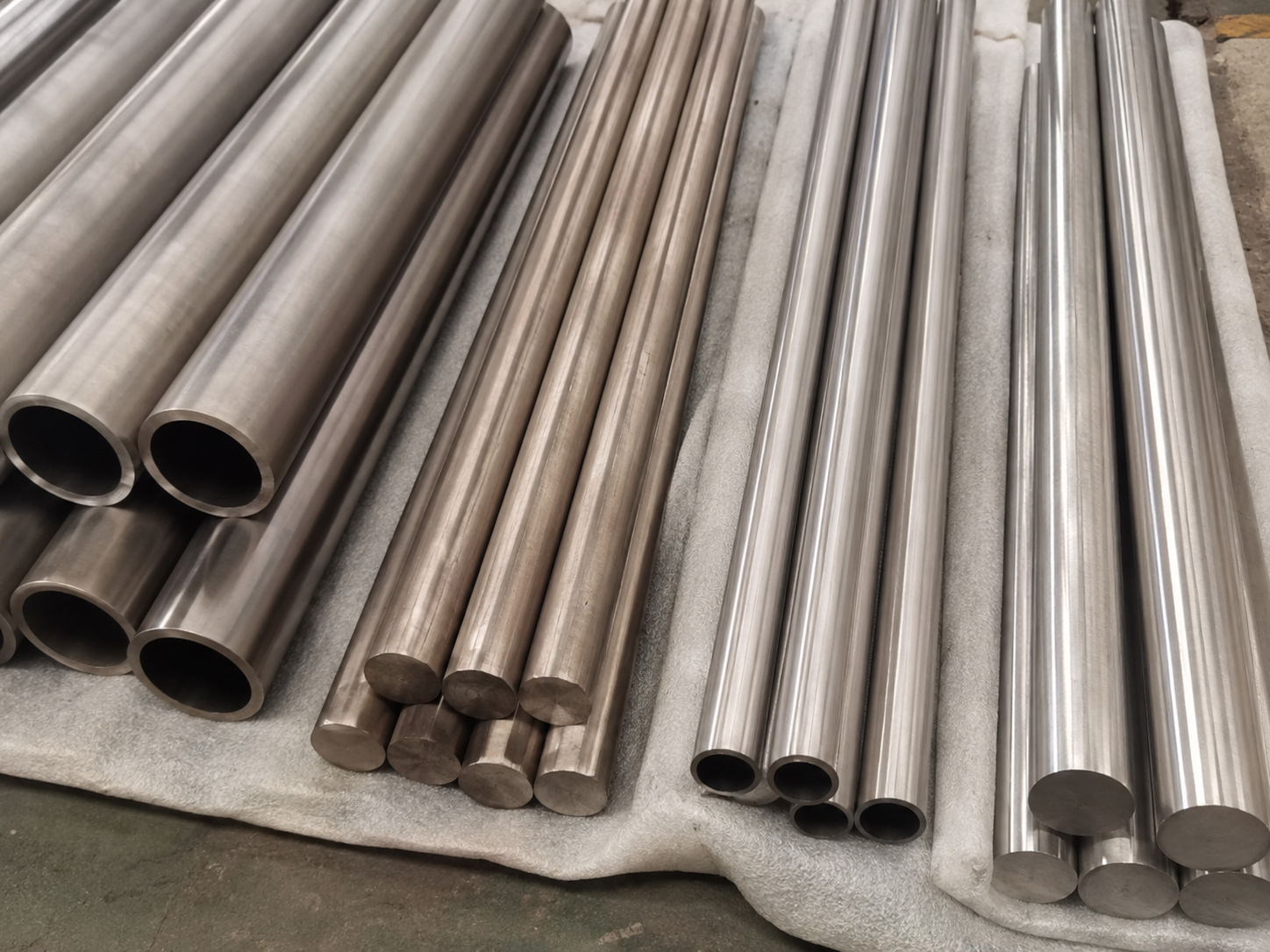
This distinction matters for buyers comparing stainless steel, titanium, nickel alloys, aluminum, copper, low-expansion alloys, or refractory metals.
A well-known high-performance alloy can still be a poor choice if it creates unnecessary mass, difficult machining, thermal mismatch, magnetic interference, galling, contamination, long lead time, or an unsupported qualification burden.
First Separate Vacuum Equipment from Spaceflight Hardware
Vacuum equipment and spaceflight hardware overlap, but they are not interchangeable design categories.
Ground-Based Vacuum Equipment
Ground-based vacuum equipment may include:
- Industrial vacuum chambers;
- High-vacuum and ultra-high-vacuum systems;
- Vacuum furnaces;
- Particle accelerators;
- Semiconductor process equipment;
- Thin-film deposition equipment;
- Electron microscopes;
- Space-simulation chambers;
- Cryogenic vacuum systems;
- Laboratory instruments.
For these systems, material selection may focus on:
- Gas load;
- Pump-down time;
- Outgassing;
- Permeation;
- Leak tightness;
- Weldability;
- Bake-out temperature;
- Surface cleaning;
- Magnetic behavior;
- Corrosion resistance;
- Thermal conductivity;
- Cost and maintainability.
Spaceflight Hardware
Spaceflight equipment may include:
- Satellite structures;
- Instrument mounts;
- Optical supports;
- Propulsion hardware;
- Pressure-system components;
- Deployment mechanisms;
- Antenna supports;
- Thermal-control hardware;
- Fasteners and inserts;
- Sensor housings;
- Space-exposed surfaces.
In addition to vacuum-related concerns, spaceflight hardware may need to survive:
- Launch acceleration;
- Random vibration;
- Acoustic loading;
- Mechanical shock;
- Repeated thermal cycling;
- Temperature gradients;
- Long mission duration;
- Atomic oxygen in some low-Earth-orbit exposures;
- Particle and ultraviolet radiation;
- Contamination limits;
- Fracture-control requirements;
- Limited or impossible maintenance.
A material that is appropriate for an Earth-based vacuum vessel is not automatically appropriate for flight hardware.
Similarly, a titanium alloy selected for a satellite bracket is not automatically the right material for an ultra-high-vacuum chamber.
Start with the Component Function
Before comparing alloy grades, define what the component actually does.
Questions to Answer First
| Question | Why It Matters |
|---|---|
| Is the component exposed directly to vacuum? | External supports and internal wetted surfaces may have different requirements |
| Is it ground equipment or flight hardware? | Launch and orbital environments add separate verification needs |
| Is the part structural, thermal, electrical, optical, sealing, or fluid-related? | Different functions create different material priorities |
| Will it be welded, brazed, bolted, machined, coated, or bonded? | Joining and processing can control the final result |
| What temperature range will it experience? | Strength, toughness, creep, CTE and surface behavior can change with temperature |
| Is repeated thermal cycling expected? | Thermal fatigue and interface stress may become important |
| Is mass a major constraint? | Titanium or aluminum may be attractive, while nickel alloys may create a mass penalty |
| Is dimensional stability critical? | CTE, thermal conductivity and stiffness may matter more than tensile strength |
| Is magnetic behavior important? | Electron beams, sensors and scientific instruments may require magnetic-property control |
| Will the part contact corrosive chemicals or process gases? | Corrosion compatibility can override general vacuum considerations |
| Is the component moving? | Galling, fretting, wear, lubrication and cold-welding risks may apply |
| What evidence is required for acceptance? | MTRs, NDT, cleaning, outgassing and qualification documents should be agreed early |
The material decision should begin with the dominant engineering risk, not with a preferred brand name or alloy family.
What Does “Vacuum Compatibility” Really Mean?
Vacuum compatibility is not one material property.
A material can have high strength and excellent corrosion resistance while still creating problems through surface contamination, trapped gas, unsuitable lubrication, porous coatings, blind holes, virtual leaks, or insufficient bake-out capability.
Main Vacuum-Compatibility Factors
| Factor | What Buyers Should Review |
|---|---|
| Vapor pressure | Materials or constituents should not evaporate significantly under the operating conditions |
| Outgassing | Adsorbed or absorbed species may be released under vacuum |
| Surface contamination | Water, oils, fingerprints, solvents and machining residues may dominate early gas load |
| Trapped volumes | Blind holes, threads, overlapping joints and porous structures can create virtual leaks |
| Permeation | Some gases can diffuse through seals or materials |
| Bake-out compatibility | The component must tolerate the required cleaning or bake-out temperature |
| Surface area and roughness | Larger or rougher surfaces can retain more contamination |
| Welding and joints | Porosity, incomplete penetration and trapped volumes can affect leak performance |
| Lubricants and polymers | Greases, adhesives, seals and cable materials often require separate screening |
| Cleaning process | Final vacuum performance depends on cleaning, handling, storage and assembly |
The NASA Outgassing Database provides material screening data generated using the ASTM E595 outgassing test.
The ECSS thermal-vacuum outgassing screening standard also defines a method for screening materials proposed for spacecraft and associated equipment.
These tests are valuable, but they should not be misunderstood.
An ASTM E595 result for a material specimen does not automatically prove that a complete assembly will meet its contamination or vacuum-performance target. The assembled hardware may include machining residues, lubricants, coatings, seals, adhesives, trapped volumes, connectors and packaging contamination that were not represented by the original specimen.
Are Titanium and Nickel Alloys Automatically Low-Outgassing?
No alloy family should be described as automatically “low-outgassing” without defining its condition and test basis.
Dense, clean metallic materials generally do not behave like volatile polymeric materials, but metal surfaces can still carry:
- Adsorbed water;
- Hydrocarbons;
- Cutting fluids;
- Polishing compounds;
- Cleaning residues;
- Oxide and reaction layers;
- Trapped contaminants;
- Lubricants;
- Coatings;
- Handling contamination.
The delivered bar, tube or plate is also not the same as the finished vacuum component.
The component may later be:
- Machined;
- Welded;
- Ground;
- Polished;
- Pickled;
- Passivated;
- Electropolished;
- Heat treated;
- Coated;
- Cleaned;
- Baked;
- Assembled with seals and lubricants.
Each step can change the final vacuum behavior.
For this reason, asking whether “Inconel 625 has lower outgassing than titanium” is usually less useful than asking:
- What is the actual component surface condition?
- What cleaning method will be used?
- What bake-out temperature is available?
- What vacuum level and gas-load target apply?
- Are adhesives, lubricants, coatings or seals present?
- Is an ASTM E595 screen, RGA test or system-level outgassing measurement required?
- Will the part be handled and packed under controlled-cleanliness conditions?
Material grade is only one part of the answer.
Vacuum Level Changes the Selection Priorities
A rough-vacuum system, high-vacuum instrument, UHV chamber and XHV research system do not impose identical material requirements.
The pressure range alone is not enough. Buyers should also define the permitted gas species, contamination sensitivity, pump-down target, bake-out strategy and operating temperature.
Vacuum-System Selection Matrix
| System Type | Important Selection Concerns | Material Families Often Evaluated |
|---|---|---|
| Industrial rough vacuum | Cost, strength, sealing, corrosion, maintainability | Carbon steel, stainless steel, aluminum, application-specific alloys |
| High-vacuum chamber | Cleanability, welding, surface condition, gas load | Austenitic stainless steel, aluminum, copper and selected alloys |
| Ultra-high-vacuum system | Hydrogen and water outgassing, bake-out, weld quality, magnetic behavior | Specially processed stainless steel, aluminum, copper and application-specific materials |
| Vacuum furnace | High-temperature strength, creep, vapor pressure, contamination | Nickel alloys, refractory metals, heat-resistant stainless alloys |
| Cryogenic vacuum system | Low-temperature toughness, CTE, thermal conductivity, sealing | Austenitic stainless steel, aluminum, titanium, copper |
| Corrosive process vacuum | Chemical compatibility, erosion, temperature, contamination | Nickel alloys, titanium alloys, stainless steel or lined systems |
| Space-simulation chamber | Vacuum, thermal cycling, contamination, chamber size and maintainability | Stainless steel, aluminum, copper and specialized internal fixtures |
Nickel alloys can be valuable in high-temperature or corrosive vacuum systems. They should not be presented as a default replacement for stainless steel in every UHV chamber.
Titanium can be useful where mass, corrosion resistance, strength-to-weight ratio or CTE is important. It may be less attractive where thermal conductivity, cost, galling resistance or straightforward fabrication is the dominant requirement.
Surface Condition and Cleanliness Can Matter More Than Alloy Name
Two components made from the same alloy may show different vacuum performance if they have different surface histories.
A freshly machined part containing cutting oil is not equivalent to a properly cleaned, handled and baked component. A polished surface is not automatically clean. An electropolished part can still be contaminated during packaging or assembly.
Surface and Cleanliness Requirements to Define
| Requirement | Procurement Question |
|---|---|
| Surface finish | Is a specific Ra value required, and on which surfaces? |
| Machining residue | Must cutting oil or coolant residues be removed? |
| Pickling or passivation | Is a defined chemical surface process required? |
| Electropolishing | Is it technically required or only assumed? |
| Degreasing | What approved solvents or methods may be used? |
| Ultrasonic cleaning | Is it appropriate for the component geometry and material? |
| Bake-out | What temperature, duration and vacuum level apply? |
| Rinse-water quality | Is high-purity water required? |
| Particle control | Is a particle-count or visual cleanliness criterion specified? |
| Molecular contamination | Is a non-volatile residue or organic-contamination limit required? |
| Handling | Are gloves, controlled tools or clean areas required? |
| Packaging | Are capped ends, double bags, inert gas or sealed clean packaging required? |
| Storage | How long may the material remain packed before use? |
The current ECSS cleanliness and contamination control framework treats cleanliness as a planned and documented activity involving hardware, facilities, monitoring and responsibilities.
This is more meaningful than simply asking a supplier whether a metal is “vacuum grade.”
Temperature Extremes Require More Than Melting Point
Melting point is rarely the main selection value for vacuum or space hardware.
Long before melting, a material may:
- Lose yield strength;
- Creep under sustained load;
- Oxidize during ground processing;
- Change microstructure;
- Lose preload;
- Distort;
- Become less ductile;
- Develop thermal-fatigue damage;
- Create interface stress through CTE mismatch.
At low temperature, buyers may need to consider:
- Ductility;
- Fracture toughness;
- Thermal contraction;
- Seal compatibility;
- Differential contraction;
- Electrical and thermal conductivity;
- Lubrication and moving interfaces.
Thermal Questions to Ask
- What are the minimum, average and maximum temperatures?
- How long does the part remain at each temperature?
- How quickly does the temperature change?
- How many thermal cycles are expected?
- Is the part restrained by another material?
- What CTE mismatch exists at the interface?
- Is high thermal conductivity desirable or undesirable?
- Will the part be baked before use?
- Does the material maintain the required strength and toughness over the full range?
- Is creep or stress relaxation relevant at the actual load and duration?
For spaceflight hardware, NASA environmental verification guidance provides one example of how thermal-vacuum conditions are evaluated together with vibration, acoustic and mechanical-shock environments.
A material should not be qualified for a space application solely because it survived a single high-temperature test.
Dimensional Stability Can Be More Important Than Strength
Many vacuum and space instruments depend on alignment.
Examples include:
- Optical benches;
- Telescope mounts;
- Detector supports;
- Sensor housings;
- Precision apertures;
- Electron-beam equipment;
- Antenna systems;
- Metrology frames;
- Cryogenic instruments.
For these components, the highest-strength alloy may not be the best choice.
The decision may be controlled by:
- Coefficient of thermal expansion;
- Thermal conductivity;
- Elastic modulus;
- Thermal gradients;
- Residual stress;
- Machining stability;
- Joint design;
- Coating behavior;
- Long-term dimensional drift.
Dimensional-Stability Trade-Offs
| Material Family | Potential Advantage | Possible Limitation |
|---|---|---|
| Aluminum alloys | Low mass, good thermal conductivity, mature manufacturing | Higher CTE than titanium or low-expansion alloys |
| Titanium alloys | Strength-to-weight, moderate CTE, corrosion resistance | Low thermal conductivity, machining cost, galling |
| Invar-type alloys | Very low CTE in defined temperature ranges | High density, magnetic behavior, corrosion and machining considerations |
| Kovar-type alloys | Useful for certain glass or ceramic sealing interfaces | Density, magnetic behavior and application-specific thermal range |
| Stainless steel | Stability, weldability, vacuum-system experience | Higher density and moderate thermal conductivity |
| Nickel alloys | High-temperature and corrosion capability | Density, cost and unnecessary complexity in benign environments |
| Carbon composites | Low mass and tailorable CTE | Anisotropy, outgassing, moisture history, joining and qualification |
For more detailed discussion of space structure selection, see the related guide on titanium alloy bars for satellite structural components.
Launch Loads Apply to Space Hardware, Not Every Vacuum Component
A ground-based vacuum chamber does not need to survive launch unless it is part of transported or flight hardware.
Spaceflight parts may experience:
- Static acceleration;
- Random vibration;
- Acoustic excitation;
- Mechanical shock;
- Fastener preload changes;
- Local resonance;
- Repeated mechanism operation.
These conditions may make fatigue, fracture toughness, surface defects, threads, joints and NDT more important than outgassing.
Mechanical Properties to Review
| Property or Condition | Why It Matters |
|---|---|
| Yield and ultimate strength | Basic static-load assessment |
| Elastic modulus | Stiffness, resonance and alignment |
| Fatigue behavior | Repeated vibration, launch and mechanism cycles |
| Fracture toughness | Crack tolerance and critical structural items |
| Creep or stress relaxation | Sustained load at elevated temperature |
| Surface condition | Possible crack-initiation locations |
| Residual stress | Machining stability and fatigue |
| Notch sensitivity | Threads, holes, fillets and local geometry |
| Galling and wear | Moving titanium or stainless interfaces |
| NDT capability | Detection of defined internal or surface discontinuities |
A room-temperature tensile result on an MTR does not establish the fatigue life or fracture behavior of the final part.
For a deeper explanation, see fatigue resistance in aerospace titanium and nickel alloys.
Moving Parts in Vacuum Create Additional Risks
Vacuum mechanisms can behave differently from atmospheric equipment.
Conventional oils and greases may be unsuitable because of volatility, migration or contamination. Clean metal-to-metal interfaces may experience high friction, adhesion, galling or cold-welding-related behavior.
Components such as:
- Bearings;
- Hinges;
- Valves;
- Bellows;
- Sliding guides;
- Deployment mechanisms;
- Robotic joints;
- Threaded fasteners;
may require separate consideration of:
- Contact material pairs;
- Coatings;
- Surface hardness;
- Surface roughness;
- Lubricant volatility;
- Wear debris;
- Fretting;
- Preload;
- Thermal cycling;
- Vacuum-life testing.
Selecting titanium only because it is light and strong can create a poor result if galling and interface behavior are ignored.
The alloy, coating, lubricant and mating material should be evaluated as one tribological system.
Radiation Is Mission-Dependent
Radiation should not be treated as a generic reason to select nickel or titanium alloys.
The relevant environment depends on:
- Orbit;
- Mission duration;
- Shielding;
- Particle type;
- Particle energy;
- Total dose;
- Temperature;
- Component function;
- Required property retention.
ECSS-Q-ST-70-06C defines testing procedures for electromagnetic radiation and charged-particle exposure of spacecraft materials, including coatings, windows, thermal-control materials and structural materials. ECSS particle and UV radiation testing
For many conventional metallic structural components, radiation may not be the first-order selection criterion. For specialized missions, however, radiation-induced property changes, activation, coatings or nearby sensitive instruments may require focused evaluation.
A supplier should not claim that a titanium or nickel alloy is “radiation hard” without defining the exposure and the property being measured.
Atomic Oxygen Is Not a Universal Space-Corrosion Condition
Atomic oxygen is particularly associated with exposed materials in low Earth orbit.
It is often a major concern for polymers, organic coatings and some surface systems. NASA’s atomic-oxygen durability handbook focuses specifically on long-duration LEO exposure and polymer erosion behavior. NASA atomic oxygen durability guidance
This does not mean atomic oxygen should be ignored for metals and coatings.
It means buyers should first ask:
- Is the component in LEO?
- Is it externally exposed?
- Is the base metal protected by a coating?
- Could oxide products create contamination?
- Will the surface optical, electrical or thermal properties change?
- Does the mission specify an atomic-oxygen fluence?
- Is coupon or material-level testing required?
A component inside a sealed enclosure or ground-based vacuum chamber should not be selected based on atomic-oxygen resistance.
Material Families: What They Can and Cannot Solve
No family is universally superior.
Austenitic Stainless Steels
Possible advantages:
- Common vacuum-system experience;
- Good weldability;
- Mechanical stability;
- Broad availability;
- Mature cleaning and fabrication processes;
- Some grades and conditions offer low magnetic permeability.
Important checks:
- Surface condition;
- Weld quality;
- Hydrogen and water outgassing;
- Bake-out route;
- Magnetic state after forming or welding;
- Chloride or process corrosion;
- Mass.
Aluminum Alloys
Possible advantages:
- Low density;
- High thermal conductivity;
- Space-structure experience;
- Machinability;
- Useful for some vacuum chambers and instruments.
Important checks:
- Strength at temperature;
- Surface oxide and treatment;
- Welding and leak tightness;
- CTE;
- Thread durability;
- coating and galvanic interfaces;
- outgassing from applied surface systems.
Titanium Alloys
Possible advantages:
- High strength-to-weight ratio;
- Corrosion resistance;
- Lower CTE than many aluminum alloys;
- Useful for fittings, brackets, interfaces and fasteners.
Important checks:
- Low thermal conductivity;
- Galling;
- Machining;
- residual stress;
- joining;
- product standard;
- surface contamination;
- cost and lead time.
The current ASTM B348/B348M titanium bar specification can define titanium bar and billet delivery requirements, but it does not prove spaceflight suitability.
Nickel Alloys
Possible advantages:
- High-temperature strength;
- Creep resistance in applicable grades;
- oxidation and corrosion resistance;
- aggressive-process compatibility.
Important checks:
- High density;
- cost;
- machinability;
- magnetic properties by grade and condition;
- thermal expansion;
- whether the high-performance capability is actually needed.
The ASTM B446 nickel alloy bar specification covers particular nickel alloy rod and bar products. It is not a universal standard for every Inconel, Hastelloy or nickel-alloy grade.
Copper and Copper Alloys
Possible advantages:
- High thermal and electrical conductivity;
- heat sinks;
- thermal straps;
- RF and electrical applications;
- selected vacuum seals.
Important checks:
- Low strength in some conditions;
- oxidation;
- mass;
- softness;
- joining;
- surface contamination.
Low-Expansion Alloys
Possible advantages:
- Dimensional stability;
- optical and precision interfaces;
- glass or ceramic sealing in selected applications.
Important checks:
- Density;
- magnetism;
- corrosion;
- limited thermal-conductivity performance;
- applicable temperature range;
- joining and machining.
Refractory Metals
Possible advantages:
- Very high-temperature capability;
- low vapor pressure in suitable conditions;
- special furnace or high-energy applications.
Important checks:
- Brittleness;
- oxidation during ground handling;
- machining;
- joining;
- density;
- availability;
- contamination risk;
- cost.
Scenario-Based Selection Matrix
| Application Scenario | Dominant Questions | Material Families to Evaluate |
|---|---|---|
| UHV chamber body | Weldability, bake-out, gas load, magnetic behavior, leak tightness | Austenitic stainless steel, aluminum, copper and specialized chamber materials |
| Cryogenic vacuum vessel | Low-temperature toughness, contraction, sealing, thermal paths | Austenitic stainless steel, aluminum, titanium, copper |
| High-temperature vacuum furnace fixture | Creep, vapor pressure, contamination, thermal cycling | Nickel alloys, refractory metals, heat-resistant stainless alloys |
| Corrosive vacuum process line | Exact chemistry, temperature, erosion, welds | Nickel alloys, titanium alloys, stainless steel or lined systems |
| Satellite structural bracket | Launch loads, fatigue, mass, CTE, interfaces | Titanium, aluminum, stainless steel or composite solutions |
| Optical instrument mount | Dimensional stability, heat flow, CTE, stiffness | Titanium, aluminum, Invar-type alloys, composites or hybrid structures |
| Vacuum mechanism | Galling, wear, lubrication, debris, thermal cycling | Material pair plus coating and lubricant system |
| Heat sink or thermal strap | Thermal conductivity, mass, attachment | Copper, aluminum and engineered thermal materials |
| Glass or ceramic feedthrough | CTE matching, sealing, electrical isolation | Kovar-type alloys and application-specific sealing systems |
| Space-exposed surface | Orbit, UV, particles, atomic oxygen, coating stability | Base alloy plus qualified coating or surface system |
This matrix is a starting point, not a material approval list.
What Does an MTR Prove?
A Material Test Report or Material Test Certificate usually provides batch-specific evidence such as:
- Material grade;
- Heat number;
- Chemical composition;
- Tensile properties;
- Heat-treatment condition;
- Product standard;
- Product form;
- Selected inspection results.
It does not normally prove:
- Low outgassing of the final assembly;
- UHV pump-down performance;
- Contamination compatibility;
- Orbital thermal-cycling life;
- Fatigue life of the finished part;
- Radiation resistance;
- Atomic-oxygen durability;
- coating compatibility;
- mission success.
BS EN 10204 inspection documents can define the type of inspection documentation supplied with metallic products.
For a detailed discussion of aerospace documentation, see technical documents aerospace material buyers should request.
What Additional Evidence May Be Required?
| Project Concern | Possible Evidence |
|---|---|
| Material identity | MTR/MTC, CoC, PMI, heat-number traceability |
| Dimensions | Dimensional inspection and straightness report |
| Surface condition | Roughness, visual, PT or surface-treatment report |
| Internal integrity | UT or another specified NDT report |
| Outgassing | ASTM E595 or project-specific screening |
| Dynamic gas release | RGA or system-level outgassing data |
| Cleaning | Cleaning procedure and completion record |
| Bake-out | Time-temperature-vacuum record |
| Thermal behavior | CTE, conductivity, thermal-cycle or thermal-vacuum data |
| Fatigue or fracture | Applicable fatigue, crack-growth or fracture-toughness data |
| High-temperature service | Creep, rupture, oxidation or microstructure data |
| Radiation | Mission-specific material test data |
| Atomic oxygen | Orbit-specific exposure or coating qualification |
| Laboratory reliability | ISO/IEC 17025 certificate and relevant scope |
| Critical process | Nadcap or customer-approved process evidence |
| Quality system | AS9100 or another contractually required QMS certificate |
Not every order needs all these reports.
The required package should be tied to the actual risk and acceptance plan.
How to Evaluate Supplier Claims
A credible supplier should distinguish between:
- General datasheet information;
- Actual batch test results;
- Internal manufacturing capability;
- Outsourced processes;
- Application-specific test evidence;
- Customer or third-party approvals.
Supplier Questions to Ask
- What exact alloy grade and UNS designation are being offered?
- What product specification and revision apply?
- What product form and delivery condition are included?
- Who is the original mill or material source?
- Can the heat number be traced to every delivered piece?
- Which processes are performed internally?
- Which processes are subcontracted?
- What heat treatment is applied?
- What surface condition will be delivered?
- What cleaning method can be provided?
- Is bake-out or vacuum firing available?
- Is electropolishing available, and under what specification?
- Is ASTM E595 testing actually required for this item?
- Can RGA or system-level outgassing data be supported when required?
- What NDT methods and acceptance levels are available?
- What laboratory performs additional testing?
- Does the laboratory’s ISO/IEC 17025 scope include the required method?
- Does the quality system cover the actual manufacturing site?
- Does any Nadcap accreditation cover the actual process used?
- How are substitutions and process changes controlled?
- How are nonconforming materials handled?
- How are cleaned components packed and stored?
- Can the same material route be repeated for future orders?
- What documents will be submitted before shipment?
AS9100 aerospace quality management supports quality-system control.
Nadcap critical process accreditation relates to defined aerospace critical processes.
ISO/IEC 17025 laboratory competence relates to the competence and consistent operation of testing and calibration laboratories.
None of these replaces the MTR, application review or project-specific verification.
Cost, Performance and Risk Should Be Scaled by Hardware Level
A better cost model does not divide projects into “cheap research” and “expensive missions.”
It separates hardware by intended use and consequence of nonconformance.
Risk-Based Procurement Matrix
| Hardware Level | Typical Priority | Possible Evidence Level |
|---|---|---|
| Material comparison coupon | Chemistry, basic properties, availability | Datasheet, MTR and basic identification |
| Non-flight machining prototype | Machinability, geometry, delivery | MTR, dimensions, heat traceability |
| Ground vacuum test hardware | Leak tightness, cleaning, repeatability | MTR, NDT, cleaning and dimensional records |
| Engineering-development hardware | Representative material and process | Full specification, traceability and selected test data |
| Qualification hardware | Design-representative material and manufacturing | Controlled source, process evidence and qualification records |
| Flight hardware | Contract, mission and customer compliance | Complete approved documentation and change control |
| Contamination-critical hardware | Molecular and particle control | Cleaning, packaging, outgassing and contamination evidence |
| Fracture- or mission-critical hardware | Defect control, fatigue, fracture and traceability | Defined NDT, material allowables, process and approval package |
The lowest material price is not necessarily the lowest project cost.
However, the most expensive alloy is not automatically the lowest-risk choice either.
An unnecessarily complex alloy can increase:
- Lead time;
- machining cost;
- inspection burden;
- qualification effort;
- source dependence;
- repair difficulty;
- mass;
- thermal mismatch.
The correct goal is adequate verified performance with controlled project risk, not maximum material specification.
Common Material-Selection Mistakes
1. Treating Vacuum and Space as the Same Application
A ground UHV system and a satellite structure may share some concerns but follow different verification paths.
2. Assuming Titanium or Inconel Is Automatically Low-Outgassing
Surface history, cleaning, coatings, lubricants and assembly geometry may be more important.
3. Selecting Nickel Alloy for UHV Only Because It Is “High Performance”
High temperature or corrosion resistance may add cost and mass without improving the dominant vacuum problem.
4. Selecting Titanium Only for Weight Reduction
Thermal conductivity, stiffness, machining, galling and interface compatibility still require review.
5. Using Melting Point as the Main Temperature Rating
Usable limits may be controlled by creep, strength loss, oxidation, thermal fatigue or dimensional stability.
6. Treating Radiation as a Universal Structural-Metal Requirement
Radiation exposure and relevant material effects depend on mission, shielding, dose and function.
7. Treating Atomic Oxygen as a Deep-Space Requirement
Atomic oxygen concerns are strongly related to particular LEO exposure conditions.
8. Ignoring Non-Metallic Materials
Seals, coatings, adhesives, lubricants, wiring and labels may dominate contamination or outgassing.
9. Requesting RGA Data from a Raw Bar Supplier Without Defining the Test
RGA results depend on the finished geometry, cleaning, bake-out, test system and acceptance method.
10. Assuming Electropolishing Is Always Required
It can be useful in selected applications but should be specified for a technical reason.
11. Treating an MTR as Application Approval
An MTR proves selected batch properties, not complete vacuum or space suitability.
12. Applying an Arbitrary Safety Margin
Design margins should follow the applicable engineering standard, model and project verification plan.
13. Ignoring Material Interfaces
Dissimilar metals, carbon composites, coatings, fasteners and seals can create galvanic, thermal and mechanical problems.
14. Reviewing Cleaning and Documentation After Production
Missing records or unsuitable processing may be difficult to correct after the component is completed.
Practical RFQ Checklist
Before ordering alloy materials for vacuum or space equipment, define:
- Is the equipment ground-based or flight hardware?
- Is the component directly exposed to vacuum?
- What vacuum level and gas-load target apply?
- Which gas species or contaminants are most critical?
- What is the permitted pump-down time?
- Is bake-out required?
- What bake-out temperature and duration apply?
- Are RGA or outgassing data required?
- Does ASTM E595 screening apply?
- Are adhesives, coatings, lubricants or seals included?
- What is the minimum and maximum operating temperature?
- How many thermal cycles are expected?
- Is dimensional stability critical?
- What CTE and thermal-conductivity requirements apply?
- Is mass a controlling factor?
- Is magnetic permeability limited?
- Is electrical conductivity or grounding important?
- What static and cyclic loads apply?
- Is fatigue or fracture control required?
- Is the part moving or sliding?
- Are galling, wear or cold-welding risks present?
- Will the material contact corrosive chemicals or process gases?
- Is the component externally exposed in space?
- Does atomic oxygen apply to the mission orbit?
- Is radiation testing required?
- What alloy grade and UNS designation are required?
- What exact ASTM, AMS, ECSS, NASA, OEM or customer specification applies?
- What specification revision applies?
- What heat-treatment condition is required?
- What product form, size and tolerance are required?
- What surface finish is required?
- What cleaning process is required?
- What packaging and storage controls are required?
- What NDT method and acceptance criteria apply?
- What MTR/MTC and CoC are required?
- Is EN 10204 3.1 or another document type required?
- Is heat-number traceability required after cutting?
- Are AS9100, Nadcap or approved-source requirements applicable?
- Is third-party testing required?
- Are substitutions or process changes prohibited without approval?
- Can the supplier repeat the same route for future orders?
- Have engineering, materials, contamination, thermal and quality teams approved the requirement?
Frequently Asked Questions
Is Inconel 625 the best material for ultra-high vacuum?
No. Alloy 625 may be valuable where corrosion resistance, strength or elevated temperature is important, but UHV systems often depend more on chamber design, weld quality, surface preparation, bake-out and gas-load control. Stainless steel, aluminum, copper or other materials may be more suitable depending on the system.
Is titanium automatically suitable for space equipment?
No. Titanium may provide useful strength-to-weight and thermal-expansion characteristics, but its thermal conductivity, galling behavior, machining, interfaces, cost and project specification must also be reviewed.
Does a metal need ASTM E595 testing?
ASTM E595 is a screening method for volatile content in vacuum. Whether it is required for a bare metal, coating, adhesive, seal, lubricant or complete material system depends on the project and contamination-control plan.
Does an MTR prove low outgassing?
No. An MTR normally provides chemistry, mechanical properties, heat treatment and traceability. It does not normally provide application-specific outgassing or RGA performance.
Is stainless steel suitable for UHV?
Austenitic stainless steels are widely evaluated for high- and ultra-high-vacuum systems, but the exact grade, welds, surface condition, cleaning, bake-out and magnetic requirements still matter.
Is radiation resistance always important for alloy selection?
No. It depends on orbit, dose, particle type, shielding, mission duration and the property that must be retained.
Does every space component require cleanroom packaging?
No. Packaging requirements should follow the contamination sensitivity and downstream processing. Raw stock that will undergo machining and cleaning may require different packaging from final cleaned flight hardware.
Should the most critical project always use the most expensive alloy?
No. Critical projects need the most appropriate verified material and process route. Over-specification can create new cost, mass, sourcing and qualification risks without improving the dominant failure mode.
Conclusion
Selecting alloy materials for vacuum and space equipment is not a search for one universal “best” metal.
Vacuum equipment requires control of gas load, outgassing, surface contamination, trapped volumes, bake-out, leak tightness and joining.
Spaceflight hardware may additionally require control of launch loads, thermal-vacuum cycling, dimensional stability, fracture risk, contamination, exposed surfaces and mission-specific environmental effects.
Stainless steel, aluminum, titanium, nickel alloys, copper, low-expansion alloys and refractory metals can all be appropriate in the right context. None is automatically vacuum-grade or space-grade simply because of its alloy family.
A strong material-selection process should:
- Separate ground vacuum requirements from spaceflight requirements;
- Define the component function and dominant failure mode;
- Evaluate the whole material-and-surface system;
- Match mechanical and thermal properties to the real environment;
- Control cleaning, coatings, seals, lubricants and trapped volumes;
- Specify the correct product standard and revision;
- Define NDT and acceptance criteria based on risk;
- Maintain continuous batch traceability;
- Distinguish QMS certificates from batch and test evidence;
- Scale documentation and testing to the hardware level;
- Obtain engineering and quality approval before production.
The goal is not to buy the most advanced alloy.
The goal is to select a material, processing route and evidence package that together satisfy the actual vacuum, thermal, mechanical, contamination and mission requirements.