
How to Select Titanium and Nickel Alloys for Surgical Instrument Components
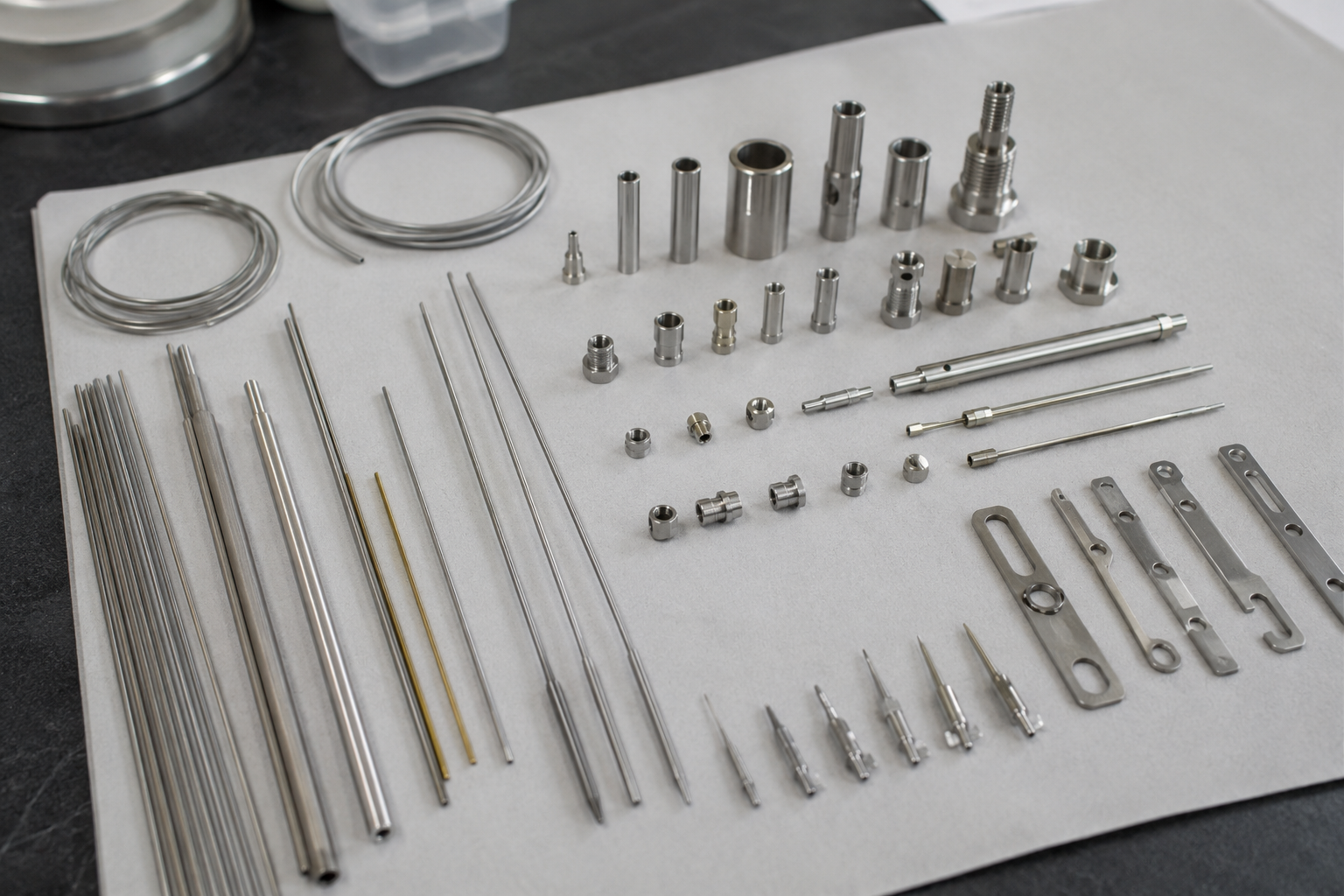
Titanium and nickel-containing alloys can provide valuable properties for surgical instrument components, but they are not automatically the best materials for every instrument.
Many conventional forceps, scissors, clamps, retractors, needle holders, and cutting instruments continue to use carefully selected stainless steels because these materials can provide an effective balance of hardness, rigidity, edge retention, wear resistance, corrosion resistance, manufacturability, and cost.
Titanium becomes attractive where reduced weight, corrosion resistance, specific strength, low magnetic response, or a particular surface characteristic is important.
Nickel-titanium shape memory alloy—commonly called Nitinol—is a much more specialized option. It may be selected where a component requires superelasticity, shape recovery, kink resistance, controlled flexibility, or deployment through a constrained path.
The correct material is therefore not the alloy with the strongest marketing description. It is the material, product form, condition, surface, manufacturing route, verification plan, and supplier evidence that match the exact function of the finished surgical instrument component.
The first question should not be:
“Should this surgical instrument use titanium or a nickel alloy?”
It should be:
“What must this specific component do, what does it contact, how will it be manufactured and reprocessed, and which failure mechanisms must the material help control?”
Start by Defining the Instrument Category
“Surgical instrument” is a broad term.
The material-selection pathway for a standard reusable clamp is not the same as the pathway for a flexible retrieval basket, steerable catheter component, implant-delivery system, or permanently implanted clip.
Standard Reusable Surgical Instruments
Examples may include:
- Forceps;
- clamps;
- scissors;
- retractors;
- needle holders;
- curettes;
- probes;
- handles;
- trays and instrument supports.
Important requirements may include:
- Rigidity;
- hardness;
- wear;
- edge retention;
- corrosion resistance;
- cleanability;
- repeated reprocessing;
- joint stability;
- dimensional accuracy;
- surface appearance.
ISO 7153-1 surgical-instrument materials identifies metals commonly used for standard surgical, orthopedic, and dental instruments.
ASTM F899 surgical-instrument steels defines chemical requirements for several classes of wrought stainless steel used in surgical-instrument manufacture.
These standards demonstrate that stainless steel remains an important baseline material.
Minimally Invasive Surgical Components
Examples may include:
- Flexible graspers;
- snares;
- retrieval baskets;
- steerable components;
- guidewire elements;
- flexible needles;
- endoscopic components;
- delivery-system components.
Important requirements may include:
- Flexibility;
- kink resistance;
- torque transmission;
- repeated strain recovery;
- small dimensions;
- radiopacity;
- surface smoothness;
- fatigue;
- corrosion;
- controlled transformation behavior.
Nitinol may be considered where its superelastic or shape-memory behavior provides a specific functional advantage.
Rigid Lightweight Components
Examples may include:
- Instrument handles;
- robotic links;
- housings;
- support arms;
- shafts;
- instrument bodies;
- non-cutting structural components.
Titanium may offer:
- Reduced mass;
- corrosion resistance;
- high strength relative to weight;
- low magnetic susceptibility;
- anodized identification options.
Its lower elastic modulus and wear behavior still need to be considered.
Patient-Contact and Implantable Components
A component may contact:
- Intact skin;
- mucous membranes;
- compromised tissue;
- blood;
- bone;
- internal tissue.
Contact may be:
- Transient;
- short-term;
- prolonged;
- permanent.
A permanently implanted component is not governed by the same evidence pathway as the reusable handle of a surgical instrument.
The applicable material and biological requirements should follow the final device’s intended use and regulatory classification.
Titanium and Nitinol Are Not Generic Upgrades
Titanium and Nitinol solve particular engineering problems.
They may also introduce new design and manufacturing constraints.
Possible Reasons to Select Titanium
- Weight reduction;
- corrosion resistance;
- reduced magnetic response;
- high specific strength;
- compatibility with selected imaging environments;
- controlled anodized color identification;
- particular patient-contact or implant requirements.
Possible Limitations of Titanium
- Lower stiffness than steel;
- limited cutting-edge retention in many conditions;
- galling and adhesive wear;
- difficult machining;
- higher material cost;
- challenging threaded or sliding interfaces;
- need for surface or wear treatments in some applications.
Possible Reasons to Select Nitinol
- Superelastic recovery;
- shape-memory function;
- resistance to permanent kinking;
- controlled flexibility;
- compact delivery;
- deployment into a preset form;
- strain accommodation in curved anatomy.
Possible Limitations of Nitinol
- Strong sensitivity to thermomechanical processing;
- transformation-temperature variation;
- fatigue sensitivity;
- inclusion and cleanliness concerns;
- surface-oxide control;
- nickel-release evaluation;
- difficult machining and joining;
- requirement for specialized testing.
The choice should therefore be based on functional need rather than material prestige.
Use “Nickel Alloy” Carefully
The phrase “nickel alloy” can refer to many unrelated material families:
- Nickel-titanium shape memory alloys;
- nickel-chromium alloys;
- nickel-chromium-molybdenum alloys;
- nickel-copper alloys;
- cobalt-nickel-chromium alloys;
- nickel-containing stainless steels.
These materials do not have the same:
- Mechanical behavior;
- corrosion mechanism;
- biological profile;
- standards;
- manufacturing route;
- medical-device history.
For flexible surgical instrument components, the most relevant nickel-containing material is often Nitinol.
A purchase order should state:
- Nickel-titanium or another exact alloy family;
- applicable material standard;
- nominal composition;
- product form;
- condition;
- functional requirements.
“Medical nickel alloy” is not a sufficient specification.
When Titanium May Be Appropriate
Lightweight Handles and Structures
Titanium can reduce the mass of a handheld or robotic instrument.
This may help where the design needs:
- Lower moving mass;
- reduced operator fatigue;
- improved balance;
- reduced load on a robotic joint;
- high corrosion resistance.
Weight reduction does not automatically improve control.
Instrument feel may also depend on:
- Center of gravity;
- mass distribution;
- handle geometry;
- rigidity;
- damping;
- grip design.
A lighter instrument that deflects excessively or feels unstable may not improve usability.
Rigid Shafts and Support Components
Titanium alloys can provide useful strength while reducing mass.
However, a thin titanium shaft may deflect more than a steel shaft with the same geometry because titanium generally has a lower elastic modulus.
The design should consider:
- Shaft diameter;
- unsupported length;
- load direction;
- connection stiffness;
- allowable deflection;
- buckling;
- torsion;
- fatigue.
Higher yield strength does not automatically provide higher rigidity.
Components Used Near Magnetic Fields
Titanium generally has low magnetic susceptibility compared with ferromagnetic steels.
This may be beneficial in selected equipment environments.
The complete instrument still requires evaluation because it may also contain:
- Fasteners;
- springs;
- cutting inserts;
- magnets;
- electronics;
- coatings;
- other metallic components.
A titanium body does not automatically make a complete device MR Safe or MR Conditional.
Identification by Anodized Color
Titanium surfaces can be anodized to produce interference colors without conventional paint.
Color may support:
- Instrument-size identification;
- procedure-set identification;
- component differentiation;
- visual coding.
The manufacturer should validate:
- Color consistency;
- cleaning resistance;
- sterilization resistance;
- visibility;
- marking durability;
- effect on surface condition.
An anodized color is not itself proof of biocompatibility or corrosion resistance.
When Titanium May Be a Poor Choice
Cutting Edges
Scissors, blades, punches, rongeurs, and other cutting components may require:
- High hardness;
- edge retention;
- wear resistance;
- resistance to deformation;
- repeatable sharpening.
Many hardened surgical stainless steels provide a more suitable balance for these functions.
Titanium may require:
- A hardened insert;
- a coating;
- a ceramic edge;
- another cutting material;
- a hybrid design.
The lightweight body and the cutting edge do not need to use the same material.
Sliding and Articulating Joints
Titanium against titanium can be vulnerable to:
- Galling;
- adhesive wear;
- frictional heating;
- material transfer;
- particle generation.
Possible controls include:
- Dissimilar material pairing;
- bushings;
- coatings;
- controlled clearance;
- approved lubrication;
- replaceable wear components.
Hardness alone does not predict joint durability.
Fine Gripping Teeth
Forceps jaws and gripping teeth may need:
- High local hardness;
- resistance to rounding;
- dimensional stability;
- repeatable grip.
A titanium instrument body may still need a separate jaw insert or surface treatment.
Titanium Material Standards Must Match the Application
General Titanium Bars and Billets
ASTM B348 titanium bar requirements cover several annealed titanium and titanium-alloy bar and billet grades.
This can be an appropriate purchasing basis for selected non-implant instrument parts when:
- The grade is suitable;
- the customer approves the standard;
- additional requirements are defined separately.
ASTM B348 compliance does not prove:
- Final-device biocompatibility;
- fatigue life;
- reprocessing durability;
- finished surface quality;
- regulatory compliance.
Implant-Specific Ti-6Al-4V ELI
ASTM F136 implant titanium covers wrought annealed Ti-6Al-4V ELI, UNS R56401, for surgical implant applications.
It includes product forms such as:
- Bar;
- forging bar;
- plate;
- sheet;
- strip;
- wire.
F136 should not be required automatically for an external instrument handle or non-implant support merely because the product is used in surgery.
It also does not guarantee:
- Finished-component fatigue;
- biological safety;
- cleaning;
- surface condition;
- device performance.
The material standard should follow the actual component and approved design basis.
What Makes Nitinol Different?
Nitinol is not selected mainly for conventional high tensile strength.
Its engineering value comes from a reversible solid-state phase transformation.
Depending on composition, processing, temperature, and stress, the material can display:
- Shape-memory behavior;
- superelastic behavior;
- distinctive loading and unloading plateaus;
- recoverable strain;
- temperature-dependent stiffness and force.
These properties are highly sensitive to manufacturing.
ASTM F2063 Is a Mill-Product Standard
The current ASTM medical-device standards catalogue lists ASTM F2063-26 Nitinol requirements.
F2063 addresses wrought nickel-titanium mill products for medical devices and surgical implants.
It should be understood as a starting-material specification.
The mill product is not necessarily supplied with the:
- Final device shape;
- final surface;
- final transformation temperature;
- final superelastic behavior;
- final fatigue performance.
Subsequent operations can change the result.
These operations may include:
- Cold drawing;
- straightening;
- machining;
- laser cutting;
- grinding;
- heat treatment;
- shape setting;
- welding;
- electropolishing;
- oxide removal.
Composition Alone Cannot Prove Nitinol Function
A small change in nickel-to-titanium ratio can significantly affect transformation temperature.
At the same time, ordinary chemical-analysis precision is not sufficient to describe the final functional behavior by composition alone.
The purchase and process specifications may need to define:
- Austenite finish temperature;
- martensite transformation range;
- measurement method;
- specimen form;
- heat-treatment condition;
- test temperature;
- loading condition.
Chemical conformity and functional conformity should be reviewed separately.
Transformation Temperature Must Be Method-Specific
ASTM F2082 transformation-temperature testing uses bend and free recovery to assess transformation behavior.
ASTM F2004 uses thermal analysis.
The results from these methods should not be treated as directly interchangeable.
The purchase order should specify:
- Test method;
- required transformation parameter;
- acceptable range;
- specimen source;
- test condition;
- sampling frequency.
A reported “Af = 25°C” is incomplete without the method and specimen condition.
Superelastic Tensile Properties Need Specialized Testing
ASTM F2516 superelastic tensile testing evaluates properties such as:
- Upper plateau strength;
- lower plateau strength;
- residual elongation;
- ultimate tensile strength;
- total elongation.
These data may be more functionally relevant than a conventional yield-strength result.
The test should still represent:
- The intended material form;
- processing condition;
- temperature;
- loading direction;
- device requirement.
A mill-level tensile result does not automatically establish final component behavior after shape setting and surface processing.
Heat Treatment and Shape Setting Are Functional Manufacturing Steps
Nitinol heat treatment may influence:
- Transformation temperature;
- superelastic plateau;
- residual strain;
- shape recovery;
- fatigue;
- oxide thickness;
- grain structure;
- precipitate condition.
The manufacturer should control:
- Furnace;
- temperature;
- time;
- fixture;
- atmosphere;
- cooling;
- batch identification;
- final verification.
A supplier should not change the heat-treatment route without customer review when the route forms part of the validated device process.
Nitinol Fatigue Is Strain- and Process-Sensitive
Flexible surgical components may experience repeated:
- Bending;
- torsion;
- straightening;
- deployment;
- retrieval;
- cyclic phase transformation.
Fatigue behavior may depend on:
- Alternating strain;
- mean strain;
- device geometry;
- inclusion population;
- surface defects;
- transformation temperature;
- test temperature;
- residual stress;
- heat treatment;
- electropolishing;
- loading mode.
A static tensile certificate does not establish the fatigue life of a Nitinol basket, grasper, guidewire, or flexible mechanism.
Testing should use a representative:
- Component geometry;
- processing condition;
- surface;
- loading path;
- temperature;
- expected use cycle.
Surface Condition Is Critical for Nitinol
Nitinol surfaces may contain:
- Thermal oxide;
- machining marks;
- drawing defects;
- grinding damage;
- laser-cut recast material;
- embedded particles;
- residual contamination.
Surface processing may include:
- Mechanical polishing;
- chemical treatment;
- pickling;
- electropolishing;
- passivation or oxide conditioning;
- cleaning.
The final surface can influence:
- Fatigue initiation;
- corrosion;
- friction;
- nickel release;
- cleanability;
- biological response.
A mill certificate normally does not prove the final device surface.
Nickel Release Requires a Risk-Based Evaluation
Nitinol contains a substantial amount of nickel.
The presence of a titanium-rich surface oxide can reduce exposure of the underlying alloy, but it does not justify a universal “no nickel release” claim.
Nickel release may depend on:
- Surface preparation;
- oxide thickness;
- defects;
- corrosion;
- wear;
- fretting;
- sterilization;
- contact duration;
- test medium;
- temperature.
The FDA Nitinol technical guidance provides device-specific considerations covering material, manufacturing, corrosion, fatigue, and biological risk.
Nickel sensitivity should not be dismissed merely because the material meets F2063.
“Biocompatible Material” Is Not the Same as a Biologically Safe Device
ISO 10993-1 biological evaluation requires biological evaluation within a risk-management process.
The assessment may consider:
- Contact type;
- contact duration;
- material composition;
- manufacturing process;
- surface condition;
- degradation products;
- particles;
- cleaning residues;
- sterilization;
- packaging.
A titanium or Nitinol MTR cannot prove the biological safety of the complete device.
For components with no direct or indirect patient contact, a different biological-risk rationale may apply.
Apply ISO 14971 to Material Selection
ISO 14971 risk management provides the framework for identifying hazards, evaluating risks, implementing controls, and reviewing production and post-production information.
Material-related hazards may include:
- Fracture;
- excessive deflection;
- cutting-edge loss;
- wear particles;
- galling;
- corrosion;
- nickel release;
- incorrect transformation temperature;
- loss of superelasticity;
- cleaning failure;
- unapproved source changes;
- mixed material heats.
The material standard is one control within the wider device risk-management system.
Reusable Instruments Require Reprocessing Validation
Reusable instruments may be exposed repeatedly to:
- Blood and tissue;
- saline;
- enzymatic cleaners;
- alkaline detergents;
- disinfectants;
- rinse water;
- brushing;
- ultrasonic cleaning;
- steam sterilization;
- drying;
- handling and storage.
Material compatibility should be evaluated against the complete reprocessing cycle.
Cleaning Often Governs More Than Sterilization
Sterilization does not remove all soil or residues.
Before sterilization, the device may need effective:
- Pre-cleaning;
- flushing;
- brushing;
- disassembly;
- washing;
- rinsing;
- drying.
Instrument design can create difficult-to-clean locations such as:
- Box locks;
- hinges;
- narrow lumens;
- coils;
- braided structures;
- threaded joints;
- blind holes;
- rough surfaces.
A corrosion-resistant alloy cannot compensate for a geometry that cannot be cleaned effectively.
ISO 17664-1 Defines Manufacturer Information Responsibilities
ISO 17664-1 reprocessing information addresses the information a medical-device manufacturer should provide for processing critical and semi-critical devices before use or reuse.
Relevant instructions may include:
- Preparation;
- cleaning;
- disinfection;
- drying;
- inspection;
- maintenance;
- packaging;
- sterilization;
- storage;
- maximum reuse limits where applicable.
The raw-material supplier does not establish these instructions for the finished device.
Steam Sterilization Must Be Validated
ISO 17665 moist-heat sterilization defines requirements for developing, validating, and routinely controlling moist-heat sterilization processes.
Repeated steam exposure may affect the complete instrument through:
- Surface discoloration;
- deposits from poor water quality;
- coating damage;
- lubricant loss;
- joint wear;
- marking degradation;
- trapped moisture;
- galvanic interaction.
The phrase “autoclave resistant” should be supported by a defined instrument, cycle, number of repetitions, and acceptance criteria.
Surface Finish Must Match Function
Different areas of one instrument may require different surfaces.
Tissue-Contacting Surface
Potential requirements may include:
- Smoothness;
- absence of burrs;
- cleanability;
- controlled residues;
- resistance to corrosion.
Gripping Surface
A jaw may require:
- Teeth;
- texture;
- high local hardness;
- repeatable geometry;
- resistance to rounding.
Sliding Surface
A joint may require:
- Low friction;
- wear control;
- stable clearance;
- lubricant compatibility.
Nitinol Flexible Surface
A flexible component may require:
- Removal of process defects;
- fatigue-resistant finish;
- controlled oxide;
- corrosion and nickel-release evaluation.
There is no universal surface roughness that is optimal for every surgical component.
Raw Material Surface and Final Device Surface Are Different
Bar, tube, or wire may be supplied as:
- Oxidized;
- descaled;
- pickled;
- ground;
- mechanically polished;
- electropolished.
Subsequent manufacturing may remove or alter the original surface.
The supplier’s surface certificate normally applies only to the delivered material condition.
The final device manufacturer remains responsible for controlling:
- Machining;
- laser processing;
- grinding;
- heat treatment;
- polishing;
- electropolishing;
- cleaning;
- marking;
- final inspection.
Corrosion Resistance Cannot Be Assumed from Alloy Name
Corrosion may be influenced by:
- Alloy condition;
- surface finish;
- heat tint;
- crevices;
- dissimilar materials;
- cleaning residues;
- chloride exposure;
- sterilization deposits;
- mechanical wear.
For reusable stainless-steel instruments, ASTM F1089 corrosion testing provides relevant test procedures.
For small implantable metallic devices, ASTM F2129 evaluates corrosion susceptibility in final form and finish.
The test method should be selected for the actual device and risk—not merely because it is available.
Mechanical Requirements Must Be Component-Specific
Rigidity
Rigid instruments may require minimal deflection.
Important variables include:
- Elastic modulus;
- section geometry;
- span;
- connection design;
- load;
- allowable displacement.
Strength
Strength may control:
- Permanent bending;
- jaw deformation;
- shaft buckling;
- fastener failure;
- actuation loads.
Fatigue
Fatigue may control:
- Flexible tools;
- repeated joints;
- guidewires;
- Nitinol components;
- robotic instrument links.
Wear
Wear may control:
- Hinges;
- box locks;
- gears;
- jaws;
- cutting interfaces;
- threaded parts.
One material property should not be used as a substitute for the complete functional test.
Build a Function-Based Material Comparison
| Component Function | Possible Material Direction | Key Limitations to Check |
|---|---|---|
| Cutting edge | Hardenable surgical stainless steel, carbide, ceramic, hybrid construction | Edge retention, brittleness, corrosion, sharpening |
| Forceps or clamp body | Stainless steel or titanium | Rigidity, jaw alignment, wear, weight |
| Lightweight handle | Titanium or polymer–metal hybrid | Balance, cleaning, connection strength |
| Rigid shaft | Stainless steel or titanium alloy | Deflection, torsion, buckling, weight |
| Flexible retrieval component | Nitinol | Transformation behavior, fatigue, surface, nickel release |
| Guidewire or steerable element | Nitinol or application-specific wire system | Torque, kink, coating, fatigue, joining |
| Articulating joint | Hardened stainless, mixed-material pair, coated titanium | Galling, debris, lubrication, sterilization |
| Implantable clip or component | Approved implant material | Device-level mechanical, corrosion and biological evidence |
| Non-patient-contact internal support | Titanium, stainless steel, aluminum or polymer | Cost, stiffness, cleaning and assembly |
This is a screening framework, not an application-approval table.
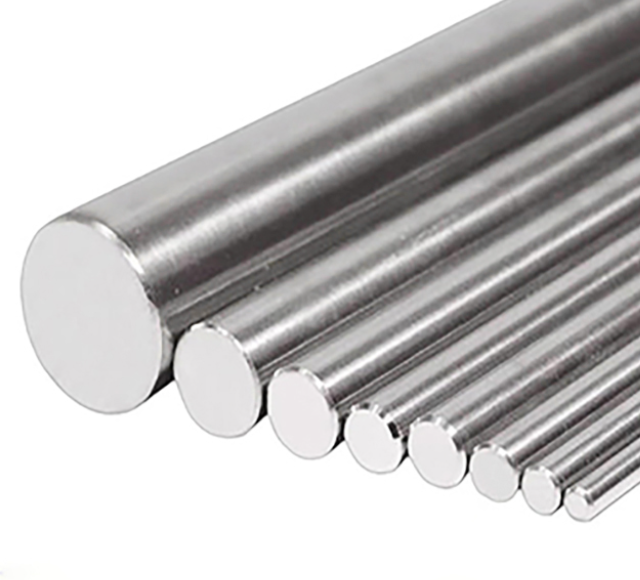
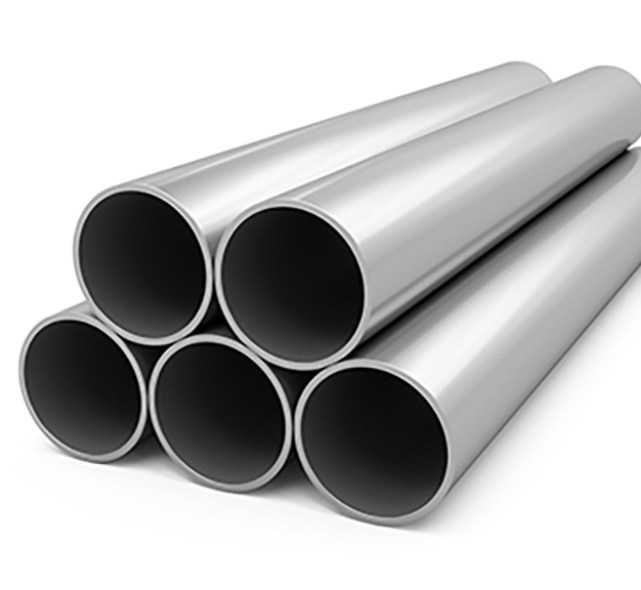
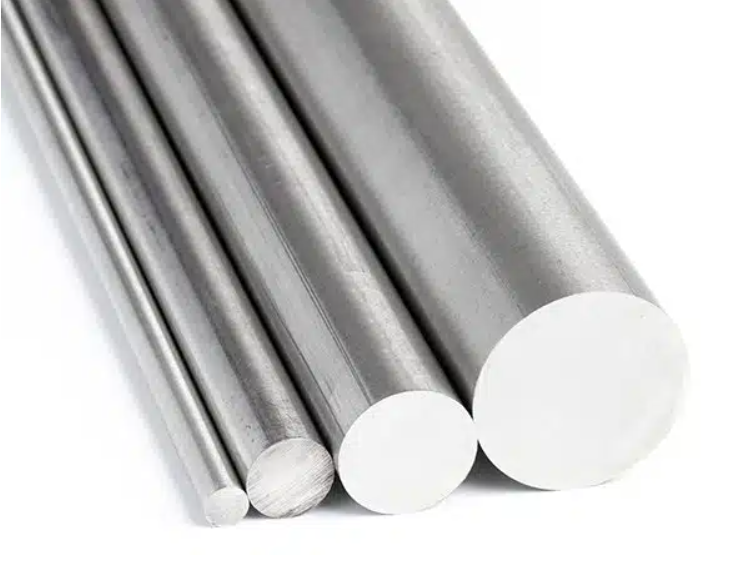
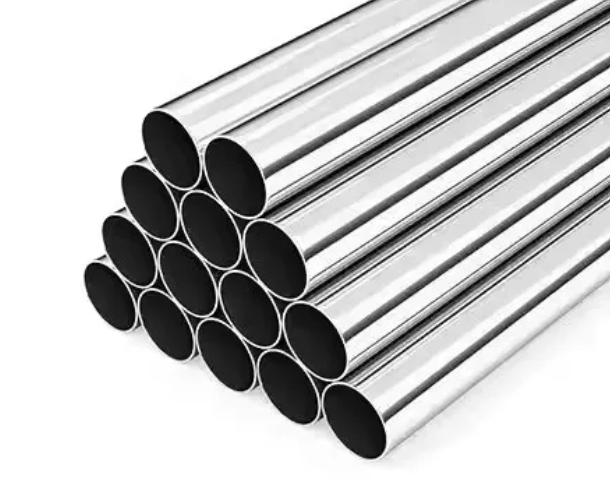
Product Form Must Be Defined
The required starting material may be:
- Bar;
- rod;
- wire;
- seamless tube;
- welded and drawn tube;
- plate;
- strip;
- forging;
- near-net component.
Product form affects:
- Material standard;
- manufacturing route;
- dimensions;
- surface;
- inspection;
- functional condition.
For Nitinol, a general mill-product standard should not automatically be applied to a highly cold-worked finished tube or wire without checking the applicable product specification.
What Should Be Included in the Purchase Specification?
Material Identification
- Exact alloy;
- UNS designation where applicable;
- product standard;
- standard revision;
- product form;
- material condition;
- titanium or nickel-titanium designation.
Dimensions
- Diameter;
- wall thickness;
- width or thickness;
- length;
- tolerance;
- straightness;
- ovality;
- surface condition;
- machining allowance.
Titanium Requirements
- Grade;
- heat-treatment condition;
- chemistry;
- mechanical properties;
- microstructure where required;
- surface;
- NDT where justified.
Nitinol Requirements
- Nominal nickel range;
- product form;
- thermomechanical condition;
- transformation-temperature range;
- test method;
- superelastic tensile properties;
- surface condition;
- microcleanliness where required;
- fatigue-related requirements where justified.
Inspection
- Visual inspection;
- dimensions;
- surface;
- PMI where justified;
- UT or ET where required;
- mechanical testing;
- transformation testing;
- third-party testing;
- acceptance criteria.
Traceability and Documents
- Original heat number;
- original mill MTR;
- Certificate of Conformance;
- EN 10204 document type where applicable;
- test reports;
- heat-treatment records;
- cut-piece traceability;
- approved deviations;
- packaging list linked to material lots.
What an MTR Can Prove
An MTR may provide:
- Material grade;
- heat number;
- chemical composition;
- mechanical properties;
- product standard;
- delivery condition;
- selected inspection results.
For Nitinol, it may also include certain material-level transformation or mechanical data when required.
It does not normally prove:
- Final instrument fatigue;
- final shape recovery;
- finished transformation temperature;
- final surface;
- nickel-release performance;
- biological safety;
- cleaning validation;
- sterilization durability;
- finished-device regulatory compliance.
The MTR should be reviewed against the exact purchase order.
ISO 13485 Is Not a Material Certificate
ISO 13485 quality management defines quality-management system requirements for organizations involved in the medical-device lifecycle and supply chain.
Whether a raw-material supplier must hold ISO 13485 depends on:
- Supplier role;
- customer supplier controls;
- material criticality;
- outsourced processes;
- applicable regulatory strategy.
A certificate should be checked for:
- Legal entity;
- location;
- scope;
- manufacturing or distribution activity;
- validity;
- certification body.
The certificate does not prove that a specific titanium or Nitinol heat conforms to the purchase order.
ISO/IEC 17025 Scope Must Match the Test
ISO/IEC 17025 laboratory competence addresses laboratory competence, impartiality, and consistent operation.
For important tests, verify:
- Laboratory identity;
- test location;
- accredited scope;
- exact method;
- certificate validity;
- sample traceability;
- report authorization.
A laboratory accredited for chemical analysis may not be accredited for:
- Nitinol transformation testing;
- fatigue;
- corrosion;
- nickel release;
- metallography;
- NDT.
Internal and external laboratories can both be acceptable when their competence and controls meet the project requirements.
EN 10204 Defines Inspection Documents
BS EN 10204 inspection documents defines types of inspection documents for metallic products.
An EN 10204 3.1 document may support batch-specific material documentation.
It does not establish:
- Final-device performance;
- biological safety;
- reusable life;
- FDA or EU compliance;
- Nitinol fatigue life;
- sterilization validation.
The required document type should be specified only when relevant to the purchasing system.
Traceability Must Continue Through Processing
A full bar, tube, or wire lot may be divided into smaller pieces.
Traceability controls may need to cover:
- Original melt;
- conversion process;
- heat treatment;
- cutting;
- straightening;
- surface processing;
- packaging;
- delivery.
The medical-device manufacturer may then extend the chain through:
- Incoming inspection;
- component lot;
- machining;
- shape setting;
- polishing;
- cleaning;
- final assembly;
- sterilization;
- finished-device lot.
Raw-material traceability is the first part of the evidence chain.
Source and Process Changes Require Control
Potentially significant changes may include:
- Original mill;
- melt source;
- material standard;
- product form;
- thermomechanical condition;
- heat-treatment facility;
- Nitinol transformation target;
- surface-finishing process;
- testing laboratory;
- NDT method;
- packaging.
A change that still meets broad chemistry limits may nevertheless affect:
- Machining;
- transformation behavior;
- fatigue;
- surface;
- validated device performance.
The supplier agreement should define notification and approval requirements.
Supplier Evaluation Questions
Scope and Material
- Which exact titanium or nickel-titanium alloy is offered?
- What product standard and revision apply?
- What product form is supplied?
- Is the material intended for a standard instrument, special device, or implant?
- Which requirements are standard and which are customer-specific?
Manufacturing Source
- Who is the original melt producer?
- Where is the material converted into bar, tube, or wire?
- Where is heat treatment performed?
- Which processes are subcontracted?
- Can the same manufacturing route be repeated?
- How are source changes controlled?
Nitinol-Specific Control
- What is the thermomechanical condition?
- What transformation-temperature range is supplied?
- Which test method is used?
- Are DSC and bend-free-recovery data distinguished?
- Are plateau properties available?
- How is shape-setting consistency controlled?
- Is microcleanliness evaluated?
- What surface condition is delivered?
- Is nickel-release or corrosion evidence available for the intended surface?
Titanium-Specific Control
- What grade and UNS designation apply?
- What heat-treatment condition is supplied?
- Is microstructure controlled?
- What mechanical properties are actual test results?
- What surface and dimensional tolerances are available?
Testing and Documentation
- What is included in the standard MTR?
- Which tests require a separate order?
- Which laboratory performs each test?
- Are methods within the laboratory’s accredited scope?
- How are reports linked to the supplied material?
Traceability and Quality
- How are cut pieces identified?
- How are mixed heats prevented?
- How long are records retained?
- What QMS certificate covers the actual site?
- How are nonconformities managed?
- How are customer-approved deviations controlled?
A Practical Selection Workflow
Step 1: Define the Instrument
Identify whether the component belongs to:
- Standard reusable instrument;
- cutting tool;
- rigid MIS device;
- flexible MIS device;
- delivery system;
- robotic instrument;
- implantable component;
- non-contact structure.
Step 2: Define the Function
Determine whether the component requires:
- Rigidity;
- edge retention;
- grip;
- flexibility;
- shape recovery;
- torque transmission;
- low mass;
- wear resistance;
- low magnetic response.
Step 3: Define Contact and Reuse
Confirm:
- Patient-contact type;
- contact duration;
- reusable or single-use status;
- cleaning process;
- sterilization process;
- expected number of cycles.
Step 4: Compare Material Systems
Compare:
- Surgical stainless steel;
- titanium;
- Ti-6Al-4V;
- Nitinol;
- cobalt alloy;
- carbide;
- ceramic;
- polymers;
- hybrid constructions.
Step 5: Define the Product Form
Select:
- Bar;
- tube;
- wire;
- strip;
- forging;
- finished component.
Step 6: Identify the Damage Mechanisms
Possible risks include:
- Plastic deformation;
- excessive deflection;
- fracture;
- fatigue;
- galling;
- fretting;
- edge wear;
- corrosion;
- nickel release;
- loss of transformation behavior;
- coating failure.
Step 7: Establish Material Requirements
Define:
- Standard;
- condition;
- chemistry;
- mechanical properties;
- transformation behavior;
- surface;
- dimensions;
- inspection;
- documentation.
Step 8: Validate Manufacturing
Control:
- Machining;
- forming;
- laser cutting;
- heat treatment;
- shape setting;
- joining;
- polishing;
- cleaning;
- marking.
Step 9: Validate the Finished Instrument
Depending on the device, evaluate:
- Functional load;
- fatigue;
- deployment;
- recovery;
- joint wear;
- cutting performance;
- corrosion;
- cleaning;
- sterilization;
- biological safety.
Step 10: Maintain Supply-Chain Control
Confirm:
- Approved source;
- heat traceability;
- process stability;
- laboratory scope;
- change notification;
- incoming inspection;
- final documentation.
Common Mistakes in Surgical Instrument Material Selection
1. Assuming Every Instrument Benefits from Titanium
Stainless steel may provide better rigidity, hardness, wear, or cost for many functions.
2. Calling Every Nickel-Containing Material a Nickel Alloy
Nitinol, nickel superalloys, stainless steel, and cobalt-nickel alloys require different evaluations.
3. Applying Implant Standards to Non-Implant Instruments
ASTM F136 should not be required automatically for an external handle or reusable tool.
4. Selecting Titanium for a Cutting Edge Without Wear Review
Titanium may not provide the required edge retention without a hybrid or treated design.
5. Ignoring Titanium’s Lower Modulus
A strong titanium component can still deflect more than a steel component of the same geometry.
6. Assuming Titanium Is Wear Proof
Galling can occur at threads, joints, jaws, and sliding surfaces.
7. Treating F2063 as Final Nitinol Device Approval
It defines starting-material requirements, not the complete finished device.
8. Using Chemistry Alone to Approve Nitinol
Transformation behavior requires functional thermal or mechanical testing.
9. Comparing Transformation Temperatures from Different Methods
DSC and bend-free-recovery results should not be treated as identical.
10. Using Conventional Tensile Data to Describe Nitinol
Plateau strength, recovery, residual strain, and test temperature may be more relevant.
11. Ignoring Shape-Setting and Heat-Treatment Changes
Nitinol properties can change after the mill product is delivered.
12. Treating the Raw Surface as the Final Device Surface
Machining, laser cutting, polishing, and heat treatment may replace or alter it.
13. Claiming Nitinol Cannot Release Nickel
Nickel release depends on the finished surface and exposure conditions.
14. Treating Autoclave Resistance as a Material Datasheet Property
The complete device and repeated processing cycle must be validated.
15. Treating ISO 13485 as a Batch Certificate
It is a quality-management system standard.
16. Demanding an In-House Laboratory Without Reviewing Competence
Qualified external laboratories may be suitable when correctly controlled.
17. Requesting Every Possible Test
Testing should address identified risks and acceptance needs.
18. Qualifying a Second Source Without Equivalency Review
A second source may introduce new processing, surface, or functional variation.
19. Losing Traceability After Cutting
Every piece should remain linked to its original lot where required.
20. Allowing Unapproved Source or Process Changes
Changes may affect a validated medical-device supply chain.
RFQ Checklist for Titanium and Nitinol Components
Before requesting a quotation, define:
- Instrument type;
- component name;
- standard or special instrument;
- implantable or non-implantable;
- patient-contact category;
- contact duration;
- reusable or single-use;
- cleaning process;
- sterilization process;
- expected processing cycles;
- functional requirement;
- required rigidity;
- allowable deflection;
- static load;
- cyclic load;
- bending strain;
- torsion;
- wear or galling concern;
- cutting requirement;
- shape-memory requirement;
- superelastic requirement;
- recovery requirement;
- transformation-temperature range;
- transformation test method;
- test temperature;
- proposed material;
- alloy designation;
- UNS designation where applicable;
- material standard;
- standard revision;
- product form;
- delivery condition;
- thermomechanical condition;
- heat-treatment condition;
- bar diameter;
- tube outside diameter;
- tube wall thickness;
- wire diameter;
- strip thickness;
- length;
- dimensional tolerance;
- straightness;
- ovality;
- surface condition;
- machining allowance;
- chemistry;
- mechanical properties;
- plateau properties;
- residual elongation;
- transformation-temperature data;
- microcleanliness;
- microstructure;
- surface-inspection requirement;
- UT or ET requirement;
- corrosion test;
- nickel-release test;
- fatigue requirement;
- third-party inspection;
- original mill MTR;
- Certificate of Conformance;
- EN 10204 document type;
- heat or lot marking;
- cut-piece traceability;
- clean-packaging requirement;
- ISO/IEC 17025 requirement;
- supplier QMS requirement;
- source-change notification;
- process-change notification;
- deviation approval;
- record-retention period.
Frequently Asked Questions
Are titanium and Nitinol the best materials for all surgical instruments?
No. Stainless steel remains more suitable for many cutting, gripping, wear, and rigid structural applications. Titanium and Nitinol should be selected where their specific properties provide a verified advantage.
What is the main difference between titanium and Nitinol?
Titanium is generally selected for properties such as corrosion resistance, low density, specific strength, and low magnetic response. Nitinol is selected mainly for superelasticity, shape memory, recoverable strain, and flexibility.
Can ASTM F136 titanium be used for surgical instruments?
It can be used when technically and contractually appropriate, but F136 is an implant-material standard. Many non-implant instruments do not require it.
Is Nitinol simply a corrosion-resistant nickel alloy?
No. It is a nickel-titanium shape memory alloy whose function depends strongly on phase transformation and thermomechanical processing.
Does ASTM F2063 prove that a Nitinol component is superelastic?
It establishes requirements for the mill product. Final superelastic behavior may change through cold work, heat treatment, shape setting, machining, and surface processing.
Why is transformation temperature important?
It influences which phase is present and how the component behaves at manufacturing, room, storage, or body temperature.
Can transformation temperature be determined from chemistry?
Not with sufficient precision for functional approval. A defined thermal or thermomechanical test is normally needed.
Does a titanium or Nitinol MTR prove biocompatibility?
No. Biological safety should be evaluated for the final finished device and its intended patient contact.
Is Nitinol safe for people with nickel sensitivity?
This cannot be answered from alloy name alone. The device manufacturer should evaluate nickel release, surface, contact duration, toxicology, and the finished device’s biological risk.
Can titanium instruments withstand unlimited autoclave cycles?
No universal cycle limit can be established from the alloy grade alone. The complete instrument and validated reprocessing procedure must be evaluated.
Is ISO 13485 mandatory for every raw-material supplier?
Not universally. It may be required by the medical-device manufacturer’s supplier controls. The supplier’s role, facility, activity, and certificate scope should be reviewed.
Can a material supplier approve the final surgical-instrument application?
The supplier can provide material data, manufacturing information, inspection reports, and traceability. Final approval belongs to the medical-device manufacturer and its engineering, quality, biological-safety, and regulatory functions.
Conclusion
Selecting titanium and nickel alloy materials for surgical instrument components requires more than comparing corrosion resistance, strength, weight, or supplier certificates.
A defensible material decision must connect:
- Instrument category;
- component function;
- patient contact;
- reuse and sterilization;
- rigidity;
- cutting or gripping performance;
- wear and galling;
- fatigue;
- flexibility;
- shape recovery;
- transformation temperature;
- exact alloy and product form;
- thermomechanical processing;
- surface condition;
- corrosion and nickel release;
- biological-risk evaluation;
- inspection;
- traceability;
- supplier quality controls;
- final-device validation.
Titanium can be valuable for lightweight, corrosion-resistant, low-magnetic, and selected structural components.
Nitinol can provide exceptional functionality where a component requires superelasticity, shape memory, flexibility, or kink resistance.
Neither material is universally superior to stainless steel or other established surgical materials.
The goal is not to replace conventional materials with the most advanced alloy available.
The goal is to establish a controlled material and manufacturing pathway that gives the finished surgical instrument the required function, durability, cleanability, biological safety, and documented conformity.