
Using the wrong heat exchanger tube material is not just a purchasing mistake. It can increase the risk of corrosion, leakage, fouling, cracking, reduced heat transfer, unplanned maintenance, safety concerns, and early tube replacement.
In many projects, the tube material may look acceptable on a datasheet, but still be unsuitable for the actual operating environment. The problem is usually not that the material is “bad.” The problem is that the material does not match the process medium, temperature, pressure, flow condition, cleaning method, corrosion risk, mechanical stress, or expected service life.
Quick Answer:
A heat exchanger tube material is “wrong” when its corrosion resistance, mechanical strength, thermal behavior, surface condition, fabrication suitability, inspection level, or documentation does not match the real service environment. A mismatched material may lead to premature corrosion, pitting, crevice corrosion, stress corrosion cracking, erosion-corrosion, fatigue cracking, fouling-related efficiency loss, leakage, downtime, and higher life-cycle cost.
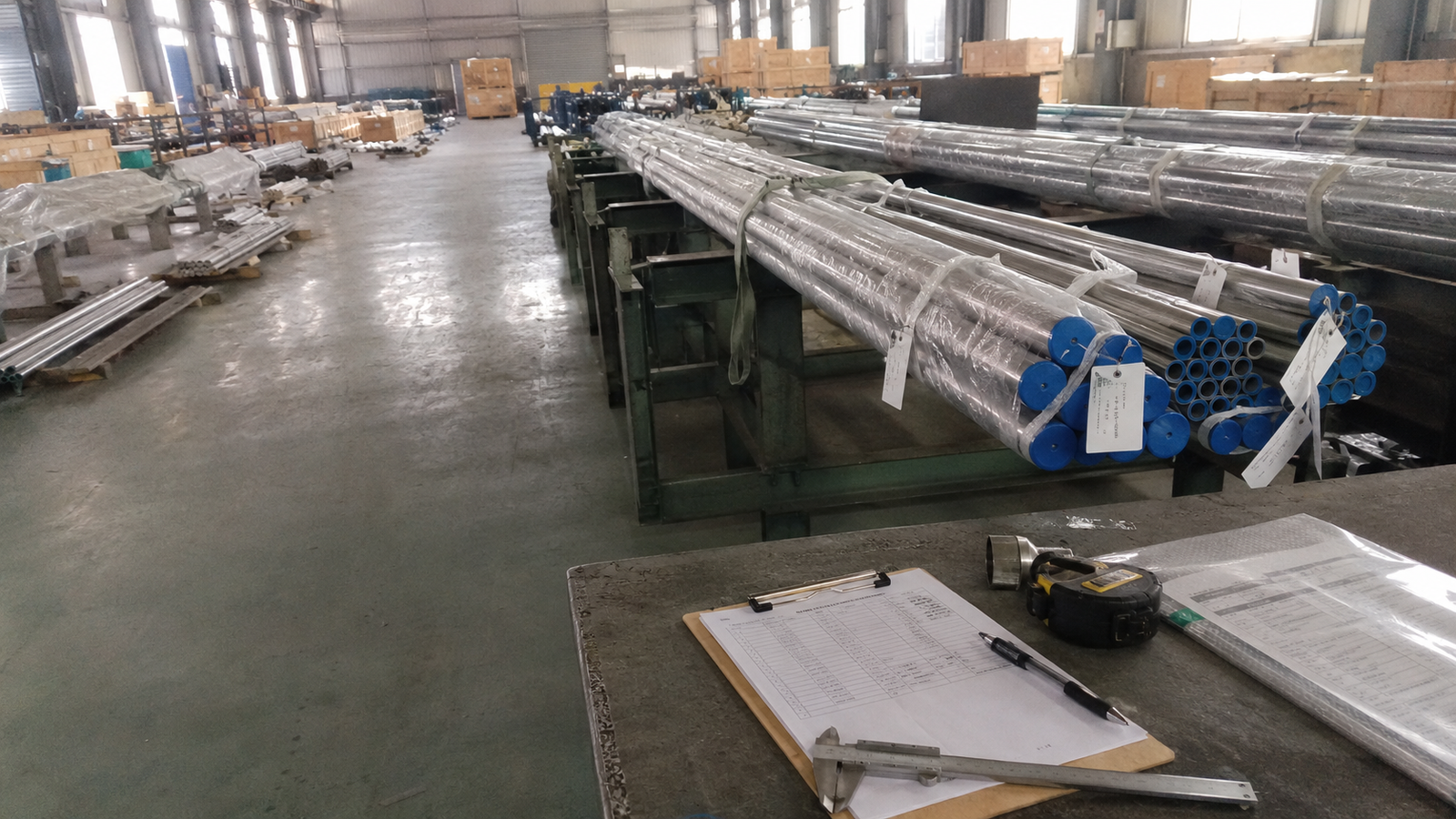
AMPP explains that material selection is influenced by corrosion resistance in the environment, availability of design and test data, mechanical properties, cost, maintainability, compatibility with other system components, life expectancy, and reliability: AMPP Materials Selection and Design for Corrosion Control.
The UK Health and Safety Executive lists heat exchanger risks that include corrosion, maintenance faults, overheating, overpressurisation, structural failure, and vibration: HSE Heat Exchangers.
This is why heat exchanger tube material selection should be based on real application data, not only price, grade name, or a general datasheet.
What Makes a Material “Wrong” for a Heat Exchanger Tube?
A material becomes “wrong” when it does not match the heat exchanger’s actual operating conditions.
For example, a stainless steel tube may be suitable in a controlled, moderate environment, but may face pitting, crevice corrosion, or stress corrosion cracking in hot chloride-containing service. A titanium tube may be excellent in many seawater applications, but it may still need review in reducing acids, crevice-prone designs, high-temperature conditions, or unusual cleaning chemistry. A nickel alloy may provide strong corrosion resistance in one chemical environment, but may be unnecessary or unsuitable in another.
The right heat exchanger tube material must match the tube-side medium, shell-side medium, temperature, pressure, flow rate, corrosion mechanism, fouling risk, cleaning method, fabrication process, standard, and expected service life.
The NIST corrosion performance database shows that corrosion observations are tied to particular environments, including concentration and temperature: NIST Corrosion Performance Databases.
This means a corrosion table or general claim should not be used alone. Buyers should confirm the actual operating environment.
Key Factors That Determine Material Suitability
| Factor | Why It Matters |
|---|---|
| Tube-Side Medium | The fluid inside the tube may cause corrosion, fouling, erosion, or chemical attack |
| Shell-Side Medium | The external medium may be just as important as the internal medium |
| Temperature Range | Higher temperature can accelerate corrosion and reduce mechanical strength |
| Pressure | Internal and external pressure affect wall thickness and mechanical design |
| Flow Rate | High velocity, turbulence, or solids may increase erosion-corrosion risk |
| Chloride Content | Chlorides can increase pitting, crevice corrosion, and SCC risk in susceptible materials |
| pH and Chemical Concentration | Acidic, alkaline, oxidizing, or reducing conditions change alloy behavior |
| Cleaning Chemicals | Cleaning media may be more aggressive than normal process fluid |
| Fouling and Deposits | Deposits can reduce heat transfer and create localized corrosion zones |
| Fabrication Method | Welding, bending, expansion, and surface treatment affect final performance |
| Expected Service Life | A short-term solution may not be suitable for long-term continuous operation |
| Documentation | MTR, heat number, and inspection records help verify what was actually supplied |
How Can Operating Conditions Lead to Tube Material Failure?
Heat exchanger tube failures are often caused by the interaction between material and environment.
A material may pass basic mechanical tests and still fail early if the actual process creates a corrosion or stress condition that was not considered.
Specific operating conditions such as chloride exposure, high temperature, pressure cycling, flow velocity, fouling, cleaning chemicals, stagnant zones, residual stress, and thermal cycling can increase the risk of tube material failure.
1. Pitting Corrosion
Pitting corrosion is localized corrosion that can create small but deep holes in the tube wall. It is especially dangerous because the surrounding surface may look acceptable while the pit continues to grow.
Pitting risk may increase with:
- Chlorides
- Stagnant conditions
- Deposits
- Surface defects
- High temperature
- Incorrect material selection
2. Crevice Corrosion
Crevice corrosion can occur in tight gaps where the local chemistry becomes different from the main fluid. In heat exchangers, crevice-prone areas may include tube sheets, supports, gaskets, deposits, and under-scale areas.
NASA describes crevice corrosion as corrosion produced at the region of contact between metals or between metals and nonmetals, and notes that it may occur under washers or other contact areas: NASA Forms of Corrosion.
3. Stress Corrosion Cracking
Stress corrosion cracking, or SCC, occurs when a susceptible material is exposed to a specific corrosive environment while under tensile stress.
AMPP explains that chloride stress corrosion can occur in austenitic stainless steel under tensile stress in the presence of oxygen, chloride ions, and high temperature: AMPP Stress Corrosion Cracking.
A Health and Safety Executive report on chloride stress corrosion cracking in austenitic stainless steel also notes that susceptibility depends on factors such as chloride concentration, temperature, pH, stress level, surface finish, and metallurgical condition: HSE Chloride Stress Corrosion Cracking Report.
This is why stainless steel tube selection should be reviewed carefully in hot chloride service.
4. Erosion-Corrosion
Erosion-corrosion can occur when mechanical wear and corrosion act together. It may be influenced by:
- High flow velocity
- Turbulence
- Solids or abrasive particles
- Tube inlet design
- Deposits
- Surface condition
Even corrosion-resistant materials should be reviewed for flow condition and erosion risk.
5. Intergranular Corrosion
Intergranular corrosion occurs along grain boundaries and may weaken the material. It can be related to improper heat treatment, sensitization, welding effects, or specific corrosive environments.
This is why buyers should review heat treatment condition, welding requirements, and applicable standards.
6. Fatigue Cracking
Heat exchangers may experience vibration, pressure cycling, thermal cycling, start-stop operation, or pulsating flow.
MIT material on fatigue explains that fatigue damage can accumulate due to repeated loads that may be well below the yield point: MIT Fatigue.
This means static strength alone is not enough. Buyers should also review vibration, cyclic loading, tube support design, thermal cycling, and operating stability.
7. Hydrogen Embrittlement
Hydrogen embrittlement is another possible failure mechanism in certain environments and materials. NASA describes hydrogen embrittlement as a process that decreases the fracture toughness or ductility of a metal due to atomic hydrogen: NASA Hydrogen Embrittlement.
For heat exchanger buyers, this means hydrogen exposure, pickling, cleaning, plating, sour service, or hydrogen-containing environments should be reviewed when relevant.
Why Should Buyers Look Beyond Upfront Material Cost?
Initial tube price is important, but it is not the full cost of a heat exchanger tube decision.
A cheaper material may be acceptable when it matches the application. But a cheaper material that does not match the operating environment may increase the risk of leaks, cleaning problems, early replacement, emergency maintenance, and downtime.
Buyers should compare life-cycle cost, not only the price per meter or price per kilogram. Life-cycle cost includes purchase, installation, operation, maintenance, repair, renewal, replacement, downtime risk, and disposal.
The U.S. Environmental Protection Agency defines life-cycle cost as original cost minus salvage value plus operating costs, maintenance costs, renewal costs, and decommissioning costs: EPA Life Cycle and Replacement Costs.
The U.S. Department of Energy’s O&M Best Practices Guide describes reactive maintenance as allowing machinery to run to failure and repairing or replacing damaged equipment only when obvious problems occur: DOE O&M Best Practices Guide.
For heat exchanger tube procurement, this means the cheapest material is not always the lowest-cost material over the full service life.
Cost Factors Beyond Initial Tube Price
| Cost Factor | Why It Matters |
|---|---|
| Tube Purchase Price | Initial procurement cost |
| Fabrication Cost | Welding, bending, cutting, expansion, and installation |
| Inspection Cost | PMI, eddy current, UT, hydrostatic testing, third-party inspection |
| Maintenance Cost | Cleaning, inspection, repair, labor, spare parts |
| Downtime Cost | Lost production during unplanned shutdown |
| Replacement Cost | Tube bundle replacement, labor, logistics, crane or special tools |
| Energy Cost | Fouling or poor heat transfer may increase operating cost |
| Safety Risk | Leakage of hazardous media can create safety and environmental concerns |
| Documentation Risk | Missing MTR or traceability can delay acceptance or troubleshooting |
Initial Price vs Life-Cycle Risk
| Selection Approach | Possible Short-Term Benefit | Possible Long-Term Risk |
|---|---|---|
| Lowest initial price only | Lower purchase cost | Higher risk if material is mismatched |
| Grade name only | Simple procurement | Ignores actual media and temperature |
| Datasheet only | Quick comparison | May miss cleaning chemicals, cycling, fouling, or impurities |
| Application-based selection | More technical review upfront | Lower material mismatch risk |
| Documented and traceable supply | Better quality verification | Requires more supplier coordination |
How Can the Wrong Material Affect Heat Exchanger Efficiency?
Tube material mismatch does not only cause leakage. It can also affect heat transfer performance.
If corrosion products, fouling, deposits, scale, or surface damage build up on the tube, heat transfer efficiency may decline. Pressure drop may also increase, which can affect pumping energy and process stability.
Springer’s heat exchanger fouling reference explains that fouling reduces heat transfer rate and increases pressure drop in heat exchangers: Heat Exchangers Fouling, Cleaning, and Maintenance.
This means material selection should also consider:
- Fouling tendency
- Surface condition
- Cleaning method
- Flow velocity
- Deposit formation
- Corrosion product buildup
- Tube wall thickness
- Heat transfer requirements
A corrosion-resistant material with a suitable surface condition may support more stable long-term heat transfer when it is properly selected and maintained.
What Approach Helps Buyers Choose the Right Tube Material?
The best approach is structured and risk-based.
Instead of asking only “Which material is cheapest?” or “Which alloy is strongest?”, buyers should define the service environment and identify the likely failure mechanisms.
A reliable heat exchanger tube material selection process should define operating conditions, identify failure mechanisms, compare candidate materials, review applicable standards, check testing requirements, calculate life-cycle cost, and verify supplier documentation.
Step 1: Define the Application Conditions
Buyers should provide:
- Heat exchanger type
- Tube-side medium
- Shell-side medium
- Chemical composition
- Chloride level
- pH
- Temperature range
- Pressure range
- Flow velocity
- Solids or particles
- Fouling tendency
- Cleaning chemicals
- Startup and shutdown conditions
- Expected service life
- Regulatory or project requirements
Step 2: Identify Potential Failure Mechanisms
Possible failure mechanisms include:
- General corrosion
- Pitting corrosion
- Crevice corrosion
- Stress corrosion cracking
- Erosion-corrosion
- Intergranular corrosion
- Hydrogen embrittlement
- Fatigue cracking
- Thermal fatigue
- Fouling-related performance loss
- Weld-related defects
- Galvanic corrosion
Step 3: Compare Material Options
Common heat exchanger tube materials may include:
| Material Family | When It May Be Considered | Key Review Point |
|---|---|---|
| Carbon Steel | Low-corrosion, cost-sensitive service | Corrosion allowance and water chemistry |
| Stainless Steel | General industrial and moderate corrosion service | Chlorides, pitting, crevice corrosion, SCC |
| Duplex Stainless Steel | Higher chloride resistance and strength needs | Welding, phase balance, temperature limits |
| Nickel Alloys | Aggressive chemical, chloride, acid, or high-temperature service | Correct alloy grade and environment match |
| Titanium Alloys | Seawater, brine, condensers, evaporators, selected chemical service | Crevice risk, reducing acids, cleaning chemistry |
| Copper Alloys | Selected condenser and cooling water service | Ammonia, sulfides, erosion, galvanic compatibility |
Final material selection should be confirmed by project engineering requirements and service conditions.
Step 4: Confirm Applicable Standards
Tube standards help define product form, manufacturing method, material requirements, testing, and acceptance criteria.
| Standard | Material Family | Scope |
|---|---|---|
| ASTM B338 | Titanium and titanium alloy tubes | Seamless and welded tubes for surface condensers, evaporators, and heat exchangers |
| ASTM B163 | Nickel and nickel alloy tubes | Seamless nickel and nickel alloy tubes for condenser and heat-exchanger service |
| ASTM A213 | Ferritic and austenitic steel tubes | Seamless boiler, superheater, and heat-exchanger tubes |
ASTM B338 covers 28 grades of seamless and welded titanium alloy tubes for surface condensers, evaporators, and heat exchangers: ASTM B338.
ASTM B163 covers seamless tubes of nickel and nickel alloy for condenser and heat-exchanger service: ASTM B163.
ASTM A213 covers seamless ferritic and austenitic steel boiler, superheater, and heat-exchanger tubes: ASTM A213.
Step 5: Verify Testing and Documentation
Buyers should not rely only on supplier claims. They should request batch-specific documents.
ASTM E8/E8M covers tension testing of metallic materials and determination of yield strength, tensile strength, elongation, and reduction of area: ASTM E8/E8M.
ASTM E1476 provides guidance for metals identification, grade verification, and sorting: ASTM E1476.
ISO explains that the ISO 9000 family helps organizations improve the quality of products and services and consistently meet customer expectations: ISO 9000 Family.
However, ISO certification does not replace batch-specific MTR, heat number, inspection records, or required test reports.
Documents Buyers Should Request
| Document / Test | What It Confirms |
|---|---|
| MTR / MTC | Batch-specific chemistry and mechanical properties |
| Heat Number | Traceability to production batch |
| Standard Confirmation | ASTM, ASME, EN, ISO, or customer specification |
| Chemical Analysis | Alloy composition |
| Tensile Test | Yield strength, tensile strength, elongation |
| Hardness Test | Hardness requirement if specified |
| PMI / Grade Verification | Reduces material mix-up risk |
| Dimensional Inspection | OD, wall thickness, length, tolerance |
| Surface Inspection | Surface condition and visible defects |
| Eddy Current / UT | Tube integrity depending on project requirement |
| Hydrostatic Test | Pressure integrity when required |
| Third-Party Inspection | Independent verification for critical projects |
Buyer Checklist: How to Avoid Wrong Heat Exchanger Tube Material
Before requesting a quotation, buyers should prepare the following information.
| RFQ Item | What to Provide |
|---|---|
| Heat Exchanger Type | Condenser, evaporator, cooler, heater, shell-and-tube exchanger |
| Tube Material | Stainless steel, duplex, nickel alloy, titanium, copper alloy, or open to recommendation |
| Tube Standard | ASTM B338, ASTM B163, ASTM A213, ASME, EN, ISO, customer specification |
| Product Type | Seamless tube, welded tube, U-tube, straight tube |
| Size | OD, wall thickness, length |
| Tolerance | Standard or custom tolerance |
| Tube-Side Medium | Chemical, seawater, steam, brine, gas, process fluid |
| Shell-Side Medium | Cooling water, steam, gas, chemical, process fluid |
| Temperature | Normal, maximum, startup, shutdown, cleaning |
| Pressure | Operating pressure, design pressure, pressure surge |
| Flow Condition | Velocity, turbulence, vibration, stagnant zones |
| Corrosion Risk | Pitting, crevice corrosion, SCC, oxidation, galvanic corrosion |
| Fouling Risk | Scale, biological fouling, solids, deposits |
| Cleaning Method | Mechanical cleaning, chemical cleaning, cleaning frequency |
| Fabrication | Welding, bending, tube expansion, flanging |
| Surface Condition | Pickled, polished, bright annealed, clean ID / OD |
| Testing | PMI, eddy current, UT, hydrostatic, tensile, hardness |
| Documentation | MTR, heat number, certificate, inspection report |
| Inspection | Internal, customer, or third-party inspection |
| Delivery | Quantity, packaging, destination, lead time |
This checklist helps suppliers provide a more accurate recommendation and helps buyers reduce incomplete specification risk.
How Emily PIPE Supports Heat Exchanger Tube Buyers
Emily PIPE is a China-based manufacturer and exporter specializing in nickel alloy tubes, nickel alloy bars, titanium alloy tubes, and titanium alloy bars. We support customers across chemical processing, marine engineering, power generation, oil and gas, heat exchangers, desalination, and other corrosion-resistant or high-temperature applications.
For heat exchanger tube projects, we can support buyers with:
- Nickel alloy seamless tubes
- Nickel alloy welded tubes
- Titanium seamless tubes
- Titanium welded tubes
- ASTM B338 titanium tube requirements
- ASTM B163 nickel alloy tube requirements
- Custom tube size, length, tolerance, and surface condition
- MTR / MTC and heat number traceability
- Dimensional and surface inspection
- PMI, eddy current, UT, hydrostatic, tensile, hardness, and other testing support when required
- Third-party inspection support
- Export packaging and logistics support
Our role is not to claim that one alloy solves every heat exchanger problem. Our role is to help buyers review actual operating conditions, confirm material requirements, prepare documentation, and supply alloy tubes that match the required standard and project environment.
If you are selecting heat exchanger tube materials, please send your tube material, standard, size, tube-side medium, shell-side medium, temperature, pressure, flow condition, corrosion risk, fouling risk, cleaning method, testing requirement, documentation requirement, and destination. Our team can help review your requirements and provide a suitable quotation.
FAQ: Wrong Heat Exchanger Tube Material
1. What happens if the wrong tube material is used in a heat exchanger?
The wrong tube material may increase the risk of corrosion, leakage, fouling, reduced heat transfer, cracking, downtime, emergency maintenance, and early replacement.
2. Does a material become wrong because it is low quality?
Not always. A material can meet its standard and still be wrong for a specific application if it does not match the operating environment.
3. Why does chloride matter in heat exchanger tube selection?
Chlorides may increase the risk of pitting, crevice corrosion, and stress corrosion cracking in susceptible materials, especially at elevated temperature or in stagnant areas.
4. Can cleaning chemicals cause tube material problems?
Yes. Cleaning chemicals may be more aggressive than the normal process fluid. They should be included in the material selection review.
5. Why is upfront price not enough for material selection?
Initial price does not include maintenance, repair, downtime, replacement, inspection, energy loss, or safety risk. Buyers should compare life-cycle cost.
6. What documents should buyers request?
Buyers should request MTR / MTC, heat number, chemical composition, mechanical properties, standard confirmation, dimensional inspection, surface inspection, PMI, NDT reports, and third-party inspection when required.
7. Are nickel alloy tubes always better?
No. Nickel alloy tubes may be suitable for aggressive chemical, chloride, acid, or high-temperature service, but the exact grade must match the actual environment.
8. Are titanium tubes always better?
No. Titanium tubes may be suitable for seawater, brine, condensers, evaporators, and selected chemical service, but crevice risk, reducing acids, temperature, and cleaning chemistry should still be reviewed.
Conclusion
Using the wrong heat exchanger tube material can increase the risk of corrosion, leakage, fouling, fatigue, embrittlement, downtime, and higher life-cycle cost.
The right material is not simply the cheapest option, the strongest alloy, or the most corrosion-resistant grade on paper. It is the material that matches the actual operating environment.
A structured selection process should review media, temperature, pressure, flow, fouling, corrosion mechanism, fatigue risk, cleaning method, standards, testing, documentation, and supplier capability.
For nickel alloy and titanium alloy heat exchanger tubes, good material selection starts with application details and ends with traceable, tested, and properly documented supply.