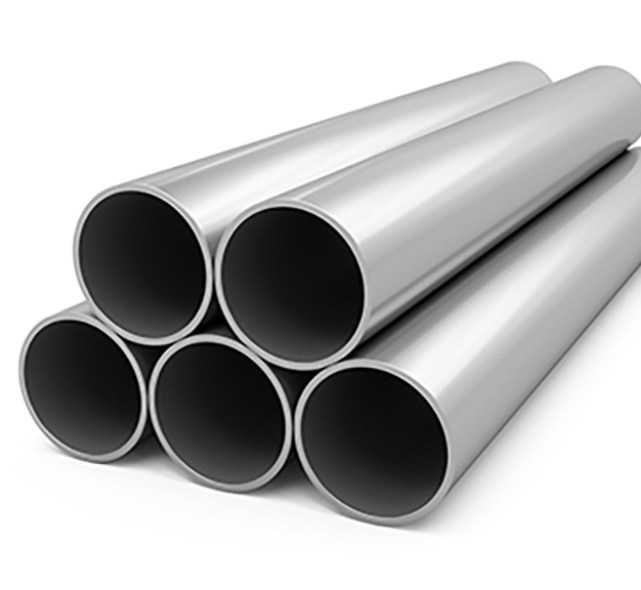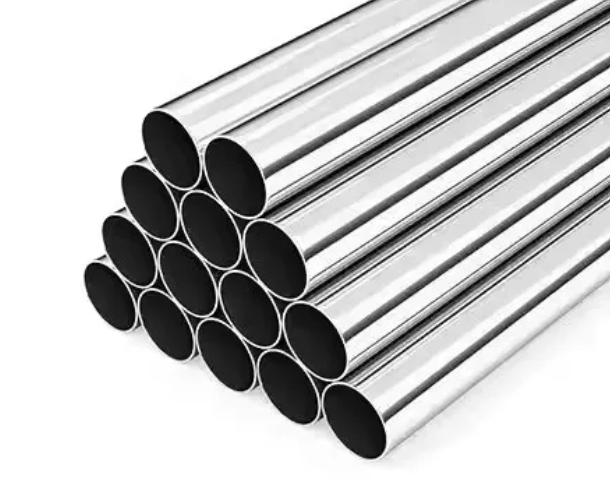

Condenser and evaporator tubes may look similar from the outside, but their material selection logic can be very different. Both are heat exchanger tubes, and both may involve phase change, corrosion, pressure, fouling, and thermal cycling. However, the operating role of each unit changes the risks that buyers should review.
A condenser normally removes heat from a vapor and condenses it into liquid. An evaporator normally adds heat to a liquid or refrigerant and vaporizes it. This difference affects media exposure, temperature profile, fouling behavior, pressure direction, corrosion risk, and maintenance strategy.
Quick Answer:
The main material selection difference between condenser and evaporator tubes is the service environment. Condenser tubes often need strong resistance to cooling-water corrosion, fouling, erosion, tube-sheet crevice risk, and sometimes external pressure or vacuum-related design concerns. Evaporator tubes may need resistance to boiling-side corrosion, scaling, fouling, chemical concentration, internal pressure, thermal cycling, and process-fluid attack. The right material should be selected according to media, temperature, pressure, flow, fouling, corrosion mechanism, tube standard, inspection, documentation, and life-cycle cost.
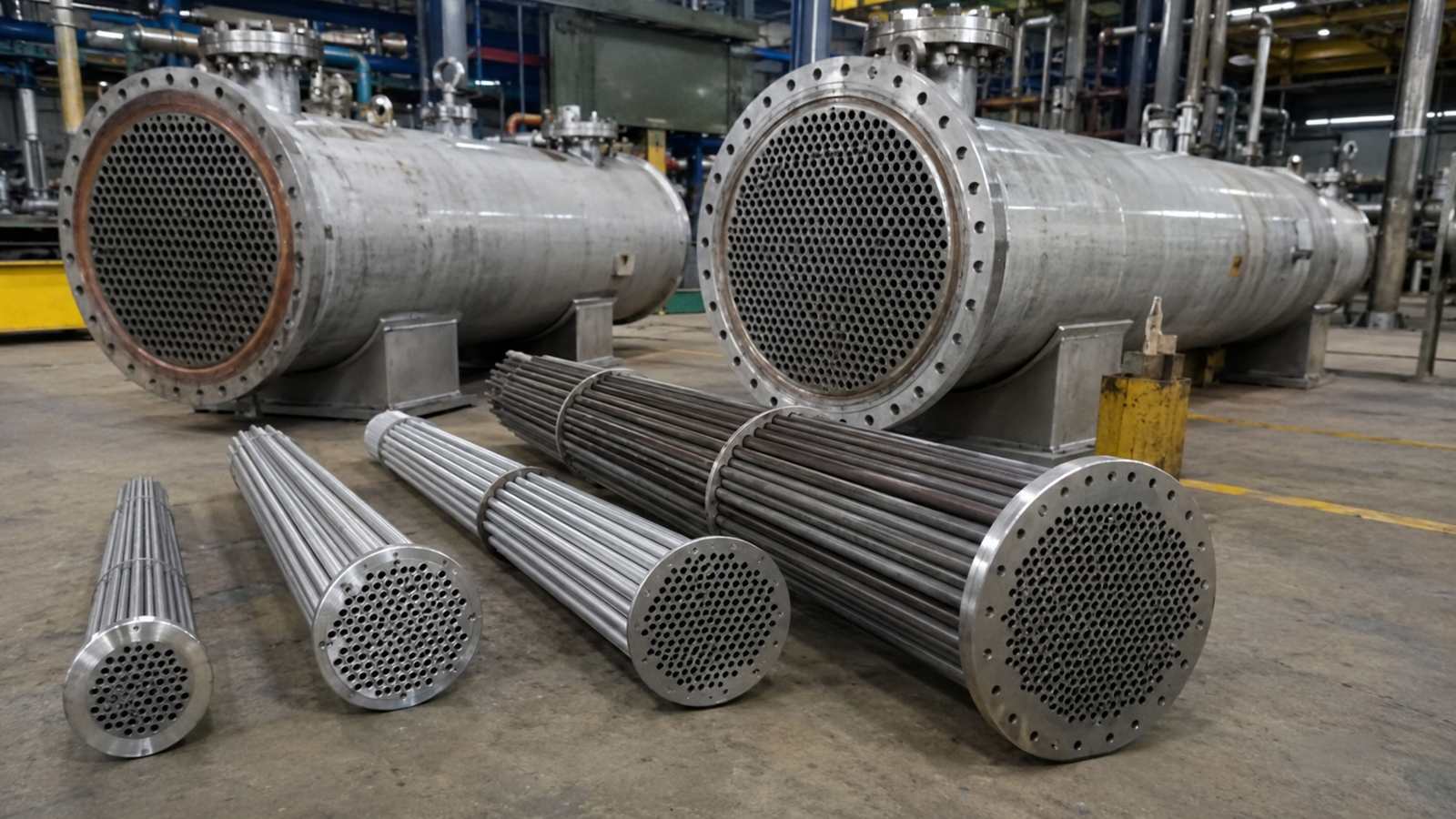
Purdue teaching material describes condensers and evaporators as heat exchangers in which refrigerant changes phase: Purdue - Evaporators and Condensers.
ASTM B338 covers seamless and welded titanium alloy tubes for surface condensers, evaporators, and heat exchangers: ASTM B338. ASTM B163 covers seamless nickel and nickel alloy tubes for condenser and heat-exchanger service: ASTM B163.
This is why buyers should not select condenser and evaporator tube materials by grade name alone.
Why Do Condenser and Evaporator Tubes Need Different Material Thinking?
Condenser tubes and evaporator tubes both transfer heat, but they often face different service risks.
Condenser tube material selection should focus on the cooling medium, condensing side, fouling, erosion, tube-sheet conditions, pressure design, and water-side corrosion. Evaporator tube material selection should focus on boiling media, process chemistry, concentration effects, scaling, fouling, internal pressure, and thermal cycling.
Condenser Tube Environment
Condensers reject heat and convert vapor into liquid. Depending on the design, condenser tubes may contact:
- Cooling water
- Seawater
- Brackish water
- Treated water
- Steam condensate
- Refrigerants
- Air-side contaminants
- Cleaning chemicals
Common condenser tube risks include:
- Water-side corrosion
- Seawater corrosion
- Pitting corrosion
- Crevice corrosion near tube sheets
- Galvanic corrosion
- Biofouling
- Scaling
- Erosion from high flow
- Tube vibration
- Vacuum or external pressure design concerns
A condenser tube may fail not because the base material is weak, but because the cooling water chemistry, flow, deposits, tube sheet design, or cleaning process was not considered.
Evaporator Tube Environment
Evaporators absorb heat and vaporize a liquid or refrigerant. Depending on the system, evaporator tubes may contact:
- Boiling refrigerants
- Brines
- Process chemicals
- Concentrated solutions
- Wastewater
- Acids or alkalis
- Steam or hot fluid on the heating side
- Cleaning agents
Common evaporator tube risks include:
- Boiling-side corrosion
- Scaling and deposits
- Fouling
- Under-deposit corrosion
- Chemical concentration effects
- Thermal cycling
- Internal pressure
- Fatigue from start-stop operation
- Stress corrosion cracking in susceptible materials
- Weld or expansion-related defects
An evaporator may concentrate dissolved species as liquid boils. This can change the local chemistry and increase corrosion or scaling risk.
Condenser vs Evaporator Material Review
| Review Item | Condenser Tubes | Evaporator Tubes |
|---|---|---|
| Main Function | Condense vapor into liquid | Vaporize liquid or refrigerant |
| Main Risk Area | Cooling-water side and tube-sheet area | Boiling/process side and concentration zones |
| Common Media | Cooling water, seawater, steam, refrigerant | Brine, refrigerant, process liquid, chemicals |
| Corrosion Concern | Water-side corrosion, pitting, crevice corrosion, galvanic corrosion | Process-fluid corrosion, under-deposit corrosion, SCC, scaling-related corrosion |
| Fouling Concern | Biofouling, scale, cooling-water deposits | Scaling, concentration deposits, process fouling |
| Mechanical Concern | Tube vibration, external pressure/vacuum, erosion | Internal pressure, thermal cycling, fatigue |
| Material Focus | Corrosion resistance, fouling control, tube integrity | Corrosion resistance, boiling stability, scaling resistance, pressure and thermal fatigue |
The correct tube material depends on which risks are most important in the actual system.
Why Is “One Material Fits All” Risky?
A tube material that works well in a condenser may not work well in an evaporator. The reverse can also be true.
There is no universal best tube material for every condenser or evaporator. Tube material selection depends on the actual medium, temperature, pressure, flow, fouling, corrosion mechanism, mechanical stress, fabrication process, and life-cycle cost.
AMPP explains that material selection is influenced by corrosion resistance in the environment, design and test data, mechanical properties, cost, maintainability, compatibility, life expectancy, and reliability: AMPP Materials Selection and Design for Corrosion Control.
The UK Health and Safety Executive also lists multiple material selection factors, including tensile strength, toughness, fatigue resistance, creep resistance, high and low temperature behavior, corrosion resistance, fabrication, availability, and cost: HSE Design Codes - Plant.
Example: Stainless Steel
Stainless steel tubes may be suitable for many general heat exchanger applications, especially when the media are controlled and corrosion risk is moderate.
However, stainless steel may not be suitable for:
- Hot chloride environments
- Severe pitting conditions
- Crevice-prone designs
- Strong acids
- High-temperature creep conditions
- Aggressive cleaning chemicals
Example: Titanium
Titanium tubes may be considered for seawater condensers, brine systems, evaporators, desalination, and selected chemical heat exchangers. However, titanium is not automatically suitable for every reducing acid, high-temperature condition, or hydrogen-related environment.
Example: Nickel Alloys
Nickel alloy tubes may be considered for aggressive chemical media, high-temperature service, selected acid environments, and demanding condenser or evaporator conditions. But different nickel alloys are not interchangeable. Inconel 625, Incoloy 800H, Alloy 825, Hastelloy C276, Hastelloy C22, Monel 400, and Alloy 20 each have different strengths and limits.
The buyer should not ask only, “Which alloy is best?”
The better question is, “Which alloy best matches this condenser or evaporator environment?”
Corrosion Resistance vs Heat Transfer Efficiency: What Is the Trade-Off?
Heat exchanger tube material selection often involves balancing heat transfer performance with corrosion resistance, mechanical strength, availability, fabrication, and cost.
A high thermal conductivity material may improve heat transfer in suitable environments, but it may not provide enough corrosion resistance in aggressive media. A corrosion-resistant alloy may have lower thermal conductivity, but it may reduce leakage, replacement, and downtime risk when corrosion is the main threat.
Material Trade-Offs
| Material Type | Heat Transfer Consideration | Corrosion / Durability Consideration |
|---|---|---|
| Copper Alloys | High thermal conductivity | May be limited by water chemistry, ammonia, sulfides, erosion, or galvanic issues |
| Stainless Steels | Moderate thermal conductivity | Good for many general applications, but must review chlorides and SCC |
| Duplex Stainless Steels | Moderate thermal conductivity | Better chloride resistance than many austenitic stainless steels, but welding and temperature limits matter |
| Nickel Alloys | Lower thermal conductivity than copper alloys | Strong corrosion or high-temperature performance depending on grade |
| Titanium Alloys | Lower thermal conductivity than copper alloys | Strong seawater corrosion resistance in suitable environments |
Heat transfer is not determined by tube material alone. Tube wall thickness, fouling, flow velocity, surface condition, tube layout, cleaning, and heat exchanger design also matter.
Fouling Can Reduce Heat Transfer
Fouling can become more important than the small difference between material thermal conductivities. Deposits can create a resistance layer and change the available flow cross-section.
A Springer paper on heat exchanger fouling notes that as fouling layer thickness increases, heat transfer decreases, and in confined channels the layer can change the available flow cross-section: Towards a Common Taxonomy for Heat Exchanger Fouling.
For buyers, this means tube material should be selected together with fouling control and cleaning strategy.
Mechanical Strength and Pressure: What Should Buyers Check?
Pressure and mechanical stress must be reviewed according to the actual condenser or evaporator design.
Condenser and evaporator tubes should be checked for internal pressure, external pressure, tube wall thickness, temperature, vibration, fatigue, tube expansion, welding, and applicable design code requirements. Room-temperature strength alone is not enough for high-temperature or cyclic service.
Condenser Mechanical Considerations
Condenser tubes may need to handle:
- Vacuum conditions
- External pressure
- Cooling-water pressure
- Tube vibration
- Steam impingement
- Tube-sheet expansion stress
- Erosion at tube inlets
- Thermal cycling during startup and shutdown
Evaporator Mechanical Considerations
Evaporator tubes may need to handle:
- Internal boiling pressure
- Pressure surges
- Temperature cycling
- Scaling and deposit-related hot spots
- Concentration effects
- Tube vibration
- Thermal fatigue
- Weld or bend stress
Why Fatigue and Temperature Matter
ASTM E8/E8M covers room-temperature tension testing of metallic materials, including yield strength, tensile strength, elongation, and reduction of area: ASTM E8/E8M.
These mechanical test values are useful, but they do not fully describe fatigue behavior, high-temperature creep, corrosion fatigue, or thermal cycling.
MIT material on fatigue explains that fatigue damage can accumulate under repeated loads that may be well below the yield point: MIT Fatigue.
For high-temperature service, creep and oxidation resistance may become important. University of Cambridge material on nickel-based superalloys explains that creep and oxidation resistance are prime design criteria for superalloys used at high temperatures: Nickel Based Superalloys - University of Cambridge.
This is why buyers should check material properties at the actual operating temperature, not only room-temperature values.
Which Standards Are Common for Condenser and Evaporator Tubes?
Tube standards help define material, product form, dimensions, manufacturing method, testing, and acceptance requirements.
Buyers should specify the correct standard for the tube material and application, such as ASTM B338 for titanium tubes, ASTM B163 for nickel alloy tubes, or ASTM A213 for seamless ferritic and austenitic steel heat exchanger tubes.
Common Tube Standards
| Standard | Material Family | Scope |
|---|---|---|
| ASTM B338 | Titanium and titanium alloy tubes | Seamless and welded tubes for surface condensers, evaporators, and heat exchangers |
| ASTM B163 | Nickel and nickel alloy tubes | Seamless tubes for condenser and heat-exchanger service |
| ASTM A213 | Ferritic and austenitic alloy steel tubes | Seamless boiler, superheater, and heat-exchanger tubes |
ASTM A213 covers seamless ferritic and austenitic steel boiler, superheater, and heat-exchanger tubes: ASTM A213.
ASTM B338 and ASTM B163 are especially relevant for titanium and nickel alloy heat exchanger tube procurement.
Cost vs Longevity: What Is the Real Value?
Initial tube price is only one part of total cost. The real cost of a condenser or evaporator tube decision includes installation, cleaning, inspection, maintenance, downtime, replacement, and lost production risk.
A higher-priced tube material may be justified when it reduces corrosion-related leakage, fouling-related cleaning, unplanned shutdown, or early replacement risk. However, the most expensive material is not always the best choice. Buyers should compare total life-cycle cost, not only price per meter or price per kilogram.
The U.S. Environmental Protection Agency defines life-cycle cost as original cost minus salvage value plus operating costs, maintenance costs, renewal costs, and decommissioning costs: EPA Life Cycle and Replacement Costs.
The U.S. Department of Energy’s O&M Best Practices Guide explains that reactive maintenance may involve unplanned downtime, labor, repair or replacement, secondary damage, and inefficient use of staff resources: DOE O&M Best Practices Guide.
Initial Price vs Life-Cycle Cost
| Cost Factor | Lower Initial Price Material | Better-Matched Tube Material |
|---|---|---|
| Tube Purchase Price | Lower | Higher |
| Corrosion Risk | May be higher if mismatched | Lower when matched to service |
| Fouling / Cleaning Burden | May be higher depending on media and surface | More predictable when selected and maintained properly |
| Downtime Risk | May increase if leakage or failure occurs | May decrease when material fits the application |
| Replacement Frequency | May be higher | May be lower |
| Inspection Burden | May increase | Can be planned more effectively |
| Total Life-Cycle Cost | May become higher over time | May be lower over service life |
This does not mean buyers should always select titanium or nickel alloy tubes. It means buyers should compare material cost with the cost of maintenance, shutdown, and replacement.
How Should Buyers Verify Supplier Claims?
Supplier claims such as “excellent corrosion resistance,” “high strength,” or “long service life” should be verified with documents and application data.
Buyers should verify tube material claims with MTR / MTC, heat number traceability, applicable standards, chemical and mechanical test data, dimensional inspection, surface inspection, PMI or grade verification, NDT reports, and third-party inspection when required.
Documents Buyers Should Request
| Document / Test | What It Confirms |
|---|---|
| MTR / MTC | Batch-specific chemistry and mechanical properties |
| Heat Number | Traceability to production batch |
| Standard Confirmation | ASTM, ASME, EN, ISO, or customer specification |
| Chemical Analysis | Alloy composition |
| Tensile Test | Yield strength, tensile strength, elongation |
| PMI / Grade Verification | Reduces risk of material mix-up |
| Dimensional Inspection | OD, wall thickness, length, tolerance |
| Surface Inspection | Surface condition and visible defects |
| Eddy Current / UT | Tube integrity depending on project requirement |
| Hydrostatic Test | Pressure integrity when required |
| Third-Party Inspection | Independent verification for critical projects |
ASTM E1476 provides guidance for nondestructive identification and sorting of metals: ASTM E1476.
ISO explains that the ISO 9000 family helps organizations improve the quality of products and services and consistently meet customer expectations: ISO 9000 Family.
However, ISO certification does not replace batch-specific MTR, heat number, and inspection records.
Buyer Checklist: How to Select Condenser and Evaporator Tube Material
Before requesting a quotation, buyers should prepare the following information.
| RFQ Item | Condenser Tube Questions | Evaporator Tube Questions |
|---|---|---|
| Application | Surface condenser, steam condenser, marine condenser, refrigerant condenser | Chemical evaporator, brine evaporator, refrigerant evaporator, desalination evaporator |
| Tube Standard | ASTM B338, ASTM B163, ASTM A213, ASME, EN, ISO, customer standard | ASTM B338, ASTM B163, ASTM A213, ASME, EN, ISO, customer standard |
| Product Type | Seamless tube, welded tube, straight tube, U-tube | Seamless tube, welded tube, straight tube, U-tube |
| Tube Material | Stainless steel, nickel alloy, titanium, copper alloy, duplex | Stainless steel, nickel alloy, titanium, duplex, special alloy |
| Tube-Side Medium | Cooling water, seawater, steam, refrigerant, process fluid | Boiling liquid, refrigerant, brine, process chemical |
| Shell-Side Medium | Steam, cooling water, refrigerant, air, process fluid | Steam, hot fluid, process fluid, air |
| Temperature | Normal, maximum, startup, shutdown, cleaning | Normal, maximum, boiling condition, cleaning |
| Pressure | Vacuum, external pressure, cooling water pressure | Internal pressure, pressure surge, boiling pressure |
| Corrosion Risk | Cooling-water corrosion, seawater corrosion, pitting, crevice corrosion | Chemical corrosion, scaling, under-deposit corrosion, SCC |
| Fouling Risk | Biofouling, scaling, deposits | Scaling, concentration fouling, process deposits |
| Flow Condition | Velocity, turbulence, vibration, stagnant zones | Boiling flow, circulation rate, deposits, stagnant zones |
| Fabrication | Welding, bending, tube expansion, flanging | Welding, bending, tube expansion, flanging |
| Surface Condition | Pickled, polished, bright annealed, clean ID / OD | Pickled, polished, bright annealed, clean ID / OD |
| Testing | PMI, eddy current, UT, hydrostatic, tensile, hardness | PMI, eddy current, UT, hydrostatic, tensile, hardness |
| Documentation | MTR, heat number, certificate, inspection report | MTR, heat number, certificate, inspection report |
This checklist helps buyers avoid incomplete specifications and helps suppliers provide more accurate recommendations.
How Emily PIPE Supports Condenser and Evaporator Tube Buyers
Emily PIPE is a China-based manufacturer and exporter specializing in nickel alloy tubes, nickel alloy bars, titanium alloy tubes, and titanium alloy bars. We support customers across chemical processing, marine engineering, power generation, oil and gas, heat exchangers, desalination, and other corrosion-resistant or high-temperature applications.
For condenser and evaporator tube projects, we can support buyers with:
- Nickel alloy seamless tubes
- Nickel alloy welded tubes
- Titanium seamless tubes
- Titanium welded tubes
- ASTM B338 titanium tube requirements
- ASTM B163 nickel alloy tube requirements
- Custom tube size, length, tolerance, and surface condition
- MTR / MTC and heat number traceability
- Dimensional and surface inspection
- PMI, eddy current, UT, hydrostatic, tensile, hardness, and other testing support when required
- Third-party inspection support
- Export packaging and logistics support
Our role is not to claim that one tube material works for every condenser or evaporator. Our role is to help buyers review application conditions, confirm standards, prepare documentation, and supply alloy tubes that match the required specification and project environment.
If you are selecting tube materials for condensers or evaporators, please send your tube material, standard, size, tube-side medium, shell-side medium, temperature, pressure, flow condition, corrosion risk, fouling risk, cleaning method, testing requirement, documentation requirement, and destination. Our team can help review your requirements and provide a suitable quotation.
FAQ: Condenser vs Evaporator Tube Material Selection
1. What is the main difference between condenser and evaporator tube material selection?
Condenser tubes usually focus on condensing-side conditions, cooling-water corrosion, fouling, tube-sheet crevice risk, external pressure, and water-side maintenance. Evaporator tubes often focus on boiling media, process chemistry, concentration effects, scaling, internal pressure, and thermal cycling.
2. Can the same tube material be used for both condensers and evaporators?
Sometimes yes, but it should not be assumed. The same material may perform differently if the medium, temperature, pressure, fouling, or corrosion mechanism changes.
3. When should titanium tubes be considered?
Titanium tubes may be considered for seawater condensers, brine systems, evaporators, desalination equipment, and selected chemical heat exchangers. Final selection should review crevice risk, temperature, cleaning chemicals, and ASTM B338 requirements.
4. When should nickel alloy tubes be considered?
Nickel alloy tubes may be considered for aggressive chemical media, high-temperature service, selected acid environments, chloride-containing conditions, and demanding condenser or evaporator applications.
5. Are copper alloy tubes still useful?
Copper alloys can be useful in some condenser applications because of high thermal conductivity, but water chemistry, ammonia, sulfides, erosion, and galvanic compatibility must be reviewed.
6. Is heat transfer efficiency more important than corrosion resistance?
Both matter. However, if corrosion causes leakage or frequent shutdowns, corrosion resistance may become more important than small differences in thermal conductivity.
7. What standards are commonly used for condenser and evaporator tubes?
Common examples include ASTM B338 for titanium tubes, ASTM B163 for nickel alloy tubes, and ASTM A213 for seamless ferritic and austenitic steel heat-exchanger tubes.
8. What documents should buyers request?
Buyers should request MTR / MTC, heat number, chemical composition, mechanical properties, standard confirmation, dimensional report, surface inspection, NDT reports, and third-party inspection when required.
Conclusion
Material selection for condenser and evaporator tubes is not a one-size-fits-all decision. The correct choice depends on phase-change duty, tube-side and shell-side media, temperature, pressure, flow, fouling, corrosion mechanism, mechanical stress, standards, inspection, and life-cycle cost.
For condenser tubes, buyers should pay close attention to cooling-water corrosion, seawater exposure, fouling, tube-sheet crevice risk, external pressure, and vibration.
For evaporator tubes, buyers should pay close attention to boiling media, concentration effects, scaling, chemical corrosion, internal pressure, thermal cycling, and cleaning chemistry.
A well-matched tube material can help reduce leakage, fouling, downtime, maintenance, and replacement risk. The best material is not always the cheapest or the most expensive option. It is the material that best matches the actual condenser or evaporator service environment.