
Why Are Titanium Bars Used in Medical Equipment Manufacturing?
Many medical equipment manufacturers struggle with material selection. Titanium often stands out, but it should not be chosen only because it is a familiar medical material. The correct choice depends on the device type, body contact, mechanical load, corrosion environment, manufacturing process, quality standard, and regulatory requirements.
Titanium bars are widely used in selected medical equipment and implant applications because titanium offers strong biocompatibility, high specific strength, low density, and good corrosion resistance. However, medical material selection should always be evaluated according to the intended use, biological risk, mechanical demand, and applicable standards such as ISO 10993, ASTM F67, and ASTM F136.
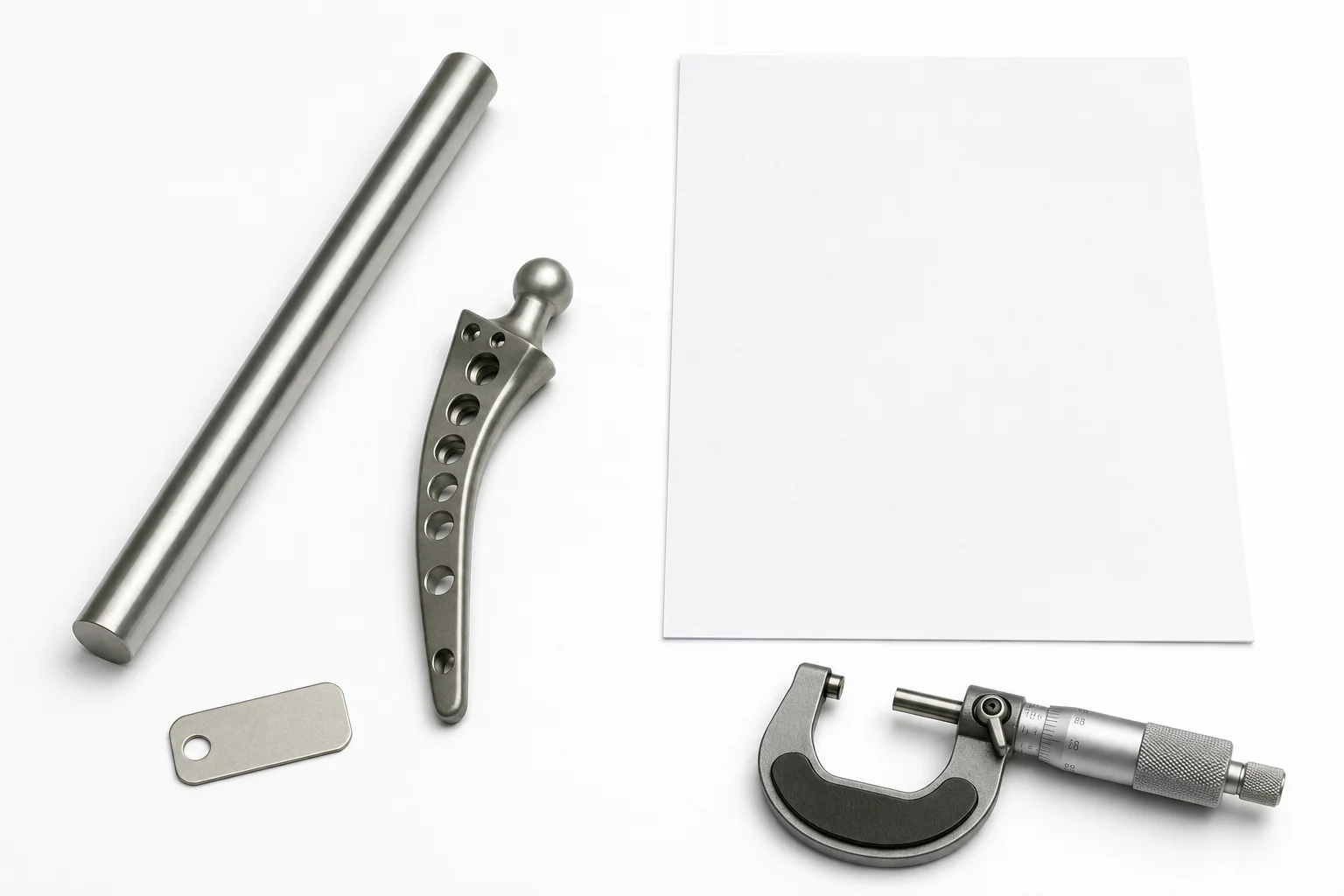
When I talk with engineers and procurement teams, it is clear that understanding basic material properties is only the first step. The real challenge is knowing how those properties translate into practical decisions for medical implants, surgical instruments, orthopedic components, dental systems, and other precision medical parts.
Is Biocompatibility the Only Reason to Choose Titanium for Implants?
You might think biocompatibility is the only reason titanium is used in medical devices. It is important, but it is not the whole story. A material must also meet mechanical, corrosion, manufacturing, and regulatory requirements.
Biocompatibility is crucial, but it is not the only driver for titanium use in medical applications. ISO 10993-1 evaluates biological safety within a risk management process, considering the device’s materials, intended use, and tissue contact. For titanium implants and devices, buyers must also review strength, ductility, fatigue behavior, corrosion resistance, surface condition, and traceability.
Based on our interactions with manufacturers, a common misconception is that if a material is “biocompatible,” it is automatically suitable for any medical application. That is not true.
Biocompatibility means the material and device must perform with an appropriate biological response for a specific application. Titanium is valued because it is generally well tolerated by the body and forms a protective oxide film that supports corrosion resistance. Public medical material references describe titanium as highly biocompatible because of its corrosion resistance in bodily fluids, bio-inert behavior, osseointegration potential, and protective oxide film.
However, patient safety and device reliability go beyond avoiding adverse biological response. An orthopedic implant must support load. A dental implant must resist chewing force and oral fluid exposure. A spinal component must withstand repeated stress. A surgical tool may need dimensional stability, surface quality, and cleanability.
Specific titanium grades are selected to balance these requirements. Commercially pure titanium grades are often reviewed where corrosion resistance, ductility, and biocompatibility are important. Ti-6Al-4V ELI, also known as Grade 23, is commonly used for demanding implant applications because reduced interstitial elements improve ductility and fracture toughness compared with standard Ti-6Al-4V.
How Properties Combine for Material Choice
| Property | Importance for Medical Applications | Example Application |
|---|---|---|
| Biocompatibility | Supports safe interaction with tissue or body fluids when evaluated for intended use | Implants, dental components, surgical devices |
| Strength | Helps withstand mechanical loading and functional stress | Bone plates, spinal rods, joint components |
| Corrosion Resistance | Helps reduce degradation and ion release in physiological environments | Dental implants, orthopedic implants, device housings |
| Ductility and Toughness | Helps resist cracking during forming, machining, or service loading | Implantable bars, screws, precision components |
| Density | Supports lightweight device design | Orthopedic implants, surgical tools, prosthetic components |
| Surface Condition | Affects biological response, cleanability, corrosion behavior, and coating performance | Dental implants, bone-contacting surfaces, surgical tools |
How Does Titanium's Strength-to-Weight Ratio Impact Device Design?
Device size, comfort, and mechanical reliability are all important in medical design. Titanium’s high specific strength can give designers more flexibility, but it must still be matched with the application.
Titanium and titanium alloys are often selected because they combine relatively low density with useful strength. Ti-6Al-4V is known for high specific strength and corrosion resistance, and it is used in biomedical implants and prostheses where low density and corrosion resistance are needed.
In our experience, clients sometimes focus only on the alloy name and overlook what the strength-to-weight ratio means for actual design. This property can help reduce part mass while maintaining required mechanical performance.
For medical devices, lower weight can be useful in orthopedic components, prosthetic systems, surgical instruments, and compact implantable devices. Stronger materials may allow smaller cross-sections or thinner designs, but only if fatigue, fracture toughness, surface quality, and manufacturing process are also controlled.
Commercially pure titanium may be used where ductility, corrosion resistance, and formability are important. Ti-6Al-4V and Ti-6Al-4V ELI may be considered where higher strength is required. Final selection should follow the relevant ASTM, ISO, drawing, and regulatory requirements.
Design Impact of Titanium Properties
| Design Goal | Benefit from Titanium | Example Device |
|---|---|---|
| Reduced Size | Higher strength can support compact design when the stress condition allows | Precision implant parts, minimally invasive components |
| Lower Weight | Low density can reduce component mass | Orthopedic implants, prosthetic parts, surgical tools |
| Durability | Suitable grade and processing can support long-term load-bearing performance | Joint components, spinal fixation parts |
| Complex Geometry | Titanium bars can be machined into precise shapes when processing is controlled | Dental abutments, orthopedic hardware, custom components |
| Corrosion Resistance | Passive oxide film supports long-term material stability | Body-contacting and implantable components |
Why Is Corrosion Resistance So Critical in the Human Body?
The human body is a demanding environment for metals. Body fluids contain chlorides, proteins, oxygen, and changing pH conditions. Some devices also experience friction, fretting, or wear. These factors can affect long-term material performance.
Corrosion resistance is critical because it helps prevent material degradation and reduce metal ion release in the body. Titanium is valued because it naturally forms a protective oxide film; however, titanium is not completely immune to corrosion or wear-related degradation, so surface condition, design, and application environment still matter.
From a materials perspective, the human body is not a neutral environment. Chlorides, proteins, pH changes, mechanical motion, and crevices can all influence corrosion behavior. When a metal corrodes, it may lose mechanical integrity or release ions into nearby tissue.
Titanium stands out because it forms a thin, stable oxide layer on its surface. This passive layer helps protect the underlying metal from reacting with the surrounding environment. It is one of the main reasons titanium is widely used for implants, surgical tools, dental implants, and orthopedic applications.
However, the article should avoid saying titanium “does not react” or “cannot corrode.” Titanium and its alloys can still experience degradation under certain conditions, such as mechanical abrasion, fretting, low pH, fluoride-containing oral environments, or crevice conditions. Therefore, corrosion resistance should be supported by correct grade selection, surface finish, cleaning, packaging, inspection, and application review.
Comparison of Medical Metal Corrosion Considerations
| Material Type | Main Corrosion / Degradation Consideration | Medical Use Implication |
|---|---|---|
| Titanium and Titanium Alloys | Stable passive oxide film; possible degradation under fretting, crevice, low pH, or fluoride conditions | Widely used for implants and devices, but surface and environment must be controlled |
| Stainless Steel | May be vulnerable to pitting or crevice corrosion in chloride-containing environments depending on grade and condition | Can be used in medical devices, but long-term implant use needs careful standard and environment review |
| Cobalt-Chrome Alloys | Good corrosion resistance, but wear debris and ion release can be concerns in articulating joints | Used in selected orthopedic and dental applications with wear/corrosion review |
| Nitinol | Surface oxide and nickel release control are critical | Used in stents and shape-memory devices where surface control is essential |
How Do Material Specifications and Quality Control Affect Procurement Decisions?
You may know titanium is a strong candidate, but how do you ensure you receive the right titanium? In medical device manufacturing, “titanium” alone is not a sufficient specification.
Material specifications and quality control are critical because they define chemical composition, mechanical properties, impurity limits, product condition, traceability, and inspection requirements. For example, ASTM F67 covers unalloyed titanium for surgical implant applications, while ASTM F136 covers wrought Ti-6Al-4V ELI alloy for surgical implant applications.
Based on our interactions with manufacturers, a common misconception is that all titanium is the same. This is especially risky in the medical device sector.
The raw material must match the required grade and standard. ASTM F67 covers chemical, mechanical, and metallurgical requirements for unalloyed titanium strip, sheet, plate, bar, billet, forging, and wire used for surgical implants. ASTM F136 covers wrought Ti-6Al-4V ELI alloy for surgical implant applications.
Ti-6Al-4V ELI is not just a marketing term. ELI means Extra Low Interstitial. Titanium alloy references describe Grade 23 / Ti-6Al-4V ELI as having reduced interstitial elements such as oxygen and iron, which improves ductility and fracture toughness with some reduction in strength. This makes it especially relevant for implant-grade applications where toughness, fatigue resistance, and biological performance matter.
Quality control is also broader than final inspection. A reliable titanium bar supplier should provide heat-number-based traceability, material certificates, chemical analysis, mechanical test results, dimensional inspection, surface inspection, and packaging controls when required.
For medical device manufacturers, quality systems also matter. ISO 13485 is an internationally recognized quality management system standard for the design and manufacture of medical devices. It helps organizations ensure medical devices meet customer and regulatory requirements for safety and efficacy, and it supports risk management, regulatory compliance, process control, and consistent delivery.
Key Quality Checkpoints in Titanium Procurement
| Checkpoint | Importance | Why It Matters for Medical Devices |
|---|---|---|
| Material Certification | Confirms compliance with ASTM, ISO, or customer standards | Helps verify material identity and specification compliance |
| Heat Number Traceability | Links the material to a specific melt or batch | Supports audits, recalls, and root-cause investigation |
| Chemical Analysis | Verifies elemental composition and impurity limits | Helps prevent off-spec material use |
| Mechanical Testing | Confirms tensile strength, yield strength, elongation, and reduction of area where required | Supports structural integrity review |
| Microstructure Review | Confirms metallurgical condition when required | Helps evaluate consistency and processing quality |
| Surface Finish Inspection | Checks defects, scratches, contamination, or surface condition | Reduces risk of corrosion initiation, contamination, or poor downstream processing |
| Packaging Control | Protects material during transport and storage | Helps avoid dents, scratches, moisture, and contamination |
What Should Buyers Ask Before Ordering Titanium Bars for Medical Equipment?
For medical equipment and implant-related manufacturing, procurement should not stop at grade, diameter, and price. Buyers should ask detailed technical and quality questions before placing the order.
Before ordering titanium bars for medical equipment, buyers should confirm grade, standard, size tolerance, surface condition, heat treatment, testing, MTC requirements, traceability, packaging, and whether the supplier can support the intended medical application.
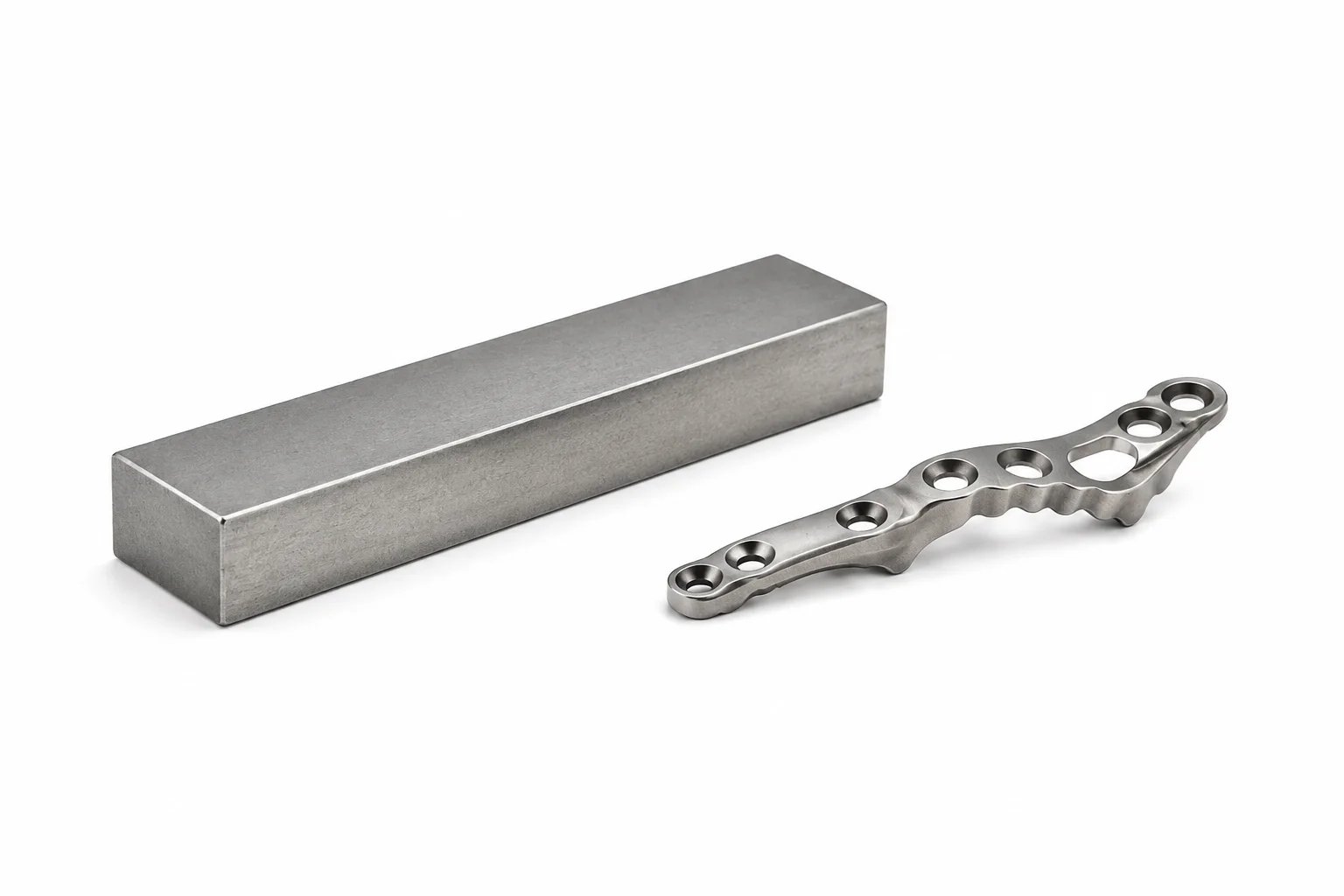
A complete RFQ helps avoid confusion between supplier and buyer. For example, “Ti-6Al-4V bar” is not enough for a medical project. The buyer may need to specify Ti-6Al-4V ELI / Grade 23, ASTM F136, diameter tolerance, surface finish, annealed condition, MTC, heat number marking, and packaging requirements.
Questions to Ask a Titanium Bar Supplier
| Area | Questions to Ask |
|---|---|
| Grade and Standard | Is the material commercially pure titanium, Ti-6Al-4V, or Ti-6Al-4V ELI? Which ASTM or ISO standard applies? |
| Chemical Composition | Can you provide chemical analysis and impurity limits for O, N, H, Fe, C, Al, V, and other elements? |
| Mechanical Properties | Can you provide tensile strength, yield strength, elongation, and reduction of area? |
| Traceability | Can the bar be traced by heat number from raw material to final shipment? |
| Testing | Which chemical, mechanical, dimensional, surface, and NDT tests are included? |
| Surface Condition | Is the bar peeled, ground, polished, pickled, or machined? What surface defects are controlled? |
| Documentation | Can you provide MTCs, inspection reports, packing list, and certificate of conformity if required? |
| Packaging | How do you prevent scratches, dents, moisture, and contamination during export shipping? |
| Application Support | Have you supplied titanium bars for medical equipment, implants, dental parts, or surgical instruments? |
| Quality System | Do your production and inspection processes support medical device customer requirements? |
Conclusion
Titanium’s medical applications go beyond basic properties. Titanium bars are used because they can combine biocompatibility, corrosion resistance, high specific strength, low density, and processability. But the right material choice depends on application needs, body contact, mechanical loading, surface condition, standards, documentation, and supplier quality control.
There is no single titanium grade that fits every medical device. Commercially pure titanium, Ti-6Al-4V, and Ti-6Al-4V ELI each have different roles depending on the application and standard.
At Emily PIPE, we support titanium alloy bars, titanium alloy tubes, nickel alloy tubes, and nickel alloy bars for demanding industrial and medical-related applications. We help customers review material grade, standard, size, surface finish, inspection, certification, traceability, and delivery requirements before shipment.