
Why OD, Wall Thickness, Length, and Tolerance Matter When Buying Nickel Alloy Tubes
Buying nickel alloy tubes may look simple at first. A buyer may only think about alloy grade and price. But in real projects, dimensional details such as outside diameter, wall thickness, length and tolerance can strongly affect fit-up, pressure design, flow performance, heat transfer, fabrication, inspection, packaging and total cost.
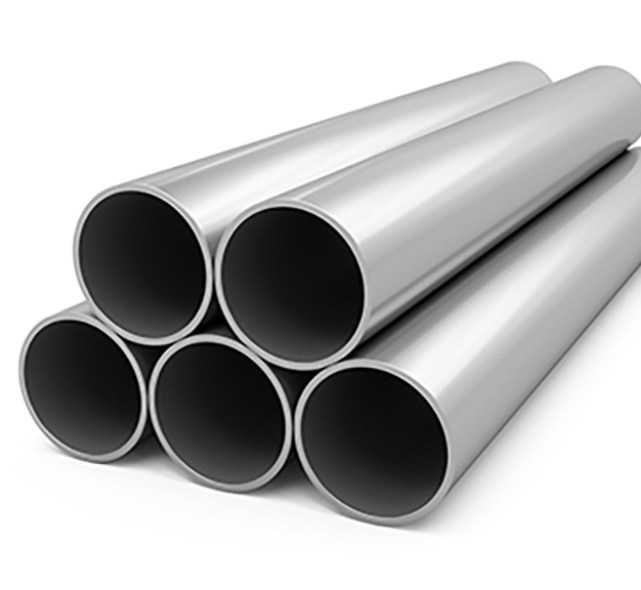
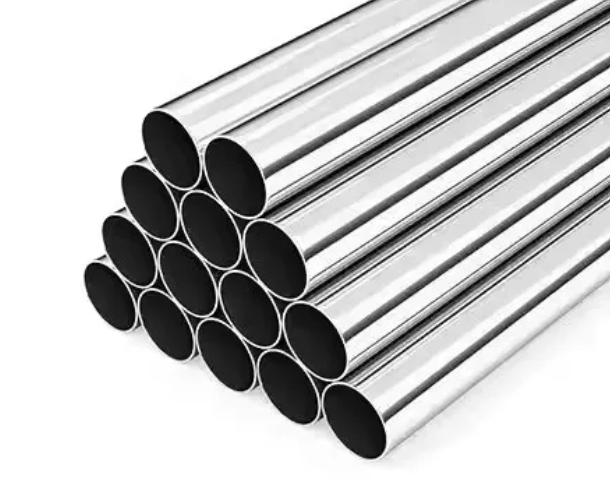
When buying nickel alloy tubes, OD, wall thickness, length and tolerance should not be treated as simple numbers. They should be specified according to product standard, application environment, pressure, flow requirement, assembly method, inspection scope and delivery conditions. For example, ASTM B163 covers nickel and nickel alloy seamless condenser and heat-exchanger tubes by outside diameter and average wall or minimum wall, while ASTM B444 covers selected nickel alloy seamless pipe and tube with chemical, tensile, hydrostatic and nondestructive electric testing requirements.
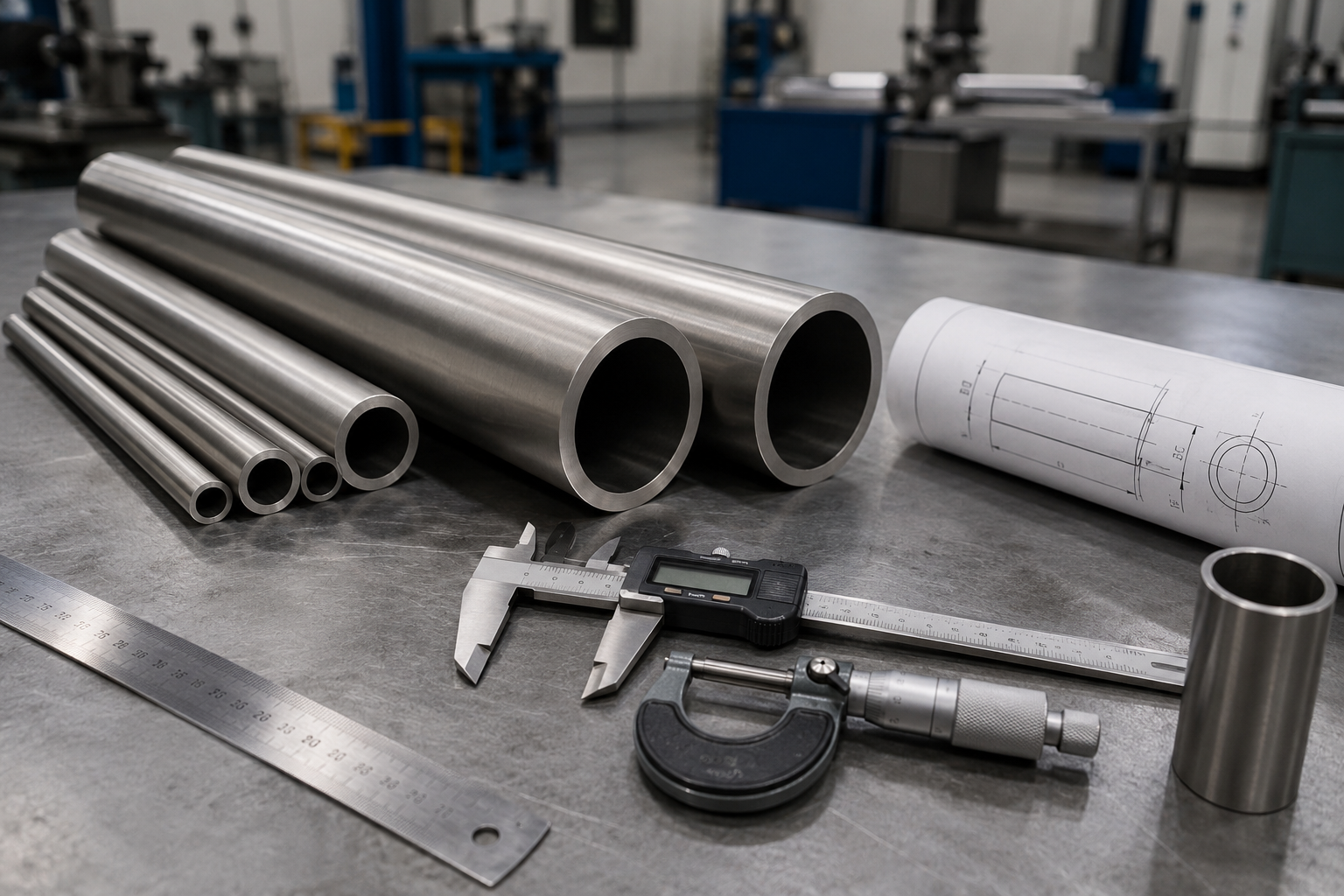
For nickel alloy tubes used in heat exchangers, chemical processing, oil and gas, marine systems, power generation, pressure equipment or high-temperature applications, small specification gaps can create real procurement problems. A missing tolerance, unclear wall thickness basis or unsuitable length can lead to rework, delayed quotation, rejected material or unnecessary cost.
This article explains what buyers should confirm before ordering nickel alloy tubes.
Quick Checklist: What Should Buyers Confirm Before Ordering Nickel Alloy Tubes?
Before sending an RFQ or purchase order, buyers should confirm the following tube parameters.
| Parameter | What Buyers Should Provide | Why It Matters |
|---|---|---|
| Alloy Grade | Inconel 625, Alloy 825, Monel 400, Hastelloy C276, Alloy 600, etc. | Defines chemical composition and performance range |
| UNS Number | N06625, N08825, N04400, N10276, N06600, etc. | Avoids confusion between trade names and equivalent grades |
| Product Standard | ASTM B444, ASTM B163, ASME SB444, ASME SB163, customer standard | Defines product scope, tests and acceptance requirements |
| Tube Type | Seamless tube, welded tube, pipe, heat exchanger tube, coil tube | Different forms have different production routes and standards |
| Outside Diameter OD | Nominal OD and tolerance | Affects fit-up, connectors, tube sheets, supports and inspection |
| Wall Thickness WT | Average wall, minimum wall, schedule or exact WT | Affects pressure capacity, corrosion allowance, heat transfer and weight |
| Inside Diameter ID | ID if flow or clearance is critical | OD and WT together determine ID |
| Length | Random length, fixed length, cut length or maximum shipping length | Affects fabrication, weld quantity, packaging and logistics |
| Tolerance | OD, WT, length, straightness, ovality, concentricity if required | Affects assembly, machining and acceptance |
| Surface Finish | Pickled, polished, bright annealed, cleaned, as-welded | Affects corrosion, cleanliness, appearance and downstream processing |
| Heat Treatment | Annealed, solution annealed, stress relieved or other condition | Affects mechanical properties and corrosion behavior |
| Testing | Hydrostatic, ET, UT, PMI, dimensional inspection | Confirms required quality scope |
| Documents | MTR/MTC, heat number, EN 10204 3.1/3.2, inspection reports | Supports traceability and project acceptance |
| Packaging | Caps, plastic film, wooden case, separate heats, bundle labels | Reduces transport damage and traceability loss |
A clear RFQ helps suppliers quote the same scope and helps buyers compare prices fairly.
How Does Outside Diameter Affect a Nickel Alloy Tube Project?
Outside Diameter, or OD, is often the first dimension buyers specify. But OD is more than a basic size. It affects how the tube fits into the system and how other components are selected.
The OD of a nickel alloy tube affects compatibility with tube sheets, clamps, supports, fittings, connectors and assembly space. OD, together with wall thickness, also determines inside diameter, which can influence flow area and pressure drop.
OD and Fit-Up
Nickel alloy tubes are often installed with other components, such as:
- tube sheets
- ferrules
- compression fittings
- flanges
- clamps
- supports
- heat exchanger baffles
- manifolds
- welded connections
- machined components
If the OD is too large, the tube may not fit into the mating part. If the OD is too small, it may create loose fit-up, sealing problems, welding problems or assembly instability. In heat exchanger applications, OD must match the tube sheet hole design and the expansion, welding or sealing process.
OD and Flow
OD alone does not define flow capacity. Flow is mainly related to inside diameter, and inside diameter is determined by OD and wall thickness.
However, OD is still important because the buyer often specifies OD first, then selects wall thickness. If two tubes have the same OD but different wall thicknesses, they will have different IDs and different flow areas.
The Darcy–Weisbach equation is widely used to describe pressure loss in pipe flow. It shows that diameter is an important variable in pressure drop and flow performance. This is why buyers should not separate OD and WT from flow requirements.
OD and Structure
OD can also influence bending stiffness, support spacing and resistance to external handling forces. Larger OD may improve stiffness in some situations, but it also increases size, weight and cost. The best OD depends on the assembly design, load condition, support spacing and available installation space.
OD Checklist for Buyers
| OD Question | Why It Matters |
|---|---|
| Is the OD nominal or actual? | Avoids misunderstanding between drawing and product standard |
| What OD tolerance is required? | Affects fit-up and inspection |
| Does the OD match the tube sheet or fitting? | Prevents assembly problems |
| Is the ID also important? | Needed for flow, clearance or heat transfer calculations |
| Is ovality controlled? | Important for precision assembly and expansion into tube sheets |
| Is straightness required? | Important for long tubes and automated assembly |
| Is OD measured before or after surface finishing? | Grinding or polishing may change final dimension |
| Does the standard define OD tolerance? | ASTM, ASME or customer standards may apply |
Why Is Wall Thickness a Critical Factor?
Wall thickness, or WT, is one of the most important tube parameters. It affects pressure capacity, corrosion allowance, heat transfer, weight, cost and manufacturability.
Wall thickness should be selected according to pressure, temperature, corrosion allowance, applicable code, tube size, service life and manufacturing tolerance. In pressure-related service, tube wall stress is closely related to internal pressure, radius and wall thickness.
Wall Thickness and Pressure
For pressure-containing tubes and pipes, wall thickness is directly related to pressure capacity. In thin-walled cylindrical pressure vessels, hoop stress is commonly expressed in relation to internal pressure, radius and wall thickness. This does not replace ASME or project code calculations, but it explains why wall thickness matters.
If the wall is too thin for the pressure and design condition, the tube may not have enough safety margin. If the wall is much thicker than needed, the buyer may pay for extra material, weight and machining without real benefit.
Wall Thickness and Corrosion Allowance
In corrosive environments, buyers may require corrosion allowance. This means extra wall thickness is included to account for expected material loss during service. Corrosion allowance should be defined by the design engineer or project specification. It should not be assumed automatically.
For nickel alloys, corrosion resistance is often a key reason for selection, but corrosion risk still depends on exact media, concentration, temperature, flow, oxygen level, chloride level and service time.
Wall Thickness and Heat Transfer
In heat exchanger tubes, wall thickness also affects heat transfer. Thicker walls can increase thermal resistance. Fourier’s law of heat conduction explains that heat transfer through a material depends on thermal conductivity, area, temperature difference and thickness. In practical heat exchanger design, tube thickness is often balanced against pressure, corrosion allowance, vibration resistance and heat transfer efficiency.
Wall Thickness and Weight
Thicker walls mean more material. For expensive nickel alloys, this can significantly affect:
- material cost
- shipping cost
- installation weight
- support structure
- cutting and machining time
- lead time
A buyer should not simply choose the thickest available tube. The correct wall thickness should meet the design requirement without unnecessary over-specification.
Wall Thickness Checklist for Buyers
| WT Question | Why It Matters |
|---|---|
| Is the wall specified as average wall or minimum wall? | This affects inspection and pricing |
| What pressure does the tube need to withstand? | Supports correct wall selection |
| Is there internal or external pressure? | External pressure may require collapse review |
| Is corrosion allowance required? | Important for long-term service in corrosive media |
| Is heat transfer important? | Thicker walls may reduce heat transfer efficiency |
| What WT tolerance applies? | Affects minimum acceptable wall |
| Is hydrostatic testing required? | Verifies pressure integrity where required |
| Is wall thickness measured by UT? | Important for critical or precision tubes |
| Does the standard define wall requirements? | ASTM / ASME requirements should be checked |
Average Wall vs Minimum Wall: Why Does It Matter?
One common RFQ problem is that buyers provide only “wall thickness” without saying whether it means average wall or minimum wall.
Practical Difference
| Wall Basis | Meaning | Buyer Concern |
|---|---|---|
| Average Wall | Wall thickness is controlled around an average value according to the applicable standard | Useful for many heat exchanger and general tube applications |
| Minimum Wall | The tube must not fall below a specified minimum wall thickness | Important when pressure, corrosion allowance or design margin is critical |
| Nominal Wall | A commonly used stated wall size, but the actual allowable variation depends on the standard | Buyers must confirm tolerance and acceptance |
| Schedule Wall | Often used for pipe sizes rather than precision tubing | Buyers should confirm whether tube or pipe standard applies |
If a buyer needs minimum wall, this should be clearly stated in the RFQ. Otherwise, the supplier may quote average wall or standard wall tolerance, which may not meet the project requirement.
What Project Implications Does Tube Length Have?
Tube length affects fabrication, welding, packaging, shipping, installation and material yield. It should not be treated only as total meters.
Nickel alloy tube length should be selected by balancing manufacturing capability, cut length requirement, welding plan, installation method, handling limit, shipping method and material yield. Longer tubes may reduce field joints, but they may also increase packaging and logistics difficulty.
Length and Fabrication
In many tube systems, shorter lengths mean more joints. More joints may require more welding, more inspection and more installation time. For pressure or corrosion-related applications, each weld may also require additional quality control, such as visual inspection, dye penetrant testing, radiographic testing or hydrostatic testing.
Longer tubes can reduce the number of joints, but they must still be practical to manufacture, straighten, inspect, pack, ship and install.
Length and Shipping
Very long nickel alloy tubes may require special packaging or oversized transport. This can increase cost and lead time. Very short tubes may be easier to handle but can increase the number of packages, labels and field joints.
Before ordering, buyers should confirm:
- maximum production length
- standard stock length
- fixed cut length availability
- container or truck loading limit
- packaging method
- destination handling capability
- acceptable length tolerance
Length and Material Yield
Nickel alloy tubes are expensive. Poor cut-length planning can create unnecessary scrap. If the required lengths do not match production or stock lengths efficiently, the supplier may include scrap loss in the quotation.
A buyer can reduce waste by discussing cut plans with the supplier before placing the order.
Length Checklist for Buyers
| Length Question | Why It Matters |
|---|---|
| Do you need fixed length or random length? | Affects production and price |
| What is the length tolerance? | Important for assembly and cutting |
| Can the length fit shipping containers or trucks? | Affects logistics cost |
| Is the tube installed in one piece or welded on site? | Affects fabrication plan |
| Do you need cut-to-size pieces? | Affects cutting cost and scrap |
| Is end protection required? | Important for tube ends and sealing surfaces |
| Should heats be separated by length or bundle? | Supports traceability |
| Is straightness important over full length? | Long tubes may need stricter straightness control |
How Does Tolerance Affect Tube Performance and Fit?
Tolerance defines how much a dimension is allowed to vary from the nominal value. It is one of the most misunderstood parts of nickel alloy tube purchasing.
Tolerance affects fit-up, interchangeability, machining allowance, inspection acceptance and cost. Proper tolerances support assembly and project acceptance, while unnecessarily tight tolerances can increase cost and lead time.
Engineering tolerance means the permissible limits of variation in a physical dimension or measured value. In tube purchasing, tolerances may apply to OD, WT, ID, length, straightness, ovality, concentricity and surface finish.
Why Tighter Tolerance Is Not Always Better
Many buyers think tighter tolerance always means better quality. This is not always true. A tighter tolerance may require more controlled production, additional inspection, slower manufacturing, extra sorting or special finishing. This can increase price and lead time.
The better approach is to specify the tolerance required by the application, not the tightest possible tolerance.
Common Tube Tolerances
| Tolerance Type | Why It Matters |
|---|---|
| OD Tolerance | Affects fit-up with fittings, tube sheets and supports |
| WT Tolerance | Affects minimum wall, pressure design and heat transfer |
| ID Tolerance | Important for flow, clearance or inserted components |
| Length Tolerance | Important for assembly and cutting |
| Straightness | Important for long tubes, machining and automated assembly |
| Ovality | Important for tube expansion, roundness and precision fit |
| Concentricity | Important when uniform wall is required |
| Surface Roughness | Important for hygiene, cleanability, corrosion and fluid flow |
Tolerance Checklist for Buyers
| Tolerance Question | Why It Matters |
|---|---|
| Which dimension needs strict tolerance? | OD, ID, WT and length may not need the same control |
| Is the tolerance from ASTM/ASME or customer drawing? | Avoids conflicting requirements |
| Is standard tolerance acceptable? | May reduce cost and lead time |
| Does the part need machining after delivery? | Machining allowance may be needed |
| Is the tube used in precision assembly? | Tighter OD/ID control may be required |
| Is the tube used in a heat exchanger tube sheet? | OD and ovality control may be important |
| Will the tube be bent or formed? | Wall thickness and ovality after forming may matter |
| How will tolerance be inspected? | Defines measuring tools and acceptance method |
What Standards and Documents Should Buyers Connect to These Dimensions?
Dimensional requirements should be linked to the product standard, purchase order and inspection documents.
Useful Standards and References
| Standard / Document | Why It Matters |
|---|---|
| ASTM B444 | Covers selected nickel alloy seamless pipe and tube, including chemical, tensile, hydrostatic and nondestructive electric testing requirements |
| ASTM B163 | Covers nickel and nickel alloy seamless condenser and heat-exchanger tubes by outside diameter and average or minimum wall |
| Engineering Tolerance | Explains allowable dimensional variation |
| Darcy–Weisbach Equation | Shows why diameter matters in flow and pressure drop |
| Cylinder Stress | Helps explain relationship between internal pressure, radius and wall thickness |
| Thermal Conduction | Helps explain how wall thickness affects heat transfer resistance |
| Mill Test Report / MTC | Certifies chemical and physical properties and compliance with standards |
| Heat Number | Links physical material to batch, composition and quality records |
| Hydrostatic Test | Pressure and leak testing for pipes, tubes and pressure-containing components |
| ISO/IEC 17025 | Requirements for testing and calibration laboratory competence |
ASTM B444 and ASTM B163 help buyers connect tube size, wall requirement, product form and testing scope to recognized standards. However, buyers should still specify project-specific dimensions, tolerances, inspection requirements and certificate needs in the RFQ or purchase order.
What Quality Checks Should Buyers Request?
Dimensions should not only be written in the purchase order. They should also be checked before shipment.
Recommended Inspection Items
| Inspection Item | What It Confirms |
|---|---|
| OD Measurement | Tube outside diameter meets requirement |
| WT Measurement | Wall thickness meets average or minimum wall requirement |
| ID Measurement | Inside diameter meets flow or assembly requirement |
| Length Measurement | Tube length matches order |
| Straightness Check | Tube is suitable for installation or machining |
| Ovality Check | Tube roundness meets application requirement |
| Surface Inspection | No unacceptable scratches, pits, dents or contamination |
| End Inspection | Ends are protected, clean and suitable for welding or assembly |
| PMI | Confirms alloy grade when required |
| Hydrostatic Test | Confirms pressure tightness when required |
| ET / UT | Confirms required nondestructive testing scope |
| MTR / MTC Review | Confirms chemical and mechanical properties |
| Heat Number Check | Confirms certificate-material traceability |
A good inspection package should match the purchase order, not just general supplier practice.
Common RFQ Mistakes About OD, WT, Length and Tolerance
Many quotation delays happen because important dimensional details are missing.
| RFQ Mistake | Possible Result |
|---|---|
| OD is given but WT is missing | Supplier cannot calculate ID, weight or pressure-related scope |
| WT is given but average/minimum wall is unclear | Quotation and inspection criteria may differ |
| Length is listed only as total meters | Supplier does not know fixed length, random length or cut length |
| Tolerance is not specified | Supplier may quote standard tolerance, which may not fit the project |
| Standard is not specified | ASTM/ASME/customer requirements may not be aligned |
| Surface finish is missing | Product may not meet corrosion, cleanliness or appearance expectations |
| Heat treatment is missing | Mechanical properties may not match requirement |
| Testing requirement is unclear | Hydrostatic, ET, UT or PMI may be excluded from quotation |
| Certificate requirement is missing | MTR, EN 10204 3.1/3.2 or third-party inspection may not be included |
| Packaging requirement is missing | Long tubes may be damaged or mixed during transport |
RFQ Template for Nickel Alloy Tubes
Buyers can use the following template when requesting nickel alloy tubes.
| RFQ Item | Information to Provide |
|---|---|
| Alloy Grade | Inconel 625, Alloy 825, Monel 400, Hastelloy C276, Alloy 600, etc. |
| UNS Number | N06625, N08825, N04400, N10276, N06600, etc. |
| Product Standard | ASTM B444, ASTM B163, ASME SB444, ASME SB163, customer specification |
| Tube Type | Seamless tube, welded tube, pipe, heat exchanger tube, coil tube |
| OD | Nominal OD and tolerance |
| WT | Average wall, minimum wall or exact WT |
| ID | Required ID if important |
| Length | Fixed length, random length, cut length or max length |
| Tolerance | OD, WT, length, straightness, ovality, concentricity |
| Surface Finish | Pickled, polished, bright annealed, cleaned, as-welded |
| Heat Treatment | Annealed, solution annealed, stress relieved |
| Application | Heat exchanger, chemical processing, marine system, oil and gas, power plant |
| Operating Conditions | Temperature, pressure, media, chloride, pH, flow, service life |
| Testing | Hydrostatic, ET, UT, PMI, dimensional inspection |
| Documents | MTR/MTC, heat number, EN 10204 3.1/3.2, inspection reports |
| Packaging | Caps, waterproof film, wooden case, bundle marking, separate heats |
| Delivery Terms | Quantity, Incoterms, destination, delivery schedule |
How Can Emily PIPE Support Nickel Alloy Tube Buyers?
Emily PIPE supplies nickel alloy tubes, nickel alloy bars, titanium alloy tubes and titanium alloy bars for global industrial customers. We support standard and customized specifications according to drawings, technical requirements and application environments.
For nickel alloy tube buyers, we can help review:
- alloy grade and UNS number
- ASTM / ASME / EN / ISO standard requirements
- OD, wall thickness, ID, length and tolerance
- average wall vs minimum wall requirements
- heat treatment condition
- application environment and pressure-related requirements
- surface finish and end protection
- dimensional inspection requirements
- hydrostatic, ET, UT, PMI and third-party inspection requirements
- MTR / MTC and heat number traceability
- packaging and export documentation
We recommend confirming OD, wall thickness, length and tolerance before production, not after the material is finished. Clear dimensional requirements help reduce misunderstanding, rework, shipment rejection and unnecessary cost.
Conclusion
OD, wall thickness, length and tolerance are core parameters when buying nickel alloy tubes. They affect fit-up, pressure design, flow performance, heat transfer, fabrication, inspection, packaging, logistics and project cost.
The safest approach is to define these parameters together with alloy grade, UNS number, product standard, application environment, testing requirements, certificate needs and delivery terms.
If you are sourcing nickel alloy tubes and need help confirming OD, wall thickness, length, tolerance, standard, testing or documentation requirements, you can send us your material grade, UNS number, tube size, application environment, pressure, temperature, testing requirements and delivery schedule. Our team can help review the RFQ scope and provide a quotation based on your actual project needs.