
How to Choose Nickel or Titanium Alloys Based on Working Conditions
Are you trying to select the right nickel or titanium alloy for a demanding project? Many buyers start with basic information such as temperature, pressure and corrosion environment. These details are important, but they are only the beginning.
Choosing nickel or titanium alloys based on working conditions requires a systematic review of operating temperature, pressure, corrosive media, flow condition, mechanical load, service duration, thermal cycling, contaminants, standards, testing requirements and documentation. Material selection is an engineering process that considers performance requirements, material properties, cost, availability and behavior under working conditions.
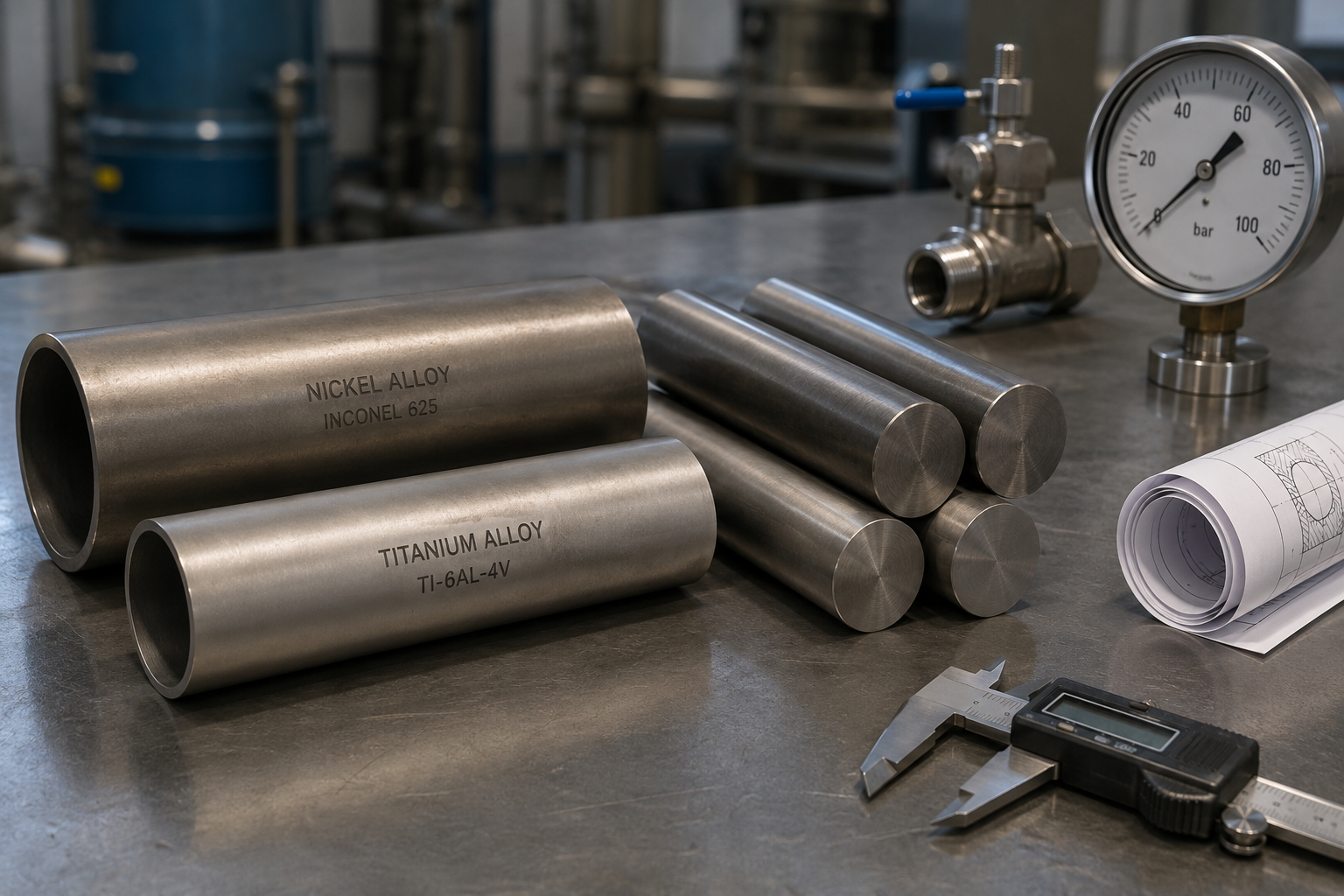
For buyers of nickel alloy tubes, nickel alloy bars, titanium alloy tubes and titanium alloy bars, the main question is not simply “Which alloy is best?” The better question is:
Which alloy is suitable for this exact temperature, pressure, corrosion medium, load, service life, standard and inspection requirement?
A material that performs well in one environment may not perform well in another. This is why buyers should define the full working condition before final material selection.
Quick Checklist: What Working Conditions Should Buyers Provide?
Before asking for a material recommendation, buyers should prepare the following information.
| Working Condition | What Buyers Should Provide | Why It Matters |
|---|---|---|
| Operating Temperature | Maximum, minimum, continuous and intermittent temperature | Affects strength, oxidation, creep and corrosion rate |
| Pressure | Internal pressure, external pressure, pressure fluctuation or surge | Affects tube wall thickness, stress and safety margin |
| Corrosive Media | Chemical name, concentration, pH, chloride level, sulfur content, oxygen level | Determines corrosion resistance requirement |
| Flow Condition | Flow velocity, turbulence, solids, slurry, erosion risk | May cause erosion-corrosion or localized damage |
| Mechanical Load | Static load, cyclic load, bending, torsion, vibration, impact | Determines strength, fatigue and toughness requirements |
| Thermal Cycling | Heating/cooling frequency and temperature change rate | May cause thermal fatigue or stress concentration |
| Service Duration | Short-term, batch operation, continuous operation, years of service | Creep, oxidation and corrosion are time-dependent |
| Welding / Fabrication | Welding, bending, machining, threading, heat treatment after forming | Affects final properties and processing risk |
| Contact Materials | Dissimilar metals, fasteners, tube sheet, flanges, supports | Helps evaluate galvanic corrosion and expansion mismatch |
| Criticality | Non-critical, pressure-related, safety-related, aerospace, medical, chemical, marine | Determines inspection and documentation level |
| Standard Requirement | ASTM, ASME, AMS, EN, ISO or customer specification | Defines chemistry, mechanical properties and tests |
| Documentation | MTR/MTC, heat number, EN 10204 3.1/3.2, test reports, third-party inspection | Supports project acceptance and traceability |
If these details are incomplete, the supplier may only provide a general recommendation. For critical projects, general recommendations are not enough.
Why Can’t Buyers Select an Alloy Only from Basic Working Conditions?
Many buyers know the basic operating temperature, pressure and main chemical medium. But material performance depends on how these factors interact.
Basic working conditions are useful, but alloy selection should also consider interactions between temperature, stress, corrosive media, flow, contaminants and time. A material that looks suitable in a simple datasheet may still face problems under combined real-world conditions.
For example:
- Temperature can reduce strength, accelerate oxidation or increase corrosion rate.
- Pressure can increase mechanical stress and influence wall thickness requirements.
- Chlorides may increase pitting, crevice corrosion or stress corrosion cracking risk in some environments.
- Cyclic loading may lead to fatigue.
- Corrosion plus cyclic loading may lead to corrosion fatigue.
- High flow velocity or particles may cause erosion-corrosion.
- Dissimilar metals in an electrolyte may create galvanic corrosion.
- Startup, shutdown and cleaning conditions may be more aggressive than normal operation.
Key Environmental Interactions
| Interaction | Why It Matters |
|---|---|
| Temperature + Stress | May increase creep, stress relaxation or strength loss |
| Temperature + Oxygen / Hot Gas | May increase oxidation or high-temperature corrosion |
| Stress + Corrosive Media | May increase stress corrosion cracking risk in susceptible alloys |
| Cyclic Load + Corrosion | May reduce fatigue life through corrosion fatigue |
| Flow + Particles + Corrosion | May cause erosion-corrosion or impingement attack |
| Chloride + Crevice Area | May increase localized corrosion risk |
| Dissimilar Metals + Electrolyte | May cause galvanic corrosion |
| Heat Treatment + Service Condition | May change strength, ductility or corrosion behavior |
| Surface Finish + Media | May affect cleanability, friction, corrosion initiation and inspection |
Stress corrosion cracking is crack growth in a corrosive environment and can occur when susceptible alloys are exposed to tensile stress and specific chemical conditions. Galvanic corrosion occurs when dissimilar metals are electrically connected in an electrolyte and one metal corrodes preferentially. These examples show why alloy selection should not rely only on one parameter.
What Hidden Factors in Working Environments Are Often Missed?
Many failures or rejections happen because the buyer described only the normal operating condition, not the full working cycle.
Hidden Factors Buyers Should Check
| Hidden Factor | What to Ask | Possible Risk If Ignored |
|---|---|---|
| Startup Conditions | Is temperature, pressure or chemistry different during startup? | Thermal shock, condensation, temporary corrosion |
| Shutdown Conditions | Is the system cleaned, purged, drained or left wet? | Crevice corrosion, deposits, stagnant corrosion |
| Cleaning Process | Acid cleaning, alkaline cleaning, steam cleaning, sterilization? | Surface attack, pitting, contamination |
| Minor Impurities | Chlorides, sulfur compounds, fluorides, dissolved oxygen, H₂S? | Localized corrosion or cracking risk |
| Concentration Changes | Does evaporation or boiling concentrate chemicals? | More aggressive corrosion than expected |
| Flow Velocity | Is the fluid stagnant, fast-moving or turbulent? | Erosion-corrosion or deposits |
| Solids / Slurry | Are particles present in the flow? | Abrasion and erosion |
| Vibration | Is the component near pumps, compressors or rotating equipment? | Fatigue and loosening |
| Residual Stress | Welding, cold working, bending, machining, threading? | Higher cracking or distortion risk |
| Crevice Zones | Gaskets, tube sheets, clamps, deposits, dead legs? | Crevice corrosion |
| Dissimilar Metal Contact | Is titanium connected to stainless steel, copper alloy or nickel alloy? | Galvanic corrosion risk |
| Maintenance Interval | Can the equipment be inspected or replaced easily? | Material choice may need higher safety margin |
A good material recommendation should consider both normal operation and abnormal or transient conditions.
How Should Buyers Evaluate Datasheets and Supplier Data?
Datasheets are useful, but they are not the same as an application guarantee. Buyers should check whether the data is relevant to the actual working condition.
Supplier data should be evaluated by asking what standard was used, what test condition applied, whether values are typical or guaranteed, and whether the material condition matches the supplied product. Critical projects may need additional testing, MTR/MTC review, heat number traceability or third-party inspection.
Questions for Evaluating Technical Data
| Data Question | Why It Matters |
|---|---|
| Was the test performed at room temperature or service temperature? | Room-temperature data may not represent high-temperature performance |
| Is the value typical, minimum, maximum or specification limit? | Critical design may require guaranteed limits |
| What standard was used? | ASTM, ASME, AMS, EN or ISO standards may define different requirements |
| What material condition was tested? | Annealed, solution annealed, aged, cold worked or stress relieved material may behave differently |
| Was corrosion data tested in the same chemical media? | Pure chemical data may not match real process fluid with impurities |
| Was exposure time similar to the real application? | Long-term corrosion, creep or oxidation may be time-dependent |
| Are there data for localized corrosion? | General corrosion rate may not show pitting, crevice corrosion or SCC risk |
| Was the sample welded, machined or heat treated? | Fabrication can change surface condition, residual stress and microstructure |
| Can the supplier provide MTR/MTC? | Confirms batch-level chemical and mechanical properties |
| Can the supplier provide heat number traceability? | Links the physical material to certificate and records |
A Mill Test Report or Material Test Certificate certifies a metal product’s chemical and physical properties and states compliance with applicable standards. A heat number links the metal product to a specific batch or heat for traceability.
When Should Buyers Consider Nickel Alloys?
Nickel alloys are often considered when the application involves high temperature, corrosion, pressure, or aggressive chemical conditions. However, buyers should select the exact nickel alloy grade based on the environment.
Nickel-based superalloys are commonly used for elevated-temperature applications where creep resistance, oxidation resistance, corrosion resistance and high-temperature strength are important. Superalloys are designed for high-temperature service, and creep and oxidation resistance are primary concerns.
Typical Reasons to Consider Nickel Alloys
| Working Condition | Why Nickel Alloys May Be Considered |
|---|---|
| High Temperature | Many nickel alloys retain strength better than common stainless steels at elevated temperature |
| Creep Risk | Nickel-based superalloys may provide better creep resistance in high-temperature stress conditions |
| Oxidation Exposure | Chromium-containing nickel alloys may form protective oxide layers |
| Aggressive Chemicals | Some nickel alloys resist selected acids, caustic solutions or mixed chemical media |
| Chloride / Marine Service | Selected nickel alloys may resist pitting and crevice corrosion depending on grade |
| Pressure Equipment | Nickel alloy tubes may be used in heat exchangers, reactors and process piping |
| Machined Components | Nickel alloy bars can be used for shafts, fasteners, valve parts and pump components |
| High-Value Equipment | Long-term reliability may justify higher material cost |
Common Nickel Alloy Examples
| Alloy | Typical Selection Reason | Buyer Caution |
|---|---|---|
| Inconel 625 / UNS N06625 | Corrosion resistance, oxidation resistance, good strength | Verify exact chemical media, temperature and standard |
| Inconel 718 / UNS N07718 | High strength, fatigue and creep resistance up to about 700°C | Not always the best for very high oxidation or chemical corrosion |
| Alloy 600 / UNS N06600 | Oxidation resistance and high-temperature stability | Strength and corrosion limits must be checked |
| Alloy 825 / UNS N08825 | Resistance to selected acids and chloride environments | Verify media concentration and temperature |
| Hastelloy C276 / UNS N10276 | Severe chemical corrosion environments | Cost, availability and exact media compatibility should be reviewed |
| Monel 400 / UNS N04400 | Marine and selected chemical environments | Not suitable for every oxidizing environment |
For nickel alloy tubes such as UNS N06625, ASTM B444 covers cold-worked seamless pipe and tube and includes chemical testing, tensile testing, hydrostatic testing and nondestructive electric testing requirements. For nickel alloy rods, bars, forgings and forging stock used in moderate or high-temperature service, ASTM B637 includes chemical analysis, heat treatment, tension testing, hardness testing and stress-rupture testing requirements.
When Should Buyers Consider Titanium Alloys?
Titanium alloys are often considered when low weight, corrosion resistance and strength-to-weight ratio are important. They are widely used in aerospace, marine, medical and chemical applications, but they are not automatically suitable for every high-temperature or reducing environment.
Titanium and titanium alloys are known for high tensile strength-to-density ratio, corrosion resistance, fatigue resistance and use in aircraft, marine, medical and highly stressed components. However, titanium alloy selection should still be verified by exact grade, temperature, stress, media and fabrication condition.
Typical Reasons to Consider Titanium Alloys
| Working Condition | Why Titanium Alloys May Be Considered |
|---|---|
| Weight-Sensitive Design | Titanium offers high strength-to-weight ratio |
| Marine Environment | Titanium is often selected for corrosion resistance in seawater-related applications |
| Aerospace Components | Low density and strength are valuable for aircraft applications |
| Medical Applications | Titanium alloys are widely used where biocompatibility is important |
| Oxidizing Media | Titanium can perform well in many oxidizing environments |
| Heat Exchanger Tubes | Titanium tubes may be used in seawater or chloride-containing cooling systems |
| Low-Magnetic Requirement | Titanium is useful where magnetic response must be limited |
| Long-Term Corrosion Resistance | Higher initial cost may be justified by corrosion performance in suitable environments |
Common Titanium Alloy Examples
| Titanium Grade | Typical Selection Reason | Buyer Caution |
|---|---|---|
| Titanium Grade 2 / UNS R50400 | Commercially pure titanium, good corrosion resistance and formability | Strength is lower than Grade 5 |
| Titanium Grade 5 / Ti-6Al-4V / UNS R56400 | High strength-to-weight ratio, aerospace and mechanical components | Corrosion and high-temperature capability must be verified |
| Titanium Grade 7 / UNS R52400 | Palladium-added titanium for improved corrosion resistance in some reducing media | Cost and availability should be checked |
| Titanium Grade 12 / UNS R53400 | Titanium alloy with improved strength and corrosion behavior in some environments | Verify application and standard |
| Titanium Grade 23 / Ti-6Al-4V ELI | Medical and high-reliability applications where ELI grade is needed | Requires strict documentation and traceability |
ASTM B348/B348M covers titanium and titanium alloy bars and billets, including chemical composition and tensile property requirements. Buyers should specify titanium grade, UNS number, standard, condition, diameter, length, tolerance, surface finish and testing requirements.
Nickel vs Titanium: How Should Buyers Compare Them?
The decision between nickel and titanium should be based on the dominant risk in the working environment.
Practical Comparison
| Selection Factor | Nickel Alloys | Titanium Alloys |
|---|---|---|
| Density / Weight | Heavier | Much lighter |
| High-Temperature Strength | Often stronger at elevated temperature, depending on grade | More limited at high temperature; verify grade and load |
| Creep Resistance | Strong advantage for many nickel superalloys | Must be carefully verified by grade and temperature |
| General Corrosion Resistance | Excellent in many chemical environments, depending on grade | Excellent in many oxidizing and chloride-containing environments, depending on grade |
| Reducing Media | Some nickel alloys perform well | Titanium may need caution in some reducing or hydrogen-producing environments |
| Oxidation Resistance | Strong for many chromium-containing nickel alloys | Good in some temperature ranges, but must verify limits |
| Marine Service | Certain nickel alloys are suitable | Titanium is often attractive for seawater service |
| Biocompatibility | Some nickel alloys are used industrially, but nickel sensitivity may matter in medical contexts | Titanium is widely used in medical implant applications |
| Machining | Some nickel alloys are difficult to machine | Titanium also requires careful machining due to heat and galling issues |
| Cost | Often high, varies by grade | Often high, but lower weight may reduce total part mass |
| Typical Product Form | Tubes, pipes, bars, forgings, fittings | Tubes, bars, sheets, billets, medical/aerospace parts |
Simple Decision Logic
| If the Main Challenge Is... | Buyers Often Start by Evaluating... |
|---|---|
| High temperature + sustained stress | Nickel-based superalloys |
| Severe chemical corrosion | Specific nickel alloys or titanium grades depending on media |
| Seawater / chloride cooling system | Titanium tubes or selected nickel alloys |
| Weight-sensitive aerospace structure | Titanium alloys |
| High-strength fastener or shaft at elevated temperature | Nickel alloy bars such as Alloy 718 |
| Medical implant or biocompatibility requirement | Titanium Grade 5, Grade 23 or other medical-grade titanium |
| Heat exchanger in chloride environment | Titanium tubes, Alloy 625, Alloy 825 or other grade after media review |
| Mixed acid / oxidizing-reducing chemical process | Hastelloy-type or other corrosion-resistant nickel alloys after media review |
This table is only a starting point. Final material selection should be based on the exact medium, concentration, temperature, pressure, stress and required standard.
What Standards and Documents Should Buyers Connect to Material Selection?
Material selection should not stop at the alloy name. Buyers should also confirm the product standard, certificate and inspection requirements.
Useful Standards and Documents
| Standard / Document | Why It Matters |
|---|---|
| ASTM B444 | Nickel alloy seamless pipe and tube such as UNS N06625; includes chemical, tensile, hydrostatic and nondestructive electric testing |
| ASTM B637 | Nickel alloy rods, bars, forgings and forging stock for moderate or high-temperature service |
| ASTM B348/B348M | Titanium and titanium alloy bars and billets |
| Mill Test Report / MTC | Certifies chemical and physical properties and compliance with standards |
| Heat Number | Links physical material to batch, composition, manufacturing and quality records |
| Ultrasonic Testing | Helps detect internal flaws or characterize material when required |
| Eddy-Current Testing | Helps detect or characterize surface and subsurface flaws in conductive materials |
| Hydrostatic Test | Pressure and leak testing for pipes, tubes and pressure-containing components |
| ISO/IEC 17025 | Requirements for testing and calibration laboratory competence |
A supplier’s quality management certificate does not replace batch-level material documentation. Buyers should still request MTR/MTC, heat number, product marking, inspection reports and third-party inspection if required.
What Questions Should Buyers Ask Suppliers Before Choosing Nickel or Titanium?
Before selecting nickel or titanium alloy tubes and bars, buyers should ask practical questions that connect the material to the working condition.
Supplier Questions
| Question | Why It Matters |
|---|---|
| Which alloy grades are suitable for my temperature and media? | Helps narrow down material options |
| What UNS number should I specify? | Avoids trade name confusion |
| What product standard applies? | Defines chemistry, mechanical properties and tests |
| Is the data based on room-temperature or service-temperature testing? | Prevents overreliance on irrelevant data |
| Is corrosion data available for my exact chemical media? | Helps avoid generic corrosion claims |
| What are the limitations of this alloy? | A good supplier should explain trade-offs |
| What heat treatment condition is supplied? | Condition affects strength, ductility and corrosion behavior |
| Can you provide MTR/MTC and heat number traceability? | Supports quality verification |
| Do I need UT, ET, hydrostatic, PMI or dimensional inspection? | Defines inspection scope |
| Can you support third-party inspection? | Useful for critical or high-value orders |
| What surface finish is recommended? | Affects corrosion, machining, cleanliness and appearance |
| What packaging is suitable for export? | Prevents damage and traceability loss during shipment |
RFQ Checklist for Nickel or Titanium Alloy Selection
To get useful material advice and an accurate quotation, buyers should provide a complete RFQ.
| RFQ Item | Information to Provide |
|---|---|
| Material Family | Nickel alloy or titanium alloy |
| Candidate Grade | Inconel 625, Inconel 718, Hastelloy C276, Alloy 825, Titanium Grade 2, Titanium Grade 5, etc. |
| UNS Number | N06625, N07718, N10276, N08825, R50400, R56400, etc. |
| Product Form | Seamless tube, welded tube, pipe, round bar, rod, billet, forged bar |
| Standard | ASTM, ASME, AMS, EN, ISO or customer specification |
| Size and Tolerance | OD, wall thickness, diameter, length, straightness, surface finish |
| Quantity | Pieces, meters, kilograms or tons |
| Operating Temperature | Maximum, minimum, continuous, intermittent and cycling temperature |
| Pressure / Load | Internal pressure, tensile load, bending, vibration, cyclic load |
| Corrosive Media | Chemical name, concentration, pH, chloride, sulfur, oxygen, flow rate |
| Service Duration | Short-term, batch service, continuous service, design life |
| Fabrication Method | Welding, bending, machining, threading, heat treatment after forming |
| Required Tests | Chemical, tensile, hardness, UT, ET, hydrostatic, PMI, corrosion testing |
| Required Documents | MTR/MTC, EN 10204 3.1/3.2, heat number, inspection reports |
| Inspection Requirement | Supplier inspection, third-party inspection, witness testing |
| Packaging Requirement | Caps, waterproof film, wooden case, bundle marking, separate heats |
| Delivery Requirement | Destination, Incoterms, delivery schedule |
A complete RFQ helps the supplier recommend a material based on real project conditions instead of guessing.
How Can Emily PIPE Support Alloy Selection?
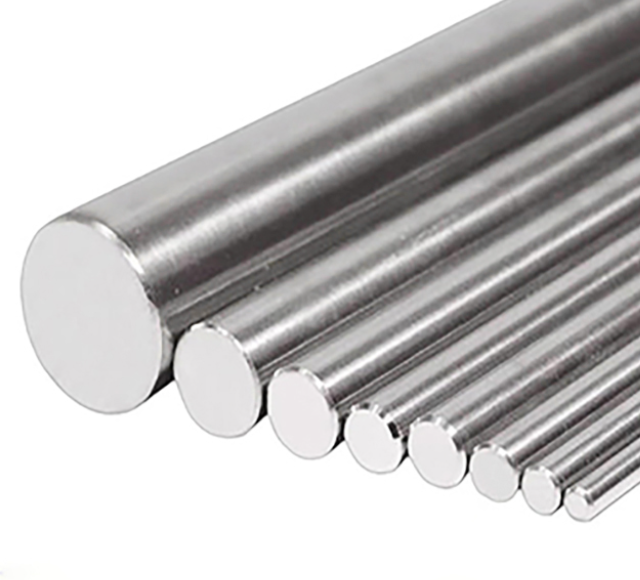
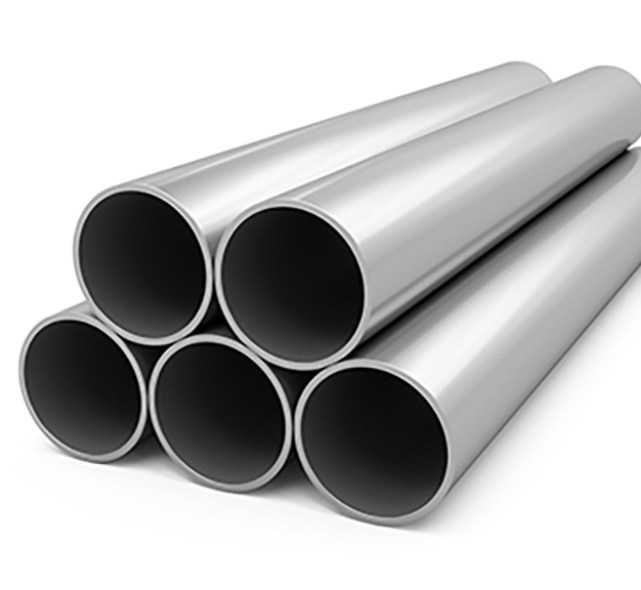
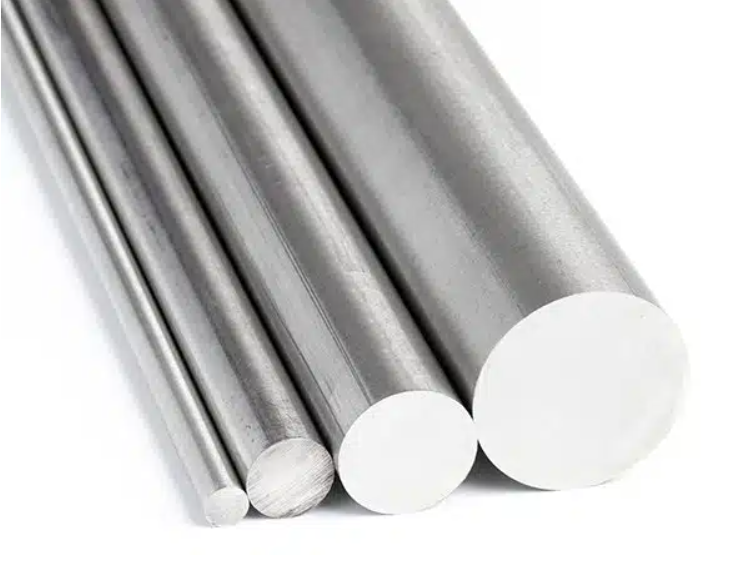
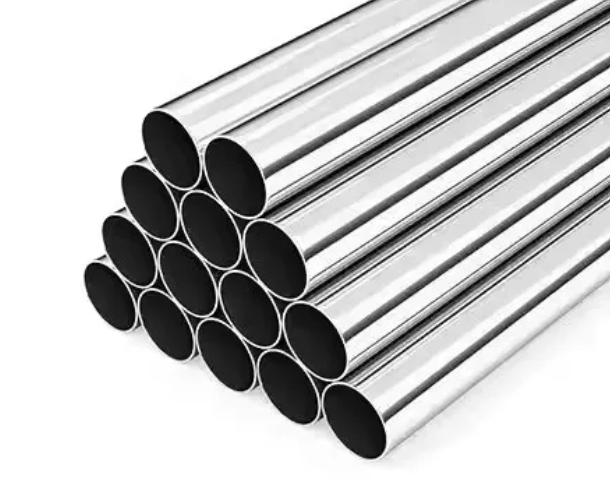
Emily PIPE supplies nickel alloy tubes, nickel alloy bars, titanium alloy tubes and titanium alloy bars for global industrial customers. We support standard and customized specifications according to drawings, technical requirements and application environments.
For material selection projects, we can help review:
- nickel alloy and titanium alloy grade options
- UNS number and equivalent grade confirmation
- ASTM / ASME / EN / ISO / AMS standard requirements
- tube OD, wall thickness, length and tolerance
- bar diameter, length, tolerance and surface condition
- application environment and material selection logic
- heat treatment condition
- MTR / MTC and heat number traceability
- UT, ET, hydrostatic, PMI and dimensional inspection requirements
- third-party inspection requirements
- packaging and export documentation
We recommend sharing working conditions as early as possible. Temperature, pressure, chemical media, flow, load, service life, standard and test requirements all help us prepare a more accurate material scope.
Conclusion
Choosing between nickel and titanium alloys is not a simple matter of matching one temperature or one corrosion environment. The safest approach is to define the complete working condition and then compare material properties, standards, testing requirements and documentation.
Nickel alloys are often considered for high-temperature strength, creep resistance, oxidation resistance and aggressive chemical environments. Titanium alloys are often considered for low weight, corrosion resistance, marine service, aerospace applications and medical applications. However, each grade has limits, and final selection should be verified against the exact temperature, pressure, media, load, fabrication method and project specification.
If you are sourcing nickel alloy tubes, nickel alloy bars, titanium alloy tubes or titanium alloy bars and need material selection support, you can send us your material grade, UNS number, size, standard, working temperature, pressure, corrosive media, mechanical load, testing requirements and delivery schedule. Our team can help review the material scope and provide a quotation based on your project needs.