
Why Third-Party Inspection Matters When Buying Nickel and Titanium Alloy Materials
Are you worried about material quality when purchasing nickel alloy or titanium alloy tubes and bars from overseas suppliers? In international alloy procurement, price and delivery time are important, but they are not enough. Buyers also need confidence that the delivered material matches the purchase order, standard, certificate, inspection scope, and application requirements.
Third-party inspection matters in global alloy purchasing because it provides independent verification against agreed requirements before shipment or acceptance. ISO/IEC 17020:2026 specifies requirements for the competence, impartiality and consistent operation of inspection bodies. It also explains that inspection can cover materials, products, processes, quantity, quality, safety and fitness for purpose.
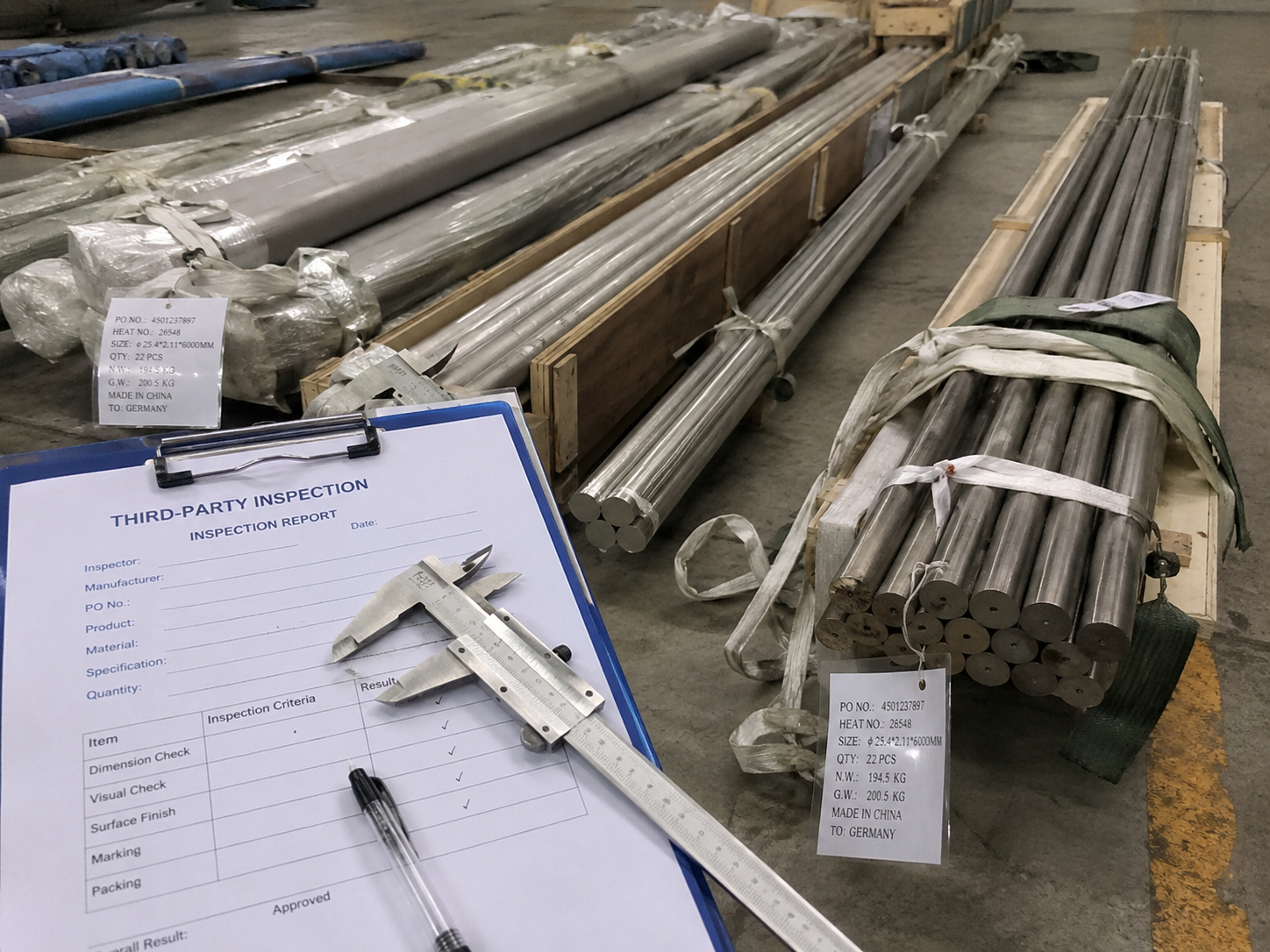
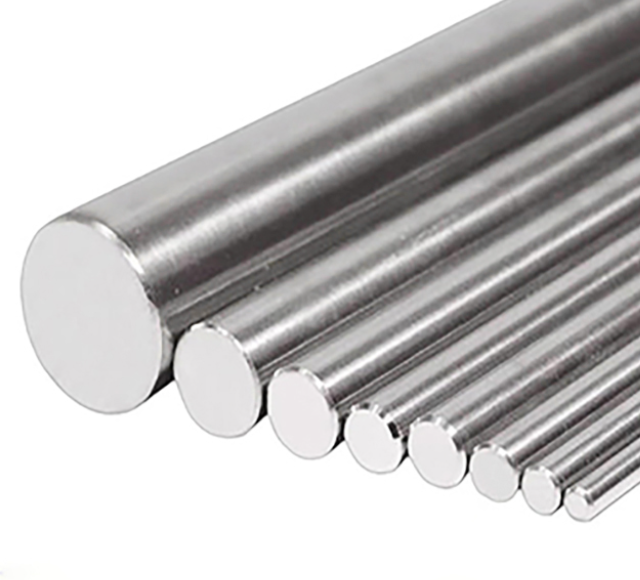
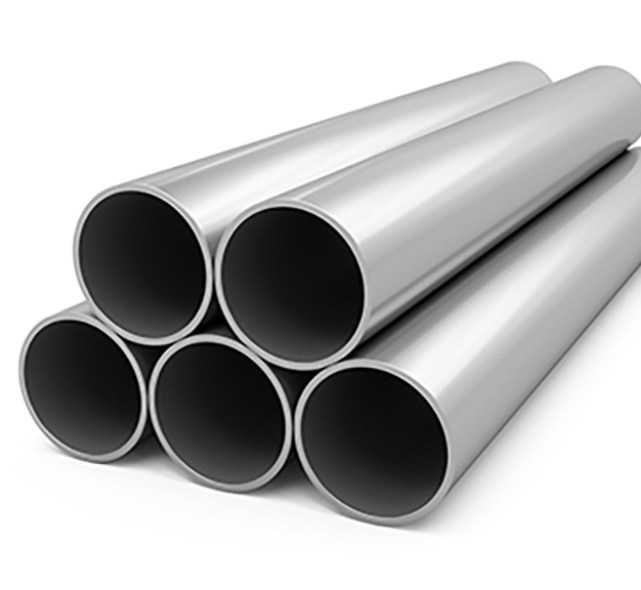
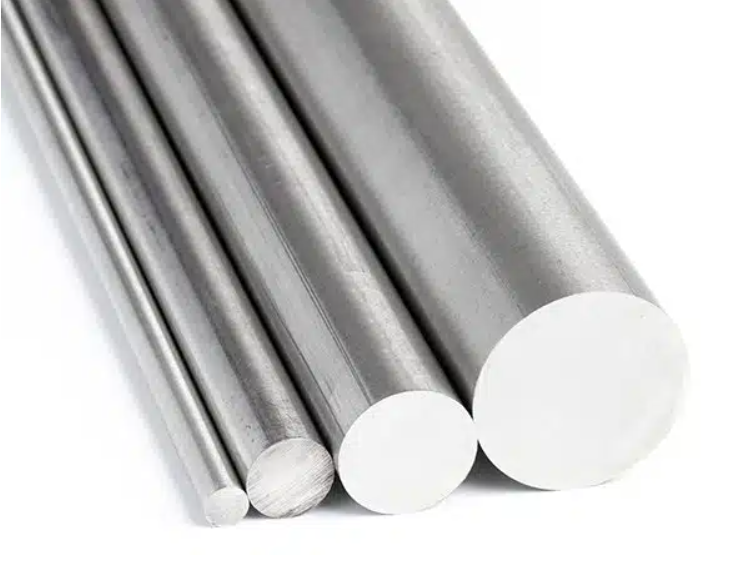
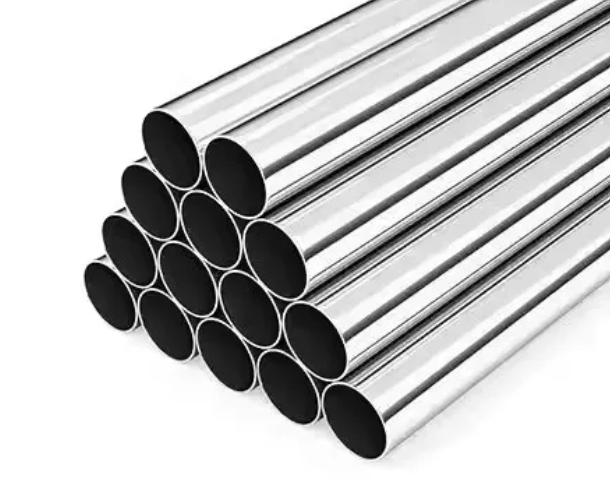
For specialized materials such as nickel alloy tubes, nickel alloy bars, titanium alloy tubes and titanium alloy bars, a simple visual check is often not enough. Buyers may need to verify material grade, UNS number, standard, MTR/MTC, heat number, dimensions, surface condition, testing reports, packaging, and shipment documents.
Third-party inspection is not a magic guarantee. It does not replace a reliable supplier, a clear purchase order, correct material selection, or proper engineering review. But when properly specified, it can help buyers reduce the risk of wrong material, incomplete documents, dimensional mismatch, missing tests, surface damage, packaging problems, and shipment disputes.
Quick Answer: What Does Third-Party Inspection Help Buyers Verify?
Third-party inspection can help buyers verify whether the supplied material matches the agreed requirements before shipment or acceptance.
| Inspection Area | What the Inspector Can Check | Why It Matters |
|---|---|---|
| Purchase Order Match | Grade, UNS number, standard, size, quantity, surface, testing, documents | Confirms the shipment matches the agreed order |
| Material Documents | MTR/MTC, CoC, inspection reports, EN 10204 3.1/3.2 if required | Supports project acceptance and traceability |
| Heat Number Traceability | Heat number on MTR, product marking, label and packing list | Links physical material to a specific batch |
| Material Grade Verification | PMI, chemical analysis, or document review when required | Helps prevent wrong material or mixed material |
| Dimensions | OD, wall thickness, diameter, length, straightness, tolerance | Reduces machining, welding or assembly risk |
| Surface Condition | Scratches, pits, cracks, dents, oxidation, contamination, finish quality | Affects acceptance, corrosion risk and processing |
| NDT Reports | UT, ET, hydrostatic, PT, RT or other tests if required | Confirms required inspection has been performed |
| Witness Testing | Inspector witnesses agreed testing at supplier site or lab | Adds independent evidence for critical orders |
| Packaging | Wooden case, caps, waterproof film, anti-scratch protection, labels | Reduces transport damage and traceability loss |
| Quantity and Marking | Pieces, meters, weight, bundles, heat marking, size marking | Avoids shipment mismatch |
| Pre-Shipment Condition | Final visual check before export | Helps catch problems before international shipping |
A third-party inspector should not only confirm whether material “looks good.” The inspection should be linked to the purchase order, standard, inspection plan, and acceptance criteria.
Why Can’t Buyers Rely Only on Supplier Quality Reports?
Supplier quality reports are important. A reliable supplier should provide accurate MTR/MTC, test reports, packing lists and traceability documents. But for critical or high-value orders, buyers may still need an independent check.
A Mill Test Report or Material Test Certificate certifies a metal product’s chemical and physical properties and states compliance with applicable standards. However, buyers should still verify whether the certificate matches the actual delivered material, heat number, marking, dimensions and required inspection scope.
A supplier’s MTR may show chemical composition and mechanical properties, but buyers should ask:
- Does the heat number on the MTR match the material marking?
- Does the product standard match the purchase order?
- Does the certificate show the correct product form?
- Are all required tests included?
- Are UT, ET, hydrostatic, PMI or dimensional reports required?
- Is the certificate batch-specific or generic?
- Does the packing list match the delivered quantity?
- Does the physical material match the dimensions and surface finish ordered?
A heat number is a traceable identifier that links a metal product to its specific batch or heat, allowing access to records about composition, manufacturing process and quality assurance. This makes heat number matching one of the most important parts of alloy material verification.
Why Supplier Reports May Need Independent Verification
| Issue Type | What Can Go Wrong | How TPI Helps |
|---|---|---|
| Document Mismatch | MTR, heat number, label or packing list do not match | Cross-checks documents against physical material |
| Missing Test Data | Certificate does not include required UT, ET, hydrostatic, hardness or tensile data | Confirms whether required reports are included |
| Wrong Standard | Supplier quotes one standard but certificate lists another | Verifies standard before shipment |
| Dimensional Issue | OD, wall thickness, diameter or length does not match PO | Measures material before shipment |
| Surface Damage | Scratches, dents, pits, contamination or wrong finish | Performs visual and surface inspection |
| Material Mix-Up | Different grades or heats mixed in shipment | Checks marking, heat numbers and PMI if required |
| Incomplete Packaging | Poor packing causes damage during sea or air freight | Checks export packaging before shipment |
| Unclear Traceability | Material cannot be linked to certificate or batch | Requires heat number and marking confirmation |
Third-party inspection is especially useful when the buyer cannot personally visit the factory, when the order is urgent, when the supplier is new, or when the material will be used in a critical application.
How Does Third-Party Inspection Reduce Delays and Production Setbacks?
Many alloy procurement problems become expensive because they are found too late. If a buyer discovers wrong dimensions, missing documents or surface damage only after the material arrives, the result may be production delays, rework, extra testing, replacement cost, or shipment disputes.
Pre-shipment inspection is a quality control method for checking goods before shipment. It can include checking product quality, quantity, packing, documentation, test reports, packing lists, and compliance with specifications, contracts or purchase orders.
For overseas buyers, this is important because returning or replacing alloy materials after international shipment can be difficult and expensive. Customs, freight, production schedules, and project deadlines can make post-delivery corrections much harder than pre-shipment corrections.
Common Delay Risks That TPI Can Help Reduce
| Delay Risk | How It Happens | How TPI Helps Before Shipment |
|---|---|---|
| Wrong Material Grade | Material label, MTR or actual material does not match order | Checks grade, UNS number, heat number and PMI if required |
| Missing Documents | MTR, CoC, inspection report or EN 10204 document is incomplete | Reviews documents before shipment |
| Dimension Mismatch | Tube OD, wall thickness, bar diameter or length is outside requirement | Measures dimensions before release |
| Surface Defects | Scratches, pits, dents or contamination found after delivery | Performs visual inspection before export |
| Packing Damage | Tubes or bars are not protected well for international transport | Checks packaging, caps, waterproof film and wooden cases |
| Quantity Shortage | Pieces, meters, bundles or weight do not match invoice | Confirms quantity and packing list |
| Wrong Test Scope | Required UT, ET, hydrostatic or PMI was not performed | Checks inspection reports and witnesses tests if required |
| Late Project Acceptance | End user rejects documents or traceability | Reviews certificate format and project requirements before shipment |
The goal is not to add inspection for every small order. The goal is to identify which orders carry enough risk to justify independent verification.
When Is Third-Party Inspection Recommended for High-Performance Alloys?
Not every alloy order needs third-party inspection. For repeat orders from a long-term qualified supplier, with low-risk applications and simple requirements, supplier documents and internal QC may be enough.
However, TPI becomes more valuable when the cost of failure, rejection or delay is high.
When Buyers Should Strongly Consider TPI
| Situation | Why TPI May Be Useful |
|---|---|
| New Supplier | Supplier capability, document accuracy and quality consistency are not yet proven |
| High-Value Order | Financial loss from rejection or replacement may be significant |
| Critical Application | Material will be used in pressure, high-temperature, corrosive, aerospace, medical or safety-related systems |
| Tight Tolerance | Small dimensional deviations may cause machining or assembly problems |
| Complex Material Requirement | Heat treatment, surface finish, grain size, microstructure or special testing is required |
| Multiple Heats / Batches | Risk of material mix-up increases |
| Project Requires EN 10204 3.2 | Buyer or authorized inspector may need to witness or verify testing |
| Third-Party Lab Testing Required | Independent chemical, mechanical or metallographic testing is needed |
| Buyer Cannot Inspect On Site | TPI acts as buyer’s local inspection support before shipment |
| Supplier Performance Is Uncertain | Additional verification reduces procurement uncertainty |
Low-Risk vs High-Risk Decision Guide
| Factor | Lower-Risk Scenario | Higher-Risk Scenario |
|---|---|---|
| Supplier Relationship | Long-term supplier with stable records | New or unverified supplier |
| Product Criticality | Non-critical stock material | Pressure, aerospace, medical, chemical or marine service |
| Material Complexity | Standard grade, simple size, common stock | Special alloy, special heat treatment, tight tolerance |
| Testing Requirement | Basic MTR and visual check | UT, ET, hydrostatic, PMI, metallography or corrosion test |
| Internal Buyer QC | Buyer has full incoming inspection capability | Buyer lacks lab or NDT capability |
| Cost of Failure | Easy replacement, low downtime | Production halt, project penalty, safety or compliance risk |
| Documentation Need | Basic supplier certificate accepted | End user requires full traceability and inspection evidence |
Third-party inspection should be treated as a risk-management tool. The higher the risk, the more useful an independent inspection can be.
What Specific Quality Checks Should TPI Include for Nickel and Titanium Alloys?
Generic inspection may not be enough for nickel and titanium alloy materials. The inspection scope should match the product form, standard, application and buyer’s acceptance requirements.
For nickel and titanium alloy tubes and bars, third-party inspection may include document review, heat number traceability, dimensional inspection, visual inspection, PMI, chemical analysis, mechanical testing, NDT, hydrostatic testing, metallographic examination, packaging inspection and third-party witness testing when required.
Common TPI Items for Alloy Tubes and Bars
| Inspection Type | Purpose | Typical Method / Document |
|---|---|---|
| Document Review | Verify PO, standard, MTR, CoC, inspection reports | MTR/MTC, packing list, invoice, test reports |
| Heat Number Check | Confirm traceability from material to certificate | Heat number marking, label, MTR, packing list |
| Material Grade Verification | Reduce risk of wrong alloy or mix-up | PMI, chemical analysis, MTR review |
| Chemical Analysis | Verify element composition when required | OES, ICP-OES, lab chemical analysis, PMI screening |
| Mechanical Testing | Confirm strength, yield, elongation, hardness if required | Tensile test, hardness test, impact test if applicable |
| Dimensional Inspection | Confirm OD, wall thickness, diameter, length, straightness | Caliper, micrometer, thickness gauge, CMM if required |
| Visual / Surface Inspection | Identify scratches, dents, cracks, pits, contamination | Visual inspection, surface finish check |
| Ultrasonic Testing | Detect internal discontinuities when specified | UT report, witnessed UT |
| Eddy Current Testing | Detect surface or near-surface flaws in conductive materials | ET report, witnessed ET |
| Hydrostatic Testing | Verify pressure tightness of tubes or pipes | Hydrostatic test report, witnessed test |
| Metallographic Examination | Evaluate grain size, microstructure or phase condition when required | Metallography report, microstructure photos |
| Packaging Inspection | Confirm export protection and traceability | Wooden case, plastic caps, waterproof film, labels |
| Final Random Inspection | Check finished and packed goods before shipment | Pre-shipment inspection report |
ISO/IEC 17025 is the international standard for testing and calibration laboratories. ISO states that it sets requirements for laboratory competence, impartiality and consistent operation, helping ensure accuracy and reliability of testing and calibration results.
Which Standards and Documents Should Buyers Connect to TPI?
Third-party inspection becomes more useful when it is connected to recognized standards and clear documents.
Useful Standards and References
| Standard / Document | Why It Matters |
|---|---|
| ISO/IEC 17020:2026 | Requirements for inspection bodies performing inspection with competence, impartiality and consistency |
| ISO/IEC 17025 | Requirements for testing and calibration laboratory competence |
| ISO 9001 | Quality management system standard for process control and customer requirements |
| ASTM B444 | Nickel alloy seamless pipe and tube, including chemical, tensile, hydrostatic and nondestructive electric testing requirements |
| ASTM B637 | Nickel alloy rod, bar, forgings and forging stock for moderate or high-temperature service |
| ASTM B348/B348M | Titanium and titanium alloy bars and billets |
| Mill Test Report | Certifies chemical and physical properties and compliance with standards |
| Heat Number | Links physical metal to batch, composition, manufacturing and QA records |
| Ultrasonic Testing | NDT method for internal flaws and material characterization |
| Eddy-Current Testing | NDT method for conductive materials, surface and near-surface flaws |
| Hydrostatic Test | Pressure and leak test commonly used for pipes, pipelines and pressure vessels |
| Pre-Shipment Inspection | Quality control method before shipment, including goods, documents, packing and compliance checks |
For example, ASTM B444 covers UNS N06625 nickel alloy seamless pipe and tube and includes chemical testing, tensile testing, hydrostatic testing and nondestructive electric testing. ASTM B637 covers precipitation-hardening and cold-worked nickel alloy rods, bars, forgings and forging stock for high-temperature service, including chemical analysis, heat treatment, tension, hardness and stress-rupture testing. ASTM B348/B348M covers titanium and titanium alloy bars and billets, including chemical composition and tensile property requirements.
What Should a Third-Party Inspection Report Include?
A useful TPI report should be clear, traceable and connected to the purchase order. It should not only say “passed.”
TPI Report Checklist
| Report Item | What Buyers Should Check |
|---|---|
| Buyer / Supplier / Project Information | Confirms the report belongs to the correct order |
| Purchase Order Number | Links inspection to commercial order |
| Material Grade and UNS Number | Confirms material identity |
| Product Form | Tube, pipe, round bar, billet, forged bar |
| Applicable Standard | ASTM, ASME, EN, ISO, AMS or customer specification |
| Size and Quantity | Confirms OD, wall thickness, diameter, length, pieces, weight |
| Heat Number / Lot Number | Must match MTR, marking and packing list |
| Document Review Result | MTR, CoC, test reports, EN 10204 certificate if required |
| Inspection Scope | Visual, dimensional, PMI, UT, ET, hydrostatic, packaging, witness testing |
| Sampling Method | Full inspection, random inspection, agreed AQL or project-specific sampling |
| Equipment Used | Measuring tools, PMI device, NDT equipment if applicable |
| Test Witness Records | Test date, method, standard, result and inspector observation |
| Nonconformities | Description, photos, quantity affected and supplier response |
| Photos | Product marking, surface, dimensions, packaging, labels |
| Final Conclusion | Accepted, rejected, pending correction, or conditional release |
| Inspector Signature and Date | Supports report accountability |
Buyers should require photos of material marking, heat number, labels, packaging and any nonconforming areas. This is especially important for overseas shipments where later dispute handling may be difficult.
What Questions Should Buyers Ask Before Arranging TPI?
Before arranging third-party inspection, buyers should not only tell the inspector to “check quality.” They should define the inspection scope clearly.
Buyer Questions
| Question | Why It Matters |
|---|---|
| What exactly should the inspector verify? | Avoids vague inspection scope |
| Which standard or purchase specification applies? | Gives the inspector clear acceptance criteria |
| Should inspection be 100% or sampling-based? | Affects cost, time and confidence level |
| Should the inspector witness testing or only review reports? | Important for UT, ET, hydrostatic or mechanical tests |
| Is PMI required? | Helps confirm material identity |
| Is laboratory testing required? | Needed for independent chemical or mechanical confirmation |
| Should the lab be ISO/IEC 17025 accredited? | Important for critical or regulated projects |
| Should the inspection body follow ISO/IEC 17020 principles? | Supports competence, impartiality and consistency |
| What photos are required? | Useful for remote buyer review |
| What happens if nonconformity is found? | Defines correction, replacement, re-inspection or rejection process |
| Who pays for re-inspection? | Avoids dispute |
| When should inspection happen? | Before packing, after packing, or before shipment |
A good inspection plan should be written before production is finished, not after a problem appears.
What Are the Limits of Third-Party Inspection?
Third-party inspection is valuable, but buyers should understand its limits.
TPI can reduce risk, but it cannot replace clear specifications, correct material selection, reliable suppliers, complete testing requirements, or proper engineering review.
What TPI Can and Cannot Do
| TPI Can Help With | TPI Cannot Automatically Guarantee |
|---|---|
| Verify selected order requirements | That every possible defect has been found |
| Review certificates and heat traceability | That the material will never fail in service |
| Check dimensions and surface condition | That the design or application is correct |
| Witness agreed tests | That unrequested tests were performed |
| Confirm packaging and shipment readiness | That no damage will happen during transport |
| Reduce supplier-document mismatch risk | That the supplier’s entire production system is perfect |
| Provide independent inspection evidence | That all future batches will be identical |
This is why buyers should define what needs to be checked, what standard applies, what acceptance criteria are used, and what documents must be delivered.
RFQ Checklist: What Buyers Should Provide for TPI of Alloy Materials
To make third-party inspection useful, buyers should include clear requirements in the RFQ or purchase order.
| RFQ Item | Information to Provide |
|---|---|
| Material Grade | Inconel 625, Inconel 718, Hastelloy C276, Alloy 825, Monel 400, Titanium Grade 2, Titanium Grade 5, etc. |
| UNS Number | N06625, N07718, N10276, N08825, N04400, R50400, R56400, etc. |
| Product Form | Seamless tube, welded tube, pipe, round bar, forged bar, billet |
| Standard | ASTM, ASME, EN, ISO, AMS, customer specification |
| Size and Tolerance | OD, wall thickness, diameter, length, straightness, surface finish |
| Quantity | Pieces, meters, kilograms, tons |
| Heat Treatment | Annealed, solution annealed, aged, stress relieved, cold worked |
| Application | Heat exchanger, pump shaft, valve stem, reactor, marine system, aerospace part, medical equipment |
| Required Documents | MTR/MTC, CoC, EN 10204 3.1/3.2, packing list, inspection reports |
| Required Tests | Chemical, tensile, hardness, UT, ET, hydrostatic, PMI, metallography |
| TPI Scope | Document review, dimensional inspection, visual inspection, witness test, packaging inspection |
| Sampling Plan | 100% inspection, random sampling, AQL or customer-defined plan |
| Acceptance Criteria | Standard requirements, drawing tolerance, project specification |
| Inspection Timing | Before packing, after packing, before shipment |
| Photo Requirements | Marking, heat number, surface, dimensions, packing, labels |
| Nonconformity Handling | Correction, replacement, re-inspection, rejection, claim process |
| Delivery Requirement | Shipment date, destination port, packing method |
A complete RFQ helps the supplier, inspector and buyer work from the same standard.
How Can Emily PIPE Support Third-Party Inspection?
Emily PIPE supplies nickel alloy tubes, nickel alloy bars, titanium alloy tubes and titanium alloy bars for global industrial customers. We support standard and customized specifications according to drawings, technical requirements and application environments.
For customers who require third-party inspection, we can help prepare:
- material grade and UNS number confirmation
- ASTM / ASME / EN / ISO / AMS standard review
- tube or bar size and tolerance confirmation
- heat treatment condition confirmation
- MTR / MTC and heat number traceability
- chemical and mechanical test reports
- UT, ET, hydrostatic, PMI and dimensional inspection when required
- EN 10204 3.1 or 3.2 documents when required
- third-party inspection coordination
- production and packing photos
- export packaging and shipping documents
We recommend confirming third-party inspection requirements before production or shipment. This helps avoid document mismatch, missing tests, packaging issues, delayed delivery and project acceptance problems.
Conclusion
Third-party inspection matters in nickel and titanium alloy purchasing because it gives buyers an independent way to verify selected requirements before shipment or acceptance.
For specialized alloy tubes and bars, TPI can help check documents, heat number traceability, dimensions, surface condition, testing reports, packaging and shipment readiness. It is especially useful for new suppliers, critical applications, high-value orders, tight tolerances, complex materials and projects requiring independent verification.
However, TPI is not a universal guarantee. It works best when the buyer provides clear specifications, standards, inspection scope, acceptance criteria and documentation requirements.
If you are sourcing nickel alloy tubes, nickel alloy bars, titanium alloy tubes or titanium alloy bars and need third-party inspection support, you can send us your material grade, UNS number, size, standard, application environment, required tests, document requirements and inspection scope. Our team can help prepare the material scope and coordinate inspection according to your project needs.