
What Does Hydrostatic Testing Reveal About Nickel and Titanium Alloy Tubes?
Worried about leakage or pressure-integrity problems in alloy tubes? Hydrostatic testing is one of the most important pressure verification methods for tubes and piping products, especially when the material will be used in pressure-related systems such as heat exchangers, chemical processing lines, marine equipment, oil and gas systems, power generation equipment, or industrial fluid transfer systems.
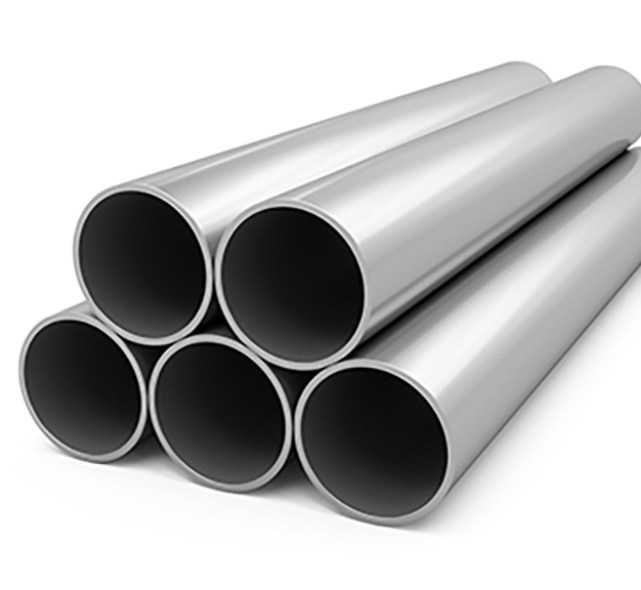
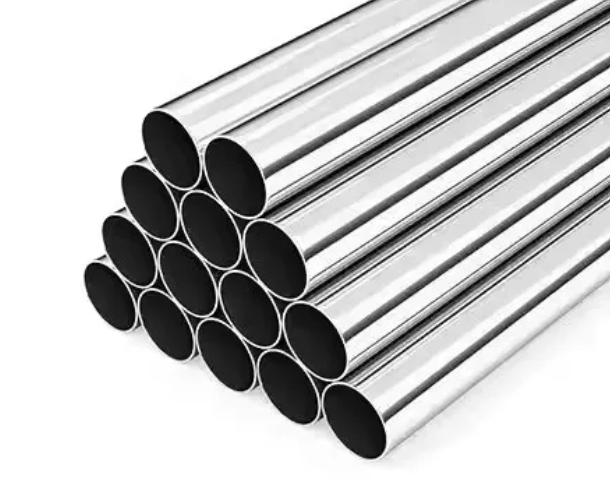
Hydrostatic testing helps verify whether nickel alloy tubes or titanium alloy tubes can hold a specified internal pressure without visible leakage, unacceptable pressure loss, rupture, or other pressure-related failure under the test conditions. A hydrostatic test is commonly used for pipes, pipelines and pressure vessels to test strength and leaks by filling the system with a liquid, usually water, and pressurizing it to a specified test pressure.
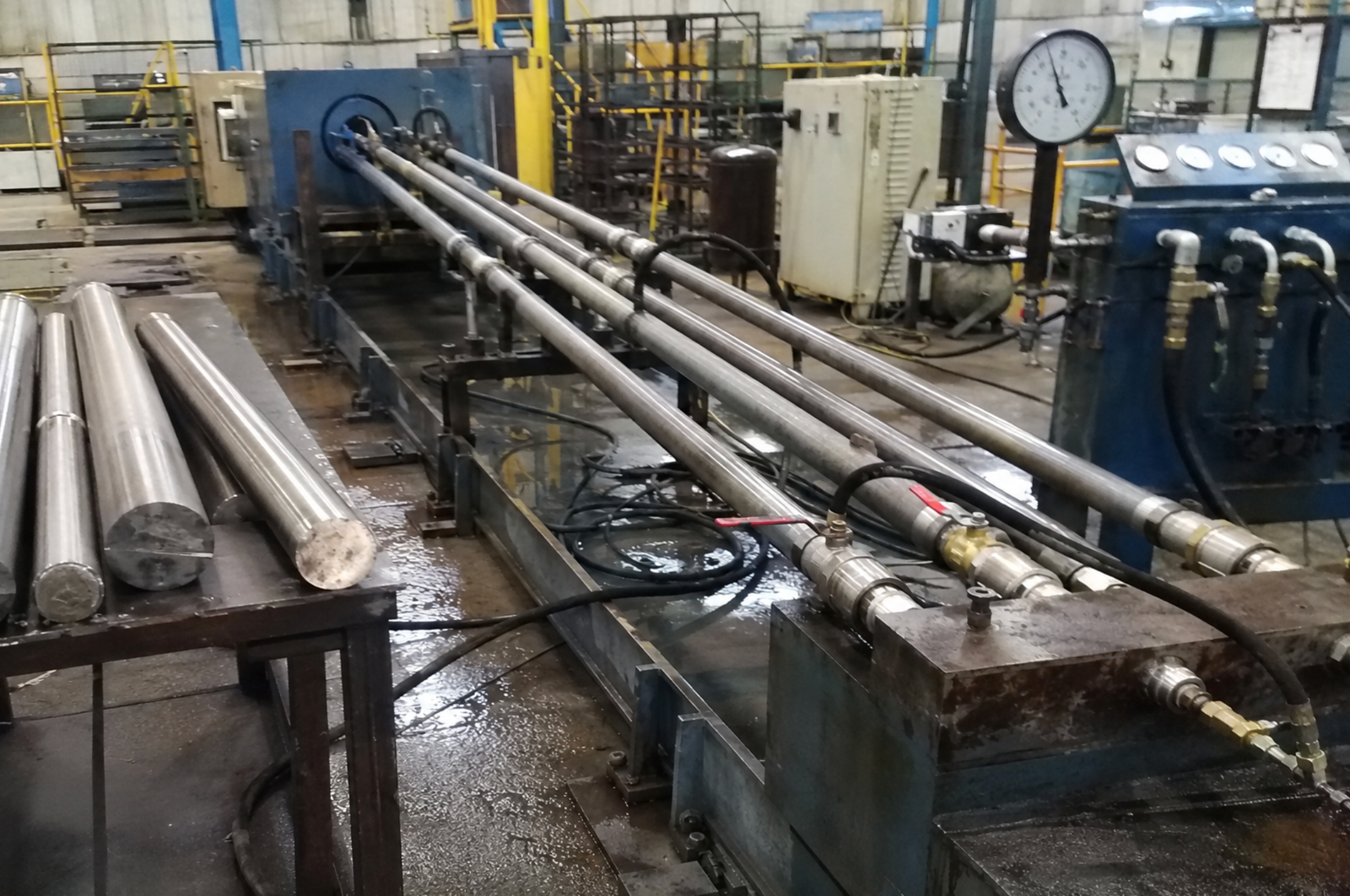
For nickel alloy tubes and titanium alloy tubes, buyers often request hydrostatic testing because they want confidence before installation. This is especially common when tubes are used for heat exchangers, pressure service, chemical processing, marine systems, oil and gas equipment, or other high-value industrial applications.
However, hydrostatic testing should not be misunderstood. It is not a complete material-quality guarantee. It does not replace MTR review, heat number traceability, dimensional inspection, visual inspection, eddy current testing, ultrasonic testing, PMI testing, or application-specific corrosion evaluation.
Hydrostatic testing mainly answers one important question:
Can this tube hold the specified test pressure without leakage or unacceptable failure under the agreed test condition?
That question is valuable, but it is not the only question buyers should ask.
Quick Checklist: What Should Buyers Confirm Before Hydrostatic Testing?
Before requesting hydrostatic testing for alloy tubes, buyers should confirm the following points with the supplier.
| Item to Confirm | Why It Matters |
|---|---|
| Material Grade | Nickel alloy and titanium alloy grades may have different strength and application requirements |
| UNS Number | Confirms exact material identity, such as UNS N06625, N08825, R50400, R56400 |
| Product Form | Seamless tube, welded tube, pipe or custom tube may follow different requirements |
| Applicable Standard | ASTM, ASME, EN, ISO or customer specification may define testing requirements |
| Tube Size | OD, wall thickness and length affect pressure calculation and acceptance |
| Test Pressure | Must match the applicable standard, project specification or purchase order |
| Hold Time | Determines how long the tube is held at test pressure |
| Test Medium | Water is common, but cleanliness and corrosion concerns should be reviewed |
| Test Temperature | Test temperature may affect pressure calculation or acceptance in some specifications |
| Acceptance Criteria | Defines pass/fail conditions, such as no visible leakage or unacceptable pressure drop |
| Report Requirement | The report should include pressure, duration, medium, result, date and inspector |
| Complementary Inspection | ET, UT, PMI, dimensional inspection or MTR review may still be required |
A purchase order that only says “hydrostatic test required” may not be clear enough. Buyers should define the standard, pressure, duration, acceptance criteria and report format.
What Does Hydrostatic Testing Actually Reveal?
Hydrostatic testing primarily reveals whether a tube or pressure-containing component can hold internal pressure under a specified test condition.
Hydrostatic testing is most useful for checking leakage paths, through-wall defects, pressure tightness problems, and obvious pressure-integrity failures. It can show whether a tube leaks, ruptures, or loses pressure under the required test pressure.
What Hydrostatic Testing Can Help Verify
| Inspection Target | What It Means for Buyers |
|---|---|
| Leakage | Detects whether liquid escapes through the tube wall, weld, end area or defect path |
| Pressure Tightness | Confirms the tube can hold pressure for the specified duration |
| Through-Wall Discontinuities | Helps reveal defects that create a leakage path |
| Rupture Under Test Pressure | Identifies tubes that cannot withstand the specified pressure |
| Gross Pressure Weakness | May reveal serious weakness under pressure load |
| Manufacturing or Handling Damage | May expose damage that causes leakage during the test |
According to the general principle of hydrostatic testing, pressure tightness can be checked by shutting off the supply valve and observing whether pressure loss occurs. Leaks may also be easier to identify when the test liquid contains a colorant.
What Does Hydrostatic Testing Not Reveal?
A key buyer mistake is assuming hydrostatic testing can detect every hidden material defect. It cannot.
Hydrostatic testing does not automatically detect all internal defects, surface cracks, inclusions, laminations, corrosion susceptibility, fatigue risk, chemical composition problems, wrong material grade, or microstructure issues.
Hydrostatic Test Limitations
| Hydrostatic Testing Cannot Fully Confirm | Better Method to Consider |
|---|---|
| Chemical Composition | MTR / MTC review, chemical analysis, PMI |
| Wrong Alloy Grade | PMI test, MTR review, heat number traceability |
| Small Surface or Near-Surface Cracks | Eddy current testing, penetrant testing, visual inspection |
| Deep Internal Defects | Ultrasonic testing or radiographic testing depending on product and defect type |
| Wall Thickness Accuracy | Dimensional inspection, ultrasonic thickness measurement |
| Microstructure or Grain Size | Metallographic examination if required |
| Fatigue Life | Design review, fatigue analysis, application-specific testing |
| Corrosion Resistance in Real Media | Corrosion testing or material compatibility review |
| Long-Term High-Temperature Creep | Creep or stress-rupture testing where applicable |
| Weld Quality Details | UT, RT, ET, PT or welding procedure qualification depending on requirements |
For example, a tube may pass hydrostatic testing but still require eddy current testing for surface or near-surface indications. Eddy-current testing is used for conductive materials and can detect or characterize surface and subsurface flaws. A tube may also require ultrasonic testing if internal soundness needs to be verified. Ultrasonic testing is commonly used to detect internal flaws or characterize materials.
Beyond Pass/Fail: What Do Hydrostatic Test Parameters Really Tell Buyers?
Many buyers only look for the word “Pass” on a hydrostatic test report. A pass result is important, but it is not the whole story. The test parameters define what the result actually means.
The value of a hydrostatic test report depends on test pressure, hold time, test medium, temperature, acceptance criteria and applicable standard. Without these details, buyers cannot easily judge whether the test matches their purchase order or project requirements.
Key Hydrostatic Test Parameters
| Parameter | What It Means | What Buyers Should Check |
|---|---|---|
| Test Pressure | The pressure applied during the test | Does it match the standard, PO or project specification? |
| Hold Duration | How long the pressure is maintained | Was the required hold time reached? |
| Test Medium | Usually water or another suitable liquid | Is the fluid acceptable for the alloy and cleanliness requirement? |
| Test Temperature | Temperature during testing | Is it within the allowed test condition? |
| Pressure Drop | Whether pressure decreased during the hold | Was pressure loss within allowed limits? |
| Visible Leakage | Whether liquid escaped during the test | Was there any leak at tube wall, weld or ends? |
| Acceptance Criteria | Rules for pass/fail judgment | Are the criteria stated clearly? |
| Report Traceability | Heat number, lot number, tube size, quantity | Can the report be linked to the delivered material? |
Hydrostatic testing should be performed according to the applicable standard or customer specification. The test does not fully simulate every service condition. For example, it does not fully simulate long-term corrosion, thermal cycling, vibration, erosion, fatigue or creep.
How Does ASTM B444 Relate to Hydrostatic Testing?
For nickel alloy seamless pipe and tube such as UNS N06625, ASTM B444 is an important reference.
ASTM B444 covers UNS N06625 and related nickel-chromium-molybdenum alloys in cold-worked seamless pipe and tube form. The ASTM abstract states that each pipe or tube shall undergo hydrostatic testing and also be examined with a nondestructive electric test as prescribed.
This matters because buyers often request “Inconel 625 tube” without defining the standard or test scope. A clearer request would be:
ASTM B444 UNS N06625 seamless tube, specified OD and wall thickness, required heat treatment condition, MTR with heat number traceability, hydrostatic test report, and nondestructive electric test report according to the applicable specification.
ASTM-Based Order Checklist
| Item | Why It Matters |
|---|---|
| Exact Standard | ASTM B444, ASME SB444, EN or customer standard |
| UNS Number | Example: UNS N06625 |
| Tube Form | Seamless tube, welded tube or pipe |
| Heat Treatment Condition | Annealed or solution annealed where applicable |
| Tube Size | OD, wall thickness and length |
| Hydrostatic Test | Confirm pressure, duration, result and report |
| Nondestructive Electric Test | Confirm ET or other required electric test if applicable |
| MTR / MTC | Confirm chemical and mechanical properties |
| Heat Number | Match MTR, marking, label and packing list |
| Surface Finish | Pickled, polished, bright annealed or other finish |
| Packaging | Caps, waterproof protection, wooden case if required |
How Do Hydrostatic Test Results Fit Into Overall Risk Assessment?
Hydrostatic test results should not be reviewed in isolation. They are one part of a broader quality and risk-control system.
A hydrostatic test pass supports pressure-integrity verification under the specified test condition. Stronger buyer confidence comes from combining hydrostatic test results with MTR/MTC, heat number traceability, dimensional inspection, surface inspection, PMI, ET, UT and application-specific requirements.
How to Interpret Combined Inspection Results
| Inspection Result | Meaning | Buyer Action |
|---|---|---|
| Hydro Pass + Documents Match + Surface/Dimensions OK | Stronger evidence of order conformity | Accept if all PO requirements are met |
| Hydro Pass + Missing MTR or Heat Number Mismatch | Pressure test passed, but traceability is unclear | Hold acceptance until documents are corrected |
| Hydro Pass + Wall Thickness Issue | Tube held pressure, but size may not meet tolerance | Review dimensional report and project tolerance |
| Hydro Pass + ET/UT Indications | No leakage under test, but other indications need evaluation | Review acceptance criteria and application risk |
| Hydro Fail | Leakage, rupture or pressure-holding problem | Reject or quarantine material and investigate cause |
| Hydro Report Missing Parameters | Result cannot be fully evaluated | Request complete report with pressure, hold time and traceability |
This combined view helps buyers avoid two common mistakes:
- Accepting a tube only because the hydrostatic test passed.
- Rejecting a tube without checking the full standard, test method and acceptance criteria.
Can Hydrostatic Testing Help Evaluate Supplier Consistency?
Hydrostatic testing can provide useful quality-control information, but buyers should avoid overinterpreting it.
Hydrostatic test records can help buyers review whether a supplier is consistently meeting pressure-integrity requirements. However, hydrostatic testing alone does not prove material homogeneity, chemical composition, microstructure, wall thickness control or long-term service reliability.
What Hydrostatic Test Records Can and Cannot Show
| Hydrostatic Records Can Help Show | Hydrostatic Records Cannot Fully Prove |
|---|---|
| Whether tested tubes held specified pressure | Exact alloy chemistry |
| Whether leakage occurred during testing | Complete internal soundness |
| Whether rejected tubes were removed | Grain size or microstructure |
| Whether test pressure and hold time were recorded | Long-term corrosion resistance |
| Whether test results are traceable to heat or lot | Fatigue life or creep resistance |
| Whether the supplier follows a documented test process | Wall thickness accuracy without dimensional inspection |
For supplier evaluation, buyers should ask for more than a single pass/fail statement. A useful supplier should be able to provide:
- hydrostatic test report
- MTR / MTC
- heat number traceability
- dimensional inspection report
- surface inspection records
- ET or UT reports if required
- nonconformity handling procedure
- third-party inspection support if required
What Should Be Included in a Hydrostatic Test Report?
A useful hydrostatic test report should be traceable, clear and connected to the delivered material.
Hydrostatic Test Report Checklist
| Report Item | What to Check |
|---|---|
| Material Grade | Inconel 625, Alloy 825, Monel 400, titanium grade, etc. |
| UNS Number | N06625, N08825, N04400, R50400, R56400, etc. |
| Product Form | Seamless tube, welded tube, pipe |
| Tube Size | OD, wall thickness, length and quantity |
| Heat Number / Lot Number | Must match MTR, marking and packing list |
| Applicable Standard | ASTM B444, ASME SB444, customer standard or project specification |
| Test Pressure | Pressure applied during the test |
| Hold Time | Duration at specified pressure |
| Test Medium | Water or other suitable test fluid |
| Test Temperature | Temperature if required by specification |
| Result | Pass, fail, rejected quantity, retest if applicable |
| Leakage Observation | No visible leakage, leakage location, or pressure loss if applicable |
| Inspector / QA Approval | Signature, date and inspection authority |
| Report Number | Document traceability for project files |
Buyers should also confirm that the hydrostatic test report is consistent with the MTR, packing list, invoice and product marking.
What Questions Should Buyers Ask Before Ordering Hydrostatic Tested Alloy Tubes?
Before ordering hydrostatic tested nickel alloy or titanium alloy tubes, buyers should ask the supplier specific questions.
Supplier Questions
| Question | Why It Matters |
|---|---|
| Which standard defines the hydrostatic test? | Confirms inspection basis |
| What test pressure will be used? | Ensures pressure matches PO or standard |
| How long will pressure be held? | Confirms hold-time requirement |
| What test medium is used? | Important for cleanliness and corrosion concerns |
| Will each tube be tested? | Confirms coverage |
| What is the acceptance criterion? | Defines pass/fail conditions |
| Will I receive a hydrostatic test report? | Needed for project documentation |
| Will the report show heat number and tube size? | Supports traceability |
| Is ET, UT or PMI also required? | Helps avoid relying on one test for all risks |
| How are failed tubes handled? | Confirms quality control process |
| Can third-party inspection witness the test? | Useful for critical or project-based orders |
| Can export packaging protect tubes after testing? | Prevents damage or contamination before delivery |
A transparent supplier should be able to explain what the hydrostatic test confirms and what it does not confirm.
RFQ Checklist for Alloy Tubes Requiring Hydrostatic Testing
To avoid misunderstanding, buyers should include hydrostatic testing requirements in the RFQ or purchase order.
| RFQ Item | Information to Provide |
|---|---|
| Material Grade | Inconel 625, Alloy 825, Monel 400, titanium Grade 2, titanium Grade 5, etc. |
| UNS Number | N06625, N08825, N04400, R50400, R56400, etc. |
| Product Form | Seamless tube, welded tube, pipe |
| Standard | ASTM, ASME, EN, ISO, customer specification |
| Tube Size | OD, wall thickness, length and tolerance |
| Quantity | Pieces, meters, kilograms or tons |
| Heat Treatment | Annealed, solution annealed, stress relieved or other required condition |
| Application | Heat exchanger, chemical processing line, marine system, pressure equipment, power generation equipment |
| Test Pressure | Required pressure or standard-based pressure calculation |
| Hold Time | Required pressure holding duration |
| Test Medium | Water or other specified medium |
| Acceptance Criteria | No visible leakage, pressure drop limit, no rupture or project-specific criteria |
| Report Requirement | Hydrostatic test report, MTR/MTC, heat number traceability |
| Complementary Tests | ET, UT, PMI, dimensional inspection, surface inspection, third-party inspection |
| Packaging Requirement | Plastic caps, waterproof film, wooden case, anti-scratch protection |
A complete RFQ helps suppliers quote the correct inspection scope and helps buyers compare quotations fairly.
How Can Emily PIPE Support Buyers?
Emily PIPE supplies nickel alloy tubes, nickel alloy bars, titanium alloy tubes and titanium alloy bars for global industrial applications. For alloy tube buyers, we can help review testing and documentation requirements before production and shipment.
We can support customers with:
- material grade confirmation
- UNS number confirmation
- ASTM / ASME / EN / ISO standard review
- tube OD, wall thickness and tolerance review
- heat treatment condition confirmation
- MTR / MTC and heat number traceability
- hydrostatic testing when required
- eddy current testing when required
- ultrasonic testing when required
- PMI and dimensional inspection when required
- third-party inspection support
- export packaging and documentation
We recommend defining hydrostatic testing requirements before placing the order, not after the tubes are finished. This helps avoid misunderstanding between buyer, supplier, engineering team and end user.
Conclusion
Hydrostatic testing is an important pressure-integrity verification method for nickel alloy tubes and titanium alloy tubes. It helps confirm whether a tube can hold a specified internal pressure without visible leakage, rupture or unacceptable pressure loss under the agreed test conditions.
However, hydrostatic testing is not a complete quality guarantee. It does not replace MTR/MTC review, heat number traceability, dimensional inspection, surface inspection, PMI, ET, UT or application-specific risk evaluation.
The safest approach is to combine hydrostatic testing with clear purchase specifications, traceable documents, dimensional inspection, surface inspection and any complementary NDT required by the project.
If you are sourcing nickel alloy tubes or titanium alloy tubes and need hydrostatic testing, you can send us your material grade, UNS number, tube size, standard, application environment, test pressure, report requirements and delivery schedule. Our team can help review the test scope and provide a quotation based on your real project needs.