
How to Control Alloy Material Traceability from Raw Material to Final Shipment
Are you unsure about the true origin and documentation of your nickel or titanium alloy materials? In global alloy procurement, a material may look correct on the surface, but buyers still need proof that the delivered tubes or bars match the purchase order, material certificate, heat number, inspection records and shipment documents.
Controlling alloy material traceability means linking material identity, heat number, MTR/MTC, production records, inspection records, product marking, packing list and shipment documents into a clear and auditable chain. A Mill Test Report or Material Test Certificate certifies a metal product’s chemical and physical properties and states compliance with applicable standards, while a heat number links the metal product to a specific batch or heat for traceability.
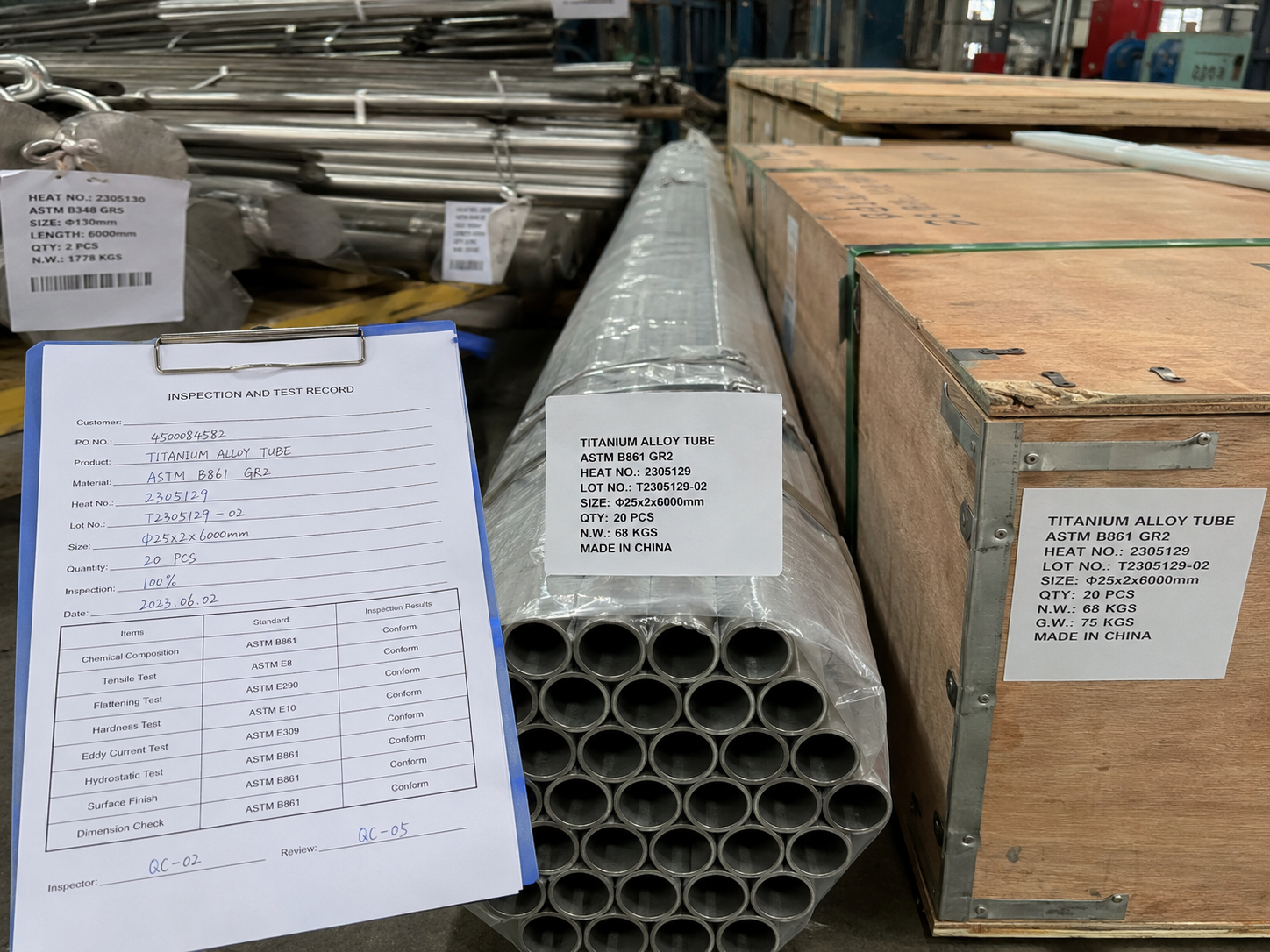
For nickel alloy tubes, nickel alloy bars, titanium alloy tubes and titanium alloy bars, traceability is not only a paperwork issue. It directly affects material verification, project acceptance, quality control, nonconformity handling, root-cause analysis and buyer confidence.
However, traceability should not be misunderstood. It does not automatically guarantee that a material will never fail in service. Instead, it helps buyers verify whether the delivered material matches the agreed grade, standard, heat number, testing scope and documentation requirements.
Quick Checklist: What Should Alloy Material Traceability Include?
A practical alloy traceability system should connect documents, physical material and inspection records.
| Traceability Item | What Buyers Should Check | Why It Matters |
|---|---|---|
| Purchase Order | Grade, UNS number, standard, size, quantity, testing and documents | Defines what the supplier must deliver |
| Material Grade | Inconel 625, Inconel 718, Hastelloy C276, Alloy 825, Titanium Grade 2, Grade 5, etc. | Confirms material identity |
| UNS Number | N06625, N07718, N10276, N08825, R50400, R56400, etc. | Reduces confusion between similar trade names |
| Heat Number | Heat number on MTR, marking, label and packing list | Links physical material to a batch |
| MTR / MTC | Chemical composition, mechanical properties, standard compliance | Provides batch-level material evidence |
| Product Marking | Grade, heat number, size, standard or lot information | Connects physical material to documents |
| Production Records | Heat treatment, cutting, drawing, rolling, forging or finishing records if required | Supports process traceability |
| Inspection Records | UT, ET, hydrostatic, PMI, dimensional report, visual inspection | Confirms agreed tests were performed |
| Packing List | Quantity, bundle number, heat number, size, weight | Helps verify shipment accuracy |
| Shipment Documents | Invoice, packing list, certificate package, photos, labels | Supports customs, receiving inspection and project files |
If any of these items do not match, buyers should pause acceptance and ask the supplier to clarify before machining, welding, installing or reselling the material.
What Does “Controlled Traceability” Really Mean?
Many suppliers say they offer “full traceability,” but this phrase can mean different things. For buyers, the important question is not whether the supplier uses the word “traceability,” but whether the supplier can connect the actual delivered material to reliable documents and records.
Controlled traceability means the supplier can identify and verify the material at each important stage, from incoming raw material to production, inspection, packaging and final shipment. The traceability depth should match the application risk, industry requirements and purchase specification.
For example, a general industrial stock order may only require basic batch traceability, MTR/MTC and product marking. A high-pressure chemical processing project may require heat number traceability, NDT reports, hydrostatic test records and EN 10204 3.1 documents. Aerospace or medical applications may require stricter quality systems, process records, special process approvals and tighter documentation control.
Different Traceability Levels for Alloy Materials
| Application Type | Typical Traceability Requirement | Example Documents or Evidence | Buyer Risk If Traceability Is Weak |
|---|---|---|---|
| General Industrial Use | Batch traceability and basic material certificate | MTR/MTC, packing list, product marking | Receiving dispute, wrong material, rework |
| Chemical Processing / Oil & Gas | Heat number traceability, corrosion-related material verification, NDT records if required | MTR/MTC, PMI, UT/ET/hydrostatic reports, NACE/ISO requirement if applicable | Leakage, rejection, shutdown, project delay |
| Heat Exchanger / Pressure Systems | Tube identity, heat number, pressure integrity and NDT records | ASTM/ASME standard, hydrostatic report, ET/UT report, dimensional report | Tube failure, leakage, late project acceptance |
| Aerospace Applications | Stricter process control, material certification and special process records | AS9100-related quality system evidence, Nadcap if required, heat treatment records, NDT records | High safety and compliance risk |
| Medical Applications | Regulatory-focused quality management and full documentation control | ISO 13485-related quality system, material certificates, process validation records if required | Regulatory rejection, patient safety risk |
| Customized Drawing Parts | Material, process, dimensions and inspection linked to drawings | Drawing revision, traveler record, dimensional report, inspection report | Assembly mismatch, machining waste, late delivery |
ISO 9001 is a globally recognized quality management system standard that helps organizations establish, implement, maintain and continually improve a QMS. It supports process control, customer requirements and continuous improvement, but it does not replace batch-level material evidence.
For medical device-related projects, ISO 13485 focuses on quality management systems for the design and manufacture of medical devices and emphasizes regulatory requirements, risk management and process validation.
These management system standards support quality control, but buyers still need MTR/MTC, heat number traceability, inspection reports and physical marking checks for each relevant batch.
How Can Buyers Verify a Supplier’s Traceability Claims?
Buyers should verify traceability through documents, physical marking and process evidence. A supplier should not only say “we have traceability.” They should be able to show how the material is identified, recorded, processed, inspected and shipped.
Key Evidence Buyers Should Request
| Evidence Type | Purpose | What to Check |
|---|---|---|
| MTR / MTC | Confirms chemical and mechanical properties | Heat number, grade, UNS number, standard, actual test results |
| Heat Number Marking | Links physical material to batch records | Heat number on tube/bar, label, bundle tag or packing list |
| Product Marking | Identifies material and size | Grade, size, standard, heat number, lot number if applicable |
| Packing List | Confirms shipment quantity and heat distribution | Pieces, weight, length, bundle number, heat number |
| Inspection Reports | Confirms required tests were performed | UT, ET, hydrostatic, PMI, dimensional inspection, visual inspection |
| Heat Treatment Record | Verifies thermal processing when required | Temperature range, holding time, cooling method, furnace batch |
| Dimensional Report | Confirms size and tolerance | OD, wall thickness, diameter, length, straightness |
| Third-Party Inspection Report | Adds independent verification if required | Inspector, scope, results, photos, nonconformities |
| Production Traveler / Process Record | Tracks material through processing steps | Route, operation, date, operator, equipment, linked heat number |
| Shipment Photos | Confirms marking and packaging before dispatch | Product marking, labels, wooden case, bundle condition |
An MTR/MTC should not be reviewed alone. It should be checked against the actual material marking, packing list and inspection reports. If the heat number on the certificate does not match the physical material, traceability is broken.
What Should an MTR/MTC Prove?
The MTR/MTC is one of the most important documents in alloy procurement, but buyers should understand both its value and its limits.
An MTR/MTC can prove batch-level chemical and physical property data, but it does not automatically prove every inspection result, surface condition, dimension, packaging condition or future service performance.
MTR / MTC Review Checklist
| MTR Item | What Buyers Should Confirm |
|---|---|
| Supplier / Mill Name | Who issued the certificate |
| Material Grade | Whether the alloy grade matches the PO |
| UNS Number | Whether the exact UNS number is correct |
| Product Form | Tube, pipe, bar, billet, forging stock |
| Standard | ASTM, ASME, EN, ISO, AMS or customer specification |
| Heat Number | Must match product marking and packing list |
| Chemical Composition | Element values should meet the required standard |
| Mechanical Properties | Tensile strength, yield strength, elongation, hardness if required |
| Heat Treatment Condition | Annealed, solution annealed, aged, stress relieved, cold worked |
| Test Results | Whether required tests are included or separate reports are needed |
| Certificate Type | EN 10204 3.1 or 3.2 if required |
| Signature / Stamp | Issuer, date and approval information |
| Document Consistency | Check PO, invoice, packing list and marking alignment |
EN 10204 defines types of inspection documents for metallic products, including 3.1 and 3.2 inspection certificates. If a project requires EN 10204 3.1 or 3.2, buyers should state this clearly in the RFQ or purchase order.
Which Standards Support Alloy Material Traceability?
Traceability becomes stronger when it is connected to recognized standards, product specifications and inspection documents.
Useful Standards and References
| Standard / Reference | Why It Matters |
|---|---|
| Mill Test Report | Certifies chemical and physical properties and compliance with standards |
| Heat Number | Links physical material to batch, composition, process and QA records |
| ISO 9001 | Quality management system standard for process control and documented information |
| ISO 13485 | Quality management system standard for medical devices, with stronger regulatory and risk-management focus |
| AS9100 | Aerospace quality management system standard based on ISO 9001 with additional aerospace requirements |
| Nadcap | Aerospace and defense accreditation program for special processes such as NDT, heat treating, welding and material testing laboratories |
| ASTM B444 | Covers UNS N06625 and related nickel alloy seamless pipe and tube; includes chemical, tensile, hydrostatic and nondestructive electric testing requirements |
| ASTM B637 | Covers precipitation-hardenable nickel alloy rod, bar, forgings and forging stock for moderate or high-temperature service |
| ASTM B348/B348M | Covers titanium and titanium alloy bars and billets, including chemical composition and tensile property requirements |
| Ultrasonic Testing | NDT method for internal flaws or material characterization |
| Eddy-Current Testing | NDT method for conductive materials, surface and near-surface flaw detection |
| Hydrostatic Test | Pressure and leak test commonly used for pipes, pipelines and pressure vessels |
ASTM B444 is useful for nickel alloy tubes such as UNS N06625 because it covers chemical testing, tensile testing, hydrostatic testing and nondestructive electric testing. ASTM B637 is useful for nickel alloy bars and forgings because it covers chemical analysis, heat treatment, tension testing, hardness and stress-rupture testing. ASTM B348/B348M is useful for titanium alloy bars and billets because it covers chemical composition and tensile properties.
How Does Traceability Help with Risk Management?
Traceability is not only about compliance. It also helps buyers respond faster when something goes wrong.
Strong traceability supports risk reduction by making it easier to identify affected material, isolate suspect batches, investigate root causes and provide evidence for customer or project review.
Without vs With Controlled Traceability
| Procurement Factor | Without Controlled Traceability | With Controlled Traceability |
|---|---|---|
| Material Identity | Buyer may not know whether material matches certificate | Grade, UNS number and heat number can be checked |
| Batch Control | Difficult to isolate affected material | Specific heat or batch can be identified |
| Nonconformity Handling | Investigation is slow and unclear | Root-cause review is more efficient |
| Project Acceptance | End user may reject documents | Traceable document package supports acceptance |
| Supplier Comparison | Hard to compare quality systems | Traceability discipline becomes a supplier evaluation factor |
| Incoming Inspection | More uncertainty during receiving | Documents and markings make inspection more efficient |
| Long-Term Records | Future claim or audit may be difficult | Records support future review and investigation |
Traceability does not eliminate the need for incoming inspection. Instead, it makes incoming inspection more reliable because the buyer can compare physical material, marking, MTR/MTC, packing list and inspection reports.
What Are Common Red Flags in Alloy Traceability?
Buyers should pay attention to warning signs before accepting or using alloy materials.
Traceability Red Flags
| Red Flag | Possible Risk |
|---|---|
| MTR does not show heat number | Weak batch traceability |
| Heat number on material does not match certificate | Document-material mismatch |
| Product marking is missing or unclear | Hard to link physical material to records |
| Certificate is generic rather than batch-specific | Material identity cannot be fully verified |
| Standard on certificate differs from PO | Wrong specification risk |
| Chemical composition is incomplete | Alloy grade cannot be properly verified |
| Required test reports are missing | UT, ET, hydrostatic or PMI scope may not be fulfilled |
| Packing list does not show heat distribution | Mixed heats may be difficult to manage |
| Multiple grades packed together without clear labels | Material mix-up risk |
| Supplier cannot provide process or inspection records when required | Weak process control evidence |
| Certificate date or issuer looks inconsistent | Document authenticity concern |
| Third-party inspection report does not match shipment | Acceptance or dispute risk |
If any of these issues appear, buyers should stop using the material until the supplier provides clarification or corrected documents.
What Questions Should Buyers Ask Suppliers About Traceability?
Before placing an order, buyers should ask specific questions about traceability instead of accepting general promises.
Supplier Traceability Questions
| Question | Why It Matters |
|---|---|
| Can you provide MTR/MTC for the exact heat? | Confirms batch-specific documentation |
| Will the heat number be marked on the material or label? | Links physical goods to certificate |
| Can the packing list show heat number and quantity? | Helps receiving inspection |
| Can you provide EN 10204 3.1 or 3.2 if required? | Supports project documentation needs |
| What product standards apply? | ASTM, ASME, EN, ISO, AMS or customer standard |
| Are UT, ET, hydrostatic or PMI reports included? | Confirms required testing scope |
| Can you provide heat treatment records if required? | Important for heat-treated bars and tubes |
| How do you prevent material mix-up? | Reveals shop-floor control discipline |
| How long are records retained? | Important for future claim or audit |
| Can third-party inspection verify marking and documents? | Adds independent evidence for critical orders |
| What happens if a traceability mismatch is found? | Defines nonconformity handling |
| Can production and packing photos be provided? | Helps remote buyers verify marking and packaging |
A strong supplier should be able to explain how material identity is controlled at each stage, from incoming material to final shipment.
RFQ Checklist: What Buyers Should Provide for Traceable Alloy Materials
To make traceability effective, buyers should define documentation and marking requirements in the RFQ or purchase order.
| RFQ Item | Information to Provide |
|---|---|
| Material Grade | Inconel 625, Inconel 718, Hastelloy C276, Alloy 825, Titanium Grade 2, Titanium Grade 5, etc. |
| UNS Number | N06625, N07718, N10276, N08825, R50400, R56400, etc. |
| Product Form | Seamless tube, welded tube, pipe, round bar, billet, forged bar |
| Standard | ASTM, ASME, EN, ISO, AMS, customer specification |
| Size and Tolerance | OD, wall thickness, diameter, length, straightness, surface finish |
| Quantity | Pieces, meters, kilograms or tons |
| Heat Treatment | Annealed, solution annealed, aged, stress relieved, cold worked |
| Application | Heat exchanger, reactor, pump shaft, valve stem, marine system, aerospace part, medical equipment |
| Required Certificate | MTR/MTC, EN 10204 3.1, EN 10204 3.2, CoC |
| Required Traceability | Heat number marking, bundle label, packing list heat distribution |
| Required Tests | Chemical, tensile, hardness, UT, ET, hydrostatic, PMI, metallography |
| Process Records | Heat treatment record, production traveler, inspection record if required |
| Third-Party Inspection | Document review, marking check, dimensional inspection, witness test |
| Packaging Requirement | Plastic caps, waterproof film, wooden case, anti-scratch protection |
| Record Retention | Required period if project needs long-term traceability |
A complete RFQ helps the supplier prepare the correct document package and helps the buyer avoid disputes after delivery.
How Can Emily PIPE Support Alloy Material Traceability?
Emily PIPE supplies nickel alloy tubes, nickel alloy bars, titanium alloy tubes and titanium alloy bars for global industrial customers. We support standard and customized specifications according to drawings, technical requirements and application environments.
For traceability-focused orders, we can help provide:
- material grade and UNS number confirmation
- ASTM / ASME / EN / ISO / AMS standard review
- MTR / MTC
- heat number traceability
- product marking and label confirmation
- chemical and mechanical test reports
- UT, ET, hydrostatic, PMI and dimensional inspection when required
- heat treatment and inspection records when required by the project
- EN 10204 3.1 or 3.2 documents when required
- third-party inspection coordination
- production and packing photos
- export packaging and shipping documents
We recommend confirming traceability requirements before production and shipment. This helps avoid document mismatch, missing heat numbers, unclear marking, delayed project acceptance and customer disputes.
Conclusion
Alloy material traceability is essential for nickel and titanium alloy procurement because buyers need to know whether the material they receive matches the purchase order, standard, MTR/MTC, heat number, inspection records and shipment documents.
Good traceability does not mean simply keeping a certificate. It means connecting the physical material to heat number, product marking, process records, inspection reports, packing list and shipment documents.
For critical applications, traceability supports quality control, risk reduction, root-cause investigation and project acceptance. It is especially important for aerospace, medical, oil and gas, chemical processing, heat exchanger, marine and high-temperature applications.
If you are sourcing nickel alloy tubes, nickel alloy bars, titanium alloy tubes or titanium alloy bars and need controlled material traceability, you can send us your material grade, UNS number, size, standard, application environment, certificate requirements and inspection scope. Our team can help prepare a traceable material package according to your project needs.