
Why Do Nickel Alloy Tubes Crack After Welding?
Nickel alloy tubes are widely used in chemical processing, oil and gas, marine engineering, heat exchangers, power generation, aerospace, pressure systems, and other corrosion-resistant or high-temperature applications. These materials are selected because they can offer strong resistance to corrosion, oxidation, heat, and demanding industrial environments.
However, even high-performance nickel alloy tubes can develop cracking during welding, after welding, during post-weld heat treatment, or later in service. When this happens, the cause is usually not one simple factor.
Nickel alloy tube weld cracking can result from the combined effect of material grade, weld metal chemistry, surface cleanliness, joint design, heat input, interpass temperature, filler metal selection, residual stress, post-weld heat treatment, inspection control, and the final service environment. To reduce cracking risk, buyers should evaluate the whole welding system instead of focusing only on the tube material or the welding machine.
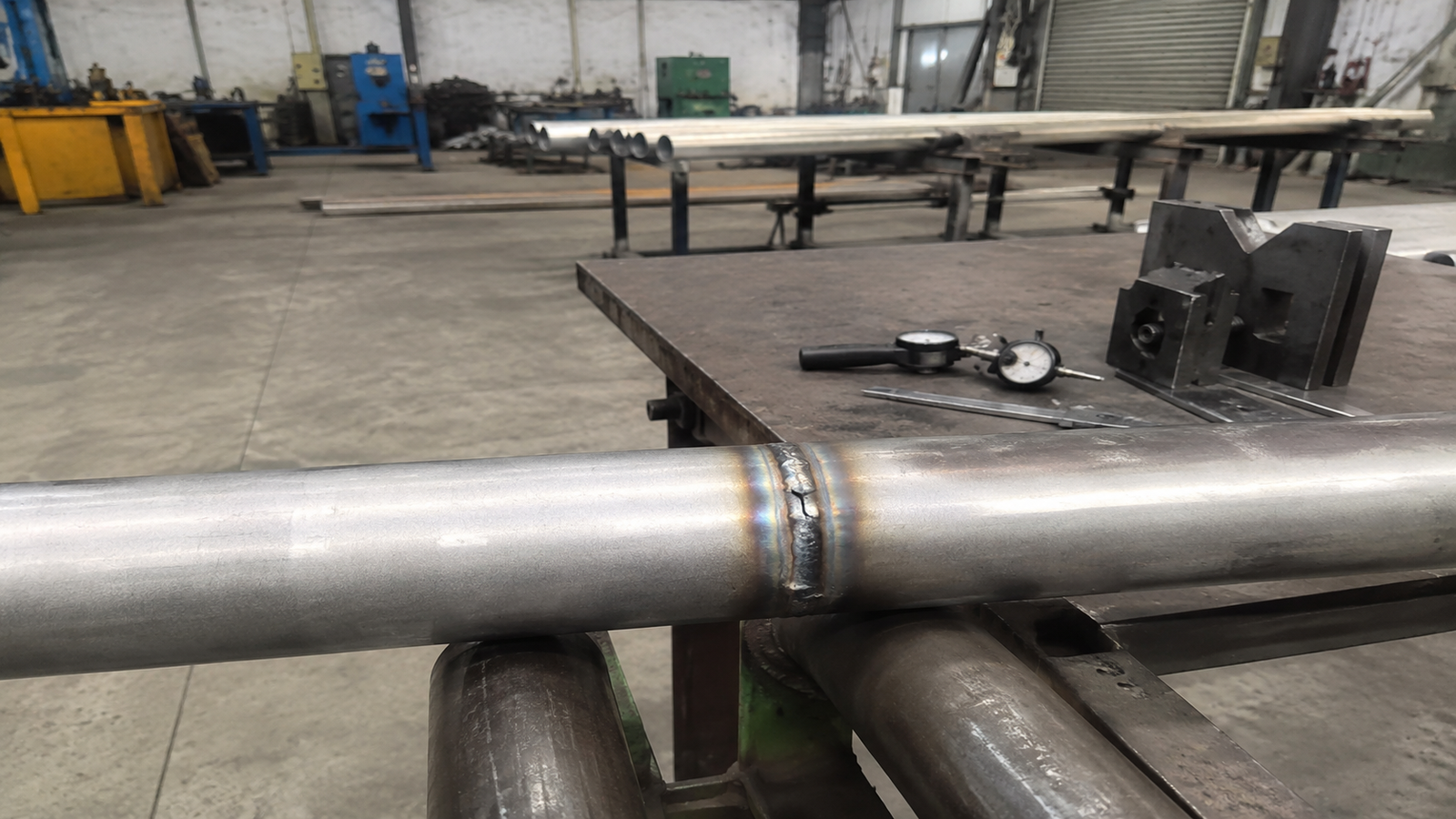
For industrial buyers, the key question is not only “Is this nickel alloy tube weldable?” A better question is: Can the material grade, tube condition, welding procedure, filler metal, cleaning method, inspection plan, and service environment support a reliable welded assembly?
This guide explains why nickel alloy tubes may crack after welding and what buyers should confirm before ordering materials for welded tube projects.
Quick Answer: Why Do Nickel Alloy Tubes Crack After Welding?
Nickel alloy tubes may crack after welding because welding creates a local melting and heating cycle that changes the weld metal, heat-affected zone, residual stress, and surface condition. If the alloy, filler metal, cleaning, welding parameters, heat input, interpass temperature, or service environment is not suitable, cracking risk may increase.
TWI notes that common imperfections in nickel alloy welding include porosity, oxide inclusions, lack of inter-run fusion, weld metal solidification cracking, and microfissuring. Source: TWI — Weldability of Materials: Nickel and Nickel Alloys
| Possible Cause | How It Can Increase Cracking Risk |
|---|---|
| Wrong alloy selection | Some alloys are more sensitive to certain welding or service conditions. |
| Poor surface cleaning | Oil, grease, dirt, oxide, or contamination can increase weld defect risk. |
| Unsuitable filler metal | Weld metal chemistry may affect hot cracking resistance and corrosion performance. |
| Poor joint fit-up | Large gaps, wrong root gap, poor bevel, or excessive restraint may increase weld stress. |
| Excessive or poorly controlled heat input | Can affect HAZ width, grain structure, residual stress, and distortion. |
| High interpass temperature | Can increase metallurgical and dimensional risk if not controlled by WPS. |
| Restrained joint design | High restraint can increase weld stress during cooling. |
| Improper PWHT | Some precipitation-hardening alloys need specific heat treatment planning. |
| Residual stress | Tensile residual stress can contribute to service cracking in aggressive environments. |
| Service environment | Temperature, pressure, chlorides, acids, H₂S, caustic media, thermal cycling, and vibration may affect cracking risk. |
| Incomplete inspection | Cracks or defects may remain undetected before installation. |
Why Is Nickel Alloy Weld Cracking Not One Simple Problem?
Nickel alloy weld cracking is not usually caused by one isolated mistake. It is often the result of several factors acting together: alloy chemistry, base metal condition, filler metal, welding process, heat input, joint restraint, surface cleanliness, post-weld treatment, and service environment.
Main Groups of Cracking Factors
| Factor Group | Examples |
|---|---|
| Material factors | Alloy grade, UNS number, chemical composition, impurities, grain structure, cold work, heat treatment condition. |
| Tube condition | Seamless or welded tube, annealed or solution annealed condition, wall thickness, surface oxide, ID/OD cleanliness. |
| Welding process | GTAW/TIG, GMAW/MIG, plasma, orbital welding, laser welding, manual or automated welding. |
| Welding parameters | Current, voltage, travel speed, heat input, interpass temperature, shielding gas, arc length. |
| Filler metal | Matching or over-alloyed filler, crack resistance, corrosion compatibility, dilution control. |
| Joint design | Root gap, fit-up, bevel, weld pass sequence, restraint, accessibility, purge requirement. |
| Post-weld treatment | Stress relief, solution annealing, aging, cleaning, pickling, passivation, surface finishing. |
| Inspection | VT, PT, RT, UT, hydrostatic test, dimensional inspection, third-party inspection. |
| Service environment | Temperature, pressure, corrosion media, chlorides, acids, caustic, H₂S, thermal cycling, vibration. |
Buyer Takeaway
When a nickel alloy tube cracks after welding, the buyer should not only ask, “Who made the weld?” A more useful review asks:
- Was the correct alloy selected?
- Was the supplied tube condition suitable for welding?
- Was the filler metal correct?
- Was the surface cleaned properly?
- Was a qualified WPS used?
- Was heat input and interpass temperature controlled?
- Was PWHT required?
- Was the final service environment considered?
- Was inspection performed after welding?
What Cracking Mechanisms Can Occur in Nickel Alloy Welds?
Different cracking mechanisms may appear at different stages of welding and service. Not every mechanism applies to every nickel alloy, but buyers should understand the main categories.
Common Cracking Mechanisms
| Cracking Mechanism | Where / When It May Occur | General Description |
|---|---|---|
| Solidification cracking | Weld metal during final solidification | Cracks may form along the weld centerline or interdendritic regions while the weld metal is still hot. |
| Hot cracking | Weld metal or HAZ at high temperature | Often associated with contamination, low-melting films, alloy chemistry, restraint, or weld pool behavior. |
| Liquation cracking | Heat-affected zone near fusion line | Grain boundary melting may occur in the HAZ, followed by cracking during cooling under stress. |
| Microfissuring | Weld metal or HAZ | Small cracks may form due to metallurgical and thermal factors. |
| Ductility dip cracking | Solid state at elevated temperature range | Some FCC alloys, including certain nickel alloy weld metals, may lose ductility in a temperature range during thermal cycling. |
| PWHT / strain-age cracking | During post-weld heat treatment or aging | More relevant to some precipitation-hardening alloys where hardening and stress relaxation interact. |
| Stress corrosion cracking | Later in service | Requires susceptible material condition, tensile stress, and a specific corrosive environment. |
| Fatigue cracking | Later in cyclic service | May start from weld defects, stress concentration, poor geometry, or vibration. |
TWI states that the most serious cracking problem with nickel alloys is hot cracking in either the weld metal or near the fusion line in the HAZ, with the latter being more frequent. It also identifies contamination from grease, oil, dirt, and inadequate cleaning as important contributors. Source: TWI — Welding of Nickel Alloys, Part 1
TWI also explains solidification cracking as cracking that forms while the weld metal is still hot and during solidification. Source: TWI — Defects: Solidification Cracking
Buyer Takeaway
Cracking mechanism identification matters. A weld centerline crack, HAZ crack, delayed crack after PWHT, or service crack in a corrosive environment may require different corrective actions.
Why Is Surface Cleaning So Important Before Welding Nickel Alloy Tubes?
Nickel alloys are generally weldable, but they require careful cleaning before welding. Surface contamination can increase the risk of porosity, oxide inclusions, lack of fusion, hot cracking, and poor weld quality.
TWI states that nickel alloys should be cleaned immediately before welding by degreasing, removing surface oxide by machining, grinding or scratch brushing, and degreasing again. Source: TWI — Weldability of Materials: Nickel and Nickel Alloys
Common Cleaning Risks
| Cleaning Issue | Possible Welding Problem |
|---|---|
| Oil or grease | Contamination, porosity, hot cracking risk. |
| Dirt or dust | Inclusion or poor weld pool cleanliness. |
| Surface oxide | Oxide inclusion or lack of fusion risk. |
| Cutting fluid residue | Gas generation and contamination during welding. |
| Moisture | Porosity or hydrogen-related concerns in some conditions. |
| Poor ID cleanliness | Internal weld contamination, especially in tube welding. |
| Handling after cleaning | Fingerprints or re-contamination before welding. |
Buyer Takeaway
For welded nickel alloy tube projects, buyers should confirm not only material grade and size, but also surface condition, end preparation, cleaning requirement, packaging, and whether the tube must be protected from contamination before welding.
How Do Welding Parameters Affect Cracking Risk?
Welding parameters affect heat input, cooling rate, weld pool shape, dilution, grain structure, residual stress, and distortion. These factors can influence cracking risk.
Important parameters include:
- Welding process
- Current
- Voltage
- Travel speed
- Heat input
- Interpass temperature
- Shielding gas
- Filler metal
- Root gap
- Joint restraint
- Pass sequence
TWI notes that most nickel alloys are best welded in the annealed or solution-treated condition, especially if they have been cold worked. It also states that interpass temperature should not rise above 250°C, although some alloy suppliers recommend lower interpass temperatures for certain alloys such as Alloy C276. Source: TWI — Welding of Nickel Alloys, Part 2
Common Welding Parameter Misconceptions
| Misconception | Better Understanding |
|---|---|
| “More heat input always improves fusion.” | Heat input should be controlled according to WPS. Excessive heat can increase metallurgical and distortion risks. |
| “Lowest heat input is always best.” | Very fast travel speed or narrow bead shape can also create cracking risk. Parameters must be optimized. |
| “If the tube is weldable, any process is acceptable.” | Weldability depends on alloy, joint design, filler metal, process and procedure control. |
| “One parameter set works for all nickel alloys.” | Alloy 625, Alloy 718, Alloy 825, Alloy C-276, Alloy 400 and Nickel 200 may need different procedure control. |
| “Interpass temperature is not important.” | Interpass temperature can affect microstructure, residual stress and cracking risk. |
| “A visually good weld is always safe.” | Surface appearance cannot replace NDT, WPS control and service evaluation. |
Buyer Takeaway
Buyers should request or review the WPS for critical welded assemblies. Welding parameters should not be left as informal shop practice for pressure, corrosive, high-temperature or critical service.
Why Does Filler Metal Selection Matter?
Filler metal selection affects weld metal chemistry, crack resistance, corrosion performance, mechanical properties, dilution behavior, and service suitability. A filler metal that works for one nickel alloy application may not be ideal for another.
Filler Metal Questions Buyers Should Ask
| Question | Why It Matters |
|---|---|
| Is the filler metal compatible with the base alloy? | Helps avoid mismatch in strength, corrosion resistance, or weldability. |
| Is the filler metal selected for corrosion environment? | Chemical processing and marine service may require corrosion-focused selection. |
| Does it reduce hot cracking risk? | Some filler selections help improve weld metal crack resistance. |
| Is dilution considered? | Weld chemistry changes when base metal mixes with filler metal. |
| Is the filler suitable for PWHT or aging? | Important for precipitation-hardening alloys. |
| Is the filler documented in WPS/PQR? | Provides process traceability and repeatability. |
Buyer Takeaway
Filler metal selection should be part of a qualified welding procedure, not a last-minute decision. Buyers should confirm the filler classification, batch traceability, WPS compatibility, and final service requirement.
Are Product Parameters Alone Enough to Prevent Welding Cracks?
No. Product parameters are necessary, but they are not enough by themselves. A material datasheet or product specification can describe alloy grade, chemical composition, mechanical properties, heat treatment condition, and dimensional range, but it cannot guarantee welding success under every application.
For example, ASTM B444 covers UNS N06625 and related nickel alloys in cold-worked seamless pipe and tube form. Source: ASTM B444
ASTM B704 covers welded UNS N06625, UNS N06219, UNS N08825 and related nickel alloy tubes for boilers, heat exchangers and condensers. Source: ASTM B704
These standards help define material requirements, but welding success still depends on procedure, joint design, filler metal, cleaning, qualification, inspection, and service environment.
What Product Parameters Do Not Fully Answer
| Product Information | What Still Needs to Be Confirmed |
|---|---|
| Chemical composition | Weld pool dilution, filler compatibility, hot cracking sensitivity. |
| Mechanical properties | HAZ properties, weld metal properties, service temperature behavior. |
| Tube size | Joint fit-up, root gap, wall thickness welding sensitivity. |
| Heat treatment condition | Whether pre-weld or post-weld heat treatment is required. |
| Surface finish | Whether additional oxide removal or degreasing is needed before welding. |
| “Weldable” statement | Exact WPS, filler metal, heat input, interpass temperature and inspection plan. |
| Corrosion resistance claim | Actual service media, concentration, temperature, pressure and stress condition. |
Buyer Takeaway
Material standards and datasheets provide a baseline. They should be combined with WPS/PQR, MTC/MTR, filler metal selection, weld inspection, and service condition review.
Why Are WPS and PQR Important for Nickel Alloy Tube Welding?
For critical nickel alloy tube welding, a Welding Procedure Specification (WPS) and Procedure Qualification Record (PQR or WPQR) are important because they help control repeatability and verify that the procedure can produce acceptable welds.
TWI explains that the WPS details the welding variables used to ensure a welded joint achieves the specified weld quality and mechanical properties. It also explains that a WPS is supported by records such as how the weld was made, NDE and mechanical test results, which together form a welding approval record such as WPAR or PQR. Source: TWI — Welding Procedure
WPS / PQR Items Buyers May Need to Review
| Item | Why It Matters |
|---|---|
| Base material | Confirms exact alloy grade, UNS number, thickness range, product form. |
| Welding process | GTAW/TIG, GMAW/MIG, plasma, laser, orbital welding, etc. |
| Filler metal | Confirms filler classification, size, compatibility and traceability. |
| Joint design | Root gap, bevel, land, backing, purge and fit-up. |
| Heat input | Controls weld thermal cycle and metallurgical risk. |
| Interpass temperature | Important for nickel alloy weld quality control. |
| Preheat requirement | Usually not required for many nickel alloys except to remove condensation or under specific conditions. |
| PWHT requirement | Depends on alloy type, code, service and customer specification. |
| Shielding gas | Affects weld pool protection and oxidation control. |
| Inspection method | VT, PT, RT, UT, hydrostatic test or project-specific NDT. |
| Acceptance criteria | Defines what is acceptable before installation. |
Buyer Takeaway
For critical welded tube projects, buyers should ask whether the fabricator has a qualified WPS/PQR for the exact alloy, tube thickness, joint design, filler metal and service requirement.
How Do Different Nickel Alloys Behave Differently During Welding?
Not all nickel alloys weld the same way. Even when they are all called “nickel alloys,” their strengthening mechanisms, composition, heat treatment condition, and cracking risks can be different.
Examples of Nickel Alloy Welding Considerations
| Alloy | UNS Number | General Welding Consideration |
|---|---|---|
| Alloy 625 / Inconel 625 | N06625 | Solid-solution strengthened nickel-chromium-molybdenum-niobium alloy. Commonly used for corrosion-resistant welded tube systems. Cleaning, filler selection and heat input control are still important. |
| Alloy 718 / Inconel 718 | N07718 | Age-hardenable nickel alloy. Weldability is better than many precipitation-hardening superalloys, but heat treatment, HAZ cracking and restraint still need careful review. |
| Alloy C-276 / Hastelloy C-276 | N10276 | Corrosion-resistant Ni-Cr-Mo alloy. Interpass temperature and cleanliness should be carefully controlled. |
| Alloy 825 / Incoloy 825 | N08825 | Used in acidic and chloride-containing environments. Corrosion environment and filler selection should be checked. |
| Alloy 400 / Monel 400 | N04400 | Nickel-copper alloy. Welding procedure and filler selection should match mechanical and corrosion requirements. |
| Nickel 200 | N02200 | Commercially pure nickel. Cleaning and contamination control remain important. |
TWI notes that post-weld heat treatment cracking, also known as strain-age or reheat cracking, is likely to occur during post-weld ageing of precipitation-hardening alloys, but Alloy 718 was developed to be resistant to this type of cracking. Source: TWI — Weldability of Materials: Nickel and Nickel Alloys
Buyer Takeaway
Do not assume that welding experience with one nickel alloy automatically applies to another. Buyers should confirm the exact alloy grade, UNS number, standard, heat treatment condition, filler metal and WPS.
How Does Service Environment Cause Cracking After Welding?
Some cracks do not appear immediately after welding. They may develop later during service because of residual stress, tensile loading, corrosive media, temperature, pressure, thermal cycling or vibration.
Stress corrosion cracking generally requires a susceptible material condition, tensile stress and a specific corrosive environment. For welded tube systems, tensile residual stress from welding may become one contributing factor.
Service Factors Buyers Should Confirm
| Service Factor | Why It Matters |
|---|---|
| Corrosive media | Chlorides, acids, caustic, H₂S, seawater and process chemicals may affect cracking risk. |
| Temperature | Higher temperature can accelerate corrosion or metallurgical degradation. |
| Pressure | Pressure increases stress on welded tube joints. |
| Thermal cycling | Repeated heating and cooling can create fatigue and stress concentration. |
| Vibration | Cyclic loading can promote fatigue crack initiation. |
| Crevice condition | Poor joint design may create local corrosion sites. |
| Residual stress | Welding creates tensile residual stress unless controlled or relieved. |
| Inspection interval | Some service cracks may not be visible without proper inspection. |
Buyer Takeaway
A nickel alloy may perform well as base metal but still fail if the welded joint is exposed to an aggressive combination of stress, temperature and corrosive media. Buyers should provide full service conditions before material and welding decisions are made.
What Common Misconceptions Should Buyers Avoid?
Many welding problems start from assumptions that sound reasonable but are incomplete.
Common Misconceptions
| Misconception | Better Understanding |
|---|---|
| “Nickel alloys are corrosion-resistant, so welding cracks are unlikely.” | Corrosion resistance does not eliminate weld cracking risk. Welding procedure and environment still matter. |
| “If the material meets ASTM, welding will be safe.” | ASTM compliance verifies material requirements, not the welding result. |
| “A good welder can solve all cracking problems.” | Skill is important, but WPS, filler metal, cleaning, heat input, joint design and material condition also matter. |
| “More heat input means better fusion.” | Heat input should be controlled. Excessive heat may increase distortion or metallurgical risk. |
| “All nickel alloys weld the same way.” | Different nickel alloys have different weldability and cracking sensitivities. |
| “PWHT is always optional.” | PWHT depends on alloy, code, service, heat treatment condition and customer specification. |
| “MTC is enough.” | MTC verifies material data; WPS/PQR and weld inspection are still needed for welded assemblies. |
| “A visual check is enough.” | Some cracks or defects require PT, RT, UT or other inspection methods. |
How Can Buyers Reduce Nickel Alloy Tube Weld Cracking Risk?
The best approach is risk-based. Buyers should connect material selection, welding procedure, inspection and service environment before production begins.
Practical Risk Reduction Checklist
| Step | What to Confirm |
|---|---|
| 1. Confirm alloy grade | UNS number, standard, heat treatment condition, tube type and certificate. |
| 2. Review service environment | Temperature, pressure, corrosion media, concentration, pH, chlorides, acids, H₂S, caustic, vibration, thermal cycling. |
| 3. Confirm tube condition | Seamless/welded, annealed/solution annealed, wall thickness, surface finish, ID/OD cleanliness. |
| 4. Control end preparation | Square cut, burr-free ID/OD, suitable bevel, root gap and fit-up. |
| 5. Clean before welding | Degrease, remove oxide, avoid re-contamination. |
| 6. Select filler metal carefully | Match alloy, corrosion resistance, mechanical properties and crack resistance. |
| 7. Use qualified WPS/PQR | Confirm process, parameters, heat input, interpass temperature and acceptance criteria. |
| 8. Control heat input | Avoid uncontrolled overheating and excessive interpass temperature. |
| 9. Evaluate PWHT need | Depends on alloy, code, service and final property requirement. |
| 10. Inspect welds | VT, PT, RT, UT, hydrostatic test or third-party inspection as required. |
| 11. Keep traceability | MTC/MTR, heat number, filler batch, WPS/PQR, inspection records. |
| 12. Review failure risk | Critical service may require more testing and documentation. |
Buyer Takeaway
Crack prevention is not one action. It is a controlled chain from material selection to welding procedure, inspection and service review.
Why Are MTC, MTR and Heat Number Traceability Important?
Material traceability helps buyers verify that the supplied tube matches the required grade, standard, heat treatment condition and test results. This is especially important for welded tube projects in pressure, corrosion, high-temperature or critical service.
EN 10204 Type 3.1 inspection certificates provide actual test results from the material lot supplied and are endorsed by the manufacturer’s representative independent from manufacturing. Source: EN 10204 Type 3.1 Inspection Certificates
What Buyers Should Check on MTC / MTR
| Certificate Item | What to Confirm |
|---|---|
| Material grade | Alloy 625, Alloy 718, Alloy C-276, Alloy 825, Alloy 400, Nickel 200, etc. |
| UNS number | N06625, N07718, N10276, N08825, N04400, N02200, etc. |
| Standard | ASTM B444, ASTM B704, ASTM B622, ASTM B626, ASME, EN, or customer specification. |
| Heat number | Must match tube marking, packing list and certificate. |
| Chemical composition | Actual test values should meet the required standard. |
| Mechanical properties | Tensile strength, yield strength, elongation and hardness if required. |
| Heat treatment condition | Annealed, solution annealed, age-hardened or project-specific condition. |
| Tube size | OD, wall thickness, length, tolerance and dimensional inspection. |
| Inspection results | Hydrostatic, pneumatic, eddy current, UT, PMI, or third-party inspection if required. |
| Surface condition | Pickled, bright, polished, cleaned or project-specific finish. |
Buyer Takeaway
MTC/MTR does not replace a welding procedure, but it is the starting point for material verification. For welded projects, buyers should keep material certificate, filler certificate, WPS/PQR and weld inspection records together.
Buyer Checklist: What to Confirm Before Welding Nickel Alloy Tubes
A clear RFQ helps suppliers and fabricators understand the full project requirement.
| RFQ Item | What to Provide |
|---|---|
| Material grade | Alloy 625, Alloy 718, Alloy C-276, Alloy 825, Alloy 400, Nickel 200, etc. |
| UNS number | N06625, N07718, N10276, N08825, N04400, N02200, etc. |
| Standard | ASTM B444, ASTM B704, ASTM B622, ASTM B626, ASME, EN, or customer drawing. |
| Tube type | Seamless tube, welded tube, pipe, heat exchanger tube, custom tube. |
| Tube size | OD, wall thickness, length, tolerance and wall thickness range. |
| Material condition | Annealed, solution annealed, pickled, polished, bright annealed, cleaned. |
| Welding method | TIG/GTAW, orbital TIG, MIG/GMAW, plasma, laser or customer WPS. |
| Filler metal | Required filler classification or supplier recommendation. |
| Joint design | Butt weld, socket weld, tube-to-tubesheet, bevel, root gap, purge requirement. |
| End preparation | Square cut, burr-free, bevelled, faced, cleaned, capped. |
| Service environment | Temperature, pressure, corrosion media, pH, chloride, acid, caustic, H₂S, vibration, thermal cycling. |
| PWHT requirement | Required by code, drawing, application or customer specification. |
| Inspection | VT, PT, RT, UT, hydrostatic, pneumatic, PMI, third-party inspection. |
| Certificate | EN 10204 3.1, MTC/MTR, heat number traceability, filler certificate. |
| Packing | End protection, clean packing, moisture protection, export wooden case. |
Example RFQ Message
We need Alloy 625 seamless tubes, UNS N06625, per ASTM B444. Size: OD 25.4 mm, wall thickness 2.11 mm, length 6000 mm. Tubes will be welded by GTAW for a chemical processing system. Please confirm material condition, surface finish, end preparation, EN 10204 3.1 MTC, heat number traceability, hydrostatic or NDT test availability, recommended filler metal, cleaning requirement, and whether the material condition is suitable for welding. The service environment includes chloride-containing process media at elevated temperature. Please advise delivery time, MOQ, packing method, and available inspection documents.
This type of RFQ is much clearer than simply asking, “Please quote nickel alloy tubes.”
Common Mistakes When Buying Nickel Alloy Tubes for Welding
1. Only Confirming Alloy Grade
The same alloy grade may still need different welding procedures depending on tube size, wall thickness, heat treatment condition, joint design and service environment.
2. Ignoring Surface Cleaning
Oil, grease, oxide, dirt and cutting residue can increase weld defect risk. Cleaning should be confirmed before welding.
3. Treating “Weldable” as a Complete Answer
A weldable alloy still needs a suitable welding process, filler metal, WPS, heat input control and inspection plan.
4. Ignoring Interpass Temperature
Interpass temperature should be controlled according to WPS and alloy requirements.
5. Using the Wrong Filler Metal
Filler selection affects crack resistance, corrosion resistance and final weld properties.
6. Not Sharing Service Environment
The supplier cannot evaluate cracking risk properly without temperature, pressure, media, concentration, pH, chlorides, acids, H₂S, caustic or vibration information.
7. Assuming PWHT Is Always Optional
PWHT depends on alloy type, code, customer specification, heat treatment condition and service requirement.
8. Relying Only on Visual Inspection
Some cracks or defects may need PT, RT, UT, hydrostatic testing or third-party inspection.
9. Not Keeping Traceability Records
Material heat number, filler certificate, WPS/PQR and inspection reports should be retained for critical projects.
10. Choosing Only by Lowest Price
Low material price cannot compensate for welding failure, rework, delayed delivery or service risk.
FAQ: Nickel Alloy Tube Weld Cracking
1. Why do nickel alloy tubes crack after welding?
Nickel alloy tubes may crack due to hot cracking, solidification cracking, HAZ cracking, PWHT cracking, residual stress, poor cleaning, incorrect filler metal, unsuitable welding parameters, or aggressive service conditions.
2. Are nickel alloy tubes difficult to weld?
Many nickel alloys are weldable, but they require proper cleaning, filler metal selection, welding procedure control, heat input control, and inspection.
3. Is cracking always caused by the welder?
No. Cracking can be caused by material condition, alloy selection, contamination, joint design, heat input, filler metal, restraint, PWHT, or service environment. Welder skill is only one part of the system.
4. Does Alloy 625 weld differently from Alloy 718?
Yes. Alloy 625 is a solid-solution strengthened alloy, while Alloy 718 is age-hardenable. Their welding and heat treatment considerations are not the same.
5. Can poor cleaning cause nickel alloy weld cracking?
Yes, poor cleaning can increase the risk of porosity, oxide inclusions, lack of fusion and hot cracking. Nickel alloys should be cleaned immediately before welding.
6. Is PWHT always required for nickel alloy tube welding?
No. PWHT depends on alloy type, code, WPS, service environment and customer specification. Some precipitation-hardening alloys require special heat treatment planning, while many solution-strengthened alloys may not require PWHT.
7. What inspection methods are used after nickel alloy tube welding?
Common methods include visual testing, penetrant testing, radiographic testing, ultrasonic testing, hydrostatic testing, pneumatic testing and third-party inspection, depending on project requirements.
8. What should buyers provide before ordering nickel alloy tubes for welding?
Buyers should provide material grade, UNS number, standard, tube size, wall thickness, service environment, welding method, filler metal requirement, WPS/PWHT requirement, certificate requirement and inspection requirement.
Conclusion
Cracking after welding nickel alloy tubes is usually not a single-cause problem. It may involve alloy selection, tube condition, surface cleanliness, filler metal, joint design, welding parameters, heat input, interpass temperature, residual stress, post-weld treatment, inspection and service environment.
For buyers, the best approach is to evaluate the complete welding system before production starts. Material standards and MTC/MTR documents are important, but they should be supported by WPS/PQR, filler metal traceability, end preparation, cleaning control, inspection records and service condition review.
Emily PIPE supplies nickel alloy tubes, nickel alloy bars, titanium alloy tubes and titanium alloy bars for global industrial applications. If you are preparing a welded nickel alloy tube project, you can send your material grade, UNS number, tube size, wall thickness, welding method, service environment, certificate requirement and inspection requirement for technical review and quotation.