
Why Are Precision Bars Better for Precision Machined Components?
Precision machined components depend on more than CNC equipment, cutting tools, and operator skill. The starting material also matters. If the raw bar has unstable dimensions, inconsistent hardness, poor surface condition, unclear traceability, or hidden quality risks, the final machined part may face higher scrap rates, unstable tolerance control, poor surface finish, or performance uncertainty.
Precision bars are often preferred for precision machined components because they can provide better dimensional control, more predictable material condition, improved traceability, and a more stable starting point for machining. For high-value nickel alloy and titanium alloy parts, this can help reduce machining risk, support tighter tolerance control, and improve final component reliability.
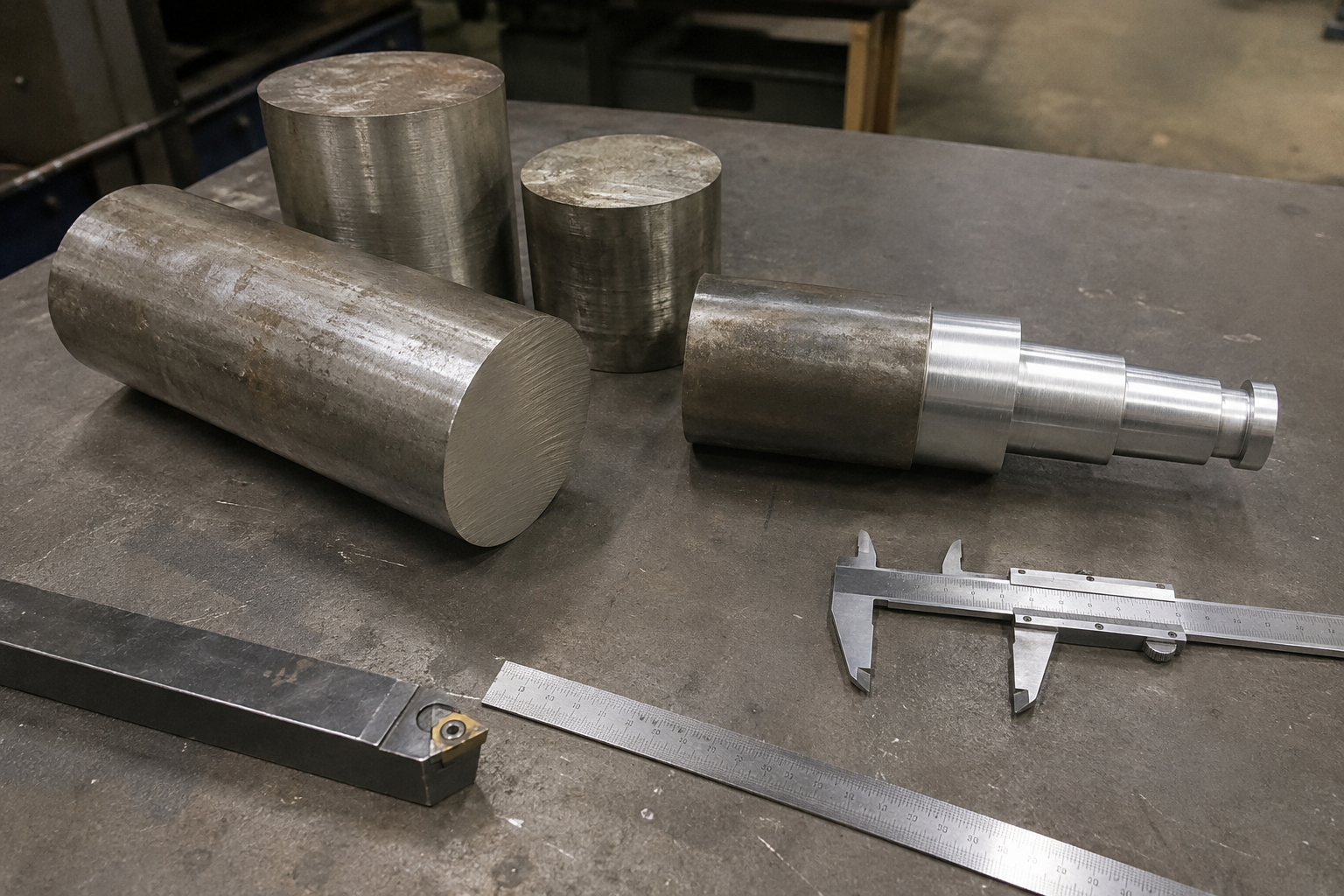
For industrial buyers, the question is not only “Why is a precision bar more expensive?” The better question is: Will a more controlled starting material reduce downstream machining, inspection, and reliability risks?
This guide explains why precision bars can be a better choice for CNC machined components, especially for nickel alloy bars and titanium alloy bars used in aerospace, chemical processing, oil and gas, marine engineering, medical equipment, power generation, valves, pumps, shafts, fasteners, and precision industrial parts.
Quick Answer: Why Are Precision Bars Better for Precision Machined Components?
Precision bars can help improve machining predictability because they usually offer better control over dimensions, surface condition, straightness, material documentation, and batch traceability than less-controlled raw material forms.
However, buyers should avoid assuming that every “precision bar” is automatically suitable for every critical application. The real value depends on the alloy grade, product standard, heat treatment condition, surface finish, dimensional tolerance, MTC/MTR documentation, inspection requirement, and final part application.
| Factor | Why It Matters for Precision Machining |
|---|---|
| Dimensional control | A more controlled diameter, straightness, or surface condition can reduce rough machining time and support final tolerance control. |
| Material consistency | Stable chemistry, mechanical properties, and heat treatment condition help the machinist use more predictable cutting parameters. |
| Surface condition | Peeled, ground, polished, or bright bars may reduce cleanup compared with rough black or hot-worked surfaces. |
| Internal quality | Critical parts may require UT, inspection records, or additional quality control to reduce hidden defect risk. |
| Traceability | Heat number, MTC/MTR, and EN 10204 3.1 documentation help connect the physical bar to actual test results. |
| Machinability | More predictable hardness and structure may reduce sudden tool load variation, although tool life still depends on alloy and machining setup. |
| Component reliability | Better starting material control can reduce risk in fatigue-sensitive, corrosion-sensitive, or high-value components. |
Nickel alloys include many different alloy families with different corrosion resistance, high-temperature strength, and mechanical behavior. The Nickel Institute explains that nickel can alloy with chromium, iron, molybdenum, copper and other elements to create a wide variety of alloys with different performance characteristics. Source: Nickel Institute — Nickel Alloys
What Is a Precision Bar?
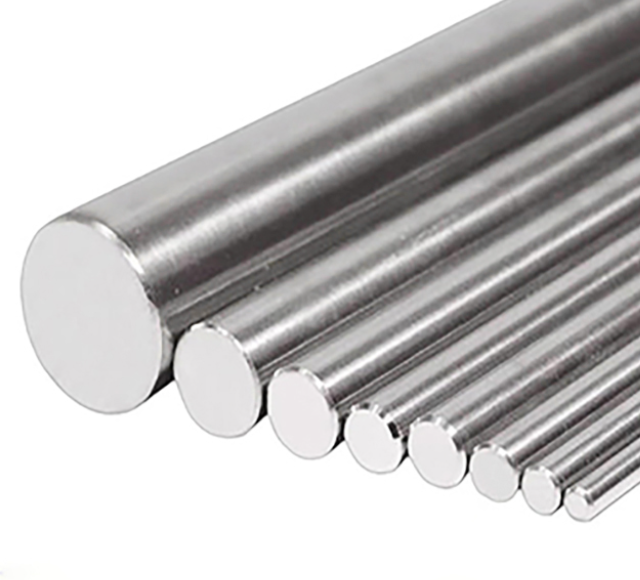
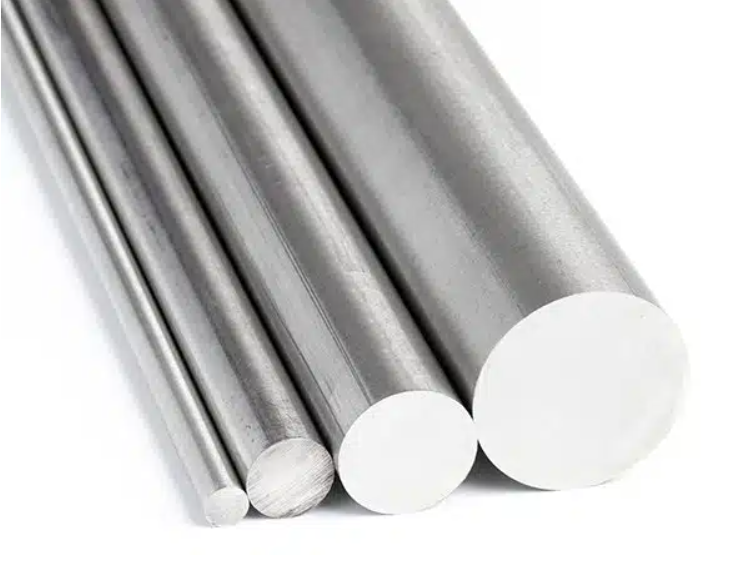
A precision bar is a bar product supplied with tighter control over size, straightness, surface condition, and often material documentation compared with a general rough bar. In industrial purchasing, precision bars may include peeled bars, ground bars, polished bars, cold-worked bars, centerless-ground bars, or bars supplied to customer-specific tolerance and surface requirements.
A precision bar is not only about appearance. It is a controlled starting material for precision machining.
Common Precision Bar Requirements
| Requirement | What Buyers Should Confirm |
|---|---|
| Alloy grade | Alloy 625, Alloy 718, Alloy 400, Alloy C-276, Titanium Grade 2, Ti-6Al-4V, etc. |
| UNS number | N06625, N07718, N04400, N10276, R50400, R56400, etc. |
| Standard | ASTM, AMS, ASME, EN, ISO, or customer drawing. |
| Condition | Annealed, solution annealed, age hardened, cold worked, hot worked, stress relieved. |
| Surface | Black, pickled, peeled, ground, polished, bright, or customer-specific finish. |
| Tolerance | Diameter tolerance, length tolerance, straightness, roundness, ovality, or wall thickness. |
| Certificate | MTC/MTR, EN 10204 3.1, chemical composition, mechanical properties, heat treatment record. |
| Inspection | PMI, UT, hardness, dimensional report, surface inspection, third-party inspection if required. |
Buyer Takeaway
When buying precision bars, buyers should not only ask for a material name and price. They should also confirm the bar condition, tolerance, surface finish, certificate, heat number traceability, and final application.
How Do Precision Bars Reduce Material Variability?
Material variability can come from several sources: chemical composition variation, different heat treatment response, uneven hardness, inconsistent microstructure, surface defects, dimensional variation, inclusions, or residual stress.
Precision bars can reduce these risks by using more controlled production, finishing, inspection, and documentation. For high-performance alloys, melting and remelting processes can also be important when stricter cleanliness or critical application requirements are involved.
For nickel- and cobalt-based superalloys, a paper in ISIJ International explains that vacuum induction melting is important for manufacturing sophisticated alloys because of their reactivity with atmospheric oxygen and nitrogen. It also describes subsequent remelting processes such as VAR and ESR as technologies used to meet very high quality requirements for aerospace applications. Source: State of the Art of Superalloy Production Using VIM/VAR or VIM/ESR
Common Sources of Material Variability
| Variability Source | Why It Matters |
|---|---|
| Chemical composition variation | Can affect strength, corrosion resistance, hardness, and heat treatment response. |
| Microstructure variation | Can influence machining behavior, fatigue behavior, and mechanical performance. |
| Inclusions or internal defects | May become crack initiation sites or cause machining interruptions in critical parts. |
| Residual stress | May cause distortion after cutting, turning, grinding, or heat treatment. |
| Surface defects | May require additional machining allowance or cause rejection after inspection. |
| Dimensional variation | Can increase setup time, roughing time, and risk of insufficient stock. |
How Controlled Production Helps
| Controlled Step | Purpose |
|---|---|
| Controlled melting | Helps manage chemical composition and reduce unwanted reactions with oxygen or nitrogen. |
| VAR / ESR when required | May improve cleanliness, solidification structure, or quality level for demanding applications. |
| Forging / rolling control | Helps shape the bar and influence grain structure and mechanical properties. |
| Heat treatment control | Helps achieve required strength, hardness, ductility, or stress relief. |
| Peeling / grinding / polishing | Improves surface condition and dimensional accuracy before machining. |
| Inspection and certification | Confirms chemistry, mechanical properties, dimensions, and traceability. |
A comparative study of ESR and VAR processing for Ni-containing alloy steel found that VAR reduced total oxygen and nitrogen because of the vacuum environment and significantly decreased the number and size of inclusions in the studied steel. Source: Comparative Study on Cleanliness and Compositional Change of Alloy Steels Processed by ESR and VAR
Buyer Takeaway
For ordinary parts, a standard bar may be sufficient. For precision, safety-critical, or high-value parts, buyers should ask whether a precision bar with tighter tolerance, better surface condition, and stronger documentation is more appropriate.
Can Precision Bars Improve Machinability?
Precision bars can support better machinability, but they do not automatically make a difficult alloy easy to machine. The final machining result still depends on alloy grade, heat treatment condition, tool material, cutting parameters, coolant, machine rigidity, and part geometry.
For nickel-based superalloys, machining can be difficult due to tool wear mechanisms such as abrasive wear, adhesive wear, diffusion wear, oxidation wear, and plastic deformation. Research also notes that low thermal conductivity can lead to heat accumulation near the cutting zone and increase tool wear and production cost. Source: Tool Wear in Nickel-Based Superalloy Machining: An Overview
How Precision Bars May Help Machining
| Machining Factor | How Precision Bars May Help |
|---|---|
| Tool life | More predictable hardness and surface condition can reduce sudden tool load changes. |
| Cutting stability | Better straightness and roundness can improve setup stability and reduce vibration risk. |
| Cycle time | Less cleanup stock may reduce rough machining time in suitable cases. |
| Surface finish | Better starting surface may support more consistent final surface quality. |
| Dimensional accuracy | Tighter starting tolerance can reduce the amount of material that must be corrected. |
| Scrap risk | Better documentation and inspection reduce the risk of machining the wrong or unsuitable material. |
What Precision Bars Cannot Solve Alone
| Limitation | Explanation |
|---|---|
| Wrong alloy selection | A precision bar of the wrong grade will still fail the application requirement. |
| Poor cutting parameters | Tool wear, heat, and surface damage can still occur if machining strategy is incorrect. |
| Insufficient machining allowance | A precise raw bar still needs enough stock for final tolerance and surface cleanup. |
| Lack of traceability | A good-looking bar without MTC/MTR may be unsuitable for critical projects. |
| Overly tight drawing requirements | Some tolerances require grinding, polishing, CMM inspection, or special process planning. |
Buyer Takeaway
Precision bars are most useful when the buyer wants to reduce variability before machining. They are not a replacement for correct tool selection, proper cutting parameters, adequate machining allowance, and inspection planning.
How Do Precision Bars Support Dimensional Stability?
Dimensional stability matters when the final part has tight tolerances, long length, thin walls, sealing surfaces, or rotating functions. If the starting bar has poor straightness, ovality, surface defects, or residual stress, the machining process becomes harder to control.
Dimensional Factors Buyers Should Confirm
| Dimensional Item | Why It Matters |
|---|---|
| Diameter tolerance | Affects machining allowance and final size control. |
| Straightness | Important for shafts, long bars, automatic machining, and rotating parts. |
| Roundness / ovality | Important for turning, grinding, and precision fits. |
| Length tolerance | Affects cutting plan, fixture design, and material utilization. |
| Surface finish | Affects cleanup requirement, final Ra value, and inspection. |
| End condition | Important for automatic feeding, facing, and length-controlled parts. |
ASTM product specifications show why dimensions and mechanical properties should be confirmed in purchase orders. For example, ASTM B446 for nickel alloy rod and bar includes heat treatment, tensile properties, dimensions, length, and straightness requirements. Source: ASTM B446
For titanium bars and billets, ASTM B348 states that covered grades should meet chemical composition requirements and that tensile properties are determined using machined test specimens. Source: ASTM B348
Buyer Takeaway
If the final component needs tight tolerance, do not only ask for the alloy grade. Ask for the bar tolerance, straightness, surface condition, MTC, and whether the supplier can support peeled, ground, polished, or custom precision bar supply.
How Do Precision Bars Improve Component Reliability?
Precision bars can improve the starting condition for reliable components, but they do not “guarantee” reliability by themselves. Final reliability also depends on design, machining, heat treatment, surface finish, inspection, environment, and assembly.
For components under cyclic loading, surface integrity is especially important. A review on machined surface integrity and fatigue performance explains that fatigue cracks generally initiate from free surfaces and that surface topography, residual stress, work hardening, and metallurgical structure changes can affect fatigue performance. Source: Effect of Machined Surface Integrity on Fatigue Performance of Metal Workpieces
Reliability Factors Linked to Bar Quality
| Reliability Factor | Why Precision Bar Control Matters |
|---|---|
| Mechanical properties | More consistent tensile strength, yield strength, elongation, and hardness help designers predict performance. |
| Fatigue behavior | Fewer surface and internal quality risks reduce potential crack initiation concerns. |
| Heat treatment response | Consistent chemistry and microstructure support more predictable heat treatment results. |
| Corrosion performance | Correct alloy chemistry and surface condition help the material match the intended environment. |
| Dimensional stability | Better straightness and tolerance help reduce machining correction and distortion risk. |
| Traceability | Heat number and certificate control support quality audits and project documentation. |
Critical Applications Where Precision Bars Are Often Useful
| Application | Why Precision Bar Quality Matters |
|---|---|
| Aerospace components | Fatigue, traceability, dimensional precision, and strict standards are critical. |
| Medical components | Surface cleanliness, chemistry, certification, and traceability are important. |
| Marine and offshore parts | Corrosion resistance, mechanical reliability, and inspection are important. |
| Chemical processing parts | Alloy selection, surface condition, and corrosion resistance must match the environment. |
| Valves and pumps | Sealing surfaces, shafts, trim parts, and flow components require stable machining quality. |
| Precision shafts and fasteners | Straightness, concentricity, strength, and surface finish directly affect function. |
Buyer Takeaway
Precision bars are not simply a premium version of standard bars. They are a risk-control choice for applications where dimensional stability, material traceability, surface finish, fatigue performance, or machining consistency matters.
Are Precision Bars Worth the Higher Cost?
Precision bars often cost more than rough or standard bars. However, the real decision should be based on total cost, not only the purchase price.
A lower-cost standard bar may be acceptable for simple parts with broad tolerances. But for high-value nickel alloy and titanium alloy components, hidden costs can appear during machining, inspection, and final quality control.
Total Cost Comparison
| Cost Factor | Standard Bar Risk | Precision Bar Benefit |
|---|---|---|
| Raw material price | Lower initial cost | Higher initial cost |
| Rough machining time | May require more cleanup | May reduce cleanup in suitable cases |
| Tooling cost | More variability may increase tool wear risk | More predictable cutting may support stable tool life |
| Scrap and rework | Higher risk if surface, dimension, or certificate is not controlled | Lower risk when requirements are confirmed upfront |
| Inspection time | More incoming inspection may be needed | Better documentation can simplify verification |
| Delivery risk | Rework or replacement material may delay production | More predictable starting material supports planning |
| Performance risk | Hidden variability may affect critical parts | Better traceability and quality control reduce uncertainty |
When Precision Bars Are Usually Worth Considering
| Situation | Why Precision Bars May Be Worth It |
|---|---|
| High-value alloy material | Nickel and titanium alloys are expensive; scrap is costly. |
| Tight tolerance component | Better starting tolerance can reduce machining correction. |
| Long or slender parts | Straightness and residual stress control matter. |
| Fatigue-sensitive parts | Surface integrity and internal quality are important. |
| Critical application | Aerospace, medical, offshore, chemical, and pressure-related parts may require higher confidence. |
| High production volume | Stable input material supports repeatable CNC production. |
| Strict documentation | MTC/MTR, heat number traceability, and inspection records may be required. |
Buyer Takeaway
The higher cost of precision bars may be justified when the cost of scrap, tool wear, rework, delivery delay, or field failure is higher than the extra material cost. Buyers should evaluate total project cost, not only the unit price of the bar.
Why Are MTC, MTR and Heat Number Traceability Important?
For precision machined components, documentation is part of quality control. Buyers should confirm that the supplied bar can be traced to actual test results before the material is cut or machined.
EN 10204 Type 3.1 inspection documents include a statement that the supplied products comply with the order and include test results. The document is validated by the manufacturer’s authorized inspection representative independent of the manufacturing department. Source: BS EN 10204:2004 Inspection Documents
What Buyers Should Check on a Material Certificate
| Certificate Item | What to Confirm |
|---|---|
| Material grade | Nickel alloy, titanium alloy, UNS number, and equivalent grade. |
| Standard | ASTM, AMS, ASME, EN, ISO, or customer specification. |
| Heat number | Must match bar marking, packing list, and MTC/MTR. |
| Chemical composition | Actual element values should match the required specification. |
| Mechanical properties | Tensile strength, yield strength, elongation, hardness, or other required data. |
| Heat treatment condition | Annealed, solution annealed, age hardened, cold worked, stress relieved, etc. |
| Dimensional inspection | Diameter, straightness, length, roundness, surface condition, or wall thickness. |
| NDT / additional inspection | UT, PMI, PT, hardness, CMM, or third-party inspection if required. |
If one long precision bar is cut into many smaller pieces, each piece should remain traceable to the original heat number and certificate. This is important for aerospace, medical, marine, chemical processing, oil and gas, and project-based procurement.
Buyer Checklist: What to Confirm Before Ordering Precision Bars
A clear RFQ helps the supplier quote accurately and helps the buyer avoid quality misunderstandings.
| RFQ Item | What to Provide |
|---|---|
| Material grade | Alloy 625, Alloy 718, Alloy 400, C-276, Titanium Grade 2, Ti-6Al-4V, etc. |
| UNS number | N06625, N07718, N04400, N10276, R50400, R56400, etc. |
| Standard | ASTM B446, ASTM B348, AMS4928, ASTM F136, customer drawing, etc. |
| Bar form | Round bar, flat bar, hex bar, forged bar, peeled bar, ground bar, polished bar. |
| Condition | Annealed, solution annealed, age hardened, cold worked, hot worked, stress relieved. |
| Size and tolerance | Diameter, length, straightness, roundness, ovality, or special tolerance. |
| Surface requirement | Black, pickled, peeled, ground, polished, bright, Ra requirement. |
| Final application | Shaft, fastener, valve component, pump part, implant part, aerospace part, marine part. |
| Machining process | Turning, milling, drilling, grinding, EDM, polishing, automatic machining. |
| Certificate | EN 10204 3.1, MTC/MTR, heat number traceability. |
| Inspection | PMI, UT, PT, hardness, dimensional report, CMM, third-party inspection. |
| Packing and marking | Piece marking, heat number marking, end protection, wooden case, export packing. |
Example RFQ Message
We need precision ground Alloy 625 round bars, UNS N06625, per ASTM B446. Diameter 35 mm, length 3000 mm, tight diameter tolerance and good straightness required. The bars will be CNC machined into valve components for chloride-containing chemical service. EN 10204 3.1 MTC, heat number traceability, PMI, dimensional report, and export packing are required. Please confirm surface condition, tolerance, heat treatment condition, lead time, MOQ, and whether peeled or ground bar is more suitable for our machining process.
This type of RFQ is much clearer than simply asking, “Please quote precision nickel alloy bar.”
Common Mistakes When Choosing Precision Bars
1. Only Comparing Unit Price
A lower bar price does not always mean lower total cost. Tool wear, machining time, scrap, rework, inspection, and delivery risk should also be considered.
2. Assuming All Precision Bars Are the Same
Precision bar quality depends on alloy grade, standard, heat treatment, dimensional tolerance, surface condition, inspection, and supplier capability.
3. Ignoring the Final Application
A bar for a simple industrial spacer does not need the same requirements as a bar for an aerospace fastener, pump shaft, valve stem, or medical component.
4. Not Checking MTC Before Machining
The MTC should be reviewed before cutting and machining. Once the material is cut, traceability becomes harder to manage.
5. Forgetting Straightness and Roundness
Diameter tolerance alone is not enough for shafts, automatic machining, and rotating components. Straightness and roundness should also be confirmed.
6. Over-Specifying Surface Finish
Ground or polished bars may be useful for precision parts, but unnecessary surface requirements can increase cost without improving function.
7. Ignoring Machining Allowance
Even precision bars need suitable machining allowance. If the bar is too close to the final size, there may not be enough material for cleanup, grinding, or final tolerance correction.
8. Treating Precision Bars as a Guarantee
Precision bars reduce risk, but final quality still depends on design, machining, heat treatment, inspection, and operating environment.
FAQ: Precision Bars for Precision Machined Components
1. What is a precision bar?
A precision bar is a bar product supplied with controlled size, straightness, surface condition, and often stronger documentation compared with rough or general bar stock. It may be peeled, ground, polished, cold-worked, or supplied to customer-specific tolerances.
2. Are precision bars always better than standard bars?
Not always. Precision bars are usually better for tight tolerance, high-value, or critical parts. For simple components with broad tolerances, standard bars may be sufficient.
3. Do precision bars improve machinability?
Precision bars may improve machining stability by offering better dimensional control, surface condition, and material predictability. However, machinability still depends on alloy grade, heat treatment, tooling, coolant, cutting parameters, and machine setup.
4. Why are precision bars more expensive?
Precision bars may require additional processing such as peeling, grinding, polishing, inspection, tighter tolerance control, and documentation. These steps increase cost but may reduce downstream machining risk.
5. Do precision bars reduce scrap?
They may reduce scrap risk when material condition, tolerance, surface quality, and documentation are properly matched to the final part. However, scrap also depends on machining process control and inspection.
6. What certificate should buyers request?
For industrial precision bar orders, buyers often request MTC/MTR with EN 10204 3.1 certificate, heat number traceability, chemical composition, mechanical properties, and dimensional inspection.
7. Are precision bars important for nickel alloy and titanium alloy parts?
Yes, especially when the parts are high-value, difficult to machine, fatigue-sensitive, corrosion-sensitive, or used in critical industries such as aerospace, marine, medical, chemical processing, and oil and gas.
8. What information should I send when requesting a quote?
Send the alloy grade, UNS number, standard, size, tolerance, surface condition, heat treatment condition, certificate requirement, inspection requirement, final application, and machining drawing if available.
Conclusion
Precision bars are not only a more expensive raw material option. For precision machined components, they can be a practical risk-control choice.
By offering better dimensional control, surface condition, traceability, and material predictability, precision bars can help reduce machining uncertainty, support tighter tolerance control, improve production stability, and reduce downstream quality risks.
For nickel alloy and titanium alloy components, where both material cost and machining cost are high, the value of precision bars should be evaluated by total project cost, not only raw material price.
Emily PIPE supplies nickel alloy bars, nickel alloy tubes, titanium alloy bars, and titanium alloy tubes for global industrial applications. If you are preparing a precision machining project, you can send your material grade, standard, size, tolerance, surface requirement, certificate requirement, and drawing for technical review and quotation.