
How to Choose the Right Alloy Bar for High-Temperature Fasteners
Fasteners used in high-temperature environments can face much more than simple tensile load. They may experience sustained stress, thermal cycling, oxidation, hot corrosion, vibration, creep, fatigue, preload loss, galling, or chemical exposure. Choosing the wrong alloy can increase the risk of loosening, deformation, cracking, seizure, corrosion, premature replacement, or project rejection.
The suitable alloy for high-temperature fasteners depends on the actual service conditions, including operating temperature, load, service duration, atmosphere, thermal cycling, corrosion exposure, standard requirements, heat treatment condition, and cost-risk balance. Material selection is an engineering process that aims to meet performance goals while considering material properties, cost, heat resistance, corrosion resistance, weight, machinability, availability and working conditions.
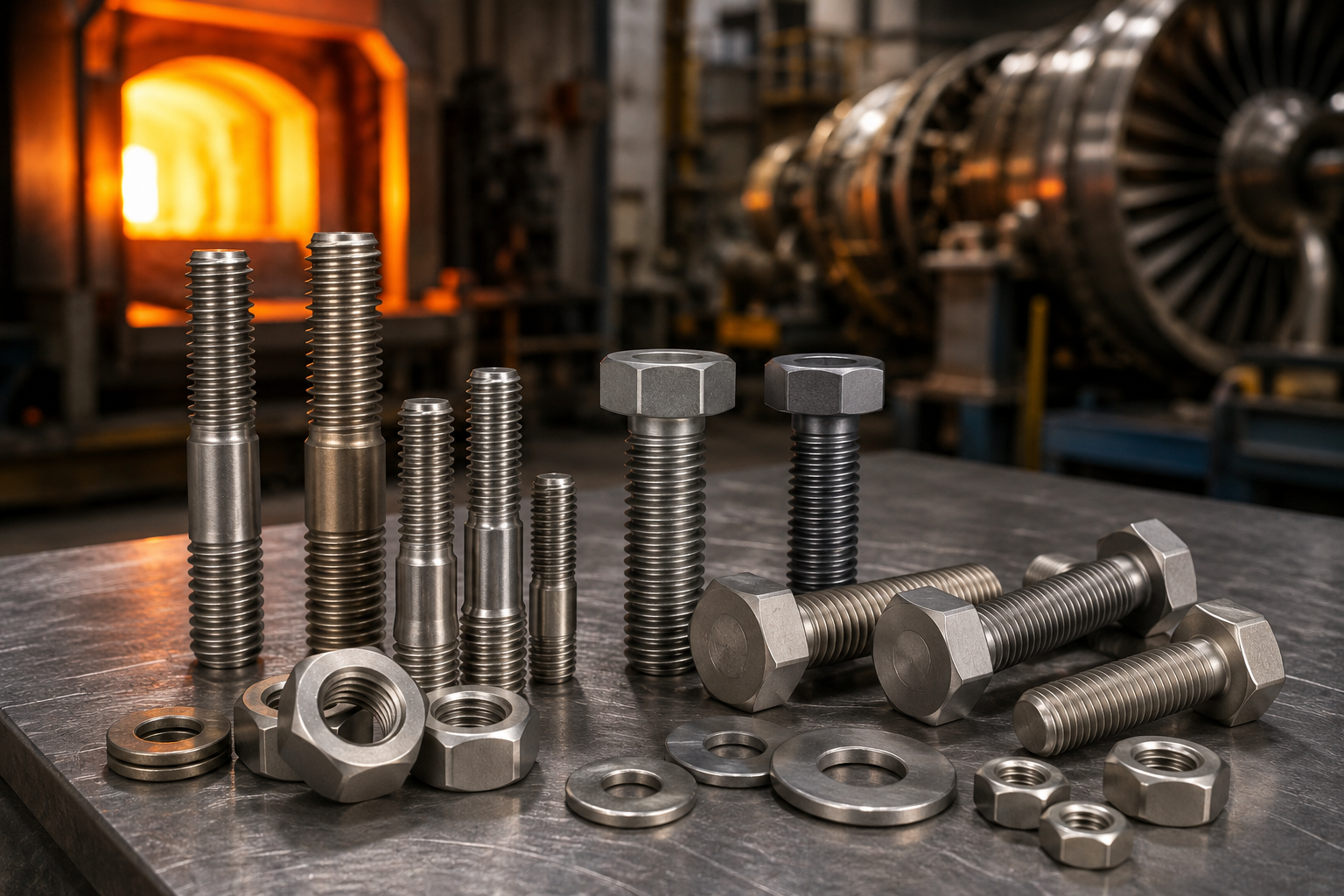
As a manufacturer of nickel alloy bars, nickel alloy tubes, titanium alloy bars and titanium alloy tubes, Emily PIPE often supports customers who need raw materials for machined fasteners, threaded parts, studs, bolts, shafts, pins, valve components and other high-performance parts.
There is no universal answer such as “use one alloy for all high-temperature fasteners.” A good material choice must start from the real working environment.
Quick Checklist: What Should Buyers Confirm Before Choosing an Alloy?
Before selecting alloy bars or rods for high-temperature fasteners, buyers should confirm the following details.
| Item to Confirm | Why It Matters |
|---|---|
| Maximum Service Temperature | Determines whether creep, oxidation or strength loss becomes critical |
| Continuous vs Intermittent Temperature | Short exposure and long-term exposure may require different alloys |
| Service Duration | Creep and oxidation are time-dependent at elevated temperatures |
| Mechanical Load | Tensile load, shear load, preload, vibration and cyclic load affect failure mode |
| Thermal Cycling | Repeated heating and cooling can introduce thermal stress and fatigue |
| Atmosphere | Air, vacuum, steam, exhaust gas, sulfur gas, chloride, acid or alkaline media affect corrosion risk |
| Fastener Function | Structural bolt, clamp, flange fastener, furnace fixture, turbine-related part or valve part |
| Dimensional Requirement | Thread size, bar diameter, tolerance, straightness and machining allowance matter |
| Standard Requirement | ASTM, ASME, AMS, ISO, EN or customer specification may apply |
| Heat Treatment Condition | Solution annealed, aged, annealed, stress relieved or cold worked condition affects performance |
| Documentation | MTR/MTC, heat number, mechanical test, hardness, NDT or third-party inspection may be required |
| Cost of Failure | Higher-risk applications may justify stronger materials and more testing |
If these details are unclear, a supplier can only give a general recommendation. For critical fasteners, buyers should provide operating temperature, load, environment, standard and application details before asking for material selection advice.
Is There One “Best” Alloy for High-Temperature Fasteners?
No single alloy is best for all high-temperature fastener applications.
A high-temperature fastener alloy must be selected by balancing strength, creep resistance, oxidation resistance, corrosion resistance, thermal fatigue behavior, density, cost, availability, machinability and documentation requirements. Nickel-based superalloys are widely used where high-temperature strength, creep resistance, oxidation resistance and corrosion resistance are required.
For example:
- A fastener exposed to high sustained load at elevated temperature may require creep resistance.
- A fastener exposed to repeated heating and cooling may require thermal fatigue resistance.
- A fastener exposed to oxidizing gas may require oxidation resistance.
- A fastener exposed to sulfur, salts, chlorides or chemical media may require hot-corrosion or stress-corrosion resistance.
- A fastener used in aerospace or weight-sensitive equipment may need high strength-to-weight ratio.
- A fastener used in a chemical plant may need both mechanical strength and corrosion resistance.
This is why material selection should be based on the application, not only on a material name.
Common Alloy Families for High-Temperature Fasteners
| Alloy Family | Typical Strength | Typical Limitation | Common Fastener-Related Use |
|---|---|---|---|
| Nickel-Based Superalloys | High-temperature strength, creep resistance, oxidation/corrosion resistance | Higher density and cost | Turbine-related components, furnace hardware, high-temperature bolting, chemical equipment |
| Inconel 718 / Alloy 718 | High strength, fatigue and creep resistance up to about 700°C | Not always the best choice for extreme oxidation or very high-temperature exposure | Aerospace fasteners, high-strength studs, pressure and power applications |
| Inconel 625 / Alloy 625 | Corrosion resistance, oxidation resistance, good strength | Lower precipitation-strengthened strength than Alloy 718 | Chemical processing, marine systems, high-temperature corrosion environments |
| Inconel 600 / Alloy 600 | Oxidation resistance and high-temperature stability | Strength may be lower than precipitation-hardened alloys | Furnace parts, thermal processing, oxidation service |
| Alloy 800H / 800HT | High-temperature strength and oxidation resistance | Application temperature and code requirements must be checked | Heat treatment fixtures, furnace and petrochemical equipment |
| Titanium Alloys | Low density, high strength-to-weight ratio, corrosion resistance | High-temperature capability must be verified by grade and exposure condition | Aerospace, marine, chemical and weight-sensitive fasteners |
| High-Temperature Stainless Steels | Oxidation resistance and availability | Creep strength and corrosion resistance may be limited at higher temperatures | Exhaust systems, furnace supports, general industrial fasteners |
| Cobalt Alloys | Wear resistance and high-temperature strength | Cost and machinability may be challenging | Hot wear parts, valve and tool-related applications |
Inconel 718 is a nickel-based superalloy known for high strength, corrosion and oxidation resistance, and fatigue and creep resistance up to about 700°C. This makes it useful for many high-strength fastener and aerospace-related applications, but it does not mean Alloy 718 is always the best choice.
Why Are Datasheet Numbers Not Enough?
Material datasheets are useful, but they are only a starting point. Buyers should not select a high-temperature fastener alloy based only on room-temperature tensile strength.
High-temperature fastener performance depends on time, temperature, load, environment and cycling conditions. Room-temperature tensile strength does not fully represent creep, fatigue, oxidation, stress relaxation, corrosion or thermal cycling behavior.
For example, a material may show high tensile strength at room temperature but still perform poorly under long-term stress at elevated temperature. Another material may resist oxidation in dry air but suffer corrosion in sulfur-containing gas, molten salts or chloride-containing environments.
What Buyers Should Look Beyond Basic Tensile Strength
| Factor | Why It Matters |
|---|---|
| Creep Resistance | Fasteners under constant load at high temperature may slowly deform over time |
| Stress-Rupture Strength | Indicates long-term resistance to rupture under stress and temperature |
| Fatigue Resistance | Important when vibration or cyclic loading is present |
| Thermal Fatigue Resistance | Important when fasteners see repeated heating and cooling |
| Oxidation Resistance | Important in hot air, furnace, exhaust or turbine-related environments |
| High-Temperature Corrosion Resistance | Important in sulfur, salts, chlorides, fuel ash or aggressive gas environments |
| Stress Relaxation | Fastener preload may drop at elevated temperature |
| Coefficient of Thermal Expansion | Mismatch with joined parts can change preload or create stress |
| Machinability | Some nickel alloys are difficult to machine into threads or complex parts |
| Heat Treatment Condition | Solution annealing, aging, cold working or stress relief can change properties |
| Surface Condition / Coating | May affect galling, oxidation, corrosion and installation performance |
| Traceability | Critical projects may require MTR/MTC, heat number and inspection reports |
Creep is time-dependent deformation under sustained stress, usually important at high temperature. Fatigue is the initiation and growth of cracks under cyclic loading. Thermo-mechanical fatigue combines cyclic mechanical loading with cyclic thermal loading and involves mechanisms such as creep, fatigue and oxidation.
How Do Temperature, Time and Load Change Alloy Selection?
For high-temperature fasteners, the temperature number alone is not enough. Buyers should also define how long the fastener stays at that temperature and what load it carries.
Temperature and Load Questions
| Buyer Question | Why It Matters |
|---|---|
| What is the maximum temperature? | Determines whether the alloy can retain strength and resist oxidation |
| Is the temperature continuous or intermittent? | Long-term exposure increases creep and oxidation concerns |
| How many hours will the fastener remain at temperature? | Creep and stress rupture are time-dependent |
| What preload or tensile stress will the fastener carry? | High stress at high temperature increases creep risk |
| Will the fastener experience vibration or cyclic load? | Fatigue resistance becomes important |
| Will the fastener be retightened or maintained? | Preload loss and stress relaxation may affect service life |
| Is there thermal cycling? | Repeated expansion and contraction may create thermal fatigue |
| Are joined materials different? | Thermal expansion mismatch may change joint load |
A fastener used for a short high-temperature cycle may not need the same alloy as a fastener exposed to thousands of hours of sustained heat and load.
How Does Atmosphere Affect High-Temperature Fastener Alloys?
The surrounding atmosphere can be just as important as temperature. A material that performs well in dry air may not perform well in sulfur-containing gas, chloride-containing environments, steam, carburizing atmosphere, or molten salt exposure.
High-temperature corrosion includes mechanisms such as oxidation, sulfidation and carburization. Hot gases containing contaminants, salts or sulfur compounds can attack alloys that might otherwise resist ordinary oxidation.
High-temperature corrosion can occur when machinery comes into contact with hot gas containing contaminants, and it includes high-temperature oxidation, sulfidation and carbonization. High-temperature oxidation is oxidation of a metal at elevated temperature.
Common Environmental Questions
| Environment | Material Concern |
|---|---|
| Dry Air | Oxidation resistance |
| Steam | Oxidation, stress corrosion or scale formation depending on alloy and temperature |
| Sulfur-Containing Gas | Sulfidation or hot corrosion risk |
| Chloride Environment | Pitting, crevice corrosion or stress corrosion risk depending on temperature and material |
| Acidic Chemical Media | General corrosion, localized corrosion or stress corrosion cracking |
| Marine Environment | Chloride corrosion and galvanic compatibility |
| Vacuum | Outgassing, surface condition and mechanical stability |
| Exhaust Gas / Combustion Gas | Oxidation, fuel ash corrosion or thermal cycling |
| Carburizing Atmosphere | Carbon pickup and material degradation risk |
If the environment is chemically aggressive, buyers should avoid choosing materials only by temperature rating. Chemical exposure must be part of the selection process.
What Role Do Nickel Alloy Bars Play in High-Temperature Fasteners?
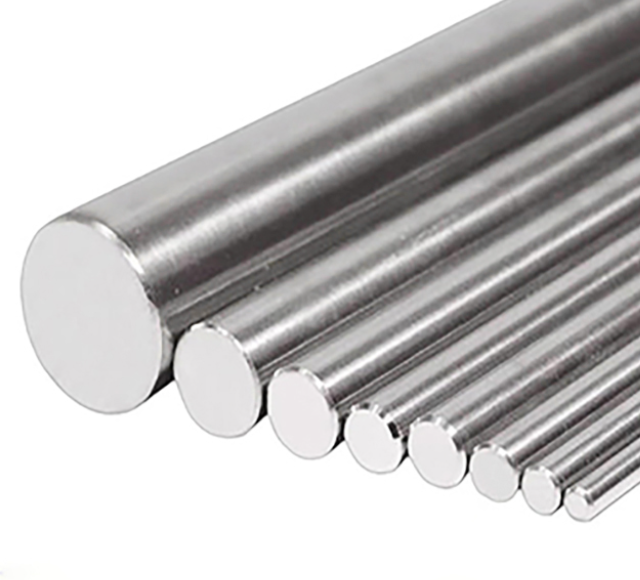
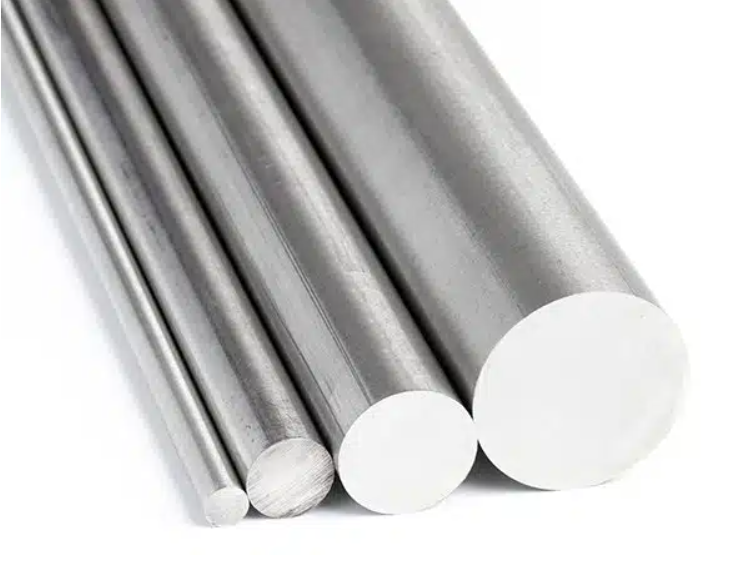
Many high-temperature fasteners are machined from round bars or rods. For nickel alloy fasteners, buyers often start from nickel alloy bars such as Inconel 718, Inconel 625, Alloy 600, Alloy 601, Alloy 800H, Alloy 825 or other grades.
For precipitation-hardenable nickel alloy rods, bars, forgings and forging stock, ASTM B637 covers hot- and cold-worked nickel alloy products for moderate or high-temperature service. The standard includes chemical analysis, heat treatment, tension testing, hardness testing and stress-rupture testing requirements.
For buyers, this means the raw bar is not just “metal stock.” It should be ordered with the correct grade, heat treatment condition, size tolerance, surface condition, test requirements and traceability.
Nickel Alloy Bar Procurement Checklist
| Item | What Buyers Should Confirm |
|---|---|
| Alloy Grade | Inconel 718, Inconel 625, Alloy 600, Alloy 800H, Alloy 825, etc. |
| UNS Number | N07718, N06625, N06600, N08810, N08825, etc. |
| Applicable Standard | ASTM B637, ASTM B166, ASTM B408, customer specification, etc. |
| Diameter and Length | Machining allowance and final fastener dimensions |
| Heat Treatment | Solution treated, aged, annealed, stress relieved or cold worked |
| Mechanical Properties | Tensile strength, yield strength, elongation, hardness |
| High-Temperature Data | Stress-rupture, creep or application-specific data if required |
| Surface Condition | Peeled, ground, polished, pickled, black surface or bright surface |
| Straightness | Important for machining long studs or precision components |
| MTR / MTC | Chemical and mechanical properties |
| Heat Number Traceability | Links bar material to certificate and production records |
| Inspection | UT, dimensional inspection, PMI or third-party inspection if required |
What About Titanium Alloys for High-Temperature Fasteners?
Titanium alloys can be attractive for weight-sensitive applications because they offer high strength-to-weight ratio and corrosion resistance. However, buyers should be careful when applying titanium alloys to high-temperature fasteners.
Titanium alloys are known for high tensile strength and toughness, low weight, corrosion resistance and use in aerospace, medical, marine and highly stressed components. However, high-temperature capability must be verified by exact grade, load, exposure time and environment.
Titanium may be suitable when weight saving is critical and the temperature is within the approved range for the specific grade and application. But titanium should not be chosen only because it is light. Buyers must check strength retention, oxidation, galling, creep, surface treatment, thread performance and compatibility with mating materials.
ASTM B348/B348M covers titanium and titanium alloy bars and billets, including chemical composition, tensile properties and dimensions. For titanium fastener raw material, buyers should specify the grade, standard, condition, diameter, tolerance, surface finish and test requirements.
Titanium Bar Procurement Checklist
| Item | What Buyers Should Confirm |
|---|---|
| Titanium Grade | Grade 2, Grade 5 / Ti-6Al-4V, Grade 23 / Ti-6Al-4V ELI, etc. |
| UNS Number | R50400, R56400, R56401, etc. |
| Standard | ASTM B348, AMS, ISO or customer specification |
| Application Temperature | Must be verified by grade and design requirement |
| Load and Preload | Threaded fasteners need controlled preload and strength |
| Surface Treatment | Important for galling, corrosion and installation |
| Mating Material | Galvanic compatibility and thermal expansion should be reviewed |
| MTR / MTC | Chemical and mechanical property data |
| Heat Number Traceability | Required for controlled procurement |
| Inspection | Dimensional inspection, PMI, UT or third-party inspection if required |
What Critical Questions Should Buyers Ask Alloy Suppliers?
Buying high-temperature fastener materials requires clear communication. A supplier cannot recommend the right alloy without knowing the operating conditions.
Supplier Questions for High-Temperature Fastener Materials
| Question | Why It Matters |
|---|---|
| What is the maximum and continuous service temperature? | Determines high-temperature strength and oxidation requirements |
| What load or preload will the fastener carry? | Determines creep, stress relaxation and strength requirements |
| Will the fastener experience thermal cycling? | Determines fatigue and expansion concerns |
| What atmosphere or chemical media will be present? | Determines oxidation, corrosion or stress-corrosion risk |
| What is the expected service duration? | Long exposure increases creep and oxidation concerns |
| What failure mode is most critical? | Creep, fatigue, oxidation, corrosion, galling or loosening |
| What standard or specification must the material meet? | ASTM, ASME, AMS, EN, ISO or customer specification |
| What material condition is supplied? | Heat treatment condition strongly affects properties |
| Can you provide MTR/MTC and heat number traceability? | Supports quality verification and project acceptance |
| Are creep, stress-rupture, fatigue or oxidation data available? | Needed for critical high-temperature evaluation |
| Is NDT or third-party inspection required? | Critical orders may need UT, PMI or inspection support |
| Are there machining or threading considerations? | Some nickel alloys are difficult to machine and thread |
| Are there installation or anti-galling requirements? | Fasteners may require coating, lubrication or surface treatment |
A good supplier should explain not only what an alloy can do, but also where its limits are.
How Can Buyers Manage Risk When Choosing High-Temperature Alloys?
Material selection is part of a larger risk-management process. Buyers should not rely only on trade names or general temperature claims.
Risk can be reduced by defining the service environment, identifying likely failure modes, selecting candidate materials, checking standards and test data, confirming traceability, and validating the material choice when the application is critical.
Risk Management Steps
| Step | What to Do |
|---|---|
| Define Failure Mode | Fracture, loosening, creep deformation, oxidation, corrosion, galling or fatigue |
| Define Service Conditions | Temperature, load, time, atmosphere, cycling, pressure, vibration |
| Select Candidate Alloys | Compare nickel alloys, titanium alloys, stainless steels or cobalt alloys |
| Check Standards | ASTM, ASME, AMS, EN, ISO or customer specification |
| Review Material Data | Tensile, yield, hardness, creep, stress-rupture, fatigue, oxidation and corrosion data |
| Confirm Heat Treatment | Aging, solution treatment, annealing or stress relief |
| Check Manufacturability | Bar diameter, machinability, thread forming, straightness, surface condition |
| Request Traceability | MTR/MTC, heat number, marking and inspection records |
| Use Testing When Required | UT, PMI, hardness, tensile, stress rupture, corrosion or third-party inspection |
| Validate Critical Applications | Pilot testing or application-specific testing where needed |
| Consider Total Cost | Balance material price with downtime, replacement, maintenance and failure risk |
Total cost of ownership considers direct and indirect costs, not only purchase price. For high-temperature fasteners, a cheaper raw material may become expensive if it leads to machining waste, early replacement, downtime or project rejection.
RFQ Checklist for High-Temperature Fastener Raw Materials
To get an accurate quotation and material recommendation, buyers should provide a clear RFQ.
| RFQ Item | Information to Provide |
|---|---|
| Application | Furnace fixture, flange bolt, turbine-related part, chemical equipment, aerospace fastener, valve component |
| Material Grade | Inconel 718, Inconel 625, Alloy 600, Alloy 800H, Titanium Grade 5, etc. |
| UNS Number | N07718, N06625, N06600, N08810, R56400, etc. |
| Product Form | Round bar, rod, forged bar, cut blank |
| Standard | ASTM B637, ASTM B348, AMS, ASME, EN, ISO, customer specification |
| Diameter and Length | Bar size, tolerance and machining allowance |
| Heat Treatment Condition | Solution treated, aged, annealed, stress relieved or cold worked |
| Service Temperature | Maximum, continuous and intermittent temperature |
| Load Condition | Tensile load, preload, shear, vibration, thermal cycling |
| Environment | Air, steam, exhaust gas, sulfur, chloride, acid, vacuum, marine atmosphere |
| Required Tests | Chemical, tensile, hardness, stress rupture, UT, PMI, dimensional inspection |
| Required Documents | MTR/MTC, heat number, EN 10204 3.1/3.2, inspection reports |
| Surface Condition | Peeled, ground, polished, pickled, bright, black surface |
| Inspection Requirement | Third-party inspection, dimensional report, NDT report |
| Delivery Requirement | Quantity, packaging, destination and delivery schedule |
A complete RFQ helps the supplier provide a more accurate material recommendation and helps the buyer compare offers fairly.
How Can Emily PIPE Support High-Temperature Fastener Material Buyers?
Emily PIPE supplies nickel alloy tubes, nickel alloy bars, titanium alloy tubes and titanium alloy bars for global industrial customers. For high-temperature fastener material buyers, we can support raw material selection and supply based on drawings, standards and application requirements.
We can help provide:
- nickel alloy bars and titanium alloy bars for machining fasteners
- material grade and UNS number confirmation
- ASTM / ASME / EN / ISO / AMS standard review
- bar diameter, length, tolerance and surface condition confirmation
- heat treatment condition review
- MTR / MTC and heat number traceability
- chemical and mechanical test reports
- UT, PMI, hardness, dimensional inspection or third-party inspection when required
- export packaging and shipment documentation
We recommend sharing your application conditions before final material selection. Information such as service temperature, load, atmosphere, exposure time, standard and required tests helps us recommend a more suitable alloy and prepare a reliable quotation.
Conclusion
Choosing the right alloy for high-temperature fasteners is not about finding one universal “best” material. It is about matching alloy properties to actual service conditions.
Buyers should consider temperature, load, service duration, thermal cycling, oxidation, corrosion, creep, fatigue, stress relaxation, machinability, standards, testing and traceability. Nickel-based alloys such as Inconel 718, Inconel 625, Alloy 600 and Alloy 800H are often considered for high-temperature or corrosive service, while titanium alloys may be considered when weight saving and corrosion resistance are important within the approved temperature range.
The safest approach is to define the application clearly, compare candidate alloys, request proper material certificates, confirm heat treatment and traceability, and use additional testing when the application risk is high.
If you are sourcing nickel alloy bars or titanium alloy bars for high-temperature fasteners, you can send us your material grade, UNS number, size, standard, service temperature, load condition, atmosphere, testing requirements and delivery schedule. Our team can help review the material scope and provide a quotation based on your project needs.