
When Should You Choose Inconel 625 for Your Project Needs?
Deciding on the right material can be difficult. Many buyers consider Inconel 625 when they face corrosion, heat, or strength concerns, but they are often unsure whether it is truly necessary or simply over-specified for their application.
Choosing Inconel 625 wisely depends on a careful review of the real operating conditions, not just a high-temperature number. It becomes a strong candidate when severe corrosion risks, mechanical loads, high-temperature exposure, or fabrication requirements make lower-cost materials unreliable or risky.
From my years of experience working with industrial clients, I have seen many companies struggle with material selection. Sometimes, an Inconel 625 specification appears in an RFQ, but the real reason behind the selection is not clearly stated. This can lead to unnecessary material cost or, in worse cases, equipment failure if the chosen alloy does not match the actual service environment.
The goal of this article is to explain the decision logic behind Inconel 625 selection: when it is necessary, when it may be over-specified, and what technical information should be reviewed before making a final material decision.
Why do RFQs often miss crucial details for Inconel 625 selection?
Many RFQs mention only material grade, size, and operating temperature. However, for corrosion-resistant alloy selection, temperature alone is not enough. Corrosion behavior is affected by factors such as pH, temperature, and the specific service environment.
RFQs may miss key details for Inconel 625 selection when they focus mainly on temperature and ignore factors such as chloride concentration, pH level, oxidizing or reducing conditions, H2S exposure, flow velocity, and cyclic stress. These details define the actual corrosion and mechanical risks.
From my perspective as a supplier, I often receive requests for Inconel 625 where the only operating parameter provided is a high temperature. While temperature is important, it tells only part of the story. When an RFQ simply says “Inconel 625, 800°C,” the first technical question should be: What else is happening in the system?
For example, chloride ion concentration can strongly influence pitting, crevice corrosion, and chloride stress corrosion cracking. A TMS Superalloys paper on Alloy 625 discusses localized corrosion data in relation to chloride concentration and pH, which shows why material selection should not be based on temperature alone.
Understanding the Missing Pieces in Your Material Specification
When I review an RFQ, I look for information beyond size and temperature. These details help confirm whether Inconel 625 is technically required or whether another alloy may be enough.
- Chloride Concentration: Chloride ions are a major concern in seawater, brine, chemical processing, and some flue gas desulfurization systems. Inconel 625 is often selected because it offers resistance to pitting, crevice corrosion, and chloride-related corrosion risks.
- pH Levels: Acidic, neutral, and alkaline environments can affect alloys very differently. A material that works in one solution may fail in another.
- Oxidizing or Reducing Conditions: Inconel 625 performs well across many severe environments, but the exact chemistry matters. The combination of nickel, chromium, and molybdenum gives the alloy broad corrosion resistance.
- H2S or Other Aggressive Chemicals: In oil and gas or chemical service, H2S can create sulfide stress cracking risks. This must be reviewed together with chloride, pH, stress, and temperature.
- Cyclic Stress or Fatigue Requirements: Mechanical loads are just as important as chemical exposure. If the component faces vibration, pressure cycling, bending, or thermal cycling, fatigue behavior should be reviewed.
- Flow Rate and Erosion Risk: High flow velocity or abrasive particles can create erosion-corrosion risks, especially in piping, heat exchangers, and process equipment.
How Incomplete Data Leads to Premature Material Commitments
When only partial information is available, two problems can appear.
The first problem is over-specification. A buyer may choose Inconel 625 “just to be safe” because the operating data is incomplete. This may raise the project cost unnecessarily.
The second problem is under-specification. A buyer may choose a lower-cost alloy without realizing that chloride, low pH, H2S, or cyclic stress could cause premature failure.
For this reason, we usually ask customers to provide the service medium, temperature range, pressure, chloride level, pH, oxygen content, H2S/CO2 presence, stress condition, fabrication method, inspection requirements, and applicable standards before confirming the most suitable material.
Is Inconel 625's higher price always justified by its chemistry?
A higher price does not automatically mean Inconel 625 is the best choice for every project. It means the alloy contains high-value alloying elements and provides a combination of corrosion resistance, strength, and high-temperature performance that may or may not be needed in a specific application.
Inconel 625's higher cost is justified when the service environment actually requires the performance created by its high nickel, chromium, molybdenum, and niobium content. It is not a universal “better material”; it is the right material only when the operating risks require it.
According to the public material summary for Inconel 625 / UNS N06625, the alloy contains nickel as the base element, with chromium, molybdenum, and niobium plus tantalum as important alloying additions. These elements are directly related to its corrosion resistance, strength, and high-temperature performance.
The Role of Nickel and Molybdenum in Corrosion Resistance
- Nickel (Ni): High nickel content helps nickel-based alloys resist many chloride-related corrosion risks and contributes to stable austenitic structure.
- Molybdenum (Mo): Molybdenum improves resistance to localized corrosion, especially pitting and crevice corrosion in chloride-containing environments.
- Niobium (Nb): Niobium contributes to strengthening and helps support the alloy’s mechanical performance.
So, when the project involves high chloride exposure, acidic media, seawater, aggressive chemical processing, or critical welded components, the chemistry of Inconel 625 can justify its higher cost.
Comparing Inconel 625 with Alternatives
Material selection should compare the real operating conditions against several possible alloys.
- Alloy 825: Alloy 825 may be considered in some acid and chloride-containing environments where the conditions are corrosive but not severe enough to require Inconel 625. Public references on Incoloy alloys describe Alloy 825 as a nickel-iron-chromium alloy containing molybdenum and copper.
- Hastelloy C276: C276-type nickel-chromium-molybdenum alloys are usually considered for very severe chemical processing environments. However, they should not be selected automatically. They should be reviewed against the exact chemical media, temperature, fabrication needs, and budget.
- Duplex Stainless Steel 2205: Duplex stainless steels may be cost-effective in some chloride-containing environments, but they also have service limits. A UK HSE report explains that chloride stress corrosion cracking susceptibility in austenitic stainless steels depends on variables including chloride concentration, temperature, pH, stress level, surface finish, and metallurgical condition. This is why stainless steel alternatives must be reviewed carefully.
- 316L Stainless Steel: 316L is widely used in mild to moderate environments. However, in chloride-containing environments, especially with elevated temperature and tensile stress, 300-series stainless steels can become vulnerable to chloride stress corrosion cracking.
The key is not to ask, “Which alloy is best?” The better question is: “Which alloy is appropriate for this exact environment, failure risk, fabrication route, and budget?”
How do we avoid over-specifying Inconel 625 without risking failure?
Over-specification often happens when old project specifications are copied without rechecking the current operating conditions. A material used in one project may not be necessary in another project if the service medium, temperature, chloride level, pressure, or failure consequence is different.
We avoid over-specifying Inconel 625 by reassessing the actual operating environment, identifying the likely failure modes, and comparing suitable alternatives before finalizing the material.
The Pitfalls of Copying Old Specifications
Copying specifications without reassessment can create unnecessary cost. For example, if Project A required Inconel 625 because of high chloride, low pH, and high temperature, but Project B operates in a much milder environment, using the same material may be unnecessary.
The opposite can also happen. If an old project used stainless steel successfully, it does not mean stainless steel will work in a new project with higher chloride content, higher temperature, H2S exposure, or higher stress.
Strategies for Smart Material Selection and Budget Optimization
-
Define the Actual Operating Environment
Confirm the service medium, temperature, pressure, pH, chloride level, oxygen content, H2S/CO2 presence, flow velocity, and cleaning or shutdown conditions. -
Identify the Specific Failure Modes
The main concern may be pitting, crevice corrosion, chloride stress corrosion cracking, sulfide stress cracking, general corrosion, erosion-corrosion, oxidation, creep, or fatigue. -
Evaluate Alternatives Systematically
Compare Inconel 625 with Alloy 825, Hastelloy C276, duplex stainless steel, 316L stainless steel, titanium alloys, or other materials based on the actual service conditions.
| Material | Key Strength | When to Consider |
|---|---|---|
| Inconel 625 | Broad corrosion resistance, seawater resistance, high strength, weldability, oxidation resistance | Severe chloride, seawater, chemical processing, high-stress or high-temperature service |
| Alloy 825 | Good resistance in some acid and chloride-containing environments | Moderate acid and chloride service where 625 may be unnecessary |
| Hastelloy C276 | Strong corrosion resistance in severe chemical service | Very aggressive chemical processing where 625 may not be enough |
| Duplex SS 2205 | High strength and better chloride SCC resistance than many 300-series stainless steels | Moderate chloride service with temperature limits and cost sensitivity |
| 316L SS | General corrosion resistance and good fabrication | Mild to moderate environments without severe chloride/SCC risk |
- Evaluate the Consequence of Failure
If failure could cause safety hazards, environmental damage, long shutdowns, or high repair cost, using a higher-performance alloy may be justified. If the consequence is low and the environment is mild, a lower-cost material may be acceptable.
Can fabrication needs alone make Inconel 625 the right choice?
Sometimes the corrosion environment is not the only reason to choose Inconel 625. Fabrication can also influence the final decision. Weldability, forming, bending, machining, and inspection requirements can affect cost, lead time, and reliability.
Fabrication compatibility can make Inconel 625 a practical choice when weld quality, corrosion resistance after welding, and manufacturing reliability are critical. However, machining Inconel 625 is still challenging and should be considered in the total project cost.
The Critical Role of Weldability
Nickel alloys can be welded by conventional welding processes, but good welding results depend on proper procedure control. TWI’s welding guidance for nickel and nickel alloys highlights the importance of filler metal selection and welding considerations for alloys including Inconel 625.
This means Inconel 625 is weldable, but good weldability does not remove the need for qualified welding procedures, clean joint preparation, suitable filler metal, and proper inspection.
Formability and Machinability Considerations
Inconel 625 can be formed and fabricated into many industrial components, but machining should not be underestimated. A ScienceDirect paper notes that machining Inconel 625 is challenging because of low thermal conductivity, rapid work hardening, and strength retention at high temperature.
This affects:
- cutting speed
- tool wear
- surface integrity
- machining time
- fatigue performance of machined components
- final production cost
Therefore, when a project involves extensive machining, the material decision should include not only corrosion performance but also fabrication cost and manufacturing risk.
The Total Cost of Ownership for Fabrication
When selecting a material, the raw material price is only one part of the total cost. Buyers should also consider:
- welding procedure qualification
- skilled labor requirements
- tooling cost
- machining time
- scrap and rework rate
- non-destructive testing
- delivery schedule
- failure consequence in service
A lower-cost material can become more expensive if it creates welding problems, machining delays, rework, or early failure. On the other hand, Inconel 625 should not be selected only because it is a premium alloy. It should be selected because it solves a real corrosion, strength, temperature, or fabrication problem.
When should I truly consider Inconel 625 for my project?
You should consider Inconel 625 when your project involves a combination of aggressive corrosion, mechanical stress, high temperature, seawater exposure, or complex fabrication requirements.
Inconel 625 is most suitable when the service environment creates corrosion or mechanical risks that lower-cost alloys cannot handle reliably. It is especially valuable where failure consequences are serious and long-term reliability is more important than the lowest initial material cost.
Key Scenarios Where Inconel 625 Performs Well
-
Highly Corrosive Chemical Processing
Inconel 625 is widely used in chemical processing because of its corrosion resistance across many aggressive environments. It may be used for reaction vessels, tubing, heat exchangers, transfer piping, valves, and other equipment where strength and corrosion resistance are both required. -
Marine and Offshore Applications with Seawater Exposure
Inconel 625 is often selected for seawater and offshore applications because chloride-containing environments can create pitting, crevice corrosion, and stress corrosion cracking risks. The TMS Superalloys paper on Alloy 625 includes corrosion data related to chloride concentration, pH, and localized corrosion behavior. -
High-Temperature Oxidation and Thermal Cycling
Alloy 625 has been studied under cyclic oxidation conditions at 982°C / 1800°F. The same TMS Superalloys paper discusses cyclic oxidation testing and the alloy’s ability to retain a protective oxide coating. For pressure-bearing or load-bearing designs, however, allowable stress and temperature limits should always be checked against the applicable code and product standard. -
Aerospace and Engine-Related Components
Inconel 625 is used in aerospace and high-temperature engineering where corrosion resistance, heat resistance, and mechanical strength are required. The exact product form and service condition should still be reviewed before final selection. -
Components Requiring Fatigue Strength
Inconel 625 can be considered for components exposed to vibration, pressure cycling, or dynamic loading, especially when corrosion resistance and fatigue resistance are both important. -
Critical Welded Fabrications
Inconel 625 can be a strong candidate when the component requires reliable weld quality, good corrosion resistance after welding, and resistance to corrosion-related failure.
Applicable Product Standards
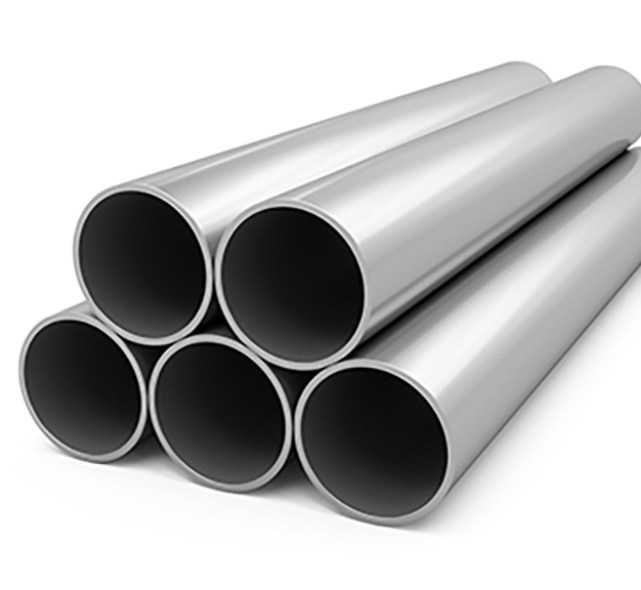
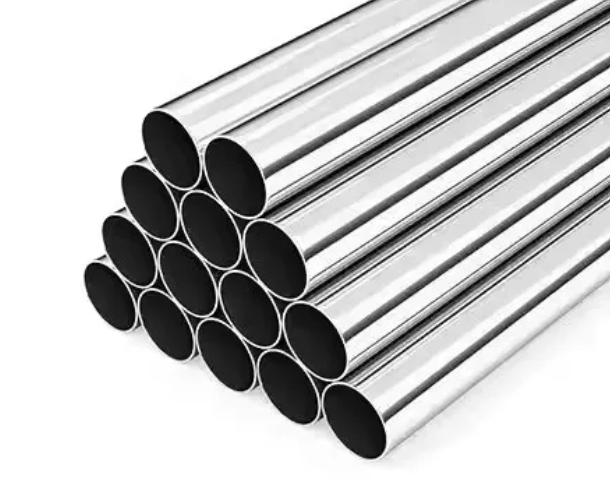
For seamless pipe and tube, ASTM B444 covers nickel-chromium-molybdenum-columbium alloys including UNS N06625 in the form of cold-worked seamless pipe and tube. Buyers should confirm the required standard, grade, heat treatment condition, size tolerance, testing requirements, and certificate requirements before ordering.
Making the Final Decision: A Practical Checklist
Before choosing Inconel 625, ask these questions:
-
Is the corrosion environment severe enough?
Look for chloride content, low pH, oxidizing or reducing acids, seawater, H2S, CO2, oxygen, deposits, and crevices. -
Are there mechanical loads or fatigue cycles?
Review pressure cycling, vibration, bending, thermal cycling, and stress concentration. -
Is the temperature high enough to affect material behavior?
Check oxidation, creep, design stress, thermal fatigue, and applicable code limits. -
Are welding and fabrication requirements critical?
Review welding process, filler metal, forming method, tube expansion, machining, heat treatment, and inspection. -
What happens if the component fails?
If failure could cause safety risk, environmental damage, long shutdowns, or high repair cost, a premium alloy may be justified. -
Can a lower-cost alloy meet the same requirement safely?
Compare Alloy 825, duplex stainless steel, 316L stainless steel, titanium alloys, Hastelloy C276, or other materials based on the actual service environment.
Conclusion
Choosing Inconel 625 should be based on real operating risks, not simply on high temperature or brand reputation. It becomes valuable when severe corrosion, seawater exposure, high stress, high-temperature oxidation, fatigue, or critical fabrication requirements make lower-cost materials risky.
For buyers, the best approach is to provide complete service information before confirming the material. At Emily PIPE, we help customers review operating conditions, standards, product form, size requirements, inspection needs, and delivery plans so that the final alloy choice balances performance, safety, and cost.