
What is Inconel 625? And how do its Composition, Properties, and Applications define its use?
Are you struggling to find a material that can withstand extreme corrosion and high temperatures? Many industrial buyers face this challenge, leading to costly material failures and project delays. Inconel 625 offers specific benefits for these tough conditions.
Inconel 625 is a nickel-chromium-molybdenum alloy known for its excellent strength and outstanding resistance to corrosion1 in diverse aggressive environments. Its unique composition makes it suitable for applications requiring resistance to pitting, crevice corrosion, and high-temperature oxidation.
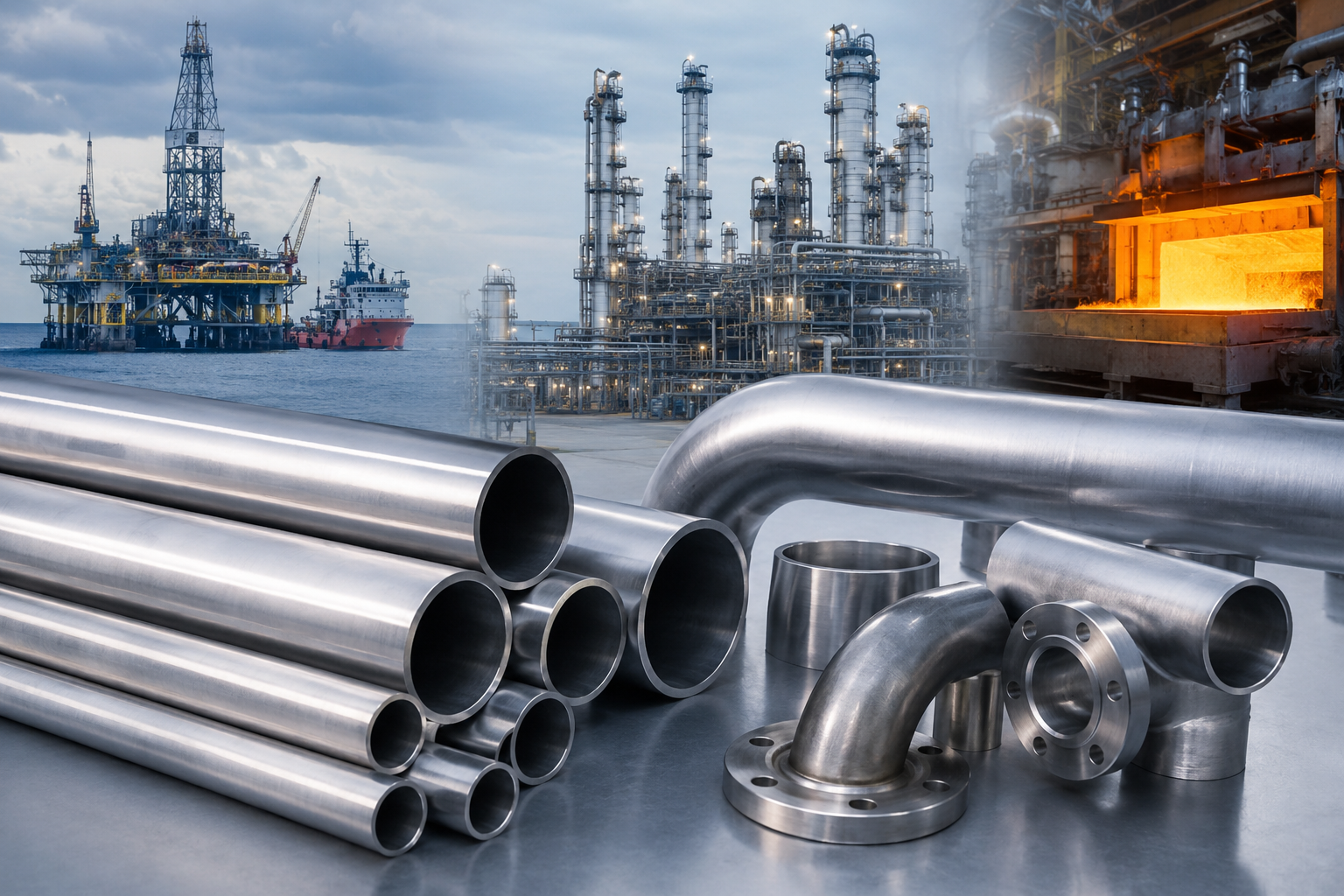
From our experience as a manufacturer, we understand the critical decisions buyers make about materials. Choosing the right alloy is not just about price; it is about long-term performance and project success. Let's look closer at Inconel 625 to see if it is the right fit for your demanding applications.
What is Inconel 625's unique composition, and why does it matter?
Are you wondering why Inconel 625 performs so well in harsh environments? Many assume it is just "another nickel alloy," but its specific chemical makeup is the true secret. This composition directly shapes its capabilities.
Inconel 625's strength and corrosion resistance come from its primary alloying elements: nickel for the core, chromium for oxidation resistance, and critically, molybdenum and niobium for superior localized corrosion resistance and high-temperature stability. Each element plays a functional role in its performance.
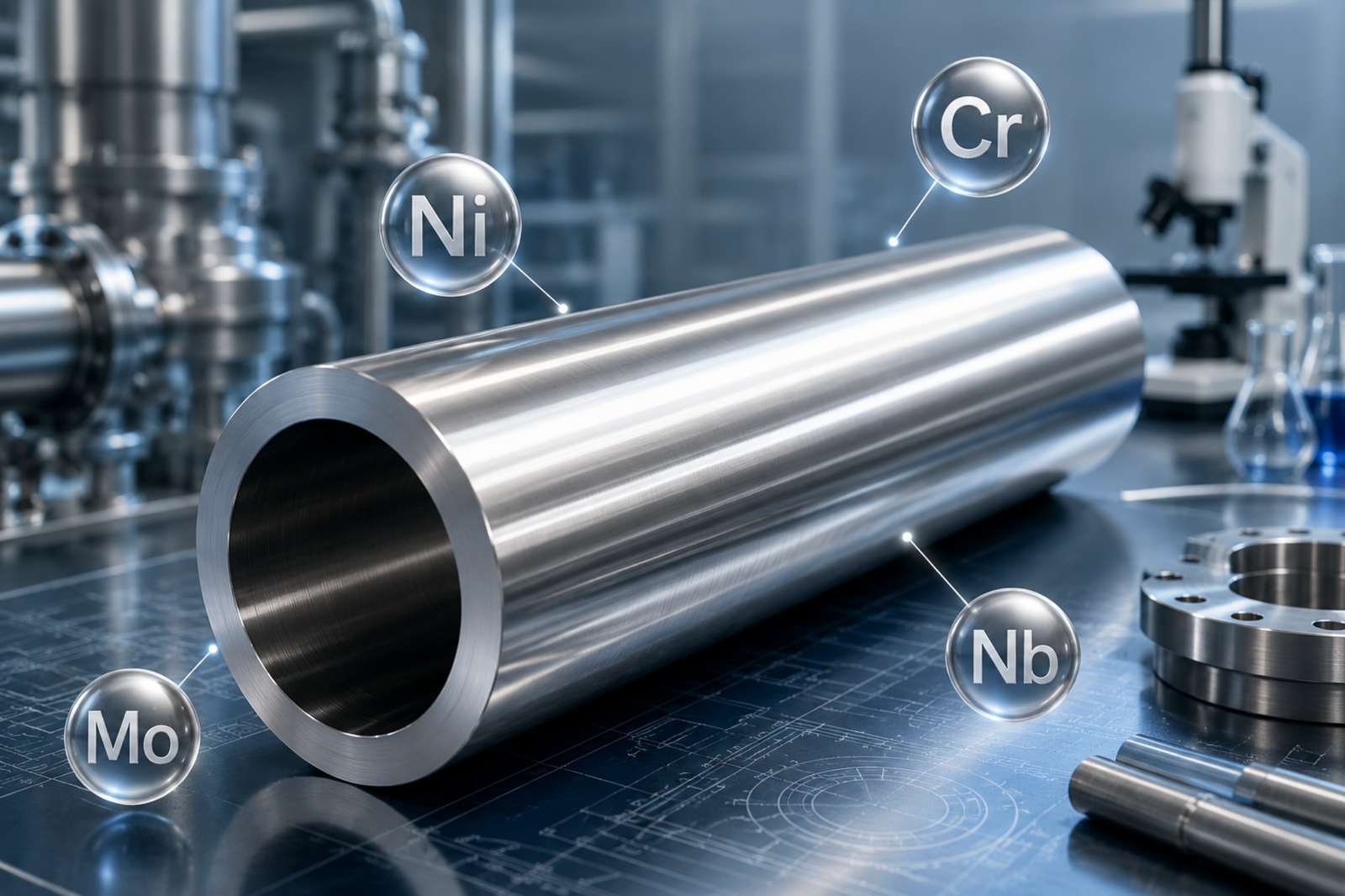
From my vantage point, seeing thousands of material specifications cross my desk, I have learned that composition is not just a datasheet listing; it is a decision map. When customers ask about Inconel 625, I always guide them to understand what each element does. Nickel (Ni) forms the alloy's base, giving it a good baseline for corrosion resistance and stability. Chromium (Cr) contributes to its strong resistance against oxidizing environments, which means it helps prevent rust and scale formation at high temperatures. But the real heroes for many of our industrial customers are molybdenum (Mo) and niobium (Nb). Molybdenum significantly boosts Inconel 625's resistance to pitting and crevice corrosion, especially in chloride-heavy environments2 like seawater or acidic solutions. This is vital for offshore oil and gas or chemical processing. Niobium, sometimes called Columbium (Cb), acts as a stiffening agent and helps stabilize the alloy's matrix, especially at high temperatures.3 This means it maintains its strength and integrity when things get really hot. Without these specific elements, Inconel 625 would not be the material it is. I recall a time when a customer chose a different alloy for a marine application, thinking all nickel alloys were equal. They learned the hard way that the lack of sufficient molybdenum led to early pitting failure.
Key Alloying Elements in Inconel 625
When we evaluate material requests, we look at how the specified composition will hold up in the customer's actual operating conditions. Here is a simple breakdown of how the main elements in Inconel 625 contribute:
| Element | Typical Range (%) | Primary Role in Inconel 625 | Impact on Performance |
|---|---|---|---|
| Nickel | 58.0 min | Base element, provides overall corrosion resistance | Forms the stable matrix, good general corrosion resistance |
| Chromium | 20.0 – 23.0 | Oxidation and hot corrosion resistance | Protects against scaling, resists oxidizing acids |
| Molybdenum | 8.0 – 10.0 | Pitting and crevice corrosion resistance | Crucial for chloride environments, acidic solutions |
| Niobium | 3.15 – 4.15 | Strengthening and stabilization, especially at high temperatures | Improves high-temperature strength, weldability |
| Iron | 5.0 max | Minor element | Balances properties, cost control |
| Carbon | 0.10 max | Grain boundary control | Keeps strength, limits carbide precipitation |
Understanding this table helps buyers connect the numbers on a spec sheet to real-world performance. It is why we emphasize these details when customers are making procurement decisions. We know a chemical plant piping system needs strong localized corrosion resistance, and the molybdenum content in 625 delivers that. Similarly, for applications involving high heat, the niobium ensures structural integrity.
How do Inconel 625's properties empower demanding applications?
Do you sometimes assume all "high-performance" alloys are the same? This is a common pitfall. While Inconel 625 offers impressive properties, it is essential to understand its specific strengths and, more importantly, its limitations for your project.
Inconel 625 is primarily valued for its outstanding strength, high creep resistance, and exceptional resistance to a wide range of corrosive media, including strong acids and seawater. However, it is not universally corrosion-proof and has defined limits in very strong oxidizing acids or certain sulfur compounds.
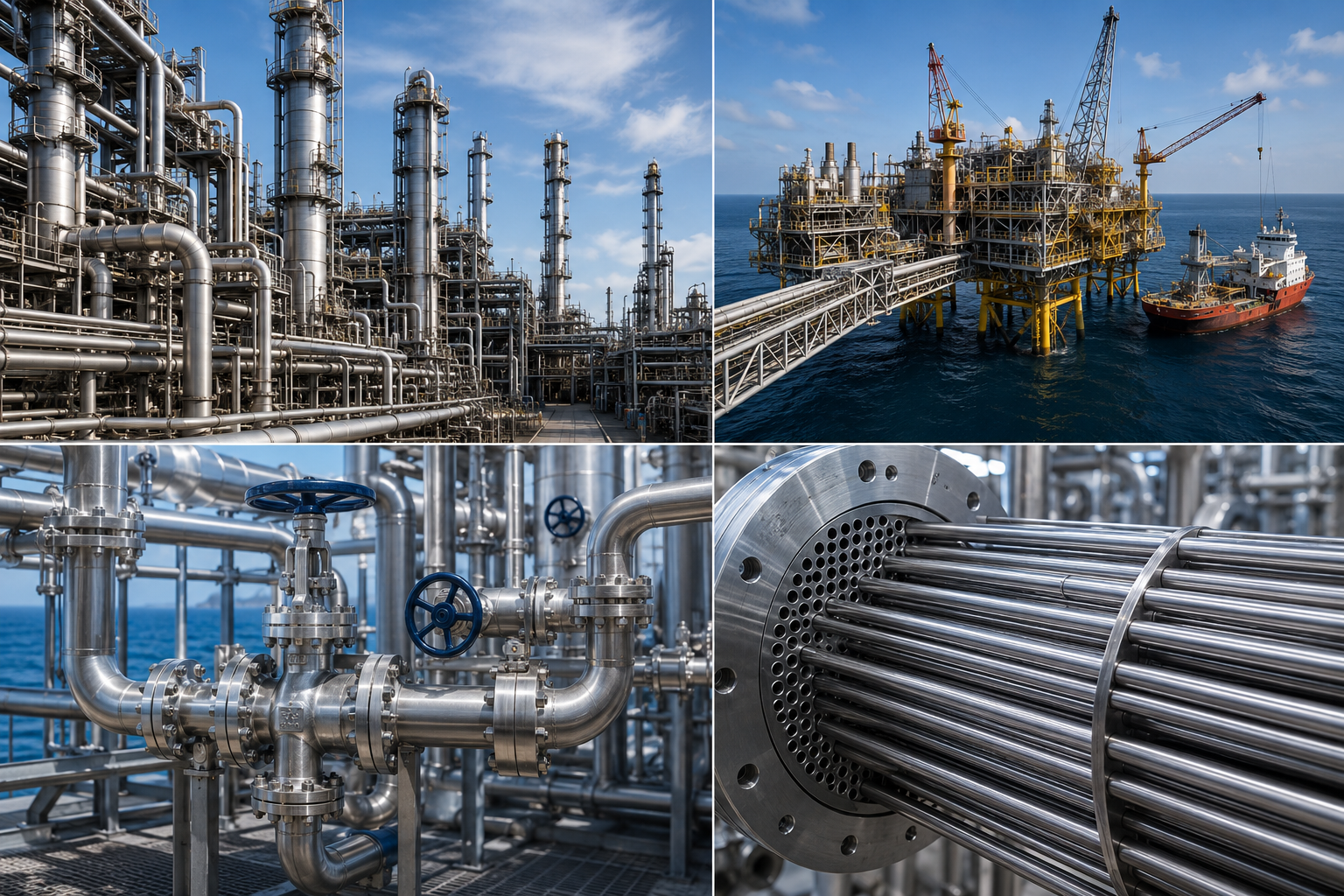
In my twenty years in this business, I have seen customers successfully apply Inconel 625 in the toughest environments. I have also seen situations where it was misapplied, leading to performance issues. The phrase "nickel alloy" does not mean "corrosion-proof everywhere." Its remarkable properties come from that unique composition we just discussed. For example, its high nickel content provides good resistance to alkaline environments, and its chromium ensures good resistance to oxidizing acids. The molybdenum and niobium are the key to its resistance against pitting and crevice corrosion, which are insidious forms of attack, especially in marine and chemical processing settings. These properties make it ideal for heat exchanger tubing, subsea components, and process piping. Customers working in offshore equipment or chemical processing often specify 625 precisely because of this localized corrosion resistance. However, it is crucial to understand its boundaries. For instance, Inconel 625 is generally not recommended for use in strong oxidizing acids like hot concentrated nitric acid.4 Also, environments with specific sulfur compounds at very high temperatures can sometimes challenge its performance.5 We always encourage our clients to share their exact operating conditions so we can confirm if 625 is truly the best material.
Key Properties and Application Insights of Inconel 625
When we guide customers through material selection, we look at how the physical and mechanical properties align with their application's demands. Here is a brief look at some critical properties:
Mechanical Properties
Inconel 625 is a solid-solution strengthened alloy.6 This means its strength comes from the uniform distribution of alloying elements within its crystal structure, rather than from special heat treatments.
- High Tensile Strength: It maintains significant strength even at elevated temperatures. This is vital for structural components in hot environments.
- Good Fatigue Strength: It resists repeated stress cycles, which is important for dynamically loaded parts.
- Excellent Creep-Rupture Strength: It resists deformation under constant stress at high temperatures over long periods. This is a must for components in jet engines or power generation.
Corrosion Resistance
This is often the main reason customers choose Inconel 625.
- Pitting and Crevice Corrosion: Exceptional resistance, thanks to molybdenum, in chloride-containing media (e.g., seawater).
- Oxidizing and Reducing Acids: Good resistance to various acids, but less effective in highly oxidizing strong acids.
- Stress Corrosion Cracking: High resistance in chloride and sour gas environments.
- High-Temperature Oxidation: Chromium provides good resistance to oxidation up to 980°C (1800°F).
Specific Application Areas
Based on these properties, Inconel 625 finds its home in:
- Chemical Processing Industry: Heat exchangers, reaction vessels, valves, and piping for handling aggressive chemicals.
- Oil and Gas Industry: Subsea components, flare stacks, heat exchanger tubing, and sour gas service equipment.
- Aerospace: Engine components, ducting, and exhaust systems, though here 718 might be more common for fasteners.
- Marine Engineering: Propeller blades, wire rope, mooring lines, submarine components, and exhaust ducts due to seawater resistance.
- Power Generation: Components in superheaters, reheaters, and incinerators.
We often get inquiries for heat exchanger tubing in chemical plants or offshore platforms. In these cases, the resistance to localized corrosion in hot chloride solutions is paramount. This is where Inconel 625 truly shines, offering a reliable, long-service-life solution that justifies its initial cost.
When should you choose Inconel 625 over alternatives like Inconel 718?
Are you evaluating Inconel 625 against Inconel 718 for your project? Many buyers make the mistake of comparing them on price or general "nickel alloy" properties, but they are designed for very different functional requirements. Picking the wrong one can lead to costly failures.
Inconel 625 is primarily selected for its superior corrosion resistance and ease of fabrication, particularly for fluid-handling and heat transfer applications. In contrast, Inconel 718 is chosen for its extreme mechanical strength and hardness at elevated temperatures, often for structural components like fasteners in aerospace, achieved through precipitation hardening.
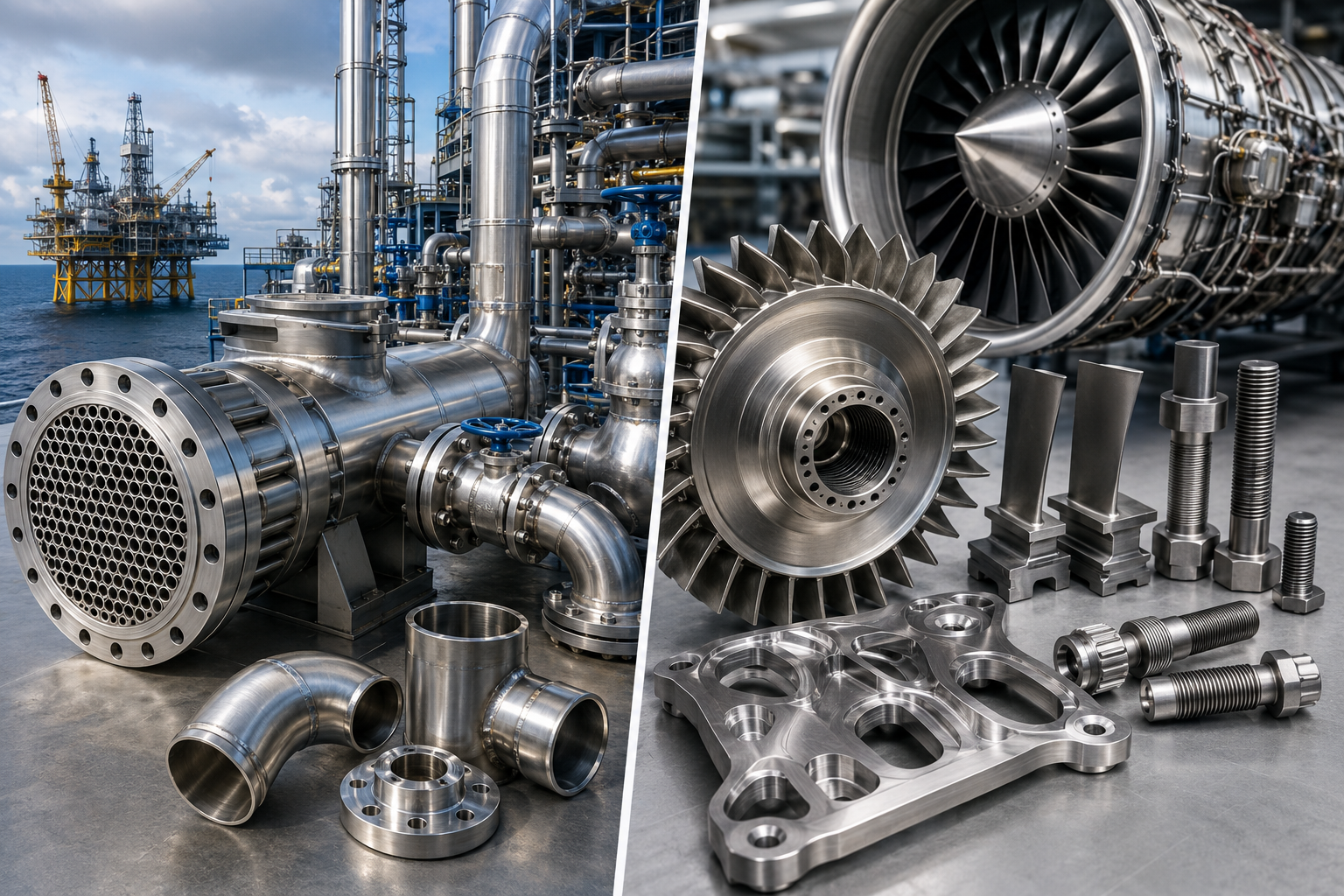
I have handled countless inquiries where customers are torn between Inconel 625 and Inconel 718. It is a common mistake to view them as interchangeable or to base the decision solely on material cost per kilogram. From our perspective, they are not substitutes; they are specialized tools for different jobs. Inconel 625 is a solid-solution strengthened alloy. This means its strength comes from its inherent chemical composition, offering excellent fabricability, including good weldability. This makes it ideal for seamless tubes and pipes, complex heat exchanger designs, or other components that need to be formed and joined. Its primary advantage is its exceptional resistance to a broad spectrum of corrosive environments, particularly pitting and crevice corrosion in chloride-rich settings. Conversely, Inconel 718 is a precipitation-hardened alloy. It achieves its very high mechanical strength, especially tensile and creep strength at high temperatures, through a specific heat treatment process7 that forms tiny precipitates within its structure. This makes it much harder and stronger but also less easy to weld or fabricate than 625. For an industrial buyer, the choice boils down to a clear functional question: if your application requires outstanding corrosion resistance and moderate high-temperature strength with good fabricability, use 625; if it demands extreme mechanical strength, hardness, and high fatigue resistance in high-stress applications, consider 718.
Differentiating Inconel 625 and Inconel 718 for Optimal Selection
Let's break down the core differences to help you make an informed decision for your project. This table highlights their distinct strengths and typical uses.
Key Differences Between Inconel 625 and Inconel 718
| Feature | Inconel 625 | Inconel 718 |
|---|---|---|
| Strengthening Mechanism | Solid-solution strengthened | Precipitation-hardened |
| Primary Strength | Excellent corrosion resistance, good strength | Exceptional high-temperature mechanical strength |
| Key Alloying Elements | Ni, Cr, Mo, Nb | Ni, Cr, Fe, Nb, Mo, Ti |
| Fabricability | Good weldability, easier to form and machine | More challenging to weld and machine, prone to cracking |
| Typical Applications | Chemical processing piping, heat exchangers, offshore components, marine equipment, acid production | Jet engine components, aerospace fasteners, gas turbine parts, rocket engines, nuclear reactor components |
| Corrosion Resistance | Superior pitting and crevice corrosion resistance in chloride environments | Good general corrosion resistance, but 625 generally better for localized corrosion |
| High-Temperature Performance | Good strength and oxidation resistance up to 980°C | Superior strength and creep resistance up to 700°C, maintaining strength at higher temperatures than 625 |
When a customer comes to us looking for piping for a new chemical plant, particularly one dealing with corrosive chemicals or seawater, Inconel 625 is often the material we recommend. Its robust corrosion profile means a longer service life and less downtime. On the other hand, if a procurement engineer needs material for critical aerospace fasteners that will experience immense mechanical stress and high temperatures, Inconel 718 is the clear choice. The application dictates the alloy, not the other way around. I have seen project delays happen when a buyer tries to use 625 for a high-stress aerospace component due to perceived cost savings, only to find it cannot meet the mechanical property requirements. Likewise, using 718 in a highly corrosive fluid environment where 625 would excel is an over-specification that adds unnecessary cost and complexity due to 718's poorer fabricability for such applications.
Why is selecting the correct Inconel 625 standard crucial for your project?
Are you merely requesting "Inconel 625" without specifying a standard like ASTM B444 or AMS 5666? This oversight is a common source of delays and material rejections for industrial buyers. Not all "Inconel 625" is created equal when it comes to certified projects.
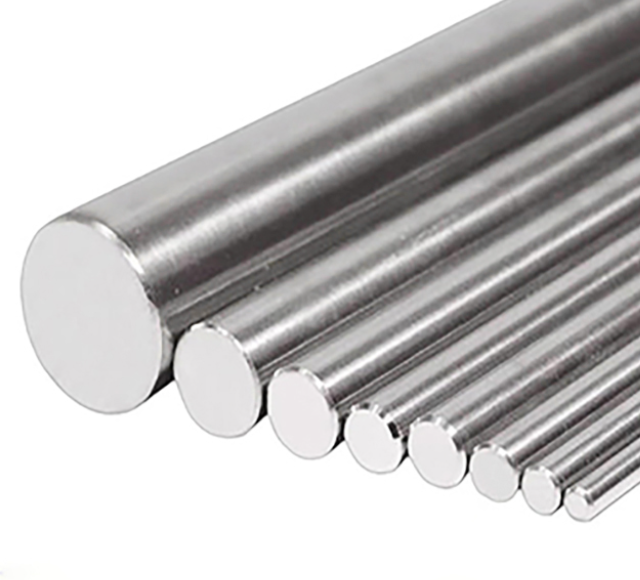
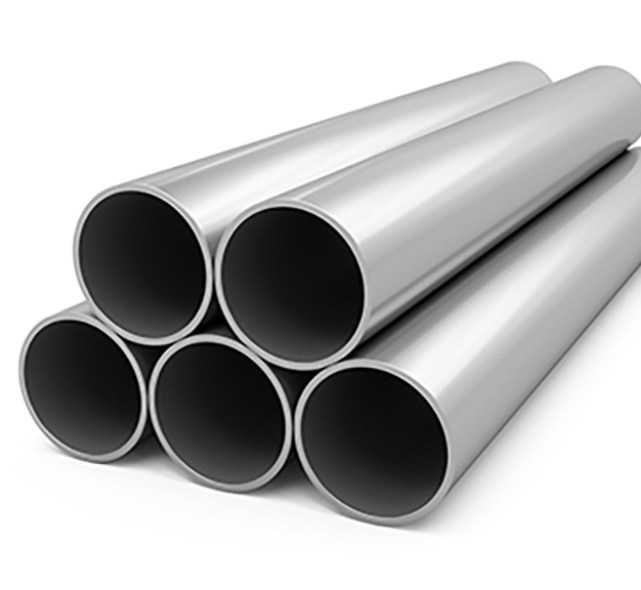
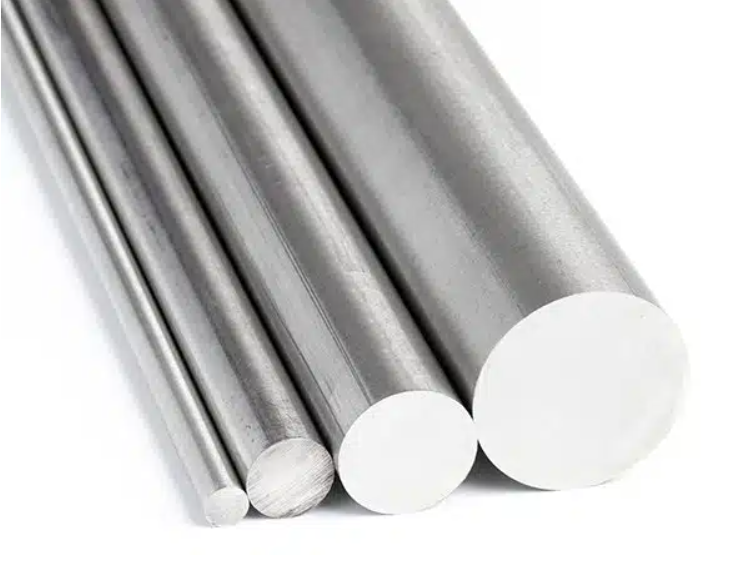
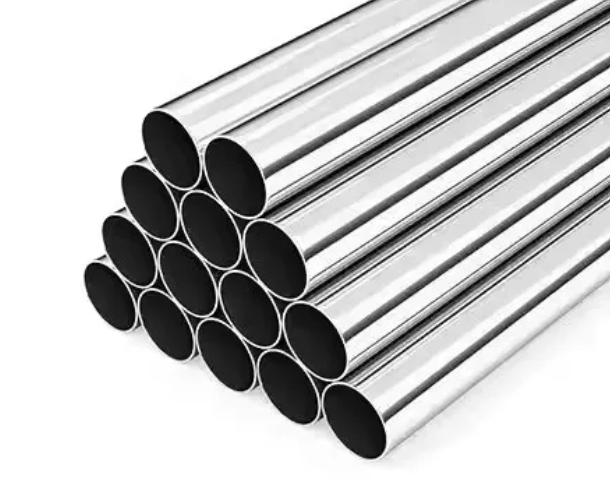
Selecting the correct Inconel 625 standard (e.g., ASTM B444 for seamless tube, B446 for bar, or AMS 5666 for aerospace bar) is critical because each standard specifies different mechanical requirements, test protocols, and approved use cases. A mismatch can lead to traceability issues, non-compliance, and material disqualification from certified projects.
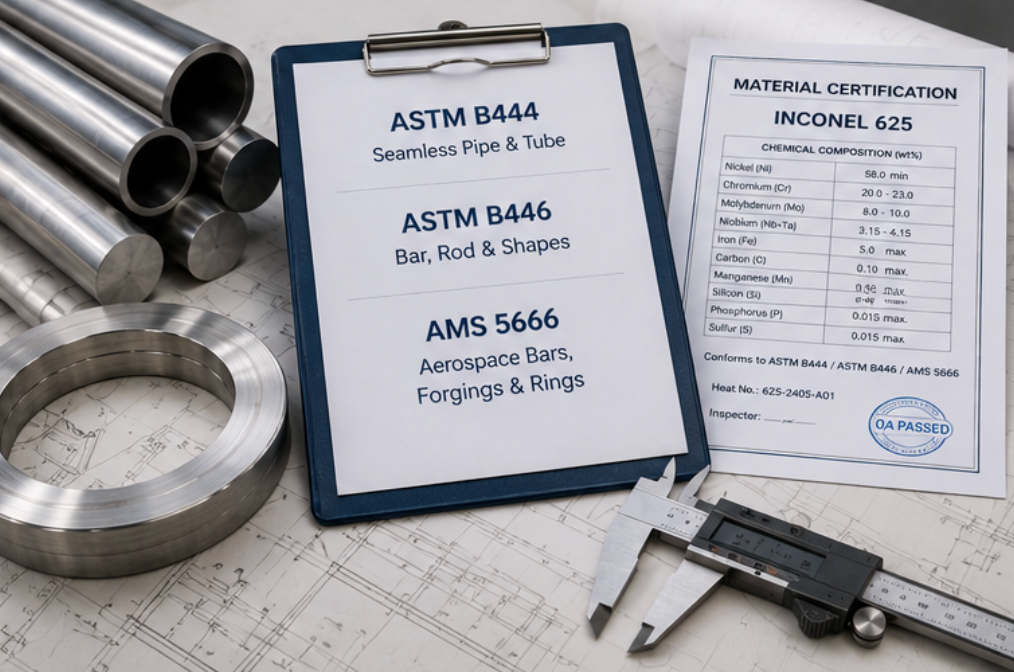
From our two decades of exporting high-performance alloys, I can tell you that the standard is just as important as the alloy name itself. A common mistake we see in sourcing requests is a vague specification for "Inconel 625 pipe" or "625 bar." However, the exact standard you cite determines the material's form, the required mechanical properties, the testing procedures, and ultimately, its suitability for your specific project. For instance, ASTM B444 is the standard specification for nickel-chromium-molybdenum-columbium alloy (UNS N06625 and N06852) seamless pipe and tube.8 If you are building a chemical plant or offshore platform needing seamless tubes, B444 is typically what you need. It dictates specific dimensions, tensile strength, yield strength, and elongation requirements, along with non-destructive testing methods. If you are sourcing bars, ASTM B446 covers hot-worked and cold-worked round bars, rods, and shapes.9 The mechanical requirements differ from B444 because the product form is different. For aerospace applications, which often demand even tighter controls and higher performance assurance, AMS 5666 (Aerospace Material Specification) is commonly specified for bars, forgings, and rings.10 This standard often has more stringent requirements for cleanliness, grain size, and mechanical properties tested at elevated temperatures, reflecting the critical nature of aerospace components.
Understanding Key Inconel 625 Standards
When you send us an inquiry, specifying the correct standard from the start streamlines the procurement process. It ensures you receive material that meets your project's precise requirements for performance and compliance.
Overview of Common Inconel 625 Standards
| Standard | Product Form | Typical Application Context | Key Differences/Implications |
|---|---|---|---|
| ASTM B444 | Seamless Pipe and Tube | Chemical processing, oil & gas (subsea, heat exchangers), power generation | Specifies dimensions, mechanical properties, hydrostatic/eddy current testing for seamless tubes. |
| ASTM B446 | Rod, Bar, and Forging | General industrial components, shafts, structural parts | Covers hot-worked and cold-worked bars/rods. Different mechanical property tables from B444. |
| AMS 5666 | Bar, Forgings, Rings | Aerospace components (engine parts, fasteners), high-performance critical applications | Often has tighter controls on chemical composition, higher mechanical properties, stringent NDT, and grain size requirements. |
Choosing the wrong standard, or not specifying one at all, creates real problems. We have seen instances where a buyer for an aerospace project, needing AMS 5666 material, accidentally ordered to a B446 specification because they just asked for "Inconel 625 bar." While the chemical composition might be similar, the material did not pass the required mechanical tests or have the necessary traceability for an aerospace application. This led to rejection of the material, significant delays, and added costs. Similarly, for a marine engineering project, getting B446 bar instead of B444 seamless pipe for a fluid transfer system is simply unusable. This is why when customers rely on us, we ensure every inquiry is precisely matched to the correct standard. It ensures that the material we provide not only says "Inconel 625" but truly performs as required by their application and passes all necessary third-party inspections.
Conclusion
Inconel 625 is a powerful alloy, defined by its specific composition, offering excellent corrosion resistance and strength for demanding applications. Understanding its unique properties and selecting the right specification is vital for project success and long-term reliability.
"Inconel 625 - Wikipedia", Inconel 625 is standardized under UNS N06625, characterized as a nickel-chromium-molybdenum alloy with high strength and excellent aqueous corrosion resistance. Evidence role: definition; source type: encyclopedia. Supports: the basic chemical classification and general corrosion-resistant properties of Inconel 625 (UNS N06625). ↩
"Influence of Chromium and Molybdenum on the Corrosion of Nickel ...", Molybdenum acts synergistically with chromium to stabilize the passive film, significantly reducing pitting and crevice corrosion rates in chloride-bearing solutions. Evidence role: mechanism; source type: paper. Supports: the role of molybdenum in enhancing localized corrosion resistance in chloride-rich environments. Scope note: The exact degree of protection depends heavily on temperature and chloride concentration. ↩
"Microstructure and Hardness of Spark Plasma Sintered Inconel 625 ...", Niobium (columbium) provides solid-solution strengthening by distorting the nickel-chromium matrix, which maintains high-temperature strength without requiring precipitation hardening. Evidence role: mechanism; source type: paper. Supports: niobium's role as a solid-solution strengthening element in Inconel 625. Scope note: Prolonged exposure at intermediate temperatures (593°C to 816°C) can eventually precipitate the delta phase, altering ductility. ↩
" Versatile Corrosion Resistance of INCONEL Alloy 625 in Various ...", While highly resistant to many acids, Inconel 625 exhibits higher corrosion rates in strongly oxidizing acids like hot concentrated nitric acid due to the dissolution of the passive chromium oxide film. Evidence role: case_reference; source type: research. Supports: the limitation of Inconel 625 in highly oxidizing environments like hot nitric acid. Scope note: Performance varies based on acid concentration and the presence of oxidizing ions. ↩
" Studies on the Hot Corrosion of a Nickel- Base Superalloy-Udimet 700", Nickel-based alloys like Inconel 625 are susceptible to rapid sulfidation at high temperatures in reducing sulfur-bearing gases due to the formation of low-melting-point nickel-sulfur eutectics. Evidence role: mechanism; source type: paper. Supports: the susceptibility of Inconel 625 to sulfidation at elevated temperatures. Scope note: The presence of chromium mitigates this to some extent, but performance is still limited compared to iron-nickel-chromium alloys with higher silicon or aluminum. ↩
"Inconel 625 - Wikipedia", Inconel 625 is classified as a solid-solution strengthened alloy where its mechanical strength is derived from the interstitial and substitutional effects of molybdenum and niobium in the nickel-chromium matrix. Evidence role: definition; source type: education. Supports: the solid-solution strengthening mechanism of Inconel 625. ↩
"Characterization of precipitation in gradient Inconel 718 superalloy", Unlike the solid-solution strengthened 625, Inconel 718 achieves its high strength through the precipitation of gamma-prime (γ') and gamma-double-prime (γ'') phases during heat treatment. Evidence role: mechanism; source type: paper. Supports: the precipitation hardening mechanism of Inconel 718. ↩
"B444 Standard Specification for Nickel-Chromium-Molybdenum ...", ASTM B444 standardizes the manufacturing, chemical composition, and mechanical property requirements for cold-worked seamless pipe and tube of UNS N06625. Evidence role: case_reference; source type: other. Supports: the scope of the ASTM B444 standard for Inconel 625 seamless pipe and tube. ↩
"B446 Standard Specification for Nickel-Chromium-Molybdenum ...", ASTM B446 specifies the requirements for nickel-chromium-molybdenum-columbium alloy (UNS N06625) in the form of hot-worked and cold-worked rod, bar, and profiles. Evidence role: case_reference; source type: other. Supports: the scope of the ASTM B446 standard for Inconel 625 bars and rods. ↩
"AMS5666 : ALLOY BARS, FORGINGS, AND RINGS, CORROSION ...", SAE AMS 5666 governs the requirements for nickel alloy, corrosion and heat-resistant, bars, forgings, and rings of UNS N06625, typically used in aerospace applications. Evidence role: case_reference; source type: other. Supports: the scope of the AMS 5666 aerospace specification for Inconel 625. ↩