
What Technical Parameters Should Buyers Confirm for Nickel Alloy Tubes?
Navigating the complexities of nickel alloy tube procurement can feel overwhelming. Many industrial buyers struggle to define the exact specifications needed for corrosive, high-temperature, or pressure-containing applications. When key details are guessed or overlooked, the project may face material mismatch, quality disputes, operational downtime, or delivery delays.
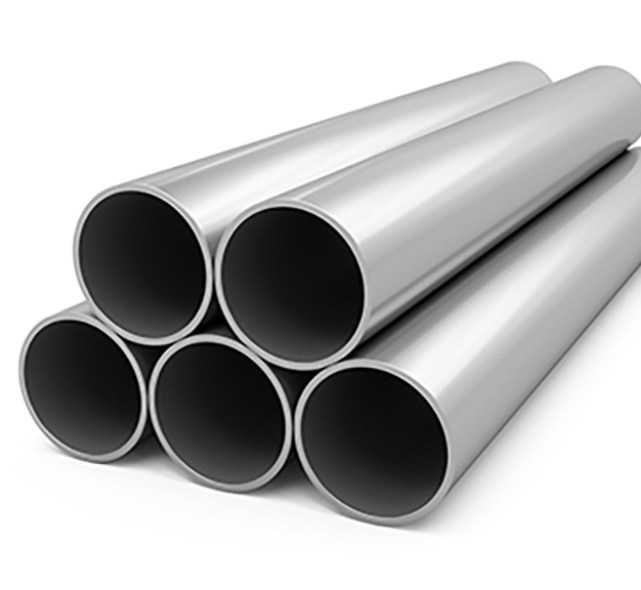
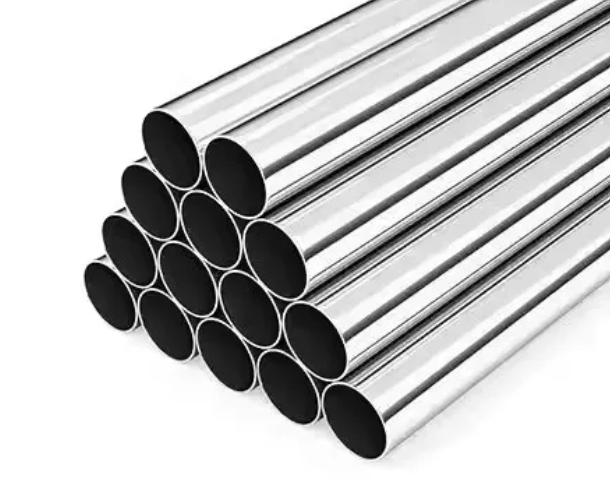
The most important technical parameters for nickel alloy tubes are application-dependent. They include material composition, mechanical properties, dimensions and tolerances, surface finish, applicable standards, testing requirements, and traceability documents. Material selection should start from the application requirements, possible materials, physical principles, and the final performance needs. Confirming these details upfront helps buyers reduce sourcing risk and improve long-term reliability.
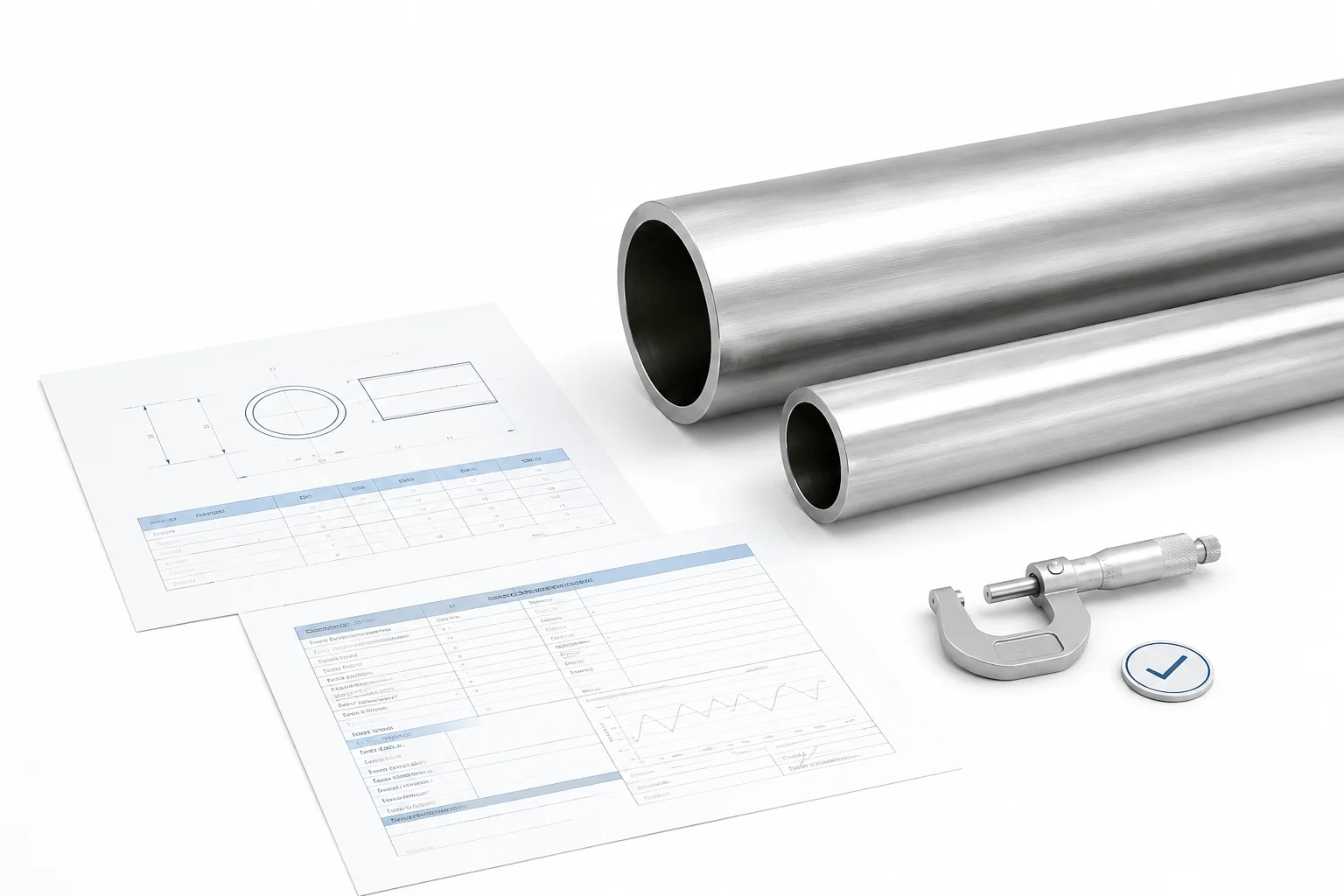
I have spent many years working with industrial buyers, and I have seen how well-defined technical parameters lead to smoother projects. Assumptions, on the other hand, can create serious problems. For nickel alloy tubes, a correct order is not only about grade name and price. It is about matching the material, size, surface, testing, and documentation to the real working environment.
How Does Material Composition Impact Tube Performance?
Do you ever wonder why one nickel alloy tube performs well in a harsh chemical environment while another fails quickly? The answer often starts with material composition. Nickel alloy performance depends strongly on the presence and balance of alloying elements such as nickel, chromium, molybdenum, iron, copper, niobium, and tungsten.
Material composition strongly influences a nickel alloy tube's corrosion resistance, high-temperature performance, weldability, and mechanical behavior. Inconel 625, for example, is a nickel-chromium-molybdenum-niobium alloy known for corrosion resistance and strength. A TMS/Superalloys paper explains that chromium helps resistance to oxidizing chemicals, high nickel and molybdenum improve resistance in non-oxidizing environments, molybdenum improves pitting and crevice corrosion resistance, and niobium helps stabilize the alloy against sensitization during welding.
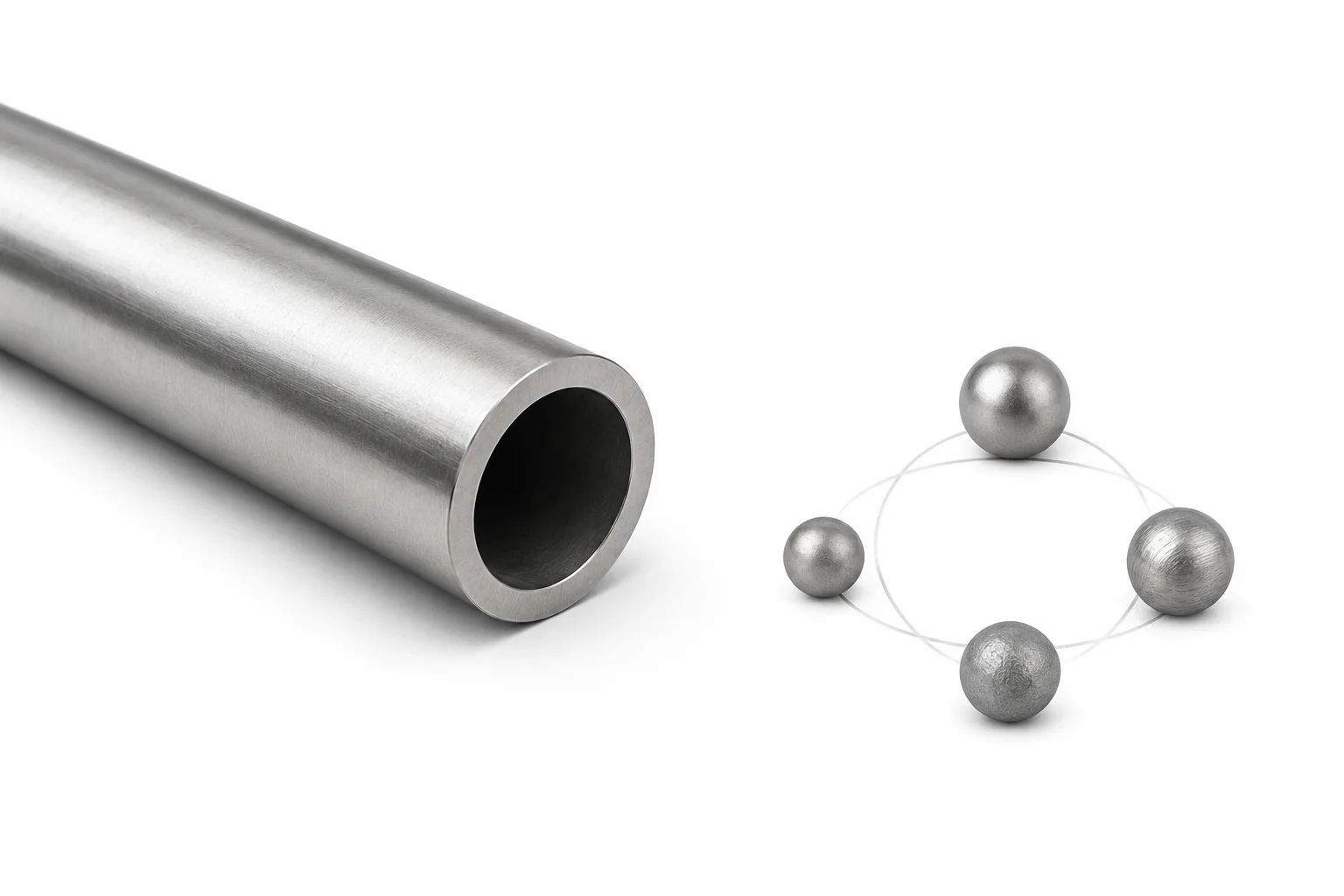
I always emphasize that composition is the foundation of performance. For example, in chemical processing plants, premature tube failure may occur when the corrosive medium is underestimated or when the selected alloy does not provide enough resistance to localized corrosion. In high-chloride environments, chromium and molybdenum are important because they help improve resistance to pitting and crevice corrosion. In high-temperature oxidizing environments, chromium becomes especially important.
It is not enough to say “nickel alloy tube.” Buyers need to confirm which nickel alloy, which UNS grade, which ASTM/ASME standard, and why that grade is suitable for the intended environment.
Why Specific Elements Matter
- Nickel (Ni): Nickel is the base element in many corrosion-resistant alloys. It contributes to corrosion resistance, high-temperature stability, and resistance to chloride stress corrosion cracking in many nickel-based alloys.
- Chromium (Cr): Chromium improves resistance to oxidizing chemicals and high-temperature oxidation.
- Molybdenum (Mo): Molybdenum improves resistance to localized corrosion, especially pitting and crevice corrosion in chloride-containing environments.
- Iron (Fe): Iron may be present as a base or alloying element and can influence mechanical properties, cost, and alloy family.
- Copper (Cu): Copper can improve resistance in certain reducing acid environments. Monel, for example, is a nickel-copper alloy family.
- Niobium (Nb): Niobium can contribute to strengthening and stabilization against sensitization in certain alloys.
- Tungsten (W): Tungsten is used in some high-performance corrosion-resistant alloys and may improve resistance in severe chemical environments.
Choosing the Right Grade: A Critical Decision
Buyers must consider the service medium, temperature, pressure, flow rate, chloride level, pH value, oxygen content, H2S/CO2 exposure, and mechanical stress. A tube used in seawater service may need different alloy chemistry from a tube used in high-temperature furnace components. A tube used in reducing acid may require a different alloy from one used in oxidizing acid.
A small difference in composition can make a significant difference depending on service conditions. This is why the buyer should confirm the exact grade, UNS number, standard, and chemical limits before ordering.
Common Nickel Alloy Compositions and Uses
| Alloy Type | Key Elements | Main Benefit | Typical Application Areas |
|---|---|---|---|
| Monel 400 | Nickel + Copper | Good resistance in seawater and selected reducing environments | Marine engineering, chemical processing |
| Inconel 625 / UNS N06625 | Nickel + Chromium + Molybdenum + Niobium | Broad corrosion resistance, pitting and crevice corrosion resistance, strength | Chemical processing, offshore, aerospace, power generation |
| Hastelloy C-276 / UNS N10276 | Nickel + Molybdenum + Chromium + Tungsten | Strong resistance in severe chemical processing environments | Chemical processing, pollution control, waste treatment |
| Incoloy 825 / UNS N08825 | Nickel + Iron + Chromium + Molybdenum + Copper | Resistance in certain acid and chloride-containing environments | Chemical processing, oil and gas, marine applications |
What Mechanical Properties Must You Verify for Your Application?
Are you confident your nickel alloy tubes can withstand the pressure, load, and stress conditions of your project? Chemical composition alone does not prove that a tube can safely perform in service. Mechanical properties must also be verified.
Buyers should verify mechanical properties such as tensile strength, yield strength, elongation, and hardness because these values help indicate whether the nickel alloy tube can resist deformation, withstand load, and support the required fabrication or service conditions. ASTM B444, for example, requires chemical testing and tensile testing for UNS N06625 seamless pipe and tube, and includes tensile strength, yield strength, elongation, hydrostatic testing, and nondestructive electric testing requirements.
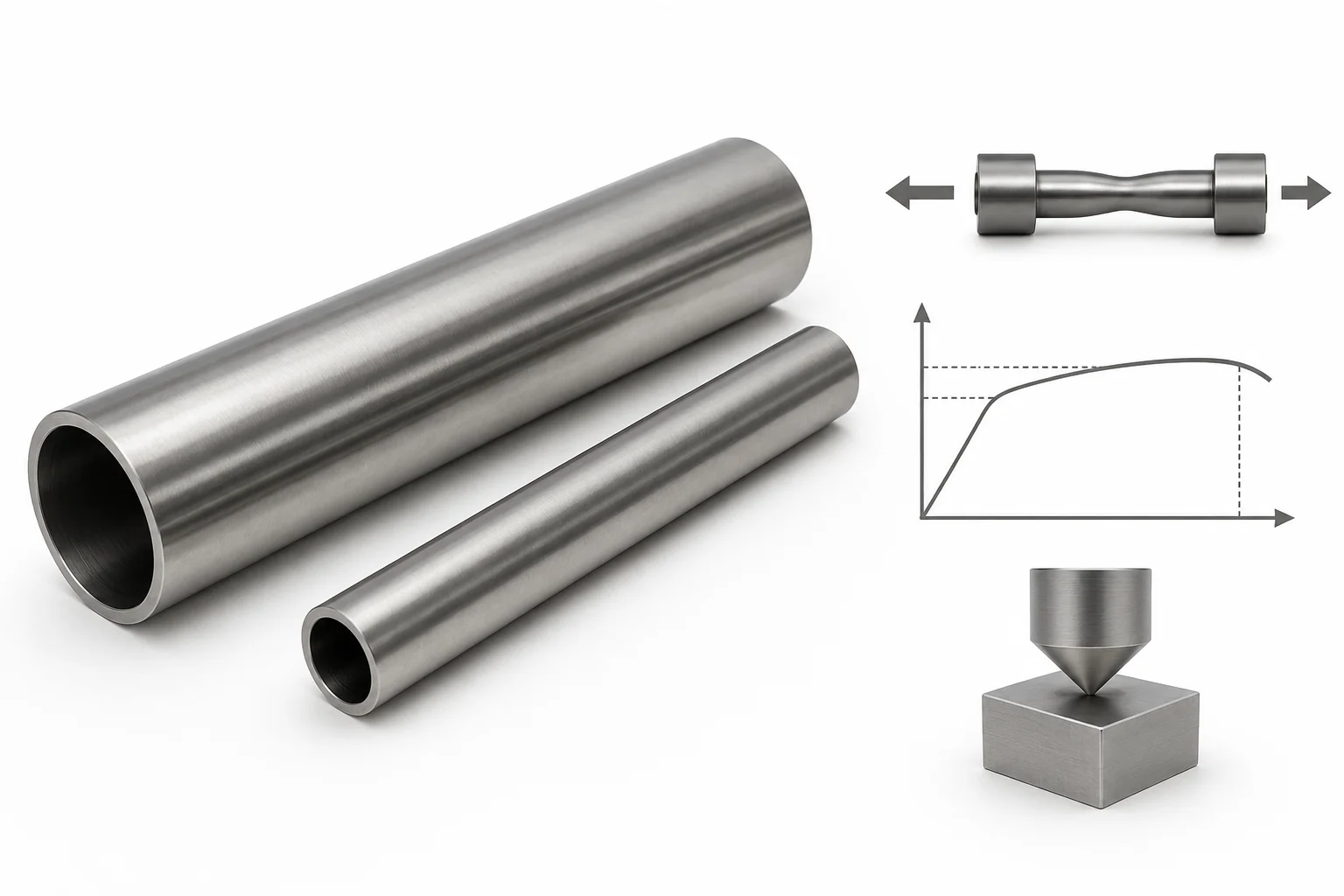
I have seen projects where tubes were installed and later showed deformation, cracking, or leakage because the required mechanical properties were not clearly specified. For high-pressure systems, yield strength is one key value to review because it relates to the point where permanent deformation begins. Tensile strength shows the maximum stress before fracture. Elongation shows ductility and helps evaluate whether the tube can tolerate bending, forming, or installation stress.
Mechanical values are not just numbers on a certificate. They help predict how the material may behave under actual operating loads.
Strength and Structural Integrity
Tensile strength is the maximum stress a material can withstand before breaking. Yield strength is the stress level at which the material begins to deform permanently. For pressure-containing or load-bearing applications, buyers should review the required design code, operating pressure, temperature, wall thickness, and minimum mechanical properties together.
For example, ASTM B167 covers several nickel-chromium and nickel-chromium-iron alloy seamless pipe and tube products for corrosion-resistant and heat-resistant applications. It lists chemical composition requirements and test methods such as chemical analysis, tension test, and hydrostatic or nondestructive electric test.
Ductility and Formability
Elongation measures ductility, or the ability of a material to deform plastically before fracture. This matters when tubes need to be bent, flared, expanded, swaged, or otherwise formed during installation or fabrication. If a tube is too brittle for the fabrication process, cracking may occur before it enters service.
Hardness and Wear Resistance
Hardness measures resistance to indentation, scratching, or abrasion. Hardness is not always the main concern for pressure tubing, but it may matter when the tube is exposed to abrasive media, sliding contact, or machining requirements. Rockwell hardness testing is one common method used to evaluate indentation hardness.
Why Are Dimensions and Tolerances More Than Just Numbers?
Have you ever experienced components not fitting together during installation? Small dimensional deviations can create welding problems, poor assembly, leakage risk, rework, and project delays.
Dimensions and tolerances are critical because they affect fit-up accuracy, installation, pressure capacity, flow area, fabrication efficiency, and overall system reliability. International standards such as ASTM B444 and ASTM B167 define product forms, material conditions, tests, and requirements for nickel alloy pipe and tube products. Buyers should confirm OD, wall thickness, length, straightness, ovality, and tolerance requirements before production.
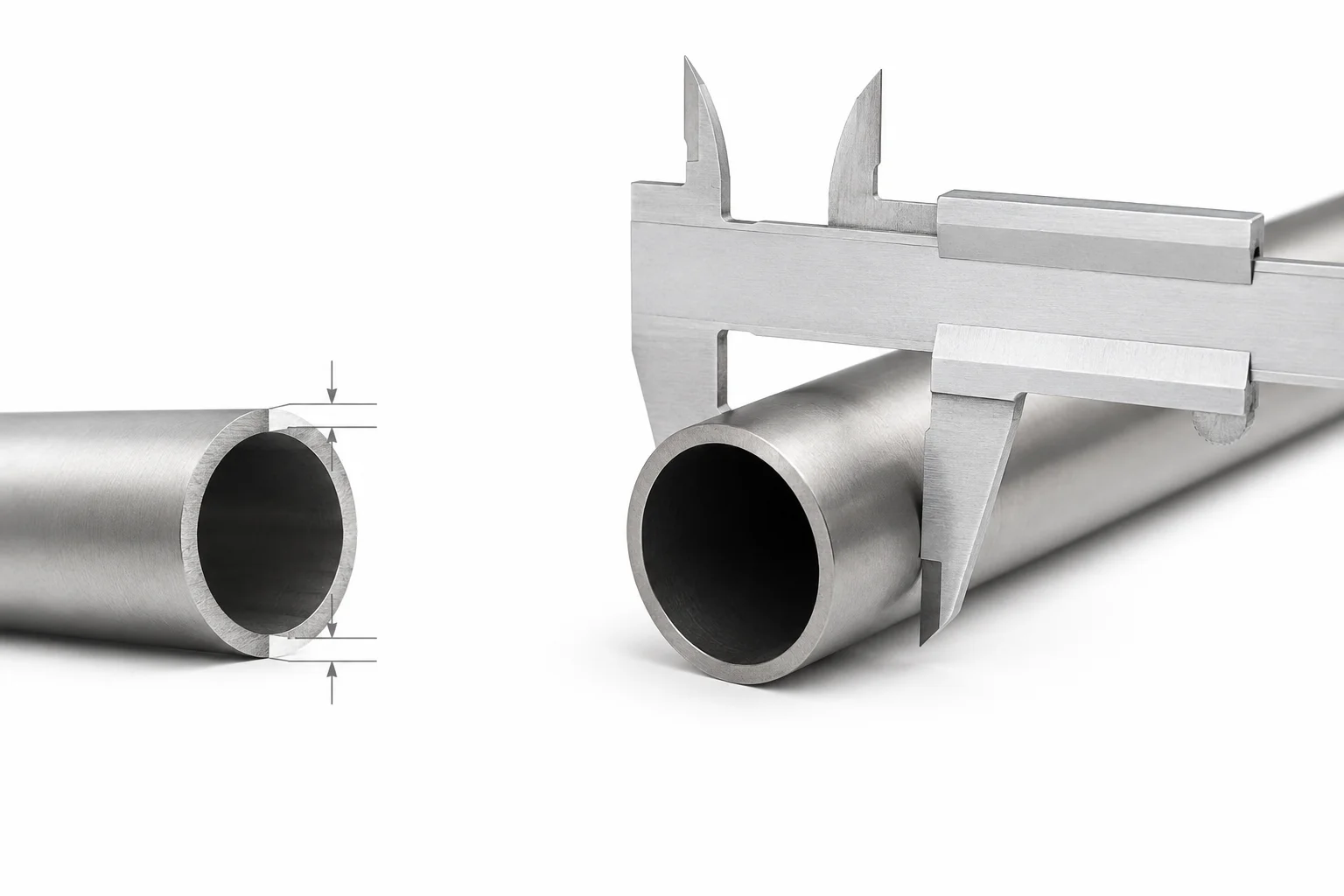
In my experience, even small deviations in dimensions can cause big problems. Outer diameter affects fit-up with fittings, tube sheets, flanges, connectors, and welding preparation. Wall thickness affects pressure margin, weight, inside diameter, flow area, and cost. Length affects fabrication planning, installation, cutting loss, and packing.
When these requirements are not clear, both buyer and supplier may assume different tolerance levels. That is why technical drawings, applicable standards, and inspection requirements should be confirmed before production.
Precision for Fit and Function
Outer Diameter (OD) and Wall Thickness (WT) are fundamental. The OD should match the connecting components and fabrication method. The wall thickness should be selected based on pressure, corrosion allowance, mechanical load, and applicable code requirements.
If OD or WT is outside the required range, the tube may create welding difficulty, poor fit-up, pressure risk, or unnecessary material cost.
Impact on Flow and Pressure
The internal diameter (ID), which is determined by OD and WT, influences flow capacity and pressure drop. In heat exchangers, instrumentation systems, chemical lines, or high-pressure tubing, the wrong ID or wall thickness can affect performance. This is why the buyer should confirm not only nominal size, but also actual OD, WT, ID, tolerance, and length.
Standard vs. Custom Tolerances
Standard tolerances may be enough for general industrial use. However, heat exchanger tubing, instrumentation tubing, medical equipment, aerospace parts, and precision assemblies may require tighter tolerances. For customized nickel alloy tubes, buyers should provide drawings or clear dimensional tables to avoid misunderstanding.
What Surface Finish Requirements Are Critical for Your Project?
Have you considered how the surface condition of a nickel alloy tube may affect corrosion behavior, cleanliness, flow, welding, or coating? Many buyers focus on chemical composition and mechanical properties but overlook surface finish.
Surface finish can influence corrosion behavior, fluid flow, cleaning, contamination control, coating adhesion, and weld preparation. In demanding environments, surface roughness, scale, contamination, embedded particles, or scratches may become initiation points for localized corrosion or quality issues. A published paper on Ni-base superalloy IN 625 also discusses how surface roughness influences early-stage oxidation behavior.
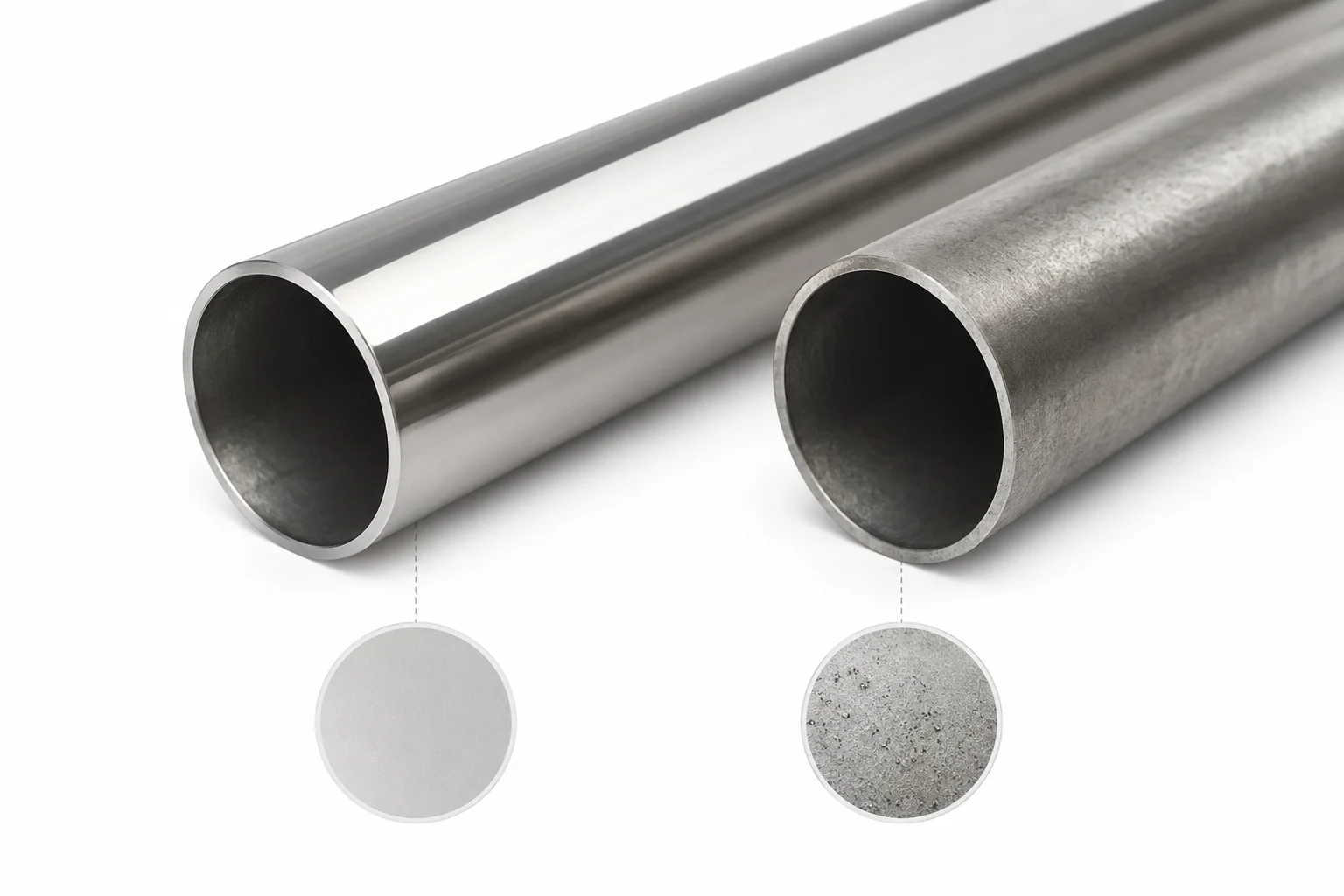
I have seen how surface finish can affect tube performance. In high-purity systems, a rough internal surface may retain particles or contaminants. In corrosive service, roughness, deposits, or surface damage may encourage localized attack. In welding or coating applications, surface cleanliness and consistency can influence final quality.
Surface finish should therefore be treated as a technical parameter, not just a visual preference.
Internal Surface: Flow, Purity, and Corrosion
The internal surface finish is important for fluid transport. A smoother internal surface may reduce friction, reduce particle entrapment, and improve cleanability. For corrosive fluids, buyers should also consider whether the internal surface has scale, scratches, pits, or contamination.
For high-purity applications, the buyer may need bright annealed, mechanically polished, or electropolished surfaces depending on cleanliness requirements.
External Surface: Protection and Processing
External surface condition matters for handling, welding, coating, insulation, and atmospheric exposure. A clean and consistent external surface can reduce fabrication problems and improve inspection visibility.
For tubes that will be welded, painted, coated, or insulated, surface condition should be matched with the downstream process.
Measuring Surface Quality
Surface finish is often measured by Roughness Average (Ra). Buyers should specify whether Ra applies to the internal surface, external surface, or both. Common finishes include pickled and annealed, bright annealed, mechanically polished, and electropolished.
The correct finish depends on application, not appearance alone.
How Do Testing and Certifications Ensure Product Reliability?
When sourcing nickel alloy tubes for critical projects, supplier claims are not enough. Buyers need objective, documented evidence that the product meets the ordered standard and technical parameters.
Testing and certification provide documented evidence that nickel alloy tubes meet specified chemical composition, mechanical properties, dimensional requirements, pressure integrity, and inspection requirements. A Mill Test Report or Material Test Report certifies a metal product’s chemical and physical properties and states compliance with applicable standards. A heat number helps link the product to its batch or heat for traceability.
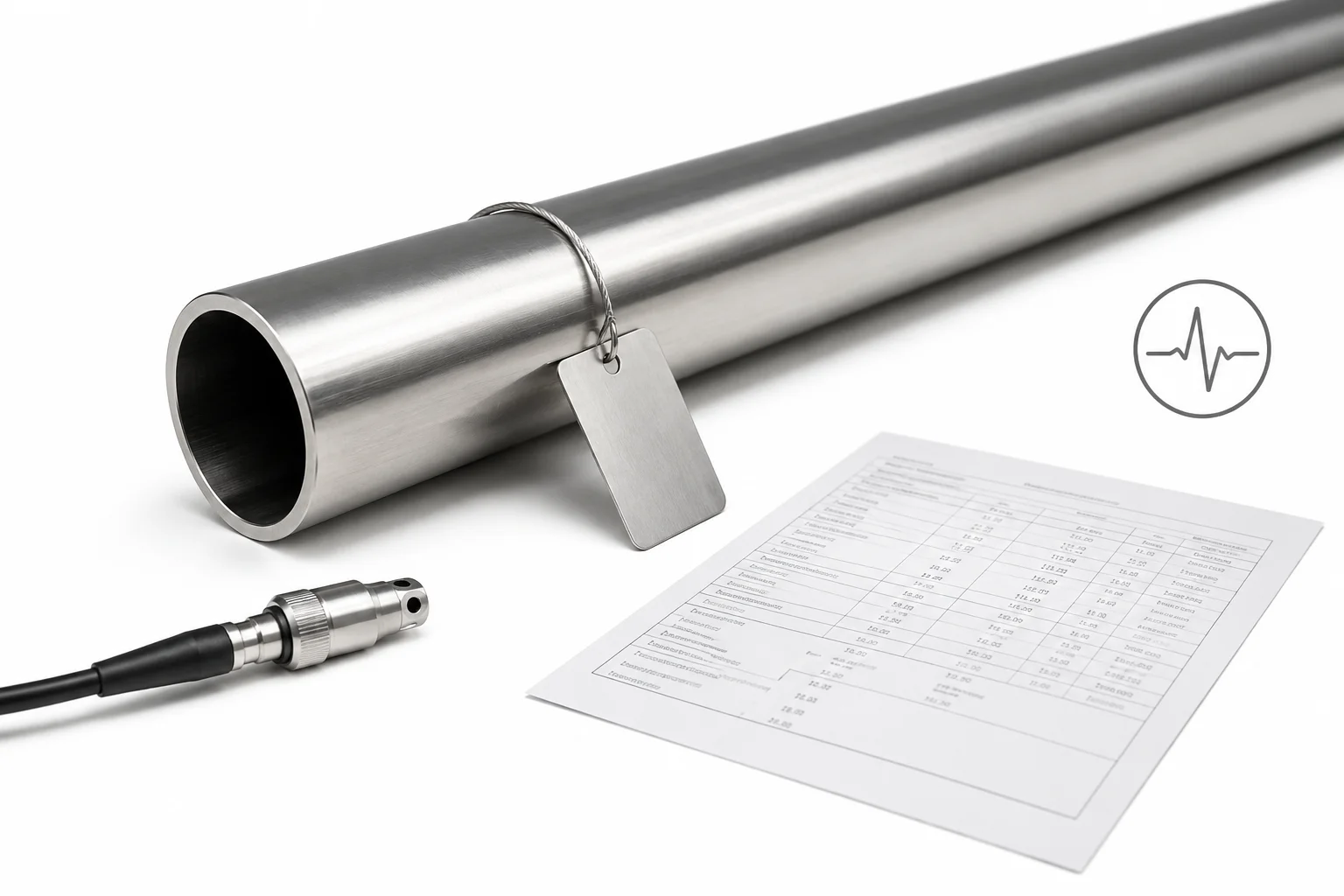
I always tell clients that testing and documentation are not formalities. They are risk-control tools. If a critical system fails, the investigation will usually start with material identity, chemical composition, mechanical properties, heat treatment, dimensional inspection, NDT records, and traceability documents.
For nickel alloy tubes, testing should be matched to the standard and application. Nondestructive testing allows the material, component, or system to be evaluated without causing damage. Common methods include ultrasonic testing, eddy current testing, radiographic testing, visual testing, and other techniques. For tubes, eddy current testing and ultrasonic testing are often used depending on product type and project requirements.
Verifying Internal Integrity
NDT methods help detect defects without destroying the product. Ultrasonic testing can be used to evaluate internal discontinuities. Eddy current testing is widely used for conductive materials and can detect surface or near-surface flaws. Eddy-current testing is an electromagnetic NDT method used to detect and characterize flaws in conductive materials.
For critical nickel alloy tubes, buyers should clarify whether UT, ECT, radiography, visual inspection, or other NDT methods are required.
Ensuring Leak-Proof Performance
Hydrostatic testing is used to test pressure vessels, pipes, and related systems for strength and leaks. It typically involves filling the vessel or pipe system with liquid and pressurizing it to a specified test pressure.
For pressure-containing nickel alloy tubes, hydrostatic testing or another approved pressure/leak test may be required by the applicable standard, buyer specification, or project code.
Traceability and Compliance Documentation
Material Test Reports are vital documents for buyers. An MTR normally includes chemical composition, mechanical properties, heat number, material grade, standard, and test results. However, an MTR alone is not the whole quality system. For critical projects, buyers should also review product marking, heat number traceability, dimensional inspection, surface inspection, NDT reports, pressure test reports, and third-party inspection records where required.
International standards and regulations may also apply. ISO 9001 is a globally recognized quality management standard that defines requirements for establishing, implementing, maintaining, and continually improving a quality management system. It supports process control and customer confidence, but it does not certify each individual tube.
For pressure equipment in the European market, the Pressure Equipment Directive 2014/68/EU may apply depending on the equipment, pressure, volume, medium, and conformity assessment category. Buyers should confirm project-specific regulatory requirements before ordering.
Conclusion
Confirming the right technical parameters for nickel alloy tubes is essential for performance, safety, and project success. Buyers should not rely only on grade name or price. They should confirm material composition, mechanical properties, dimensions and tolerances, surface finish, standards, testing, certification, and traceability.
The best technical specification explains not only what tube is required, but why it is required. It connects the material to the actual operating environment, corrosion risk, pressure condition, fabrication method, inspection plan, and compliance needs.
At Emily PIPE, we help industrial buyers clarify these parameters before production, so the supplied nickel alloy tubes, nickel alloy bars, titanium alloy tubes, and titanium alloy bars match the project’s technical, quality, and delivery requirements.