
Why Does Material Traceability Matter for Engineering Projects?
Dealing with critical materials in engineering projects brings real pressure. Hidden material risks can lead to repair costs, project delays, quality disputes, and safety concerns. For nickel alloy tubes, nickel alloy bars, titanium alloy tubes, and titanium alloy bars used in demanding environments, material history is not just paperwork. It is part of project risk control.
Material traceability tracks and documents how raw materials are transformed into finished products. In metal procurement, traceability is usually supported by heat numbers, Material Test Certificates, inspection records, production records, and shipping documents. This creates an auditable record that helps support quality assurance, compliance, failure investigation, and engineering risk management.
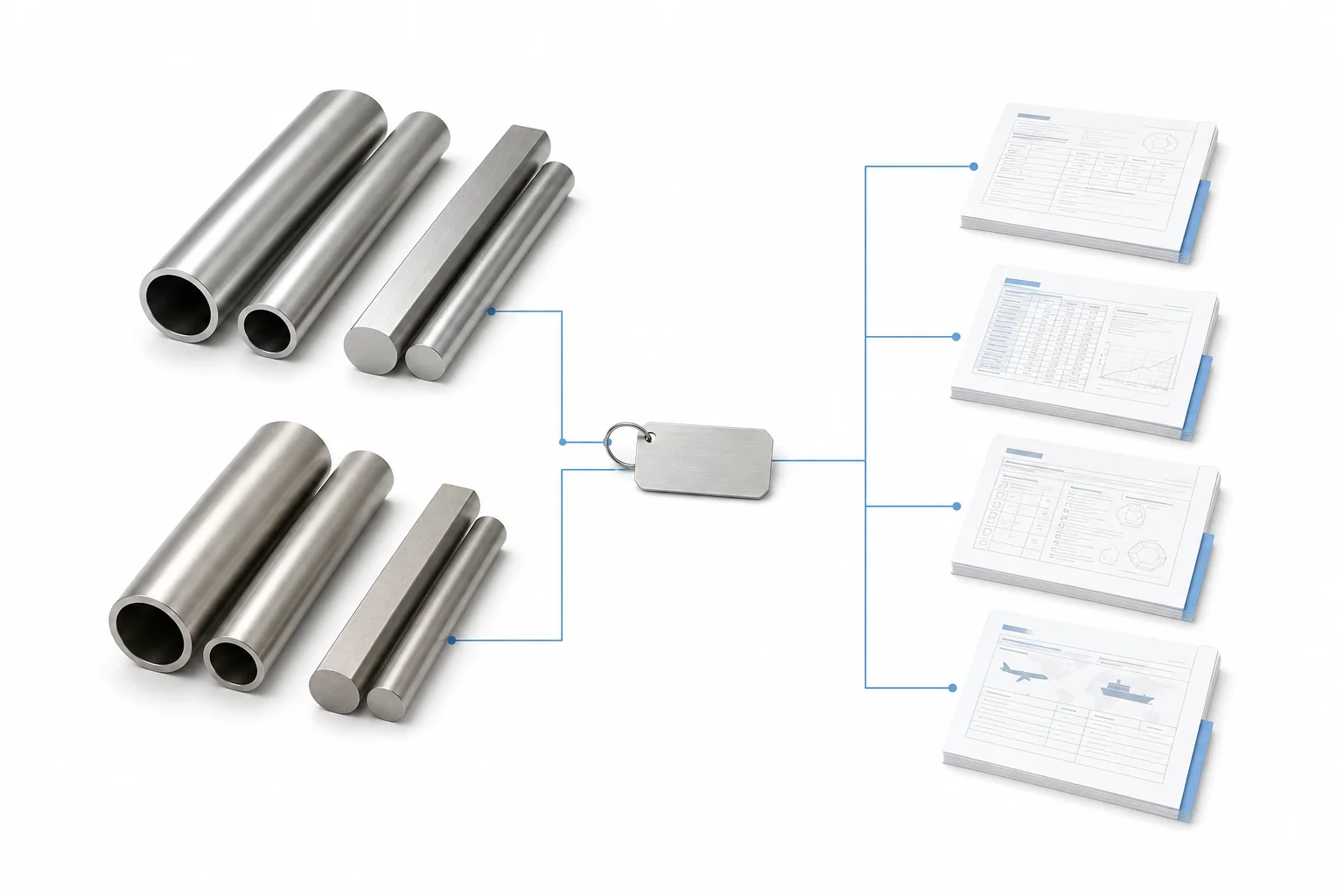
When you look at engineering projects, material quality is not a small detail. It can influence safety, service life, maintenance cost, and project reliability. From my experience supplying nickel alloy and titanium alloy materials, understanding a material's full story can make the difference between confident project execution and difficult quality disputes.
So, let us look at how material traceability helps engineers, buyers, and project teams make safer and more informed decisions.
Is Material Traceability Just About Compliance, or Something More?
Do you sometimes think material traceability is just another rule to follow? Many customers first see it as a check-box exercise. But that view misses the bigger picture.
Material traceability goes beyond simple compliance. It works as an evidence chain that supports engineering decisions, quality investigation, supplier verification, and risk control. Standards related to quality and configuration management also recognize the value of structured records across a product’s life cycle. For example, ISO 10007 provides guidance on configuration management and applies to products and services from concept to disposal.
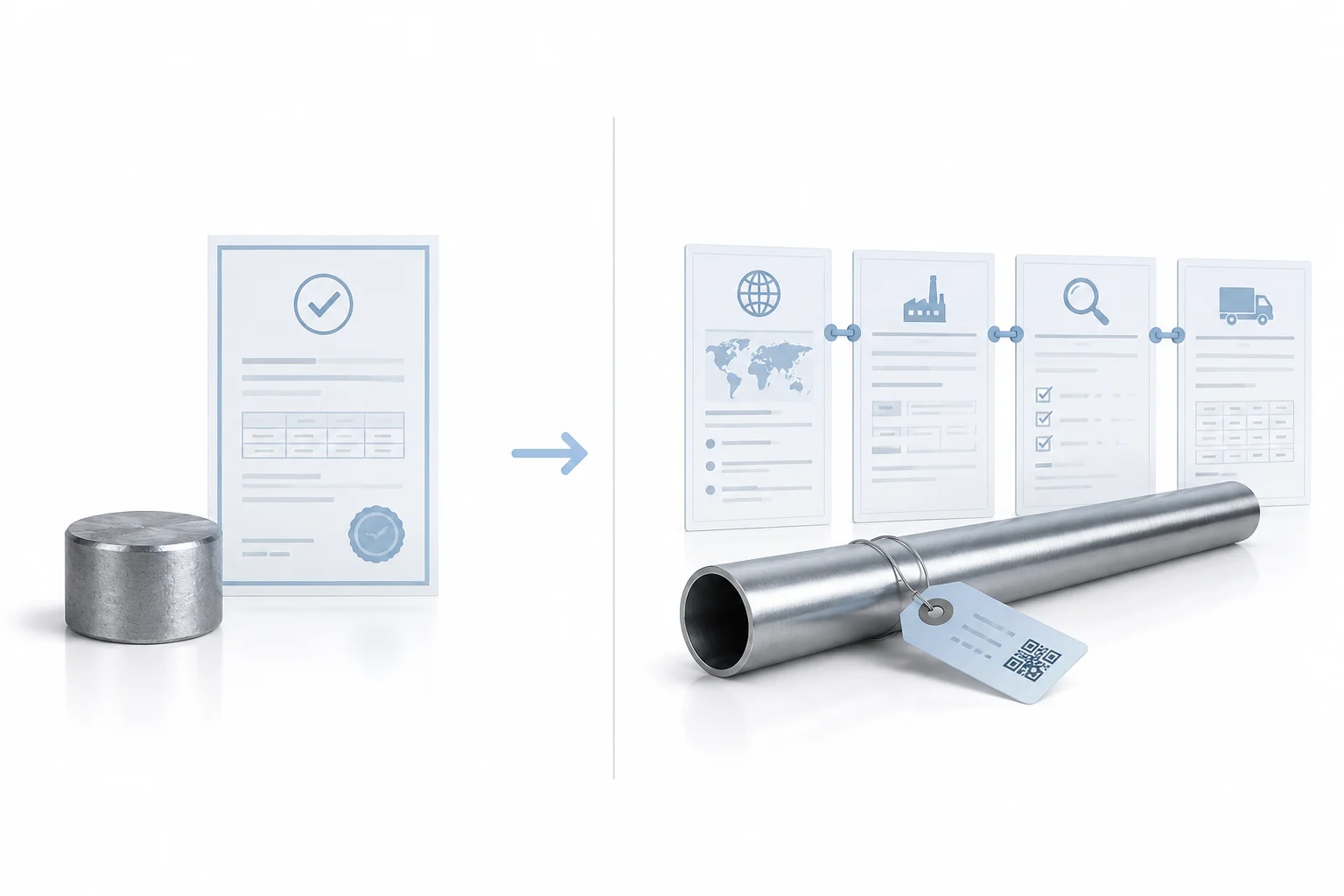
When I talk with project managers or engineers, they often ask about meeting specific standards. “Does this certificate cover our needs?” they might ask. My answer usually starts with another question: “What problem are you trying to solve?”
This is because certificates show part of the compliance picture, while traceability helps manage risk across the material’s life. It answers the “black box” problem. You receive a material, but without proper records, its origin, process route, heat treatment condition, and inspection history may remain unclear.
Unpacking the “Black Box” of Materials
- Beyond Paperwork: Traceability is not just about collecting documents. It is about connecting the physical material with its origin, processing route, inspection history, and delivery records.
- Evidence for Decisions: When detailed records are available, engineers and buyers can verify material identity, review compliance, and investigate problems more effectively.
- Quality System Support: ISO 9001 is a globally recognized quality management standard. It focuses on establishing, maintaining, and continually improving a quality management system. This kind of structured quality system supports consistent documentation and process control.
Consider this difference:
| Feature | Compliance Focus | Risk Management Focus |
|---|---|---|
| Primary Goal | Meet minimum standards and pass audits. | Support material integrity, reduce project risk, and improve failure investigation. |
| Scope | Specific test reports and required certificates. | Raw material origin, heat number, production process, inspection, packaging, and delivery records. |
| Benefit | Avoid documentation gaps and support contractual compliance. | Reduce quality disputes, improve root-cause analysis, and strengthen buyer confidence. |
| Decision Base | What is required by the order or standard? | What information is needed to protect the project and manage specific risks? |
I have advised many clients who initially focused only on one certificate. Later, they realized that a deeper understanding of the material’s history could help avoid confusion, delays, or disputes. The goal is to move from simply “checking the box” to actively “managing the risk.”
How Does Knowing Material History Help Prevent Costly Failures?
Have you ever worried about a material failing unexpectedly in a critical application? Many customers share this concern, especially in high-pressure, corrosive, high-temperature, or safety-sensitive industries.
Material history, supported by comprehensive traceability, can help identify potential quality issues, investigate supplier-related risks, and confirm whether materials match the required specification. It does not guarantee that failure will never happen, but it gives engineers the data needed to reduce uncertainty and respond faster when problems appear.
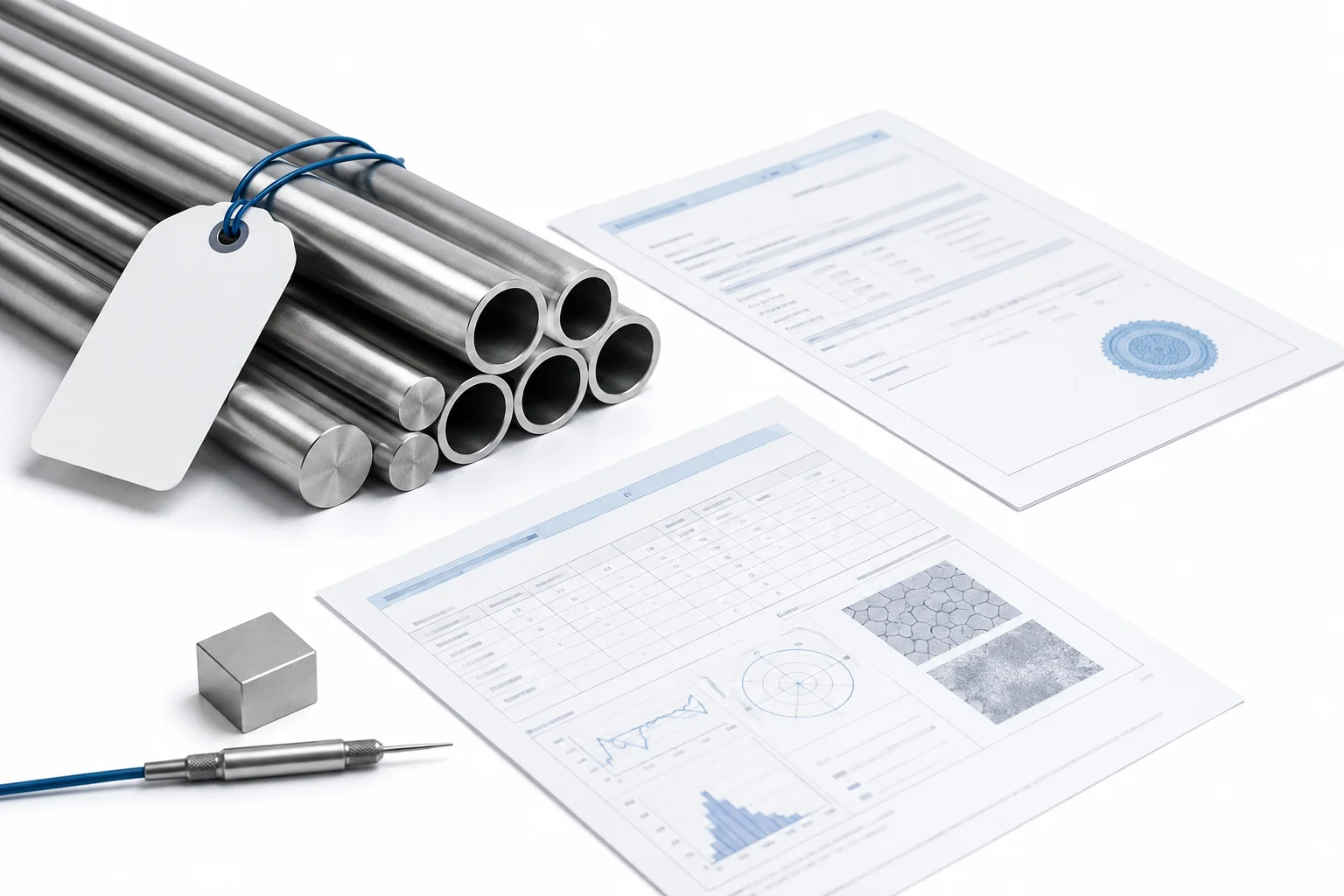
From my perspective working with nickel alloy and titanium alloy materials, many performance questions are connected to material history. Customers often ask: “Will this material truly last in extreme heat or corrosive environments?” The answer depends not only on the alloy grade, but also on its heat number, chemical composition, heat treatment, mechanical properties, surface condition, and inspection results.
A heat number is a key traceability identifier for metal products. It links the finished product back to a specific batch or heat and helps access records about chemical composition, manufacturing process, and quality assurance. A Mill Test Report or Material Test Certificate certifies a metal product’s chemical and physical properties and states compliance with applicable standards.
For nickel alloy tubes, product standards may also define what tests are required. For example, ASTM B444 covers UNS N06625 seamless pipe and tube and includes requirements such as chemical testing, tensile testing, hydrostatic testing, and nondestructive electric testing. This shows why standards, certificates, and traceability should be reviewed together rather than separately.
The Role of Traceability in Proactive Risk Mitigation
- Catching Quality Issues Early: Traceability allows each batch to be linked to its inspection and production records. If an issue appears, the affected batch, heat number, process step, or shipment can be checked more quickly.
- Supporting Root-Cause Analysis: In quality investigation, engineers often need to identify whether a problem came from material, process, inspection, handling, or service conditions. Tools such as root-cause analysis are widely used to identify factors behind defects or failures.
- Managing Supplier Risk: When you buy materials, you also rely on the supplier’s production and quality control system. Traceability gives buyers more transparency into the supply chain and reduces uncertainty.
Here’s how traceability provides clearer answers:
| Problem Scenario | Traceability Solution |
|---|---|
| Unexpected Corrosion | Review chemical composition, heat treatment condition, surface finish, and service environment records. |
| Premature Mechanical Failure | Check heat number, rolling/forging records, mechanical test results, and NDT reports. |
| Disputed Material Origin | Match product marking, heat number, MTC, packing list, and shipping documents. |
| Quality Complaint After Delivery | Identify the affected batch quickly and compare inspection records with the delivered material. |
| Standard Compliance Review | Verify whether the supplied material matches the applicable ASTM, ASME, EN, ISO, or project standard. |
This proactive approach turns material history into useful engineering data. It is not only about reacting to failures. It is about giving buyers and engineers enough information to make better decisions before problems become expensive.
What Level of Traceability Do You Really Need for Your Project?
Do all projects need the same level of material traceability? No. This is a question I often get asked. Some customers worry about overspending on unnecessary documentation, while others worry about not having enough records for a critical application.
The required level of material traceability depends on project risk, application demands, industry requirements, and buyer specifications. There is no universal “best” traceability package. The right approach balances cost, documentation depth, regulatory needs, and the consequences of material failure.
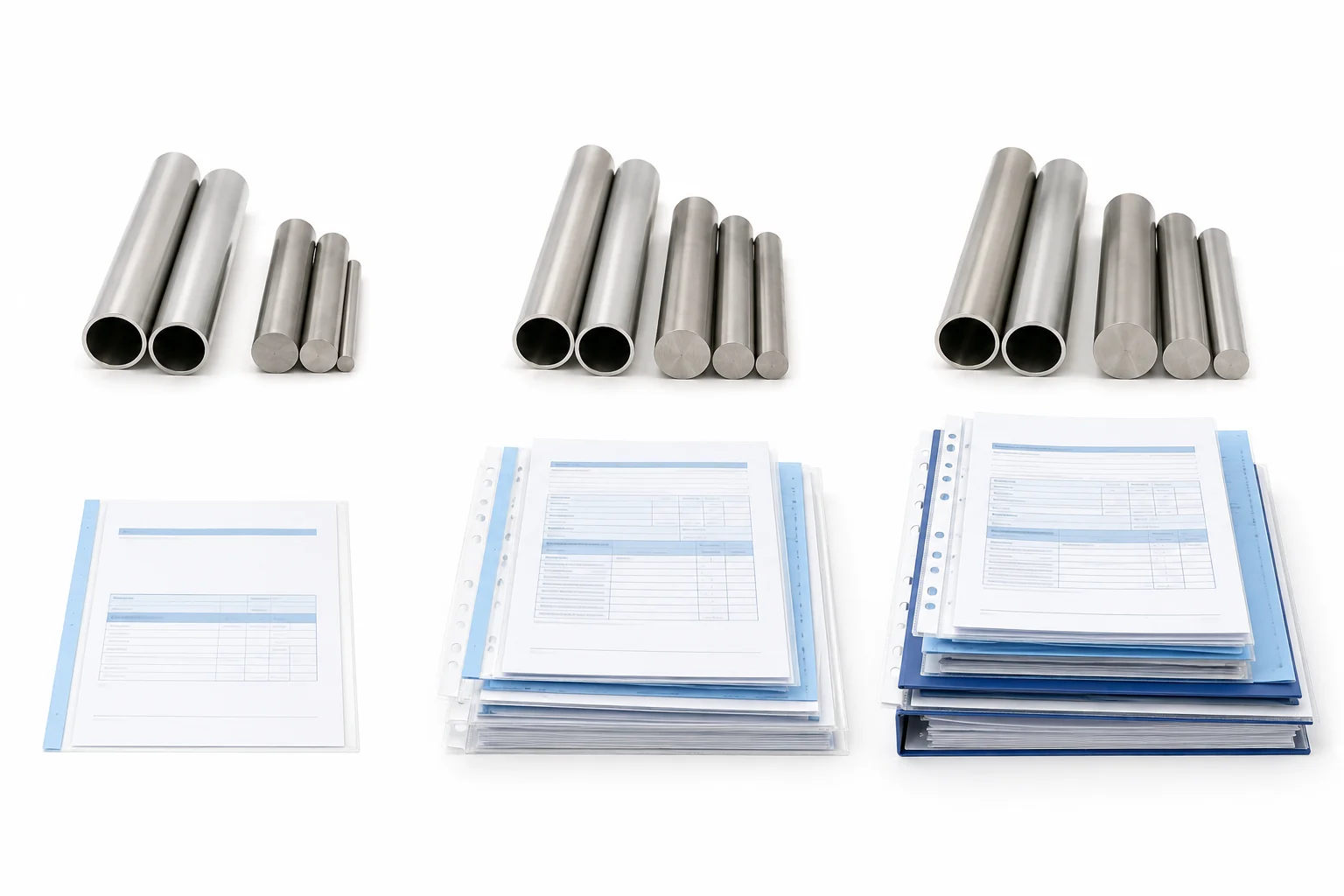
From my long experience in materials supply, I have learned that “one size fits all” does not apply to traceability. A chemical processing plant, an oil and gas project, an aerospace component, a medical device component, and a general industrial piping system may all need different levels of documentation.
For example, aerospace and defense applications often require stronger quality management and documentation controls. AS9100 is a quality management system standard for aviation, space, and defense organizations and is based on ISO 9001 with additional quality and safety-related requirements.
Medical device applications also require specific quality and risk controls. ISO 13485 is the internationally recognized quality management system standard for the design and manufacture of medical devices. For materials that contact the human body, ISO 10993-1 addresses biological evaluation of medical devices within a risk management process.
For oil and gas or chemical processing projects, traceability may need to focus on corrosion resistance, sour service requirements, pressure rating, heat treatment condition, inspection, and long-term performance. If H2S or sour service is involved, buyers may also need to consider NACE MR0175 / ISO 15156 requirements.
Matching Traceability to Your Project's Risk Level
- Risk vs. Cost Balance: For high-pressure, high-temperature, corrosive, or safety-critical applications, stronger traceability and testing are usually justified. For lower-risk applications, a standard MTC and basic conformance documents may be enough.
- Application-Specific Needs: Different industries care about different records. Aerospace may require more detailed process and batch control. Medical projects may require biocompatibility and process validation records. Chemical and oil & gas projects may focus on corrosion resistance, heat treatment, pressure testing, and material standards.
- Failure Investigation Needs: A practical question is: “If this material fails later, what records would we need to investigate the cause?” The answer often defines the right traceability level.
Let's look at how project types guide traceability decisions:
| Project Type | Typical Risk Profile | Key Traceability Focus | Example Data Points |
|---|---|---|---|
| Aerospace / Defense | Critical safety, high stress, strict quality requirements | Detailed material pedigree, process control, inspection history | Raw material source, heat number, chemistry, heat treatment logs, NDT reports, manufacturing dates, operator or process records |
| Oil & Gas / Chemical | Corrosion, pressure, temperature, safety, environmental risk | Material certificates, corrosion-related requirements, pressure and NDT records | MTCs, corrosion test results if required, mechanical properties, NACE / ISO 15156 where applicable, dimensional records |
| Medical Devices | Biocompatibility, patient safety, regulatory control | Material composition, biological evaluation, process validation | Alloy composition, biocompatibility data, surface finish, manufacturing environment controls, sterilization-related records where applicable |
| General Industrial | Moderate risk, cost-sensitive, standard service | Basic conformance and batch identification | MTCs, material grade, heat number, basic chemical and mechanical properties |
| Custom Engineering Projects | Application-specific risk | Tailored documentation based on drawings and project requirements | Drawings, inspection plans, dimensional reports, third-party inspection, packaging and shipping records |
Ultimately, the goal is to safeguard the project without adding unnecessary burden. Traceability should be designed around risk, not around paperwork for its own sake.
Conclusion
Material traceability is a systemic safeguard, not just a rule. It helps buyers and engineers verify material identity, review compliance, investigate problems, and reduce project uncertainty.
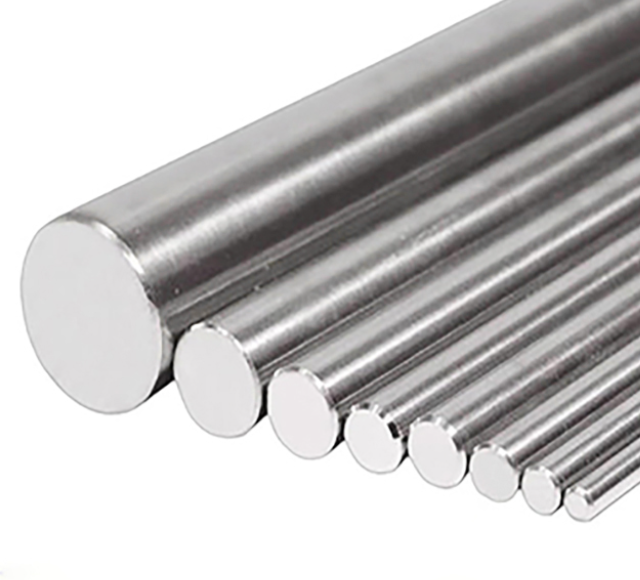
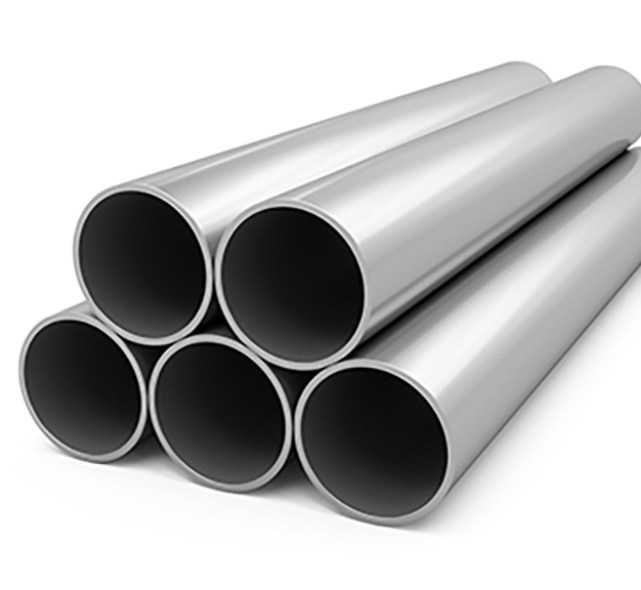
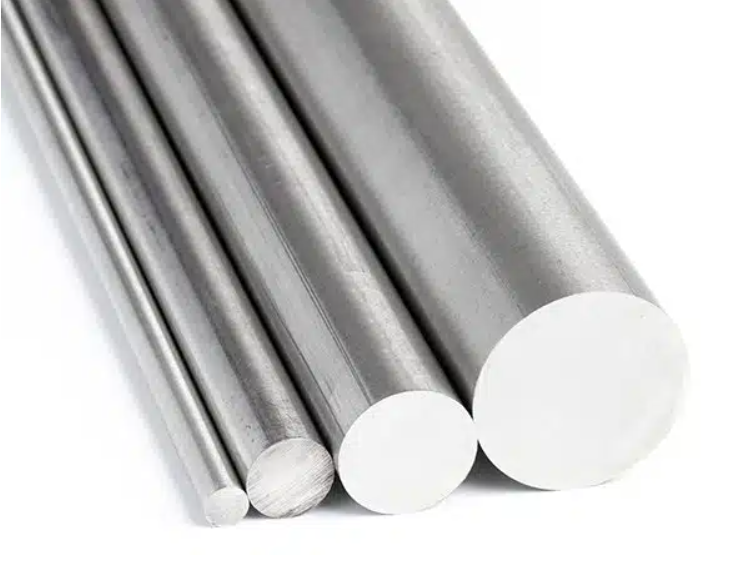
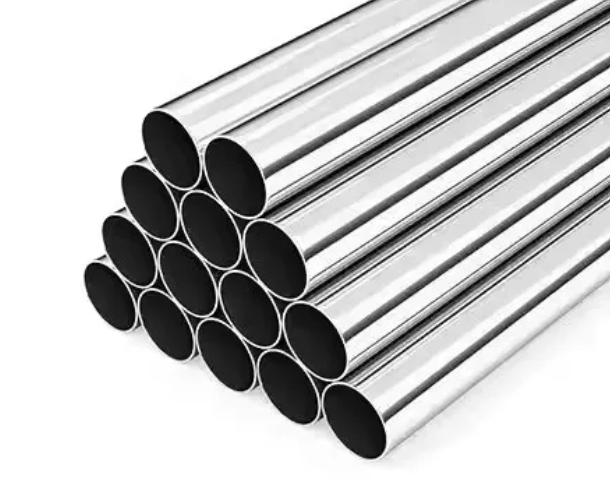
For nickel alloy tubes, nickel alloy bars, titanium alloy tubes, and titanium alloy bars, traceability should connect the physical material with its heat number, MTC, production records, inspection reports, packaging, and shipping documents.
At Emily PIPE, we help industrial buyers reduce sourcing risk by supporting clear documentation, material traceability, standard compliance, quality inspection, and responsive communication from material selection to final shipment.