
How to Control Lead Time Risks for Nickel Alloy Tubes and Bars?
Project delays from unexpected material lead times can disrupt your budget, construction schedule, and customer commitments. For nickel alloy tubes and bars, lead time is not only about production speed. It is affected by raw material availability, alloy grade, size, heat treatment, testing, documentation, supplier capacity, and international logistics.
Controlling lead time for nickel alloy tubes and bars means understanding the full process from order confirmation to material delivery. Manufacturing lead time can include order preparation, queue time, setup time, run time, movement, inspection, and shipping. For specialty alloy products, buyers should evaluate raw material availability, production capacity, testing requirements, and communication quality before relying on a delivery promise.
When I talk to contractors, distributors, and engineering buyers, a common concern is whether materials will arrive on time. It can feel like a gamble when the only answer from a supplier is “about 4–6 weeks” or “around 30 days.”
In my experience, lead time becomes easier to manage when buyers understand what drives it. It is not magic. It is planning, process visibility, technical clarity, and early communication.
What Really Makes Up Lead Time for Nickel Alloys?
Are you frustrated by vague lead time estimates for critical nickel alloy materials? It is easy to feel lost when dates change without clear explanation. The key is to understand the layers behind the delivery schedule.
Lead time for nickel alloy tubes and bars is not a single fixed number. It is influenced by raw material procurement, melting or semi-finished material preparation, forming, heat treatment, machining or finishing, inspection, documentation, packaging, and transport. Supply chain research also recognizes that real-world lead times can be uncertain because of raw material arrival delays, transportation delays, demand surges, and supplier changes.
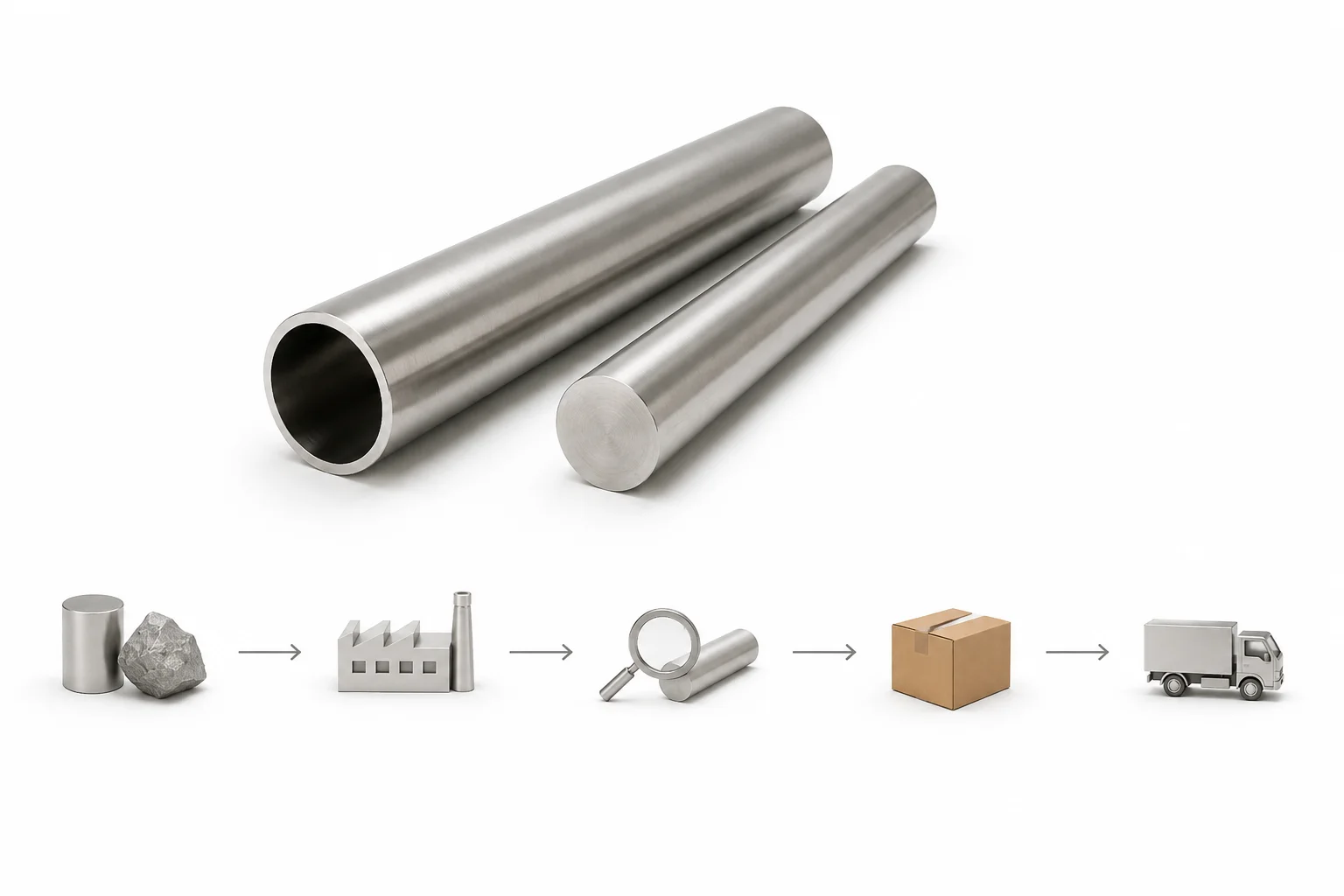
When I first started in this industry, I thought lead times were simple: you order, the factory produces, and the goods arrive. But specialty materials like nickel alloys involve many connected steps.
Raw Material Availability
Nickel alloy production depends on elements such as nickel, chromium, molybdenum, niobium, titanium, copper, iron, and other alloying additions. Raw material availability and price can change with global supply conditions.
For example, the USGS Mineral Commodity Summaries 2025 for nickel reported that nickel price movements in 2024 were influenced by Indonesian surplus, asset closures, delays in issuing mining quotas in Indonesia, unrest in New Caledonia, and restrictions related to Russian nickel. This shows why raw material supply conditions can affect planning for nickel-containing alloys.
Melting and Metallurgical Processing
Some nickel alloys and high-performance alloys may involve specialized melting and refining routes. Vacuum induction melting is used for certain special metals and alloys, including nickel and superalloys, because it allows better control of alloy chemistry and limits contamination. Vacuum arc remelting is used as a secondary melting process for high-value applications where chemical and mechanical homogeneity are important.
These processes are specialized and schedule-dependent. If the project requires a custom melt, tight chemistry control, or a less common alloy grade, the lead time may be longer than for standard stocked material.
Forming, Heat Treatment, and Finishing
After melting or sourcing semi-finished material, the metal may go through hot working, rolling, forging, extrusion, cold drawing, straightening, cutting, machining, pickling, polishing, or other finishing operations.
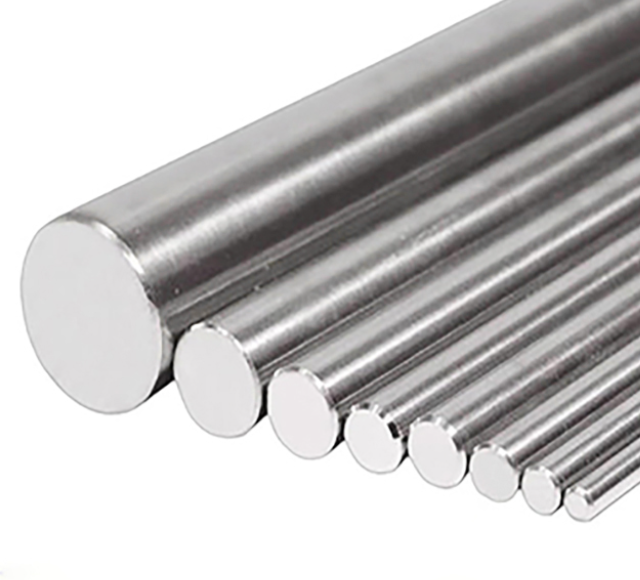
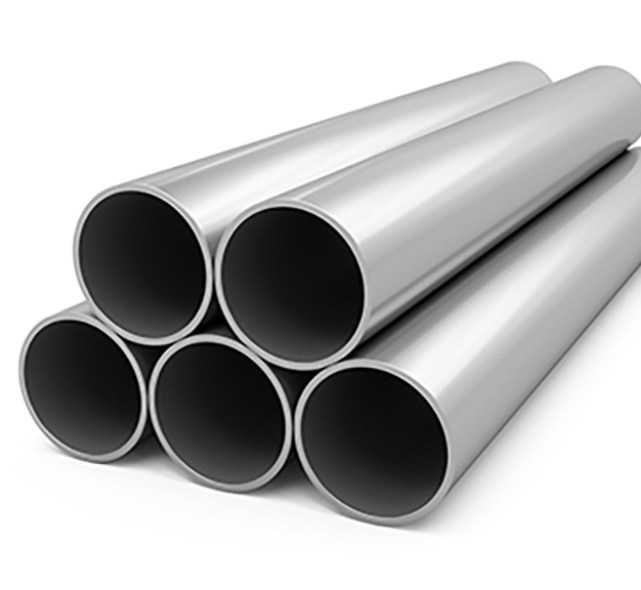
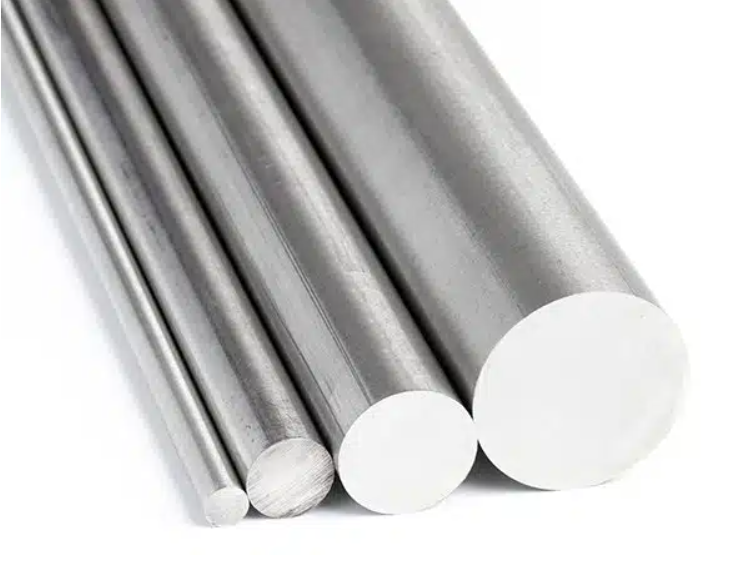
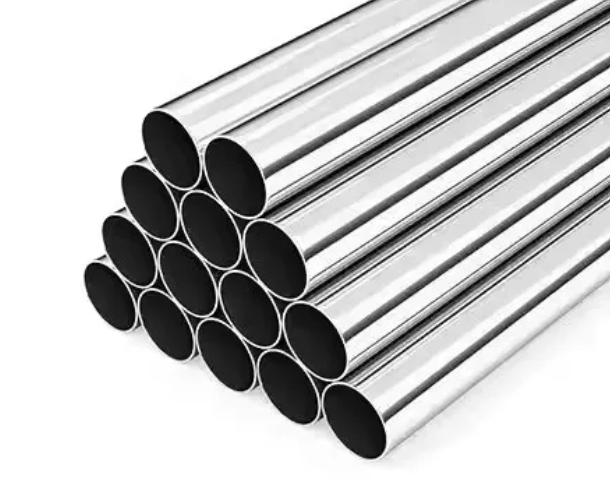
For tubes, production may involve multiple drawing or forming steps, with intermediate annealing. For bars, production may involve rolling, forging, straightening, centerless grinding, or cutting. Heat treatment is often required to achieve the required mechanical properties, corrosion resistance, or dimensional stability.
Testing, Inspection, and Documentation
Testing is not optional for critical nickel alloy materials. Depending on the product and standard, it may include chemical analysis, PMI, tensile testing, hardness testing, dimensional inspection, surface inspection, ultrasonic testing, eddy current testing, hydrostatic testing, and third-party inspection.
If inspection reveals a nonconformity, the material may require review, repair, rework, retesting, replacement, or customer approval. This can affect the final delivery schedule.
Packaging, Export, and Logistics
After production and inspection, the material still needs export packaging, marking, documentation, booking, customs clearance, port handling, and international transport. The World Bank Logistics Performance Indicators measure supply chain speed, connectivity, reliability, and the effects of ports, transshipment hubs, border procedures, and inland checkpoints. This supports the idea that logistics is part of lead time risk, not a separate afterthought.
How Do Project Specifics Change Nickel Alloy Lead Times?
Do you think every nickel alloy order has the same lead time? This is a common mistake. Your exact technical requirements can deeply affect delivery.
Project specifics such as material grade, size, quantity, product form, surface finish, heat treatment, testing, certificates, and application environment can significantly change nickel alloy lead time. Standard grades and common sizes may be faster when stock or semi-finished material is available. Highly customized or specialized orders usually require longer planning and production cycles.
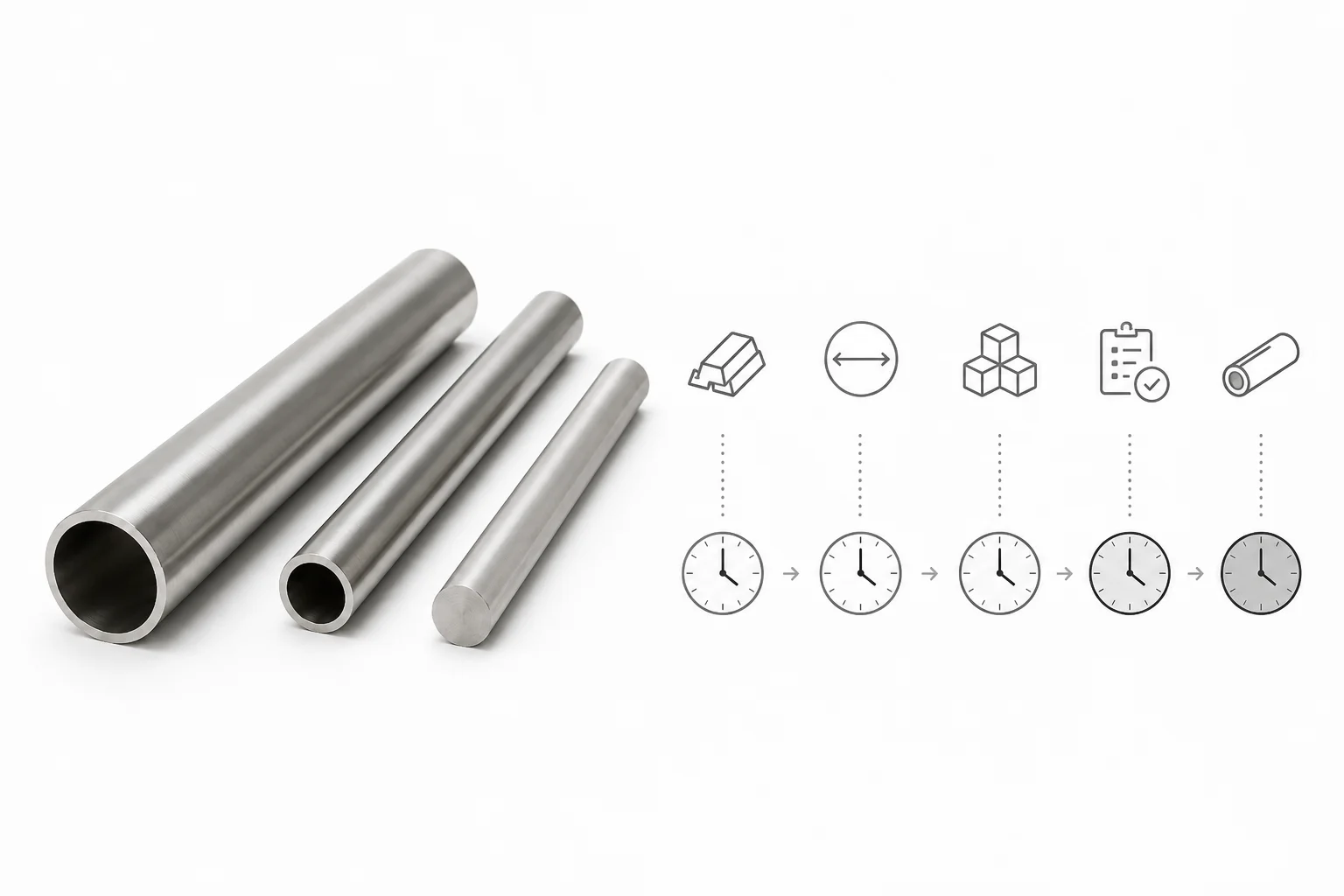
No two projects are exactly alike, and neither are their lead times. What you order directly affects how fast you can receive it.
Material Grade
If you need a common alloy such as Inconel 625 / UNS N06625 in a standard size, there may be stock or available semi-finished material. If you need a less common grade, special chemistry, or tighter composition control, the supplier may need to arrange a dedicated production route or custom melt.
For example, Inconel 625 is a nickel-based superalloy with nickel, chromium, molybdenum, and niobium additions. It is used across chemical processing, marine, nuclear, and other demanding environments. Even for a common grade, lead time can still vary by form, size, standard, and required testing.
Dimensions and Product Form
Standard OD, wall thickness, diameter, and length are usually easier to plan. Custom lengths, non-standard wall thickness, tight tolerance, special straightness, or precision surface finish may require dedicated machine setup and additional processing.
For example, tube orders may need drawing, annealing, straightening, cutting, and NDT. Bar orders may need forging or rolling, heat treatment, peeling, grinding, polishing, or machining.
Quantity
Quantity also affects delivery. A very small batch may be harder to fit into a production schedule if it requires special setup. A very large batch may require multiple production runs or longer inspection and packaging time.
This does not mean small orders are impossible. It means buyers should confirm whether the supplier has stock, semi-finished inventory, or a production slot available.
Testing and Certification Requirements
More testing means more time. If the project requires third-party inspection, witness testing, NACE-related review, special corrosion testing, impact testing, ultrasonic testing, eddy current testing, or project-specific documentation, these requirements should be confirmed before production.
For example, nondestructive testing evaluates material, components, or systems without causing damage. Ultrasonic testing can be used to detect internal flaws, while eddy-current testing is widely used for conductive materials and tubing inspection. Hydrostatic testing is used to test pressure vessels, pipes, and related systems for strength and leakage.
Standards and Application Environment
ASTM, ASME, EN, ISO, NACE, aerospace, nuclear, or medical-related requirements can add inspection points, documentation review, or approval steps. The stricter the application, the earlier the buyer should clarify standards and documentation requirements.
How Can I Truly Evaluate a Supplier's Lead Time Promises?
Are you taking supplier lead time estimates at face value? A quoted delivery date is useful, but it is not enough. Buyers need to understand what sits behind the number.
To evaluate supplier lead time promises, buyers should ask how the supplier controls raw material sourcing, production capacity, subcontracted processes, testing, documentation, and logistics. A realistic lead time should be based on actual stock status, production schedule, inspection plan, and shipping method—not only a sales estimate.
When a supplier gives a lead time, I do not treat it as the whole answer. I ask questions. A realistic lead time should be traceable to a process.
Questions About Raw Materials
Ask:
- Is the material in stock?
- Is it finished stock or semi-finished material?
- Is the required grade available from existing heat numbers?
- Does the supplier need to purchase billet, bar, tube hollow, or ingot?
- Is a custom melt required?
- Are nickel, molybdenum, chromium, niobium, or titanium additions already secured?
These questions matter because raw material arrival uncertainty is one of the recognized causes of lead time variability. A supply chain study on uncertain lead times notes that real-world lead time fluctuations may come from raw material arrival uncertainty, transportation delays, demand surges, and vendor switching.
Questions About Production Capacity
Ask:
- What is the current production load?
- Which production line will handle this order?
- Is machine setup required?
- Are heat treatment furnaces available?
- Is the testing equipment available in-house?
- Are there any known bottlenecks?
A master production schedule is used in manufacturing to plan what products will be produced, when they will be produced, and how resources such as capacity, lead time, and inventory are considered. This is why buyers should ask whether the supplier’s quoted lead time is actually aligned with their production schedule.
Questions About Outsourcing and Subcontracting
Ask:
- Which steps are done in-house?
- Which steps are outsourced?
- Who controls heat treatment, surface finishing, NDT, or third-party testing?
- Are subcontractor lead times included in the quoted delivery time?
Outsourcing is not automatically a problem. But if a critical step is subcontracted and not included in the quoted schedule, delays can appear later.
Questions About Quality Control
Ask:
- What inspections are performed before shipment?
- Is PMI required?
- Is UT, ECT, hydrostatic testing, or dimensional inspection required?
- Are third-party inspection and witness testing included?
- When will MTCs and inspection reports be ready?
ISO 9001 is a globally recognized quality management standard. ISO explains that it helps organizations establish, implement, maintain, and continually improve a quality management system. It also highlights benefits such as customer confidence, quality control processes, complaint resolution, process improvement, and regular audits.
Questions About Logistics
Ask:
- Which shipping method will be used?
- Is the delivery by air, sea, rail, or express courier?
- Which port will be used?
- Are export documents ready?
- Who handles customs clearance?
- Are wooden cases, waterproof packing, caps, or special packing required?
Logistics should be included in the lead time discussion, especially for international projects.
Why Is Early Communication Key to Managing Lead Time Risks?
Do you only talk to your supplier when problems happen? Waiting until a delay appears is usually too late. Early communication gives both sides more options.
Early and clear communication helps manage lead time risk because it supports expectation alignment, technical clarification, schedule planning, and early identification of bottlenecks. ISO 10006, which gives guidance on quality management in projects, applies to projects of different complexity, size, duration, and environment, and notes that guidance may need to be tailored to the specific project.
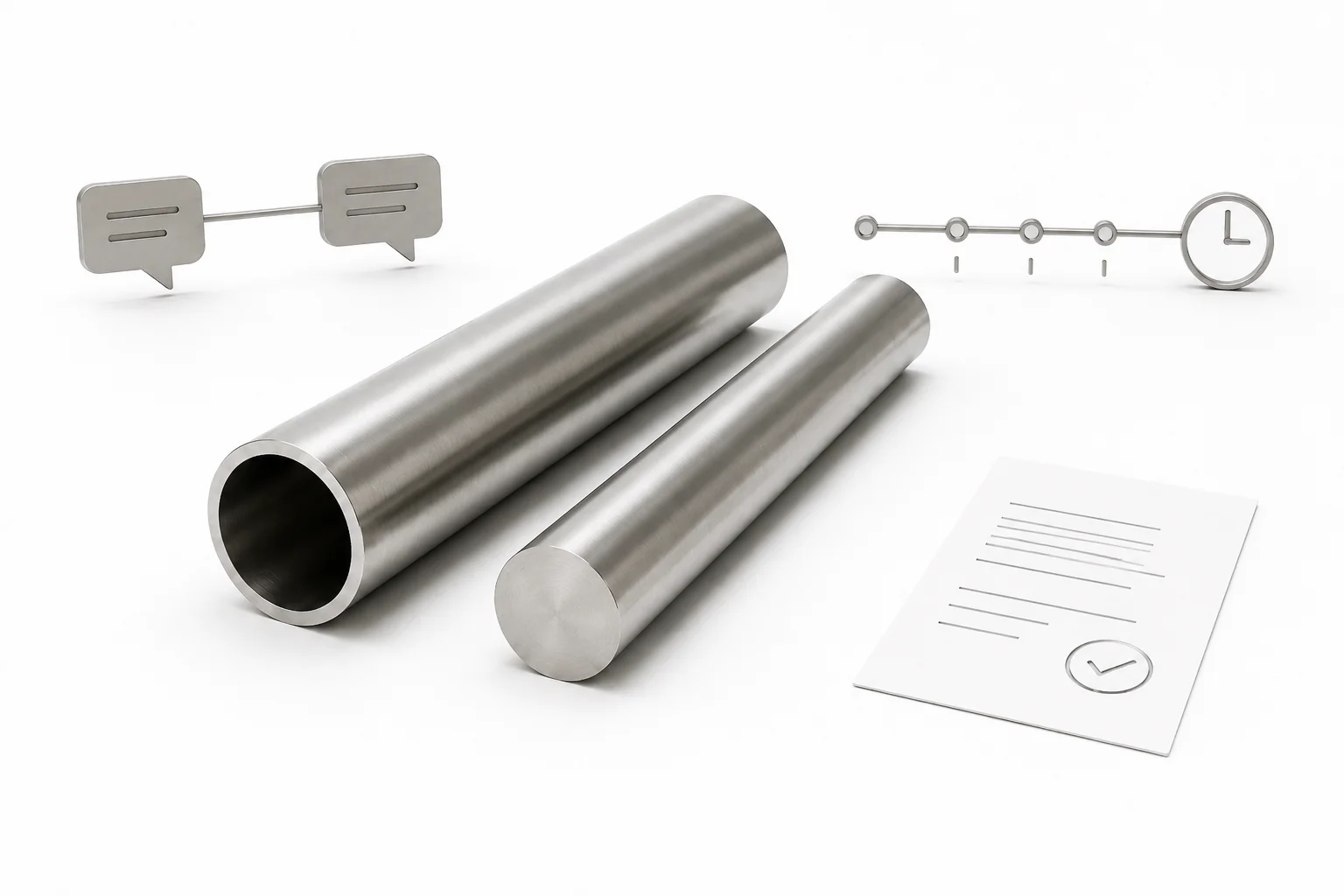
I have learned that the worst time to discuss lead time is after the problem has already happened. At that point, options are limited and usually expensive. Early communication gives the buyer and supplier time to plan.
Share the Full Project Scope
Do not only send a purchase order. Share the application, standards, critical milestones, inspection requirements, and delivery deadline. When the supplier understands why the schedule matters, they can plan production and testing more carefully.
Define Specifications Clearly
Ambiguity causes delays. Drawings, size tables, grade, UNS number, standard, tolerance, surface finish, heat treatment, testing, certificate requirements, packaging, and delivery terms should be confirmed before production.
If technical questions appear after production starts, the schedule can easily move.
Establish Communication Channels
Confirm:
- Who is the main contact?
- How often will production updates be provided?
- Which milestones will be reported?
- Who approves technical changes?
- What happens if inspection fails or a delay appears?
For complex international projects, collaboration itself can be managed as a system. ISO 44001 provides a framework for collaborative business relationship management, which supports the idea that structured communication and cooperation matter in supplier relationships.
Review Progress Regularly
For long or customized orders, buyers should not wait until the planned shipping date. They should review key milestones such as raw material arrival, production start, heat treatment completion, testing, documentation, packing, and shipment booking.
In large projects, expediting is used in procurement and project management to secure timely delivery and quality of goods. It may involve tracking manufacturing progress, checking conformity with standards, reviewing packing, and confirming timelines.
Be Transparent About Changes
If your project schedule changes, tell the supplier early. If inspection scope changes, tell them early. If the destination port changes, tell them early. Late changes often create avoidable delays.
Practical Checklist for Nickel Alloy Lead Time Control
Before placing an order for nickel alloy tubes or bars, confirm:
| Area | What to Confirm |
|---|---|
| Material | Grade, UNS number, standard, chemical requirements, heat treatment |
| Size | OD, WT, diameter, length, tolerance, straightness, surface finish |
| Quantity | Total quantity, batch size, delivery split, urgent items |
| Stock Status | Finished stock, semi-finished stock, or new production |
| Production Route | Seamless, welded, forged, rolled, drawn, machined, polished |
| Testing | PMI, chemical analysis, tensile test, hardness, UT, ECT, hydrostatic test |
| Documentation | MTC, heat number, inspection reports, third-party inspection |
| Packaging | Wooden case, waterproof film, caps, bundle, marking |
| Logistics | Shipping method, destination port, customs documents, Incoterms |
| Communication | Milestone updates, delay notice process, responsible contacts |
Conclusion
Managing nickel alloy lead time risk means more than asking “How many days?” It requires understanding production complexity, raw material availability, project-specific requirements, supplier capacity, inspection needs, documentation, and logistics.
The safest approach is to define your technical requirements early, verify the supplier’s real production and inspection capacity, confirm which processes are in-house or subcontracted, and maintain clear communication throughout the order.
At Emily PIPE, we help industrial buyers plan nickel alloy tubes, nickel alloy bars, titanium alloy tubes, and titanium alloy bars from material selection to final shipment, with attention to technical requirements, inspection, packaging, and delivery reliability.