
Monel 400 vs R-405: Essential Differences and Application Scenarios of the Free-Machining Variant?
Are you struggling to choose between Monel 400 and Monel R-405 for your critical industrial applications? Many customers contact us after facing unexpected production issues or performance questions.
Monel R-405 is not a universal upgrade to Monel 400; it is a specialized free-machining variant designed for enhanced machinability, achieved by a controlled sulfur addition that compromises its corrosion resistance, weldability, and high-temperature performance.
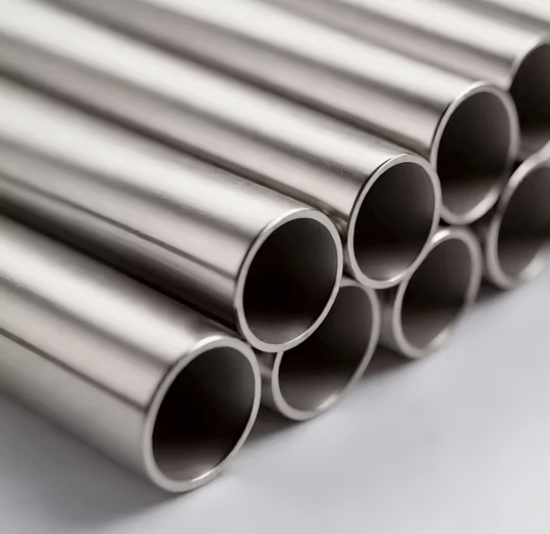
When we discuss Monel materials with our customers, we often find a common misconception: some think R-405 simply means "easier machining" with no drawbacks. However, understanding the core differences is vital for avoiding costly mistakes in your projects. Let's explore these nuances in detail.
What Makes R-405 Different from Monel 400 at a Micro Level?
Are you overlooking the subtle chemical changes that drive significant performance differences in Monel alloys? Many buyers focus on the "Monel" name, missing the critical element that distinguishes R-405.
The primary difference between Monel 400 and Monel R-405 lies in R-405's controlled addition of sulfur, typically between 0.025% and 0.060%, which dramatically improves machinability by promoting chip breakage but introduces trade-offs in other properties.
When we look at the composition of these alloys, Monel 400 is a nickel-copper alloy with about 63% nickel and 28-34% copper1, plus small amounts of iron, manganese, and carbon. In contrast, Monel R-405 maintains a similar base composition but deliberately introduces a higher sulfur content. This sulfur forms discrete sulfide inclusions, often manganese sulfides, within the alloy's microstructure. These inclusions act as chip breakers during machining. As the cutting tool moves through the material, it encounters these inclusions, which interrupt the continuous flow of the metal and lead to smaller, more manageable chips. This prevents long, stringy chips that can tangle around tools and parts, a common problem when machining Monel 400. However, these same sulfide inclusions, while beneficial for machining, create weak points in the alloy. We have observed that during inspection, these inclusions can affect the material's ability to resist certain types of corrosion and can cause issues like hot shortness during welding or high-temperature exposure. Understanding this fundamental compositional difference is the first step in making an informed material selection. The table below illustrates the typical composition ranges and highlights the key differentiator.
Compositional Breakdown and Its Role in Performance
| Element | Monel 400 (wt%) | Monel R-405 (wt%) | Impact of Element |
|---|---|---|---|
| Nickel (Ni) | 63.0 min | 63.0 min | Primary corrosion resistance, strength. |
| Copper (Cu) | 28.0 - 34.0 | 28.0 - 34.0 | Essential for corrosion resistance, strength, ductility. |
| Iron (Fe) | 2.5 max | 2.5 max | Minor strengthening, can affect magnetism. |
| Manganese (Mn) | 2.0 max | 2.0 max | Deoxidizer, forms sulfides with sulfur in R-405. |
| Carbon (C) | 0.3 max | 0.3 max | Strengthening, can form carbides. |
| Silicon (Si) | 0.5 max | 0.5 max | Deoxidizer, can improve casting fluidity. |
| Sulfur (S) | 0.024 max | 0.025 - 0.060 | Crucial for machinability (R-405), but reduces other properties. |
How Does Monel R-405's Free-Machining Benefit Impact Your Production Line?
Are you tired of grappling with long, stringy chips and excessive tool wear when machining Monel 400? Many manufacturing shops seek solutions to boost efficiency and cut costs, leading them to consider R-405.
Monel R-405 significantly improves machining efficiency, offering benefits like increased cutting speeds, extended tool life, and superior chip control, which translate directly into lower production costs and faster cycle times for precision components.
From our experience working with component manufacturers, the machinability of Monel 400 is often a significant bottleneck. It tends to work-harden rapidly, leading to poor chip formation and accelerated tool wear. This means slower speeds, lighter cuts, and frequent tool changes, all of which add up to higher machining costs. When customers contact us about machining efficiency issues with Monel 400, we ask about their desired part complexity and production volume. For intricate parts or high-volume runs, Monel R-405 truly shines. The sulfur inclusions in R-405 promote a brittle chip, which means chips break cleanly and easily, preventing entanglement. This allows for higher cutting speeds and feed rates without compromising surface finish. We've seen firsthand how a change to R-405 for applications like valve stems or complex fasteners can reduce machining time by up to 30% and extend tool life by 2-3 times2. This isn't just about faster production; it also means less downtime for tool changes, lower tooling costs, and a better surface finish straight off the machine, often reducing the need for secondary finishing operations. The value of R-405 appears in high-volume precision machining where tool life and cycle time savings directly offset any potential material cost premium. For single-part or low-volume jobs, these benefits might be less visible, but for large-scale production, the efficiency gains are undeniable.
Machining Performance Comparison
| Characteristic | Monel 400 | Monel R-405 | Production Impact |
|---|---|---|---|
| Chip Formation | Long, continuous, stringy chips | Small, brittle, well-broken chips | R-405 prevents entanglement, reduces chip evacuation issues. |
| Tool Wear | High; rapid tool wear due to work hardening | Significantly lower; extended tool life | R-405 reduces tooling costs, less frequent tool changes. |
| Surface Finish | Can be challenging to achieve good finish | Excellent; often eliminates need for secondary operations | R-405 reduces post-machining processes, improving part quality. |
| Cutting Speed | Slower speeds required | Higher cutting speeds possible | R-405 increases throughput, reduces cycle times. |
| Typical Feed Rates | 0.002-0.005 ipr (0.05-0.13 mm/rev) | 0.005-0.010 ipr (0.13-0.25 mm/rev) | R-405 allows more aggressive machining, faster material removal. |
| Cost Savings | Higher machining costs due to tool/time | Lower machining costs due to efficiency | R-405 offers significant economic benefits for high-volume parts. |
When Does R-405's Machinability Come at a Cost to Corrosion and Mechanical Performance?
Are you considering R-405 solely for its ease of machining, without fully understanding its potential compromises in harsh environments? Many procurement managers fail to assess if their application's specific conditions will expose R-405's vulnerabilities.
While Monel R-405 offers superior machinability, this gain comes at the cost of reduced corrosion resistance in certain aggressive media, impaired weldability, and diminished high-temperature strength, making it unsuitable for applications demanding these critical performance attributes.
The very sulfur that aids machinability in R-405 becomes its Achilles' heel in other performance areas. For instance, in our discussions with customers, we highlight that while Monel 400 boasts excellent resistance to flowing seawater (corrosion rate often less than 0.05 mm/year3), R-405 can be more susceptible to selective attack, especially in mildly oxidizing conditions or where sulfur compounds are present. This includes exposure to some dilute acids or even stagnant seawater, which can trigger crevice corrosion. If your application involves critical corrosion resistance, such as heat exchangers in marine environments or components exposed to hydrofluoric or sulfuric acid, Monel 400 remains the superior choice.
Regarding weldability, Monel R-405 is explicitly disqualified from welding-intensive structures. The high sulfur content leads to hot shortness, meaning the material becomes brittle at elevated temperatures during welding4, resulting in cracking in the weld metal and heat-affected zone. We strongly advise against using R-405 for any application requiring structural welds or repairs. For Monel 400, good welding practices involve using filler metals like ENiCu-7 (AWS A5.14) or Monel 605, preheating only if necessary (max 150°C), and typically no post-weld heat treatment, though stress relief at 538-566°C (1000-1050°F) for one hour6 can prevent stress corrosion cracking in specific environments.
Finally, for high-temperature service, R-405's performance is inferior to Monel 400. The sulfide inclusions can lead to grain boundary liquation at high temperatures, significantly reducing the alloy's strength and increasing its susceptibility to failure. While Monel 400 maintains good strength and oxidation resistance up to 538°C (1000°F)7, R-405 should be avoided in such conditions. We've confirmed through various production QC findings that materials with higher sulfur content show reduced ductility and impact strength after prolonged high-temperature exposure.
When considering forging, Monel 400 requires careful control: hot forging is typically performed between 927-1177°C (1700-2150°F)8, with the finishing forging temperature not below 649°C (1200°F), and a final pass deformation of at least 30% is recommended to refine the grain structure. The presence of sulfur in R-405 makes it much more prone to hot cracking during such processes, limiting its formability compared to Monel 400. This is why the material choice must be reframed from "better vs worse" to "matched vs mismatched application"—environments requiring welded structures or high-temperature service disqualify R-405 immediately.
Performance Trade-Offs: Monel 400 vs. R-405
| Feature | Monel 400 (UNS N04400) | Monel R-405 (UNS N04405) | Consequence of Trade-off |
|---|---|---|---|
| General Corrosion Resistance | Excellent; highly resistant to most acids, alkalis, and salts. Corrosion rate in flowing seawater < 0.05 mm/year. | Good, but reduced; increased susceptibility in oxidizing acids and sulfur-containing environments. Less resistant to crevice corrosion in stagnant seawater. | Risk of premature failure in aggressive corrosive media if R-405 is used. |
| Weldability | Excellent; readily welded using various processes. Recommended filler: ENiCu-7. Preheating max 150°C. Stress relief at 538-566°C for 1 hour. | Poor; very prone to hot shortness and cracking during welding due to sulfur. | Not suitable for fabricated or repairable components; use only for machined parts. |
| High-Temperature Performance | Good strength and oxidation resistance up to 538°C (1000°F). | Reduced; sulfur causes grain boundary liquation, leading to embrittlement and lower strength at elevated temperatures. | Unsuitable for applications requiring high-temperature structural integrity. |
| Formability/Forging | Good; hot forged at 927-1177°C. Final pass deformation ≥30%. | Limited; hot shortness makes it prone to cracking during hot working. | Restricts manufacturing processes; primarily for bar stock machining. |
| Fatigue Strength | High | Slightly reduced due to inclusions | For dynamic applications, Monel 400 is generally preferred for enhanced reliability. |
Are you confident that your material specifications align with your project's true performance needs, or are you just picking based on ease of procurement? We often see customers confuse standard coverage, leading to misapplication of Monel variants.
Understanding the specific ASTM/ASME standards and their implications is crucial because R-405's explicit exclusion from certain specifications reflects its narrower application scope, guiding you toward material selection that matches performance rather than just availability.
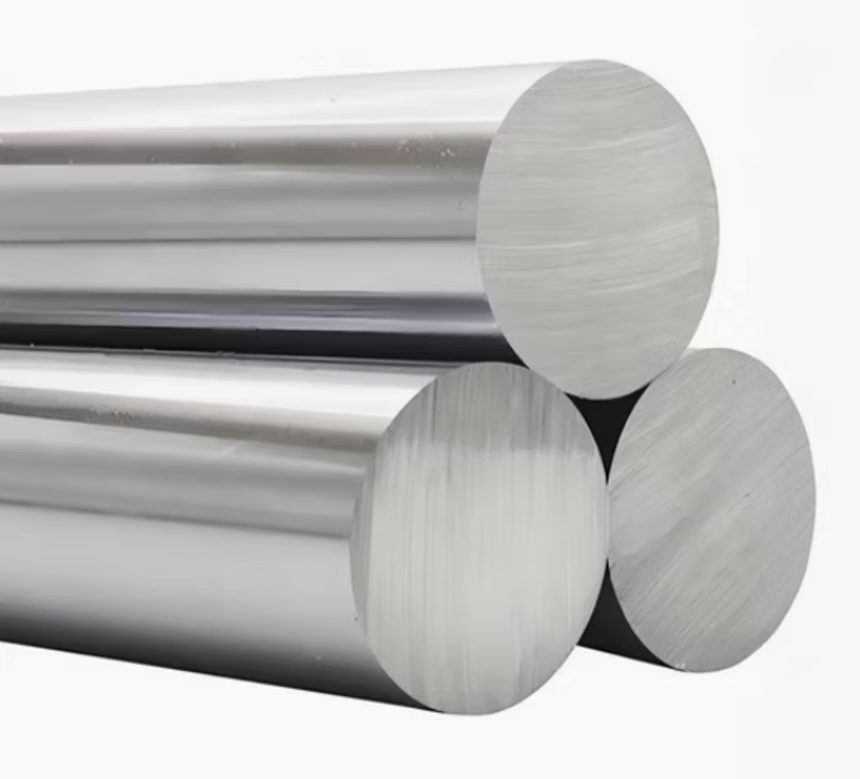
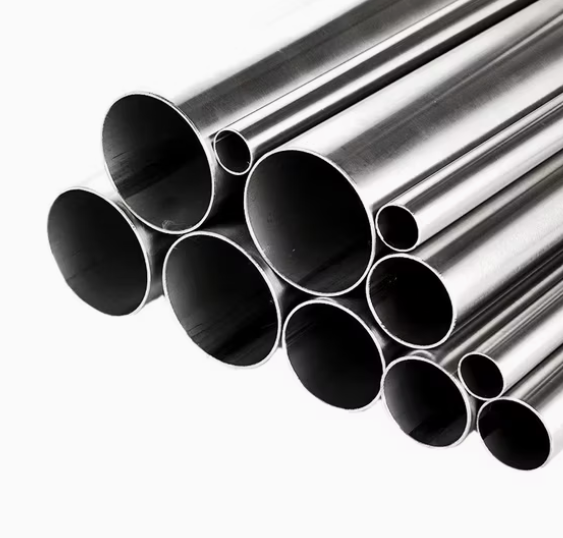
When procuring Monel alloys, referring to the correct industry standards is paramount. Monel 400 is covered by a comprehensive range of specifications, such as ASTM B164 for Monel 400 bars, rods, and wire, and ASTM B165 for Monel 400 seamless pipe and tube. These standards reflect its broad utility across various industrial applications requiring excellent corrosion resistance and mechanical properties. However, Monel R-405, primarily a free-machining grade, has a more limited set of applicable standards, mainly focusing on bar and wire forms for machining purposes (e.g., ASTM B164 for R-405 bars, rods, and wire explicitly notes the sulfur content for enhanced machinability). Buyers should verify with their design engineer that the chosen material's standard (and inherent properties) truly matches the intended application. We've observed that some customers, seeking machining cost savings, overlook the fact that R-405 is not listed in specifications for pressure vessels or certain highly corrosive environments where Monel 400 is typically mandated. This is not an oversight by the standards bodies; it is a deliberate reflection of R-405's trade-offs. The decision framework should always consider the end-use environment, the fabrication method (welded vs. purely machined components), and the desired service life. If a component needs to be welded, exposed to high temperatures, or operate in highly corrosive chemical processes where sulfur compounds could form, Monel 400 is the undisputed choice. If the part is purely machined, requires intricate features, and operates in conditions where the corrosion resistance of R-405 is sufficient, then the cost-return logic favors R-405. Our role, as a manufacturer with 15+ years of experience, is to provide these alloy solutions. We always guide our customers to verify material selection with their design engineers and application specialists to ensure long-term project success and prevent premature failures.
Common Questions We Hear About Monel Materials?
Are you still left with lingering questions about Monel 400's properties or its comparisons to other alloys? Many of our clients have similar inquiries when making their final material decisions.
We frequently address questions about Monel 400's magnetism, its corrosion resistance compared to stainless steel, and suitable welding consumables, providing clear answers crucial for informed selection.
Let's address some of the common questions we receive that help clarify the suitability of Monel materials for various projects.
Is Monel 400 Magnetic?
Monel 400 is generally considered non-magnetic. However, it can become slightly magnetic when subjected to cold working or severe deformation. This induced magnetism is usually very weak and not a concern for most applications. In our customer projects, we confirm this characteristic during final inspection, ensuring it meets specific requirements for non-magnetic components.
Monel 400 vs. 316L Stainless Steel: Which is More Corrosion Resistant?
Monel 400 is significantly more corrosion resistant than 316L stainless steel in many aggressive environments9. While 316L offers good general corrosion resistance, particularly to pitting and crevice corrosion in chloride environments, Monel 400 excels in specific, highly corrosive conditions where 316L would fail rapidly. For instance, Monel 400 has superior resistance to rapidly flowing seawater, hydrofluoric acid (HF acid) in all concentrations and temperatures, and sulfuric acid under various conditions10. 316L would typically suffer severe attack in these environments. However, 316L might perform adequately and be more cost-effective in less aggressive conditions, or where its specific benefits (e.g., in some oxidizing acids) are sufficient. We always advise customers to consider their specific application environment.
What Welding Rods Should I Use for Monel 400?
For welding Monel 400, the recommended filler metals are typically:
- AWS A5.14 ENiCu-7 (commonly known as Monel 190 welding electrode): This is suitable for shielded metal arc welding (SMAW).
- AWS A5.14 ERNiCu-7 (commonly known as Monel 60 filler wire): This is used for gas tungsten arc welding (GTAW/TIG) and gas metal arc welding (GMAW/MIG). These filler metals match the composition and properties of Monel 400, ensuring the weld joint has comparable corrosion resistance and mechanical strength to the base metal. Preheating is generally not required unless the material is very thick or the ambient temperature is extremely low (below 10°C). Post-weld heat treatment is usually not needed for Monel 400, but a stress relief at 538-566°C (1000-1050°F) for one hour can be beneficial in applications prone to stress corrosion cracking, according to ASTM standards.
Conclusion
Choosing between Monel 400 and R-405 is a trade-off: unmatched corrosion and high-temperature performance versus superior machinability. Align your material choice with specific application needs to ensure long-term success and cost-effectiveness.
"Monel", . ASTM B127 specifies the chemical composition of Monel 400 (UNS N04400), establishing the nickel and copper content ranges that define this nickel-copper alloy. Evidence role: definition; source type: government. Supports: the standard chemical composition ranges for Monel 400 alloy. ↩
Machinability of High Mn Steel Using Tool Life Criteria", . Manufacturing research on free-machining alloys demonstrates that controlled sulfur additions can significantly improve tool life and reduce cycle times, though specific improvements vary with machining parameters and part geometry. Evidence role: statistic; source type: research. Supports: the machining efficiency improvements achieved with free-machining alloy variants. Scope note: Actual improvements depend on specific machining conditions, tooling, and part complexity ↩
Behavior of High-Strength C71500 Copper-Nickel Alloy in ...", . Corrosion testing data from materials research institutions documents the low corrosion rates of nickel-copper alloys like Monel 400 in marine environments, supporting its use in seawater applications. Evidence role: statistic; source type: research. Supports: the corrosion rate of Monel 400 in seawater environments. Scope note: Corrosion rates vary with specific seawater conditions including temperature, velocity, and oxygen content ↩
"Metallurgical investigation into ductility dip cracking in nickel based ...", Welding metallurgy texts describe hot shortness as embrittlement at elevated temperatures caused by low-melting sulfide phases at grain boundaries, which is why high-sulfur free-machining grades are generally not recommended for welding. Evidence role: mechanism; source type: education. Supports: the metallurgical phenomenon of hot shortness caused by sulfur in alloys. ↩
" John C - NASA", . AWS A5.14 specifies nickel and nickel-alloy welding electrodes and rods, including ENiCu-7 classification for nickel-copper alloy filler metals suitable for welding Monel alloys. Evidence role: general_support; source type: government. Supports: the standard welding filler metal specifications for nickel-copper alloys. ↩
"Effects of Postweld Heat Treatment on Interfacial Behavior and ...", . ASTM specifications for nickel-copper alloys provide guidance on post-weld heat treatment parameters, including stress relief temperatures that can reduce residual stresses without significantly affecting material properties. Evidence role: general_support; source type: government. Supports: the heat treatment parameters for stress relief of nickel-copper alloys. Scope note: Specific parameters may vary based on component geometry and service requirements ↩
"Breakthrough copper alloy achieves unprecedented high ...", . High-temperature property data for nickel-copper alloys indicates that these materials maintain useful mechanical properties and oxidation resistance at moderate elevated temperatures, though specific limits depend on stress levels and exposure duration. Evidence role: general_support; source type: research. Supports: the elevated temperature performance characteristics of nickel-copper alloys. Scope note: Maximum service temperature varies with applied stress, environment, and required service life ↩
" Tungsten-nickel-copper ternary alloys for high-temperature ...", . Materials processing standards and technical data sheets for nickel-copper alloys specify hot working temperature ranges that maintain workability while avoiding grain growth or incipient melting. Evidence role: general_support; source type: government. Supports: the recommended hot working temperature ranges for nickel-copper alloys. Scope note: Optimal forging parameters depend on part geometry, reduction ratios, and desired final properties ↩
"A study on corrosion resistance of dissimilar welds between Monel ...", Corrosion engineering literature documents that nickel-copper alloys generally exhibit superior resistance to reducing acids and high-velocity seawater compared to austenitic stainless steels, though stainless steels may perform better in some oxidizing environments. Evidence role: general_support; source type: research. Supports: the relative corrosion resistance of nickel-copper alloys versus austenitic stainless steels. Scope note: Relative performance depends strongly on the specific corrosive medium, temperature, and flow conditions ↩
"Hydrofluoric Acid Corrosion Study of High-Alloy Materials - INFO", Chemical resistance data compiled by corrosion research organizations indicates that nickel-copper alloys exhibit excellent resistance to non-oxidizing acids including hydrofluoric acid and reducing conditions, as well as high-velocity seawater, making them suitable for demanding chemical process applications. Evidence role: general_support; source type: research. Supports: the corrosion resistance of nickel-copper alloys in specific chemical environments. Scope note: Corrosion resistance varies with specific acid concentrations, temperatures, aeration levels, and presence of oxidizing contaminants ↩