
What Heat Exchanger Manufacturers Should Check When Buying Titanium Tubes?
Are you tired of unexpected titanium tube failures causing downtime, rework, or project delays? Many heat exchanger manufacturers struggle to define the right material, testing, surface, and documentation requirements before purchasing.
When buying titanium tubes for heat exchangers, manufacturers should look beyond basic size and grade. The tube material should be matched with the real service conditions, including tube-side and shell-side fluids, temperature, pressure, pH, corrosion risk, flow condition, and required inspection. Shell-and-tube heat exchanger material selection depends on compatibility with both fluids under operating temperature, pressure, pH, and corrosion conditions.
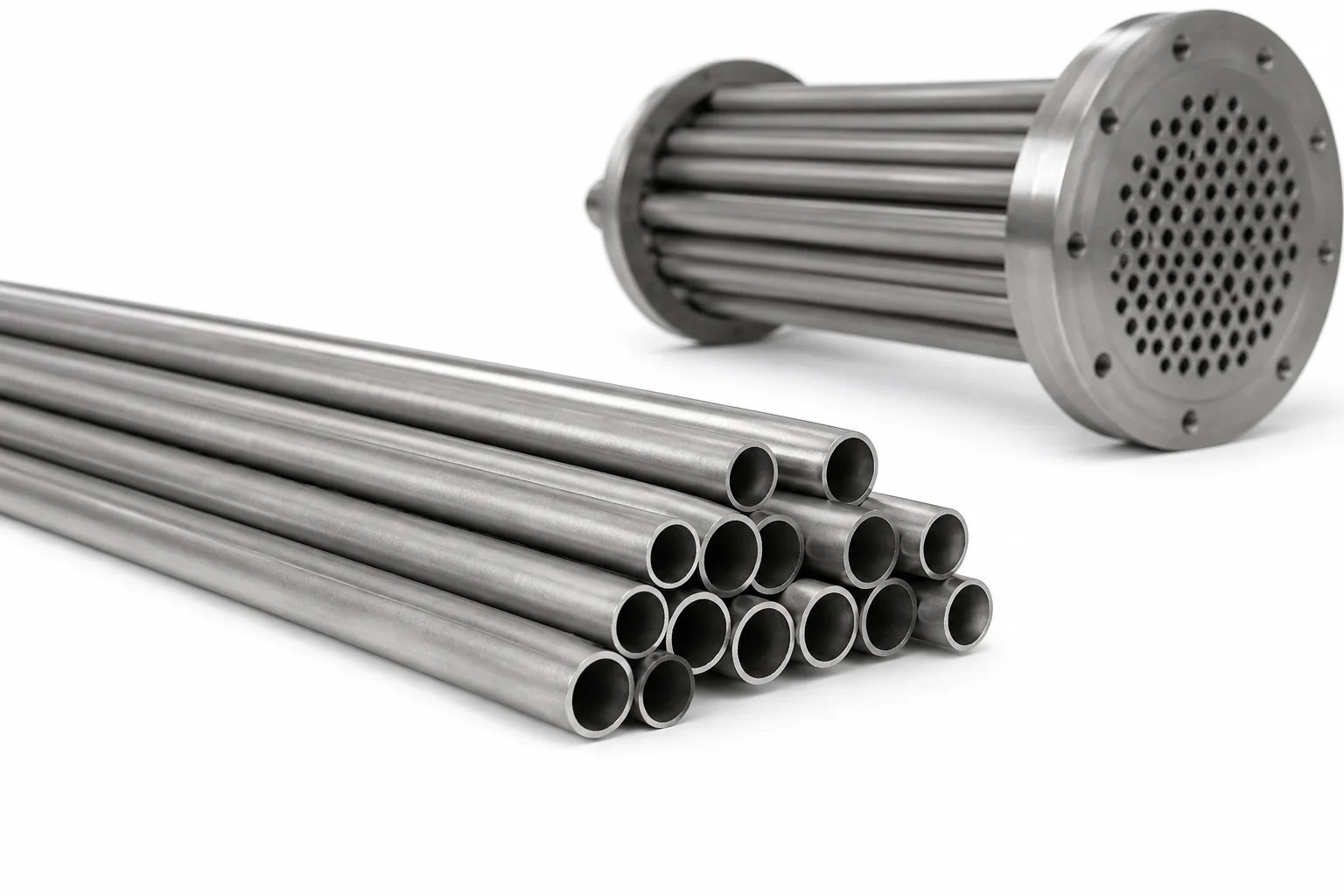
From my experience helping heat exchanger manufacturers, the real secret to success is not simply finding the cheapest option or the fastest delivery. It is understanding what makes a titanium tube reliable for its specific job. A good purchase decision should connect the application, titanium grade, manufacturing quality, inspection method, documentation, and supplier support.
How Do Application Conditions Impact Titanium Tube Selection?
Are you risking premature tube failure because your specifications do not match the real working conditions? Many buyers overlook this link, which can lead to corrosion problems, fouling, leakage, or reduced heat transfer efficiency.
Choosing the right titanium tube means aligning the material grade and product condition with the operating environment of the heat exchanger. Important factors include fluid composition, chloride level, acid type, temperature, pressure, flow velocity, fouling tendency, and whether the tube will be used in seawater, chemical processing, power generation, or another demanding application.
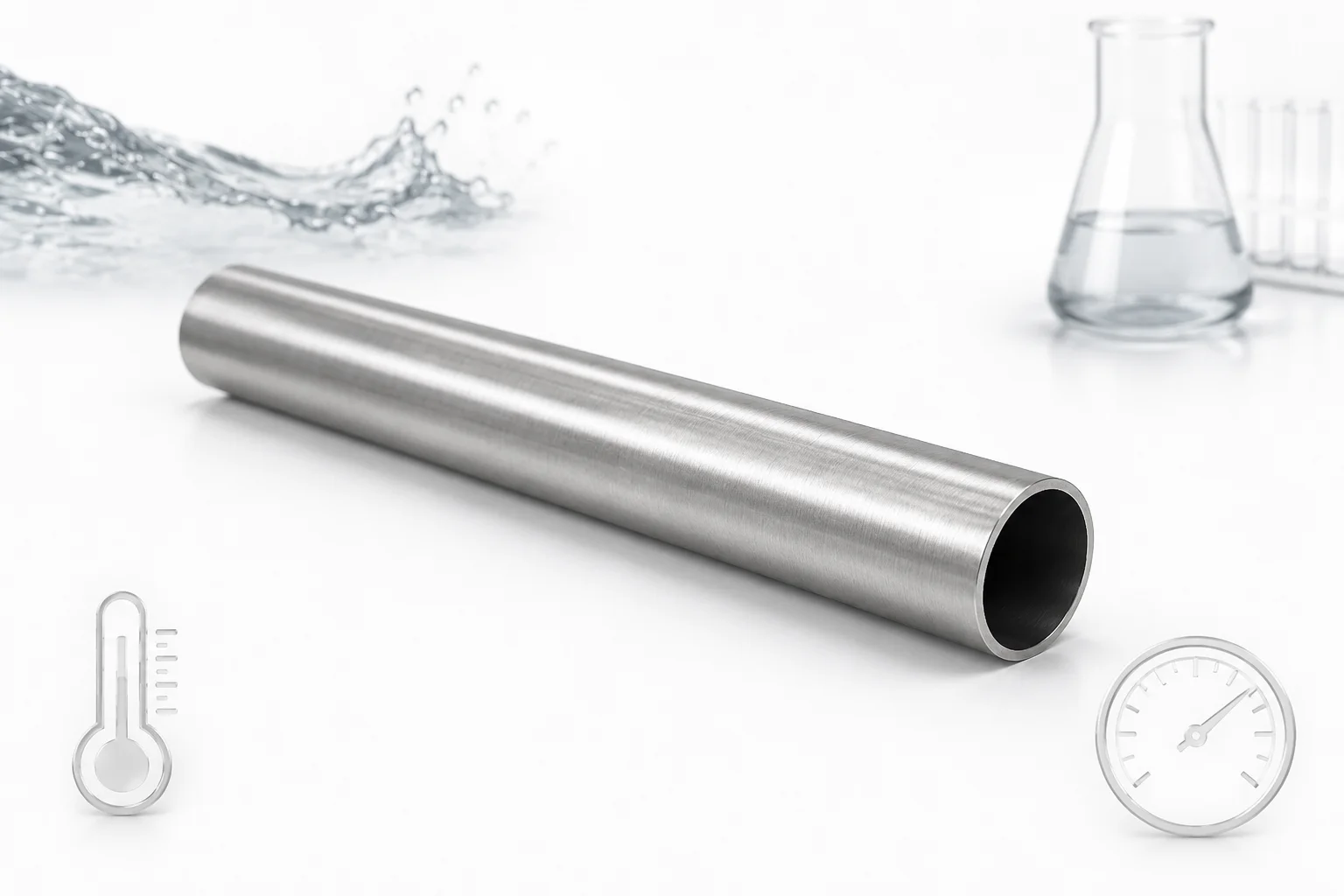
I have often seen manufacturers focus on a generic titanium grade without fully considering application context. For example, a tube suitable for clean seawater cooling may not be suitable for a more aggressive chemical process. When I talk with customers, we start by breaking down the application:
- What fluids will be inside and outside the tubes?
- What are the maximum and minimum operating temperatures?
- What are the design and operating pressures?
- Is there a risk of erosion from high velocity or abrasive particles?
- Are chlorides, acids, or other aggressive chemicals present?
- Is fouling, scaling, or contamination a concern?
Sometimes, a customer initially asks for Grade 2 titanium. After discussing the actual chemical environment, it may become necessary to review other grades such as Grade 7 or Grade 12. This is not about choosing a more expensive tube automatically. It is about preventing a much more expensive failure later.
Key Application Considerations
- Fluid Composition: Confirm chemicals, pH, chloride level, concentration, dissolved oxygen, and possible contaminants.
- Temperature Range: Confirm both normal operation and start-up/shutdown temperature changes.
- Pressure Dynamics: Confirm static pressure, pressure cycling, and possible tube-side/shell-side pressure differences.
- Erosion Potential: Confirm flow velocity, suspended particles, and abrasive media.
- Fouling Risk: Confirm whether the fluid may deposit scale, biological growth, or process residue on tube surfaces.
Material Grade Selection Guide
| Application Environment | Common Titanium Grade to Review | Main Reason |
|---|---|---|
| General industrial service, seawater cooling | Grade 2 | Commercially pure titanium with good corrosion resistance and formability |
| More severe crevice corrosion conditions | Grade 7 | Contains palladium; Grade 7 is similar to Grade 2 but has enhanced crevice corrosion resistance |
| Certain chemical or higher-strength service conditions | Grade 12 | Contains molybdenum and nickel; Grade 12 contains 0.3% molybdenum and 0.8% nickel |
| Aerospace or high-strength structural parts | Grade 5 / Ti-6Al-4V | Ti-6Al-4V offers high specific strength and is widely used where low density and corrosion resistance are needed |
This table is only a starting point. Final grade selection should be confirmed by application environment, project standard, design pressure, fabrication method, and buyer requirements.
What Supplier Qualities Support Titanium Tube Performance?
Are you unknowingly partnering with suppliers whose production process may compromise your heat exchanger quality? Hidden manufacturing risks often appear later as leakage, inconsistent dimensions, poor surface quality, or documentation disputes.
A reliable titanium tube supplier should demonstrate controlled manufacturing processes, quality management, inspection capability, traceability, and clear technical communication. These factors do not “guarantee” performance by themselves, but they strongly support consistency, compliance, and long-term reliability.
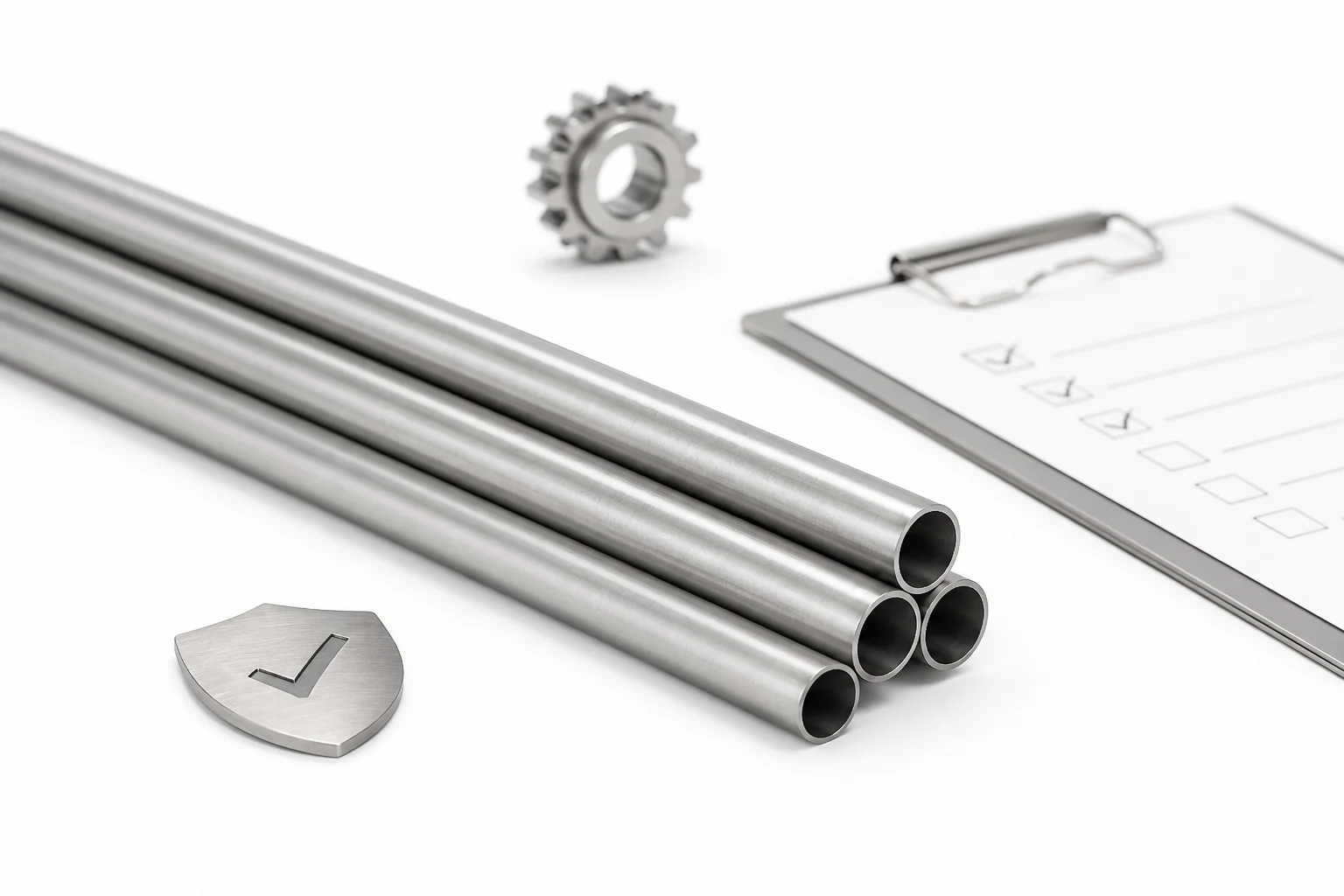
When I speak with engineers and purchasing managers, they often focus on price and delivery time. These are important, but supplier process control and quality management are just as important for heat exchanger tubes.
Buyers should ask how the supplier controls raw material sourcing, tube forming, annealing, pickling, straightening, cutting, testing, and packaging. The process matters because titanium tube performance is not only determined by grade name. It is also affected by dimensional control, surface condition, weld quality if welded tube is used, heat treatment condition, cleanliness, and inspection.
ISO 9001 is a quality management system standard. It supports structured process control and continual improvement, but it does not certify each individual tube. Therefore, buyers should combine supplier quality system review with product-level inspection records.
For heat exchanger and pressure equipment projects in the European market, the Pressure Equipment Directive 2014/68/EU may also be relevant depending on the equipment design, pressure, fluid, and conformity assessment category.
Critical Supplier Evaluation Points
- Raw Material Sourcing: Can the supplier provide heat numbers, raw material certificates, and MTCs?
- Manufacturing Process Controls: How are drawing, annealing, pickling, straightening, and surface finishing controlled?
- Quality Inspection Regimen: What NDT methods and destructive tests are performed?
- Traceability System: Can each tube be traced from raw material to finished product and shipment?
- Standards and Documentation: Can the supplier provide documents according to the required ASTM, ASME, EN, ISO, PED, or project-specific requirements?
Supplier Quality Checklist
| Aspect | Check Points | Why It Matters |
|---|---|---|
| Certifications | ISO 9001, PED-related documentation where applicable, ASTM/ASME compliance | Supports process control and project compliance |
| Production Control | Process documentation, annealing records, dimensional control, surface treatment records | Helps ensure tube consistency |
| Testing Facilities | Chemical analysis, tensile test, flaring, flattening, eddy current testing, ultrasonic testing, hydrostatic testing | Verifies properties and detects defects |
| Material Traceability | Heat numbers, batch records, MTCs, inspection reports | Essential for quality investigation and accountability |
Which Overlooked Factors Determine Titanium Tube Reliability?
Are subtle details sabotaging your heat exchanger’s long-term reliability? Many critical factors go unnoticed until there is a leakage problem, fouling issue, installation difficulty, or quality complaint.
Beyond material grade and basic dimensions, titanium tube reliability may depend on surface finish, weld integrity, dimensional tolerances, straightness, cleanliness, and supplier experience in heat exchanger applications. These factors affect fouling risk, heat transfer, assembly, inspection, and long-term service performance.
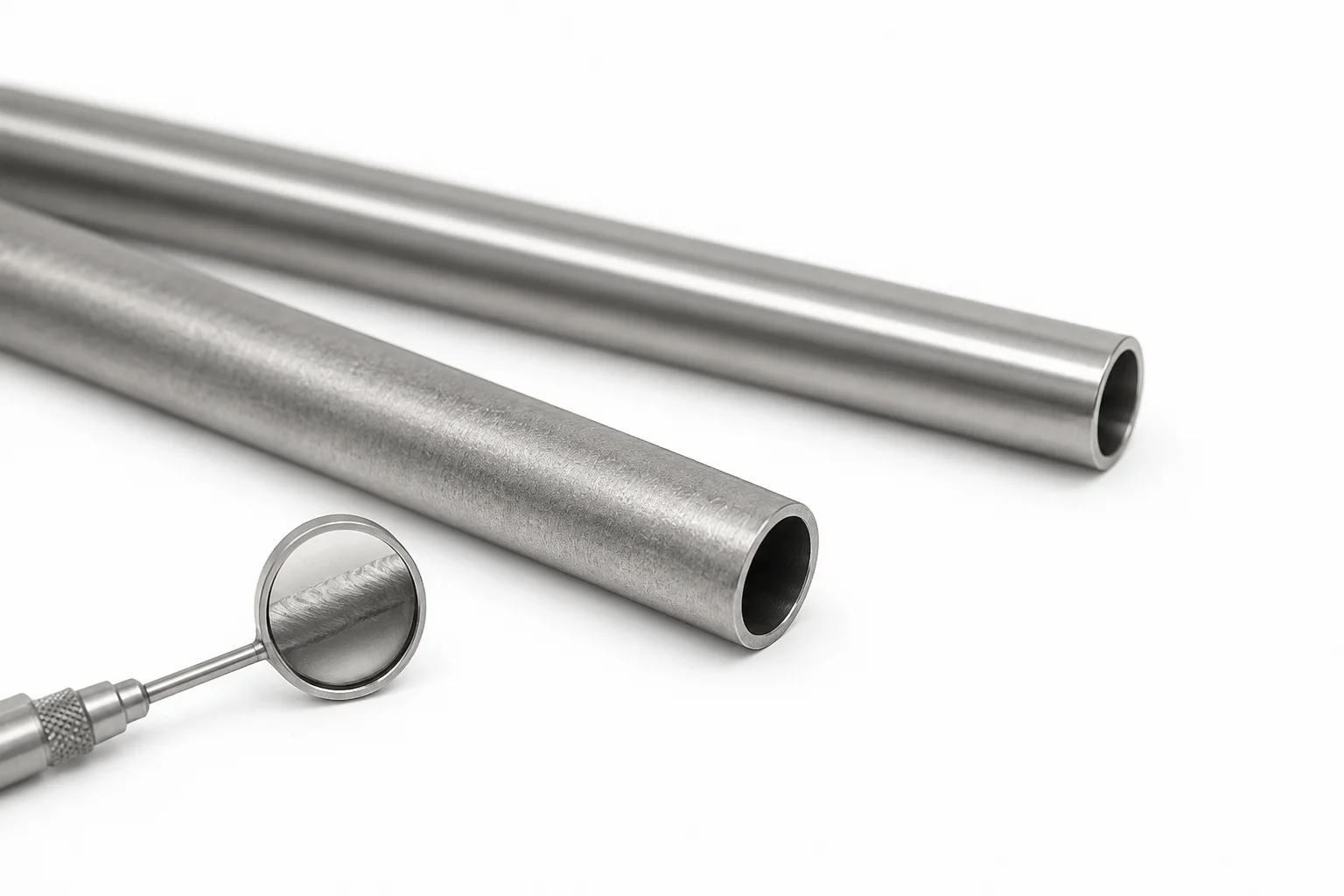
A buyer may specify the correct titanium grade and dimensions, but still overlook details that affect performance. Surface condition is one example. Fouling layers can reduce heat exchanger efficiency. Scraped-surface heat exchanger references describe fouling layers as a problem that can impede efficient heat transfer, and roughness/flow conditions can affect heat transfer behavior. Surface condition should therefore be considered as part of heat exchanger tube quality.
For welded titanium tubes, weld integrity is also critical. Poor welds may become locations for leakage, corrosion initiation, or mechanical weakness. Non-destructive testing helps reduce this risk. Eddy-current testing is used in NDT to detect and characterize surface and sub-surface flaws in conductive materials, and conventional ECT is used for heat exchanger tubing inspection in power and petrochemical industries.
Hydrostatic pressure testing is another important method. A hydrostatic test is used to test pressure vessels, pipelines, plumbing, boilers, and related systems for strength and leaks.
Key Overlooked Factors
- Surface Finish: Influences fouling, cleanability, corrosion behavior, and flow resistance.
- Weld Integrity: Important for welded tubes because weld defects may affect strength and leakage resistance.
- Dimensional Tolerances and Straightness: Out-of-tolerance tubes can create assembly problems, tube sheet issues, and stress concentration.
- Cleanliness: Residual lubricant, scale, particles, or contamination may affect corrosion behavior or product purity.
- Supplier Application Experience: A supplier familiar with heat exchanger applications can better understand tube sheet expansion, NDT expectations, packing, cleanliness, and documentation needs.
Impact of Overlooked Factors
| Factor | Potential Consequence | Mitigation Strategy |
|---|---|---|
| Rough Surface | Fouling, cleaning difficulty, reduced heat transfer, possible localized corrosion risk | Specify surface finish and Ra value where needed |
| Poor Weld | Leakage, local weakness, corrosion initiation | Require weld inspection, ECT/UT where applicable, and pressure testing |
| Dimensional Errors | Installation difficulty, tube sheet problems, stress points | Confirm OD, WT, length, straightness, tolerance, and inspection method |
| Contamination | Process contamination or corrosion risk | Require cleaning, pickling/passivation where applicable, and protective packaging |
| Weak Documentation | Quality disputes and difficult root-cause analysis | Require MTC, heat number traceability, inspection reports, and packing records |
What Questions Should You Ask a Titanium Tube Supplier?
Are you leaving critical information unasked? Many procurement discussions miss the questions that prevent future quality problems.
Before buying titanium tubes for heat exchangers, ask the supplier about manufacturing process, quality control, testing, traceability, standards, packaging, lead time, and after-sales support. A complete RFQ should make quality requirements clear before production begins.
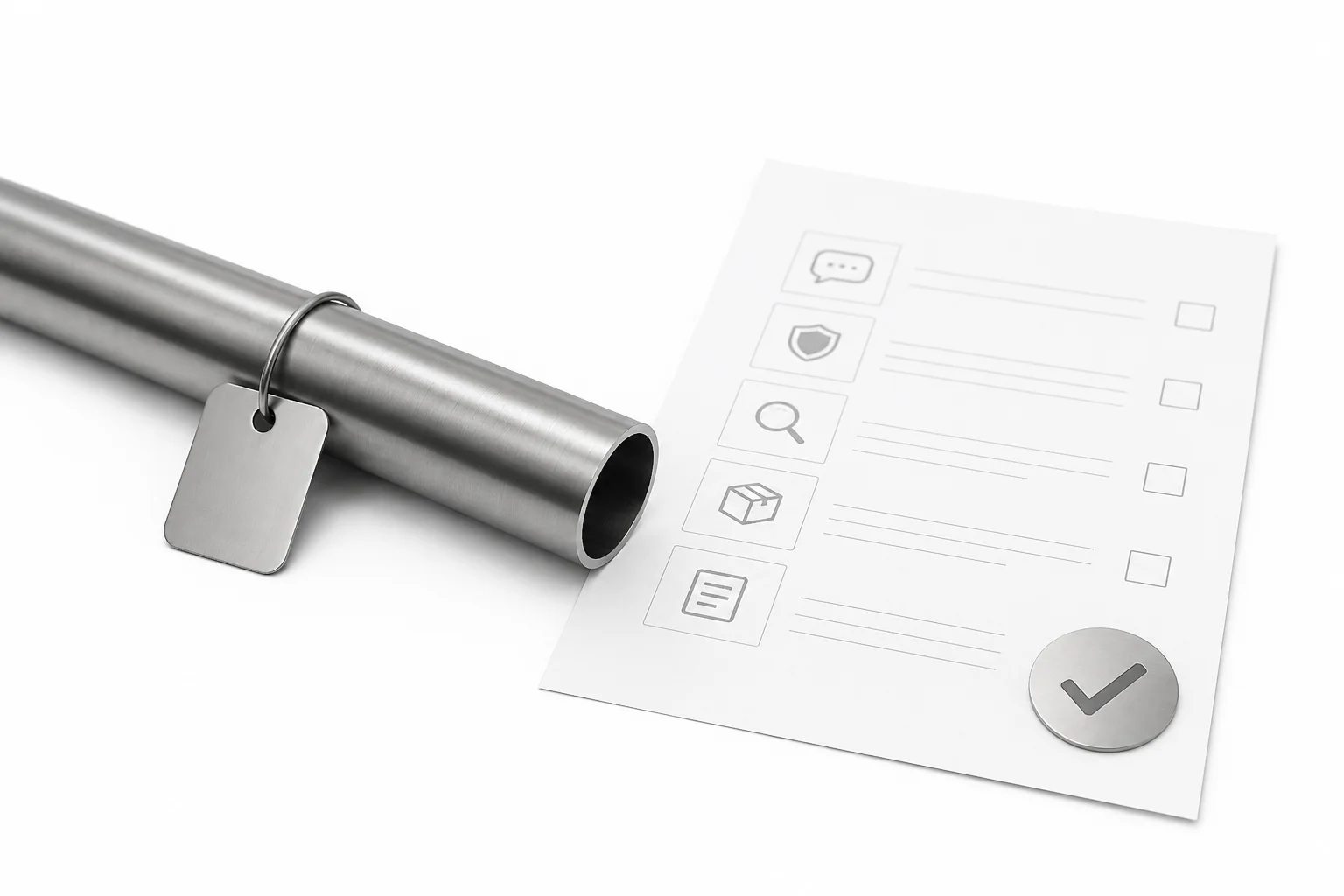
In my experience, the best way to reduce purchasing risk is to ask precise questions early. Do not only ask for price. Ask how the tube will be produced, tested, documented, packed, and supported after delivery.
For example, do not only ask whether the material is “Grade 2.” Ask which ASTM or ASME standard applies, whether the tube is seamless or welded, what condition it will be supplied in, and whether the supplier can provide Material Test Certificates.
A Mill Test Report or Material Test Certificate certifies a metal product’s chemical and physical properties and states compliance with applicable standards. A heat number helps link the delivered product to its production batch and supports traceability.
Key Questions for Suppliers
- Manufacturing Process: “Can you describe the production route, including drawing, annealing, straightening, pickling, and surface finishing?”
- Quality Control and Testing: “What NDT and destructive tests do you perform, and can you provide reports?”
- Material Traceability: “How do you connect each tube to its heat number, raw material certificate, and final MTC?”
- Standards and Certifications: “Which ASTM, ASME, EN, ISO, PED, or project-specific requirements can you support?”
- Packaging and Shipping: “How do you prevent dents, scratches, contamination, moisture damage, and deformation during transport?”
- Non-Conforming Material Control: “What is your procedure if a tube fails inspection or does not meet specification?”
- Heat Exchanger Experience: “Have you supplied titanium tubes for condensers, evaporators, seawater coolers, or shell-and-tube heat exchangers?”
- Post-Sales Support: “What technical support is available if there is a quality question after delivery?”
Supplier Discussion Points
| Category | Specific Questions | Expected Information |
|---|---|---|
| Technical and Production | “How do you control wall thickness uniformity and straightness?” | Drawing process, mandrel control, annealing, straightening, inspection |
| Quality Assurance | “What are your inspection hold points?” | Incoming material check, in-process check, final inspection |
| Testing | “Do you perform ECT, UT, hydrostatic test, tensile test, flaring, or flattening?” | Test scope, standard, acceptance criteria, reports |
| Compliance | “Do your MTCs explicitly state compliance with requested standards?” | Sample MTC, heat number, chemical/mechanical results |
| Logistics | “How are tubes packed for long-distance export?” | Wooden cases, waterproof protection, caps, separators, bundle control |
| Risk Management | “What happens if quality or delivery issues occur?” | Corrective action process, replacement policy, communication process |
Conclusion
Making informed decisions about titanium tubes requires going beyond basic specifications. Heat exchanger manufacturers should review application conditions, titanium grade, manufacturing process, surface finish, weld quality, dimensional tolerance, testing, documentation, packaging, and supplier support.
The safest purchase is not always the cheapest or fastest one. It is the one that matches the real heat exchanger environment and provides verifiable evidence of quality.
At Emily PIPE, we help customers select and source titanium alloy tubes, titanium alloy bars, nickel alloy tubes, and nickel alloy bars according to application environment, drawings, standards, inspection requirements, and delivery needs.