
Tolerance Control for Nickel and Titanium Alloy Parts: What Buyers Should Confirm Before Ordering
Are unexpected machining costs, rework or assembly problems affecting your alloy part projects? For nickel alloy tubes, nickel alloy bars, titanium alloy tubes and titanium alloy bars, tolerance control is not only a drawing detail. It can directly affect machining allowance, assembly fit, inspection acceptance, delivery schedule and long-term reliability.
Poor tolerance control may lead to scrap, rework, extra machining, assembly mismatch, inspection rejection, vibration, abnormal wear or reliability risk. Engineering tolerance refers to the permissible limit of variation in a dimension, measured value or material property. Geometric dimensioning and tolerancing helps define allowable variation in size, form, orientation and location so that a component can meet its intended function.
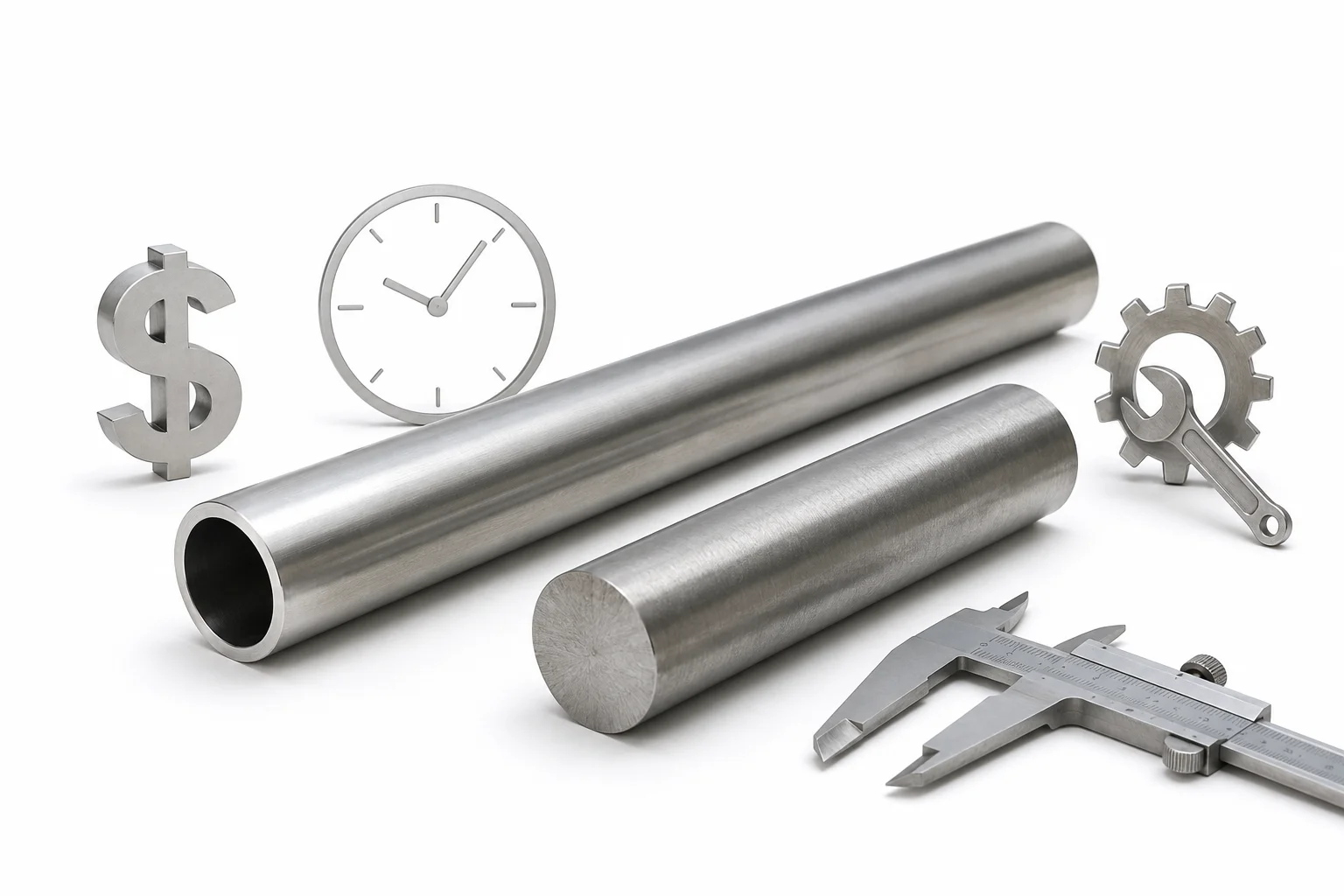
For industrial buyers, tolerance control should be discussed before placing an order, not only after machining or assembly problems appear. A material may have the correct alloy grade, standard and certificate, but if OD, wall thickness, diameter, straightness, length, roundness or surface condition does not match the application, the project may still face avoidable cost and risk.
This article explains how tolerance control affects alloy material cost, machining, assembly and reliability, and what buyers should confirm when sourcing nickel and titanium alloy materials.
Quick Answer: Why Does Tolerance Control Matter?
Tolerance control matters because alloy materials often go through further cutting, machining, welding, assembly, inspection or pressure service. Dimensional variation can affect whether the material can be processed efficiently and whether the final part fits its application.
| Tolerance Issue | Possible Project Impact | Buyer Should Check |
|---|---|---|
| Diameter Variation | Extra machining, poor shaft fit, vibration or rejection | Bar diameter tolerance and roundness |
| OD / WT Variation | Tube fit-up issues, pressure design concerns, extra inspection | Tube OD, wall thickness and ovality |
| ID Variation | Flow, boring, sleeve fit or inner-surface machining issues | Inside diameter requirement if critical |
| Length Variation | Extra cutting, assembly mismatch or wasted material | Fixed length or cut-to-length tolerance |
| Straightness Problem | Difficult CNC turning, bending, alignment or assembly | Straightness tolerance |
| Ovality / Out-of-Roundness | Poor sealing, poor tube expansion or assembly difficulty | Ovality and roundness requirement |
| Surface Defects | Extra polishing, stress concentration or corrosion initiation risk | Surface finish and visual inspection |
| Insufficient Machining Allowance | Final part may be undersized after machining | Extra stock for turning, boring or grinding |
| Overly Tight Tolerance | Higher cost and longer lead time without functional benefit | Critical-to-function review |
| Unclear Drawing Requirement | Supplier quotes wrong production or inspection scope | Drawing, standard and inspection method |
The goal is not always to request the tightest tolerance. The goal is to request the right tolerance for the function.
How Does Poor Tolerance Control Increase Project Costs?
Poor tolerance control can increase cost through scrap, rework, extra machining, inspection, delay and emergency replacement.
Cost should not be measured only by the raw material price. Poor dimensional control can create internal failure costs such as scrap and rework, as well as indirect costs such as extra inspection, urgent logistics, customer complaints and schedule delay. Cost of poor quality includes costs that would disappear if systems, processes and products were perfect, while quality costs commonly classify scrap, rework, inspection, testing and customer complaints as quality-related cost elements.
Direct Cost Impact
| Cost Area | How Poor Tolerance Creates Cost |
|---|---|
| Raw Material Waste | Oversized or undersized material may be unusable for final dimensions |
| Extra Machining Time | Operators may need additional setup, extra passes or reprogramming |
| Tool Wear | Hard nickel or titanium alloys may increase tooling cost when extra passes are needed |
| Inspection Time | More dimensional checks may be required to separate usable and non-usable pieces |
| Rework | Parts may need additional turning, grinding, straightening, polishing or facing |
| Scrap | Material outside tolerance may not be recoverable |
| Emergency Reorder | Replacement material may require expedited production or shipping |
Indirect Cost Impact
| Cost Area | Possible Result |
|---|---|
| Schedule Delay | Assembly or machining cannot continue as planned |
| Machine Downtime | Operators wait for replacement material or engineering decision |
| Supply Chain Disruption | Urgent reorder, split shipment or supplier dispute |
| Project Management Load | More communication, inspection review and nonconformance handling |
| Customer Trust | Repeated dimensional problems may reduce confidence |
| Warranty / Return Risk | Parts that pass initial inspection but perform poorly may create later claims |
A lower material price may not be cost-effective if it creates extra machining, rejection or delay. Buyers should evaluate total cost impact, not only unit price.
What Tolerances Matter Most for Nickel and Titanium Alloy Tubes?
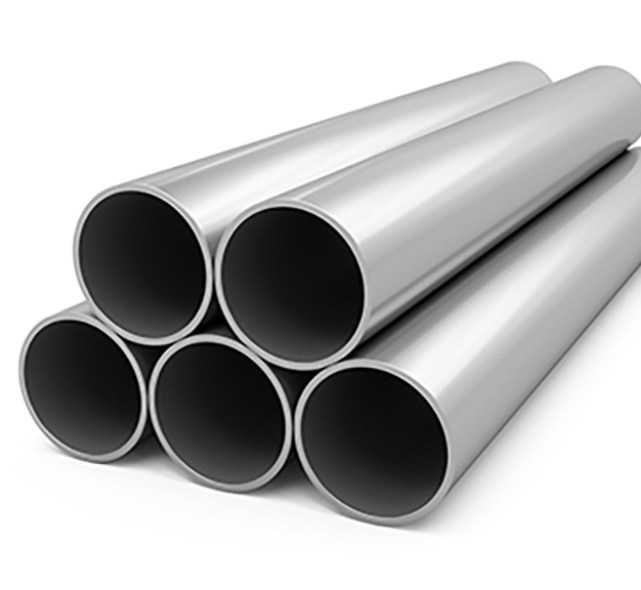
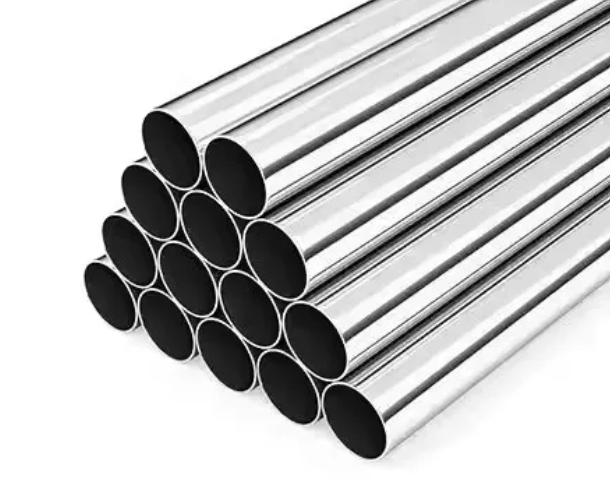
For alloy tubes, tolerance control is closely connected with fit-up, pressure design, flow, tube sheet assembly, welding, machining allowance and inspection acceptance.
Tube Tolerance Checklist
| Tube Tolerance Item | Why It Matters | Buyer Should Confirm |
|---|---|---|
| Outside Diameter (OD) | Affects tube sheet fit, coupling, expansion, sealing and assembly | OD nominal size and tolerance |
| Wall Thickness (WT) | Affects pressure capacity, weight and machining allowance | Average wall, minimum wall or exact wall requirement |
| Inside Diameter (ID) | Important for flow, boring, sleeve fit or internal cleaning | ID tolerance if critical |
| Ovality | Affects roundness, sealing, expansion and assembly | Maximum ovality if required |
| Straightness | Important for long tubes, insertion and alignment | Straightness tolerance |
| Length | Affects cutting waste, installation and assembly | Random length, fixed length or cut-to-length tolerance |
| End Condition | Burrs, deformation or poor cut ends may affect welding or assembly | As-cut, deburred, chamfered, faced or capped |
| Surface Finish | Affects corrosion behavior, cleanliness, sealing and appearance | Pickled, polished, bright annealed or cleaned surface |
| Dimensional Report | Confirms actual supplied size | Report required or not required |
| Marking and Traceability | Connects tube to MTC and heat number | Grade, heat number, size and bundle label |
For nickel alloy seamless pipe and tube such as UNS N06625, ASTM B444 covers specified nickel alloy pipe and tube products and includes chemical, tensile, hydrostatic and nondestructive electric testing. However, buyers should still state exact dimensional tolerance, length, surface and inspection requirements in the purchase order when they are critical.
What Tolerances Matter Most for Nickel and Titanium Alloy Bars?
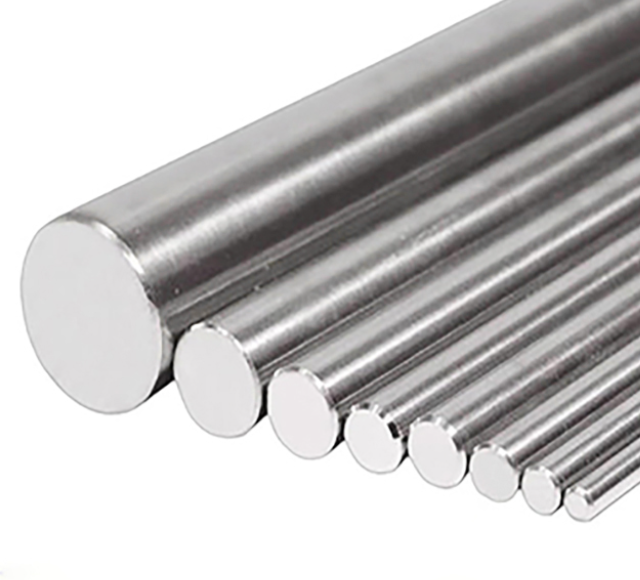
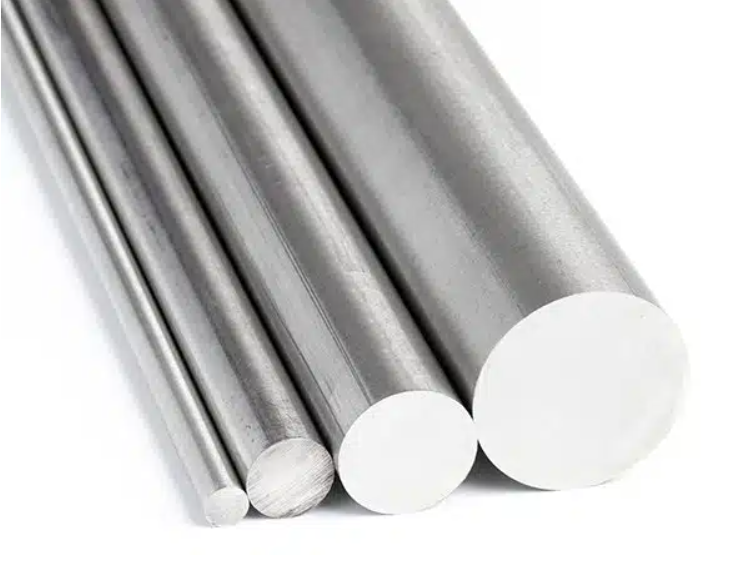
For alloy bars, tolerance control is closely connected with CNC turning, grinding, shaft machining, straightness, roundness, final part size and machining allowance.
Bar Tolerance Checklist
| Bar Tolerance Item | Why It Matters | Buyer Should Confirm |
|---|---|---|
| Diameter Tolerance | Affects turning allowance, shaft fit and machining cost | Nominal diameter and tolerance |
| Roundness | Important for precision machining and rotating parts | Roundness requirement if critical |
| Straightness | Important for shafts, long bars and CNC turning | Straightness tolerance |
| Length Tolerance | Affects cut-to-length blanks and material yield | Random length, fixed length or cut blank length |
| Surface Condition | Black, peeled, ground or polished surface affects first machining pass | Required surface condition |
| Hardness / Condition | Affects machining behavior and final performance | Annealed, solution treated, aged, cold worked or stress relieved |
| Machining Allowance | Prevents undersized final parts | Extra stock for turning, facing, grinding or boring |
| End Condition | Affects chucking, facing and further processing | Saw cut, deburred, chamfered or faced |
| Dimensional Inspection Report | Supports receiving inspection | Report required or not required |
| Heat Number Marking | Supports traceability | Heat number on material, label and packing list |
For nickel alloy rods, bars, forgings and forging stock for moderate or high-temperature service, ASTM B637 covers chemical analysis, heat treatment, tension testing, hardness testing and stress-rupture testing requirements. For titanium and titanium alloy bars and billets, ASTM B348/B348M covers chemical composition and tensile property requirements. Dimensional tolerance requirements should still be clearly specified according to the drawing, order or applicable standard.
How Can Poor Tolerance Affect Long-Term Performance?
Poor tolerance control does not always cause immediate rejection. Sometimes it creates hidden reliability risks.
In critical assemblies, dimensional mismatch may affect clearance, interference, alignment, sealing, load transfer and vibration. These issues can increase wear, local stress or fatigue risk when the dimension is critical to function.
Reliability Risks from Dimensional Problems
| Tolerance Problem | Possible Reliability Impact |
|---|---|
| Excessive Clearance | Vibration, play, noise, wear or leakage |
| Too Tight Interference | Assembly stress, deformation, cracking risk or difficult installation |
| Poor Concentricity | Runout, imbalance, vibration and bearing wear |
| Poor Straightness | Misalignment, bending load and machining difficulty |
| Poor Roundness | Uneven contact, sealing issues and machining variation |
| Wall Thickness Variation | Uneven stress, pressure concern or inconsistent machining allowance |
| Surface Scratches / Notches | Local stress concentration or corrosion initiation risk |
| Poor End Condition | Welding or assembly difficulty |
| Wrong Machining Allowance | Final part cannot meet drawing requirement |
A stress concentration is a location where local stress is greater than surrounding stress. Stress concentration can occur around holes, grooves, notches, fillets, nicks or scratches. In fatigue-sensitive parts, these areas may become crack initiation points under repeated loading.
This does not mean every dimensional deviation causes failure. It means buyers should identify which dimensions are critical to function and control those dimensions carefully.
How Do You Connect Technical Tolerances to Real Application Needs?
A tolerance value on a drawing is only meaningful when connected to the part’s function.
Buyers should connect tolerance requirements to end-use function, mating parts, assembly method, sealing requirement, load path, temperature, corrosion environment and inspection method. Not every dimension needs a very tight tolerance, but critical dimensions must be clearly defined.
Critical-to-Function Tolerance Review
| Application Question | Why It Matters |
|---|---|
| Does the part rotate? | Diameter, roundness, concentricity and straightness may be critical |
| Does it seal? | OD, surface finish, roundness and end condition may matter |
| Does it fit into another component? | Clearance or interference fit must be controlled |
| Does it carry pressure? | Wall thickness, OD, defects and test scope may matter |
| Does it face cyclic load? | Surface condition, stress concentration and dimensional transitions matter |
| Will it be welded? | End condition, bevel, OD, wall and cleanliness may matter |
| Will it be machined further? | Machining allowance, diameter, straightness and hardness matter |
| Will it be used in corrosive media? | Surface damage, crevices and roughness may matter |
| Is it for medical or aerospace use? | Traceability, inspection and surface integrity may be stricter |
| Is cost a major concern? | Avoid over-tolerancing non-critical dimensions |
Right Tolerance vs Over-Tolerance
| Situation | Better Decision |
|---|---|
| Every dimension is specified too tightly | Cost and lead time may increase without functional benefit |
| Critical dimensions are not controlled | Assembly or reliability risk may increase |
| Drawing lacks tolerance blocks | Supplier may interpret requirements differently |
| Tolerance is copied from an old project | It may not match the new application |
| Material is ordered before final machining allowance is checked | Final parts may become undersized |
| No inspection method is defined | Measurement disputes may occur |
ASME Y14.5 is a widely used engineering standard for stating and interpreting geometric dimensioning and tolerancing. GD&T helps define dimensional requirements and verify parts through dimensional measurement, gauging or coordinate-measuring machines.
What Should Buyers Check Before Ordering Alloy Materials for Machining?
For nickel and titanium alloy materials, tolerance should be discussed before order confirmation.
Material Ordering Checklist
| Item | What to Confirm |
|---|---|
| Alloy Grade | Inconel 625, Inconel 718, Hastelloy C276, Titanium Grade 2, Titanium Grade 5 |
| UNS Number | N06625, N07718, N10276, R50400, R56400 |
| Product Form | Tube, pipe, round bar, rod, billet, cut blank |
| Standard | ASTM, ASME, EN, ISO, AMS or customer specification |
| Nominal Size | OD, WT, ID, diameter, length |
| Tolerance Requirement | OD tolerance, WT tolerance, diameter tolerance, length tolerance |
| Straightness | Required straightness value for long bars or tubes |
| Ovality / Roundness | Required when roundness affects fit or sealing |
| Surface Condition | Black, pickled, peeled, ground, polished, bright annealed |
| Machining Allowance | Extra stock for turning, boring, facing or grinding |
| End Condition | As-cut, deburred, chamfered, faced, capped |
| Hardness / Condition | Annealed, solution annealed, aged, stress relieved, cold worked |
| Dimensional Report | Required or not required |
| MTR/MTC | Required for chemistry and mechanical properties |
| Heat Number Marking | Required for traceability |
| Packaging | Anti-scratch packing, separate heats, end protection |
| Inspection Method | Caliper, micrometer, gauge, CMM, UT, PMI, visual inspection |
A complete tolerance requirement helps suppliers quote the correct production and inspection scope.
Can an MTC Prove Tolerance Control?
An MTC is important, but it should not be used as the only proof of dimensional tolerance.
A Mill Test Report or Material Test Certificate mainly supports material identity, chemical composition, mechanical properties and standard compliance. Dimensional tolerance should be verified by a dimensional inspection report, drawing review or receiving inspection.
MTC vs Dimensional Inspection Report
| Document | What It Usually Supports | What It May Not Fully Prove |
|---|---|---|
| MTR / MTC | Chemical composition, mechanical properties, heat number, standard compliance | Actual OD, WT, diameter, straightness or length tolerance unless included |
| Dimensional Inspection Report | Actual measured size and tolerance results | Chemical composition or mechanical properties |
| Heat Number Record | Traceability between material and certificate | Dimensional accuracy by itself |
| Surface Inspection Report | Surface defects, finish and visual acceptance | Chemical composition |
| PMI Report | Alloy identity verification | Mechanical properties or tolerance |
| Packing List | Quantity, size, heat number distribution and shipment details | Full inspection compliance |
| Product Marking Photos | Confirms grade, heat number and size marking before shipment | Actual measured dimensions |
A Mill Test Report or Material Test Certificate certifies a metal product’s chemical and physical properties and states compliance with applicable standards. A heat number links a metal product to a specific heat or batch, supporting traceability to composition, manufacturing process and quality records.
How Should Buyers Evaluate Supplier Capability for Tolerance Control?
Choosing a supplier should not be based only on price. Buyers should evaluate whether the supplier can control the dimensions that matter to the application.
A capable supplier should be able to discuss tolerance, inspection method, material condition, heat number traceability, dimensional reports and past experience with similar alloy tubes or bars. Quality system certification can support process management, but it does not replace actual inspection evidence.
Supplier Evaluation Checklist
| Evaluation Area | What Buyers Should Ask |
|---|---|
| Relevant Product Experience | Have you supplied this alloy and product form before? |
| Tolerance Capability | What OD, WT, diameter, straightness and length tolerance can you hold? |
| Inspection Equipment | What tools are used: micrometer, caliper, gauge, CMM or other equipment? |
| Calibration Control | Are measuring tools calibrated and recorded? |
| In-Process Inspection | Do you inspect during production or only after completion? |
| Final Inspection Report | Can you provide a dimensional inspection report? |
| MTR/MTC | Can you provide batch-level chemical and mechanical data? |
| Heat Number Traceability | Does the heat number appear on MTC, marking and packing list? |
| Surface Control | How are scratches, dents, pits and burrs controlled? |
| Packing Protection | How do you prevent damage during shipment? |
| Nonconforming Material Control | How do you handle out-of-tolerance material? |
| Third-Party Inspection | Can you support third-party dimensional inspection if required? |
ISO 9001 is a globally recognized quality management standard that helps organizations establish, implement, maintain and improve a quality management system. If laboratory or calibration credibility is important, ISO/IEC 17025 sets requirements for testing and calibration laboratory competence, impartiality and consistent operation.
What Documents Should Buyers Request?
Different documents prove different things. Do not expect one certificate to prove everything.
Useful Documents
| Document | What It Supports |
|---|---|
| MTR / MTC | Chemical composition, mechanical properties and standard compliance |
| Dimensional Inspection Report | Actual OD, WT, diameter, length, straightness and tolerance results |
| Heat Number Record | Traceability from material to certificate |
| Surface Inspection Report | Surface defects, finish and visual acceptance |
| Hardness Report | Material condition and machining planning |
| PMI Report | Alloy identity verification |
| UT / ET Report | Internal or surface-related flaw inspection if required |
| Hydrostatic Test Report | Pressure-tightness testing for tubes or pipes if required |
| Packing List | Quantity, size, weight and heat number distribution |
| Product Marking Photos | Confirms grade, size and heat number before shipment |
| Third-Party Inspection Report | Independent verification if required by project |
When a dimension is critical, buyers should ask for a dimensional report, not only an MTC.
Which Standards Are Relevant to Nickel and Titanium Alloy Tubes and Bars?
The correct standard depends on product form, alloy grade and application.
| Product Type | Useful Standard / Source | Why It Matters |
|---|---|---|
| Nickel Alloy Seamless Pipe / Tube | ASTM B444 | Covers UNS N06625, UNS N06852 and UNS N06219 cold-worked seamless pipe and tube; includes chemical, tensile, hydrostatic and nondestructive electric testing |
| Nickel Alloy Bars / Forgings | ASTM B637 | Covers precipitation-hardening and cold-worked nickel alloy bars, forgings and forging stock for moderate or high-temperature service |
| Titanium Alloy Bars / Billets | ASTM B348/B348M | Covers titanium and titanium alloy bars and billets, including chemical composition and tensile property requirements |
| GD&T / Tolerancing | ASME Y14.5 | Supports clear dimensioning and tolerancing rules |
| Quality Management | ISO 9001 | Supports QMS process control but does not replace inspection reports |
| Laboratory Competence | ISO/IEC 17025 | Supports testing and calibration laboratory competence and reliability |
| Material Certificate | Mill Test Report | Provides batch-level chemical and physical property evidence |
| Traceability | Heat Number | Links physical material to heat/batch records |
For tight dimensional requirements, buyers should not rely only on product standards. They should state exact tolerance and inspection requirements in the purchase order.
RFQ Checklist for Alloy Parts With Tolerance Requirements
Buyers can use this checklist when ordering nickel or titanium alloy tubes, bars or cut blanks.
| RFQ Item | Information to Provide |
|---|---|
| Material Family | Nickel alloy or titanium alloy |
| Alloy Grade | Inconel 625, Inconel 718, Hastelloy C276, Titanium Grade 2, Titanium Grade 5 |
| UNS Number | N06625, N07718, N10276, R50400, R56400 |
| Product Form | Tube, pipe, bar, rod, billet, cut blank |
| Standard | ASTM B444, ASTM B637, ASTM B348, ASME, EN, ISO, AMS or customer specification |
| Nominal Size | OD, WT, ID, diameter, length |
| Tolerance | OD tolerance, WT tolerance, diameter tolerance, length tolerance |
| Straightness | Required value if important |
| Ovality / Roundness | Required value if important |
| Machining Allowance | Extra stock for final turning, boring, facing or grinding |
| Surface Condition | Black, pickled, peeled, ground, polished, bright annealed |
| End Condition | As-cut, deburred, chamfered, faced, capped |
| Application | Aerospace, medical, chemical, marine, oil and gas, heat exchanger, power generation |
| Mating Parts | Shaft, bearing, seal, tube sheet, flange, housing, sleeve |
| Critical-to-Function Dimensions | Dimensions that affect fit, sealing, load or movement |
| Inspection Report | Dimensional report, surface report, hardness, PMI, UT, ET if required |
| Certificate Type | MTR/MTC, EN 10204 3.1, EN 10204 3.2, CoC |
| Traceability | Heat number marking, bundle label, packing list |
| Packaging | Anti-scratch protection, end caps, wooden case, separate heats |
| Delivery Terms | Quantity, Incoterms, destination and delivery schedule |
A clear RFQ reduces interpretation differences and helps the supplier quote the correct tolerance level.
How Can Emily PIPE Support Buyers With Tolerance-Controlled Alloy Materials?
Emily PIPE supplies nickel alloy tubes, nickel alloy bars, titanium alloy tubes and titanium alloy bars for global industrial customers. We support standard and customized specifications according to drawings, technical requirements and application environments.
For tolerance-sensitive projects, we can help review:
- nickel alloy and titanium alloy grade options
- UNS number and equivalent grade confirmation
- ASTM / ASME / EN / ISO / AMS standard requirements
- tube OD, wall thickness, length, straightness and ovality requirements
- bar diameter, length, straightness and surface condition requirements
- cut-to-length blanks and machining allowance
- heat treatment condition and hardness requirement
- MTR/MTC and heat number traceability
- dimensional inspection report requirements
- UT, ET, PMI, hydrostatic and hardness testing if required
- EN 10204 3.1 / 3.2 certificate requirements
- anti-scratch packaging and separate heat-number packing
- third-party inspection coordination
We recommend sharing the final application, drawing, critical dimensions, tolerance requirements and inspection method at the RFQ stage. This helps reduce wrong quotation scope, rework, rejection and delivery delay.
Conclusion
Poor tolerance control increases cost, rework and reliability risk. Clear drawings, suitable tolerances, inspection reports and supplier verification help buyers avoid avoidable project problems.