
Seawater systems are difficult environments for industrial equipment. Cooling water lines, condensers, evaporators, heat exchangers, desalination equipment, ship systems, offshore platforms, and marine piping may face saltwater corrosion, deposits, fouling, pressure cycles, cleaning chemicals, and long operating hours.
Titanium tubes are often selected for seawater systems because titanium forms a stable protective oxide film and has strong resistance to seawater corrosion. However, titanium is not a universal solution for every seawater condition. Grade selection, tube standard, surface condition, flow design, crevice risk, biofouling control, inspection, and supplier documentation still matter.
Quick Answer:
Titanium tubes can help reduce corrosion-related downtime and maintenance risk in seawater systems when they are correctly selected, fabricated, inspected, and maintained. Their main advantage is seawater corrosion resistance, but they do not automatically eliminate biofouling, fouling, poor flow design, crevice corrosion risk, or installation problems. Buyers should review seawater chemistry, temperature, flow rate, pressure, cleaning method, tube grade, ASTM B338, surface condition, MTR, heat number traceability, and supplier quality control before ordering.
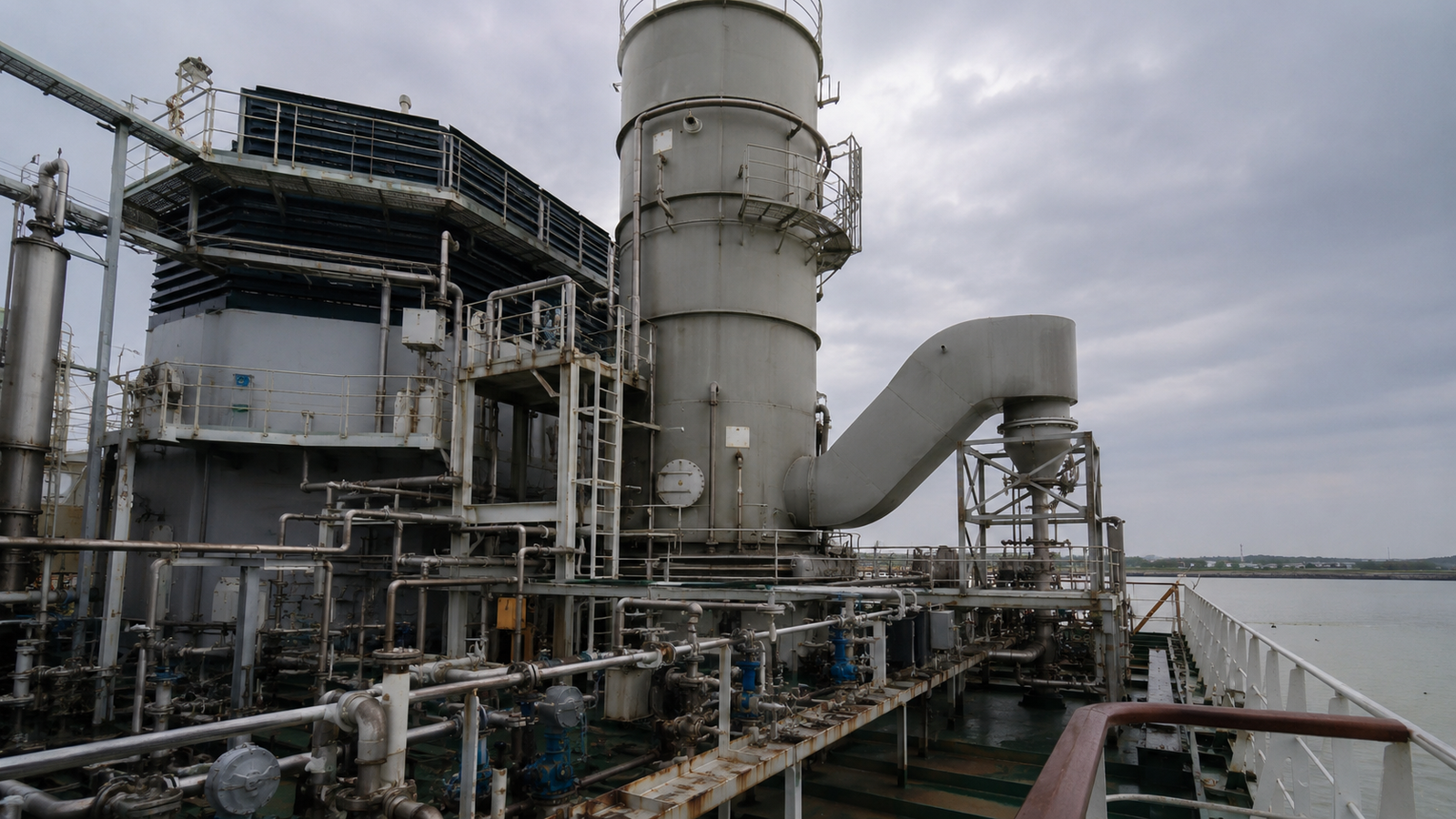
The Royal Society of Chemistry explains that titanium forms a thin oxide layer that resists the corroding action of seawater: Royal Society of Chemistry - Titanium.
ASTM B338 covers seamless and welded titanium and titanium alloy tubes intended for surface condensers, evaporators, and heat exchangers: ASTM B338.
This is why titanium tubes are often considered for seawater-cooled heat exchangers and related marine systems. But material selection still needs application-specific review.
Are Titanium Tubes a One-Size-Fits-All Solution for Every Seawater System?
No. Titanium tubes are not a one-size-fits-all solution.
Titanium has strong corrosion resistance in many seawater environments, but performance still depends on operating conditions, design, grade, surface condition, fabrication quality, and maintenance strategy.
Titanium tubes should be selected according to the specific seawater system, including temperature, flow rate, pressure, dissolved oxygen, chlorination, crevice conditions, fouling risk, cleaning method, and required standard.
AMPP states that no material is resistant to all corrosive situations, and that material selection is critical to preventing many types of failures: AMPP Materials Selection and Design for Corrosion Control.
The NIST corrosion performance database also shows that corrosion behavior must be evaluated according to specific environments, such as chemical medium, concentration, and temperature: NIST Corrosion Performance Databases.
For buyers, this means “titanium is good in seawater” is a useful starting point, but it is not the full specification.
Application Variables Buyers Should Confirm
| Variable | Why It Matters | Risk if Ignored |
|---|---|---|
| Seawater Temperature | Higher temperature can change corrosion and fouling behavior | Higher localized corrosion or fouling risk |
| Flow Rate | Affects heat transfer, fouling, pressure drop, and erosion design | Poor performance, deposits, blockage, or vibration |
| Stagnant Areas | Crevices and low-flow areas can become more aggressive | Localized corrosion or deposit-related problems |
| Chlorination / Biocide | Used for fouling control but must be reviewed with material and system design | Local chemistry changes, operational risk |
| Pressure Cycles | Affects mechanical stress and fatigue review | Cracking or leakage risk |
| Tube Surface Finish | Influences cleaning, fouling tendency, and inspection | Higher maintenance burden |
| Welding / Expansion | Affects tube integrity and installation quality | Leaks, stress concentration, rework |
| Tube Standard | Confirms product requirements and acceptance criteria | Specification mismatch |
| MTR / Traceability | Verifies batch chemistry and testing | Material mix-up or documentation gap |
Grade Selection Matters
ASTM B338 includes many grades of titanium and titanium alloy tubes. Grade 2 is commonly used where commercially pure titanium is suitable. Grade 7 and Grade 12 may be considered in more demanding corrosion or crevice-risk situations, depending on temperature, chemistry, and project requirements.
A review article on titanium corrosion explains that titanium has outstanding corrosion resistance because of its protective oxide layer, but it may still suffer different forms of corrosion in severe environments, including crevice corrosion, hydrogen embrittlement, stress corrosion cracking, fretting corrosion, and erosion: Corrosion of Titanium: Part 1.
Research on Grade 2 titanium crevice corrosion notes that oxygen concentration, temperature, and material microstructure are key parameters influencing crevice corrosion behavior: Surface Science Western - Crevice Corrosion of Grade-2 Titanium.
A study published in ASTM Journal International found that the rate and extent of crevice propagation were significantly suppressed on Grade 12 titanium compared with Grade 2 titanium under the tested conditions: Crevice Corrosion of Grade-12 Titanium.
This does not mean Grade 12 is always required. It means grade selection should be based on the actual seawater condition and risk level.
What Common Mistakes Do Buyers Make When Choosing Titanium Tubes for Seawater?
Many problems come from treating titanium tubes as a commodity product. Buyers may only compare grade and price, while ignoring system conditions, surface finish, testing, and documentation.
Common mistakes include assuming all titanium grades perform the same, relying only on basic datasheets, ignoring crevice corrosion risk, overlooking biofouling and cleaning strategy, and accepting materials without clear MTR and heat number traceability.
Mistake 1: Assuming “Titanium Never Corrodes”
Titanium has excellent corrosion resistance in many seawater environments, but it is not immune to every corrosion mechanism. Severe crevices, high temperature, unusual chemistry, hydrogen-related conditions, or incorrect system design can still create risk.
Better approach:
- Confirm seawater temperature.
- Confirm stagnant or crevice areas.
- Review gasket, support, tube sheet, and deposit conditions.
- Consider whether Grade 2, Grade 7, Grade 12, or another grade is appropriate.
- Do not rely only on the word “titanium.”
Mistake 2: Ignoring Biofouling
Titanium helps solve corrosion-related problems, but it does not automatically eliminate marine biofouling. Biofouling can reduce heat transfer, narrow flow passages, increase pressure drop, and increase cleaning demand.
A study available through OSTI examined marine biofouling characteristics for titanium-tubed heat exchangers using a test rig simulating expected service conditions: OSTI - Monitoring of Marine Biofouling of Titanium Tube Heat Exchanger.
Springer’s heat exchanger fouling reference notes that fouling reduces heat transfer rate and increases pressure drop, and identifies biological fouling as one mechanism: Heat Exchangers Fouling, Cleaning, and Maintenance.
Better approach:
- Review seawater intake quality.
- Confirm filtration or screening.
- Confirm flow velocity.
- Confirm cleaning method.
- Confirm chlorination or biocide strategy if used.
- Confirm whether the surface finish supports cleaning requirements.
Mistake 3: Only Comparing Price
A lower-priced titanium tube may look attractive, but buyers should also compare standard, tolerance, surface condition, testing, MTR, heat number, packaging, delivery reliability, and supplier support.
A cheaper material can become expensive if it creates:
- Rework
- Installation problems
- Tube leaks
- Premature cleaning
- Unplanned shutdown
- Missing documentation
- Rejection during inspection
The U.S. Environmental Protection Agency defines life-cycle cost as original cost minus salvage value plus operating costs, maintenance costs, renewal costs, and decommissioning costs: EPA Life Cycle and Replacement Costs.
For seawater systems, buyers should compare total cost over time, not only price per kilogram or price per meter.
Mistake 4: Ignoring Surface Finish and Cleanliness
Surface finish is not only cosmetic. It can influence cleaning, fouling tendency, tube installation, and inspection acceptance.
Buyers should confirm:
- Inner surface condition
- Outer surface condition
- Pickled or polished requirement
- Oil, dirt, or contamination control
- Tube end condition
- Packaging protection
- Whether surface inspection is included
Mistake 5: Not Checking Documentation
For critical seawater systems, documentation is part of quality control.
Buyers should request:
- MTR / MTC
- Heat number
- Chemical composition
- Mechanical properties
- ASTM B338 confirmation
- Dimensional report
- Surface inspection report
- PMI or grade verification if required
- Hydrostatic, eddy current, UT, or other test report if required
- Third-party inspection if required by project
How Do You Pick the Right Titanium Tube for a Specific Seawater System?
The right titanium tube is selected by matching material grade, tube standard, surface condition, dimension, inspection, and documentation to the actual system.
To select titanium tubes for seawater systems, buyers should evaluate corrosion environment, temperature, flow dynamics, pressure, fouling risk, crevice design, fabrication method, standard, testing, and supplier traceability before placing an order.
Step 1: Define the Seawater Environment
Buyers should provide:
- Natural seawater, brine, treated seawater, or mixed water
- Salinity
- pH
- Dissolved oxygen
- Chloride level
- Pollutants
- Suspended solids
- Biological activity
- Chlorination or other treatment chemicals
- Cleaning chemicals
- Maximum and minimum temperature
Step 2: Define the Operating Conditions
Important operating details include:
- Flow rate
- Velocity
- Turbulence
- Stagnant areas
- Pressure
- Pressure surges
- Thermal cycling
- Vibration
- Start-stop frequency
- Expected service interval
- Cleaning frequency
Step 3: Select Tube Grade and Standard
For heat exchanger and condenser applications, ASTM B338 is commonly referenced because it covers seamless and welded titanium and titanium alloy tubes for surface condensers, evaporators, and heat exchangers.
The grade should be selected according to the application:
| Grade / Type | Typical Review Point |
|---|---|
| Grade 1 | High ductility and formability requirements |
| Grade 2 | Common commercially pure titanium option for many seawater tube applications |
| Grade 7 | Palladium-containing grade; may be evaluated for more demanding corrosion conditions |
| Grade 12 | Titanium with Ni and Mo; may be evaluated where higher strength and improved crevice corrosion resistance are needed |
| Custom Requirement | Should be reviewed against project specification and actual service conditions |
Final selection should be confirmed by the buyer’s engineering team or project specification.
Step 4: Confirm Tube Dimensions and Tolerance
Buyers should specify:
- Outside diameter
- Wall thickness
- Length
- Tolerance
- Straightness
- End condition
- Seamless or welded requirement
- Surface finish
- Quantity
- Packaging requirement
Step 5: Confirm Testing and Documentation
ASTM E8/E8M covers tension testing of metallic materials and determination of yield strength, tensile strength, elongation, and reduction of area: ASTM E8/E8M.
ASTM E1476 provides guidance for metals identification, grade verification, and sorting: ASTM E1476.
Depending on the project, buyers may request:
- Chemical analysis
- Mechanical testing
- PMI
- Eddy current testing
- Ultrasonic testing
- Hydrostatic testing
- Dimensional inspection
- Surface inspection
- Third-party inspection
- MTR / MTC
- Certificate of conformity
- Heat number traceability
How Can a Supplier Help Reduce Downtime and Maintenance Risk?
A reliable supplier should not only quote price. The supplier should help confirm whether the material requirement is clear and whether the supplied tubes match the required standard, dimensions, surface condition, testing, and documentation.
A reliable titanium tube supplier should provide technical communication, clear documentation, quality inspection, heat number traceability, and application-based support. This helps buyers reduce procurement risk before the material enters the seawater system.
What Buyers Should Ask Suppliers
| Question | Why It Matters |
|---|---|
| Can you supply according to ASTM B338? | Confirms tube standard for condenser and heat exchanger service |
| Which titanium grade is supplied? | Avoids grade mismatch |
| Can you provide MTR / MTC? | Confirms batch-specific chemistry and mechanical properties |
| Is heat number traceability available? | Supports quality review and problem investigation |
| What tests are included? | Confirms inspection scope |
| Can you support eddy current, hydrostatic or UT testing? | Important for tube integrity |
| What is the surface condition? | Affects installation, cleaning and fouling management |
| Can you meet custom length and tolerance? | Reduces cutting, waste and rework |
| Is third-party inspection available? | Useful for critical projects |
| How is packaging handled? | Prevents damage or contamination during shipment |
| Can you discuss application conditions? | Shows supplier understands more than price and grade |
ISO 9001 and Supplier Quality
ISO explains that the ISO 9000 family helps organizations improve the quality of products and services and consistently meet customer expectations: ISO 9000 Family.
However, ISO certification alone is not enough to prove that a specific batch is suitable for your seawater system. Buyers should still request batch-specific MTR, heat number, inspection records, and required test reports.
Buyer Checklist for Titanium Tubes in Seawater Systems
Before ordering, buyers should prepare the following information.
| RFQ Item | What to Provide |
|---|---|
| Application | Heat exchanger, condenser, evaporator, desalination, ship cooling, offshore system |
| Standard | ASTM B338, ASME SB338, customer specification |
| Grade | Grade 1, Grade 2, Grade 7, Grade 12, or project-specified grade |
| Product Type | Seamless tube or welded tube |
| Size | OD, wall thickness, length |
| Tolerance | Standard or custom tolerance |
| Surface Condition | Pickled, polished, bright, clean ID / OD requirement |
| Seawater Type | Natural seawater, brine, treated seawater, mixed water |
| Temperature | Normal and maximum temperature |
| Flow Rate | Velocity, turbulence, stagnant areas |
| Pressure | Operating pressure and pressure surges |
| Fouling Risk | Biological activity, deposits, cleaning frequency |
| Chemical Treatment | Chlorination, biocide, cleaning agents |
| Fabrication | Welding, bending, tube expansion, flanging |
| Testing | PMI, eddy current, hydrostatic, UT, tensile, hardness |
| Documentation | MTR, heat number, certificate, inspection report |
| Inspection | Internal, customer, or third-party inspection |
| Quantity and Delivery | Pieces, weight, destination, lead time |
This checklist helps suppliers provide a more accurate quotation and helps buyers avoid missing critical application details.
How Emily PIPE Supports Titanium Tube Buyers
Emily PIPE is a China-based manufacturer and exporter specializing in nickel alloy tubes, nickel alloy bars, titanium alloy tubes, and titanium alloy bars. For seawater-related applications, we support buyers with titanium tube and pipe solutions for heat exchangers, condensers, marine systems, offshore equipment, desalination equipment, and other corrosion-resistant applications.
We can support:
- Titanium seamless tubes
- Titanium welded tubes
- Titanium pipes
- Titanium bars and rods
- ASTM B338 / ASME SB338 requirements
- Grade 1, Grade 2, Grade 7, Grade 12, and other project-specified titanium grades
- Custom size, length, tolerance, and surface condition
- MTR / MTC and heat number traceability
- Dimensional and surface inspection
- PMI, eddy current, hydrostatic, UT, and other testing support when required
- Third-party inspection support
- Export packaging and logistics support
Our role is not to claim that titanium tubes eliminate all seawater system maintenance. Our role is to help buyers review the application conditions, confirm material requirements, and supply titanium tubes with proper documentation and traceability.
If you are sourcing titanium tubes for seawater systems, please send your grade, standard, size, seawater condition, temperature, pressure, flow rate, cleaning method, testing requirement, documentation requirement, and destination. Our team can help review the requirement and provide a suitable quotation.
FAQ: Titanium Tubes in Seawater Systems
1. Do titanium tubes reduce downtime in seawater systems?
Titanium tubes can help reduce corrosion-related downtime risk when correctly selected and maintained. However, downtime can also be caused by fouling, poor design, installation problems, flow issues, or lack of cleaning.
2. Are titanium tubes resistant to seawater corrosion?
Yes, titanium is widely known for strong seawater corrosion resistance because it forms a stable protective oxide layer. However, system conditions such as crevices, temperature, chemistry, and fouling still need review.
3. Do titanium tubes prevent biofouling?
No. Titanium can resist seawater corrosion, but it does not automatically prevent marine biofouling. Biofouling control requires system design, flow management, filtration, cleaning, and treatment strategy.
4. Which titanium grade is best for seawater tubes?
There is no single best grade for every seawater system. Grade 2 is commonly used in many applications, while Grade 7 or Grade 12 may be evaluated for more demanding corrosion or crevice conditions. Final selection should follow the project specification and service environment.
5. What is ASTM B338?
ASTM B338 is a standard specification for seamless and welded titanium and titanium alloy tubes intended for surface condensers, evaporators, and heat exchangers.
6. Why does crevice corrosion matter for titanium?
Crevices can create local chemistry different from the bulk seawater. In certain conditions, such as higher temperature or stagnant areas, titanium may face localized corrosion risk. Design and grade selection should consider this.
7. What documents should buyers request?
Buyers should request MTR / MTC, heat number, chemical composition, mechanical properties, standard confirmation, dimensional inspection, surface inspection, and any required NDT or third-party inspection report.
8. Can titanium tubes guarantee zero maintenance?
No. No material can guarantee zero maintenance. Titanium tubes can reduce corrosion-related maintenance risk in suitable seawater applications, but fouling, cleaning, inspection, design, and operation still matter.
Conclusion
Titanium tubes can be a strong material choice for seawater systems because of their seawater corrosion resistance and suitability for heat exchanger, condenser, evaporator, marine, offshore, and desalination applications.
However, titanium should not be selected with a “one-size-fits-all” mindset. Buyers should evaluate grade, ASTM B338 compliance, seawater chemistry, temperature, flow rate, pressure, crevice conditions, biofouling risk, surface finish, testing, MTR, heat number traceability, and supplier quality control.
The right titanium tube can help reduce corrosion-related downtime and maintenance risk, but only when it is matched to the real operating environment and supported by proper inspection, documentation, and maintenance planning.