
Equipment breakdowns, unexpected downtime, and costly repairs are not always caused by poor maintenance. In many industrial systems, material mismatch can also be an important reason behind unstable operation.
For pipes, tubes, bars, shafts, heat exchangers, pumps, valves, and connectors, alloy material selection affects how the equipment responds to corrosion, temperature, pressure, fatigue, wear, vibration, and chemical exposure.
Quick Answer:
Choosing the right alloy material helps improve equipment efficiency and stability when the material is correctly matched to real operating conditions. Nickel alloys and titanium alloys may support better corrosion resistance, fatigue performance, high-temperature stability, and maintenance planning in suitable applications. However, alloy selection should not rely only on datasheet values, initial price, or one property such as strength. Buyers should evaluate working medium, temperature, pressure, mechanical load, corrosion risk, fabrication, surface condition, inspection, MTR, traceability, and total life-cycle cost.
The U.S. Environmental Protection Agency defines life cycle cost as the total cost of an asset over its life, including original cost, operating costs, maintenance costs, renewal costs, and decommissioning costs: EPA Life Cycle and Replacement Costs.
The U.S. Department of Energy’s O&M Best Practices Guide explains that reactive maintenance can create costs related to unplanned downtime, labor, repair or replacement, secondary damage, and inefficient use of staff resources: DOE O&M Best Practices Guide.
This is why alloy selection should be treated as an equipment reliability and life-cycle cost decision, not only a material purchase decision.
Why Do Real-World Scenarios Matter More Than Lab Numbers?
Material datasheets are important. They provide useful information about chemical composition, tensile strength, yield strength, elongation, hardness, heat treatment, and typical performance.
However, datasheet values are only a starting point. Real equipment operates under combined conditions that may not be fully represented by a single laboratory test.
Real-world operating scenarios matter because equipment may face temperature changes, pressure cycles, corrosive chemicals, vibration, abrasion, flow velocity, deposits, surface defects, and start-stop conditions at the same time. Alloy selection should connect laboratory data with actual service conditions.
The NIST corrosion performance database includes observations of materials in specific corrosive environments under particular conditions such as concentration and temperature: NIST Corrosion Performance Databases.
NASA defines corrosion as degradation of a metal due to reaction with its environment, and explains that degradation means deterioration of physical properties: NASA Corrosion Fundamentals.
This means corrosion resistance should not be treated as a general label. It must be evaluated according to the exact environment.
What Real Conditions Should Buyers Confirm?
| Condition | Why It Matters |
|---|---|
| Working Medium | Acid, alkali, seawater, brine, steam, gas, chlorides, or cleaning chemicals affect corrosion risk |
| Concentration | The same chemical may behave differently at different concentrations |
| Temperature | High temperature may affect strength, oxidation, creep, and corrosion rate |
| Pressure | Pressure affects wall thickness, stress level, and safety margin |
| Flow Velocity | High flow can increase erosion-corrosion or wear |
| Vibration | Vibration may increase fatigue risk |
| Cyclic Loading | Repeated load can cause fatigue cracking over time |
| Deposits and Crevices | Local chemistry may become more aggressive |
| Surface Condition | Scratches, pits, laps, or roughness may become initiation points for failure |
| Fabrication Method | Welding, machining, bending, and heat treatment can affect final performance |
A material may look suitable in a datasheet but still underperform if the real operating environment is different from the assumed condition.
Why Is Strength Alone Not Enough for Equipment Stability?
Many buyers ask for a “strong material.” Strength is important, but equipment stability depends on more than strength.
A strong material may still fail if it cannot resist the actual corrosion medium, repeated loading, temperature, wear, or fabrication stress.
Strength alone does not guarantee equipment stability. A suitable alloy should match the full service condition, including mechanical load, corrosion environment, temperature, fatigue, wear, fabrication, inspection, and maintenance expectations.
The UK Health and Safety Executive lists multiple material selection factors, including tensile strength, toughness, hardness, fatigue resistance, creep resistance, low and high temperature behavior, corrosion resistance, ease of fabrication, availability, and cost: HSE Design Codes - Plant.
Strength, Fatigue, Corrosion, and Creep
| Material Requirement | Why It Matters |
|---|---|
| Tensile Strength | Helps resist static load and pulling force |
| Yield Strength | Helps prevent permanent deformation |
| Ductility | Helps resist brittle fracture and supports forming |
| Fatigue Resistance | Important for vibration, rotating parts, and pressure cycling |
| Corrosion Resistance | Helps prevent wall thinning, leakage, pitting, and cracking |
| Creep Resistance | Important for long-term high-temperature stress |
| Oxidation Resistance | Important for hot gas and high-temperature environments |
| Wear Resistance | Important for abrasive flow, sliding contact, and particles |
MIT material on fatigue explains that fatigue damage can accumulate under repeated loads that may be well below the yield point: MIT Fatigue.
For high-temperature applications, room-temperature strength is not enough. University of Cambridge material on nickel-based superalloys explains that creep and oxidation resistance are prime design criteria for superalloys used at high temperatures: Nickel Based Superalloys - University of Cambridge.
This is why a “strong” alloy is not always the best alloy. The best alloy is the one that fits the failure risks of the application.
How Can Smart Material Choices Reduce Costly Failure Risk?
Smart material selection does not guarantee zero failure. Equipment performance also depends on design, fabrication, installation, operation, inspection, and maintenance.
However, a suitable alloy can reduce the risk of common material-related failure modes.
Smart alloy selection can reduce costly failure risk by identifying likely failure mechanisms early and selecting materials that are better suited to the service environment. These failure mechanisms may include corrosion, fatigue, creep, wear, erosion, oxidation, or galvanic corrosion.
AMPP states that no material is resistant to all corrosive situations, and that materials selection is critical to preventing many types of failures: AMPP Materials Selection and Design for Corrosion Control.
Common Failure Modes to Review
| Failure Mode | What Buyers Should Ask |
|---|---|
| General Corrosion | What medium, concentration, temperature, and pH will the material contact? |
| Pitting Corrosion | Are chlorides, deposits, or stagnant zones present? |
| Crevice Corrosion | Are there gaskets, overlaps, deposits, or tight gaps? |
| Stress Corrosion Cracking | Are tensile stress and a cracking-prone environment present? |
| Fatigue Cracking | Is there vibration, pressure cycling, or repeated mechanical load? |
| Creep | Will the material operate under long-term high-temperature stress? |
| Oxidation | Is the equipment exposed to hot gas or high-temperature air? |
| Erosion-Corrosion | Is there high flow velocity or abrasive particles? |
| Galvanic Corrosion | Are dissimilar metals connected in an electrolyte? |
| Surface-Initiated Failure | Are scratches, rough machining marks, or surface defects present? |
NASA explains that galvanic corrosion occurs when two dissimilar metals are electrically coupled in the presence of an electrolyte and an electron conductive path: NASA Forms of Corrosion.
A review on machined surface integrity also notes that fatigue cracks generally initiate from free surfaces and that surface integrity has a close relationship with fatigue performance: Effect of Machined Surface Integrity on Fatigue Performance.
This shows why buyers should review not only alloy grade, but also surface condition, processing, inspection, and real application stress.
Is the Cheapest Alloy Always the Lowest-Cost Choice?
No. The lowest initial material price is not always the lowest total cost.
A lower-cost material may be suitable for some applications. But in critical, corrosive, high-temperature, fatigue-sensitive, or high-maintenance systems, material mismatch may create higher downstream costs.
The most economical alloy is not always the cheapest alloy. Buyers should compare total cost of ownership, including material price, fabrication, maintenance, downtime, replacement, inspection, safety risk, and service life expectation.
Initial Price vs Total Cost
| Cost Factor | Lower Initial Price Material | Better-Matched Alloy |
|---|---|---|
| Purchase Price | Lower | Higher |
| Maintenance Frequency | May be higher if material is mismatched | May be reduced in suitable applications |
| Downtime Risk | May increase if failure occurs | May decrease when material fits the service condition |
| Replacement Frequency | May be higher | May be lower |
| Inspection Burden | May increase | May become more predictable |
| Fabrication Risk | May be simple or may create issues depending on alloy | Must be reviewed before ordering |
| Total Life-Cycle Cost | May become higher over time | May be lower over full service life |
A life-cycle cost view helps buyers avoid focusing only on price per kilogram or price per meter.
For example, if a pipe, tube, or bar is used in a harsh chemical or high-temperature environment, a more suitable nickel alloy or titanium alloy may reduce replacement frequency and maintenance risk. But the material must still be checked against the actual working medium, temperature, pressure, standard, and inspection requirement.
How Do Nickel Alloys and Titanium Alloys Support Equipment Stability?
Nickel alloys and titanium alloys are both used in demanding industrial applications, but they are not interchangeable. Each alloy family has different strengths and limitations.
Nickel Alloys
Nickel alloys may be considered for chemical processing, oil and gas, heat exchangers, marine engineering, power generation, and high-temperature applications.
Possible reasons to consider nickel alloys include:
- Corrosion resistance in selected chemical environments
- High-temperature strength
- Oxidation resistance
- Resistance to selected chloride-containing conditions
- Creep resistance for some high-temperature grades
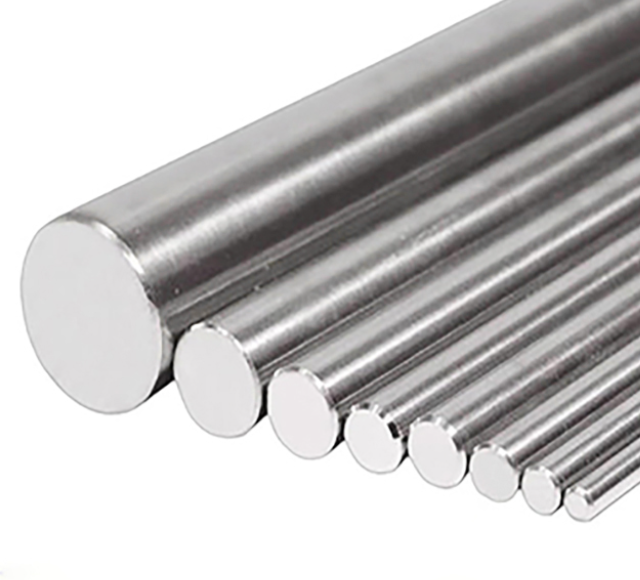
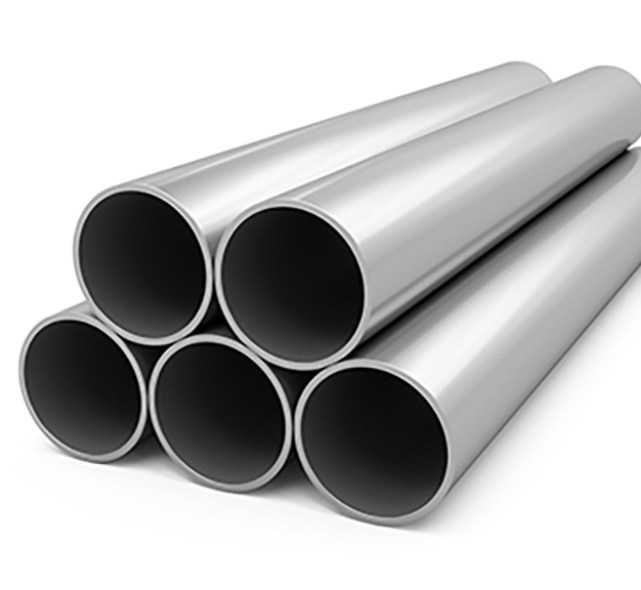
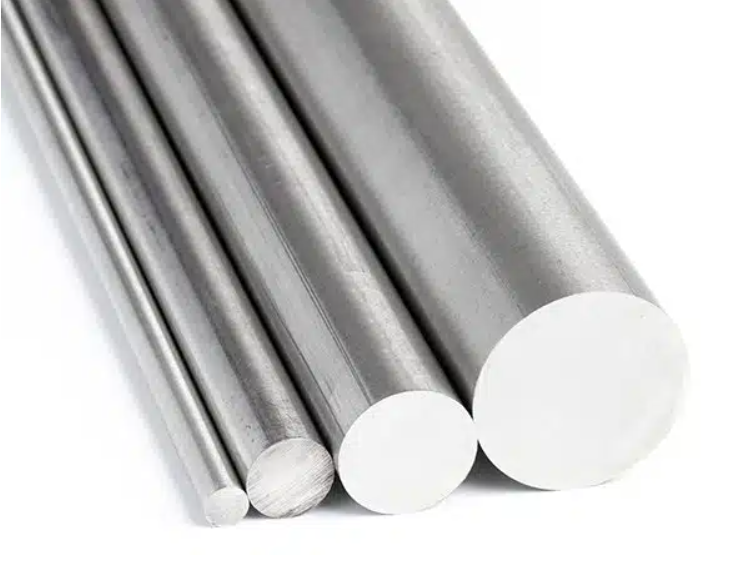
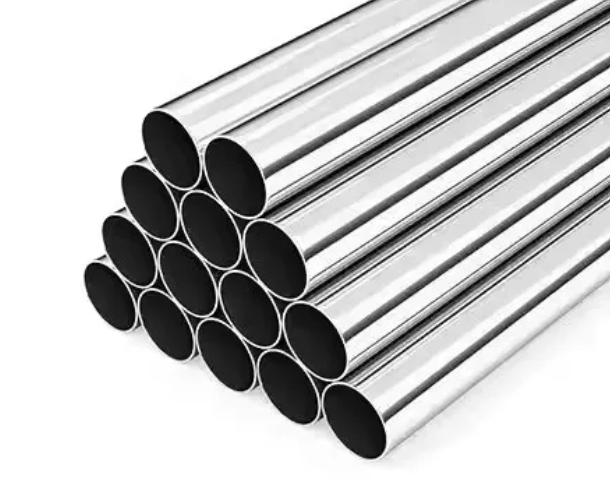
- Suitability for demanding pipe, tube, bar, and forged components
Examples include Inconel 625, Inconel 718, Hastelloy C276, Hastelloy C22, Alloy 825, Monel 400, Alloy 20, and Incoloy 800 / 800H.
However, each grade must be evaluated according to medium, concentration, temperature, pressure, fabrication method, and standard.
Titanium Alloys
Titanium alloys may be considered where corrosion resistance, low density, and strength-to-weight ratio are important.
The Royal Society of Chemistry explains that titanium forms a thin oxide layer on its surface that resists the corroding action of seawater, which is why it is used in offshore applications: Royal Society of Chemistry - Titanium.
Titanium may be considered for seawater systems, heat exchangers, aerospace components, medical equipment, and selected chemical applications. However, titanium is not suitable for every reducing acid, hydrogen-related condition, or high-temperature environment. The actual service condition must be reviewed before selection.
Can Buyers Trust Supplier Alloy Claims?
Supplier claims should be verified. A general datasheet or marketing statement is not enough for critical industrial projects.
Buyers should verify supplier alloy claims through batch-specific documents, applicable standards, MTR / MTC review, heat number traceability, chemical and mechanical test data, grade verification, inspection records, and third-party inspection when required.
Documents Buyers Should Request
| Document / Evidence | What It Helps Verify |
|---|---|
| Material Test Certificate / Mill Test Report | Batch-specific chemical composition and mechanical properties |
| Heat Number | Traceability from delivered product to production batch |
| Certificate of Conformity | Statement that material meets specified order requirements |
| Chemical Analysis | Alloy composition |
| Mechanical Test Report | Tensile strength, yield strength, elongation, hardness, or impact data |
| PMI / Grade Verification | Confirms alloy identity and reduces material mix-up risk |
| Dimensional Report | Confirms OD, WT, diameter, length, tolerance, and straightness |
| Surface Inspection | Confirms surface condition and visible defects |
| NDT Report | Confirms inspection for internal, surface, or near-surface defects |
| Third-Party Inspection | Adds independent verification when required |
ASTM E8/E8M covers tension testing of metallic materials and determination of yield strength, tensile strength, elongation, and reduction of area: ASTM E8/E8M.
ASTM E1476 provides guidance for metals identification, grade verification, and sorting, including methods such as X-ray fluorescence spectrometry and optical emission spectrometry: ASTM E1476.
ISO explains that the ISO 9000 family helps organizations improve the quality of products and services and consistently meet customer expectations: ISO 9000 Family.
However, ISO certification is not a replacement for batch-specific MTR or MTC documents. Buyers should check both supplier quality systems and the actual material records for the delivered batch.
Buyer Checklist: How to Select Alloy Materials for Equipment Stability
Before ordering nickel alloy or titanium alloy tubes and bars, buyers should provide the following information.
| RFQ Item | What to Confirm |
|---|---|
| Application | Pipe, tube, bar, shaft, connector, heat exchanger, pump, valve |
| Alloy Grade | Inconel 625, Inconel 718, Hastelloy C276, Monel 400, Grade 2 Titanium, Ti-6Al-4V |
| Standard | ASTM, ASME, EN, ISO, AMS, NACE, customer specification |
| Size | OD, wall thickness, diameter, length, tolerance |
| Working Medium | Acid, alkali, seawater, brine, steam, gas, chloride solution |
| Chemical Concentration | Exact concentration or process range |
| Temperature | Normal, maximum, start-up, shutdown, upset conditions |
| Pressure | Normal and maximum pressure |
| Load Condition | Static, cyclic, vibration, impact, fatigue, creep |
| Corrosion Risk | Pitting, crevice corrosion, SCC, oxidation, galvanic corrosion |
| Wear Condition | Abrasion, erosion, particles, high flow velocity |
| Fabrication | Welding, bending, machining, forming, threading |
| Surface Condition | Pickled, polished, bright annealed, ground, peeled, machined |
| Testing | PMI, UT, ECT, hydrostatic, tensile, hardness, corrosion test |
| Documentation | MTR, MTC, heat number, certificate, inspection report |
| Inspection | Internal inspection, customer inspection, third-party inspection |
| Maintenance Goal | Reduce downtime, extend service interval, improve stability |
This checklist helps buyers move from general material comparison to application-specific alloy selection.
How Emily PIPE Supports Alloy Material Selection
Emily PIPE is a China-based manufacturer and exporter specializing in nickel alloy tubes, nickel alloy bars, titanium alloy tubes, and titanium alloy bars. We support customers across chemical processing, oil and gas, marine engineering, aerospace, power generation, medical equipment, heat exchangers, and other high-temperature or corrosion-resistant applications.
We can support buyers with:
- Nickel alloy pipe and tube supply
- Nickel alloy bar and rod supply
- Titanium alloy tube and pipe supply
- Titanium alloy bar and rod supply
- Standard and customized specifications
- Application-based material communication
- MTR / MTC and heat number traceability
- Dimensional and surface inspection
- PMI, UT, ECT, hydrostatic, tensile, hardness, and other inspection support when required
- Custom length, tolerance, and surface requirements
- Export packaging and logistics support
Our role is not to guarantee that equipment will never fail. Our role is to help buyers review the application environment, confirm material requirements, prepare documentation, and select alloy products that better match performance and stability goals.
If you are selecting nickel alloy or titanium alloy tubes and bars for equipment efficiency and stability, please send your grade, standard, size, working medium, temperature, pressure, fabrication method, testing requirements, documentation requirements, and destination. Our team can help review your material needs and provide a suitable quotation.
FAQ: Alloy Material Selection for Equipment Efficiency and Stability
1. Does alloy material selection really affect equipment stability?
Yes. Material selection can affect corrosion resistance, fatigue life, high-temperature performance, wear resistance, maintenance frequency, and replacement risk. However, final equipment stability also depends on design, fabrication, installation, operation, and maintenance.
2. Are datasheet values enough to choose an alloy?
No. Datasheet values are useful, but they should be interpreted with actual service conditions such as working medium, temperature, pressure, vibration, fatigue, surface condition, and corrosion risk.
3. Is the strongest alloy always the best choice?
No. Strength is only one factor. A strong material may still fail if it lacks corrosion resistance, fatigue resistance, creep resistance, wear resistance, or fabrication suitability for the application.
4. Why can fatigue occur below yield strength?
Fatigue damage can accumulate under repeated loading even when the stress is below the yield point. This is why cyclic loading, vibration, and surface condition are important in material selection.
5. Are nickel alloys better than titanium alloys?
Neither is universally better. Nickel alloys and titanium alloys solve different problems. The right choice depends on chemical medium, temperature, pressure, strength requirement, density, fabrication, availability, and cost.
6. Why is the cheapest alloy not always the lowest-cost option?
Initial price does not include maintenance, downtime, replacement, inspection, rework, and failure risk. A higher-priced alloy may reduce total life-cycle cost when it is correctly matched to the application.
7. What documents should buyers request from alloy suppliers?
Buyers should request MTR or MTC, heat number, chemical composition, mechanical properties, standard compliance, inspection records, and third-party inspection documents if required.
8. Can a supplier guarantee alloy performance in every environment?
No responsible supplier should guarantee performance in every environment. Alloy performance depends on service conditions, design, fabrication, installation, maintenance, and operation. A supplier can help reduce risk by supporting proper material selection and documentation.
Conclusion
Choosing the right alloy material is important for equipment efficiency and stability, but it should not be based on grade name, strength, datasheet values, or initial price alone.
Industrial buyers should evaluate the real operating environment, including corrosion media, temperature, pressure, fatigue, wear, vibration, surface condition, fabrication, inspection, MTR, traceability, and life-cycle cost.
For nickel alloy and titanium alloy tubes and bars, the best material is not always the strongest or cheapest option. It is the material that best matches the application and helps reduce avoidable maintenance, downtime, and failure risk over the full service life.