
Why Titanium Tubes Are Used for Seawater Cooling Heat Exchangers
Seawater cooling heat exchangers operate in a demanding environment. Tubes may be exposed to chlorides, dissolved oxygen, suspended solids, biofouling, flow turbulence, temperature changes, cleaning chemicals, and long service cycles. If the tube material is not suitable, the system may face leakage risk, reduced heat transfer efficiency, unplanned maintenance, or premature replacement.
Titanium tubes are widely used in seawater cooling heat exchangers because titanium combines strong corrosion resistance in many natural seawater conditions, good strength-to-weight ratio, and stable performance in heat transfer applications. However, titanium is not a universal answer for every seawater system. The final material decision should still consider water chemistry, temperature, velocity, biofouling, crevice design, inspection requirements, and supplier traceability.
ASTM B338 covers seamless and welded titanium and titanium alloy tubes intended for surface condensers, evaporators, and heat exchangers: ASTM B338 Standard Specification.
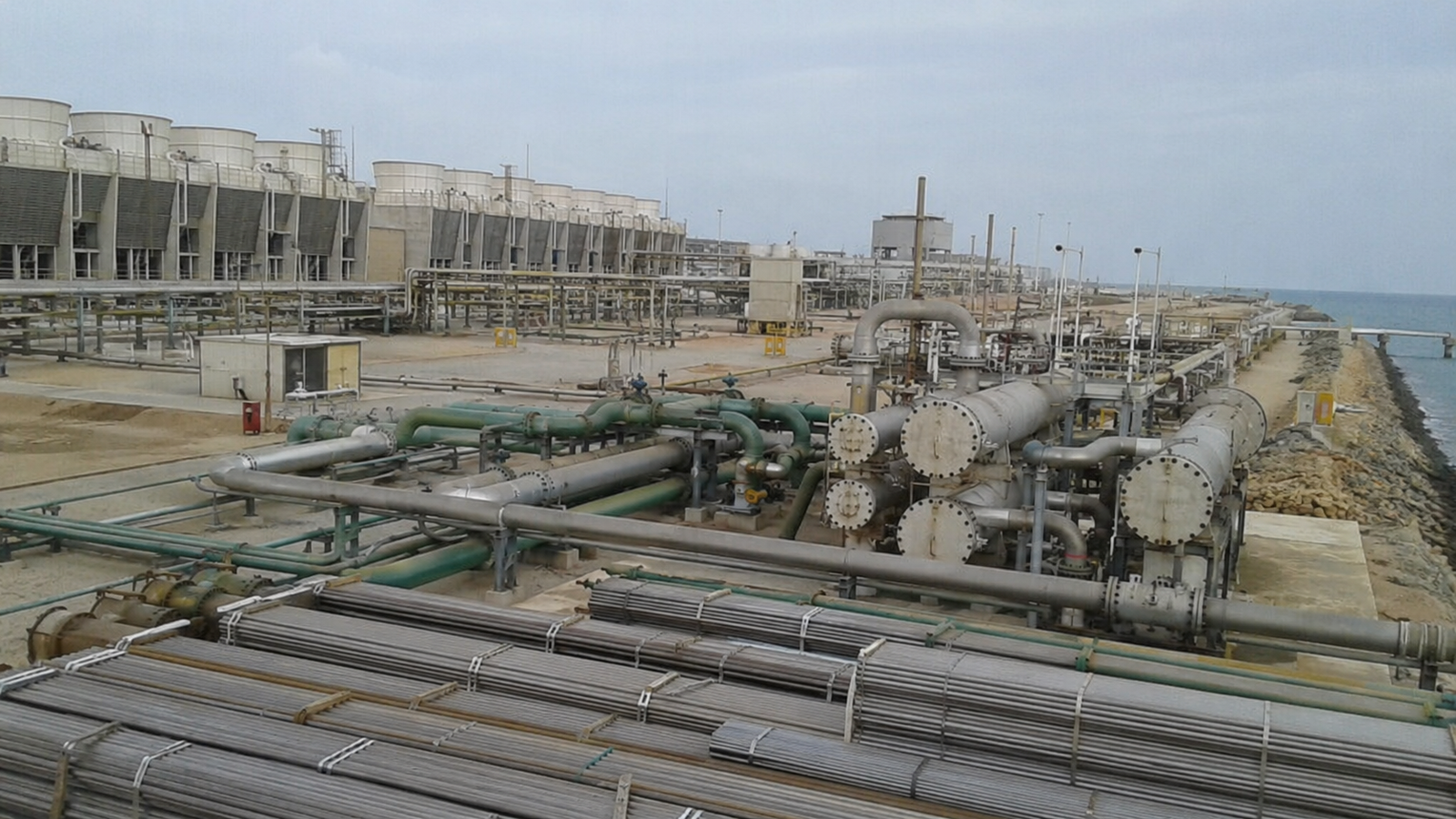
For buyers, engineers, and heat exchanger manufacturers, the key question is not simply “Is titanium corrosion-resistant?” The better question is “Is this titanium tube grade, condition, surface quality, testing scope, and documentation package suitable for this seawater cooling system?”
Why Titanium Performs Well in Seawater Cooling
Titanium’s seawater performance is closely related to its passive oxide film. In oxygen-containing environments, titanium forms a thin, protective oxide layer on its surface. This passive film helps separate the base metal from the corrosive environment and supports titanium’s corrosion resistance.
RSC’s element information for titanium explains that titanium forms a thin protective oxide layer and that titanium metal is resistant to seawater: Titanium - RSC Periodic Table.
A review on titanium passivation and biofouling in marine environments also notes that titanium alloys are used in seawater-related engineering applications, including heat exchangers in desalination plants and cooling systems in seawater-cooled power plants: Passivation and Biofouling of Ti and Its Alloys in Marine Environments.
The Passive Oxide Layer: Important, but Not Magic
The passive oxide film is one of the main reasons titanium performs well in seawater. It is compact, stable, and protective under many aerated seawater conditions. If damaged in an oxygen-containing environment, the film can reform.
However, buyers should not treat this film as a guarantee under every condition. Titanium performance may still be affected by:
- Very tight crevices
- Low-oxygen stagnant zones
- High temperature
- Polluted seawater
- Reducing acids
- Fluoride-containing media
- Abrasive suspended solids
- Improper cleaning chemicals
- Galvanic design problems
- Severe turbulence or vibration
This is why titanium tube selection should still be based on the actual seawater system, not only the material name.
Titanium and Common Seawater Corrosion Risks
Seawater heat exchangers may face several corrosion or degradation mechanisms. Titanium can reduce many of these risks, but system design and operating conditions still matter.
| Risk | Why It Matters | Titanium Tube Selection Note |
|---|---|---|
| General corrosion | Wall loss may reduce tube life | Titanium generally performs very well in natural seawater |
| Pitting corrosion | Localized pits can cause leakage | Titanium has strong resistance in many chloride environments, but abnormal chemistry should be checked |
| Crevice corrosion | Tight gaps, deposits, tube sheet areas, or stagnant zones can create local chemistry changes | Crevice design, temperature, and grade selection should be reviewed |
| Erosion-corrosion | High velocity or abrasive particles may damage surfaces | Titanium resists seawater erosion well, but sand, silt, inlet turbulence, and vibration still matter |
| Biofouling | Marine growth can reduce heat transfer and increase pressure drop | Titanium does not eliminate biofouling; cleaning or biofouling control may still be required |
| Galvanic corrosion | Contact with other metals can affect corrosion behavior | Coupled materials and electrical contact should be reviewed |
| Hydrogen-related risk | Some cathodic or chemical conditions may introduce hydrogen concerns | Cathodic protection, cleaning chemistry, and abnormal service should be checked |
A heat exchanger corrosion review discusses common failure mechanisms such as pitting, crevice corrosion, stress corrosion cracking, corrosion fatigue, and erosion-corrosion in heat exchangers. It also notes that crevices in shell-and-tube heat exchangers may appear at tube-to-tube sheet areas, open welds, bolt holes, complex geometries, and deposits: Corrosion and Corrosion Prevention in Heat Exchangers.
Titanium Does Not Eliminate Biofouling
One common misunderstanding is that titanium tubes prevent biofouling. Titanium resists corrosion well, but marine organisms can still attach to titanium surfaces.
An early study on corrosion resistance of titanium in seawater reported extensive biofouling after seawater immersion, indicating that titanium shows little toxicity toward marine organisms. The same source also noted no evidence of corrosion beneath marine organisms in the tests discussed: Corrosion Resistance of Titanium to Sea Water.
For seawater cooling heat exchangers, this means:
- Titanium can help reduce corrosion-related tube failure risk.
- Titanium does not remove the need for biofouling management.
- Low-flow or stagnant areas may still collect marine growth.
- Cleaning, filtration, chlorination, sponge ball cleaning, or other control methods may be required depending on the system.
- Biofouling can reduce heat transfer efficiency and increase pressure drop.
A MARAD report also explains that biofouling on seawater-cooled systems can reduce the effectiveness of critical systems and increase maintenance cost: Biofouling Prevention Demonstration on Seawater Cooling Systems.
Environmental Factors Buyers Should Confirm
Titanium tube performance depends on the actual seawater cooling environment. Before ordering, buyers should confirm the following conditions.
| Factor | What to Confirm | Why It Matters |
|---|---|---|
| Seawater type | Natural seawater, brackish water, polluted seawater, treated seawater, or desalination intake | Different water chemistry changes corrosion and fouling risk |
| Chloride level | Normal seawater chloride or concentrated brine | High chloride increases risk for many metals and affects grade comparison |
| Temperature | Inlet, outlet, maximum metal temperature, startup/shutdown temperature | Temperature affects corrosion reactions, biofouling, and crevice risk |
| Dissolved oxygen | Aerated, stagnant, deaerated, or polluted water | Titanium passive film depends on oxygen-containing conditions |
| Flow velocity | Normal flow, low-flow, high-flow, turbulent inlet condition | Affects fouling, sedimentation, erosion, and heat transfer |
| Suspended solids | Sand, silt, shells, marine debris, or particles | Can increase erosion or tube inlet wear |
| Biofouling | Marine growth, algae, barnacles, slime, microbial deposits | Reduces heat transfer and may create local deposits |
| Cleaning method | Mechanical cleaning, sponge ball, chlorination, chemical cleaning, acid cleaning | Cleaning chemistry must be compatible with titanium |
| Tube sheet design | Rolled joint, welded joint, expanded tube, gasket, crevice areas | Tight crevices may create localized risk |
| Coupled metals | Tube sheet, shell, baffles, fasteners, connected piping | Galvanic design should be reviewed |
| Inspection plan | ECT, UT, hydrostatic test, surface inspection, dimensional inspection | Supports quality verification before installation |
A vague request such as “titanium tube for seawater heat exchanger” is not enough for a critical project. The supplier should understand the water chemistry, operating condition, tube size, standard, testing scope, and documentation requirement.
Water Velocity, Suspended Solids, and Tube Inlet Design
Titanium has strong resistance to erosion-corrosion in many seawater applications. However, buyers should still check water velocity, tube inlet condition, turbulence, and suspended solids.
High velocity may improve heat transfer and reduce some fouling risks, but it can also increase inlet turbulence and particle impact. Low velocity may increase sedimentation and biofouling. Sand or silt can create wear, especially near tube inlets or areas with disturbed flow.
For this reason, buyers should confirm:
- Design flow rate
- Maximum flow rate
- Tube inlet velocity
- Presence of sand, silt, shell fragments, or debris
- Filtration or screening method
- Tube inlet erosion protection
- Cleaning method
- Vibration risk
- Baffle design and tube support condition
Material selection and heat exchanger design should be reviewed together.
Temperature and Crevice Risk
Typical seawater cooling systems may operate at moderate temperatures, but maximum metal temperature and local crevice conditions still matter. Crevices may occur at rolled tube-to-tube sheet joints, deposits, gaskets, tight contact points, or stagnant areas.
A general review of heat exchanger corrosion notes that crevice corrosion in shell-and-tube heat exchangers can occur at clearances between rolled tubes and tube sheets, open welds, bolt holes, and complex geometries. In severe seawater testing conditions, even titanium showed signs of crevice corrosion in some plate heat exchanger tests: Corrosion and Corrosion Prevention in Heat Exchangers.
This does not mean titanium is unsuitable. It means that for critical systems, buyers should evaluate:
- Tube grade
- Temperature
- Crevice geometry
- Tube-to-tube sheet joining method
- Deposits
- Flow condition
- Chlorination
- Shutdown condition
- Cleaning interval
- Water chemistry changes
Grade selection should be based on both corrosion environment and heat exchanger design.
Which Titanium Tube Grades Are Commonly Discussed?
ASTM B338 includes multiple grades of titanium and titanium alloy tubes for condensers and heat exchangers. Final grade selection should follow project specifications and engineering review.
| Titanium Grade | Common Discussion Point | Important Caution |
|---|---|---|
| Grade 1 | Higher ductility among commercially pure titanium grades | Lower strength than Grade 2 |
| Grade 2 | Common commercially pure titanium choice for many heat exchanger tube applications | Not a universal answer for every crevice, high-temperature, or special chemical condition |
| Grade 7 | Palladium-containing titanium grade often considered for improved corrosion resistance in more demanding conditions | Higher cost and project requirement must be justified |
| Grade 12 | Ti-Ni-Mo alloy often discussed for better crevice corrosion resistance than commercially pure titanium in some conditions | Must confirm standard, availability, temperature, and design condition |
| Grade 16 | Palladium-containing grade sometimes discussed for corrosion-resistant applications | Must match customer specification and availability |
Buyers should not choose a grade only by price. The correct grade depends on seawater chemistry, tube design, temperature, crevice risk, pressure, mechanical requirements, and project standard.
ASTM B338: Why It Matters for Titanium Heat Exchanger Tubes
ASTM B338 is one of the key standards for titanium tubes used in condensers and heat exchangers. The ASTM B338 abstract states that the specification covers 28 grades of seamless and welded titanium alloy tubes for surface condensers, evaporators, and heat exchangers.
It also describes different manufacturing routes for seamless and welded tubes and includes requirements related to chemical composition, tensile properties, flattening, reverse flattening, non-destructive electromagnetic testing, ultrasonic testing, and hydrostatic or pneumatic testing depending on tube type.
You can review the official standard page here: ASTM B338.
For buyers, this means the inquiry should clearly state:
- ASTM B338 or ASME SB338 requirement
- Titanium grade
- Seamless or welded tube
- OD, wall thickness, length, tolerance
- Straight tube or U-bent tube
- Heat treatment condition
- Surface condition
- Testing requirement
- Certificate requirement
- Packing requirement
What Testing and Inspection Should Buyers Request?
Testing requirements depend on the project standard, tube type, pressure, risk level, and customer specification.
| Test / Inspection | Purpose |
|---|---|
| Chemical analysis | Confirms titanium grade and alloy chemistry |
| Mechanical testing | Confirms tensile strength, yield strength, elongation, or other required values |
| Dimensional inspection | Confirms OD, wall thickness, length, tolerance, and straightness |
| Visual and surface inspection | Checks scratches, dents, pits, cracks, scale, and surface defects |
| Eddy current testing | Commonly used to inspect heat exchanger tubes and detect changes in wall condition or defects |
| Ultrasonic testing | Helps detect internal discontinuities in suitable products |
| Hydrostatic / pneumatic testing | Verifies pressure integrity when required |
| Flattening / reverse flattening tests | Confirms tube forming and weld quality where required by standard |
| PMI testing | Helps verify alloy identity |
| Third-party inspection | Adds independent verification for critical projects |
ASNT explains that eddy current testing is commonly used to inspect heat exchanger tubes and detect changes in tube wall thickness or the presence of defects: ASNT Electromagnetic Testing.
What Documents Should Buyers Request?
For titanium tubes used in seawater cooling heat exchangers, buyers may request:
- Material Test Certificate / Mill Test Report
- EN 10204 Type 3.1 or Type 3.2 certificate if required
- Heat number or batch number traceability
- Chemical composition report
- Mechanical properties report
- ASTM B338 / ASME SB338 compliance statement
- Dimensional inspection report
- Surface inspection report
- Eddy current testing report if required
- Ultrasonic testing report if required
- Hydrostatic or pneumatic test report if required
- PMI report if required
- Third-party inspection report if required
- Packing and marking records
EN 10204 Type 3.1 and Type 3.2 inspection documents are commonly used for metallic products. Type 3.1 provides test results and is validated by the manufacturer’s authorized inspection representative independent of manufacturing. Type 3.2 adds validation by the manufacturer’s authorized inspection representative and the purchaser’s authorized representative or designated inspector.
You can review the EN 10204 reference here: EN 10204 Inspection Documents.
Buyers should still check whether the certificate matches the physical tube: heat number, grade, size, standard, test values, quantity, marking, and purchase order.
How to Evaluate a Titanium Tube Supplier
A reliable titanium tube supplier should provide more than a low price. For seawater heat exchanger projects, supplier evaluation should include material standard knowledge, tube production control, inspection capability, traceability, export packing, and communication about application limitations.
Ask your supplier:
- Can you supply titanium tubes according to ASTM B338 / ASME SB338?
- Which grades are available: Grade 1, Grade 2, Grade 7, Grade 12, Grade 16, or others?
- Are the tubes seamless or welded?
- Can you provide MTC / MTR with heat number traceability?
- Can you provide chemical composition and mechanical properties?
- Can you support eddy current testing, ultrasonic testing, or pressure testing if required?
- Can you provide dimensional and surface inspection reports?
- Can you support third-party inspection?
- Can you provide clean packing, end protection, and clear material marking?
- Can you discuss seawater velocity, biofouling, crevice design, and water chemistry before quoting?
- Can you support custom length, U-bending, polishing, or special surface requirements if needed?
- Can you provide realistic lead time and export documentation?
ISO 9001 can help evaluate a supplier’s quality management system, but it should not replace batch-specific material verification. ISO explains that ISO 9001 is a globally recognized quality management standard that defines how to establish, implement, maintain, and continually improve a QMS: ISO 9001 Quality Management Systems.
Life Cycle Cost: Why Initial Price Is Not the Only Factor
Titanium tubes may have a higher initial cost than some traditional materials. However, the material decision should be based on total lifecycle risk, not only the purchase price.
NIST’s life cycle cost manual explains that LCC considers costs related to owning, operating, maintaining, and disposing of a system over a study period: NIST Life Cycle Cost Manual.
For seawater cooling heat exchangers, buyers should consider:
- Initial tube price
- Fabrication and installation cost
- Inspection and testing cost
- Expected service life
- Cleaning frequency
- Biofouling control cost
- Leakage risk
- Downtime consequence
- Replacement difficulty
- Spare tube inventory
- Lead time
- Documentation and inspection requirements
A lower-cost tube material may be acceptable in mild conditions. A titanium tube may be more economical in aggressive seawater service if it reduces leakage risk, corrosion maintenance, and replacement frequency. The correct decision depends on the actual application.
Practical RFQ Checklist for Titanium Tubes in Seawater Heat Exchangers
Before sending an inquiry, buyers can prepare the following information:
- Application: condenser, evaporator, seawater heat exchanger, desalination, power plant, marine cooling, or chemical cooling system
- Tube standard: ASTM B338 / ASME SB338 or customer specification
- Titanium grade: Grade 1, Grade 2, Grade 7, Grade 12, Grade 16, or other
- Seamless or welded tube requirement
- OD, wall thickness, length, tolerance, and quantity
- Straight tube, U-bent tube, or custom form
- Seawater type: natural, brackish, polluted, treated, or concentrated brine
- Chloride level and water chemistry if available
- Operating temperature and maximum metal temperature
- Flow velocity and pressure
- Suspended solids, sand, silt, or debris risk
- Biofouling control method
- Cleaning method and cleaning chemicals
- Tube sheet material and joining method
- Crevice or stagnant zone concerns
- Required testing: ECT, UT, hydrostatic, pneumatic, PMI, dimensional, surface inspection, or third-party inspection
- Required certificate type: EN 10204 3.1 or 3.2
- Packing, end protection, marking, and delivery requirement
A clear RFQ helps the supplier recommend the correct titanium grade, tube form, inspection scope, and documentation package.
Conclusion
Titanium tubes are widely used in seawater cooling heat exchangers because they offer strong corrosion resistance in many natural seawater environments, good strength-to-weight ratio, and proven relevance for condenser and heat exchanger tube applications.
However, titanium should still be selected with engineering judgment. Buyers should confirm seawater chemistry, temperature, flow velocity, suspended solids, biofouling risk, crevice design, ASTM B338 requirements, testing scope, and MTC traceability before ordering.
When the titanium grade, tube standard, inspection plan, and supplier documentation are confirmed in advance, seawater cooling heat exchanger projects are more likely to achieve stable operation, lower corrosion risk, and better long-term maintenance control.