
How to Choose Corrosion-Resistant Alloy Bars for Environmental Equipment
Selecting corrosion-resistant alloy bars for environmental equipment is not about finding one universal “best” material. Pumps, valves, shafts, stems, impellers, sleeves, bushings, fasteners, and other machined parts may work in wastewater, sludge, brine, FGD slurry, scrubber liquid, chemical waste streams, acidic condensate, or other aggressive fluids.
A poor material choice may increase corrosion risk, wear, leakage, maintenance work, downtime, or premature replacement. However, the solution is not simply to choose the highest-grade alloy. The right alloy bar depends on the actual fluid chemistry, pH, chloride level, temperature, pressure, flow velocity, suspended solids, mechanical stress, inspection requirements, and lifecycle cost.
The National Physical Laboratory guide on corrosion control for pumps and valves explains that there are many pump and valve types and a wide range of fluids, so material selection guidance must be given in general terms unless the real service condition is known: Corrosion Control for Pumps and Valves.
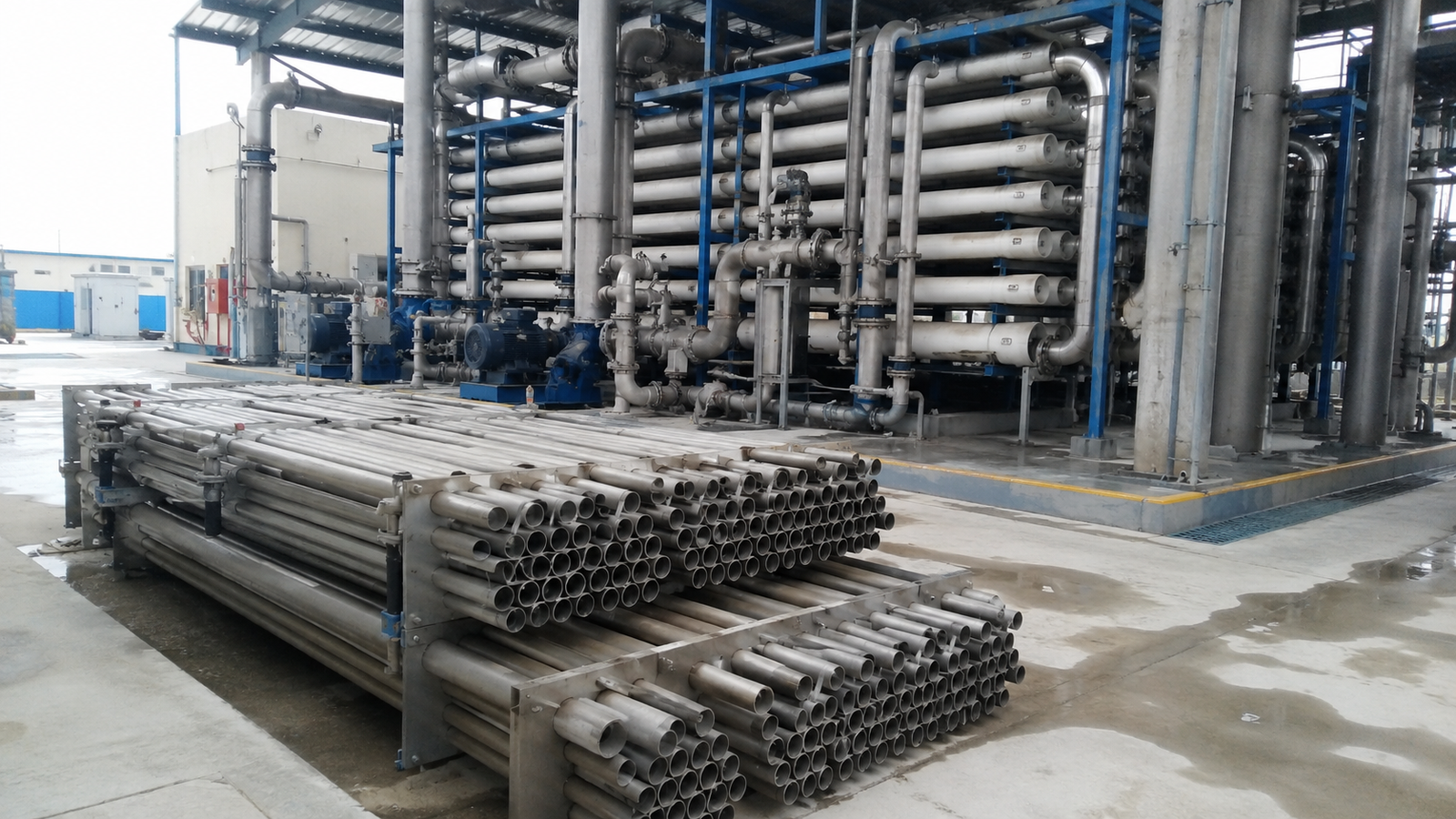
For buyers and engineers, the better question is not “Which corrosion-resistant alloy bar is best?” The better question is “Which alloy bar is suitable for this environmental equipment, this fluid, this temperature, this pressure, and this failure risk?”
Why There Is No One Best Alloy Bar
Environmental equipment may handle many different fluids and operating conditions. A material that performs well in one wastewater stream may fail in another if the pH, chloride level, temperature, oxygen content, slurry solids, or cleaning chemistry changes.
Common environmental equipment applications include:
- Wastewater treatment pumps and valves
- Sludge handling systems
- FGD slurry pumps
- Scrubber liquid handling equipment
- Chemical waste stream valves
- Brine and desalination-related equipment
- Neutralization systems
- Acid dosing systems
- Alkali handling systems
- Environmental monitoring and sampling equipment
- Pump shafts, valve stems, sleeves, bushings, impellers, and fasteners
This is why alloy selection should be scenario-based, not material-name-based.
Key Service Conditions to Confirm Before Selecting Alloy Bars
Before ordering corrosion-resistant alloy bars, buyers should define the real operating environment.
| Factor | What to Confirm | Why It Matters |
|---|---|---|
| Fluid type | Wastewater, sludge, brine, acid, alkali, FGD slurry, scrubber liquid, or mixed waste | Determines the main corrosion mechanism |
| Chemical composition | Chlorides, sulfates, sulfides, fluorides, oxidizers, reducing agents, metals, contaminants | Trace species may change corrosion behavior |
| pH range | Acidic, neutral, alkaline, or fluctuating pH | Strongly affects material compatibility |
| Temperature | Normal, maximum, minimum, thermal cycling | Higher temperature may accelerate corrosion and SCC risk |
| Pressure | Working pressure, pressure cycling, pump discharge pressure | Affects mechanical design and fatigue risk |
| Flow velocity | Low-flow, high-flow, turbulent, or stagnant | Affects fouling, erosion-corrosion, and localized corrosion |
| Suspended solids | Sand, sludge, gypsum, ash, scale, or abrasive particles | May cause erosion or wear |
| Oxygen level | Aerated, deaerated, stagnant, or variable | Affects passive film behavior and corrosion mechanism |
| Mechanical stress | Torque, bending, vibration, tensile stress, sealing stress | May contribute to fatigue or stress corrosion cracking |
| Cleaning / flushing | Acid cleaning, caustic cleaning, chlorination, chemical flushing | Cleaning chemicals may be more aggressive than normal service |
| Required standard | ASTM, ASME, EN, ISO, NACE/ISO, or customer specification | Defines material and testing requirements |
| Documentation | MTC, heat number, inspection reports, third-party inspection | Supports traceability and verification |
A vague RFQ such as “corrosion-resistant alloy bar for pump and valve parts” is usually not enough. The supplier needs the actual fluid, temperature, pressure, solids, and inspection requirements.
Scenario 1: Wastewater and Mixed Chemical Streams
Wastewater and industrial waste streams may contain chlorides, sulfates, sulfides, acids, alkalis, organic compounds, suspended solids, and changing pH. In these systems, corrosion may not come from one chemical alone. It may come from the interaction of several factors.
For example:
- Chlorides may increase pitting or crevice corrosion risk.
- Sulfides and low oxygen zones may change corrosion behavior.
- Low pH can increase general corrosion for some materials.
- High pH may still be aggressive if oxidizers or chlorides are present.
- Suspended solids may cause erosion-corrosion.
- Intermittent cleaning may expose the equipment to different chemical conditions.
The practical lesson is simple: do not select an alloy bar only by general corrosion resistance. Check the actual wastewater chemistry and the possible operating range.
Scenario 2: FGD Slurry and Scrubber Liquids
Flue gas desulfurization and scrubber systems can create highly challenging environments. Slurry chemistry, chlorides, sulfates, solids, pH, oxygen, and temperature may all influence corrosion and wear.
EPA’s FGD wastewater primer notes that chloride buildup in FGD slurry may be controlled because of the corrosion resistance limits of the FGD system: Flue Gas Desulfurization Wastewater Treatment Primer.
A DOE / OSTI paper on FGD wastewater also notes that chloride corrosion can determine the FGD purge rate: Flue Gas Desulfurization Wastewater Composition and Implications.
For alloy bar selection in FGD or scrubber systems, buyers should confirm:
- Chloride concentration
- Fluoride concentration
- Sulfate concentration
- pH range
- Temperature
- Slurry solids
- Flow velocity
- Abrasion risk
- Oxygen level
- Cleaning and flushing method
- Component function: shaft, stem, sleeve, bushing, impeller, or valve part
Alloy bars used for these parts should be selected for both corrosion and mechanical service.
Scenario 3: Abrasive Slurry Pumping
In slurry service, corrosion resistance alone is not enough. A material may resist the chemistry but still wear quickly if the slurry contains hard particles.
Important slurry factors include:
- Particle size
- Particle hardness
- Solids concentration
- Flow velocity
- Pump speed
- Turbulence
- Impact angle
- Component geometry
- Corrosion chemistry
- Cleaning and shutdown conditions
For slurry pumps and valves, buyers may need to consider both wear resistance and corrosion resistance. Material selection may involve duplex stainless steel, high-alloy stainless steel, nickel alloy, hard-facing, coatings, liners, or other engineered solutions. The final choice should be based on both corrosion environment and mechanical wear risk.
Scenario 4: Variable pH and Intermittent Chemical Exposure
Some environmental equipment does not handle one stable fluid. It may face alternating acidic and alkaline conditions, changing concentrations, intermittent cleaning, flushing chemicals, or mixed waste streams.
This can create additional risk because a passive film that is stable in one condition may be damaged or less effective in another.
Buyers should confirm:
- Normal operating pH
- Minimum and maximum pH
- Cleaning chemical pH
- Oxidizing or reducing chemicals
- Chloride level during normal and cleaning conditions
- Shutdown condition
- Stagnant periods
- Temperature during each exposure stage
For variable chemistry, a broad “corrosion-resistant” label is not enough. The alloy must be reviewed against the full operating cycle.
Why PREN Is Useful but Limited
PREN, or Pitting Resistance Equivalent Number, is often used as a screening tool for chloride-related pitting resistance. Nickel Institute explains that PREN gives a relative indication of resistance to pitting initiation: The Nickel Advantage - PREN.
However, PREN is not a universal material selection method. It does not fully predict performance in:
- Sulfuric acid
- Hydrochloric acid
- Caustic solutions
- H₂S-containing environments
- Erosion-corrosion
- Abrasive slurry
- Crevice corrosion
- High-temperature oxidation
- Corrosion fatigue
- Variable pH service
PREN can help compare candidate stainless steels and nickel-containing alloys in chloride-related environments, but it should be used together with actual service conditions.
Stress Corrosion Cracking: Why Stress Matters
Stress corrosion cracking should not be ignored in pumps and valves. AMPP defines stress corrosion cracking as cracking caused by the combined influence of tensile stress and a corrosive environment. The stress may be applied stress or residual stress: AMPP Stress Corrosion Cracking.
In environmental equipment, SCC risk may be influenced by:
- Chlorides
- Temperature
- Tensile stress
- Residual stress from machining or cold work
- Welding
- Surface damage
- High hardness
- Crevices
- Cleaning chemicals
- H₂S or other contaminants
For pump shafts, valve stems, fasteners, sleeves, and other machined parts, buyers should review both corrosion resistance and stress condition.
How to Think About Candidate Alloy Bar Families
The following table is only a starting point for technical discussion. It is not a final selection chart.
| Material Family | Why Buyers May Consider It | Important Caution |
|---|---|---|
| 304 / 316 stainless steel | Common, available, economical for mild environments | May be insufficient for high chlorides, low pH, high temperature, or severe crevice conditions |
| Duplex / super duplex stainless steel | Higher strength and improved chloride resistance compared with standard austenitic stainless steels | Welding, temperature limits, SCC risk, and media compatibility must be reviewed |
| Alloy 625 / UNS N06625 | Often considered where corrosion resistance and strength are both required | Cost, machining, temperature, and exact media compatibility must be checked |
| Alloy C-276 / C-22 type Ni-Cr-Mo alloys | Often considered for severe corrosive chemical service | Not universal; oxidizers, reducers, temperature, cost, and availability must be reviewed |
| Alloy 825 / UNS N08825 | Often considered for certain acid, chloride, and mixed chemical environments | Suitability depends on concentration, temperature, oxidizing/reducing condition, and standard |
| Alloy 20 / UNS N08020 | Often considered for selected sulfuric acid and chemical process applications | Must check exact concentration, temperature, chlorides, and fabrication requirements |
| Nickel 200 / 201 | Often considered for selected caustic or reducing conditions | Not a general high-temperature acid solution; strength, temperature, and media must be checked |
| Titanium alloys | Often considered for selected chloride or oxidizing wet environments | Reducing acids, fluorides, crevices, galling, and temperature limits must be reviewed |
| Coated or lined materials | May reduce corrosion cost in selected equipment sections | Coating damage, temperature limits, repair, inspection, and compatibility must be managed |
The right material depends on the service condition, not only the alloy family.
Common Standards for Nickel Alloy Bars
When sourcing corrosion-resistant alloy bars, buyers should confirm the applicable material standard.
| Standard | Typical Scope | Common Relevance |
|---|---|---|
| ASTM B574 | Low-carbon nickel-chromium-molybdenum alloy rod and bar, including UNS N10276 and related grades | Common reference for C-276, C-22 type Ni-Cr-Mo bars |
| ASTM B446 | Nickel-chromium-molybdenum-niobium alloy rod and bar, including UNS N06625 | Common reference for Alloy 625 bars |
| ASTM B425 | Nickel-iron-chromium-molybdenum-copper alloy rounds, squares, hexagons, and rectangles, including UNS N08825 | Common reference for Alloy 825 bars |
| ASTM B473 | UNS N08020, N08024, and N08026 nickel alloy bar and wire | Common reference for Alloy 20 type bars |
| ASTM B160 | Nickel rod and bar including UNS N02200, N02201, and N02211 | Common reference for Nickel 200 / 201 type bars |
Standards help define chemical composition, mechanical properties, and product requirements, but they do not replace application review.
How to Evaluate Supplier Claims and Datasheets
Supplier datasheets are useful, but they should not be treated as proof of suitability for a specific environmental equipment application.
Buyers should ask:
- What exact alloy grade and UNS number are supplied?
- Which ASTM, ASME, EN, ISO, or customer standard applies?
- What service condition was the corrosion data based on?
- Does the test medium match the real fluid?
- Does the temperature match the real operating temperature?
- Are chlorides, sulfides, fluorides, oxidizers, or solids present?
- Are pitting, crevice corrosion, SCC, erosion-corrosion, and fatigue considered?
- Is the heat treatment condition suitable?
- Is hardness controlled if required?
- Can the supplier provide MTC / MTR for the actual heat number?
- Can supplementary testing be arranged if the application is critical?
A datasheet gives a starting point. Real selection requires matching the data to the actual fluid and component function.
What Documents Should Buyers Request?
For corrosion-resistant alloy bars used in environmental equipment, buyers may request:
- Material Test Certificate / Mill Test Report
- EN 10204 Type 3.1 or Type 3.2 certificate if required
- Heat number or batch number traceability
- Chemical composition report
- Mechanical properties report
- Heat treatment condition
- Hardness report if required
- PMI report if required
- Ultrasonic testing report if required
- Liquid penetrant testing report if required
- Dimensional inspection report
- Surface inspection report
- Third-party inspection report if required
- Packing and marking records
EN 10204 specifies different types of inspection documents supplied to the purchaser for metallic products such as plates, sheets, bars, forgings, and castings: EN 10204 Inspection Documents.
Buyers should verify that the certificate matches the physical material: heat number, grade, size, standard, test values, quantity, marking, and purchase order.
What Testing and Inspection May Be Useful?
Inspection requirements depend on material form, application risk, standard, and customer specification.
| Test / Inspection | Purpose |
|---|---|
| Chemical analysis | Confirms alloy composition |
| Mechanical testing | Confirms tensile strength, yield strength, elongation, hardness, or impact properties |
| PMI testing | Helps verify alloy identity and major alloying elements |
| Dimensional inspection | Confirms diameter, length, tolerance, straightness, and machining allowance |
| Visual inspection | Checks surface damage, cracks, scale, pits, dents, or contamination |
| Ultrasonic testing | Helps detect internal discontinuities in suitable bars |
| Liquid penetrant testing | Helps reveal surface-breaking defects |
| Hardness testing | Important for wear, sour service, machining, or customer requirements |
| Corrosion testing | May be required for selected critical environments |
| Third-party inspection | Adds independent verification for critical orders |
ASNT explains that ultrasonic testing uses high-frequency sound waves to detect and measure discontinuities in industrial components: ASNT Ultrasonic Testing.
ASNT also explains that liquid penetrant testing can reveal surface discontinuities in solid, nonporous materials: ASNT Liquid Penetrant Testing.
Why ISO 9001 Is Useful but Not Enough
ISO 9001 can help evaluate a supplier’s quality management system. ISO describes ISO 9001 as a globally recognized quality management standard that defines how to establish, implement, maintain, and continually improve a quality management system: ISO 9001 Quality Management Systems.
However, ISO 9001 does not prove that a specific batch of alloy bars is suitable for a specific wastewater, FGD, slurry, or chemical waste environment. Buyers still need to verify:
- Material grade
- Standard
- Heat number
- Chemical composition
- Mechanical properties
- Heat treatment
- Inspection results
- Surface condition
- Application compatibility
- MTC / MTR
- Third-party inspection if required
Quality system certification supports supplier evaluation, but batch-level material verification is still necessary.
Why Initial Price Is Not the Only Cost
The lowest purchase price is not always the lowest lifecycle cost. For environmental equipment, the real cost may include machining, installation, inspection, maintenance, downtime, emergency repair, replacement, environmental risk, and lost production.
NIST’s Life Cycle Cost Manual explains that life cycle cost considers the cost of owning, operating, maintaining, and disposing of a system over a study period: NIST Life Cycle Cost Manual.
When comparing material options, buyers should consider:
- Initial alloy bar cost
- Machining cost
- Heat treatment or surface treatment cost
- Inspection and testing cost
- Expected service life
- Maintenance frequency
- Failure consequence
- Downtime risk
- Replacement difficulty
- Lead time
- Spare parts strategy
- Documentation requirement
- Environmental or safety risk
A higher-grade alloy may be more economical in a severe environment if it reduces replacement frequency. A lower-cost material may be acceptable in mild service. The correct decision should be based on total risk and lifecycle cost.
Practical RFQ Checklist for Corrosion-Resistant Alloy Bars
Before sending an inquiry, buyers can prepare the following information:
- Equipment type: pump, valve, agitator, scrubber, FGD system, wastewater unit, or custom part
- Component name: shaft, stem, sleeve, bushing, impeller, fastener, trim, or machined part
- Required alloy grade and UNS number if known
- Required standard: ASTM, ASME, EN, ISO, NACE/ISO, or customer specification
- Bar shape: round, square, hexagon, flat, forged bar, or custom blank
- Diameter, length, tolerance, straightness, and quantity
- Heat treatment condition
- Surface condition: peeled, turned, ground, polished, pickled, or machined
- Fluid type and chemical composition
- pH range
- Chloride, sulfate, sulfide, fluoride, oxidizer, or reducing agent level
- Temperature range
- Pressure and pressure cycling
- Flow velocity and turbulence
- Suspended solids, slurry, sand, sludge, or abrasive particles
- Mechanical stress: torque, bending, vibration, fatigue, sealing load
- Previous failure mode if available
- Required certificate type, such as EN 10204 3.1 or 3.2
- Required testing: PMI, UT, PT, hardness, corrosion test, dimensional inspection, or third-party inspection
- Packing, marking, and delivery requirements
A clear RFQ helps the supplier recommend a suitable material instead of quoting a general “corrosion-resistant alloy.”
Conclusion
Choosing corrosion-resistant alloy bars for environmental equipment requires a scenario-based approach. There is no single best material for every pump, valve, slurry system, wastewater stream, or FGD application.
The correct alloy bar depends on fluid chemistry, pH, chlorides, temperature, pressure, slurry solids, flow velocity, mechanical stress, corrosion mechanism, standard, inspection scope, and lifecycle cost.
When buyers confirm the real service conditions, verify supplier documentation, and compare total risk instead of only purchase price, environmental equipment projects are more likely to achieve stable operation and reduced material failure risk.