
How to Choose Corrosion-Resistant Alloys for Exhaust Gas Treatment Equipment
Choosing corrosion-resistant alloys for exhaust gas treatment equipment is not a simple material-grade decision. Exhaust gas systems may face acid gases, moisture, chlorides, sulfur compounds, nitrogen oxides, particulates, high temperature, condensation zones, erosion, and thermal cycling at the same time.
There is no single “best” corrosion-resistant alloy for every exhaust gas treatment system. The right material depends on gas composition, operating temperature, acid dew point, wet or dry service, condensate chemistry, flow velocity, particulate loading, emission control process, expected service life, inspection requirements, and budget.
EPA’s wet scrubber guidance explains that wet scrubbers are air pollution control devices used to remove particulate matter and acid gases from waste gas streams. This means material selection should consider not only temperature, but also acid gas chemistry, moisture, deposits, and corrosion risk.
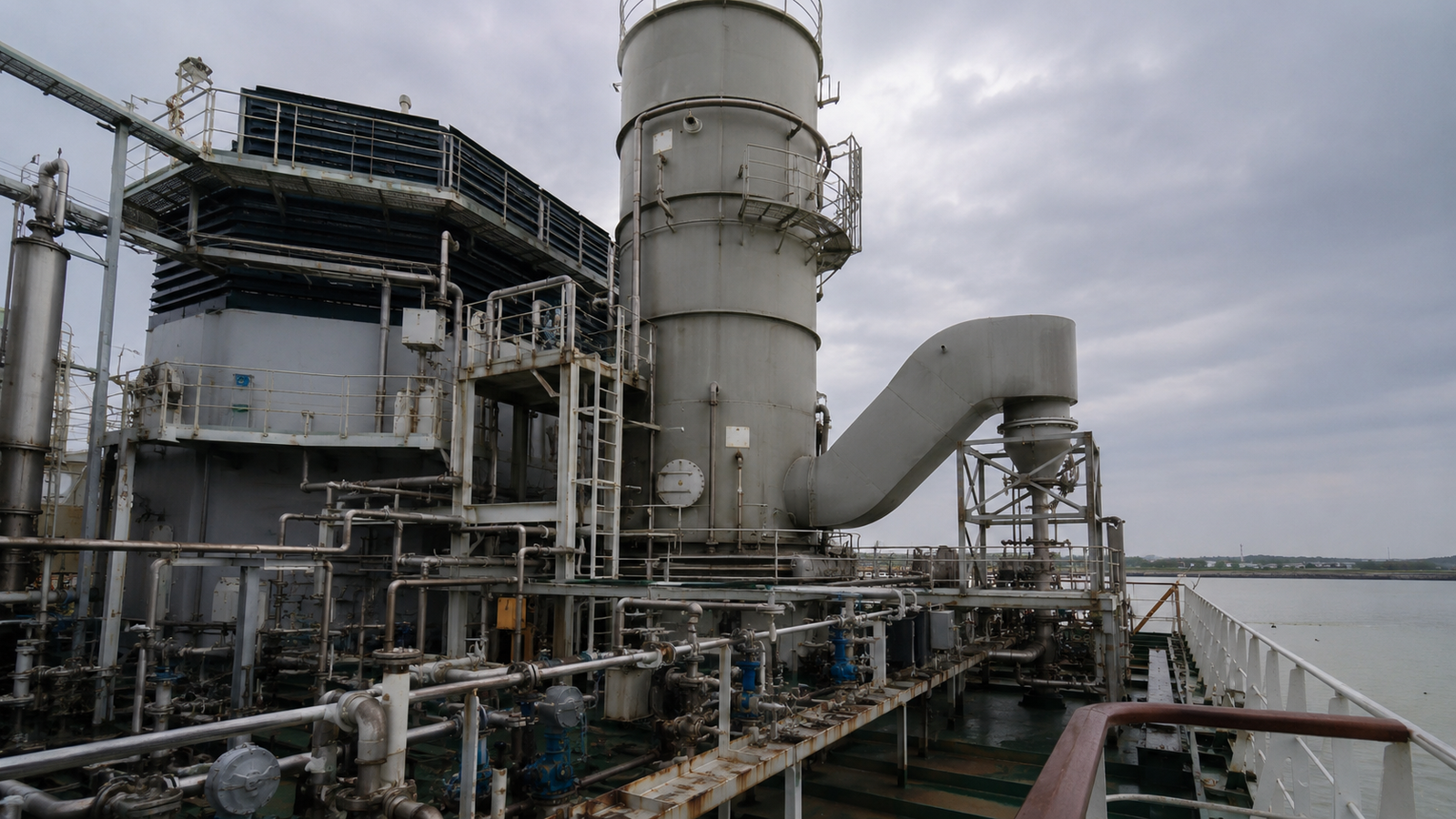
For buyers, engineers, and project teams, the key question is not “Which alloy is the most corrosion-resistant?” The better question is “Which material is suitable for this gas composition, condensation condition, temperature zone, and equipment design?”
Why There Is No Single Best Alloy for Exhaust Gas Treatment
Exhaust gas treatment systems can include scrubbers, absorbers, ducts, stacks, quench sections, heat exchangers, mist eliminators, wet flue gas desulfurization units, incineration gas treatment equipment, and chemical exhaust systems. Each area may experience a different corrosion environment.
For example:
- Hot dry gas zones may require high-temperature oxidation resistance.
- Acid dew point zones may face sulfuric acid or hydrochloric acid condensation.
- Wet scrubber zones may face low pH slurry, chlorides, fluorides, dissolved oxygen, and abrasive particles.
- Stack and outlet zones may face wet acidic condensate and deposit corrosion.
- Quench zones may face thermal shock, acid condensation, and erosion.
- Chemical exhaust systems may contain HCl, HF, SOx, NOx, VOCs, or mixed acid gases.
A material that performs well in one zone may not be suitable for another. Therefore, alloy selection should be made by equipment section and service condition, not by a general material label.
How Emission Control Requirements Affect Material Selection
Emission control requirements may influence the type of exhaust gas treatment equipment used, the chemical environment inside the system, and the severity of corrosion exposure.
EPA’s Clean Air Technology Center provides air pollution control technology fact sheets covering emission limits, reductions, applications, costs, and characteristics. EPA also discusses multi-pollutant control technologies for SO₂, NOx, and mercury reduction.
For material buyers, this does not mean every regulation automatically requires a higher alloy. It means the material should be reviewed whenever the exhaust gas treatment process changes.
Possible process changes include:
- More aggressive scrubbing chemistry
- Higher moisture content
- Lower outlet temperature
- More condensation
- Higher chloride concentration
- Different slurry chemistry
- More frequent cleaning
- Higher temperature operation
- Additional pollutant control stages
- Longer required service life
When process conditions change, material suitability should be checked again.
Why Gas Composition Is the First Question
Before selecting an alloy, buyers should define the exhaust gas composition as clearly as possible.
| Gas / Contaminant | Possible Corrosion Risk | What Buyers Should Confirm |
|---|---|---|
| SO₂ / SO₃ | Sulfuric acid formation, acid dew point corrosion, sulfidation | SOx level, moisture, dew point, temperature profile |
| HCl / chlorides | Pitting, crevice corrosion, chloride stress corrosion cracking, acid condensation | Chloride level, wet/dry condition, pH, temperature |
| HF / fluorides | Aggressive acid attack in wet zones | Fluoride level, moisture, pH, material compatibility |
| NOx | Nitric acid formation in wet conditions, oxidizing environment | NOx level, condensate chemistry, temperature |
| Water vapor | Condensation, acid formation, localized corrosion | Dew point, insulation, cold spots, shutdown condition |
| Oxygen | Oxidation, passivation behavior, interaction with other gases | Oxygen level and temperature |
| Particulates / ash | Erosion, under-deposit corrosion, abrasion | Particle loading, velocity, deposit chemistry |
| Alkali salts / metal salts | Hot corrosion or deposit corrosion | Deposit composition and operating temperature |
| VOCs or mixed gases | Complex reaction products or cleaning challenges | Full gas analysis and process variation |
A vague description such as “corrosive exhaust gas” is usually not enough. The supplier needs actual gas chemistry, moisture level, temperature range, and equipment location.
Why Acid Dew Point Matters
Acid dew point is one of the most important concepts in exhaust gas corrosion. A review on flue gas acid dew point explains that acid dew point is the temperature at which acid vapor, normally sulfuric acid vapor, begins to condense. Acid condensation can cause low-temperature corrosion.
You can review the source here: Review of Flue Gas Acid Dew-Point and Related Low Temperature Corrosion.
This is important because exhaust gas equipment often has temperature gradients. A duct, stack, heat exchanger, or scrubber inlet may pass through a temperature zone where acid condensation occurs. If sulfuric acid, hydrochloric acid, or mixed acid condensate forms on metal surfaces, corrosion can accelerate even if the gas temperature seems acceptable in the main flow.
Buyers should confirm:
- Gas inlet temperature
- Gas outlet temperature
- Surface temperature of metal parts
- Water dew point
- Acid dew point
- SO₃ level
- HCl and HF level
- Moisture content
- Shutdown and startup conditions
- Insulation and cold spots
- Condensate pH and chloride level
Material selection should consider the surface temperature and condensation risk, not only the bulk gas temperature.
Wet FGD and Scrubber Corrosion: Why It Is Complex
Wet flue gas desulfurization and wet scrubber systems can create aggressive corrosion conditions because hot gas, moisture, acid gases, slurry, chlorides, fluorides, oxygen, and particulates may be present together.
A study on FGD-related chimney corrosion notes that residual high-humidity gases after FGD can form concentrated acidic condensates, with sulfuric acid as a major corrosive agent; chlorides, fluorides, and other contaminants may also be present and aggravate corrosion.
You can review the source here: Influence of Temperature on Corrosion of Chimney Lining Materials After FGD.
In wet scrubber or FGD systems, buyers should confirm:
- Slurry chemistry
- Chloride concentration
- Fluoride concentration
- pH range
- Oxidation-reduction condition
- Solids content
- Flow velocity
- Deposit formation
- Local stagnant zones
- Erosion risk
- Cleaning procedure
- Temperature profile
This is why material selection for scrubbers, ducts, tanks, absorber inlets, stack liners, and heat exchanger sections may differ within the same plant.
High-Temperature Corrosion Is Not One Mechanism
Exhaust gas treatment equipment may also face high-temperature corrosion. ASM International discusses several high-temperature corrosion mechanisms of nickel alloys, including oxidation, nitridation, sulfidation, halogenation, hot corrosion, ash or salt deposit corrosion, molten salt corrosion, and molten metal corrosion.
You can review the source here: High-Temperature Corrosion Behavior of Nickel Alloys.
For buyers, this means the corrosion mechanism should be identified before selecting the alloy.
| Corrosion Mechanism | Typical Concern | Material Selection Note |
|---|---|---|
| Oxidation | Scale growth, spalling, wall loss | High chromium or oxidation-resistant alloys may be considered |
| Sulfidation | Sulfur-related high-temperature attack | Gas chemistry and temperature must be checked carefully |
| Halogenation | Chlorine or fluorine-related attack | Chlorides/fluorides and moisture are critical |
| Hot corrosion | Salt deposits and high-temperature attack | Deposit chemistry and metal temperature matter |
| Acid dew point corrosion | Acid condensation at low-temperature zones | Surface temperature and acid dew point must be reviewed |
| Erosion-corrosion | Particulates damage protective surface films | Velocity, particle loading, and hardness should be considered |
| Under-deposit corrosion | Deposits create localized corrosive cells | Cleaning, inspection, and deposit chemistry matter |
A material with good oxidation resistance may still fail in acid condensate. A material with good acid resistance may not be suitable for high-temperature dry gas. This is why the actual mechanism matters.
How to Compare Material Families
The following table is only a starting point for technical discussion. Final selection must be based on gas composition, temperature, acid dew point, condensate chemistry, flow condition, equipment design, and standards.
| Material Family | Why Buyers May Consider It | Important Caution |
|---|---|---|
| Carbon steel / coated steel | Low cost, available, suitable for mild or protected zones | Usually needs coating, lining, or corrosion allowance in aggressive exhaust environments |
| 304 / 316 stainless steel | General corrosion resistance and availability | May not be enough for severe chlorides, acid condensation, or high-temperature corrosion |
| Duplex stainless steel | Higher strength and better chloride resistance than standard austenitic stainless steels in some wet conditions | Welding, temperature limits, SCC risk, and exact chemistry must be reviewed |
| High-alloy stainless steel | Improved resistance in selected chloride or acidic environments | Cost, availability, fabrication, and limits must be checked |
| Ni-Cr-Mo alloys | Often considered for severe acid, chloride, and mixed corrosive environments | High cost; suitability depends on temperature, media, and mechanical requirements |
| Alloy 625 | Often considered where corrosion resistance and strength are both needed | Not universal; temperature, chloride, acid, and fabrication details must be confirmed |
| Alloy C-276 / C-22 type alloys | Often considered for aggressive chemical and mixed acid environments | Cost, availability, weldability, and exact condensate chemistry must be reviewed |
| Titanium Grade 2 / Grade 7 | Often considered for selected wet chloride or oxidizing acid environments | Crevices, reducing acids, high temperature, and fluorides may create limitations |
| Non-metallic linings / FRP / coatings | May reduce corrosion in selected wet zones | Mechanical damage, temperature limits, permeation, repair, and inspection must be managed |
NRC documentation on titanium corrosion resistance notes that titanium shows excellent resistance in chloride solutions, but crevice corrosion can be a limiting factor. Technical data on titanium corrosion also notes that titanium has only moderate resistance to reducing acids such as hydrochloric, sulfuric, and phosphoric acids, with corrosion rates increasing as acid concentration and temperature rise.
You can review these sources here: Corrosion Resistance of Titanium and Titanium Corrosion Manual.
How to Balance Performance and Budget
The lowest initial material price is not always the lowest total cost. Exhaust gas treatment equipment can be difficult to repair after installation, and corrosion problems may cause leakage, unplanned maintenance, shorter service life, or replacement work.
NIST’s Life Cycle Cost Manual explains that life cycle cost methodology considers the total cost of owning, operating, maintaining, and disposing of a system over a study period.
You can review the source here: NIST Life Cycle Cost Manual.
When comparing material options, buyers should consider:
- Initial material cost
- Fabrication and welding cost
- Coating or lining cost
- Inspection and testing cost
- Installation cost
- Expected service life
- Maintenance frequency
- Downtime consequence
- Replacement difficulty
- Lead time and availability
- Safety and environmental risk
- Documentation and compliance requirements
A higher-grade alloy may be more economical in a highly corrosive zone if it reduces replacement frequency. A lower-cost material may be acceptable in a mild or protected zone. The correct decision depends on risk level and life cycle cost, not only purchase price.
What Documents and Tests Should Buyers Request?
For exhaust gas treatment equipment materials, buyers should verify the material, product form, surface condition, testing, and traceability.
Common documents include:
- Material Test Certificate / Mill Test Report
- Heat number or batch number traceability
- Chemical composition report
- Mechanical properties report
- Heat treatment condition if required
- Dimensional inspection report
- Surface inspection report
- PMI report if required
- UT / PT / eddy current testing report if required
- Hydrostatic or pressure test report if required
- Corrosion test report if specified
- Third-party inspection report if required
- Packing and marking records
For metallic products, EN 10204 Type 3.1 and Type 3.2 inspection documents are commonly used to define inspection documentation. Type 3.1 provides specific inspection results and is validated by the manufacturer’s authorized inspection representative independent of manufacturing. Type 3.2 adds validation by the manufacturer’s authorized inspection representative and the purchaser’s authorized inspection representative or a designated inspector, depending on the requirement.
You can review the EN 10204 preview here: EN 10204 Inspection Documents.
Buyers should still check whether the certificate matches the physical material: heat number, grade, size, standard, test values, quantity, and marking.
What Inspection Methods May Be Useful?
Testing depends on product form, service risk, standard, and customer specification.
| Test / Inspection | Purpose |
|---|---|
| PMI testing | Helps verify alloy identity and major elements |
| Chemical analysis | Confirms composition against the required grade |
| Mechanical testing | Confirms tensile strength, yield strength, elongation, or hardness |
| Dimensional inspection | Confirms OD, wall thickness, length, tolerance, and shape |
| Visual inspection | Checks cracks, pits, scale, dents, surface damage, or contamination |
| Ultrasonic testing | Helps detect internal discontinuities in suitable products |
| Liquid penetrant testing | Helps reveal surface-breaking defects |
| Hydrostatic / pressure testing | Helps verify pressure integrity when required |
| Surface roughness testing | Useful when surface finish is specified |
| Third-party inspection | Adds independent verification for critical projects |
ASNT explains that ultrasonic testing uses high-frequency sound waves to detect and measure discontinuities in industrial components, while liquid penetrant testing reveals surface discontinuities in solid, nonporous materials.
You can review these methods here: ASNT Ultrasonic Testing and ASNT Liquid Penetrant Testing.
How to Evaluate Supplier Capability
A supplier should do more than quote a material grade and price. For exhaust gas treatment equipment, supplier capability should include material knowledge, documentation control, inspection support, stable supply, and clear technical communication.
Ask your supplier:
- Can you supply according to ASTM, ASME, EN, ISO, or customer specification?
- Can you provide MTC / MTR for the specific heat number?
- Can the material be traced back to the melt or batch?
- What product forms are available: tube, pipe, bar, plate, sheet, fitting, or custom part?
- Can you support required dimensions and tolerances?
- Can you provide PMI testing?
- Can you support UT, PT, eddy current, or hydrostatic testing if required?
- Can you support third-party inspection before shipment?
- Can you explain the limitations of the proposed alloy in the stated gas environment?
- Can you support custom length, surface finish, machining, or fabrication requirements?
- Can you provide suitable export packing and material marking?
- Can you help review previous corrosion or failure mode before suggesting a replacement material?
ISO describes ISO 9001 as a globally recognized standard for quality management. It can support supplier evaluation, but it should not be treated as proof that a specific batch of material is suitable for a specific exhaust gas treatment environment.
You can review the source here: ISO 9001 Quality Management Systems.
Practical RFQ Checklist for Exhaust Gas Treatment Alloys
Before sending an inquiry, buyers can prepare the following information:
- Equipment type: scrubber, absorber, duct, stack, quench section, heat exchanger, mist eliminator, or custom part
- Product form: tube, pipe, bar, plate, sheet, fitting, lining, or fabricated part
- Required material grade and UNS number if known
- Required standard: ASTM, ASME, EN, ISO, or customer specification
- Size, wall thickness, length, tolerance, and quantity
- Gas composition: SO₂, SO₃, NOx, HCl, HF, Cl⁻, VOCs, oxygen, water vapor, and other components
- Moisture content and condensation condition
- Acid dew point and operating temperature range
- Surface temperature of the metal part
- Wet or dry service condition
- pH and chemistry of condensate or scrubbing liquid
- Chloride and fluoride concentration
- Flow velocity and particulate loading
- Abrasion, erosion, or deposit risk
- Startup, shutdown, and temperature cycling conditions
- Required certificate type, such as EN 10204 3.1 or 3.2
- Required testing: PMI, UT, PT, eddy current, hydrostatic test, dimensional inspection, or third-party inspection
- Packing, marking, and delivery requirements
A clear RFQ helps the supplier recommend a suitable material instead of quoting a general corrosion-resistant alloy.
Conclusion
Choosing corrosion-resistant alloys for exhaust gas treatment equipment requires a scenario-based approach. The right material depends on gas composition, SOx, NOx, HCl, HF, moisture, acid dew point, temperature, condensate chemistry, flow velocity, particulates, equipment section, testing, documentation, and life cycle cost.
There is no universal alloy for every exhaust gas treatment system. Buyers should confirm the real service environment, identify the likely corrosion mechanism, verify supplier documentation, and compare total lifecycle risk before ordering.
When gas chemistry, operating conditions, inspection requirements, and material traceability are confirmed in advance, exhaust gas treatment equipment is more likely to achieve reliable long-term operation and reduced corrosion risk.