
Choosing titanium tubes for nuclear cooling water systems can feel complex. Many buyers focus only on titanium grade, tube size, and wall thickness, but these basic specifications do not fully define whether a tube is suitable for a demanding cooling-water application.
For nuclear-related cooling systems, buyers should also review surface condition, weld quality, internal cleanliness, testing records, traceability, and the supplier’s quality control capability.
Quick Answer:
When buying titanium tubes for nuclear cooling water systems, buyers should look beyond the titanium grade alone. Important checks include ASTM B338 titanium tube requirements, water chemistry, operating temperature, pressure and flow conditions, surface finish, weld integrity, internal cleanliness, non-destructive testing, MTR documentation, heat number traceability, and supplier quality assurance. These factors help support long-term cooling reliability and reduce procurement risk.
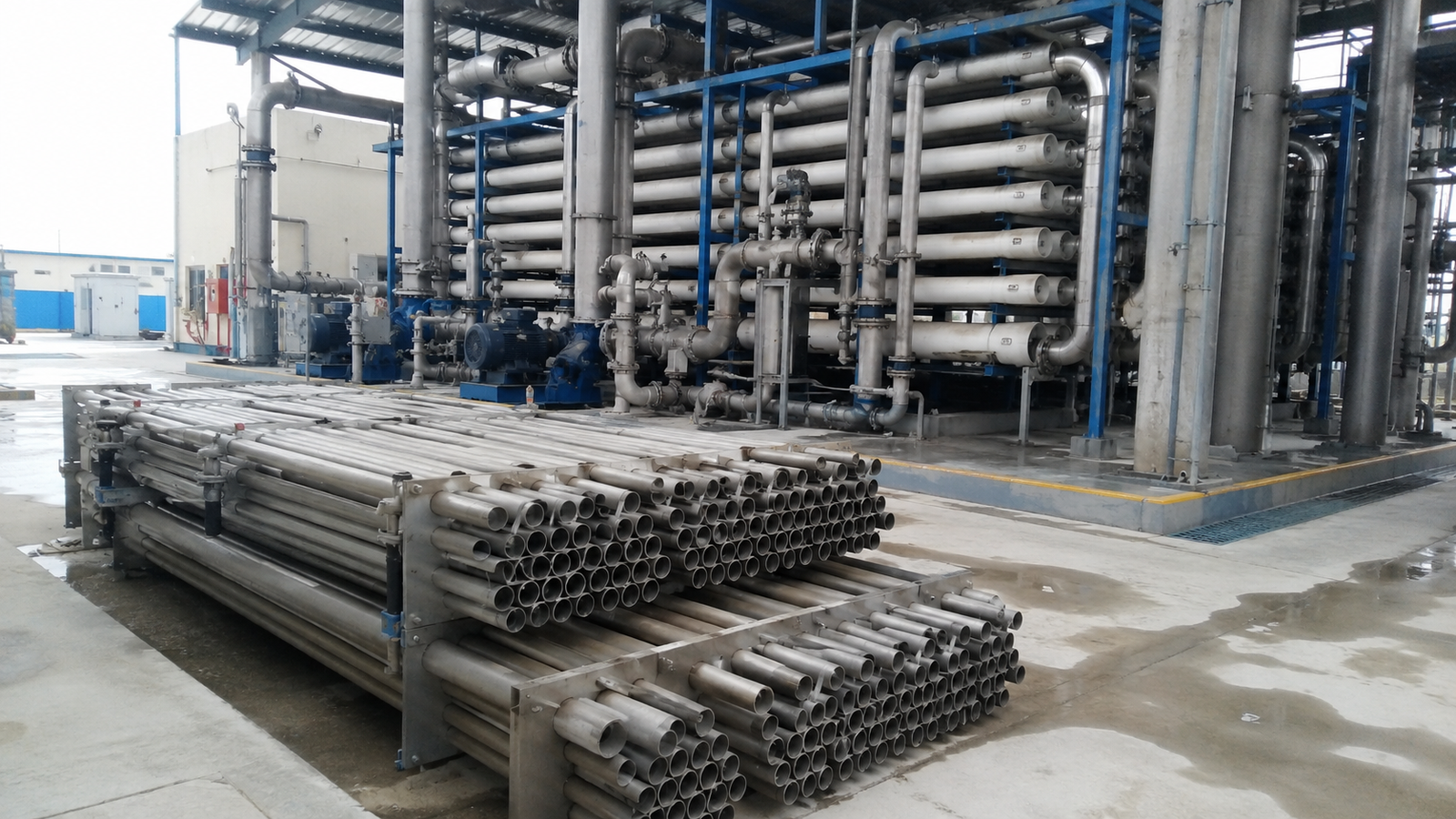
Selecting materials for nuclear cooling water systems is a serious procurement task. The tube is not just a metal part that fits a heat exchanger or condenser. It is part of a system that must support heat transfer, corrosion resistance, inspection, maintenance, and long-term reliability.
The U.S. Nuclear Regulatory Commission explains that essential service water systems remove heat from plant components that require cooling during normal operation and safety-related conditions: NRC Essential Service Water System. NRC training material also explains that even after reactor shutdown, decay heat must be removed to prevent fuel damage: NRC Pressurized Water Reactor Systems.
This is why buyers should not treat titanium tube procurement as a simple grade-and-price decision.
Are Surface Finish and Weld Quality as Important as Grade for Nuclear Tubes?
Many buyers think that once they choose a titanium grade, the most important decision is already finished. In reality, tube performance also depends on how the tube is manufactured, welded, cleaned, inspected, and documented.
Surface finish and weld quality can be as important as titanium grade for nuclear cooling water tubes. Poor internal surface condition may increase fouling or deposit risk, while poor weld quality may create weak points that require inspection and control. For critical cooling applications, buyers should evaluate grade, surface finish, weld integrity, cleanliness, and testing together.
Why Surface Finish Matters
The internal surface of a cooling tube is exposed to flowing water, suspended solids, dissolved ions, and possible treatment chemicals. A rough or poorly cleaned internal surface may allow deposits to build up more easily.
In heat exchangers, fouling refers to unwanted deposits on heat transfer surfaces. Fouling can reduce heat transfer, increase flow resistance, and contribute to operational problems. A technical chapter on heat exchanger fouling explains that fouling may include particulate, precipitation, corrosion, biological, and chemical reaction fouling: Fouling and Fouling Mitigation on Heat Exchanger Surfaces.
For titanium tubes, the issue is not that titanium is generally weak in cooling water. Titanium is widely used because of its corrosion resistance in many water and seawater environments. However, localized conditions such as deposits, stagnant areas, crevices, high temperature, or abnormal water chemistry can still create risk.
A review on titanium corrosion notes that titanium has strong corrosion resistance because of its protective oxide layer, but it may still suffer corrosion forms such as pitting, crevice corrosion, hydrogen embrittlement, stress-corrosion cracking, fretting corrosion, and erosion in severe environments: Corrosion of Titanium: Part 1.
Why Weld Quality Matters
For welded titanium tubes or welded tube assemblies, weld quality must be controlled carefully. Weld defects such as porosity, lack of fusion, incomplete penetration, or contamination can create reliability risks.
The International Atomic Energy Agency states that non-destructive testing is used for quality control, in-service inspection, and plant life assessment, and that NDT helps assess the performance and service life of components such as pipes and vessels: IAEA Non-Destructive Testing for Plant Life Assessment.
Weld integrity is also important in nuclear pressure-boundary applications. NRC operating experience has documented weld-related issues in reactor coolant system pressure boundaries: NRC Reactor Coolant System Weld Issues.
For titanium tube buyers, this means the purchase specification should not only say “titanium tube.” It should also define the tube type, welding requirements, inspection method, acceptance criteria, surface condition, and documentation package.
Key Tube Attributes Buyers Should Check
| Feature | Why It Matters for Nuclear Cooling Water Systems | Risk if Poorly Controlled |
|---|---|---|
| Surface Finish | Helps reduce fouling, deposit buildup, and cleaning difficulty | Fouling, reduced heat transfer, localized corrosion risk |
| Weld Quality | Supports tube integrity and leak prevention | Weld defects, leakage, premature failure |
| Internal Cleanliness | Helps reduce contamination and deposit initiation | Contamination, fouling, corrosion initiation sites |
| Dimensional Accuracy | Supports installation, tube expansion, and heat exchanger fit | Assembly problems, leakage risk, rework |
| Non-Destructive Testing | Helps detect defects before shipment or service | Undetected flaws, higher failure risk |
| Traceability | Connects each tube to heat number, test records, and inspection | Documentation gaps, procurement risk |
For nuclear-related projects, these physical and documentary details are not “extra requirements.” They are part of responsible material selection and supplier evaluation.
Does One Titanium Tube Fit All Nuclear Cooling Water Systems?
No single titanium tube fits every nuclear cooling water system. The correct tube depends on the cooling medium, temperature, pressure, flow velocity, tube design, applicable code, and project-specific documentation requirements.
A generic titanium tube may not be suitable for every nuclear cooling water system. Buyers should evaluate the actual operating environment, including water chemistry, chloride level, dissolved oxygen, temperature, pressure, flow rate, fouling risk, and regulatory or project specifications.
Water Chemistry
Cooling water may be fresh water, seawater, brackish water, demineralized water, treated water, or recirculating cooling water. Each environment can affect material selection differently.
Important water chemistry factors include:
- Chloride content
- pH
- Dissolved oxygen
- Suspended solids
- Sediment
- Biological activity
- Corrosion inhibitors
- Biocides
- Temperature
- Flow velocity
Titanium is often selected for seawater and chloride-containing environments because of its corrosion resistance. However, research on titanium heat exchanger tubes shows that failure can still occur under certain service conditions. One failure analysis reported leakage on titanium tubes in seawater heat exchangers within the recirculating cooling water system of a coastal nuclear power plant: Failure analysis on leaked titanium tubes of seawater heat exchangers.
Another published failure analysis reported abnormal wall thinning of heat-transfer titanium tubes in condensers at a nuclear power plant, involving corrosion, wear, erosion, and cavitation-related mechanisms: Failure analysis on abnormal wall thinning of heat-transfer titanium tubes.
These examples do not mean titanium is unsuitable. They show that titanium tube selection must match the real cooling-water environment and the full system design.
Operating Temperature and Pressure
Temperature and pressure affect both corrosion behavior and mechanical requirements. Higher temperature may increase corrosion risk in some localized environments, especially where crevices, deposits, or abnormal water chemistry exist.
A study on titanium tube corrosion in natural seawater cooling environments discusses crevice corrosion behavior and notes that titanium grades can behave differently under elevated temperature and seawater conditions: Corrosion Failure of Titanium Tubes of a Heat Exchanger.
For this reason, buyers should not assume that Grade 2, Grade 7, Grade 12, or any other grade is automatically correct. The selected grade must match the operating temperature, water chemistry, mechanical load, and project specification.
Flow Rate and Vibration
Cooling water tubes may be exposed to high flow velocity, vibration, suspended particles, and tube support contact. These conditions can influence erosion, fretting, wall thinning, and fatigue risk.
For heat exchanger and condenser tubing, buyers should confirm:
- Tube outside diameter
- Wall thickness
- Tube length
- Straightness
- Tube support design
- Flow velocity
- Vibration risk
- Erosion or sediment risk
- Inspection requirements
Standards and Project Specifications
A tube that meets one general material standard may not automatically meet every nuclear project requirement. ASTM, ASME, local nuclear regulations, customer engineering specifications, and facility-level procurement requirements may all apply.
For titanium tubes used in condensers and heat exchangers, ASTM B338 is a key standard. ASTM B338 covers seamless and welded titanium and titanium alloy tubes for surface condensers, evaporators, and heat exchangers: ASTM B338.
However, nuclear-related projects may also require quality assurance requirements beyond the product standard. For example, 10 CFR Part 50 Appendix B establishes quality assurance requirements for activities affecting safety-related structures, systems, and components, including purchasing, fabricating, handling, shipping, storing, cleaning, inspecting, testing, operating, maintaining, and modifying: 10 CFR Part 50 Appendix B.
This is why buyers should always confirm the project specification before ordering.
Application Factors That Affect Tube Selection
| Factor | Why It Matters | Example Impact |
|---|---|---|
| Water Chemistry | Determines corrosion, fouling, and deposit risk | Seawater may require different evaluation than demineralized water |
| Chloride Level | Important for titanium corrosion behavior in some conditions | Crevice or deposit areas may need special attention |
| Operating Temperature | Higher temperature can change corrosion and mechanical behavior | Grade and inspection requirements may change |
| Pressure | Affects wall thickness and pressure design | Thicker wall or stricter testing may be required |
| Flow Rate | Affects erosion, vibration, and heat transfer | Tube support and wall thickness must be reviewed |
| Cleanliness | Helps reduce contamination and deposit initiation | Cleaning and packaging requirements may be needed |
| Standards | Defines material, testing, and documentation | ASTM B338 alone may not cover all nuclear QA needs |
| Project QA Requirements | Controls procurement, inspection, records, and audits | Supplier must provide traceability and quality records |
How Can You Verify a Supplier’s Claims for Nuclear-Related Titanium Tubes?
Suppliers may use terms such as “nuclear-grade,” “high quality,” or “critical application material.” These words are not enough by themselves. Buyers need verifiable documents, clear specifications, and evidence of quality control.
To verify a supplier’s claims, buyers should request batch-specific MTRs, heat number traceability, inspection reports, applicable standards, quality system certificates, and evidence that the supplier can meet project-specific QA requirements. For nuclear-related supply chains, marketing claims should be replaced with documented proof.
Material Test Reports
A Material Test Report should be specific to the delivered batch. It should not be a general sample report.
For titanium tubes, buyers should request MTR information such as:
- Material grade
- Heat number
- Chemical composition
- Mechanical properties
- Product form
- Tube size
- Applicable standard
- Heat treatment condition, if applicable
- Test results
- Inspection reference
- Supplier or mill identification
Heat Number Traceability
Traceability connects the delivered tubes to raw material, production batch, testing records, and inspection results. For critical projects, buyers should be able to trace a tube back to the heat or melt number.
This is especially important when the project requires strict quality documentation or customer audit records.
Quality Certifications
For general quality management, ISO 9001 is an important baseline. ISO describes ISO 9001 as a quality management system standard and notes that it is widely used for organizations that need to demonstrate consistent products and services: ISO 9001.
For nuclear-related projects, ISO 9001 may not be enough by itself. Depending on the project, buyers may need to consider nuclear-specific QA requirements such as ASME NQA-1. ASME explains that the NQA-1 Certification Program provides independent third-party certification for quality assurance programs: ASME NQA-1 Certification.
The applicable requirement depends on the customer specification, plant location, safety classification, and procurement scope.
Inspection and Testing
Buyers should not rely only on certificate names. They should ask what inspection and testing are actually performed.
Common checks may include:
- Visual inspection
- Dimensional inspection
- Surface inspection
- Chemical analysis review
- Mechanical property verification
- Eddy current testing, if applicable
- Ultrasonic testing, if applicable
- Hydrostatic or pneumatic testing, if required
- Weld inspection for welded tubes
- Cleanliness and packaging check
IAEA guidance supports the use of non-destructive testing for quality control, in-service inspection, and plant life assessment: IAEA NDT for Plant Life Assessment.
Supplier Audit Capability
For nuclear-related or high-consequence projects, buyers may need to audit the supplier’s quality system. This may include review of:
- Raw material control
- Production routing
- Welding procedure control
- Cleaning procedure
- Nonconforming material control
- Inspection records
- Calibration records
- Packaging and storage controls
- Document retention
- Corrective action process
A supplier who can support audits and provide organized records is often more valuable than a supplier who only offers a low price.
What Proof Should Buyers Request?
| Type of Proof | What to Check | Why It Matters |
|---|---|---|
| MTR | Chemistry, mechanical properties, heat number, standard | Confirms the actual batch meets specification |
| Heat Number Traceability | Link between tube, raw material, and test records | Supports documentation and quality review |
| ASTM B338 Compliance | Seamless or welded titanium tube requirements | Confirms product standard for condenser and heat exchanger tubes |
| NDT Records | Eddy current, ultrasonic, hydrostatic, or other tests if required | Helps identify defects before shipment |
| Weld Records | Weld process, weld inspection, acceptance criteria | Supports welded tube integrity |
| Surface and Cleanliness Records | Internal surface condition, cleaning, packaging | Reduces fouling and contamination risk |
| ISO 9001 Certificate | General quality management system | Shows baseline QMS control |
| ASME NQA-1, if required | Nuclear QA program evidence | Supports nuclear-specific quality expectations |
| Customer Audit Support | Access to procedures and records | Helps verify supplier capability |
Why Should Buyers Think Beyond Initial Cost?
It is natural to compare prices when buying titanium tubes. However, for nuclear cooling water systems, the lowest initial price may not represent the lowest lifecycle risk.
Buyers should think beyond initial cost because inadequate material selection, incomplete documentation, poor surface condition, weak weld control, or insufficient testing may create downstream risk. In critical cooling systems, lifecycle performance, inspection, maintenance, downtime risk, and documentation quality can be more important than the initial tube price alone.
The cost of a titanium tube is only one part of the total cost. If a tube fails, the buyer may face:
- Emergency inspection
- Unplanned maintenance
- Tube plugging or replacement
- Heat exchanger performance loss
- Shutdown or reduced operating capacity
- Additional regulatory or quality review
- Rework and documentation investigation
- Supplier corrective action
Published failure analyses of titanium tubes in nuclear heat exchangers and condensers show that issues such as leakage, wall thinning, corrosion, wear, erosion, and mechanical degradation can occur under real plant conditions when system, material, and operating factors interact: Failure analysis on leaked titanium tubes, Failure analysis on abnormal wall thinning.
This is why buyers should evaluate total procurement value, not just unit price.
Initial Cost vs Lifecycle Risk
| Factor | Low Initial Cost Tube | Properly Specified and Verified Tube |
|---|---|---|
| Initial Purchase Price | Lower | Higher |
| Specification Fit | May be incomplete | Matched to project requirements |
| Testing | May be limited | Defined by buyer specification |
| Documentation | May be incomplete | MTR, heat number, inspection records |
| Traceability | May be weak | Batch-specific and reviewable |
| Surface Control | May not be clearly defined | Surface and cleanliness requirements specified |
| Weld Control | May not be fully documented | Weld and inspection records available |
| Lifecycle Risk | Higher if requirements are missed | Lower when specification and QA are controlled |
The better question is not “Which tube is cheapest?” The better question is “Which tube is properly specified, tested, documented, and suitable for this cooling water system?”
RFQ Checklist for Titanium Tubes in Nuclear Cooling Water Systems
To receive an accurate quotation, buyers should provide the following information:
| RFQ Item | Example |
|---|---|
| Titanium Grade | Grade 2, Grade 7, Grade 12, or customer-specified grade |
| Standard | ASTM B338, ASME, customer specification, or project-specific requirement |
| Tube Type | Seamless or welded |
| Outside Diameter | For example: 19.05 mm, 25.4 mm, 31.75 mm |
| Wall Thickness | For example: 0.7 mm, 0.9 mm, 1.2 mm |
| Length | Fixed length or random length |
| Surface Condition | Pickled, polished, bright, cleaned, or customer-specified |
| Internal Cleanliness | Cleaning and packaging requirement |
| Testing | Eddy current, ultrasonic, hydrostatic, pneumatic, visual, dimensional |
| Documentation | MTR, heat number, inspection report, certificate |
| Water Chemistry | Seawater, fresh water, treated water, demineralized water |
| Operating Conditions | Temperature, pressure, flow rate |
| Application | Condenser, heat exchanger, service water system, auxiliary cooling |
| QA Requirement | ISO 9001, ASME NQA-1, customer audit, project QA plan |
| Destination | Country, port, or delivery address |
Providing this information helps the supplier evaluate whether the tube can be quoted as a standard product or whether it requires project-specific review.
How Emily PIPE Supports Titanium Tube Buyers
Emily PIPE is a China-based manufacturer and exporter specializing in nickel alloy tubes, nickel alloy bars, titanium alloy tubes, and titanium alloy bars. For cooling water systems, heat exchangers, condensers, and high-reliability industrial applications, we support titanium tube supply according to customer drawings, technical requirements, and application environments.
We can support buyers with:
- Titanium seamless and welded tube supply
- Standard and customized specifications
- Material grade selection support
- ASTM B338-related supply requirements
- Batch traceability
- Material Test Reports
- Dimensional and surface inspection
- Custom length and surface requirements
- Export packaging and logistics support
- Communication for project-based procurement
For nuclear-related applications, the final material and QA requirements must always follow the buyer’s project specification, engineering code, safety classification, and regulatory requirements. Our role is to support material supply, documentation, inspection, and communication according to the defined purchase requirements.
If you are selecting titanium tubes for nuclear cooling water systems, condensers, heat exchangers, or other critical cooling applications, please send your grade, standard, tube size, wall thickness, surface condition, testing requirements, documentation requirements, and application environment.
FAQ: Titanium Tubes for Nuclear Cooling Water Systems
1. Is Grade 2 titanium enough for nuclear cooling water systems?
Grade 2 titanium is widely used in heat exchanger and condenser applications, but it is not automatically suitable for every nuclear cooling water system. Buyers should confirm water chemistry, temperature, pressure, flow rate, corrosion risk, and project specification before selecting Grade 2.
2. What standard is commonly used for titanium tubes in condensers and heat exchangers?
ASTM B338 is commonly referenced for seamless and welded titanium and titanium alloy tubes used in surface condensers, evaporators, and heat exchangers.
3. Are welded titanium tubes acceptable?
Welded titanium tubes may be acceptable when they meet the required standard, welding quality, testing, and project specification. Buyers should confirm weld inspection, acceptance criteria, and documentation requirements.
4. Why is internal cleanliness important?
Internal cleanliness helps reduce contamination, deposit initiation, and fouling risk. For critical cooling systems, cleaning, handling, storage, and packaging requirements should be clearly defined in the purchase specification.
5. What documents should be requested with titanium tubes?
Buyers should request MTRs, heat number traceability, inspection reports, applicable standard confirmation, dimensional records, surface condition records, and any project-specific QA documents.
6. Is ISO 9001 enough for nuclear-related titanium tube supply?
ISO 9001 is a general quality management system standard. For nuclear-related or safety-related applications, additional requirements such as ASME NQA-1, 10 CFR 50 Appendix B, customer QA plans, or project-specific requirements may apply.
7. Why should buyers avoid choosing only by lowest price?
The lowest initial price may create higher lifecycle risk if the tube is not properly specified, tested, cleaned, documented, or traceable. For critical cooling applications, specification fit and documentation quality are often more important than unit price alone.
8. What should I provide when requesting a quotation?
You should provide titanium grade, standard, tube type, OD, wall thickness, length, surface condition, testing requirements, documentation requirements, water chemistry, operating temperature, pressure, flow rate, and destination.
Conclusion
Choosing titanium tubes for nuclear cooling water systems requires more than checking grade, diameter, and wall thickness. Buyers should evaluate the full application environment, including water chemistry, temperature, pressure, flow rate, surface finish, weld quality, internal cleanliness, NDT, documentation, traceability, and supplier QA capability.
Titanium is widely used in condenser and heat exchanger applications because of its corrosion resistance and long service history. However, nuclear-related cooling systems require careful specification control and evidence-based procurement.
The best titanium tube for a nuclear cooling water system is not simply the cheapest tube or the most common grade. It is the tube that matches the cooling environment, project standard, quality assurance requirements, testing plan, and long-term reliability expectations.