
Choosing the right alloy can feel overwhelming. For many industrial buyers, the challenge is not only comparing specifications. It is confirming whether the selected nickel alloy or titanium alloy truly matches the operating environment, fabrication route, documentation requirements, and long-term project risk.
A reliable alloy supplier does not simply answer “yes” or “no.” A reliable supplier helps buyers clarify technical requirements, check application conditions, review material data, verify traceability, and turn complex material behavior into practical procurement decisions.
Quick Answer:
A good alloy supplier supports technical confirmation by helping buyers evaluate the application environment, operating temperature, corrosion risk, mechanical stress, fabrication method, material standard, MTR documentation, heat number traceability, and inspection requirements. This helps reduce selection risk and supports more confident decisions for nickel alloy tubes, nickel alloy bars, titanium alloy tubes, and titanium alloy bars.
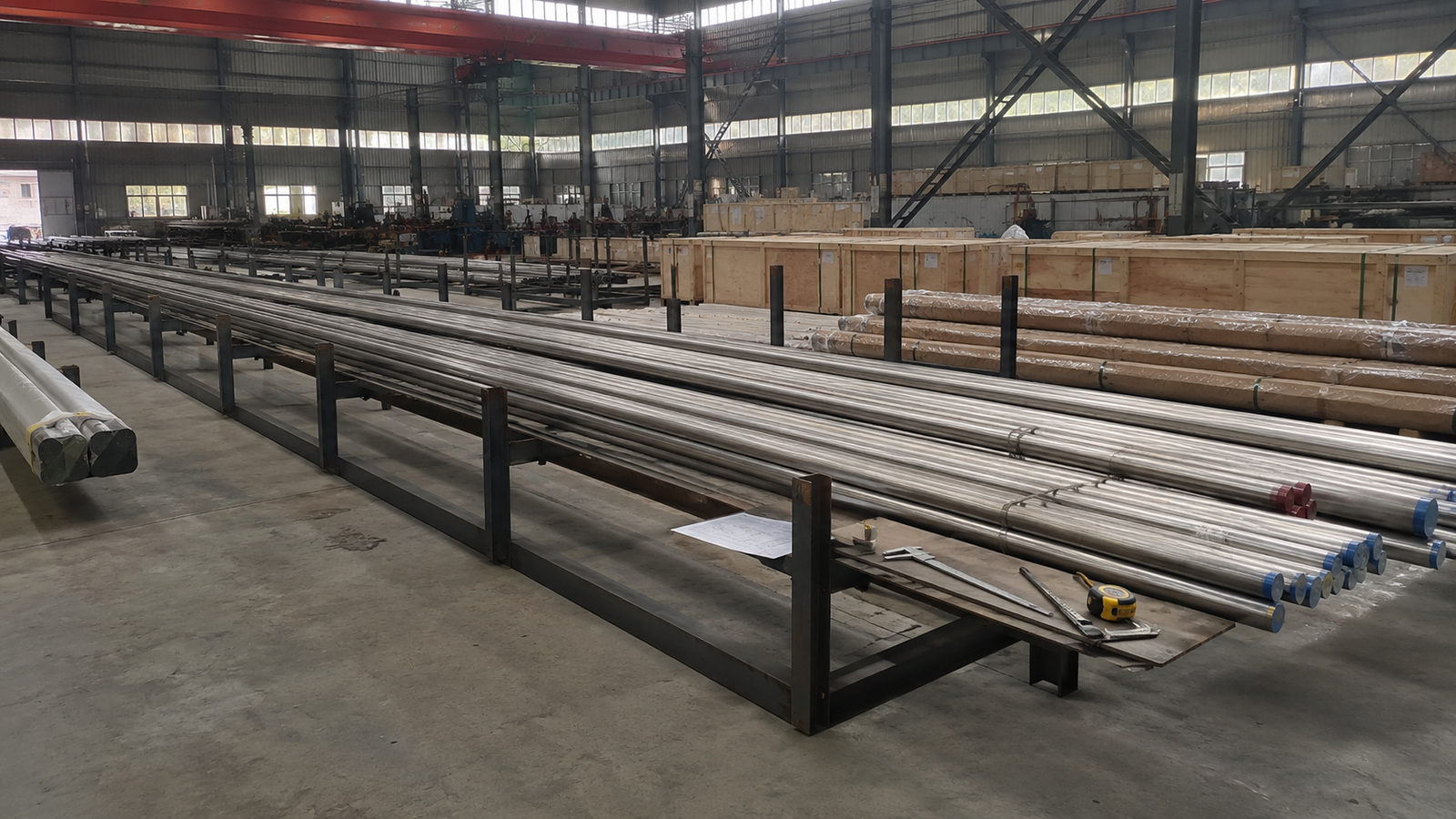
Material selection is rarely a simple specification-matching exercise. The UK Health and Safety Executive lists many factors that may affect material choice, including tensile strength, toughness, hardness, fatigue resistance, creep resistance, low and high temperature effects, corrosion resistance, ease of fabrication, availability, and cost: HSE Design Codes - Plant.
For corrosion-related applications, the Association for Materials Protection and Performance also notes that no material is resistant to all corrosive situations, and that material selection is critical to preventing many types of failures: AMPP Materials Selection and Design for Corrosion Control.
This is why supplier technical confirmation matters. It connects material science, manufacturing experience, and buyer-specific operating conditions.
Why Is Alloy Selection Never a Simple “Yes” or “No” Question?
Many buyers ask a supplier a short question: “Is this alloy suitable?”
In reality, a responsible answer usually requires more information. Alloy selection depends on the application, temperature, pressure, corrosion media, mechanical stress, fabrication method, applicable standard, and inspection requirement.
Alloy selection is complex because the same alloy can perform differently under different service conditions. A material that works well in one environment may not be suitable in another if temperature, chemistry, stress, welding, surface condition, or operating cycle changes.
1. Operating Environment
The first question is always: where will the alloy be used?
A nickel alloy tube used in a chemical reactor, a titanium tube used in a heat exchanger, and a nickel alloy bar used for a high-temperature shaft may all face very different risks.
Important operating factors include:
- Temperature
- Pressure
- Flow condition
- Chemical media
- Chloride level
- Acidity or alkalinity
- Oxidizing or reducing conditions
- Cyclic loading
- Vibration
- Expected service life
- Cleaning or sterilization process
- Maintenance conditions
NIST has published corrosion performance database information covering many corrosive environments and alloy families, showing why corrosion evaluation must be related to specific chemicals and conditions: NIST NACE/NIST Corrosion Performance Databases.
This is why a supplier should not confirm material suitability based only on the alloy name.
2. Corrosion Media
Corrosion resistance is not a universal property. A material can have excellent corrosion resistance in one medium but perform poorly in another.
For example, stainless steels and nickel alloys are widely used in chemical and petrochemical industries because of their corrosion resistance in aqueous, gaseous, and high-temperature environments. However, Nickel Institute guidance also explains that material selection must consider the specific service environment, such as chlorides, reducing acids, operating temperature, and cleaning agents: Nickel in Process Engineering.
A good supplier should ask questions such as:
- What chemicals will contact the material?
- What is the concentration?
- What is the operating temperature?
- Is the environment oxidizing or reducing?
- Are chlorides present?
- Is there risk of pitting, crevice corrosion, or stress corrosion cracking?
- Will the component be cleaned with chemicals?
Without this information, alloy selection can become guesswork.
3. Mechanical Stress
Mechanical requirements also affect material choice. A tube used for fluid transfer, a bar used for a rotating shaft, and a component used under cyclic loading may require different strength, fatigue resistance, toughness, and dimensional control.
A material with high tensile strength may still be unsuitable if it lacks enough ductility, toughness, fatigue resistance, or corrosion resistance for the actual service condition. This is why buyers should not rely on one impressive number in a data sheet.
Key mechanical questions include:
- Is the part under static load or cyclic load?
- Is fatigue resistance important?
- Is impact toughness required?
- Will the part be exposed to vibration?
- Will it be used at high temperature?
- Is creep resistance required?
- Is the component safety-critical?
4. Fabrication Method
The selected alloy must not only perform in service. It must also be workable during production.
Buyers should confirm whether the material will be:
- Welded
- Cold formed
- Hot worked
- Machined
- Bent
- Expanded
- Heat treated
- Polished
- Pickled
- Ground
- Cut to custom length
Fabrication method can strongly affect final performance. For example, TWI explains that nickel alloys are readily welded, but welding surfaces must be cleaned carefully, and common welding imperfections can include porosity, oxide inclusions, lack of inter-run fusion, solidification cracking, and microfissuring: TWI Weldability of Nickel and Nickel Alloys.
TWI also notes that hot cracking in nickel alloy welds can be related to contamination such as grease, oil, dirt, sulphur, phosphorus, lead, bismuth, and boron: TWI Welding of Nickel Alloys.
This means a supplier should discuss fabrication before confirming an alloy, especially for welded tubes, machined bars, or high-reliability components.
What Questions Should a Supplier Ask Before Confirming an Alloy?
A good supplier should not only ask for grade, size, and quantity. Technical confirmation requires a more complete view of the project.
| Question | Why It Matters |
|---|---|
| What is the application? | Helps connect material choice to real operating conditions |
| What medium will contact the alloy? | Determines corrosion resistance requirements |
| What is the operating temperature? | Affects strength, oxidation, creep, and corrosion behavior |
| What is the operating pressure? | Affects wall thickness, strength, and safety margin |
| Is the load static or cyclic? | Determines fatigue and toughness requirements |
| Will the part be welded or machined? | Affects alloy form, heat treatment, surface condition, and cost |
| What standard is required? | Confirms ASTM, ASME, ISO, EN, AMS, NACE, or customer specification |
| What documents are required? | Confirms MTR, certificate, inspection report, and traceability |
| Is third-party inspection needed? | Important for critical projects or customer audits |
| What is the target delivery schedule? | Helps check production route and realistic lead time |
These questions help avoid two common mistakes: under-specifying the material and over-specifying the material.
How Do Suppliers Clarify Misunderstandings About Alloy Properties?
Generic data sheets are useful, but they do not always tell the full story. A data sheet can show chemical composition, tensile strength, yield strength, elongation, hardness, or temperature limits. However, real-world performance depends on the actual application.
A reliable supplier helps buyers interpret material data in context. This means explaining how test conditions, temperature, corrosion media, fabrication route, heat treatment, surface condition, and batch-specific properties may affect final performance.
Misunderstanding 1: “Higher Strength Always Means Better Material”
Higher strength is not always better. A stronger material may be harder to form, more difficult to machine, less ductile, or more expensive. In some applications, toughness, fatigue resistance, corrosion resistance, or weldability may be more important than maximum tensile strength.
A good supplier should help buyers compare:
- Tensile strength
- Yield strength
- Elongation
- Hardness
- Impact toughness
- Fatigue behavior
- Creep resistance
- Corrosion resistance
- Weldability
- Machinability
Misunderstanding 2: “Corrosion Resistant Means Resistant to Everything”
No alloy resists every corrosive environment. A material may perform well in seawater but not in hot acidic media. Another material may resist reducing acids but be less suitable under strongly oxidizing conditions.
This is why the buyer should provide media name, concentration, temperature, pH, chloride content, oxygen level, flow condition, and cleaning process whenever possible.
Misunderstanding 3: “Maximum Temperature Means Safe Continuous Use”
A maximum temperature shown in a data sheet does not always mean the alloy is suitable for long-term service at that temperature. At elevated temperatures, buyers may need to consider oxidation, creep, thermal fatigue, structural stability, and long-term exposure.
Cambridge educational material on nickel-based superalloys explains that creep and oxidation resistance are prime design criteria for superalloys used at high temperatures: Nickel Based Superalloys - University of Cambridge.
Misunderstanding 4: “Standard Specification Covers Everything”
ASTM, ASME, EN, ISO, AMS, and NACE standards are important. But a standard is not always the complete answer. A project may also require additional testing, tighter tolerances, special surface finish, customer-specific inspection, or third-party certification.
NASA’s materials and processes standard explains that materials and processes control can be incorporated into program or project hardware procurement and technical programs: NASA Standard Materials and Processes Requirements.
For industrial buyers, this means the purchase order should clearly define not only the alloy grade, but also the complete technical and documentation requirements.
What Role Do MTRs and Traceability Play in Building Trust?
In alloy procurement, trust should be based on verifiable documents, not only supplier claims.
Material Test Reports, heat number traceability, inspection records, and quality management systems help buyers verify that the supplied alloy matches the required specification and batch-specific performance data.
Material Test Reports
A Material Test Report, often called an MTR or Mill Test Certificate, should provide batch-specific evidence of material properties.
For nickel alloy tubes, nickel alloy bars, titanium alloy tubes, or titanium alloy bars, an MTR should normally include:
- Material grade
- Heat number or batch number
- Chemical composition
- Mechanical properties
- Product form
- Size
- Applicable standard
- Heat treatment condition, if applicable
- Test results
- Manufacturer or mill information
- Inspection reference
The buyer should check whether the MTR matches the purchase order, product markings, and delivered material.
Heat Number Traceability
A heat number is used to link metal products to a specific batch or heat. It helps connect the delivered material with production records, composition data, and quality information: Heat Number - Wikipedia.
For critical applications, heat number traceability helps buyers answer questions such as:
- Which batch did this material come from?
- Which test report belongs to this batch?
- Was the delivered material marked correctly?
- Can the supplier trace the material back to raw material or mill records?
- Can the supplier provide replacement or investigation support if a problem occurs?
Quality Management System
A quality certificate is not a substitute for technical review, but it is still important. ISO 9001 is a globally recognized quality management system standard that helps organizations establish, implement, maintain, and improve their quality management systems: ISO 9001.
For buyers, ISO 9001 can be a baseline supplier evaluation factor. However, some industries may require additional systems or approvals, such as ISO 13485 for medical devices, AS9100 for aerospace, NQA-1 for nuclear-related projects, or customer-specific audit requirements.
How Can Suppliers Translate Material Science into Practical Advice?
Material science can be difficult for procurement teams, engineers, and project buyers to translate into daily decisions. A reliable supplier helps bridge this gap.
A good alloy supplier explains how alloy composition, microstructure, heat treatment, fabrication route, and surface condition affect practical performance. This helps buyers connect technical theory with real procurement choices.
Microstructure and Performance
The internal structure of an alloy affects its final behavior. Grain size, phases, precipitates, cold work, heat treatment, and surface condition can influence strength, ductility, toughness, fatigue resistance, creep resistance, and corrosion behavior.
For titanium alloys, a review of metastable beta titanium alloys explains that different titanium phases and phase combinations are associated with different strength, toughness, fatigue, and corrosion behavior: A Review of Metastable Beta Titanium Alloys.
For nickel-based superalloys, high-temperature performance is closely related to microstructure and creep resistance. Cambridge educational material explains that creep and oxidation resistance are key design criteria for high-temperature superalloys: Nickel Based Superalloys.
Processing Route
The same alloy grade may behave differently depending on how it is produced and processed.
Important processing factors include:
- Hot rolling
- Cold drawing
- Forging
- Annealing
- Solution treatment
- Aging treatment
- Stress relieving
- Welding
- Pickling
- Grinding
- Polishing
- Straightening
- Final inspection
For example, cold drawing can increase strength but may reduce ductility. Heat treatment can relieve stress or adjust microstructure. Welding can introduce heat-affected zones, residual stress, and possible weld defects if not controlled properly.
A supplier with manufacturing experience can help buyers understand whether the selected product form is suitable for the planned machining, welding, forming, or final assembly.
Practical Technical Confirmation Checklist for Alloy Buyers
Before placing an order, buyers should prepare a complete technical requirement package.
| Confirmation Item | What to Provide |
|---|---|
| Alloy Grade | Inconel 625, Inconel 718, Hastelloy C276, Monel 400, Grade 2 Titanium, Grade 5 Titanium, etc. |
| Product Form | Tube, pipe, bar, rod, forged bar, seamless tube, welded tube |
| Standard | ASTM, ASME, EN, ISO, AMS, NACE, or customer specification |
| Size | OD, wall thickness, diameter, length, tolerance |
| Surface Condition | Pickled, polished, bright annealed, ground, peeled, machined |
| Heat Treatment | Annealed, solution treated, aged, stress relieved, as required |
| Application | Heat exchanger, chemical reactor, shaft, connector, fastener, medical component |
| Operating Medium | Seawater, acid, alkali, gas, steam, chloride solution, high-temperature air |
| Temperature and Pressure | Normal and maximum operating conditions |
| Mechanical Load | Static, cyclic, vibration, impact, fatigue, creep |
| Fabrication Method | Welding, bending, machining, forming, threading, expansion |
| Testing | PMI, UT, eddy current, hydrostatic, tensile, hardness, flattening, flaring |
| Documentation | MTR, heat number, inspection report, certificate of origin |
| Inspection | Internal inspection, customer inspection, third-party inspection |
| Delivery Requirement | Quantity, packaging, destination, lead time |
This checklist helps both buyer and supplier confirm whether the selected alloy is technically suitable and commercially realistic.
What Should Buyers Expect from a Good Alloy Supplier?
A reliable alloy supplier should support buyers in four main areas.
1. Application-Based Material Discussion
The supplier should ask about application conditions before recommending a material. If the supplier only asks for grade and size, important risks may be missed.
2. Data-Based Confirmation
The supplier should provide material data, standard references, MTRs, inspection reports, and traceability information instead of only general claims.
3. Manufacturing and Fabrication Insight
The supplier should explain whether the alloy is suitable for the buyer’s planned welding, machining, forming, or finishing process.
4. Risk Awareness
The supplier should help buyers identify possible risks, such as:
- Wrong alloy for corrosion media
- Insufficient wall thickness
- Poor weldability
- Incomplete documentation
- Missing heat number traceability
- Unclear surface condition
- Over-specification and unnecessary cost
- Under-specification and premature failure risk
How Emily PIPE Supports Technical Confirmation
Emily PIPE is a China-based manufacturer and exporter specializing in nickel alloy tubes, nickel alloy bars, titanium alloy tubes, and titanium alloy bars. We support global industrial buyers with material supply, technical communication, documentation, and project-based procurement support.
We can help buyers review:
- Alloy grade selection
- Product form selection
- Standard and specification requirements
- Tube and bar size requirements
- Surface condition
- Heat treatment condition
- MTR and heat number traceability
- Inspection and testing requirements
- Packaging and export documentation
- Application-based procurement questions
Our goal is not to replace the buyer’s engineering design authority. Instead, we help buyers organize material information, clarify supplier-side manufacturing feasibility, and provide documentation needed for procurement decisions.
If you are selecting nickel alloy or titanium alloy tubes and bars for chemical processing, oil and gas, marine engineering, aerospace, medical equipment, power generation, heat exchangers, or high-temperature and corrosion-resistant applications, please send us your grade, standard, size, quantity, application environment, and documentation requirements.
FAQ: Alloy Supplier Technical Confirmation
1. Why can’t a supplier simply answer whether one alloy is suitable?
Because suitability depends on operating environment, temperature, pressure, corrosion media, mechanical load, fabrication method, standard requirements, and documentation needs. Without these details, the answer may be incomplete.
2. What information should I provide before asking for alloy selection support?
You should provide application, working medium, temperature, pressure, mechanical load, product form, size, standard, surface condition, testing requirements, and documentation requirements.
3. Is a data sheet enough for material selection?
No. A data sheet is only a starting point. Buyers should also consider service conditions, corrosion data, fatigue, creep, weldability, machinability, heat treatment, surface condition, and batch-specific test results.
4. Why is MTR important?
An MTR provides batch-specific information such as chemical composition, mechanical properties, standard, heat number, and test results. It helps buyers verify that the supplied material matches the purchase requirement.
5. Why is heat number traceability important?
Heat number traceability links the delivered material to a specific production batch and test report. This is important for quality review, customer audits, and problem investigation.
6. Can a supplier guarantee that an alloy will never fail?
No responsible supplier should guarantee that an alloy will never fail. Material performance depends on design, service environment, fabrication, installation, maintenance, and operating conditions. A supplier can help reduce selection risk by providing correct material, documentation, and technical clarification.
7. Should buyers always choose the highest-performance alloy?
Not always. The highest-performance alloy may increase cost unnecessarily if the application does not require it. A good supplier helps buyers balance performance, risk, cost, availability, and manufacturability.
8. What makes a supplier more trustworthy?
Useful trust signals include clear communication, MTR documentation, heat number traceability, inspection records, quality system certificates, manufacturing experience, audit support, and willingness to discuss application details honestly.
Conclusion
A good alloy supplier does more than sell nickel alloy or titanium alloy products. A good supplier helps buyers confirm technical requirements, understand material behavior, verify documentation, and reduce procurement risk.
Alloy selection is not a simple yes/no decision. It requires application context, environmental data, mechanical requirements, fabrication planning, testing, and traceability. By asking the right questions and providing verifiable data, a reliable supplier helps buyers make more confident and practical material decisions.
For critical projects, the best alloy is not always the strongest, most expensive, or most common option. It is the material that matches the application environment, performance requirements, manufacturing process, documentation needs, and long-term project risk.