
Choosing titanium bars for medical device shafts and connectors is not only a material purchase decision. It is also a decision about grade selection, mechanical performance, traceability, machining feasibility, documentation, and long-term reliability.
Many buyers already know that titanium is widely used in medical and biomedical applications. However, the real challenge is choosing the correct titanium grade, standard, tolerance, surface condition, and documentation package for the specific medical device component.
Quick Answer:
Buyers should select titanium bars according to the component’s function, body-contact condition, load requirement, sterilization method, machining process, applicable standard, and documentation needs. Commercially pure titanium grades are commonly specified under ASTM F67, while Ti-6Al-4V ELI is commonly specified under ASTM F136. For medical device supply chains, buyers should also review MTR documentation, heat number traceability, and quality system controls such as ISO 13485.
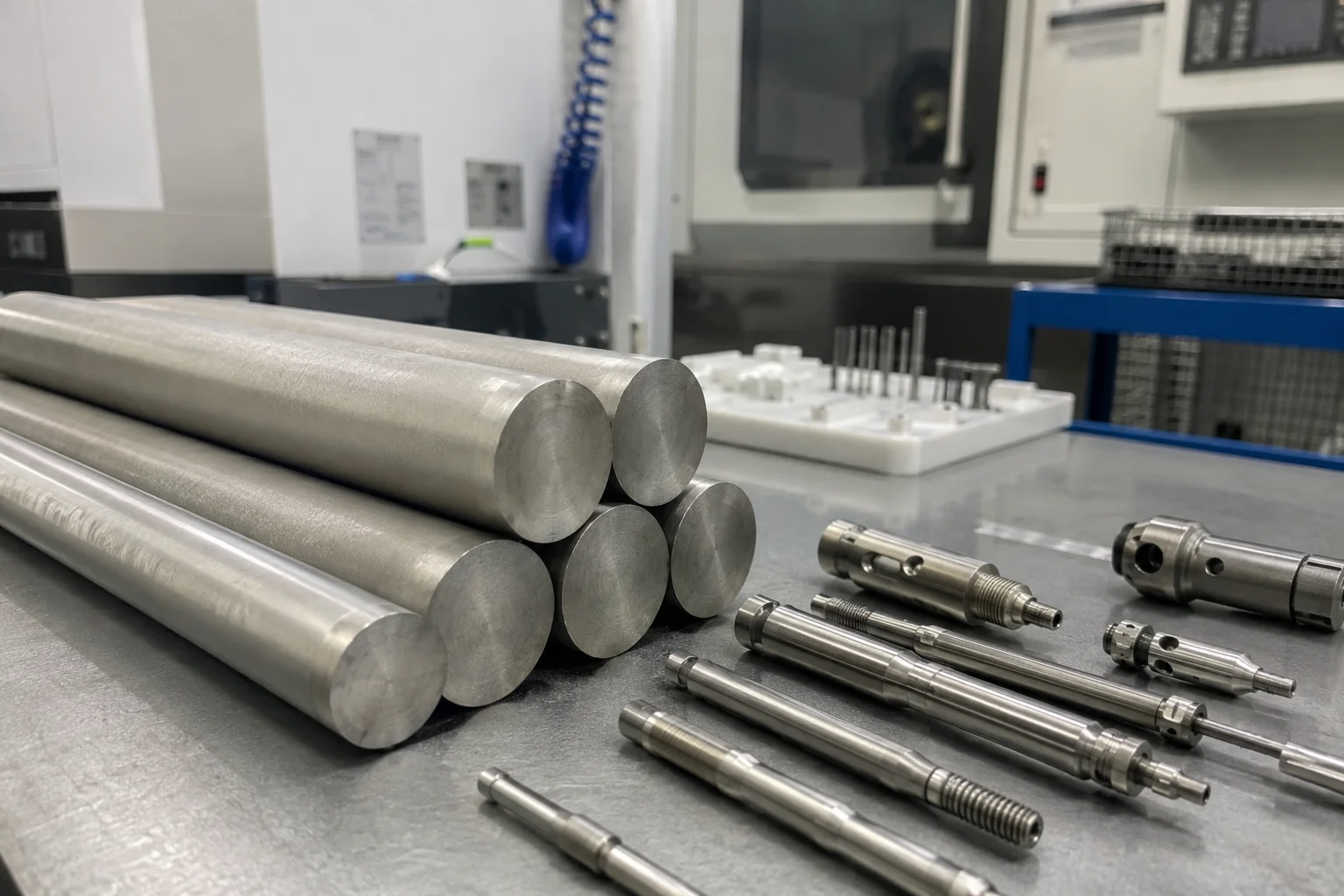
Titanium and titanium alloys are valued in medical and biomedical applications because of their corrosion resistance, biocompatibility, strength-to-weight ratio, and long history of use in implant and medical device applications. A biomedical review published on PubMed Central discusses the history, properties, and applications of titanium alloys in medicine: Biomedical Applications of Titanium Alloys.
However, titanium is not a one-size-fits-all material. A robotic surgical shaft, an implant-related connector, a diagnostic device component, and a surgical instrument part may all require different material priorities.
Why Titanium Bars Are Used for Medical Device Shafts and Connectors
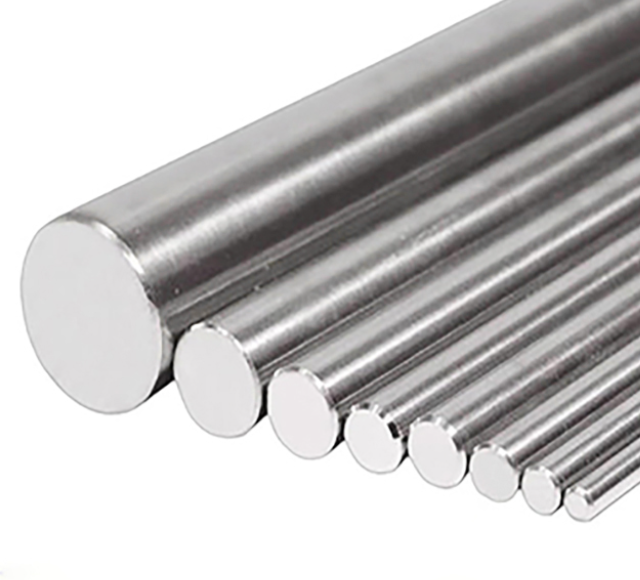
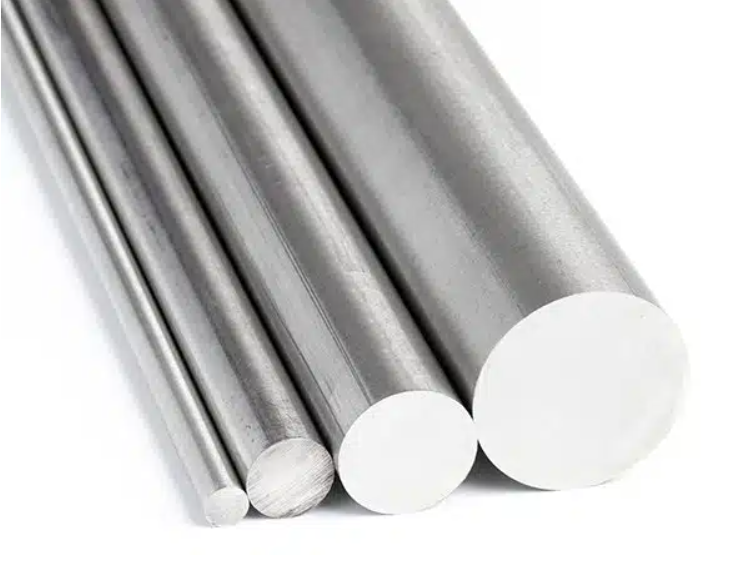
Titanium bars are often selected for medical equipment shafts, connectors, surgical tools, implant-related components, and precision medical parts because titanium offers several useful performance advantages.
1. Biocompatibility
For components that contact the human body directly or indirectly, biological safety is a major concern. Titanium is widely studied for biomedical use, and its surface behavior plays an important role in its biocompatibility. A PubMed Central review explains titanium biocompatibility from the viewpoint of its surface characteristics: Biocompatibility of titanium from the viewpoint of its surface.
For finished medical devices, material selection alone does not automatically make the device compliant. The final device manufacturer must still evaluate the complete design, surface condition, cleaning process, sterilization process, and intended body-contact duration. The FDA also provides guidance on using ISO 10993-1 for biological evaluation of medical devices.
2. Corrosion Resistance
Medical device materials may be exposed to body fluids, humid environments, cleaning media, or sterilization cycles. Titanium is valued because it can form a stable oxide layer, which helps provide corrosion resistance in many biological and medical environments.
For implant-related or body-contact components, corrosion resistance should still be evaluated according to the final application, surface finish, processing route, and regulatory requirements.
3. High Strength-to-Weight Ratio
Titanium alloys are widely used where strength and low weight are both important. This can be valuable for surgical tools, robotic medical systems, orthopedic components, precision shafts, and connectors where weight reduction and mechanical reliability both matter.
A machinability review notes that titanium alloys are valued for high strength-to-weight ratio and corrosion resistance, while also explaining that titanium alloys can be difficult to machine because of low thermal conductivity and high temperature chemical reactivity: A Review of the Machinability of Titanium Alloys.
4. Precision Machining Compatibility
Medical shafts and connectors often require tight dimensional tolerances, stable mechanical performance, and consistent surface condition. Titanium bars can be supplied for machining into:
- Surgical instrument shafts
- Robotic surgical equipment shafts
- Orthopedic fixation components
- Implant-related connectors
- Dental or orthopedic device components
- Diagnostic equipment connectors
- Lightweight structural medical parts
- Precision medical equipment components
Why Titanium Is Not a One-Size-Fits-All Solution
Some buyers simply ask for “medical titanium bar.” In most cases, this is not a complete specification.
Medical device applications may differ in:
- Whether the component is implantable or non-implantable
- Whether it contacts tissue, bone, blood, or only external equipment
- Whether it carries load or only connects parts
- Whether it experiences repeated movement or fatigue loading
- Whether it will be sterilized by steam, chemical, radiation, or other methods
- Whether the final device is intended for FDA, CE, or other regulated markets
- Whether the buyer requires ASTM F67, ASTM F136, ISO 5832, AMS, or a customer-specific specification
- Whether the final part requires special surface finish or tight dimensional tolerance
Sterilization should also be considered early. Research has shown that cleaning and sterilization can affect titanium implant surface properties such as hydrophobicity and roughness: Effect of cleaning and sterilization on titanium implant surface properties and cellular response. Another study also discusses the effect of autoclaving time on the corrosion resistance of titanium surfaces: Effect of Autoclaving Time on Corrosion Resistance of Titanium Surface.
This is why buyers should not choose titanium only by grade name. The correct choice depends on the complete application environment.
Common Titanium Grades for Medical Device Components
The two most common titanium material groups buyers ask about are commercially pure titanium and Ti-6Al-4V ELI.
Commercially Pure Titanium
Commercially pure titanium includes Grade 1, Grade 2, Grade 3, and Grade 4. These grades differ mainly in strength, ductility, and oxygen content.
ASTM F67 covers the chemical, mechanical, and metallurgical requirements for four grades of unalloyed titanium used for the manufacture of surgical implants. The FDA also lists ASTM F67 as a recognized consensus standard for medical devices: FDA Recognized Consensus Standard - ASTM F67.
Common features of commercially pure titanium include:
- Good corrosion resistance
- Good biocompatibility
- Better ductility than many higher-strength titanium alloys
- Good formability
- Lower strength than Ti-6Al-4V ELI
Typical uses may include:
- Surgical instruments
- Medical equipment housings
- Lower-load connectors
- Certain non-load-bearing or lower-load medical parts
- Components where formability and corrosion resistance are more important than maximum strength
Ti-6Al-4V ELI, Grade 23
Ti-6Al-4V ELI is a titanium alloy containing aluminum and vanadium. “ELI” means Extra Low Interstitials. This grade is commonly selected when higher strength and implant-related performance are required.
ASTM F136 covers wrought annealed titanium-6aluminum-4vanadium ELI alloy used for the manufacture of surgical implants. The FDA also lists ASTM F136 as a recognized consensus standard for medical devices: FDA Recognized Consensus Standard - ASTM F136.
Typical uses may include:
- Orthopedic fixation components
- Bone screws and plates
- Implant-related connectors
- High-strength medical shafts
- Fatigue-sensitive precision components
- Surgical tools requiring higher mechanical strength
Titanium Grade Selection Table for Buyers
| Titanium Grade | Typical Standard | Main Advantage | Typical Medical Device Use | Buyer Notes |
|---|---|---|---|---|
| Grade 1 CP Titanium | ASTM F67 | Highest ductility among CP grades | Formed parts, low-load components | Useful when formability matters more than strength |
| Grade 2 CP Titanium | ASTM F67 | Balanced corrosion resistance, ductility, and moderate strength | General medical components, connectors, housings | Often considered a common CP titanium choice |
| Grade 4 CP Titanium | ASTM F67 | Highest strength among CP grades | Stronger CP titanium components | Can be selected when more strength is needed without moving to Ti-6Al-4V ELI |
| Ti-6Al-4V ELI / Grade 23 | ASTM F136 | High strength and implant-related application history | High-strength shafts, fixation parts, implant-related connectors | Often selected for demanding mechanical applications |
How to Choose Titanium Bars for Medical Device Shafts
Medical device shafts may experience rotation, bending, repeated movement, or precision assembly requirements. When selecting titanium bars for shafts, buyers should pay attention to both material grade and machining requirements.
Key Selection Factors for Shafts
| Factor | Why It Matters |
|---|---|
| Strength | Shafts may carry torque, bending load, or axial load |
| Fatigue Resistance | Repeated movement can create fatigue risk |
| Straightness | Important for rotating shafts and precision medical equipment |
| Diameter Tolerance | Affects machining allowance and final fit |
| Surface Condition | Impacts machining quality, cleaning, and inspection |
| Traceability | Required for controlled medical device supply chains |
| MTR Documentation | Confirms chemistry and mechanical properties for the delivered batch |
For high-strength or fatigue-sensitive shafts, Ti-6Al-4V ELI may be more suitable than commercially pure titanium. For lower-load shafts or components requiring easier forming or machining, commercially pure titanium may be considered depending on the design.
How to Choose Titanium Bars for Medical Device Connectors
Medical device connectors may be used in assemblies, implant systems, diagnostic equipment, surgical tools, or device housings. Their requirements may differ from shafts.
Key Selection Factors for Connectors
| Factor | Why It Matters |
|---|---|
| Body Contact | Determines biological evaluation and material documentation needs |
| Load Level | Determines whether CP titanium or Ti-6Al-4V ELI is more suitable |
| Corrosion Resistance | Important for body fluids, sterilization, and cleaning exposure |
| Machinability | Small connectors often require precision machining |
| Surface Finish | Affects cleaning, assembly, and final device performance |
| Dimensional Stability | Important for threaded, fitted, or assembled parts |
| Standard Compliance | Helps support technical and regulatory documentation |
If a connector is implant-related or load-bearing, buyers should be careful about grade selection, standard conformity, and traceability. If the connector is external or low-load, the buyer may have more flexibility, but the final selection should still match the device design and regulatory requirements.
What Standards Should Buyers Check?
Medical titanium bar procurement should not rely only on verbal claims. Buyers should confirm the applicable standard before ordering.
ASTM F67
ASTM F67 covers unalloyed titanium for surgical implant applications. It includes Grade 1, Grade 2, Grade 3, and Grade 4 titanium.
Buyers may consider ASTM F67 when they need commercially pure titanium for medical or implant-related applications.
ASTM F136
ASTM F136 covers wrought Ti-6Al-4V ELI alloy for surgical implant applications.
Buyers may consider ASTM F136 when they need high-strength Ti-6Al-4V ELI bars for medical or implant-related components.
ISO 13485
ISO 13485 is an internationally recognized quality management system standard for organizations involved in medical devices. For buyers, ISO 13485 can be an important supplier evaluation factor because medical device supply chains usually require strong documentation, process control, and traceability.
The FDA’s Quality Management System Regulation also incorporates ISO 13485:2016 by reference as part of the updated U.S. medical device quality management framework: FDA Quality Management System Regulation.
CE and Conformity Assessment
For the European market, medical devices may require CE marking after conformity assessment. The European Medicines Agency explains that manufacturers can place a CE mark on a medical device once it has passed a conformity assessment: EMA Medical Devices.
Material suppliers do not make the final regulatory decision for a finished device. However, reliable material documentation can help the finished device manufacturer prepare supplier records, technical files, and quality documentation.
What Documents Should Buyers Request from a Titanium Bar Supplier?
For medical device shafts and connectors, documentation is as important as the material itself. A buyer should not only ask for price and delivery time.
Essential Documents and Information
| Document / Information | Why It Matters |
|---|---|
| Material Test Report / MTR | Confirms chemical composition and mechanical properties |
| Heat Number | Supports traceability from raw material to final delivery |
| Applicable Standard | Confirms whether ASTM F67, ASTM F136, or another standard applies |
| Grade and UNS Number | Helps avoid grade confusion |
| Diameter and Tolerance | Affects machining allowance and final component fit |
| Surface Condition | Important for machining, cleaning, inspection, and final use |
| Inspection Records | Supports quality review and incoming inspection |
| Certificate of Origin, if needed | Supports import and procurement documentation |
| Third-Party Inspection, if required | Adds additional verification for critical projects |
Supplier Vetting Checklist
Before purchasing titanium bars for medical device components, buyers should ask suppliers these questions:
- Can you supply titanium bars according to ASTM F67 or ASTM F136?
- Can you provide a Material Test Report for each batch?
- Can the material be traced by heat number?
- What diameter range and tolerance can you supply?
- Can you support custom length, peeling, polishing, grinding, or other surface requirements?
- What inspections are performed before shipment?
- Can you support third-party inspection if required?
- Do you have experience supplying titanium bars for medical, precision, or high-reliability components?
- Can you provide consistent supply for repeat orders?
- How do you handle non-conforming material?
These questions help buyers reduce risk before the material reaches machining, assembly, or final device validation.
Common Mistakes When Buying Titanium Bars for Medical Components
Mistake 1: Asking Only for “Medical Titanium”
“Medical titanium” is not a complete specification. Buyers should clearly state the grade, standard, diameter, tolerance, surface condition, quantity, and documentation requirements.
Mistake 2: Choosing Grade 2 When Higher Strength Is Needed
Grade 2 titanium may be suitable for some components, but it should not be automatically selected for high-load or fatigue-sensitive parts. For demanding shafts, connectors, or implant-related components, Ti-6Al-4V ELI may be more appropriate.
Mistake 3: Over-Specifying Ti-6Al-4V ELI for Every Part
Ti-6Al-4V ELI is strong, but it is not always necessary. If a component does not require high strength, using a commercially pure titanium grade may reduce cost and improve manufacturability.
Mistake 4: Ignoring Machining Difficulty
Titanium alloys can be more difficult to machine than many common metals. Low thermal conductivity, high temperature chemical reactivity, and tool wear risk can increase machining cost and affect production efficiency. Buyers should consider machinability when selecting bar size, machining allowance, and surface condition.
Mistake 5: Not Checking Traceability
For medical device supply chains, traceability is critical. Buyers should request heat number tracking, MTR documentation, and clear batch identification.
RFQ Checklist: What Buyers Should Send to the Supplier
To get a faster and more accurate quotation, buyers should provide the following details:
| RFQ Item | Example |
|---|---|
| Titanium Grade | Grade 2, Grade 4, Ti-6Al-4V ELI / Grade 23 |
| Standard | ASTM F67, ASTM F136, AMS, ISO, or customer specification |
| Product Form | Round bar, rod, forged bar, peeled bar, polished bar |
| Diameter | For example: 6 mm, 12 mm, 25 mm, 50 mm |
| Length | Fixed length or random length |
| Tolerance | h9, h10, custom tolerance, or machining allowance |
| Surface | Peeled, polished, ground, bright, or as required |
| Quantity | Total weight or number of pieces |
| Inspection | UT, PMI, dimensional inspection, third-party inspection |
| Documentation | MTR, heat number, certificate, inspection report |
| Application | Shaft, connector, surgical tool, implant-related component |
| Destination | Country, port, or delivery address |
How Emily PIPE Supports Titanium Bar Buyers
Emily PIPE is a China-based manufacturer and exporter specializing in nickel alloy tubes, nickel alloy bars, titanium alloy tubes, and titanium alloy bars. For medical equipment, precision machining, and high-reliability industrial applications, we support titanium bar supply according to customer drawings, technical requirements, and application environments.
We can support buyers with:
- Titanium bar and rod supply
- Standard and customized specifications
- Material selection support
- Batch traceability
- Material Test Reports
- Dimensional and surface inspection
- Custom length and surface requirements
- Export packaging and logistics support
- Communication for project-based procurement
If you are selecting titanium bars for medical device shafts, connectors, surgical tools, or precision components, please send your grade, standard, diameter, tolerance, surface condition, quantity, and drawing requirements. Our team can help review the material requirements and provide a suitable quotation.
FAQ: Titanium Bars for Medical Device Shafts and Connectors
1. Is Grade 2 titanium suitable for medical device shafts?
Grade 2 titanium may be suitable for certain lower-load shafts or general medical components, but it may not be ideal for high-strength or fatigue-sensitive shafts. The final choice depends on load, movement, body-contact condition, and design requirements.
2. When should buyers choose Ti-6Al-4V ELI?
Ti-6Al-4V ELI is often selected when higher strength, implant-related use, or fatigue resistance is required. It is commonly associated with ASTM F136 for surgical implant applications.
3. What is the difference between ASTM F67 and ASTM F136?
ASTM F67 covers unalloyed commercially pure titanium grades for surgical implant applications. ASTM F136 covers wrought Ti-6Al-4V ELI alloy for surgical implant applications.
4. Does titanium automatically meet medical device regulatory requirements?
No. Titanium may be suitable for many medical applications, but the finished device manufacturer is responsible for complete device validation, biological evaluation, risk management, and regulatory submission.
5. Why is traceability important for titanium bars?
Traceability connects the delivered titanium bar to its heat number, production batch, chemical composition, mechanical properties, and inspection records. This helps buyers manage quality and documentation risks.
6. What should be included in the MTR?
A Material Test Report should normally include grade, heat number, chemical composition, mechanical properties, standard, size, batch information, and inspection results as applicable.
7. Can titanium bars be supplied with custom tolerance?
Yes. Titanium bars can often be supplied with specific diameter tolerance, surface condition, and length requirements depending on the grade, size, and production route.
8. What information should I provide for a titanium bar quotation?
You should provide grade, standard, diameter, length, tolerance, surface condition, quantity, documentation requirements, inspection requirements, and application details.
Conclusion
Titanium bars are widely used for medical device shafts and connectors because of their corrosion resistance, biocompatibility, strength-to-weight ratio, and long history in biomedical applications. However, successful material selection requires more than choosing “titanium.”
Buyers should compare commercially pure titanium and Ti-6Al-4V ELI carefully, confirm whether ASTM F67 or ASTM F136 applies, verify supplier traceability, review MTR documentation, and consider machining, sterilization, surface condition, and regulatory documentation needs.
For medical device shafts and connectors, the best titanium bar is not always the strongest or most expensive option. It is the grade and specification that correctly matches the component’s function, risk level, manufacturing process, and documentation requirements.