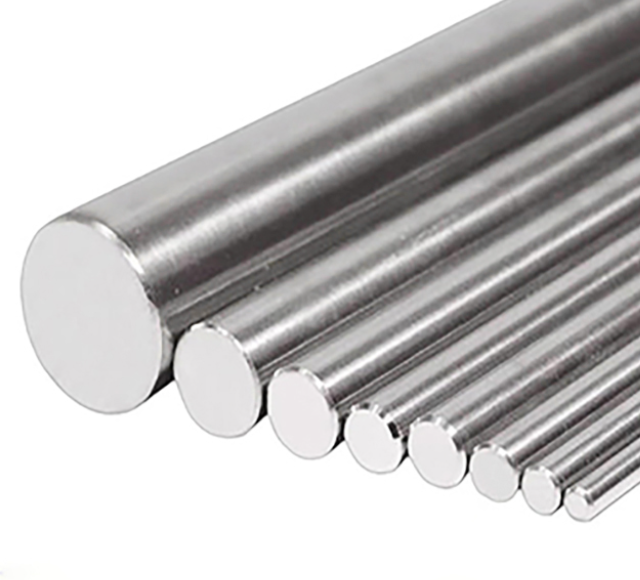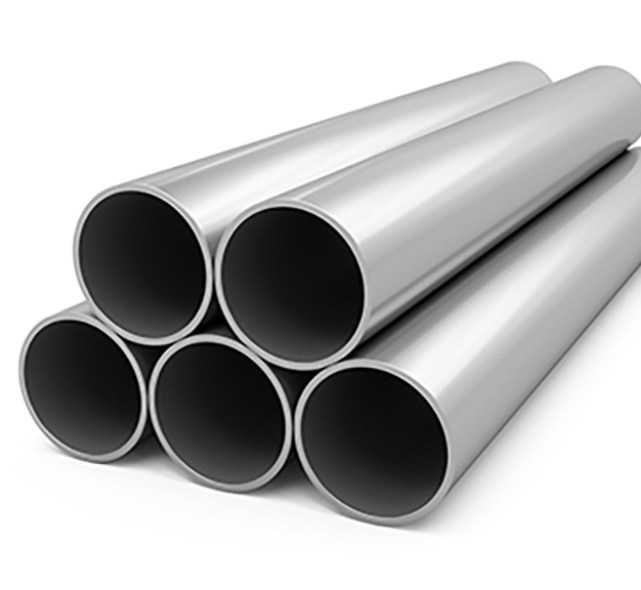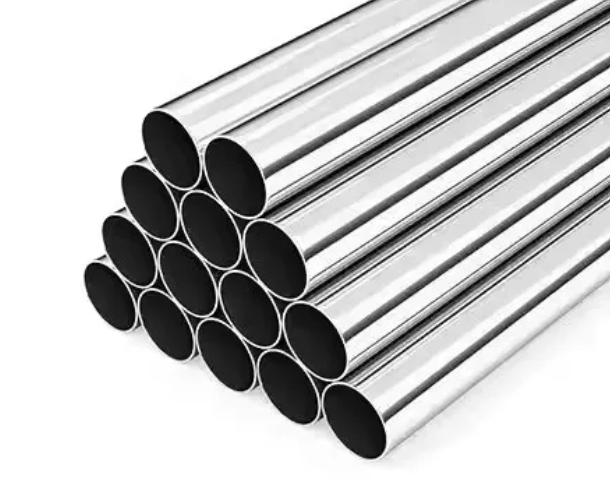

Titanium heat exchanger tubes are often selected for seawater, brine, condensers, evaporators, desalination systems, marine equipment, and selected chemical processing applications because titanium offers strong corrosion resistance in many chloride-containing environments.
However, tube performance is not determined by titanium grade alone. Surface finish, cleanliness, tube manufacturing quality, fouling tendency, flow condition, cleaning method, and inspection requirements can all influence how the tube performs in real service.
Quick Answer:
Surface finish affects titanium heat exchanger tube performance by influencing fouling tendency, cleaning behavior, pressure drop, localized corrosion initiation risk, inspection acceptance, and long-term maintenance. A smoother finish may help reduce some deposit and cleaning problems, but it does not automatically prevent fouling or guarantee better heat transfer. Engineered roughness or corrugation may improve convective heat transfer in some designs, but it can also increase pressure drop. The correct surface finish should be selected according to fluid properties, flow velocity, fouling risk, chloride environment, cleaning method, ASTM B338 requirements, surface inspection, and documentation.
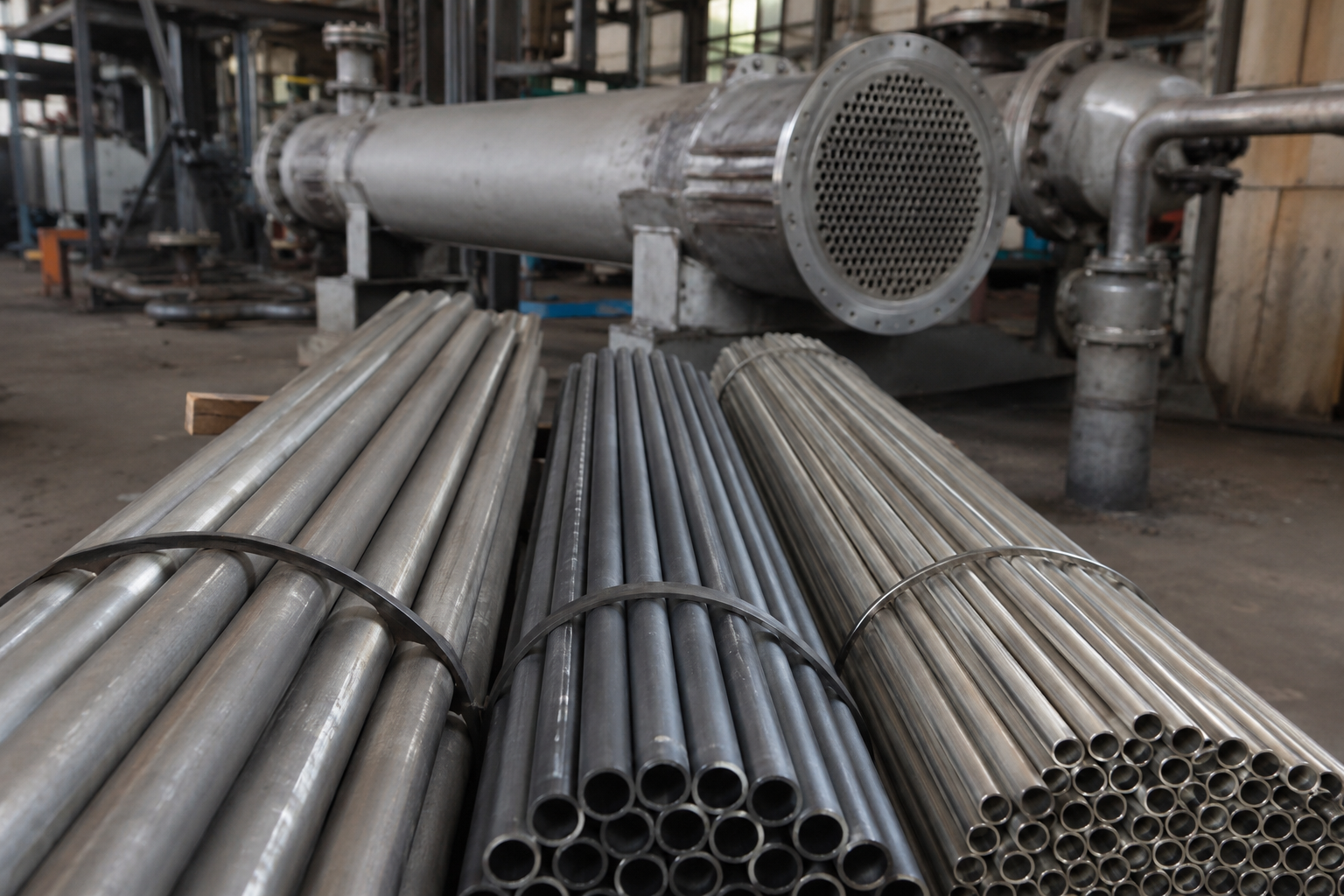
ASTM B338 covers seamless and welded titanium alloy tubes for surface condensers, evaporators, and heat exchangers: ASTM B338.
The Royal Society of Chemistry explains that titanium forms a thin oxide layer that protects it against corrosion in seawater and many other environments: Royal Society of Chemistry - Titanium.
A titanium corrosion paper hosted by the U.S. Nuclear Regulatory Commission notes that titanium has excellent resistance to neutral chloride solutions, but crevice corrosion can be a limiting factor in aqueous chloride environments: Corrosion Resistance of Titanium.
This means buyers should not only ask, “Is it titanium?” They should also ask, “What surface condition, cleanliness level, inspection scope, and documentation are required for this heat exchanger?”
Why Does Surface Finish Matter for Titanium Heat Exchanger Tubes?
Surface finish is not just a cosmetic detail. For titanium heat exchanger tubes, it can affect how the tube interacts with fluid, deposits, biological growth, cleaning chemicals, and the heat exchanger operating environment.
Surface finish matters because it can influence fouling, cleanability, flow resistance, localized corrosion initiation, inspection acceptance, and maintenance planning.
For buyers, surface finish should be reviewed together with:
- Tube grade
- ASTM B338 / ASME SB338 requirement
- Seamless or welded tube type
- OD and wall thickness tolerance
- Tube-side and shell-side media
- Flow velocity
- Fouling tendency
- Cleaning method
- Chloride concentration
- Temperature
- pH
- Crevice risk
- Surface inspection requirement
- Packaging and contamination control
- MTC / MTR and heat number traceability
A titanium tube may meet chemical and mechanical requirements, but still create problems if the surface condition is not suitable for the real application.
Does a Smoother Surface Always Improve Heat Transfer?
No. A smoother surface does not always mean better heat transfer.
Heat transfer depends on tube material, wall thickness, flow velocity, Reynolds number, fluid viscosity, fouling, tube geometry, turbulence, and exchanger design. Surface finish is only one part of the system.
A smooth surface may reduce friction and help with cleaning, but engineered roughness, corrugation, or tube geometry may improve convective heat transfer in some flow regimes. The trade-off is that rougher or textured surfaces can also increase pressure drop and pumping demand.
A Springer study on rough tubes investigated the effect of high relative surface roughness on heat transfer and pressure drop characteristics: Effect of Surface Roughness on Heat Transfer and Pressure Drop.
Research on helical corrugated tubes found that corrugation can enhance heat transfer performance in some Reynolds number ranges, but performance must be evaluated together with pressure drop: Corrugated Tubes Heat Transfer and Pressure Drop.
Smooth Surface vs Engineered Surface
| Surface Type | Possible Benefit | Possible Limitation | Buyer Review Point |
|---|---|---|---|
| Smooth / Polished Surface | Lower friction, easier cleaning, fewer visible traps for deposits | May not create turbulence enhancement | Suitable when cleanability, low pressure drop, and surface cleanliness are important |
| Standard As-Manufactured Surface | Practical balance for many industrial applications | Must be inspected for scratches, defects, contamination, and scale | Often suitable when project requirements are not extreme |
| Rough or Damaged Surface | Usually not desirable if uncontrolled | May trap deposits and create cleaning or inspection difficulty | Should not be confused with engineered heat-transfer texture |
| Engineered Texture / Corrugation | May enhance turbulence and heat transfer in some designs | Can increase pressure drop and may affect cleaning | Must be designed and validated for the specific fluid and flow condition |
For standard titanium heat exchanger tube procurement, buyers should avoid assuming that “rougher is better.” If enhanced heat transfer is needed, the tube geometry and surface should be specified intentionally, not accepted as uncontrolled roughness.
Can a Smooth Surface Prevent Fouling in All Applications?
No. A smooth surface cannot prevent fouling in all applications.
Fouling can come from suspended solids, biological growth, crystallization, chemical reaction, corrosion products, scale, or organic matter. Surface finish can influence fouling, but it is not the only factor.
Fouling depends on surface condition, fluid chemistry, temperature, flow velocity, biological activity, suspended solids, cleaning strategy, and operating time. A smoother titanium tube surface may help reduce some deposit and cleaning problems, but it cannot guarantee fouling-free operation.
Springer’s heat exchanger fouling reference states that fouling reduces heat transfer rate and increases pressure drop: Heat Exchangers Fouling, Cleaning, and Maintenance.
A study on seawater-cooled tubular heat exchanger-condensers found that surface roughness affected biofilm-related fluid frictional resistance and heat transfer resistance on AISI 316L stainless steel tubes: Surface Roughness and Biofilm Adhesion.
Although that study focused on stainless steel rather than titanium, it still supports a practical point for heat exchanger buyers: surface roughness can influence biofilm and fouling behavior, but the exact result depends on material, water quality, flow and biology.
Fouling Types and Surface Finish Review
| Fouling Type | What Happens | Surface Finish Relevance |
|---|---|---|
| Particulate Fouling | Suspended solids deposit on the tube surface | Smoother and cleaner surfaces may reduce mechanical trapping, but flow and filtration matter |
| Biological Fouling | Microorganisms form biofilm | Surface roughness, wettability, nutrients, temperature, and flow all matter |
| Crystallization / Scaling | Dissolved salts precipitate on the tube wall | Surface defects may provide nucleation sites, but chemistry and temperature are often more important |
| Corrosion Fouling | Corrosion products or deposits form on the surface | Clean surface and correct material selection help reduce risk |
| Organic Fouling | Organic matter sticks or polymerizes | Surface energy, temperature, chemistry, and cleaning method matter |
What Buyers Should Confirm
Before specifying titanium tube surface finish, buyers should confirm:
- Is the fluid clean or dirty?
- Are suspended solids present?
- Is biological fouling expected?
- Is scaling expected?
- What is the cleaning method?
- Is mechanical brushing used?
- Are chemical cleaning agents used?
- What flow velocity is expected?
- Is low pressure drop more important than enhanced turbulence?
- Is a polished ID or OD required?
- Is surface roughness measurement required?
- Is the Ra value clearly specified?
A surface finish requirement should be written clearly in the purchase specification. Do not rely only on general words like “smooth,” “bright,” or “clean.”
How Does Surface Finish Influence Corrosion Resistance?
Titanium’s corrosion resistance comes mainly from its passive titanium oxide film. Surface finish does not create titanium’s corrosion resistance by itself, but surface condition can affect cleanliness, local defects, deposits, crevices, and corrosion initiation risk.
For titanium heat exchanger tubes, corrosion-related surface concerns include scratches, embedded foreign particles, shop soils, heat-treatment scale, iron contamination, deposits, crevices, weld defects, and poor cleaning.
ASTM B600 covers cleaning and descaling procedures for titanium and titanium alloy surfaces, including removal of shop soils, oxides, scales, and foreign surface contaminants: ASTM B600.
This is important because a titanium tube surface should be clean and free from harmful contamination before it enters a critical heat exchanger application.
Surface Conditions That Need Attention
| Surface Condition | Possible Risk |
|---|---|
| Deep Scratches | May trap deposits or act as local initiation points |
| Embedded Iron | May create contamination and localized corrosion concerns |
| Heat-Treatment Scale | May affect cleanliness and surface acceptance |
| Shop Soil / Oil | May interfere with cleaning, inspection, or service cleanliness |
| Rough ID Surface | May increase deposit retention or cleaning difficulty |
| Poor Weld Surface | May create crevice or defect-related risk |
| Deposits / Under-Scale Areas | May create local chemistry different from bulk fluid |
| Uncontrolled Roughness | May increase fouling or pressure drop depending on service |
Surface Finish Is More Than Ra
Ra is commonly used to describe average surface roughness, but Ra alone is not enough to define surface quality.
Buyers should also consider:
- Rz or other roughness parameters if required
- Scratches
- Dents
- Embedded particles
- Scale
- Pickling condition
- Polishing direction
- Weld bead condition
- ID cleanliness
- OD cleanliness
- Tube end condition
- Packaging protection
Two tubes may have similar Ra values but different surface defects, cleanliness, or manufacturing history. This is why visual inspection, roughness measurement, surface cleaning, and documentation may all be needed for critical orders.
Should Buyers Always Ask for Polished Titanium Tubes?
Not always.
Polished titanium tubes may be useful when cleanability, low deposit retention, appearance, or specified surface roughness is important. But polishing adds cost and may not be necessary for every heat exchanger.
The best surface finish is not always the smoothest finish. It is the finish that matches the fluid, fouling risk, cleaning method, corrosion environment, pressure drop requirement, and project specification.
When a Smoother / Polished Finish May Be Useful
A smoother finish may be useful when:
- The fluid is prone to fouling or deposits
- Cleaning needs to be easier
- Low surface contamination is important
- The system is sensitive to pressure drop
- The tube ID must meet a specified Ra value
- The application requires high cleanliness
- Visual surface quality is part of acceptance
- The buyer’s specification requires polishing
When Standard Surface Finish May Be Enough
A standard finish may be enough when:
- The fluid is clean
- Fouling risk is low
- Cleaning requirements are moderate
- The buyer has no strict Ra requirement
- The system is not highly sensitive to surface cleanliness
- ASTM B338 and project inspection requirements are satisfied
When Surface Finish Needs Special Review
Surface finish needs special review when:
- Chlorides are present
- Seawater or brine is used
- Crevices or deposits are expected
- Biofouling is possible
- Scaling is likely
- Cleaning chemicals are aggressive
- Tube ID cleanliness is critical
- The heat exchanger is difficult to shut down
- Third-party inspection is required
- The project specification includes a surface roughness limit
What Should Be Included in a Titanium Tube Surface Finish Specification?
A clear specification helps avoid misunderstanding between buyer and supplier.
Instead of writing only “smooth surface,” buyers should define measurable or inspectable requirements.
Recommended Surface Finish Specification Items
| Specification Item | Example Requirement |
|---|---|
| Product Standard | ASTM B338 / ASME SB338 |
| Titanium Grade | Grade 1, Grade 2, Grade 7, Grade 12, or project grade |
| Product Type | Seamless or welded titanium tube |
| Surface Condition | Pickled, polished, bright, as-drawn, cleaned |
| Surface Roughness | Ra value if required |
| ID / OD Requirement | Inner surface, outer surface, or both |
| Visual Acceptance | No cracks, folds, deep scratches, dents, heavy scale |
| Cleaning Requirement | Oil-free, clean ID, no visible contamination |
| Descaling / Cleaning | ASTM B600 if specified |
| Inspection Method | Visual inspection, roughness measurement, borescope if required |
| Packaging | End caps, plastic sleeves, wooden case, moisture protection |
| Documentation | MTC, heat number, inspection report, surface report |
Example RFQ Wording
Buyers can write:
“Titanium seamless tubes according to ASTM B338 Grade 2, OD 25.4 mm × WT 1.2 mm × 6000 mm, pickled surface, clean ID and OD, Ra ≤ [buyer specified value] on ID if required, free from visible cracks, folds, heavy scratches, oil contamination and scale. MTC, heat number, dimensional inspection and surface inspection report required.”
This type of wording is clearer than simply saying “high-quality smooth titanium tube.”
How Can Buyers Verify Surface Finish and Tube Quality?
Supplier claims such as “smooth finish,” “premium surface,” or “high quality” should be verified through inspection and documentation.
For titanium heat exchanger tube procurement, buyers should verify surface finish together with ASTM B338 compliance, MTC / MTR, heat number traceability, dimensional inspection, surface inspection, NDT requirements, packaging, and third-party inspection when needed.
Documents and Tests Buyers May Request
| Document / Test | What It Confirms |
|---|---|
| MTC / MTR | Batch-specific chemical composition and mechanical properties |
| Heat Number | Traceability to production batch |
| ASTM B338 Confirmation | Tube standard and material requirement |
| Surface Inspection Report | Visible surface condition |
| Roughness Report | Ra or other measured roughness values if required |
| Dimensional Report | OD, wall thickness, length, tolerance |
| Cleaning / Descaling Record | Surface preparation if specified |
| Eddy Current Test | Tube discontinuity inspection when required |
| Ultrasonic Test | Volumetric discontinuity inspection when required |
| Hydrostatic Test | Pressure integrity when required |
| PMI / Grade Verification | Reduces material mix-up risk |
| Third-Party Inspection | Independent verification for critical projects |
ASTM E426 is a standard practice for electromagnetic eddy current examination of seamless and welded tubular products: ASTM E426.
ASTM E213 covers ultrasonic testing of metal pipe and tubing: ASTM E213.
ISO explains that the ISO 9000 family helps organizations improve product and service quality and consistently meet customer expectations: ISO 9000 Family.
However, ISO certification does not replace batch-specific MTC, heat number traceability, surface inspection, or buyer-required test reports.
Buyer Checklist for Titanium Heat Exchanger Tube Surface Finish
Before requesting a quotation, buyers should prepare the following information.
| RFQ Item | What to Provide |
|---|---|
| Application | Condenser, evaporator, cooler, heater, seawater system, brine system |
| Standard | ASTM B338, ASME SB338, customer specification |
| Titanium Grade | Grade 1, Grade 2, Grade 7, Grade 12, or project grade |
| Product Type | Seamless tube or welded tube |
| Size | OD, wall thickness, length |
| Tube Side Medium | Seawater, brine, chemical solution, steam, process fluid |
| Shell Side Medium | Cooling water, steam, process fluid, air |
| Temperature | Normal, maximum, cleaning temperature |
| Flow Velocity | Normal flow, high flow, stagnant zones |
| Fouling Risk | Scale, deposits, biological fouling, suspended solids |
| Cleaning Method | Mechanical cleaning, chemical cleaning, cleaning frequency |
| Corrosion Risk | Pitting, crevice corrosion, chloride corrosion, under-deposit corrosion |
| Surface Condition | Pickled, polished, bright, as-drawn, clean ID / OD |
| Roughness Requirement | Ra value if required |
| Surface Inspection | Visual, borescope, roughness measurement |
| Testing | ECT, UT, hydrostatic, PMI, tensile, hardness if required |
| Documentation | MTC, heat number, certificate, inspection report |
| Packaging | End caps, plastic wrapping, wooden case, moisture protection |
| Inspection | Internal, customer, or third-party inspection |
| Delivery | Quantity, destination, lead time |
This checklist helps suppliers quote more accurately and helps buyers avoid incomplete surface finish requirements.
How Emily PIPE Supports Titanium Heat Exchanger Tube Buyers
Emily PIPE is a China-based manufacturer and exporter specializing in nickel alloy tubes, nickel alloy bars, titanium alloy tubes, and titanium alloy bars. We support customers across chemical processing, marine engineering, power generation, oil and gas, heat exchangers, desalination, and other corrosion-resistant or high-temperature applications.
For titanium heat exchanger tubes, we can support:
- Titanium seamless tubes
- Titanium welded tubes
- ASTM B338 / ASME SB338 requirements
- Grade 1, Grade 2, Grade 7, Grade 12, and project-specified grades
- Custom OD, wall thickness, length, tolerance, and surface condition
- Pickled, polished, bright, or project-specified surface finish
- MTC / MTR and heat number traceability
- Dimensional and surface inspection
- Roughness measurement support when required
- PMI, eddy current, UT, hydrostatic, tensile, hardness, and other testing support when required
- Third-party inspection support
- Export packaging and logistics support
Our role is not to claim that one surface finish solves every heat exchanger problem. Our role is to help buyers review application conditions, confirm surface requirements, prepare documentation, and supply titanium tubes that match the required standard and project environment.
If you are selecting titanium heat exchanger tubes, please send your grade, standard, size, tube-side medium, shell-side medium, temperature, flow condition, fouling risk, cleaning method, surface finish requirement, roughness requirement, testing requirement, documentation requirement, and destination. Our team can help review your requirements and provide a suitable quotation.
FAQ: Titanium Heat Exchanger Tube Surface Finish
1. Does a smoother titanium tube surface always improve heat transfer?
No. A smoother surface may reduce friction and help cleaning, but heat transfer also depends on flow velocity, turbulence, wall thickness, fouling, tube geometry, and exchanger design. Engineered roughness or corrugation may improve heat transfer in some designs, but it can also increase pressure drop.
2. Can a smooth titanium tube surface prevent fouling?
No. Smoothness alone cannot prevent fouling. Fouling depends on fluid chemistry, suspended solids, biological activity, temperature, flow, surface condition, and cleaning strategy.
3. Why does surface finish matter for corrosion resistance?
Surface finish matters because scratches, deposits, scale, contamination, and crevices may create local conditions that increase corrosion initiation risk. Titanium relies on a protective oxide film, so surface cleanliness and contamination control are important.
4. What is ASTM B338?
ASTM B338 is a standard specification for seamless and welded titanium alloy tubes used for surface condensers, evaporators, and heat exchangers.
5. What is ASTM B600?
ASTM B600 is a standard guide for cleaning and descaling titanium and titanium alloy surfaces. It covers procedures for removing shop soils, oxides, scales, and foreign surface contaminants.
6. Should I specify Ra for titanium heat exchanger tubes?
If surface roughness is important for your application, you should specify the required Ra value and whether it applies to ID, OD, or both. If no Ra value is specified, the supplier may provide the standard surface condition according to normal production and inspection practice.
7. Is polished titanium always better than pickled titanium?
Not always. Polished titanium may be useful for cleanability or strict surface requirements, but pickled or standard surfaces may be enough for many industrial applications. The choice depends on the medium, fouling risk, cleaning method, and project specification.
8. What documents should buyers request?
Buyers should request MTC / MTR, heat number, ASTM B338 confirmation, dimensional inspection, surface inspection, roughness report if required, NDT reports if required, and third-party inspection documents for critical projects.
Conclusion
Surface finish is an important but often underestimated factor in titanium heat exchanger tube performance. It can influence fouling, cleaning, pressure drop, localized corrosion risk, inspection acceptance, and maintenance planning.
However, surface finish should not be treated as a single magic number. A smoother surface is not always better for every heat exchanger, and a rougher surface should not be accepted unless it is intentionally designed and specified.
The right titanium tube surface finish depends on the actual application: fluid type, temperature, flow velocity, fouling risk, chloride environment, cleaning method, surface roughness requirement, ASTM B338 compliance, inspection scope, MTC, heat number traceability, and supplier quality control.
For buyers, the safest approach is to define the required surface condition clearly in the RFQ and verify it through documentation, inspection, and traceable supply.