
Sourcing nickel alloy spare parts for oil and gas equipment is not only about matching a part number, size, or alloy name. A spare part may look correct on paper, but it can still create risk if the material grade, manufacturing route, heat treatment, testing, documentation, or service environment is not properly verified.
For buyers, the better question is not only:
“Can you supply this nickel alloy part?”
A more useful question is:
“Can this nickel alloy part meet the actual pressure, temperature, corrosion, sour service, mechanical load, inspection, documentation, and delivery requirements of my equipment?”
Quick Answer:
To source nickel alloy spare parts for oil and gas equipment, buyers should evaluate the real application, confirm the correct nickel alloy grade, verify sour service requirements such as NACE MR0175 / ISO 15156 when applicable, check manufacturing route, heat treatment, testing, MTR / MTC, heat number traceability, PMI or grade verification, supplier quality system, inspection plan, delivery schedule, and after-sales support. Nickel alloy sourcing should be based on due diligence, not only simple parameter matching.
AMPP explains that no material is resistant to all corrosive situations and that material selection is critical to preventing many types of failures: AMPP Materials Selection and Design for Corrosion Control.
NACE MR0175 / ISO 15156 provides requirements and recommendations for selecting and qualifying metallic materials for H2S-containing oil and gas production environments: ANSI/NACE MR0175 / ISO 15156.
This is why sourcing nickel alloy spare parts should begin with real service conditions, not only with alloy names.
Why Should Buyers Look Beyond Basic Specifications?
Basic specifications are important, but they are not enough for critical oil and gas spare parts.
A buyer may provide:
- Alloy name
- Size
- Quantity
- Drawing number
- Delivery date
These details are useful, but they do not fully define performance risk.
For nickel alloy spare parts, buyers should also confirm service environment, pressure, temperature, sour service conditions, corrosion risk, mechanical load, manufacturing route, heat treatment, testing, and documentation.
Basic Specification vs. Real Sourcing Requirement
| Basic Item | Why It Is Not Enough | What Buyers Should Add |
|---|---|---|
| Alloy Name | Trade names can be unclear or incomplete | UNS number, ASTM / ASME / API / NACE requirement |
| Size | Size does not define material suitability | Drawing, tolerance, machining allowance, surface condition |
| Quantity | Quantity affects price but not technical risk | Batch requirement, spare strategy, delivery schedule |
| Price | Lowest price may not include testing or documents | Testing scope, MTR, PMI, inspection and packaging |
| Delivery Date | Delivery depends on production route and inspection | Required date, shutdown schedule, freight method |
| Supplier Claim | Verbal claim is not traceable | MTR / MTC, heat number, audit, inspection report |
What Material Details Matter for Nickel Alloy Spare Parts?
A nickel alloy spare part should be specified according to the required product form and service condition.
For example:
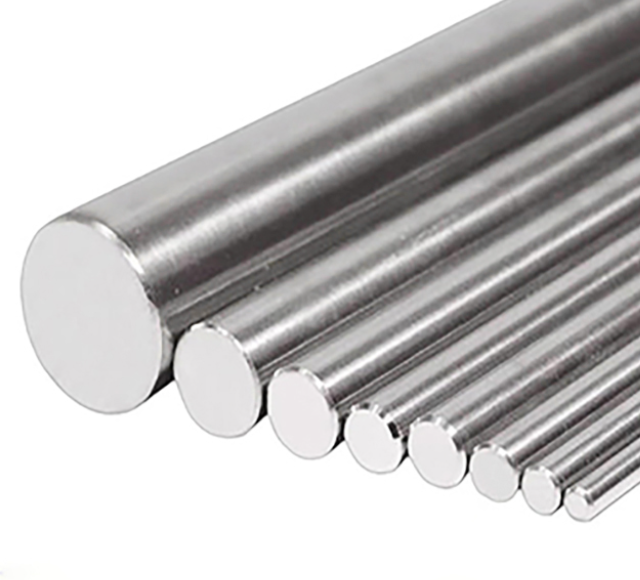
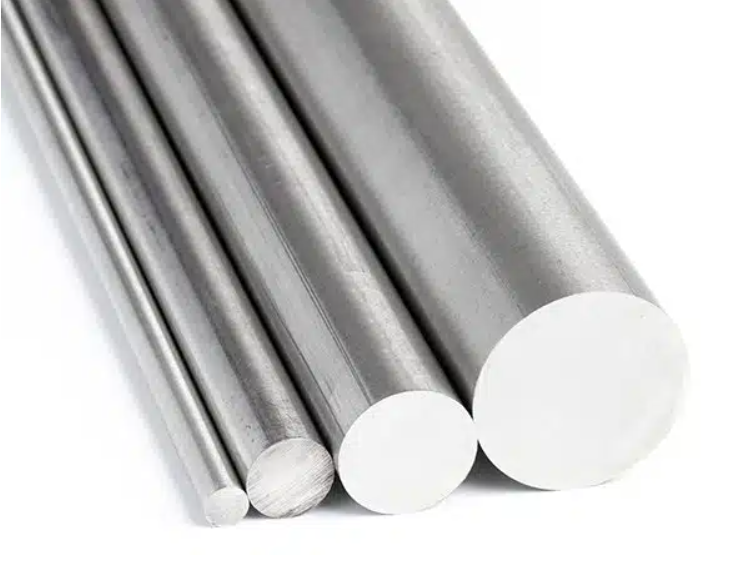
- Bar stock may be used for shafts, fasteners, valve components, machined parts or connectors.
- Forgings may be used for flanges, pressure parts, valve bodies or high-load components.
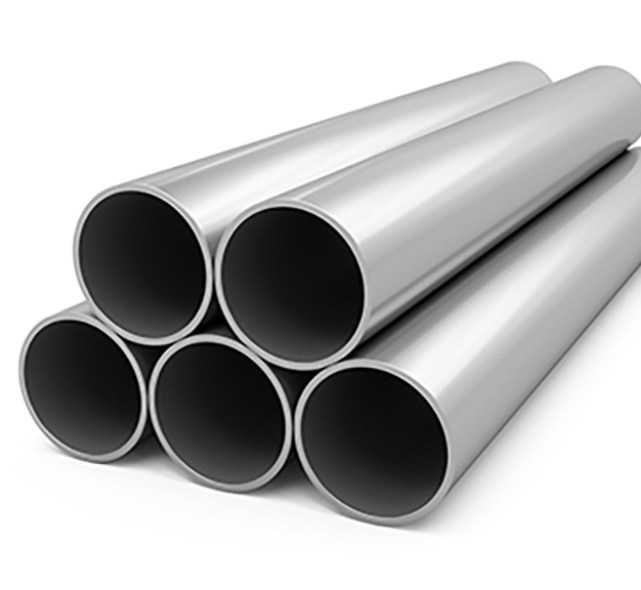
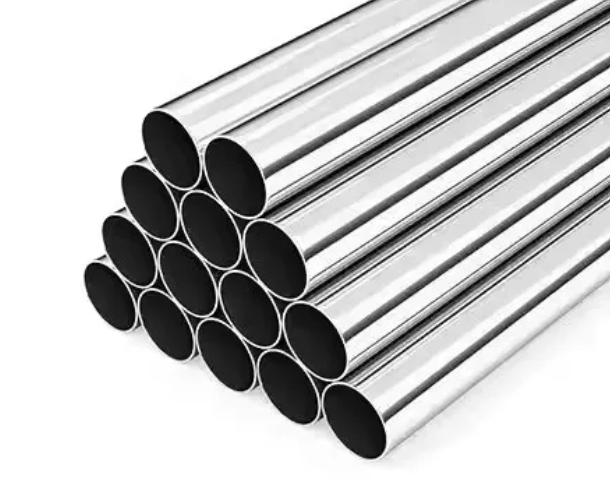
- Tubes or pipes may be used for heat exchangers, control lines, process tubing or piping systems.
- Plates or sheets may be used for fabricated components.
A buyer should not treat all forms of the same alloy as identical.
Product Form and Standard Review
| Product Form | Possible Standard Example | Why It Matters |
|---|---|---|
| Nickel alloy rod / bar | ASTM B446, ASTM B637, ASTM B166, ASTM B574, ASTM B473 | Defines chemical composition, heat treatment, mechanical properties and dimensions |
| Nickel alloy forgings | ASTM B564, ASTM B637, ASTM B462 | Relevant for forged pressure parts, flanges, fittings, valve components or high-load parts |
| Nickel alloy pipe / tube | ASTM B444, ASTM B163, ASTM B622, ASTM B423, ASTM B165 | Relevant for heat exchangers, process tubing, piping and corrosion-resistant flow paths |
| Nickel alloy fittings | ASTM B366 / B366M | Relevant for wrought nickel alloy fittings |
| Nickel alloy plate / sheet | ASTM B443, ASTM B575, ASTM B424 | Relevant for fabricated parts and corrosion-resistant equipment |
ASTM B446 covers nickel-chromium-molybdenum-niobium alloy UNS N06625 and related alloys in hot-worked and cold-worked rod and bar form: ASTM B446.
ASTM B637 covers precipitation-hardening and cold worked nickel alloy bars, forgings and forging stock for moderate or high temperature service: ASTM B637.
ASTM lists B564 as a standard specification for nickel alloy forgings: ASTM Nonferrous Metal Standards.
This means the buyer should specify not only “Inconel” or “nickel alloy,” but also the correct form, standard, grade, heat treatment condition and testing requirement.
Which Nickel Alloy Fits the Specific Oil and Gas Application?
There is no single nickel alloy that fits every oil and gas environment.
Oil and gas equipment may face:
- H2S / sour service
- CO2 corrosion
- Chlorides
- Seawater or produced water
- Brine
- Acids
- Caustic media
- High pressure
- High temperature
- Low temperature
- Erosion
- Vibration
- Thermal cycling
- Mechanical load
- Welding or machining requirements
The right alloy should be selected according to the exact service environment, not only according to general corrosion resistance.
Nickel Alloy Options to Evaluate
| Alloy / Material Family | When It May Be Evaluated | Buyer Caution |
|---|---|---|
| Alloy 625 / UNS N06625 | Corrosion-resistant parts, subsea components, tubing, fasteners, chemical and marine-related service | Confirm chloride, acid, temperature, strength, standard and heat treatment |
| Alloy 718 / UNS N07718 | High-strength components, fasteners, shafts, valve or wellhead-related parts where strength is critical | Confirm aging condition, hardness, tensile properties, sour service limits if applicable |
| Alloy 825 / UNS N08825 | Selected acid, seawater, chloride or oilfield service depending on environment | Confirm pH, chloride, sulfuric/phosphoric acid conditions and project standard |
| Alloy C276 / UNS N10276 | Selected aggressive chemical or sour environments depending on service | Confirm oxidizing / reducing condition, acid type, temperature and standard |
| Monel 400 / UNS N04400 | Selected seawater, hydrocarbon, alkali or marine-related parts | Confirm sulfide, ammonia, velocity, galvanic and mechanical conditions |
| Nickel 200 / UNS N02200 | Selected caustic or high-purity applications | Confirm temperature, sulfur compounds and strength requirements |
This table is not a final material recommendation. It is a starting point for technical review.
What About Sour Service and NACE MR0175 / ISO 15156?
For H2S-containing oil and gas production environments, buyers may need to consider NACE MR0175 / ISO 15156.
This standard is important because H2S-containing environments can create cracking risks in susceptible materials.
NACE MR0175 / ISO 15156 describes general principles and gives requirements and recommendations for selecting and qualifying metallic materials for service in H2S-containing oil and gas production environments: ANSI/NACE MR0175 / ISO 15156.
ISO also warns that metallic materials selected using ISO 15156 are resistant to cracking in defined H2S-containing environments, but not necessarily immune to cracking under all service conditions: ISO 15156.
Buyer Review Points for Sour Service
| Item | What to Confirm |
|---|---|
| H2S Partial Pressure | Required for sour service assessment |
| Chloride Level | Affects cracking and corrosion risk |
| pH | Important for material limits |
| Temperature | Affects cracking susceptibility and allowable conditions |
| Material Grade | Must match project and standard requirements |
| Hardness | Often controlled for sour service applications |
| Heat Treatment | Must match qualified condition |
| Welding | Welds and heat-affected zones may need review |
| MTR / MTC | Must show batch-specific chemistry and mechanical properties |
| Traceability | Heat number should link part to material batch |
| Standard Revision | Confirm project-required version of NACE / ISO / customer spec |
Important: NACE MR0175 / ISO 15156 should not be used as a marketing phrase only. The buyer should confirm the actual service limits and the required material condition.
Why Does Manufacturing Route Matter?
Nickel alloy spare parts can be forged, rolled, machined, welded, cast, drawn or heat treated. The route affects properties, inspection needs and cost.
A part for a high-pressure valve, shaft, fastener or wellhead component may need different manufacturing control than a tube or simple spacer.
Manufacturing Route Review
| Route | Why It Matters | Buyer Check |
|---|---|---|
| Forging | Used for many high-load or pressure-related components | Confirm forging standard, heat treatment, NDT and mechanical testing |
| Rolling | Common for plate, sheet and bar products | Confirm thickness, surface, flatness and mechanical properties |
| Cold Working | Can increase strength but may affect residual stress | Confirm final condition and testing |
| Heat Treatment | Affects strength, hardness, ductility, precipitation and microstructure | Confirm annealed, solution annealed, aged or stress-relieved condition |
| Machining | Affects final tolerance and surface finish | Confirm drawing, tolerance and inspection |
| Welding | Can create heat-affected zones and residual stress | Confirm welding procedure and post-weld requirements |
| Casting | Can make complex shapes but may require defect inspection | Confirm casting standard, NDT and acceptance criteria |
Cambridge University’s nickel-based superalloy material explains that nickel-based superalloys are heat treated after solution treatment to control precipitates and optimize properties: Nickel Based Superalloys - University of Cambridge.
ASTM B446 also notes that UNS N06625 products may be supplied in different heat-treated conditions and that hot-working or reannealing may significantly change properties depending on working history and temperature: ASTM B446.
This is why buyers should not approve a nickel alloy spare part only by alloy name.
How Can Buyers Verify Supplier Credibility?
Supplier credibility should be verified with documents, process control and traceability.
A supplier’s website claim is not enough for critical oil and gas spare parts.
Buyers should request batch-specific documents, inspection reports, standard confirmation, heat number traceability and clear testing scope before placing an order.
Supplier Verification Checklist
| Verification Item | What to Ask |
|---|---|
| Company Capability | Do they manufacture, machine, inspect or only trade? |
| Relevant Experience | Have they supplied similar nickel alloy parts or product forms? |
| Product Standard | Which ASTM / ASME / API / NACE / ISO standard is being quoted? |
| Material Grade | What is the exact grade and UNS number? |
| MTR / MTC | Can they provide batch-specific chemistry and mechanical data? |
| Heat Number | Can the part be traced to the original heat / melt? |
| Heat Treatment Record | Is the condition documented? |
| Mechanical Test | Tensile, hardness, impact or stress-rupture test if required |
| NDT | UT, ECT, PT, MT, RT or other test if required |
| PMI / Grade Verification | Can material mix-up risk be reduced? |
| Third-Party Inspection | Can SGS, BV, TÜV, ABS, LRQA or buyer-appointed inspection be supported? |
| Quality System | ISO 9001, API Q1 or other project-required system |
| Packaging | Can the supplier protect machined surfaces and traceability labels? |
| Delivery Control | Can they provide production updates and logistics documents? |
ISO explains that the ISO 9000 family helps organizations improve product and service quality and consistently meet customer expectations: ISO 9000 Family.
API states that API Spec Q1 is a quality management system requirement for organizations providing products for the petroleum and natural gas industry: API Spec Q1.
API also explains that the API Monogram is a voluntary licensing program that supports consistent manufacturing of products that conform to applicable API specifications: API Quality Certifications.
However, ISO or API quality system certification does not replace batch-specific MTR, heat number traceability, inspection reports or purchase-order requirements.
What Documents Should Buyers Request?
Documentation is one of the most important parts of nickel alloy spare parts sourcing.
Common Documents
| Document | What It Confirms |
|---|---|
| Quotation Scope | What material, standard, testing and documents are included |
| Drawing / Technical Specification | Final geometry, tolerance, surface finish and machining requirement |
| MTR / MTC | Batch-specific chemical composition and mechanical properties |
| Heat Number | Traceability to raw material batch |
| Chemical Analysis | Confirms alloy composition |
| Mechanical Test Report | Tensile, yield, elongation, hardness, impact or stress-rupture if required |
| Heat Treatment Record | Confirms supplied condition |
| PMI / Grade Verification Report | Helps reduce material mix-up risk |
| NDT Report | UT, ECT, PT, MT, RT or hydrostatic test if required |
| Dimensional Report | Confirms size and tolerance |
| Surface Inspection Report | Confirms visual and surface condition |
| Corrosion Test Report | If required by project |
| Third-Party Inspection Report | Independent verification when required |
| Packing List and Marking Record | Supports receiving inspection and traceability |
ASTM E1476 provides guidance for nondestructive identification and sorting of metals: ASTM E1476.
ASTM E426 is intended as a guide for eddy current examination of both seamless and welded tubular products: ASTM E426.
ASTM E213 covers ultrasonic testing of metal pipe and tubing: ASTM E213.
ASTM E8/E8M is commonly used for tension testing of metallic materials: ASTM E8/E8M.
When Is Third-Party Inspection Useful?
Third-party inspection may be useful when:
- The part is used in critical equipment.
- The end user requires independent verification.
- The project requires EN 10204 3.2.
- The buyer is qualifying a new supplier.
- The part has strict dimensional or NDT requirements.
- The material is expensive or difficult to replace.
- The delivery schedule is tied to a shutdown or installation window.
ABS explains that EN 10204 Type 3.2 certification may involve third-party surveyor visual examination, sample dimensional checks, material traceability confirmation and witnessing mechanical tests: ABS EN 10204 Type 3.2 Certification.
Not every order needs Type 3.2 or third-party inspection. The requirement should match the project risk and purchase specification.
How Should Buyers Compare Price and Long-Term Risk?
A low price is not automatically wrong. But price should be compared with scope.
A quote with only material price is not the same as a quote including:
- Correct standard
- Correct heat treatment
- MTR / MTC
- Heat number traceability
- PMI
- NDT
- Dimensional report
- Third-party inspection
- Export packaging
- Technical review
- Delivery control
Buyers should compare life-cycle cost, not only purchase price.
The U.S. Environmental Protection Agency defines life-cycle cost as original cost minus salvage value plus operating costs, maintenance costs, renewal costs and decommissioning costs: EPA Life Cycle and Replacement Costs.
The U.S. Department of Energy’s O&M Best Practices Guide describes reactive maintenance as allowing machinery to run to failure and repairing or replacing damaged equipment when obvious problems occur: DOE O&M Best Practices Guide.
Hidden Cost Factors
| Cost Factor | Why It Matters |
|---|---|
| Emergency Replacement | Special nickel alloys may need production lead time |
| Shutdown Delay | Late parts can affect maintenance windows |
| Wrong Grade | Material mismatch may cause corrosion, cracking or mechanical failure |
| Missing Documentation | Root-cause analysis becomes harder |
| Failed Inspection | Rework or replacement may be needed |
| Poor Packaging | Machined or polished surfaces may be damaged |
| Expedited Freight | Urgent shipment can increase cost |
| Supplier Change | Requalification takes time |
What Does a Full Sourcing Due Diligence Process Include?
A strong sourcing process is structured.
Sourcing Due Diligence Checklist
| Step | What to Do |
|---|---|
| 1. Define Application | Equipment type, function, medium, pressure, temperature |
| 2. Confirm Material Grade | Alloy name, UNS number, ASTM / ASME / API / NACE requirement |
| 3. Review Service Environment | H2S, CO2, chloride, brine, acid, seawater, high temperature |
| 4. Confirm Product Form | Bar, forging, tube, pipe, fitting, machined part |
| 5. Confirm Manufacturing Route | Forged, rolled, machined, welded, heat treated |
| 6. Define Testing | Chemical, mechanical, hardness, impact, NDT, PMI |
| 7. Define Documentation | MTR / MTC, heat number, inspection report, 3.1 / 3.2 if required |
| 8. Verify Supplier | Quality system, experience, audit, third-party inspection support |
| 9. Check Delivery | Lead time, production schedule, packing and shipping method |
| 10. Review After-Sales Support | Complaint handling, replacement support, technical communication |
This process helps reduce material mismatch, documentation gaps and supplier uncertainty.
Example RFQ for Nickel Alloy Oil and Gas Spare Parts
Buyers can use wording like this:
“Please quote nickel alloy spare parts for oil and gas equipment according to attached drawing. Material: Alloy 718 / UNS N07718, standard ASTM B637, age-hardened condition, sour service review according to project requirement, MTR / MTC and heat number traceability required. Please include chemical analysis, mechanical test report, hardness test, PMI report, dimensional inspection, NDT if required, and third-party inspection option. Please confirm lead time, packing method and delivery terms.”
For Alloy 625 parts:
“Please quote Alloy 625 / UNS N06625 machined spare parts according to drawing. Raw material standard ASTM B446 for bar stock or ASTM B564 for forgings, depending on manufacturing route. MTR / MTC, heat number traceability, dimensional report, surface inspection and PMI required. Please confirm whether NACE MR0175 / ISO 15156 review is applicable for the stated service environment.”
This type of request is much clearer than simply writing:
“Please quote Inconel spare parts.”
How Emily PIPE Supports Nickel Alloy Spare Parts Buyers
Emily PIPE is a China-based manufacturer and exporter specializing in nickel alloy tubes, nickel alloy bars, titanium alloy tubes and titanium alloy bars. We support customers across oil and gas, chemical processing, marine engineering, aerospace, power generation, heat exchangers and other corrosion-resistant or high-temperature applications.
For nickel alloy spare parts and raw material sourcing, we can support:
- Nickel alloy bars
- Nickel alloy tubes and pipes
- Titanium alloy bars and tubes
- Materials for machined parts
- Materials for valve components
- Materials for heat exchanger and piping spare parts
- Alloy 625, Alloy 718, Alloy 825, Alloy C276, Monel 400, Nickel 200 and other grades according to project requirements
- ASTM / ASME material standard support
- MTR / MTC and heat number traceability
- PMI, chemical analysis, tensile, hardness, UT, ECT, hydrostatic and other testing support when required
- Third-party inspection support
- Export packaging and logistics support
Our role is not to claim that one nickel alloy fits every oil and gas application. Our role is to help buyers clarify material grade, standard, operating environment, sour service requirement, testing, documentation and delivery needs before production.
If you are sourcing nickel alloy spare parts for oil and gas equipment, please send the drawing, material grade, UNS number, required standard, equipment type, operating medium, temperature, pressure, H2S / CO2 / chloride condition, testing requirement, documentation requirement, inspection requirement and destination. Our team can help review your requirements and provide a suitable quotation.
FAQ: Nickel Alloy Spare Parts for Oil and Gas
1. What information is needed to source nickel alloy spare parts?
Buyers should provide drawing, material grade, UNS number, product standard, quantity, operating medium, temperature, pressure, corrosion risk, sour service requirement, testing, documentation and delivery requirements.
2. Is Inconel 625 suitable for all oil and gas spare parts?
No. Alloy 625 may be evaluated for selected corrosion-resistant oil and gas applications, but final suitability depends on pressure, temperature, chloride, H2S, pH, stress, standard and part design.
3. Is Inconel 718 used for high-strength oil and gas parts?
Alloy 718 may be evaluated for high-strength parts, but buyers should confirm heat treatment, tensile properties, hardness, sour service requirements and applicable standard such as ASTM B637 when relevant.
4. What is NACE MR0175 / ISO 15156?
It is a standard for selecting and qualifying metallic materials for H2S-containing oil and gas production environments. It should be applied according to the defined service conditions and project specification.
5. Is ISO 9001 enough to prove spare part quality?
No. ISO quality management certification is useful, but buyers still need batch-specific MTR / MTC, heat number traceability, inspection reports and test records.
6. What is PMI?
PMI means positive material identification. It helps verify the alloy grade and reduce material mix-up risk.
7. Why does heat number traceability matter?
Heat number traceability links the supplied part to the original material batch. It supports quality control, documentation review and failure investigation.
8. Should buyers request third-party inspection?
Third-party inspection may be useful for critical parts, new suppliers, high-value materials, strict project specifications or EN 10204 3.2 requirements.
Conclusion
Sourcing nickel alloy spare parts for oil and gas equipment requires more than matching a drawing or alloy name.
A reliable sourcing decision should review the application, operating environment, sour service condition, nickel alloy grade, product form, manufacturing route, heat treatment, testing, MTR / MTC, heat number traceability, supplier quality system, third-party inspection and delivery risk.
For oil and gas buyers, good sourcing is due diligence. It helps reduce material mismatch, documentation gaps, inspection disputes, delivery surprises and long-term maintenance risk.