
What Should Buyers Check First When Nickel Alloy Tubes Arrive?
Receiving a new shipment of nickel alloy tubes is an important step in the procurement process. The tubes may already look correct from the outside, but buyers still need to verify whether the delivered goods match the purchase order, packing list, material certificates and project requirements.
For nickel alloy tube orders, the first check is not only a visual inspection. A practical first step is to compare the physical goods, bundle labels, packing list, purchase order and Material Test Certificate / Mill Test Report.
When nickel alloy tubes arrive, buyers should first confirm whether the delivered tubes match the purchase order, packing list, labels, heat numbers and MTC/MTR. After that, buyers should check quantity, packaging condition, visible damage, dimensions, surface condition, required test reports and any project-specific inspection requirements.
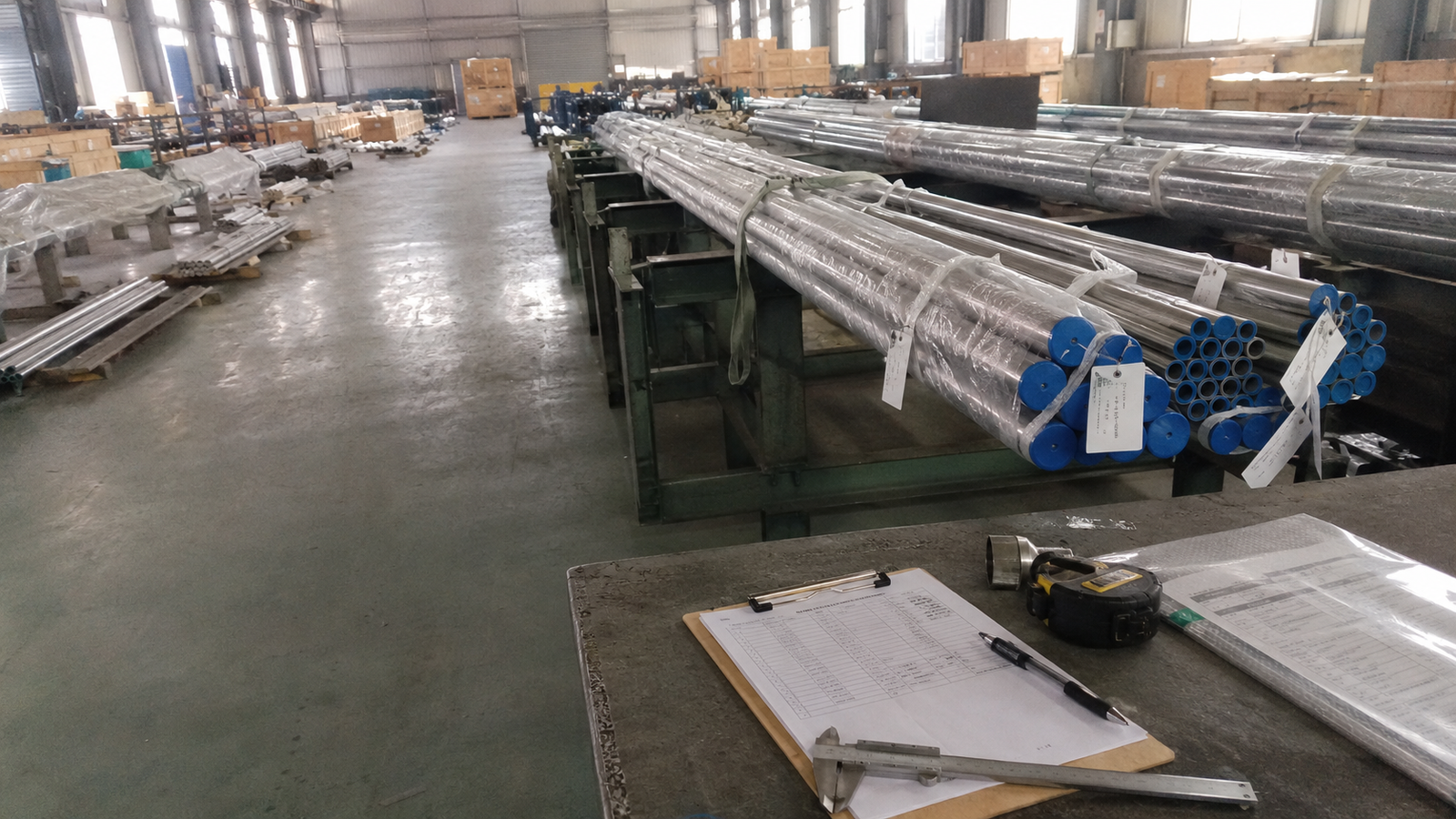
The purpose of receiving inspection is simple: confirm that the material delivered is the material ordered before it enters production, machining, welding, installation or inventory.
This guide explains what buyers should check when nickel alloy tubes arrive and how to reduce risk before using the material.
Quick Answer: What Is the First Check After Receiving Nickel Alloy Tubes?
The first check should be a basic identity and traceability check.
Before measuring every tube or sending samples for testing, buyers should confirm:
- Does the shipment match the purchase order?
- Does the packing list match the delivered bundles or pieces?
- Do bundle labels show the correct alloy grade, size and heat number?
- Does the MTC/MTR match the heat number on the physical goods?
- Are the required standards, heat treatment conditions and test reports included?
- Is there visible shipping damage or packaging damage?
EN 10204 Type 3.1 inspection certificates provide actual test results from the supplied material lot and are validated by the manufacturer’s authorized inspection representative independent of the manufacturing department. Source: EN 10204 Type 3.1 Inspection Certificates
Buyer Takeaway
Do not start with only appearance. Start by confirming identity, traceability and order consistency.
Why Is There No Single Universal First Check?
There is no single universal first check because different nickel alloy tube applications have different risks.
A buyer using nickel alloy tubes for heat exchangers may focus first on OD, wall thickness, length, tube straightness and leak testing. A buyer using tubes in a chemical process system may focus on alloy grade, heat number, corrosion resistance, surface condition and MTC/MTR. A buyer using tubes for high-pressure or safety-sensitive equipment may require additional NDT or third-party inspection.
The First Check Depends On
| Factor | Why It Changes the Inspection Priority |
|---|---|
| Application | Heat exchanger, chemical processing, marine system, aerospace-related equipment and power generation may have different risks. |
| Purchase order | The PO defines the ordered grade, size, standard, surface, testing and documents. |
| Tube standard | ASTM, ASME, EN, ISO or customer drawings may require different acceptance criteria. |
| Service environment | Corrosive media, pressure, temperature and chloride content affect inspection focus. |
| Criticality | Safety-sensitive or high-value projects may require more verification. |
| Supplier history | New suppliers or first orders may require stricter receiving checks. |
| Required documentation | MTC/MTR, NDT reports, PMI, dimensional reports or third-party inspection may be required. |
ASTM B444 covers UNS N06625 and related nickel alloy seamless pipe and tube, including tensile testing, hydrostatic testing and nondestructive electric testing requirements. Source: ASTM B444
ASTM B163 covers seamless nickel and nickel alloy tubes for condenser and heat-exchanger service and includes OD and wall-related requirements. Source: ASTM B163
Buyer Takeaway
The best receiving inspection starts from the purchase order and application risk, not from a generic checklist.
Step 1: Check Packaging and Shipping Condition
Before opening the shipment fully, inspect the outer packaging.
What to Check
| Item | What to Look For |
|---|---|
| Wooden case or bundle condition | Broken wood, collapsed packaging, loose straps, water damage or impact marks. |
| Protective covering | Torn wrapping, missing covers, exposed tubes or damaged plastic film. |
| End protection | Missing end caps, crushed tube ends or contamination inside tube ends. |
| Moisture signs | Wet packaging, rust-colored stains from contact materials or water marks. |
| Handling damage | Bent tubes, dented bundles, crushed ends or scratched surfaces. |
| Shipping marks | Correct consignee, PO number, bundle number and destination information. |
What to Do If Damage Is Found
If packaging damage is visible:
- Take photos before unpacking.
- Record the issue on the receiving note.
- Keep damaged packing materials.
- Do not mix the damaged bundle with approved material.
- Notify the supplier and carrier quickly.
- Check whether any tube is bent, dented, scratched or contaminated.
Buyer Takeaway
Packaging damage does not always mean tube damage, but it should trigger closer inspection and documentation.
Step 2: Verify Quantity Against the Packing List
The next step is to confirm that the delivered quantity matches the packing list and PO.
Quantity Items to Confirm
| Item | Why It Matters |
|---|---|
| Number of bundles | Confirms shipment completeness. |
| Number of pieces | Important for cut-length tubes or small quantity orders. |
| Total length | Important when tubes are ordered by meter or foot. |
| Total weight | Useful for large shipments, customs and inventory records. |
| Bundle numbers | Helps match labels, packing list and MTC/MTR. |
| Short shipment / over shipment | Should be reported before material enters stock. |
Buyer Takeaway
Quantity errors are easiest to resolve immediately after delivery. Confirm bundle count, piece count, total length and total weight before moving material into production.
Step 3: Check Labels, Marking and Heat Number Traceability
Labels and markings connect the physical goods to the documents.
For nickel alloy tubes, buyers should check whether bundle tags or tube markings show the required information.
Label / Marking Items
| Item | Why It Matters |
|---|---|
| Alloy grade | Confirms material identity, such as Alloy 625, Alloy 718, Alloy 825, Alloy C-276 or Alloy 400. |
| UNS number | Reduces confusion between similar trade names. |
| Size | Confirms OD, wall thickness and length. |
| Standard | ASTM B444, ASTM B163, ASTM B704, ASME SB standard or customer drawing. |
| Heat number | Links the tube to MTC/MTR and batch-level test data. |
| Lot / batch number | Helps track production and inspection records. |
| Supplier name | Confirms source and documentation consistency. |
| PO number | Helps match the shipment to the order. |
Why Heat Number Matters
The heat number is one of the most important traceability details. It should match:
- Physical tube marking or bundle label
- Packing list
- MTC/MTR
- NDT report if required
- Dimensional inspection report if required
- PMI or third-party report if required
Buyer Takeaway
If the heat number on the tube or bundle label does not match the MTC/MTR, isolate the material and ask the supplier to clarify before using it.
Step 4: Review the MTC/MTR Carefully
The Material Test Certificate or Mill Test Report is a key receiving document. It should be checked against the PO and physical goods.
What an MTC/MTR Should Help Verify
| MTC/MTR Item | What to Check |
|---|---|
| Supplier / manufacturer | Does it match the approved supplier or mill? |
| Heat number | Does it match the label and packing list? |
| Alloy grade | Does it match the ordered material? |
| UNS number | Does it match the specification? |
| Product standard | ASTM B444, B163, B704, ASME SB standard or customer drawing. |
| Chemical composition | Are key elements within the standard or PO requirement? |
| Mechanical properties | Tensile strength, yield strength, elongation and hardness if required. |
| Heat treatment condition | Annealed, solution annealed, aged or customer-specified condition. |
| Testing performed | Tensile, hardness, hydrostatic, NDT, PMI or corrosion test if required. |
| Certificate type | EN 10204 3.1, 3.2, CoC or other certificate type. |
| Signature / authorization | Confirms document approval and responsibility. |
ASTM E8/E8M covers tension testing of metallic materials and includes determination of yield strength, tensile strength, elongation and reduction of area. Source: ASTM E8/E8M
ASTM E18 covers Rockwell hardness testing of metallic materials. Source: ASTM E18
Important Caution
An MTC/MTR is not a replacement for every inspection. It may not include full dimensional data, surface roughness, every NDT report, packing condition or complete heat treatment furnace cycle unless those items are required and reported.
Buyer Takeaway
Check the MTC/MTR line by line against the PO. If the PO requires a test or report, confirm it is actually included.
Step 5: Confirm Alloy Grade and Chemical Composition
Nickel alloy names can be confusing. For example, Alloy 625, Alloy 600, Alloy 718, Alloy 825, Alloy C-276 and Alloy 400 are all nickel alloys, but they have different chemical compositions and application ranges.
Chemical Verification Methods
| Method | Use |
|---|---|
| MTC/MTR chemical analysis | Confirms batch-level reported composition. |
| PMI test | Quick alloy identity verification using XRF or similar methods. |
| OES analysis | Laboratory or shop-based elemental analysis when more complete verification is needed. |
| Third-party lab test | Independent confirmation for critical projects or supplier qualification. |
ASTM E1473 describes chemical analysis test methods for nickel, cobalt and high-temperature alloys. Source: ASTM E1473
Important Caution
PMI is useful for verifying alloy identity, but it may not replace full chemical analysis required by a product standard. Buyers should define the required method and acceptance criteria before shipment when independent verification is needed.
Buyer Takeaway
For normal orders, MTC/MTR review may be enough. For critical or first-time supplier orders, buyers may request PMI or third-party chemical verification.
Step 6: Check Dimensions
Dimensional inspection confirms whether the tubes will fit, assemble, weld, expand into tube sheets or meet pressure and flow requirements.
Key Dimensions for Nickel Alloy Tubes
| Dimension | Why It Matters |
|---|---|
| Outside diameter (OD) | Affects fit-up, tube sheet expansion, fittings and installation. |
| Inside diameter (ID) | Affects flow, clearance and internal components. |
| Wall thickness (WT) | Affects pressure capacity, corrosion allowance, heat transfer and mechanical strength. |
| Length | Affects installation and project layout. |
| Straightness | Important for heat exchanger tubes, long tubes and precision assemblies. |
| Ovality / roundness | Affects fit-up, welding and sealing. |
| End condition | Burrs, dents, deformation or poor cuts may affect assembly and flow. |
Practical Receiving Checks
Buyers may perform:
- Caliper or micrometer OD checks
- Wall thickness checks
- Length measurement
- Straightness check
- Visual end inspection
- Random sampling inspection
- Full inspection for critical orders
Buyer Takeaway
Do not only check nominal size. Confirm tolerance, sampling method and acceptance criteria according to PO, standard or drawing.
Step 7: Inspect Surface Condition
Surface condition affects appearance, cleaning, welding, corrosion behavior and downstream processing.
Surface Issues to Check
| Surface Issue | Possible Risk |
|---|---|
| Scratches | May cause appearance rejection or become local defect sites. |
| Dents | May affect fit-up, pressure integrity or assembly. |
| Pits | May indicate surface damage or corrosion concern. |
| Oxide scale | May need pickling or cleaning before use. |
| Oil or contamination | May affect welding, cleaning or high-purity use. |
| Burrs at tube ends | May restrict flow or affect assembly. |
| Crushed tube ends | May prevent connection or expansion. |
| Internal contamination | Important for fluid, heat exchanger or clean-service tubes. |
When to Request More Surface Verification
For critical applications, buyers may request:
- Surface roughness report
- Internal cleanliness report
- Borescope inspection
- Liquid penetrant testing
- Pickling or cleaning confirmation
- Photos before shipment
ASTM E165 covers liquid penetrant examination procedures for detecting discontinuities open to the surface, such as cracks, seams, laps, laminations and through leaks. Source: ASTM E165/E165M
Buyer Takeaway
Visual inspection is useful, but it cannot detect every defect. If surface integrity is critical, define the required test method before ordering.
Step 8: Confirm NDT Reports If Required
Not every nickel alloy tube order requires the same NDT. The required tests depend on the product standard, application and purchase order.
Common NDT Methods
| NDT Method | What It Helps Detect |
|---|---|
| Ultrasonic testing (UT) | Internal discontinuities in metal pipe and tubing. |
| Eddy current testing (ET / ECT) | Surface and near-surface discontinuities in tubular products. |
| Hydrostatic test | Pressure-related leakage or integrity according to standard. |
| Pneumatic test | Leak testing in certain tube applications. |
| Liquid penetrant testing (PT) | Surface-open defects such as cracks or seams. |
| PMI | Alloy identity verification. |
ASTM E213 covers ultrasonic testing of metal pipe and tubing for detecting discontinuities during volumetric examination. Source: ASTM E213
ASTM E426 covers eddy current examination of seamless and welded tubular products made from relatively low-conductivity materials such as titanium, stainless steel and nickel alloys. Source: ASTM E426
Buyer Takeaway
If UT, ET, hydrostatic testing, PMI or PT is required, ask for the actual report, not only a general statement.
When Should Buyers Consider Advanced or Independent Testing?
Advanced testing should be considered when the project risk is high, the supplier is new, the application is safety-sensitive, or the PO requires independent verification.
Situations Where Extra Verification May Be Useful
| Situation | Possible Extra Check |
|---|---|
| First order from a new supplier | PMI, dimensional sampling, third-party review. |
| Critical pressure service | Hydrostatic test, UT, ET, dimensional report. |
| Highly corrosive service | PMI, corrosion test if specified, surface inspection. |
| Aerospace-related application | Material traceability, NDT reports, third-party inspection if required. |
| Heat exchanger project | OD, WT, straightness, length, surface and leak test review. |
| Medical-related equipment | Strict traceability and customer-specific validation. |
| Large project quantity | Sampling plan, batch inspection and incoming QC record. |
| Document inconsistency | Isolate material and request supplier clarification. |
Buyer Takeaway
Advanced testing should be based on application risk and PO requirements. It is not necessary for every order, but it should be planned before the material is used.
What Should Buyers Do If Something Does Not Match?
If there is any mismatch between the physical goods, PO, packing list, labels and documents, do not use the material immediately.
Recommended Steps
- Isolate the affected material.
- Take clear photos of labels, packaging and defects.
- Mark the bundle or pieces as “pending inspection.”
- Compare PO, packing list, MTC/MTR and labels again.
- Record the issue in an internal receiving inspection note.
- Contact the supplier with evidence.
- Ask for corrected documents or technical clarification.
- Request replacement, repair, credit or re-inspection if needed.
- Keep all communication records.
- Do not machine, weld or install the material until the issue is resolved.
Common Mismatch Examples
| Issue | What to Do |
|---|---|
| Heat number mismatch | Hold material and request clarification. |
| Wrong size on label | Measure and confirm before acceptance. |
| Missing MTC/MTR | Do not release to production until document is received. |
| Missing NDT report | Ask supplier to provide report if required by PO. |
| Visible damage | Photograph and notify supplier/carrier. |
| Quantity shortage | Check packing list and report immediately. |
| Surface defects | Record location, size and severity; ask for acceptance review. |
| Wrong alloy name | Request corrected document and consider PMI verification. |
Buyer Takeaway
The worst mistake is to use questionable material first and investigate later. Hold and document the issue before processing.
Buyer Receiving Inspection Checklist
| Check Item | What to Confirm |
|---|---|
| Purchase order | Grade, UNS number, standard, size, quantity, surface, testing and certificate requirements. |
| Packing list | Bundle number, quantity, weight, length and shipment details. |
| Packaging | No major damage, moisture, crushed ends or broken protection. |
| Labels / marking | Alloy grade, UNS number, size, heat number, PO number and supplier. |
| Heat number | Matches MTC/MTR, packing list and physical goods. |
| MTC/MTR | Chemistry, mechanical properties, heat treatment, standard and certificate type. |
| Dimensions | OD, ID, wall thickness, length, straightness, ovality and tolerance. |
| Surface condition | Scratches, dents, pits, oxide scale, burrs, contamination and cleanliness. |
| End condition | Square cut, deburred, capped or customer-specified condition. |
| NDT reports | UT, ET, hydrostatic, pneumatic, PT or PMI reports if required. |
| Third-party inspection | Verify report and release note if required. |
| Nonconformance record | Record any mismatch before releasing material. |
Example Receiving Inspection Process
Example 1: Alloy 625 Seamless Tubes
Order requirement:
Alloy 625 seamless tubes, UNS N06625, ASTM B444, OD 25.4 mm × WT 2.11 mm × 6000 mm, solution annealed, pickled surface, EN 10204 3.1 MTC, hydrostatic test and NDT report required.
Receiving check:
- Confirm bundle labels show Alloy 625 / UNS N06625.
- Confirm heat number matches MTC/MTR.
- Check ASTM B444 is listed on the MTC.
- Confirm OD, WT and length by sampling.
- Check surface for dents, scratches and crushed ends.
- Verify hydrostatic test and NDT report are included.
- Release material only after document and physical checks match.
Example 2: Nickel Alloy Heat Exchanger Tubes
Order requirement:
Seamless nickel alloy tubes for heat exchanger service, ASTM B163, OD and wall tolerance controlled, straight length, surface cleaned and capped.
Receiving check:
- Confirm ASTM B163 or customer standard.
- Check OD, wall thickness and length.
- Check straightness and tube end condition.
- Inspect internal and external cleanliness.
- Confirm heat number and MTC/MTR.
- Check whether leak testing or NDT report is required.
- Keep tubes capped and protected before use.
Common Mistakes When Receiving Nickel Alloy Tubes
1. Checking Appearance Only
A tube may look fine but still have wrong heat number, missing documents or incorrect test reports.
2. Not Matching Heat Numbers
Heat number mismatch creates traceability risk and should be resolved before use.
3. Not Reviewing the MTC/MTR
MTC/MTR should be checked against the PO, not just stored.
4. Assuming All Tests Are Included
UT, ET, hydrostatic test, PMI or PT should be required clearly if needed.
5. Ignoring Tube Ends
Crushed ends, burrs or missing caps can create assembly or cleanliness problems.
6. Measuring Only OD
For tubes, ID, wall thickness, length, straightness and ovality may also matter.
7. Not Documenting Shipping Damage
Damage should be photographed and reported immediately.
8. Mixing Unverified Material Into Stock
Unverified material should be isolated until inspection is complete.
9. Waiting Too Long to Report Issues
Late reporting makes claims and corrective action harder.
10. Not Sharing Evidence With Supplier
Photos, labels, MTC pages and measurement records help the supplier respond quickly.
FAQ: Nickel Alloy Tube Receiving Inspection
1. What should I check first when nickel alloy tubes arrive?
Start by checking the PO, packing list, labels, heat number and MTC/MTR. Then inspect packaging, quantity, dimensions, surface and required test reports.
2. Why is heat number important?
Heat number links the physical tube to batch-level chemical and mechanical test data on the MTC/MTR.
3. Is MTC/MTR enough to accept the material?
MTC/MTR is essential, but buyers should also verify physical labels, quantity, dimensions, surface condition and any required NDT reports.
4. What is EN 10204 3.1?
EN 10204 3.1 is an inspection certificate type that provides specific test results for the supplied material lot and confirms compliance with the order.
5. What NDT may be required for nickel alloy tubes?
Common NDT methods include ultrasonic testing, eddy current testing, hydrostatic testing, pneumatic testing, liquid penetrant testing and PMI, depending on the standard and project.
6. Should I perform PMI after receiving nickel alloy tubes?
PMI may be useful for critical projects, new suppliers, mixed inventory or when independent alloy verification is required.
7. What should I do if the MTC heat number does not match the label?
Hold the material, do not use it, and ask the supplier for clarification or corrected documentation.
8. Should I inspect every tube?
It depends on project risk, quantity, standard and PO requirements. Some projects use sampling; critical projects may require full inspection.
9. What should I do if tubes are damaged during shipment?
Take photos, record the damage, keep packaging, isolate the material and notify the supplier and carrier immediately.
10. What should buyers include in future orders to make receiving inspection easier?
Include alloy grade, UNS number, standard, size, tolerance, surface condition, heat treatment, NDT, MTC/MTR type, marking, packing and acceptance criteria in the PO.
Conclusion
Checking nickel alloy tubes after delivery is not a single action. It is a structured receiving inspection process.
The first practical step is to match the physical goods with the purchase order, packing list, labels, heat number and MTC/MTR. After that, buyers should check packaging, quantity, dimensions, surface condition, end condition and required test reports.
For critical applications, additional verification such as PMI, UT, ET, PT, hydrostatic testing, dimensional reports or third-party inspection may be required.
A clear receiving process helps buyers reduce traceability risk, avoid wrong material use, prevent inspection disputes and protect project schedules.
Emily PIPE supplies nickel alloy tubes, nickel alloy bars, titanium alloy tubes and titanium alloy bars for global industrial applications. If you are preparing a nickel alloy tube order, you can send your material grade, UNS number, size, standard, delivery condition, inspection requirement and certificate requirement for technical review and quotation.