
How to Select Nickel Alloy Bars and Tubes for Nuclear Reactor Internals
Selecting nickel alloy bars and tubes for nuclear reactor internals is not simply a matter of comparing alloy names, room-temperature tensile properties, or general corrosion tables.
“Nuclear reactor internals” covers a wide range of components, environments, safety functions, and regulatory classifications. Some internal structures are made primarily from austenitic stainless steels, zirconium alloys, or other approved materials. Nickel alloys are used selectively where their corrosion resistance, elevated-temperature properties, fabrication characteristics, or historical qualification support a defined component requirement.
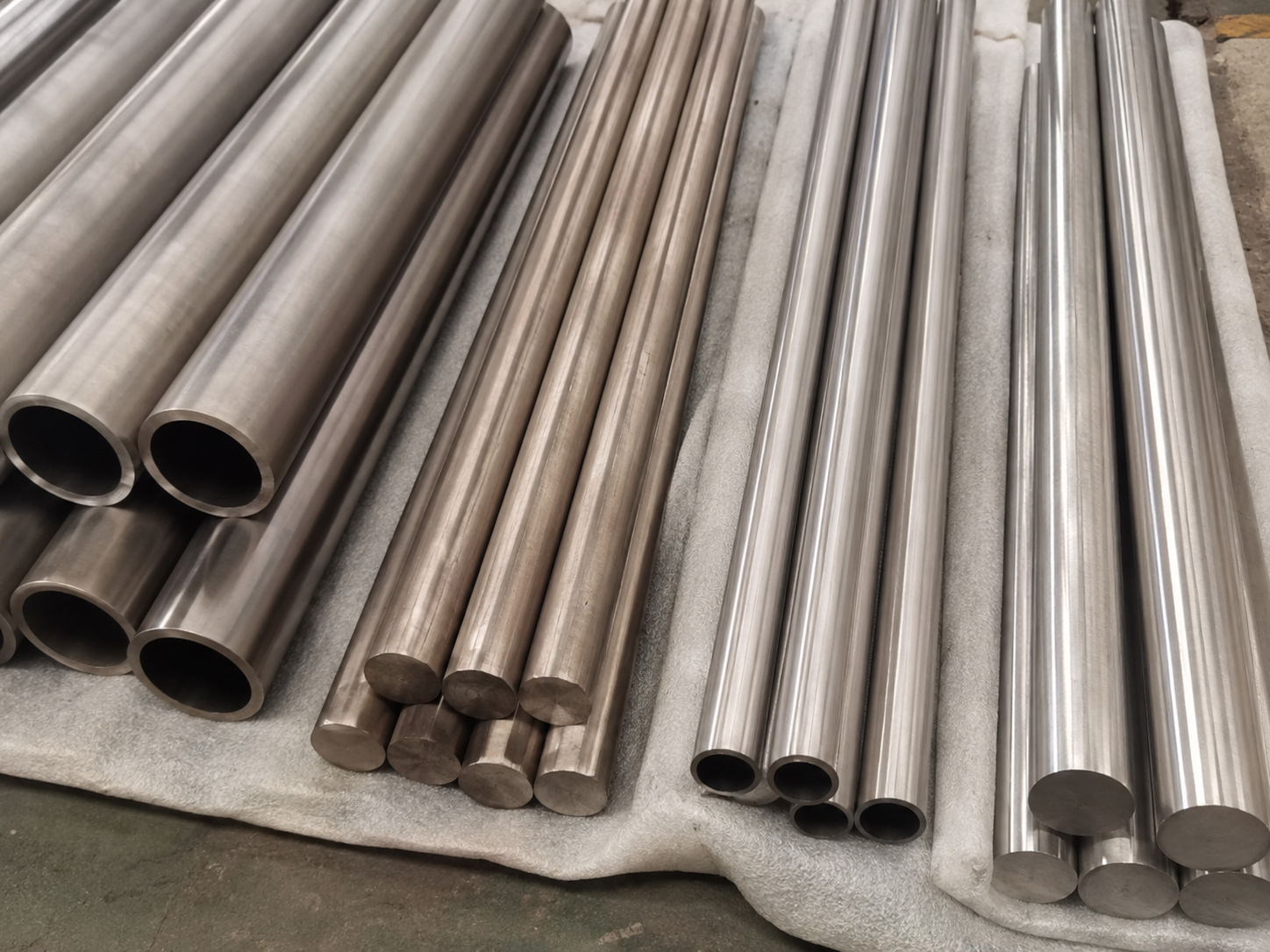
Bars and tubes also serve different functions.
A nickel alloy bar may be machined into a pin, fastener, shaft, guide component, support member, spacer, spring-related part, or instrumentation component. A tube may be used in a heat exchanger, steam generator, instrumentation system, penetration, guide assembly, or another project-defined location.
The correct material is therefore not the nickel alloy with the highest chromium, nickel, molybdenum, or tensile strength. It is the approved alloy, product form, condition, manufacturing route, inspection level, documentation package, and quality-assurance pathway that match the exact component, reactor environment, code classification, design life, and licensing basis.
The first procurement question should not be:
“Which Inconel alloy is best for reactor internals?”
It should be:
“What is the component, what safety function does it perform, which degradation mechanisms apply, and which code and approved material specification control its construction?”
Start by Defining What “Reactor Internals” Means
The term should not be used as a general label for every metal component located inside a nuclear facility.
Depending on the reactor design and project terminology, relevant equipment may include:
- Core-support structures;
- control-rod guide structures;
- baffles, former plates, barrels, shrouds, and supports;
- hold-down springs and retaining components;
- instrumentation guides and penetrations;
- fasteners, pins, keys, and support hardware;
- internal flow-distribution components;
- adjacent pressure-boundary penetrations;
- steam-generator or intermediate heat-exchanger tubes;
- high-temperature internal heat-transfer components;
- molten-salt-facing structures.
These components do not necessarily follow the same material or code requirements.
For example, a steam-generator tube may operate inside the nuclear steam-supply system but is not normally classified in the same way as a reactor-vessel core-support structure.
Component Definition Checklist
| Question | Why It Matters |
|---|---|
| What is the exact component name? | Determines the applicable design, product form, inspection, and code rules |
| Is it inside the reactor vessel? | Distinguishes core internals from adjacent nuclear equipment |
| Does it retain pressure? | May change its ASME construction class and material rules |
| Does it support the core? | May bring ASME Section III core-support requirements into scope |
| Is it safety-related? | Affects QA, procurement, dedication, traceability, and reporting |
| Is the material irradiated? | Determines whether irradiated properties and aging mechanisms apply |
| Is it welded? | Introduces weld-metal, HAZ, residual-stress, and qualification requirements |
| Is it replaceable? | Influences inspection, maintenance, and lifecycle strategy |
| What raw-material form is required? | Bar, tube, forging, plate, casting, or weld material follow different standards |
| Who is the design authority? | Final material approval belongs to the authorized project organization |
A supplier should not infer the nuclear classification from the words “reactor internal.”
Establish the Regulatory and Code Basis First
Material selection should begin with the project’s regulatory and design framework.
Depending on the jurisdiction and component, the governing requirements may include:
- National nuclear regulations;
- plant licensing basis;
- ASME Boiler and Pressure Vessel Code;
- ASME Section II material specifications;
- ASME Section III construction requirements;
- ASME Code Cases;
- owner or reactor-vendor specifications;
- approved material lists;
- nuclear quality-assurance requirements;
- project-specific technical and procurement specifications.
ASME Section III Class 1 requirements address materials, design, fabrication, examination, testing, and overpressure protection for applicable Class 1 items.
ASME Section III core-support requirements apply where the relevant component falls within their defined scope.
The purchase order should identify:
- Applicable code;
- construction class;
- code edition and addenda;
- applicable Code Cases;
- material specification;
- supplemental requirements;
- design-authority approval;
- required Authorized Nuclear Inspector involvement where applicable.
The latest commercial edition is not automatically the correct edition for an existing plant or licensed design. The project-controlled edition governs.
There Is No Universal “Nuclear-Grade Nickel Alloy”
“Nuclear grade” is not a complete alloy designation.
A technically complete material description may need to include:
- UNS designation;
- ASTM or ASME material specification;
- product form;
- heat-treatment condition;
- dimensional requirements;
- melting and remelting route;
- grain-size requirement;
- cleanliness or residual-element limits;
- surface condition;
- mechanical-property requirements;
- NDT requirements;
- inspection-document type;
- nuclear QA status;
- approved manufacturer or material organization.
Two products with the same nominal UNS grade may not be interchangeable if they differ in:
- Product form;
- section size;
- heat treatment;
- cold work;
- grain structure;
- melt route;
- residual stress;
- surface condition;
- testing;
- code qualification;
- supplier approval.
Define the Reactor Environment
Light-Water Reactors
PWR and BWR components may be exposed to combinations of:
- High-temperature water;
- high pressure;
- dissolved hydrogen or oxygen;
- boric acid;
- lithium chemistry;
- conductivity and impurity limits;
- radiolysis products;
- neutron irradiation;
- residual and applied stress;
- flow-induced vibration.
The relevant material question is not simply whether the alloy resists water.
It is whether the specific product condition and fabricated component resist the credible degradation mechanisms under the approved chemistry, temperature, stress, irradiation, and design-life conditions.
High-Temperature Gas-Cooled Reactors
High-temperature gas reactor components may be exposed to:
- Reactor-grade helium;
- elevated temperature;
- long hold times;
- thermal gradients;
- creep;
- stress relaxation;
- creep–fatigue interaction;
- trace impurities in the helium;
- oxidation, carburization, or decarburization;
- neutron irradiation.
Here, room-temperature tensile strength becomes less important than:
- Time-dependent allowable stress;
- creep rupture;
- creep–fatigue;
- environmental effects;
- thermal stability;
- weld performance;
- code qualification.
Molten-Salt Reactors
Molten-salt systems may involve:
- Fluoride salts;
- chloride salts;
- fuel salts or coolant salts;
- high temperature;
- salt-purity control;
- oxidation-reduction control;
- moisture and oxygen contamination;
- fission and activation products;
- selective dissolution of alloying elements;
- mass transfer between hot and cold regions;
- irradiation;
- salt infiltration and wear.
The chemical name of the base salt is not enough to establish compatibility.
Liquid-Metal and Other Advanced Reactors
Liquid sodium, lead, lead-bismuth, supercritical fluids, research-reactor coolants, and other concepts introduce different concerns, including:
- Dissolution;
- mass transfer;
- oxygen control;
- liquid-metal embrittlement;
- carburization or decarburization;
- erosion;
- activation;
- irradiation effects.
A material proven in a PWR should not be transferred automatically to an advanced reactor.
Identify the Credible Degradation Mechanisms
General Corrosion
General corrosion may produce relatively uniform loss, but it is not always the principal limitation for nuclear internals.
Even a low rate may matter where it affects:
- Dimensions;
- gaps;
- alignment;
- flow;
- activation products;
- contamination;
- inspection assumptions.
Primary Water Stress Corrosion Cracking
PWSCC has historically affected Alloy 600 and associated nickel-alloy weld metals in PWR primary-water applications.
NRC operating experience with Alloy 600 and Alloy 690 shows why alloy chemistry, thermal treatment, stress, product form, and water environment must be considered together.
Alloy 690 has been adopted in many replacement steam-generator applications because of its improved resistance relative to Alloy 600.
This does not prove that:
- Every Alloy 690 product is equivalent;
- every heat treatment is acceptable;
- Alloy 690 is immune to cracking;
- steam-generator tube experience applies directly to bars, forgings, penetrations, or welds.
Irradiation-Assisted Stress Corrosion Cracking
IASCC involves the combined effects of:
- Neutron irradiation;
- material microstructure;
- coolant chemistry;
- electrochemical potential;
- applied or residual stress.
NRC research on IASCC explains that irradiation can increase SCC susceptibility in internal components and that the phenomenon cannot be evaluated from unirradiated material data alone.
The required evidence may depend on:
- Neutron spectrum;
- dose rate;
- fluence;
- irradiation temperature;
- grain-boundary chemistry;
- cold work;
- stress;
- water chemistry;
- component location.
Irradiation Hardening and Embrittlement
Neutron exposure may change:
- Yield strength;
- hardness;
- ductility;
- fracture toughness;
- crack-growth behavior;
- microstructure.
The effect is not adequately described by saying that an alloy is “radiation resistant.”
Void Swelling and Irradiation Creep
At relevant doses and temperatures, irradiation may contribute to:
- Dimensional growth;
- void formation;
- swelling;
- stress relaxation;
- irradiation creep;
- loss of clearances;
- distortion.
Whether these mechanisms control the design depends on the material, component position, temperature, neutron spectrum, and lifetime fluence.
Thermal Aging
Long-term temperature exposure may alter:
- Precipitate distribution;
- grain-boundary phases;
- ordering;
- hardness;
- ductility;
- toughness;
- corrosion behavior.
A short-term tensile test does not establish long-term microstructural stability.
Fatigue and Environmentally Assisted Fatigue
Reactor internals may experience:
- Startup and shutdown cycles;
- flow-induced vibration;
- thermal transients;
- pressure changes;
- control-system movement;
- local resonance;
- mechanical contact.
Water chemistry and temperature may modify fatigue behavior relative to air-test data.
Creep and Creep–Fatigue
Creep is important only when temperature, stress, and exposure time are sufficient.
For high-temperature reactor components, the design may need to consider:
- Creep strain;
- rupture;
- stress relaxation;
- creep crack growth;
- interaction between cyclic loading and creep damage.
Wear and Fretting
Internal structures may experience:
- Flow-induced vibration;
- support contact;
- sliding;
- impact;
- fretting;
- debris-related wear.
Corrosion resistance alone cannot prevent mechanical wear.
Alloy 600 and Alloy 690: What Can Be Concluded?
Alloy 600
UNS N06600 has a long history in nuclear components.
Its historical advantages include:
- Fabricability;
- availability in multiple product forms;
- resistance in many high-temperature environments.
However, operating experience has shown susceptibility to PWSCC in certain PWR components and associated environments.
Alloy 600 should therefore not be presented as a default modern selection merely because it has nuclear operating history.
Alloy 690
UNS N06690 contains more chromium than Alloy 600 and has been used extensively in thermally treated tube conditions for replacement steam generators.
Potential advantages include:
- Improved resistance to relevant high-temperature water corrosion mechanisms;
- established tube-manufacturing routes;
- nuclear operating experience.
Important limitations include:
- Performance depends on thermal treatment;
- bar, tube, plate, forging, and weld products are not interchangeable;
- associated filler metals require separate evaluation;
- residual stress and fabrication remain important;
- project approval and code requirements still control.
The decision should be based on the exact component and material specification—not a simple 600-versus-690 marketing comparison.
Alloy 625 Is Not a Universal Reactor-Internal Alloy
UNS N06625 may provide:
- Corrosion resistance;
- useful mechanical strength;
- fabricability;
- availability in several product forms.
However, it should not be selected solely because it is widely described as a high-performance nickel alloy.
Questions include:
- Is the alloy approved by the design specification?
- Does it have the required irradiated-property database?
- Is its strength needed?
- Does the environment justify its chemistry?
- Is its product form covered by the applicable code?
- Are time-dependent properties relevant?
- Are weld and heat-treatment requirements established?
- Is activation or dose contribution important?
An industrial ASTM B444 or B446 product does not automatically become a qualified nuclear internal.
Alloy 617 for High-Temperature Nuclear Service
UNS N06617 is a nickel-chromium-cobalt-molybdenum alloy developed for elevated-temperature service.
DOE-supported Alloy 617 research notes that Alloy 617 is included in ASME Section III Division 5 for defined high-temperature nuclear construction up to the applicable code limit.
This is significant, but it does not mean Alloy 617 is automatically appropriate for:
- Every HTGR internal;
- every product form;
- every construction class;
- every helium impurity condition;
- every irradiated location;
- every flaw-evaluation method.
The project must still address:
- Code edition;
- material specification;
- allowable stresses;
- creep–fatigue;
- welds;
- crack-growth data;
- environmental effects;
- inspection and surveillance.
Hastelloy N and Molten-Salt Applications
Hastelloy N was historically developed for molten-fluoride service and used in the Molten Salt Reactor Experiment.
That history does not establish universal compatibility with all modern molten-salt reactors.
ORNL molten-salt materials research shows that salt purity, purification route, impurities, and salt chemistry can produce significantly different corrosion results.
Material selection should define:
- Fluoride or chloride salt;
- exact composition;
- redox-control method;
- impurity limits;
- moisture and oxygen;
- temperature;
- velocity;
- hot and cold regions;
- irradiation;
- fission-product effects;
- tellurium or other embrittling species;
- design and inspection method.
“Hastelloy N” should be treated as one project-specific candidate, not an automatic MSR answer.
Bars and Tubes Require Different Specifications
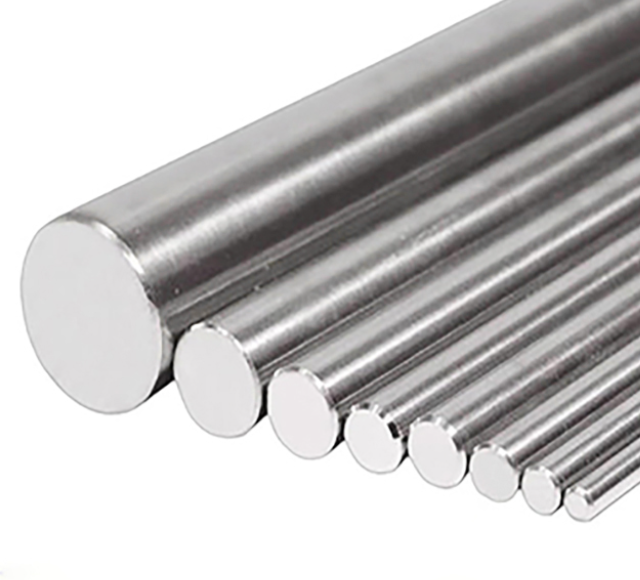
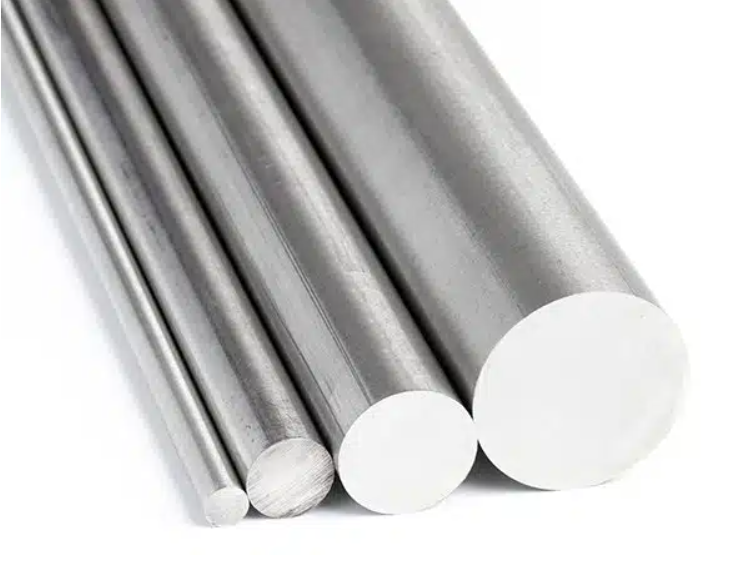
Nickel Alloy Bars
Bars may be used for:
- Pins;
- shafts;
- fasteners;
- tie rods;
- guide components;
- support hardware;
- machined fittings;
- spring-related components.
ASTM B166 nickel alloy bar requirements cover multiple nickel-chromium alloys, including UNS N06600, N06690, and N06617, in specified bar, rod, and wire forms.
The standard can define:
- Chemistry;
- dimensions;
- condition;
- tensile properties;
- hardness;
- product quality.
It does not establish nuclear classification or irradiation performance.
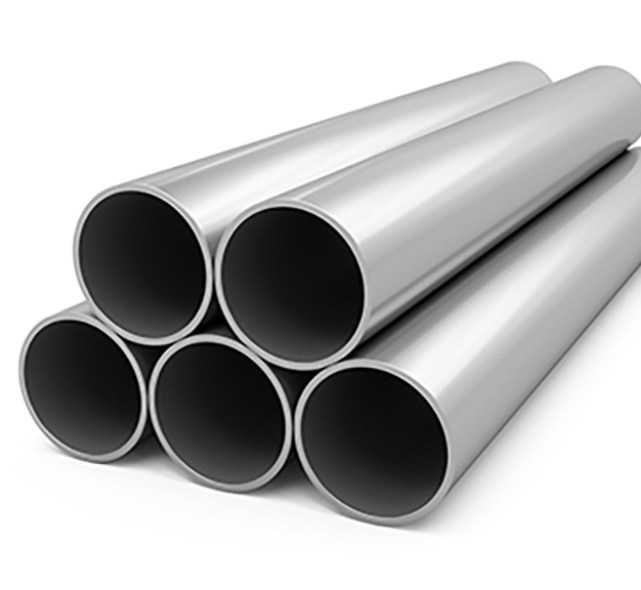
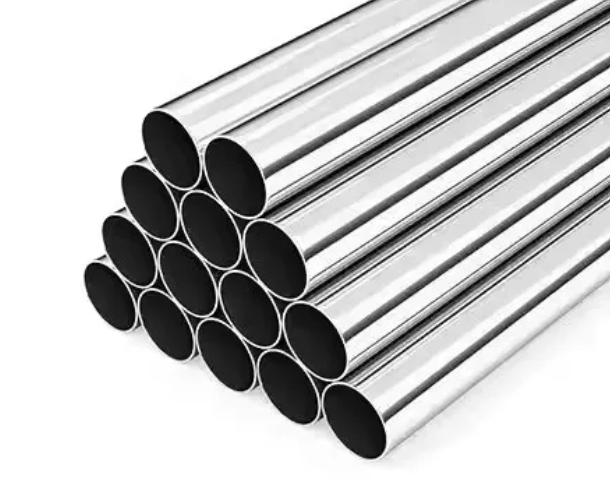
Nickel Alloy Tubes
Tubes may be used for:
- Heat exchangers;
- steam generators;
- instrumentation;
- guide structures;
- penetrations;
- project-specific internal flow paths.
ASTM B163 nickel alloy tube requirements cover seamless nickel and nickel-alloy condenser and heat-exchanger tubes.
ASTM B829 general tube requirements provide common requirements for several seamless nickel and nickel-alloy pipe and tube specifications.
The buyer should not assume that every B163 or B167 tube is nuclear qualified.
Additional requirements may include:
- ASME material-specification adoption;
- nuclear Code requirements;
- tighter chemistry;
- grain size;
- corrosion tests;
- eddy-current examination;
- ultrasonic examination;
- hydrostatic or pneumatic testing;
- surface and cleanliness controls;
- special heat treatment;
- approved mill;
- nuclear QA records.
ASTM and ASME Material Specifications Are Not Interchangeable by Assumption
ASTM specifications frequently form the technical basis for ASME material specifications, but nuclear construction may require an ASME Section II designation and compliance with Section III.
The purchase order should define:
- ASTM or ASME designation;
- exact revision;
- code edition and addenda;
- supplemental requirements;
- material organization requirements;
- Authorized Nuclear Inspector involvement;
- Code Data Reports where applicable.
A supplier should not substitute an ASTM product for an ASME Code material without written approval.
Melting and Remelting Routes
Possible melting or refining routes include:
- Air induction melting;
- vacuum induction melting;
- electroslag remelting;
- vacuum arc remelting;
- combinations of primary and secondary melting.
VIM, ESR, or VAR should not be presented as universally required.
The appropriate route depends on:
- Alloy specification;
- cleanliness requirements;
- segregation control;
- residual-element limits;
- approved manufacturing route;
- product size;
- project qualification.
A different or “higher-end” melting route is still a process change if it has not been approved.
Heat Treatment and Microstructure
Heat treatment can influence:
- Grain size;
- grain-boundary carbide distribution;
- residual stress;
- strength;
- ductility;
- creep;
- corrosion resistance;
- SCC behavior;
- weldability.
The order may need to define:
- Solution-annealing temperature;
- thermal-treatment range;
- cooling method;
- furnace atmosphere;
- furnace uniformity;
- thermocouple records;
- batch identification;
- final hardness;
- grain-size limits;
- microstructure acceptance.
A general statement such as “solution annealed” may not be sufficient for a nuclear-controlled application.
Cold Work and Residual Stress
Cold work may increase strength while also changing:
- Residual stress;
- hardness;
- microstructure;
- SCC response;
- fatigue;
- dimensional stability.
Relevant sources include:
- Tube straightening;
- drawing;
- swaging;
- rolling;
- bending;
- machining;
- grinding;
- press fitting.
The final product condition should represent the condition used in qualification and design data.
Welding Must Be Treated as a Separate Material System
A welded component includes:
- Base metal;
- weld metal;
- heat-affected zone;
- dilution zone;
- residual stress;
- surface oxide;
- repair history.
Alloy 600 base material, Alloy 82/182 weld metal, Alloy 690 base material, and Alloy 52-series weld metals do not have identical degradation behavior.
The project should specify:
- Welding procedure qualification;
- filler metal;
- heat input;
- interpass temperature;
- cleaning;
- post-weld heat treatment;
- repair limits;
- NDT;
- corrosion or SCC qualification;
- weld-map traceability.
Base-metal qualification does not automatically qualify the weldment.
Radiation Data Must Match the Application
Supplier datasheets normally describe unirradiated material.
For an irradiated internal component, relevant data may include:
- Neutron spectrum;
- dose rate;
- fluence;
- irradiation temperature;
- helium and hydrogen production;
- radiation hardening;
- fracture toughness;
- crack-growth behavior;
- IASCC;
- swelling;
- irradiation creep;
- post-irradiation ductility.
Published data are transferable only when the tested material, product form, heat treatment, irradiation conditions, and component function are sufficiently representative.
A material supplier should not generate a generic “radiation-resistant” claim from room-temperature MTR data.
Mechanical and Environmental Testing
Depending on the component, the required tests may include:
Batch and Product Tests
- Chemical composition;
- tensile properties;
- yield strength;
- elongation;
- hardness;
- grain size;
- dimensional inspection;
- surface inspection.
Elevated-Temperature Tests
- Hot tensile;
- creep;
- stress rupture;
- stress relaxation;
- creep–fatigue;
- thermal aging.
Fracture and Fatigue Tests
- Fracture toughness;
- fatigue;
- fatigue crack growth;
- creep crack growth;
- environmentally assisted fatigue.
Corrosion and SCC Tests
- General corrosion;
- intergranular corrosion;
- PWSCC screening;
- water-chemistry exposure;
- molten-salt testing;
- weld and HAZ testing.
Nondestructive Examination
- Ultrasonic testing;
- eddy-current testing;
- liquid penetrant testing;
- radiographic testing;
- visual and dimensional inspection;
- leak or pressure testing where applicable.
NDT does not prove the absence of every possible discontinuity.
The requirement should define:
- Method;
- standard;
- coverage;
- calibration;
- reference standard;
- sensitivity;
- acceptance criteria;
- personnel qualification;
- reporting;
- piece-to-report traceability.
A Nuclear Material Documentation Package Has Several Layers
1. Design and Contract Documents
These may include:
- Purchase order;
- drawing;
- component specification;
- safety classification;
- code class;
- approved material specification;
- code edition and addenda;
- approved deviations;
- technical and QA clauses.
2. Batch Material Documents
These may include:
- Original mill MTR;
- chemical composition;
- mechanical properties;
- heat number;
- heat-treatment condition;
- product standard;
- specimen and sampling information.
3. Manufacturing and Inspection Records
These may include:
- Melt records;
- forging or tube-conversion records;
- heat-treatment charts;
- dimensional reports;
- NDT reports;
- surface inspection;
- cleaning;
- marking and packing.
4. Nuclear QA Records
These may include:
- Approved supplier status;
- QA-program basis;
- ASME certificates and scope;
- procurement-document review;
- source surveillance;
- nonconformance reports;
- corrective actions;
- change control;
- record-retention evidence.
5. Engineering Qualification Evidence
These may include:
- Irradiated properties;
- creep–fatigue data;
- corrosion and SCC tests;
- environmental qualification;
- component testing;
- design allowables;
- approved equivalency evaluation.
No single document replaces all five layers.
What Does an MTR Prove?
An MTR may support:
- Alloy identity;
- heat number;
- chemical composition;
- specified mechanical properties;
- heat-treatment condition;
- product-standard compliance;
- selected batch tests.
It does not normally prove:
- Nuclear safety classification;
- irradiation performance;
- PWSCC or IASCC life;
- creep–fatigue life;
- weld qualification;
- completed component conformity;
- ASME Section III certification;
- long-term reactor service life.
The test frequency should also be understood.
A reported result may represent a heat, lot, heat-treatment batch, or sampled product—not an individual test on every physical bar or tube.
EN 10204 3.1 Is Not a Nuclear Qualification Certificate
BS EN 10204 inspection documents define inspection-document types for metallic products.
An EN 10204 3.1 certificate can support:
- Batch-specific test documentation;
- validation by authorized manufacturer inspection personnel;
- linkage to the applicable order and technical delivery conditions.
It does not establish:
- ASME nuclear code compliance;
- NQA-1 compliance;
- irradiation resistance;
- approved nuclear-source status;
- finished-component qualification.
ISO 9001, NQA-1, Appendix B, and QSC Are Different
ISO 9001
ISO 9001 is a general quality-management system standard.
It does not define nuclear-specific:
- design control;
- safety classification;
- Part 21 reporting;
- material qualification;
- nuclear record retention;
- ASME Section III authorization.
ASME NQA-1
ASME NQA-1 certification concerns an organization’s nuclear quality-assurance program.
The certificate should be checked for:
- Legal organization;
- facility;
- scope;
- validity;
- applicable program basis.
It is not a batch material certificate.
10 CFR Part 50 Appendix B
10 CFR Part 50 Appendix B establishes QA criteria for applicable safety-related structures, systems, and components in U.S. NRC-regulated nuclear power plants.
Its applicability depends on the project, jurisdiction, licensee, and procurement flowdown.
ASME Nuclear Material Organization QSC
ASME Nuclear Material Organization certification verifies a material organization’s quality system for activities performed under ASME Section III NCA-3300.
A QSC should be reviewed for:
- Organization;
- address;
- authorized activities;
- material scope;
- manufacturing or supply role;
- certificate validity.
A general claim of “ASME certified” is not enough.
Commercial-Grade Dedication Is a Controlled Acceptance Process
In U.S. NRC-regulated applications, some commercial-grade items may be accepted for use as basic components through a controlled dedication process.
NRC commercial-grade dedication guidance requires identification and verification of critical characteristics that provide reasonable assurance the item can perform its intended safety function.
A standard industrial MTR alone is not a complete commercial-grade dedication package.
Supplier Evaluation for Nuclear Materials
Verify the Exact Legal and Manufacturing Entity
Confirm:
- Company name;
- manufacturing site;
- material organization;
- original melt source;
- conversion mill;
- heat-treatment facility;
- testing laboratory;
- distributor or reseller role.
Verify Certificate Scope
Check:
- ISO 9001 scope;
- NQA-1 certificate scope;
- ASME QSC scope;
- nuclear component authorization where applicable;
- laboratory accreditation;
- expiration dates;
- listed addresses.
Review Subcontractor Control
Determine:
- Which processes are outsourced;
- how subcontractors are approved;
- how changes are communicated;
- who reviews reports;
- how traceability is preserved.
Review Nonconformance and Corrective Action
A credible nuclear supplier should have controlled processes for:
- Identifying nonconforming material;
- segregation;
- technical disposition;
- customer notification;
- corrective action;
- recurrence prevention;
- record retention.
Review Change Control
Changes that may require approval include:
- Original mill;
- melt route;
- heat-treatment facility;
- test laboratory;
- manufacturing route;
- chemistry target;
- product form;
- NDT method;
- software or inspection equipment.
Review Counterfeit, Fraudulent, and Suspect Item Controls
NRC nuclear supply-chain integrity guidance emphasizes verification of items intended for safety-related functions.
Controls may include:
- Certificate authentication;
- approved-source verification;
- marking checks;
- document consistency;
- direct confirmation with the original mill;
- anomaly reporting;
- segregation of suspect material.
Risk-Based Procurement Levels
| Procurement Level | Typical Objective | Possible Evidence |
|---|---|---|
| Research coupon | Preliminary material comparison | Datasheet, MTR, basic chemistry and condition |
| Non-nuclear prototype | Machining or fit evaluation | Traceability, dimensions, representative condition |
| Engineering test component | Validate design or process | Controlled material, inspection, test reports |
| Non-safety-related plant item | Meet plant and owner requirements | Approved supplier, MTR, NDT and documentation |
| Safety-related basic component | Perform a defined safety function | Appendix B or approved dedication controls |
| ASME Section III material | Support Code construction | Approved specification, QSC and Code records where applicable |
| Irradiated internal component | Maintain function after exposure | Irradiated data, aging evaluation and surveillance |
| High-temperature nuclear component | Address time-dependent behavior | Division 5 design data, creep–fatigue and environmental evidence |
| New reactor material qualification | Establish a new approved basis | Extensive testing, code approval and regulator/design-authority review |
Common Mistakes in Nuclear Nickel-Alloy Procurement
1. Treating “Reactor Internals” as One Product Category
Different components follow different material, code, and aging requirements.
2. Assuming All Internals Should Use Nickel Alloys
Many approved internals use stainless steels, zirconium alloys, or other materials.
3. Treating Steam-Generator Tube Experience as Universal
Tube operating history does not automatically apply to bars, welds, penetrations, or core supports.
4. Ordering Only by Commercial Alloy Name
“Inconel 690” does not define product form, specification, heat treatment, code or QA status.
5. Assuming Alloy 690 Is Immune to SCC
It offers improved resistance in relevant conditions but still requires controlled processing and application approval.
6. Using Room-Temperature MTR Data for Irradiated Design
Irradiated properties require appropriate data and engineering evaluation.
7. Assuming the Highest Nickel Content Gives the Best Result
Chromium, molybdenum, cobalt, iron, carbon, grain boundaries, heat treatment, environment and irradiation all matter.
8. Requiring VIM/VAR Without a Specification Basis
Unapproved process changes can create qualification and documentation problems.
9. Assuming Seamless Tube Is Automatically Superior
Manufacturing quality, standard compliance, inspection and application control determine suitability.
10. Treating NQA-1 as a Product Certificate
NQA-1 concerns a QA program, not the actual properties of a material heat.
11. Treating ISO 9001 as Nuclear Qualification
ISO 9001 does not establish nuclear design, material or reporting requirements.
12. Treating EN 10204 3.1 as Nuclear Approval
It defines an inspection-document type, not nuclear application qualification.
13. Ignoring Certificate Location and Scope
A certificate held by one facility may not cover another manufacturing site or process.
14. Ignoring Subcontracted Processes
Heat treatment, NDT and testing must remain qualified and traceable.
15. Reviewing Documents Only After Production
Missing QA, source, testing or witness requirements may not be recoverable later.
RFQ Checklist for Nickel Alloy Bars and Tubes
Before requesting a quotation, define:
- Reactor type;
- plant or project jurisdiction;
- exact component;
- component drawing;
- location in the system;
- pressure-retaining or non-pressure-retaining status;
- safety classification;
- ASME construction class;
- applicable code;
- code edition and addenda;
- applicable Code Cases;
- design-authority specification;
- approved material list;
- alloy grade;
- UNS designation;
- ASTM or ASME material specification;
- specification revision;
- product form;
- bar, tube, forging, plate, or weld material;
- diameter or outside diameter;
- wall thickness;
- length;
- dimensional tolerances;
- straightness;
- surface condition;
- heat-treatment condition;
- melting and remelting route;
- grain-size requirement;
- microstructure requirement;
- residual-element limits;
- room-temperature mechanical properties;
- elevated-temperature mechanical properties;
- creep or stress-rupture requirements;
- fatigue or fracture requirements;
- irradiation environment;
- neutron spectrum;
- fluence;
- irradiation temperature;
- coolant or process chemistry;
- dissolved-gas limits;
- impurity limits;
- pressure;
- normal and upset temperature;
- design life;
- PWSCC or IASCC concern;
- wear or fretting concern;
- welding requirements;
- filler-metal requirements;
- post-weld treatment;
- NDT method;
- inspection coverage;
- sensitivity and acceptance criteria;
- pressure or leak test;
- dimensional report;
- surface inspection;
- original mill MTR;
- Certificate of Conformance;
- EN 10204 document type;
- ASME QSC requirement;
- NQA-1 requirement;
- Appendix B requirement;
- Part 21 requirement;
- commercial-grade dedication requirement;
- source surveillance;
- witness or hold points;
- Authorized Nuclear Inspector involvement;
- third-party laboratory requirement;
- ISO/IEC 17025 scope requirement;
- heat-to-piece marking;
- record-retention period;
- nonconformance notification;
- process-change notification;
- source-change prohibition;
- counterfeit-item controls;
- packaging and preservation;
- final document-submittal schedule.
Frequently Asked Questions
Which nickel alloy is best for reactor internals?
There is no universal best alloy. The decision depends on the reactor type, exact component, code classification, temperature, environment, irradiation, stress, aging mechanisms, product form, and approved design basis.
Is Alloy 690 always better than Alloy 600?
Alloy 690 has provided improved resistance in important PWR applications, particularly in thermally treated steam-generator tubing. That does not mean every Alloy 690 bar, tube, forging, or weld is automatically preferable for every component.
Can Alloy 625 be used for reactor internals?
It may be considered where approved and where its mechanical and environmental properties match the component. Industrial ASTM conformity alone does not establish nuclear qualification.
Is Alloy 617 suitable for high-temperature reactors?
Alloy 617 is included within ASME Section III Division 5 for defined elevated-temperature nuclear applications. Its use must still comply with the applicable construction class, code edition, design rules, environmental basis, and qualification requirements.
Is Hastelloy N the standard material for all molten-salt reactors?
No. Hastelloy N has important historical molten-fluoride experience, but modern fluoride and chloride salt systems differ in salt chemistry, purification, redox control, impurities, irradiation, temperature, and design.
Are seamless tubes always required?
Not universally. The permitted product form and manufacturing process must follow the applicable material and component specification. A compliant welded tube may be acceptable in one application, while another requires seamless construction.
Does an MTR prove that the material is nuclear grade?
No. It normally proves specified heat chemistry, mechanical properties, condition, standard and traceability. Nuclear acceptance requires the complete design, QA, manufacturing and documentation basis.
Is ISO 9001 sufficient for a nuclear material supplier?
Usually not by itself for safety-related nuclear applications. The applicable project may require NQA-1, Appendix B controls, ASME QSC, commercial-grade dedication, or another approved nuclear QA basis.
Does an NQA-1 certificate prove that a particular material heat is acceptable?
No. It certifies or supports the organization’s quality-assurance program. The actual material must still comply with the purchase order, specification, traceability and test requirements.
Is EN 10204 3.1 sufficient for ASME Section III material?
No. It can support batch inspection documentation but does not replace ASME Code material, certification, inspection or nuclear QA requirements.
Must every nuclear nickel alloy be VIM/VAR melted?
No. The required melting route must come from the material specification, approved manufacturing procedure or purchase order.
Must every bar and tube receive 100% NDT?
Only when required by the applicable specification, Code, drawing, criticality assessment or purchase order. The method and acceptance requirements must be clearly defined.
Who approves the final material?
Final approval belongs to the authorized design organization, reactor vendor, licensee or owner, materials and structural engineers, nuclear QA organization, and regulator or Authorized Nuclear Inspector where applicable.
Conclusion
Selecting nickel alloy bars and tubes for nuclear reactor internals requires far more than choosing a familiar Alloy 600-, 690-, 625-, or 617-family material.
A defensible decision must connect:
- Exact component function;
- reactor type;
- safety classification;
- ASME construction class;
- code edition and approved specification;
- coolant, gas, liquid-metal, or molten-salt environment;
- temperature, pressure, stress, and design life;
- neutron spectrum and fluence;
- PWSCC, IASCC, fatigue, creep, swelling, wear, and thermal aging;
- bar or tube product form;
- melt route, heat treatment, microstructure, and welding;
- NDT and acceptance criteria;
- original-mill traceability;
- nuclear QA and supplier scope;
- nonconformance, change control, and record retention;
- finished-component and lifecycle verification.
Nickel alloys can provide valuable combinations of corrosion resistance, elevated-temperature capability, fabrication and mechanical performance. They are not automatically the correct material for every reactor internal.
The goal is not to buy a product described as “nuclear-grade nickel alloy.”
The goal is to establish an approved material, manufacturing, inspection, documentation, and quality-assurance pathway that provides defensible evidence that the supplied bar or tube conforms to the exact nuclear component requirement.