
How Chlorides Influence Alloy Selection in Chemical Equipment
Chloride concentration is one of the most frequently requested values in chemical-equipment material selection.
It is also one of the most frequently misunderstood.
A buyer may ask whether 316L, duplex stainless steel, Alloy 625, Alloy C-276, Alloy C-22, or titanium is suitable for a process containing a stated number of chloride parts per million.
That information is useful, but it is not enough.
The same bulk chloride concentration can produce very different material behavior depending on temperature, pH, oxidation-reduction conditions, water content, dissolved gases, stress, deposits, flow, fabrication, and equipment geometry.
Chlorides may also concentrate far above the measured bulk value inside crevices, beneath deposits, at liquid–vapor interfaces, in evaporating films, in cooling-water residues, or under insulation.
The correct alloy should therefore not be selected from chloride concentration alone. It should be selected by identifying how and where chlorides can destabilize the material’s protective surface, what damage mechanism is credible, and what evidence is required to demonstrate acceptable performance.
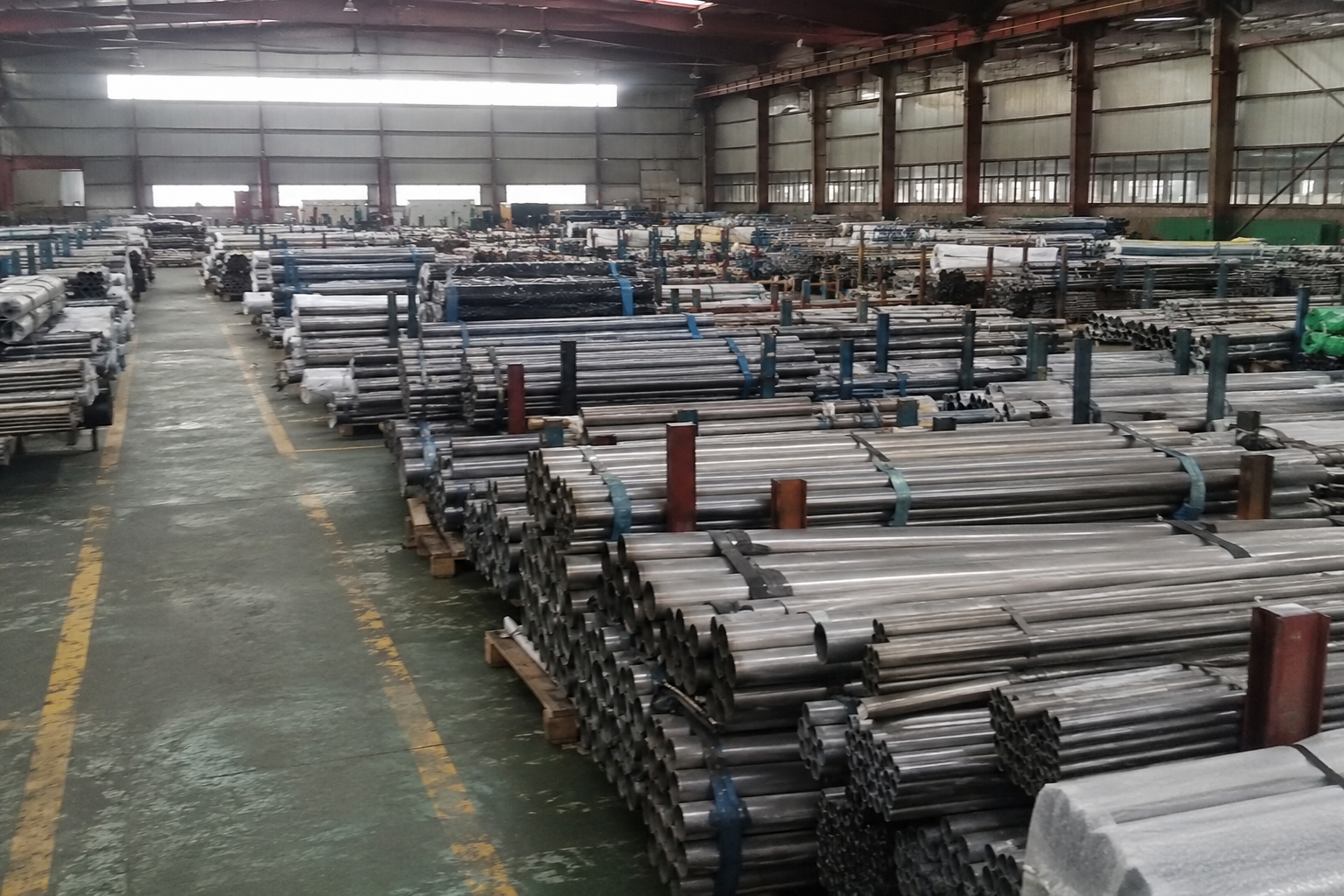
This article explains how engineers and buyers can evaluate chloride-containing environments without relying on a universal ppm limit or a simple alloy ranking.
Why Chlorides Are Important in Alloy Selection
Many stainless steels, nickel alloys, titanium alloys, and other corrosion-resistant metals depend on a passive surface film.
This film separates the underlying metal from the process environment and can reform after minor damage when the electrochemical conditions support repassivation.
Chlorides can increase localized-corrosion risk by contributing to local passive-film breakdown and by helping maintain an aggressive chemistry inside a pit or crevice after attack begins.
The outcome is not controlled by chloride alone.
A material may remain passive in one chloride-containing environment but suffer localized attack when temperature rises, pH falls, oxidizing potential changes, deposits form, or a tight crevice develops.
Chloride-Related Damage Mechanisms
| Damage Mechanism | What Happens | Why It Matters |
|---|---|---|
| Pitting corrosion | Localized passive-film breakdown produces small but potentially deep cavities | Penetration can occur with little average metal loss |
| Crevice corrosion | Restricted mass transfer creates a local environment different from the bulk solution | Attack can develop under gaskets, deposits, sleeves and lap joints |
| Chloride SCC | Tensile stress and a susceptible alloy interact with a chloride-containing environment | Cracking may occur without severe general corrosion |
| Corrosion fatigue | Repeated mechanical loading acts together with corrosion | Pits and surface attack can reduce fatigue resistance |
| Under-deposit corrosion | Deposits create shielding, concentration and differential chemistry | Bulk-fluid testing may not represent the condition |
| Erosion-corrosion | Flow, particles or bubbles damage a protective surface | Corrosion and mechanical wear may reinforce each other |
| Galvanic corrosion | Dissimilar materials are electrically connected through an electrolyte | The material pair and area ratio can change attack |
| Corrosion under insulation | External water and salts collect around hot or cyclic equipment | External chloride exposure may be unrelated to process-fluid chemistry |
The first engineering question should therefore be:
Which chloride-related damage mechanism is credible for this component?
Bulk Chloride Concentration Is Not the Same as Local Exposure
A laboratory analysis may report the average chloride concentration in a tank or process stream.
The most vulnerable equipment location may experience a very different value.
Locations Where Chlorides Can Concentrate
- Under gaskets;
- beneath deposits;
- inside threads;
- behind shaft sleeves;
- in flange faces;
- at tube-to-tubesheet joints;
- in dead legs;
- at liquid–vapor interfaces;
- in evaporating droplets;
- in condensate;
- at splash zones;
- beneath insulation;
- in cooling-water residue;
- during incomplete rinsing;
- after shutdown;
- during wet–dry cycling.
A process containing a relatively low bulk chloride concentration may still create a concentrated local electrolyte when water evaporates.
Conversely, a high bulk chloride concentration does not automatically mean every alloy will fail. Material response still depends on temperature, electrochemical potential, pH, stress, surface condition and design.
There is no universal chloride ppm limit that can be applied to all alloys and equipment.
Pitting Corrosion
Pitting is a localized form of corrosion that can produce small openings and deep penetration.
Once a stable pit develops, the chemistry inside it may become different from the bulk solution because of metal-ion hydrolysis, charge balance, restricted transport and chloride migration.
A pit can continue growing even when most of the surrounding surface remains passive.
Why Average Corrosion Rate Can Miss Pitting
A large specimen may lose very little total mass while one pit penetrates a thin tube wall.
For this reason, a corrosion report should not provide only:
- Average weight loss;
- average penetration rate;
- visual statement of “no major corrosion.”
It may also need to document:
- Number of pits;
- maximum pit depth;
- pit-density distribution;
- microscopic examination;
- location relative to welds or defects;
- surface preparation;
- test duration;
- temperature;
- electrolyte composition.
ASTM G48 localized corrosion testing provides ferric-chloride-based methods for comparing pitting and crevice-corrosion resistance of stainless steels and related alloys.
Its results should be treated as rankings under defined test conditions, not direct predictions of equipment life.
Crevice Corrosion
Crevice corrosion can occur where a solution enters a narrow, shielded space and mass transfer becomes restricted.
Common chemical-equipment crevices include:
- Gasket interfaces;
- bolted joints;
- flange faces;
- washer contact areas;
- threaded connections;
- deposits;
- tube supports;
- lap joints;
- shaft sleeves;
- packing and seals;
- incomplete weld penetration;
- insulation contact regions.
Oxygen or another cathodic reactant may become depleted inside the crevice while aggressive ions and acidity increase.
Because the local environment differs from the measured bulk fluid, open-surface coupon data may overestimate equipment resistance.
Crevice Geometry Matters
Crevice corrosion depends on more than alloy grade.
Important variables include:
- Gap width;
- crevice depth;
- gasket material;
- surface roughness;
- contact pressure;
- exposure time;
- temperature;
- solution flow;
- oxygen availability;
- deposits;
- cleaning accessibility.
A more highly alloyed material may improve resistance, but eliminating or sealing an unnecessary crevice can sometimes provide greater risk reduction than changing the alloy alone.
Chloride Stress Corrosion Cracking
Stress corrosion cracking requires three elements:
- A susceptible material;
- an environment capable of causing cracking;
- tensile stress.
Tensile stress may come from:
- Operating pressure;
- external loading;
- thermal expansion;
- welding;
- cold forming;
- machining;
- grinding;
- press fits;
- bolting;
- residual stress.
A component may show little general corrosion while cracks develop from a surface pit, weld region, cold-worked area or highly stressed geometry.
Why a Tensile Test Is Not Enough
An MTR tensile result normally shows how a batch behaved in a standard mechanical test.
It does not establish chloride SCC resistance because SCC depends on:
- Alloy condition;
- heat treatment;
- microstructure;
- residual stress;
- cold work;
- chloride chemistry;
- pH;
- oxygen or oxidizing species;
- temperature;
- exposure mode;
- test duration.
ASTM G36 chloride SCC screening uses a severe boiling magnesium chloride environment.
ASTM G123 chloride SCC testing uses acidified boiling sodium chloride to compare certain stainless alloys with different nickel contents.
Neither test should be presented as universal proof for every chloride process. Different chloride environments can rank materials differently.
Temperature Does More Than Accelerate Corrosion
It is inaccurate to assume that every 10°C temperature increase causes a fixed multiplication of corrosion rate.
Temperature may change:
- Reaction kinetics;
- passive-film stability;
- oxygen solubility;
- gas release;
- boiling and evaporation;
- salt solubility;
- chloride concentration at surfaces;
- fluid viscosity;
- diffusion;
- SCC susceptibility;
- strength and residual-stress relaxation;
- coating or lining behavior.
A material that performs acceptably at room temperature may behave differently at process temperature.
The buyer should define:
- Minimum operating temperature;
- normal temperature;
- maximum continuous temperature;
- short-term upset temperature;
- cleaning temperature;
- shutdown temperature;
- temperature gradients;
- heated and cooled surfaces.
For heat exchangers, the metal-surface temperature can differ from the measured bulk-fluid temperature. The wall temperature at a heat-transfer surface may be the more relevant corrosion variable.
pH Is Important but Not Sufficient
Lower pH can reduce the stability of passive films in many systems, but pH alone does not describe chloride aggressiveness.
Two solutions with the same pH can differ in:
- Oxidation-reduction potential;
- chloride activity;
- dissolved oxygen;
- metal-ion concentration;
- complexing agents;
- water content;
- conductivity;
- buffering capacity;
- organic phase composition.
A high-pH solution is also not automatically safe. Concentrated caustic conditions, oxidants, high temperature and particular alloy–environment combinations may create other damage mechanisms.
Material selection should therefore use the complete chemistry rather than one pH value.
Oxygen and Oxidizing Species Can Help or Harm
Oxygen and other oxidizing species have a dual role.
They may support formation and repair of a passive surface film. At the same time, they may raise the electrochemical potential of a material and increase the driving force for localized corrosion once the environment becomes sufficiently aggressive.
Relevant oxidizing species may include:
- Dissolved oxygen;
- ferric ions;
- cupric ions;
- chlorine;
- hypochlorite;
- peroxides;
- nitrates;
- process oxidants.
The result depends on the alloy, concentration, pH, temperature and complete chemical environment.
It is therefore inaccurate to state that an oxidizer always improves or always worsens chloride resistance.
Reducing Conditions Also Matter
Titanium and many other passive materials rely on an oxide film.
In strongly reducing environments, especially when combined with acidity, elevated temperature or species that destabilize the film, passivity may become more difficult to maintain.
This is one reason why the phrase “titanium is resistant to chlorides” is incomplete.
A valid evaluation must consider:
- Oxidizing or reducing state;
- acidity;
- temperature;
- chloride concentration;
- fluoride content;
- water content;
- crevices;
- hydrogen evolution or absorption risk.
Fluorides Must Be Separated from Chlorides
A process inquiry may mention “halides” as one category.
Chlorides, fluorides, bromides and iodides should not automatically be treated as equivalent.
Fluoride-containing chemistry can be particularly important for titanium because fluoride species may destabilize titanium’s passive surface under certain pH and temperature conditions.
The RFQ should therefore report each halide separately rather than only “total halides.”
Wet–Dry Cycling and Evaporation
Chemical equipment may alternate between wet and dry conditions because of:
- Splashing;
- intermittent flow;
- tank-level changes;
- condensate;
- shutdown;
- external weather;
- insulation leakage;
- cleaning;
- evaporating droplets.
During drying, water leaves while salts remain.
The next wetting cycle may produce a concentrated chloride electrolyte at the surface.
This can make intermittent exposure more aggressive than continuous immersion, particularly around:
- supports;
- nozzles;
- insulation;
- heat-transfer surfaces;
- vessel roofs;
- drain points;
- external piping.
External Chlorides Can Be as Important as Process Chlorides
Not every chloride problem originates inside the equipment.
External sources include:
- Coastal atmosphere;
- cooling-tower drift;
- seawater spray;
- deicing salts;
- wash water;
- chloride-contaminated insulation;
- leaks from nearby systems;
- cleaning chemicals.
A vessel containing a chloride-free process may still experience external pitting, SCC or corrosion under insulation.
The material-selection review should therefore distinguish:
- Internal process exposure;
- external atmospheric exposure;
- insulation environment;
- cleaning and maintenance exposure;
- hydrotest and rinse-water quality.
Mechanical Stress and Fabrication Condition
Chloride SCC and corrosion fatigue are strongly influenced by stress and surface condition.
Sources of Residual Stress
- Welding;
- cold bending;
- forming;
- straightening;
- machining;
- grinding;
- shot blasting;
- press fitting;
- thermal treatment;
- repair work.
Geometry-Related Stress Concentrations
- Sharp transitions;
- threads;
- keyways;
- holes;
- weld toes;
- undercut;
- misalignment;
- local thinning;
- pits;
- scratches.
A material with strong chloride resistance in a smooth annealed coupon may perform differently after cold work, welding, grinding or tensile loading.
Welding Can Change Chloride Performance
Welded equipment contains at least three relevant zones:
- Base metal;
- weld metal;
- heat-affected zone.
Welding may influence:
- Microstructure;
- elemental segregation;
- residual stress;
- oxide formation;
- heat tint;
- surface roughness;
- filler-metal dilution;
- crevice geometry;
- cleaning requirements.
Welding Questions to Define
- What base material specification applies?
- What filler metal is required?
- Is autogenous welding permitted?
- What heat input and interpass controls apply?
- Is solution annealing required or practical?
- How will heat tint be removed?
- What pickling or passivation process is specified?
- Will corrosion testing include the weld and HAZ?
- What NDT method applies?
- Are repair welds permitted?
A corrosion report generated on polished base metal should not automatically be applied to an as-welded component.
Surface Finish and Heat Tint
Surface finish can affect the initiation of localized corrosion.
Relevant variables include:
- Roughness;
- scratches;
- inclusions;
- embedded iron;
- grinding contamination;
- scale;
- heat tint;
- oxide thickness;
- pickling;
- passivation;
- electropolishing.
A test report should identify the specimen’s surface preparation.
This is particularly important when comparing CPT, CCT or polarization results because an aggressively polished laboratory coupon may not represent a welded or roughly machined production surface.
Deposits and Biofilms
Deposits can:
- Create oxygen concentration differences;
- trap chloride;
- restrict flow;
- concentrate acidic species;
- shield the surface from cleaning;
- support microbiological activity;
- form crevices.
Examples include:
- Scale;
- salts;
- catalyst residue;
- process solids;
- corrosion products;
- biological deposits;
- insulation residue.
The material-selection process should consider whether the system remains clean in operation or whether deposits are expected.
How to Interpret CPT and CCT
Critical pitting temperature and critical crevice temperature are useful comparative indicators.
They are not universal service limits.
A reported CPT or CCT depends on:
- Test standard;
- electrolyte;
- chloride concentration;
- oxidizing species;
- pH;
- surface preparation;
- specimen geometry;
- crevice former;
- exposure time;
- temperature ramp;
- acceptance definition.
ASTM G48 localized corrosion testing includes methods for comparing pitting and crevice-corrosion behavior in ferric chloride.
ASTM G150 critical pitting temperature testing uses an electrochemical method in a standard test medium.
The results should only be compared when the methods and conditions are equivalent.
A CPT of one alloy measured by G150 should not be directly compared with a value for another alloy generated using a different G48 procedure, surface or solution.
What Cyclic Polarization Data Can Show
ASTM G61 cyclic polarization testing can be used to compare the relative localized-corrosion susceptibility of iron-, nickel- and cobalt-based alloys in a chloride environment.
The test may provide information related to:
- Breakdown behavior;
- hysteresis;
- relative repassivation tendency;
- comparative susceptibility.
It does not provide a direct quantitative prediction of:
- Pit-growth rate;
- wall-penetration time;
- equipment life;
- chloride SCC resistance;
- crevice behavior in every geometry.
Electrochemical curves should be reviewed together with the exact test method and specimen condition.
Crevice Repassivation Testing
ASTM G192 crevice repassivation testing can be used to determine a crevice repassivation potential for corrosion-resistant alloys.
A more noble repassivation potential under the same electrolyte and temperature generally indicates stronger resistance to sustaining crevice corrosion in that test.
The result remains a comparative material property under defined conditions. It is not a prediction of actual equipment penetration rate.
PREN Is a Screening Index, Not an Approval Method
Pitting Resistance Equivalent Number is commonly used to compare certain stainless steels based on elements such as chromium, molybdenum and nitrogen.
PREN can help with preliminary screening within appropriate alloy families.
It does not account fully for:
- Nickel;
- tungsten treatment in different formulas;
- microstructure;
- phase balance;
- heat treatment;
- inclusions;
- welding;
- surface finish;
- pH;
- redox potential;
- crevice geometry;
- SCC;
- titanium or many nickel-alloy mechanisms.
A higher PREN does not automatically prove superior performance in every chloride process.
How to Screen Alloy Families
The following is a screening framework, not a material-approval table.
304 and 316-Series Stainless Steels
Potential advantages:
- Broad availability;
- good fabrication;
- established process-equipment use;
- relatively low cost;
- cleanability.
Important limitations:
- Pitting and crevice corrosion in sufficiently aggressive chloride conditions;
- chloride SCC under susceptible combinations of stress, temperature and environment;
- weld and surface-condition sensitivity;
- limited margin where chlorides concentrate.
316L may be suitable for many lower-severity services. It should not be approved merely because the nominal chloride concentration is low, or rejected merely because chlorides are present.
Higher-Alloy Austenitic Stainless Steels
Higher chromium, molybdenum and nitrogen contents can improve localized-corrosion resistance in appropriate grades.
Potential advantages:
- Greater pitting and crevice-corrosion margin than common 300-series stainless steels;
- familiar fabrication routes;
- possible lower cost than nickel alloys.
Important limitations:
- Still environment-dependent;
- SCC risk is not eliminated in every condition;
- welds, heat treatment and surface finish remain important;
- product form and availability may be limited.
Duplex and Super Duplex Stainless Steels
Potential advantages:
- Higher strength than common austenitic stainless steels;
- useful localized-corrosion resistance in selected chloride services;
- generally better chloride SCC resistance than common austenitic grades under many conditions.
Important limitations:
- Phase balance and heat treatment;
- welding qualification;
- temperature limits;
- hydrogen-related risks in certain environments;
- crevice and localized-corrosion limits;
- application-specific chemistry.
“Duplex” should not be specified without an exact UNS grade, product standard and heat-treatment condition.
Alloy 625
UNS N06625 contains nickel, chromium and molybdenum and is available in multiple product forms.
Potential advantages:
- Useful combination of mechanical strength and corrosion resistance;
- availability in bar, plate, pipe, tube and fittings;
- established fabrication routes.
Important limitations:
- Not the highest localized-corrosion-resistant nickel alloy in every environment;
- may be unsuitable in particular mixed-acid or highly oxidizing chloride systems;
- chloride performance depends on temperature, acidity, oxidants, fabrication and crevices;
- cost and machining need consideration.
ASTM B446 Alloy 625 bar requirements define bar delivery requirements. They do not approve chloride service.
Alloy C-276
UNS N10276 is a nickel-chromium-molybdenum-tungsten alloy frequently evaluated for aggressive chemical environments.
Potential advantages:
- Broad candidate range for mixed and severe process chemistries;
- resistance to many reducing and oxidizing environments;
- availability in several product forms.
Important limitations:
- Not universally superior to all other nickel alloys;
- exact performance depends on redox condition, acid mixture, temperature, chloride, crevice and fabrication;
- general corrosion resistance does not automatically prove immunity to every localized mechanism.
ASTM B574 nickel alloy bar requirements and ASTM B575 nickel alloy plate requirements define product requirements for UNS N10276 and several related alloys.
Alloy C-22
UNS N06022 is another nickel-chromium-molybdenum alloy that may be evaluated for mixed oxidizing and reducing process environments.
Potential advantages:
- High chromium and molybdenum content;
- candidate for severe localized-corrosion and mixed-chemical applications;
- availability in standard product forms.
Important limitations:
- It should not be described as universally better than C-276;
- performance rankings can change with chemistry and damage mechanism;
- test data must represent the actual environment and product condition.
Titanium Grade 2
Commercially pure Grade 2 titanium may be considered where its passive film remains stable.
Potential advantages:
- Low density;
- useful corrosion resistance in selected oxidizing and chloride-containing environments;
- availability in plate, bar, pipe, tube and forgings;
- heat-exchanger experience in suitable media.
Important limitations:
- Hot acidic crevices can be more demanding than open surfaces;
- reducing conditions may destabilize passivity;
- fluoride-containing chemistry requires specific review;
- hydrogen pickup and galvanic effects may need consideration;
- titanium can gall in contact applications.
Grade 2 should not be described as immune to chloride corrosion.
Titanium Grade 7
Grade 7 is commercially pure titanium with a palladium addition.
It may be considered where improved corrosion resistance relative to unalloyed titanium is required in specific acidic or crevice-prone environments.
Its use still requires confirmation of:
- Complete chemistry;
- temperature;
- fluoride;
- reducing conditions;
- crevice design;
- product standard;
- availability;
- fabrication;
- test evidence.
The palladium addition does not make it universally suitable for all chloride environments.
Titanium Grade 12
Grade 12 contains nickel and molybdenum additions and may offer a different combination of strength, fabrication and corrosion behavior from commercially pure titanium.
It should be treated as a separate material with its own product specifications and evidence rather than a universal intermediate solution between Grade 2 and Grade 7.
Non-Metallic and Lined Systems
Possible alternatives include:
- Fluoropolymers;
- glass-lined steel;
- rubber linings;
- ceramics;
- graphite;
- fiber-reinforced polymers;
- clad construction.
Potential advantages:
- Strong resistance to selected chloride and acid environments;
- reduced metal-ion contamination;
- separation of pressure-bearing and chemical-contact functions.
Important limitations:
- Temperature;
- pressure;
- permeability;
- mechanical damage;
- thermal shock;
- lining defects;
- inspection;
- repairability;
- extractables;
- differential expansion.
A solid nickel or titanium alloy is not automatically the only safe option.
Equipment Design Can Be More Important Than a Small Alloy Upgrade
AMPP materials selection guidance emphasizes that materials and system design should be considered together.
Useful design controls include:
- Eliminating unnecessary crevices;
- ensuring complete drainage;
- reducing dead legs;
- preventing deposit accumulation;
- controlling gasket geometry;
- avoiding chloride-contaminated insulation;
- sealing insulation entry points;
- controlling dissimilar-metal contact;
- providing inspection access;
- avoiding direct impingement;
- controlling wall temperatures;
- selecting suitable seal and gasket materials;
- managing wet–dry exposure.
A poor crevice design can defeat an otherwise strong alloy.
Build a Risk-Based Chloride Qualification Process
Step 1: Define the Chloride Source
Determine whether chloride comes from:
- Process feed;
- raw water;
- cooling water;
- seawater;
- catalyst;
- cleaning chemical;
- recycled stream;
- atmospheric deposition;
- insulation;
- hydrotest water;
- accidental contamination.
Step 2: Define the Full Environment
Record:
- Bulk chloride concentration;
- possible local concentration;
- temperature;
- pH;
- redox condition;
- dissolved oxygen;
- oxidizers;
- reducing agents;
- other halides;
- water content;
- pressure;
- flow;
- deposits;
- solids;
- stress;
- operating cycle.
Step 3: Identify the Equipment Zone
Evaluate separately:
- Open liquid surface;
- gasket crevice;
- weld;
- vapor space;
- condensate zone;
- heat-transfer surface;
- liquid level;
- under-deposit area;
- external insulated surface.
Step 4: Identify the Credible Damage Mechanism
Possible concerns include:
- Pitting;
- crevice corrosion;
- SCC;
- corrosion fatigue;
- erosion-corrosion;
- galvanic corrosion;
- corrosion under insulation;
- product contamination.
Step 5: Screen Several Material Systems
Compare:
- Common stainless steels;
- higher-alloy stainless steels;
- duplex grades;
- nickel alloys;
- titanium grades;
- linings;
- non-metallic materials;
- clad construction.
Step 6: Use Applicable Comparative Tests
Depending on the question, evaluate:
- ASTM G48;
- ASTM G150;
- ASTM G61;
- ASTM G192;
- ASTM G36;
- ASTM G123;
- application-specific immersion testing;
- welded coupon testing;
- crevice testing;
- pilot exposure.
The method should be selected because it addresses the credible failure mode—not because it produces an impressive number.
Step 7: Test Representative Fabrication
Where relevant, include:
- Base metal;
- weld metal;
- HAZ;
- intended filler metal;
- surface finish;
- heat tint removal;
- cold-worked condition;
- crevice geometry;
- actual cleaning process.
Step 8: Establish Inspection and Monitoring
Possible controls include:
- Corrosion coupons;
- UT thickness monitoring;
- eddy current testing;
- visual inspection;
- PT;
- chloride monitoring;
- leak testing;
- CUI inspection;
- process-chemistry alarms;
- planned replacement.
What Information Should a Corrosion Test Report Contain?
A useful chloride-corrosion report should identify:
- Alloy and UNS designation;
- product form;
- heat number;
- heat-treatment condition;
- welded or unwelded state;
- surface preparation;
- specimen dimensions;
- chloride source;
- chloride concentration;
- other chemical species;
- pH;
- temperature;
- pressure;
- oxygen or gas atmosphere;
- oxidizing-reducing condition;
- crevice former;
- test duration;
- test method and revision;
- acceptance criteria;
- mass loss;
- pit depth;
- crevice attack;
- cracking;
- microscopy;
- deviations.
A report stating only “passed chloride test” is not sufficient for engineering interpretation.
What Does an MTR Prove?
An MTR or MTC may provide:
- Material grade;
- UNS designation;
- heat number;
- chemical composition;
- mechanical properties;
- product standard;
- heat-treatment condition;
- selected inspection results.
It does not normally prove:
- Pitting resistance in the actual process;
- CCT or CPT;
- chloride SCC resistance;
- welded-component performance;
- resistance under deposits;
- CUI resistance;
- equipment service life;
- absence of every defect.
BS EN 10204 inspection documents define inspection-document categories for metallic products. The inspection document should still be read together with the product specification and purchase order.
ISO 9001 Does Not Prove Chloride Compatibility
ISO 9001 supply-chain guidance helps buyers evaluate whether a supplier manages its processes systematically.
It does not define:
- The alloy grade;
- chloride service limit;
- test method;
- welding condition;
- CPT;
- CCT;
- SCC resistance;
- application suitability.
The buyer must define those requirements in the RFQ, drawing, specification or approved material-selection document.
Laboratory Scope Must Match the Test
ISO/IEC 17025 laboratory competence supports confidence in laboratory competence, impartiality and consistent operation.
Buyers should verify:
- Laboratory identity;
- accreditation body;
- certificate validity;
- scope of accreditation;
- exact ASTM or project method;
- specimen sampling;
- sample traceability;
- report authorization.
An accredited laboratory may perform some corrosion tests outside its accredited scope. The scope—not only the certificate—must be reviewed.
Common Mistakes in Chloride-Service Material Selection
1. Asking Only for the Chloride ppm
Temperature, pH, redox condition, stress, crevices and concentration mechanisms are also required.
2. Applying One “Safe Chloride Limit”
There is no universal limit across alloys and applications.
3. Assuming Low Bulk Chloride Means Low Local Exposure
Evaporation, deposits, insulation and crevices can concentrate chloride.
4. Assuming More Nickel Always Means Better Chloride Resistance
Alloying effects depend on the complete composition and damage mechanism.
5. Treating PREN as Application Approval
PREN is a screening index, not proof of SCC, weld or service performance.
6. Comparing CPT Values from Different Methods
G48 and G150 values should not be compared without checking method, surface and electrolyte.
7. Treating G48 as a Service-Life Test
It ranks materials under severe specified conditions; it does not predict operating life.
8. Assuming Titanium Is Immune
Titanium still requires evaluation of reducing conditions, hot crevices, fluorides and hydrogen-related risks.
9. Assuming C-22 Is Always Better Than C-276
The ranking depends on the environment and property being evaluated.
10. Ignoring Welding and Heat Tint
A polished base-metal coupon may not represent a welded production surface.
11. Ignoring External Chloride Exposure
Atmosphere, insulation, wash water and hydrotest water may control external damage.
12. Treating an MTR as a Corrosion Certificate
MTRs normally prove batch conformity, not application-specific corrosion resistance.
13. Selecting the Most Expensive Alloy
The highest alloy content may add cost without controlling the real failure mechanism.
14. Ignoring Non-Metallic Alternatives
A lining or hybrid design may be more appropriate for certain services.
RFQ Checklist for Chloride-Containing Chemical Equipment
Before requesting a quotation, define:
- Equipment type;
- wetted component;
- internal or external exposure;
- chloride source;
- minimum chloride concentration;
- normal chloride concentration;
- maximum chloride concentration;
- possible local concentration;
- water-content range;
- pH range;
- oxidizing species;
- reducing species;
- dissolved oxygen;
- ferric or cupric ions;
- hypochlorite or chlorine;
- other halides;
- sulfur species;
- organic chemicals;
- solids and deposits;
- minimum temperature;
- normal temperature;
- maximum temperature;
- upset temperature;
- wall temperature;
- cleaning temperature;
- pressure or vacuum;
- flow velocity;
- agitation;
- boiling or evaporation;
- condensation;
- wet–dry cycles;
- stagnant conditions;
- startup and shutdown;
- cleaning chemistry;
- tensile stress;
- welding;
- cold work;
- crevice locations;
- insulation;
- product-purity limits;
- required service life;
- proposed alloy;
- UNS designation;
- product form;
- ASTM, ASME or EN standard;
- standard revision;
- heat-treatment condition;
- surface finish;
- weld filler;
- post-weld cleaning;
- MTR/MTC;
- EN 10204 document type;
- PMI;
- NDT;
- corrosion-test method;
- CPT or CCT requirement;
- SCC-test requirement;
- welded-coupon requirement;
- third-party inspection;
- laboratory accreditation requirement;
- substitution control;
- inspection and monitoring plan.
Frequently Asked Questions
Is there a safe chloride limit for 316L?
There is no universal value. Suitability depends on temperature, pH, oxygen, oxidizers, stress, crevices, deposits, surface condition and equipment function.
Does a higher PREN guarantee better chloride performance?
No. PREN may help screen certain stainless steels, but it does not include all manufacturing, welding, SCC, environmental and design variables.
Is Alloy 625 suitable for all chloride environments?
No. Alloy 625 can be a useful candidate, but its performance must be evaluated against the exact medium, temperature, acidity, oxidizing condition, crevices and mechanical requirements.
Is Alloy C-22 always better than C-276?
No. Different environments and damage mechanisms may rank them differently. Application-specific data should be reviewed.
Is titanium immune to chloride corrosion?
No. Titanium often performs well in selected chloride-containing environments, but hot acidic crevices, reducing conditions, fluorides, hydrogen-related effects and fabrication still require evaluation.
What is the difference between CPT and CCT?
CPT is associated with the temperature at which stable pitting initiates under a defined method. CCT concerns crevice-corrosion initiation under a defined crevice test. Values depend strongly on the test procedure and should not be treated as universal service limits.
Does ASTM G48 simulate my process?
Usually not exactly. It is a standardized ferric-chloride test used mainly for comparison and ranking. Your actual chemistry may require a separate representative test.
Does an MTR include chloride-corrosion results?
Normally, no. An MTR generally reports chemistry, mechanical properties, heat treatment, product standard and traceability.
Should welded specimens be tested?
When welding, filler metal, HAZ condition, heat tint or residual stress could affect performance, representative welded specimens may provide more relevant evidence.
Who should approve the final alloy?
Final approval should involve the process engineer, corrosion or materials specialist, mechanical or equipment engineer, fabricator, quality team and end user.
Conclusion
Chlorides strongly influence alloy selection in chemical equipment, but chloride concentration alone does not determine the answer.
The decision must account for:
- Localized chloride concentration;
- pH;
- oxidation-reduction conditions;
- temperature;
- water content;
- other chemical species;
- deposits;
- crevices;
- stress;
- welding;
- surface condition;
- wet–dry exposure;
- external chloride sources;
- equipment design;
- inspection and maintenance.
Stainless steels, duplex grades, nickel alloys, titanium alloys, linings and non-metallic systems can all be appropriate under different conditions.
CPT, CCT, PREN, G48, G150, G61, G192, G36 and G123 can support screening and comparison. None of them should be treated as a universal prediction of equipment life.
A responsible material-selection process should:
- Define the full chloride environment;
- identify where chloride can concentrate;
- determine the credible damage mechanism;
- compare several material and design options;
- test representative material and fabrication conditions;
- verify supplier documents and laboratory scope;
- establish inspection and monitoring;
- obtain multidisciplinary engineering approval.
The goal is not to purchase an alloy described as “chloride resistant.”
The goal is to establish a material, design, fabrication, verification and maintenance strategy that remains suitable for the complete chloride-containing environment.