
Which Parts in Marine Scrubbers May Use Nickel Alloy Materials?
Marine scrubber systems, also called Exhaust Gas Cleaning Systems (EGCS), operate in a difficult combination of hot exhaust gas, sulfur oxides, seawater, acidic washwater, chlorides, suspended particles, wet/dry zones, deposits and discharge monitoring requirements.
For buyers, the key question is not only:
Which nickel alloy is corrosion resistant?
A better question is:
Which scrubber part is exposed to the most aggressive acidic chloride environment, and what material is suitable for that exact zone?
Nickel alloy materials may be selected for critical marine scrubber parts exposed to hot acidic chloride solutions, wet exhaust gas, seawater, acidic condensate, chloride-rich washwater and localized corrosion risk. Candidate parts may include gas inlets, quench zones, spray systems, scrubber internals, pumps, valves, dampers, heat exchangers, piping, fasteners and sensor housings. However, the final material choice depends on scrubber type, system zone, pH, chloride level, temperature, wet/dry cycling, erosion risk, fabrication method, inspection requirements and total lifecycle cost.
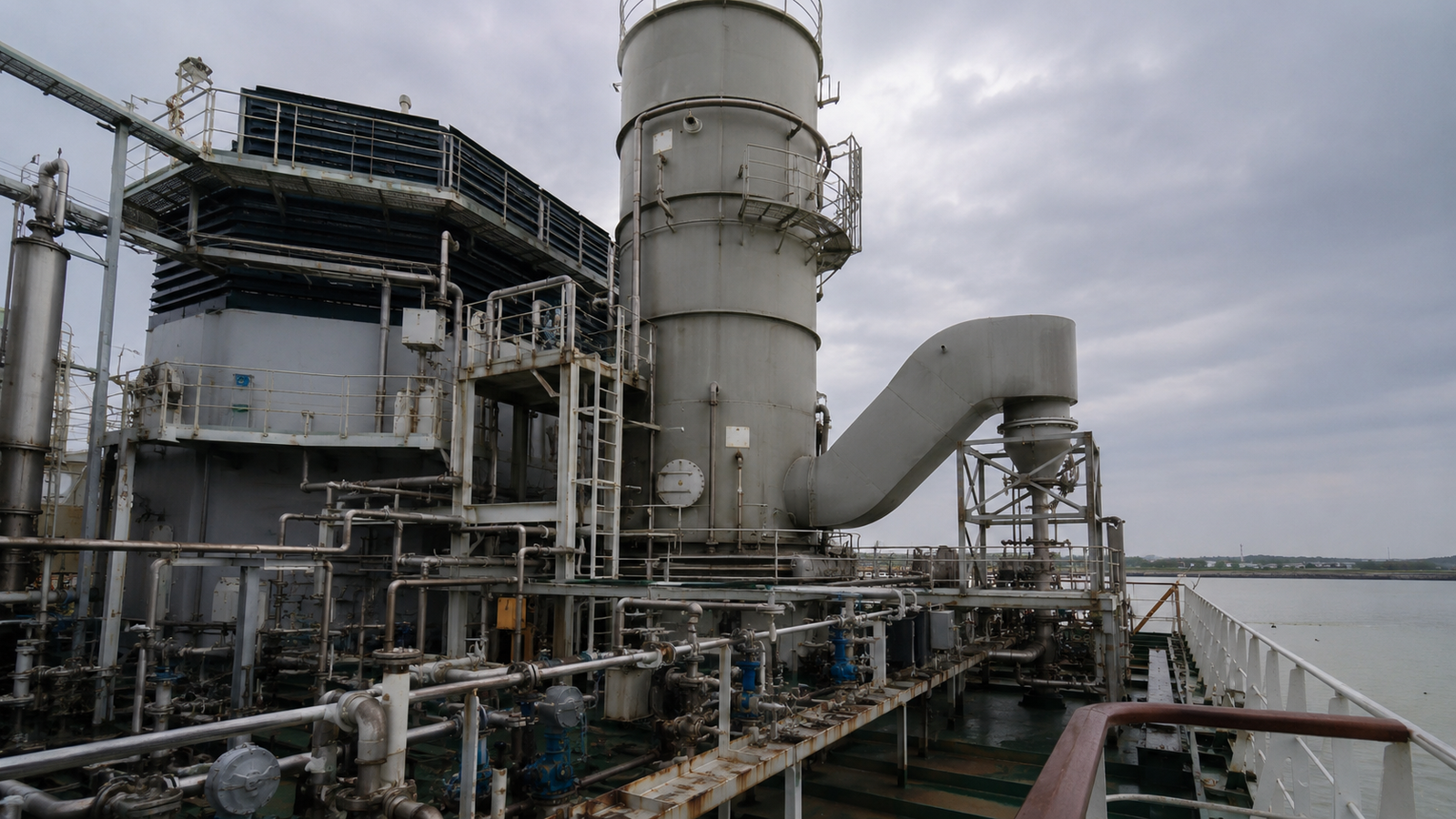
Nickel Institute states that the inside of a scrubber is an extraordinarily harsh environment and that hot acidic chloride solutions require highly corrosion-resistant nickel alloys such as Alloy 31, Alloy C-276 and Alloy 59. Source: Nickel Institute — Onboard with Marine Scrubbers
VDM Metals explains that alloys used in marine scrubbers are exposed to sulfur and chlorides from exhaust gases, while seawater creates a high wet corrosion load. Source: VDM Metals — Marine Scrubbers Exhaust Gas Cleaning
IMO explains that approved Exhaust Gas Cleaning Systems may be used as an alternative compliance method under MARPOL Annex VI, and the 2021 EGCS Guidelines cover testing, survey, certification and approval of these systems. Source: IMO — MEPC.340(77) 2021 EGCS Guidelines
Quick Answer: Which Marine Scrubber Parts May Use Nickel Alloys?
Nickel alloys may be considered for parts exposed to the most severe corrosion and wet chloride conditions.
Common Candidate Parts
| Marine Scrubber Part | Why Nickel Alloy May Be Considered |
|---|---|
| Gas inlet / raw gas inlet | Hot exhaust gas, SOx, wet/dry cycling and acid condensation risk. |
| Quench zone | Rapid cooling, acidic condensate, seawater spray and thermal change. |
| Spray nozzles / spray headers | Acidic seawater, chloride attack, erosion-corrosion and blockage risk. |
| Absorber / scrubber tower internals | Wet acidic chloride solution, deposits, crevices and continuous exposure. |
| Internal packing / trays / demisters | Localized corrosion, fouling, crevice areas and washwater exposure. |
| Dampers and duct sections | Wet exhaust gas, condensation and sulfuric acid attack. |
| Pumps and impellers | Acidic washwater, solids, velocity and erosion-corrosion. |
| Valves and fittings | Crevices, sealing surfaces, chloride-rich washwater and mechanical stress. |
| Piping and bends | Flow velocity, acidic seawater, welds, bends and localized thinning. |
| Heat exchangers / coolers | Seawater, chloride pitting, crevice corrosion and heat transfer duty. |
| Fasteners and supports | Acid mist, crevices, galvanic contact and hidden corrosion. |
| Sensor housings / probe wetted parts | Low pH washwater, chloride exposure and measurement reliability. |
Buyer Takeaway
Not every scrubber component must use nickel alloy. Nickel alloys should be evaluated for zones where corrosion, chloride, acid, temperature or erosion risk justifies the higher material cost.
Why Do Marine Scrubbers Demand Specialized Materials?
Marine scrubbers remove sulfur oxides from exhaust gas by contacting exhaust gas with washwater. The chemistry depends on whether the system is open-loop, closed-loop or hybrid.
Scrubber System Types
| Scrubber Type | Basic Operation | Material Selection Concern |
|---|---|---|
| Open-loop scrubber | Uses seawater alkalinity to scrub exhaust gas, then discharges treated washwater where allowed. | Seawater chlorides, sulfur oxides, acidic washwater, local regulations and washwater discharge limits. |
| Closed-loop scrubber | Recirculates washwater and uses alkaline dosing such as sodium hydroxide to control alkalinity. | Recirculated chemistry, salt buildup, process tank, pump, cooler and treatment unit corrosion. |
| Hybrid scrubber | Can operate in open-loop or closed-loop mode depending on area and water condition. | Material must handle different operating modes and chemistry changes. |
VDM Metals explains that in open-loop scrubbers, seawater is sprayed into exhaust gas and sulfur oxides react with water to form sulfuric acid. It also notes that closed-loop systems circulate washwater and use alkaline substances such as caustic soda or magnesium oxide. Source: VDM Metals — Marine Scrubbers Exhaust Gas Cleaning
ABS explains that open-loop operation commonly uses untreated seawater, while closed-loop scrubbers generally use treated freshwater or selected water chemistry with additives to maintain the required chemical composition. Source: ABS — Advisory on Exhaust Gas Scrubber Systems
Critical Environmental Factors
| Factor | Material Impact |
|---|---|
| Sulfur oxides / SOx | Can form acidic washwater and condensate. |
| Seawater chlorides | Promote pitting and crevice corrosion in susceptible materials. |
| Low pH | Increases general corrosion and localized corrosion risk. |
| High temperature zones | Can accelerate corrosion and oxidation. |
| Wet/dry cycling | Can concentrate salts and acids. |
| Deposits and soot | Create under-deposit corrosion and crevice-like conditions. |
| Suspended solids | Can contribute to erosion or erosion-corrosion. |
| Washwater chemistry changes | Open-loop, closed-loop and hybrid operation create different exposure. |
| Welds and crevices | Local attack can start at welds, flanges, gaskets and bolted joints. |
Buyer Takeaway
Marine scrubber material selection must be zone-specific. A material that works in a pump casing may not be right for a gas inlet, nozzle, stack section or monitoring probe.
What Corrosion Mechanisms Matter Most?
Scrubber materials are exposed to more than simple uniform corrosion.
VDM Metals identifies general corrosion, intergranular corrosion, pitting corrosion and crevice corrosion in scrubbers for gas cleaning. It also notes that in chloride-containing media such as FGD plants and scrubbers for diesel engines, pitting and crevice corrosion are among the most critical corrosion forms, becoming more critical with rising chloride concentration, increasing temperature and decreasing pH. Source: VDM Metals — Marine Scrubbers Exhaust Gas Cleaning
Main Corrosion and Wear Risks
| Mechanism | What It Means | Where It May Occur |
|---|---|---|
| General corrosion | Uniform material loss. | Washwater piping, tanks, lower-risk wet zones. |
| Pitting corrosion | Small, deep localized holes. | Chloride-rich wet zones, stainless steel surfaces, deposits. |
| Crevice corrosion | Local attack in gaps, under deposits or seals. | Flanges, fasteners, gaskets, packing supports, sensor ports. |
| Intergranular corrosion | Attack near grain boundaries. | Heat-affected zones or sensitized materials. |
| Stress corrosion cracking | Cracking under tensile stress and corrosive conditions. | Bolted parts, stressed welds, formed parts. |
| Erosion-corrosion | Combined chemical attack and mechanical wear. | Spray nozzles, pumps, valves, bends, high-flow lines. |
| Acid dew point / condensation corrosion | Acidic condensation from exhaust gas. | Inlet, ductwork, wet/dry transition zones. |
| Galvanic corrosion | Dissimilar metal contact in conductive washwater. | Mixed-metal assemblies, fasteners and supports. |
Buyer Takeaway
A scrubber material should not be selected only by a general corrosion rate. Localized corrosion and erosion-corrosion may be more important for critical parts.
Which Scrubber Zones Are Most Likely to Need Nickel Alloys?
The harshest zones are usually the areas where hot exhaust gas, acidic washwater, seawater chlorides, low pH, droplets, solids and crevices overlap.
Zone-Based Material Review
| Scrubber Zone | Main Exposure | Nickel Alloy Material Logic |
|---|---|---|
| Raw gas inlet / gas inlet | Hot SOx-containing exhaust, wet/dry cycling, condensation. | Ni-Cr-Mo alloys may be considered for severe acid and chloride corrosion. |
| Quench section | Rapid cooling, seawater spray, acidic condensate. | High localized corrosion resistance may be needed. |
| Absorber / scrubber tower | Continuous washwater, low pH, chlorides, deposits. | Alloy 31, C-276, Alloy 59 or other high-alloy materials may be evaluated. |
| Spray levels / spray headers | Acidic water, high velocity, droplet impact, blockage risk. | Corrosion plus erosion-corrosion must be reviewed together. |
| Internal packing / trays | Wet acid, crevices, deposits, fouling. | Material should resist crevice corrosion and cleaning chemicals. |
| Dampers / ducts | Wet exhaust gas, condensation and acid attack. | C276, 625, Alloy 59 or other options may be compared by zone severity. |
| Pumps / valves / fittings | Acidic washwater, chloride, velocity, mechanical stress. | Corrosion-resistant cast or wrought materials may be required. |
| Effluent / bleed-off lines | Low pH, chloride-rich wastewater, solids and monitoring requirements. | Material should protect pressure integrity and reduce localized corrosion risk. |
| Fasteners / supports | Acid mist, crevices, galvanic contact. | Higher alloy fasteners may be justified in critical wet zones. |
| Sensor housings / probe wetted parts | Washwater, pH monitoring, PAH/turbidity systems. | Material must be chemically compatible with the measurement environment. |
VDM Metals states that Alloy C-276 is used to a considerable extent in environmental technology such as flue gas desulfurization, including raw gas inlet, scrubbers, dampers, agitators and ducts. Source: VDM Metals — Marine Scrubbers Exhaust Gas Cleaning
VDM Metals also states that Alloy 59 is used in areas subjected to the highest corrosive attacks, such as raw gas inlet, absorber, heat exchangers, dampers, fasteners and as welding filler metal. Source: VDM Metals — Marine Scrubbers Exhaust Gas Cleaning
Buyer Takeaway
Material selection should be done by scrubber zone, not by a single universal alloy list.
What Nickel Alloys Are Commonly Considered?
Nickel alloys are not all the same. Different grades are designed for different corrosion and fabrication requirements.
Candidate Alloy Direction
| Material | General Direction | Possible Scrubber-Related Use | Buyer Caution |
|---|---|---|---|
| Alloy 31 / UNS N08031 | High-alloy corrosion-resistant material used in scrubber environments. | Scrubber internals, spray levels, chloride acid zones. | Confirm exact pH, chloride, temperature and fabrication needs. |
| Alloy 59 / UNS N06059 | Ni-Cr-Mo alloy with high resistance in severe oxidizing and reducing media. | Raw gas inlet, absorber, heat exchangers, dampers, fasteners and filler metal. | Cost and availability should be checked early. |
| Hastelloy C-276 / UNS N10276 | Ni-Cr-Mo-W alloy with strong pitting, crevice and acid resistance. | Scrubbers, ducting, stack liners, severe wet chloride zones. | Not a universal erosion solution; welding and inspection matter. |
| Alloy 22 / C-22 / UNS N06022 | Ni-Cr-Mo-W alloy for oxidizing and reducing media; pollution control use. | Severe chloride/acid zones, lining, special components. | Compare with C276, Alloy 59 and 625 by actual chemistry. |
| Inconel 625 / UNS N06625 | Ni-Cr-Mo-Nb alloy with corrosion resistance, strength and oxidation resistance. | Piping, valves, heat exchanger parts, hot/wet corrosive areas. | Severe acidic chloride zones may need comparison with C276/59/22. |
| 254SMO / 6Mo stainless steel | Super-austenitic stainless steel, not a nickel alloy. | Less severe chloride zones or cost-balanced areas. | Should not be grouped as a nickel alloy; pH/temperature limits matter. |
| Duplex / super duplex stainless steel | High strength and chloride resistance compared with 316L. | Selected piping or structural wet zones. | May be insufficient in very low pH/high chloride scrubber areas. |
| FRP / lining / coating | Non-metallic corrosion barrier. | Tanks, ducts, piping or lined structures. | Temperature, fire, mechanical damage and installation quality matter. |
Special Metals states that INCONEL alloy C-276 is useful for flue gas desulfurization systems and is used in scrubbers, ducting and stack liners. It also states that scrubber liquors and gas condensates generally contain chlorides and that chloride level often determines material corrosion behavior. Source: Special Metals — INCONEL Alloy C-276
Special Metals states that INCONEL alloy 22 has applications in pollution control, including flue gas desulfurization, as well as marine industries. Source: Special Metals — INCONEL Alloy 22
Special Metals states that INCONEL alloy 625 has resistance to severe corrosive environments and high-temperature effects such as oxidation and carburization. Source: Special Metals — INCONEL Alloy 625
Buyer Takeaway
C276, 625, Alloy 22, Alloy 31 and Alloy 59 should not be treated as interchangeable. The right choice depends on scrubber chemistry, component function and cost target.
Do Nickel Alloys Automatically Solve Erosion-Corrosion?
No.
Nickel alloys can provide strong corrosion resistance, but erosion-corrosion depends on both chemical and mechanical conditions.
Erosion-Corrosion Factors
| Factor | Why It Matters |
|---|---|
| Gas velocity | High-velocity gas can accelerate droplet impact and particle wear. |
| Water spray pattern | Local impingement may damage surfaces. |
| Solids and soot | Suspended particles may create abrasion. |
| Flow velocity in piping | Bends, elbows and valves may experience localized thinning. |
| Droplet size | Larger droplets may increase impact erosion. |
| Component geometry | Sharp turns and restrictions create turbulence. |
| Material hardness | Wear resistance is not only corrosion resistance. |
| Wall thickness | Thicker sections may be needed in wear zones. |
| Lining or coating | Severe erosion may require non-metallic lining, overlay or design change. |
| Inspection interval | Erosion-corrosion risk should be monitored over time. |
Important Correction
A passive film helps nickel alloys resist corrosion, but it does not make them automatically resistant to every abrasive slurry or high-velocity droplet condition. For pumps, valves, spray nozzles and bends, buyers should evaluate both corrosion and erosion separately.
Buyer Takeaway
If erosion is severe, material choice alone may not be enough. Design, flow control, wear allowance, lining and inspection strategy may also be required.
What About Effluent Systems and Monitoring Parts?
Marine scrubber washwater and discharge systems are linked to regulatory monitoring and compliance.
IMO MEPC.340(77) states that EGCS discharge water should comply with criteria before discharge into the sea. It includes pH criteria, PAH limits, turbidity limits and continuous monitoring of pH, PAH, turbidity and temperature when required. Source: IMO — MEPC.340(77) 2021 EGCS Guidelines
Effluent-Related Parts to Review
| Component | Material Concern |
|---|---|
| Discharge piping | Acidic chloride washwater, pH changes, suspended solids and welds. |
| Bleed-off lines | Concentrated recirculated washwater in closed-loop systems. |
| Valves and fittings | Crevices, sealing surfaces, mechanical stress and maintenance cycles. |
| Sample lines | Small-bore lines can experience deposits, blockage and localized corrosion. |
| pH probe wetted parts | Chemical compatibility and measurement stability. |
| PAH / turbidity sample cells | Washwater exposure, fouling and cleaning cycles. |
| Sensor housings | External sealing, internal protection and wetted-part compatibility. |
| Drain and sludge systems | Deposits, low-flow zones, solids and stagnant acidic water. |
Important Correction
Monitoring probes and sensors do not always require nickel alloy. The wetted parts may use nickel alloys, titanium, high-alloy stainless steel, ceramics, polymers or coated materials depending on the sensor design and washwater chemistry.
Buyer Takeaway
For effluent systems, material selection supports measurement reliability and pressure integrity, but compliance also depends on certified EGCS performance, correct monitoring, calibration, operation and records.
Which Standards and Documents Should Buyers Confirm?
Nickel alloy procurement should define both material grade and product form.
Common Standards for Nickel Alloy Scrubber Materials
| Product Form | Possible Standard | Common Material Example |
|---|---|---|
| Plate / sheet / strip | ASTM B575 | C276 / N10276, Alloy 22 / N06022, Alloy 59 / N06059, Alloy 686 / N06686. |
| Seamless pipe / tube | ASTM B622 | C276 / N10276 and other nickel alloy pipe/tube. |
| Alloy 625 seamless pipe / tube | ASTM B444 | Alloy 625 / UNS N06625. |
| Rod / bar | ASTM B574 or alloy-specific bar standard | C276 bar, Alloy 22 bar, other Ni-Cr-Mo alloy bars. |
| Welded pipe / tube | ASTM B619 / B626 / B704 or project standard | Depends on alloy and product design. |
| Fasteners | ASTM / ASME / customer drawing | Must match strength, corrosion and installation requirements. |
| Fabricated parts | Drawing + WPS/PQR + inspection plan | Depends on design code and class requirement. |
ASTM B575 covers plate, sheet and strip of low-carbon nickel-chromium-molybdenum alloys including UNS N10276, N06022 and UNS N06059 for general corrosive service. Source: ASTM B575
ASTM B444 covers UNS N06625 nickel-chromium-molybdenum-columbium alloy in the form of cold-worked seamless pipe and tube. Source: ASTM B444
Documents to Request
| Document / Check | Why It Matters |
|---|---|
| MTR / MTC | Confirms chemical composition, mechanical properties, heat number and standard compliance. |
| EN 10204 3.1 certificate | Provides batch-specific test results from the supplied material lot. |
| PMI report | Helps prevent material mix-up. |
| Dimensional report | Confirms OD, wall thickness, length, plate thickness or bar diameter. |
| NDT report | UT, PT, RT, ET or other inspection if required. |
| Surface inspection report | Confirms scratches, pits, dents, discoloration or contamination. |
| WPS / PQR / welding record | Important for fabricated scrubber parts. |
| Third-party inspection | Useful for critical or class-related orders. |
| Packing and marking photos | Helps verify traceability and installation control. |
EN 10204 Type 3.1 inspection certificates provide actual test results from the supplied material lot. Source: EN 10204 Type 3.1 Inspection Certificates
ISO 9001 defines requirements for establishing, implementing, maintaining and continually improving a quality management system. Source: ISO 9001 — Quality Management Systems
Important Caution
MTR/MTC proves material identity and standard compliance. It does not prove that the alloy will automatically perform for the full life of a specific scrubber system. Real performance still depends on scrubber chemistry, design, fabrication, welding, installation, operation and maintenance.
How Does Material Choice Affect Long-Term Reliability?
Correct material selection can reduce corrosion-related risks, but it is only one part of reliability.
Reliability Factors
| Factor | Why It Matters |
|---|---|
| Material grade | Must match acid, chloride, pH, temperature and wet/dry exposure. |
| Product form | Plate, pipe, tube, bar, fastener and fitting requirements are different. |
| Welding quality | Poor welding can create corrosion-sensitive zones. |
| Surface condition | Scratches, contamination or embedded iron may affect localized corrosion. |
| Crevice design | Gaskets, fasteners, deposits and supports can concentrate chlorides. |
| Flow design | High velocity, bends and impingement zones can create erosion-corrosion. |
| Inspection interval | Critical parts should be monitored before leakage or failure. |
| Cleaning and maintenance | Deposits and fouling should be controlled. |
| Traceability | Heat number and certificate records support replacement and investigation. |
| Lifecycle cost | Initial price should be compared with repair, downtime and replacement risk. |
Buyer Takeaway
Nickel alloy materials can support long-term scrubber reliability when correctly selected, fabricated, inspected and maintained. They cannot replace proper system design or operating control.
RFQ Checklist for Marine Scrubber Nickel Alloy Parts
A good RFQ should describe the scrubber zone and service environment, not only the alloy grade.
RFQ Information to Provide
| RFQ Item | What to Specify |
|---|---|
| Scrubber type | Open-loop, closed-loop or hybrid. |
| Component location | Gas inlet, quench zone, absorber, spray nozzle, pump, valve, duct, effluent line, fastener, sensor housing. |
| Product form | Tube, pipe, bar, plate, sheet, flange, fitting, fastener or fabricated part. |
| Candidate alloy | Alloy 31, C276, Alloy 59, Alloy 22, Inconel 625, 6Mo stainless, duplex or other material. |
| UNS number | N08031, N10276, N06059, N06022, N06625, etc. |
| Standard | ASTM B575, B622, B444, B574, ASME, EN or customer drawing. |
| Washwater chemistry | pH, chloride, salinity, alkalinity, sulfate, temperature, suspended solids. |
| Gas condition | Exhaust gas temperature, SOx level, wet/dry cycling, soot or particles. |
| Flow condition | Gas velocity, water flow, spray pressure, droplet impact or slurry solids. |
| Corrosion risk | Pitting, crevice corrosion, acid attack, SCC, erosion-corrosion or galvanic contact. |
| Fabrication | Welding, bending, machining, forming, lining, coating or cladding. |
| Inspection | PMI, UT, PT, RT, dimensional inspection, hydrostatic or leak test. |
| Certificate | EN 10204 3.1 / 3.2, MTR/MTC, CoC, third-party inspection. |
| Quantity and delivery | Prototype, maintenance spare, retrofit project or annual supply. |
| Packing | Seaworthy packing, surface protection, end caps, marking and heat number tags. |
Example RFQ Message
We need nickel alloy material for marine scrubber components. Scrubber type: hybrid EGCS. Component: spray header and effluent piping. Service: acidic chloride washwater, pH 2–4, seawater chloride, suspended solids, intermittent wet/dry exposure. Candidate materials: Alloy C276 / UNS N10276, Alloy 59 / UNS N06059 or Inconel 625 / UNS N06625. Product forms: seamless tube, pipe, plate and bar according to drawing. Please quote with ASTM/ASME standard, EN 10204 3.1 MTC, heat number traceability, PMI option, dimensional report, NDT availability, welding recommendation, MOQ, lead time and packing details.
Common Mistakes Buyers Should Avoid
1. Asking Only for “Marine Scrubber Alloy”
Always specify scrubber type, component location, washwater chemistry and product form.
2. Assuming Every Scrubber Part Needs Nickel Alloy
Some parts may use lined steel, FRP, titanium, duplex stainless steel, 6Mo stainless steel or other materials depending on exposure.
3. Treating C276, 625 and Alloy 59 as the Same
These alloys have different chemistry, corrosion resistance, availability, cost and fabrication behavior.
4. Ignoring Open-Loop vs Closed-Loop Chemistry
Open-loop seawater and closed-loop recirculated washwater may create different corrosion risks.
5. Ignoring pH and Chloride Level
Low pH and high chloride are key drivers of localized corrosion risk.
6. Ignoring Wet/Dry Zones
Wet/dry cycling can concentrate salts and acids and may be more aggressive than continuously wet service.
7. Assuming Nickel Alloy Solves Erosion
Erosion-corrosion also depends on flow velocity, solids, geometry, wall thickness and inspection interval.
8. Calling 254SMO a Nickel Alloy
254SMO is a super-austenitic stainless steel, not a nickel alloy. It may be useful in some areas, but it should be classified correctly.
9. Treating MTR as Service-Life Proof
MTR/MTC verifies material identity and standard compliance, not guaranteed scrubber service life.
10. Ignoring Welding and Fabrication
Poor welding, wrong filler metal or contaminated surfaces can reduce corrosion resistance even when the base alloy is correct.
FAQ: Nickel Alloy Materials for Marine Scrubber Parts
1. Do all marine scrubber parts need nickel alloy?
No. Nickel alloys are usually considered for critical zones with severe acidic chloride corrosion, wet/dry cycling, high temperature or localized corrosion risk.
2. Which scrubber parts may use nickel alloys?
Candidate parts include gas inlets, quench zones, spray nozzles, spray headers, absorber internals, dampers, ducts, pumps, valves, piping, fasteners and sensor housings.
3. Why are nickel alloys used in marine scrubbers?
They offer strong resistance to acidic chloride environments, pitting corrosion, crevice corrosion and selected high-temperature wet corrosion conditions.
4. Is Hastelloy C276 used in scrubbers?
Yes. C276 is used in flue gas desulfurization and scrubber-related applications such as scrubbers, ducting and stack liners.
5. Is Inconel 625 suitable for marine scrubber parts?
Alloy 625 may be considered where corrosion resistance, strength, pitting resistance and oxidation resistance are needed, but severe acidic chloride zones should be compared with C276, Alloy 59 or Alloy 22.
6. What is Alloy 59 used for?
Alloy 59 is considered for severe corrosive zones such as raw gas inlet, absorber, heat exchangers, dampers, fasteners and welding filler metal in flue gas cleaning environments.
7. Is 254SMO a nickel alloy?
No. 254SMO is a 6Mo super-austenitic stainless steel. It contains nickel, but it is not classified as a nickel alloy.
8. Does nickel alloy guarantee IMO compliance?
No. Material selection supports reliability, but IMO compliance depends on EGCS approval, emission equivalence, washwater monitoring, operation, maintenance and records.
9. What documents should buyers request?
Buyers should request MTR/MTC, EN 10204 3.1 if required, heat number traceability, PMI report, dimensional report, NDT report and third-party inspection if required.
10. What information should buyers send to suppliers?
Send scrubber type, component location, pH, chloride level, temperature, flow condition, product form, alloy grade, UNS number, standard, drawing, inspection requirement and certificate requirement.
Conclusion
Marine scrubbers may require nickel alloy materials because many scrubber zones operate in hot acidic chloride environments with seawater, SOx, wet/dry cycling, deposits, flow velocity and localized corrosion risk.
However, nickel alloy selection should not be based on a fixed part list. The correct material depends on scrubber type, system zone, pH, chloride level, temperature, washwater chemistry, erosion risk, fabrication method, inspection requirement and lifecycle cost.
Alloy 31, Hastelloy C276, Alloy 59, Alloy 22 and Inconel 625 may all be considered for different scrubber components, but they are not interchangeable. Buyers should also compare high-alloy stainless steels, FRP, linings, coatings and other materials where appropriate.
For serious marine scrubber projects, the safest approach is to define the service environment clearly, select materials by zone, verify ASTM/ASME/EN standards, confirm MTR/MTC and heat number traceability, and request PMI, NDT or third-party inspection when needed.
Emily PIPE supplies nickel alloy tubes, nickel alloy bars, titanium alloy tubes and titanium alloy bars for global industrial applications. If you are selecting nickel alloy materials for marine scrubber parts, you can send your scrubber type, component location, material grade, UNS number, size, drawing, washwater chemistry, inspection requirement and certificate requirement for technical review and quotation.