
How to Select Materials for Mixed Chemical Media in Process Equipment
Material selection becomes significantly more difficult when process equipment handles a mixture rather than one clearly defined chemical.
A compatibility chart may show that an alloy performs well in Chemical A and also performs well in Chemical B. That does not prove that the alloy will behave the same way when A and B are mixed.
The components may change pH, oxidation-reduction conditions, water activity, solubility, passivation, gas composition, phase behavior, or the stability of corrosion products. They may also react to form a new chemical species that was not present in either original stream.
The mixture can therefore be:
- More aggressive than its individual components;
- Less aggressive because one component inhibits attack or supports passivation;
- Aggressive through a different mechanism;
- Stable during normal operation but highly corrosive during startup, concentration, shutdown, or cleaning.
The correct material cannot be selected by adding together individual chemical compatibility ratings. It must be evaluated against the complete process composition, operating envelope, equipment geometry, fabrication route, damage mechanisms, and acceptance evidence.
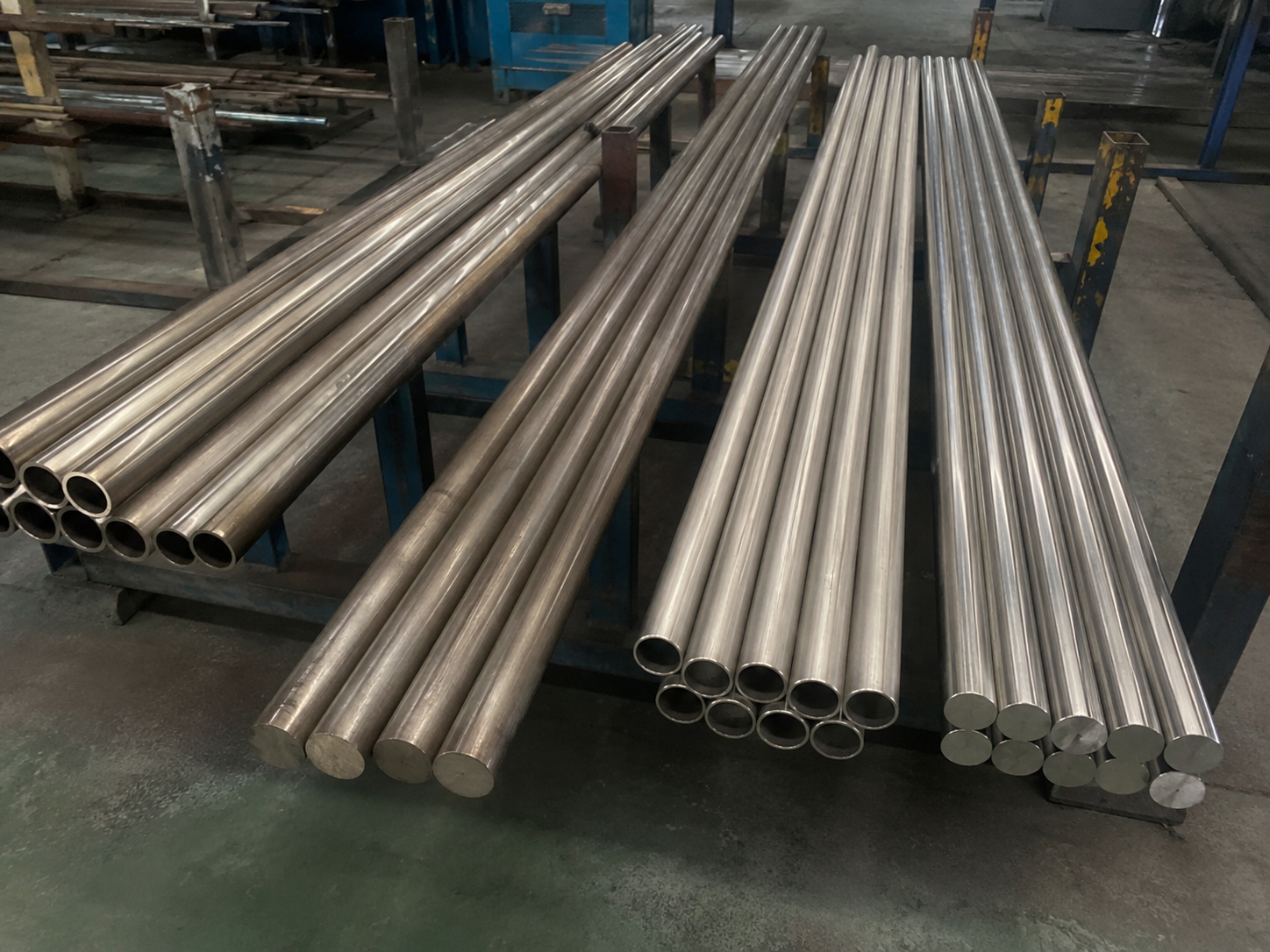
This applies whether the candidates include stainless steel, nickel-chromium-molybdenum alloys, Alloy 625, commercially pure nickel, titanium, lined steel, fluoropolymers, glass, ceramics, or a hybrid construction.
Why Single-Chemical Compatibility Data Is Not Enough
Single-chemical corrosion data is useful for initial screening.
It can help eliminate materials that are clearly unsuitable and identify alloy families that may deserve further evaluation. The problem begins when those isolated results are treated as proof of mixed-media performance.
Suppose an alloy remains passive in one oxidizing solution and shows acceptable general corrosion in a second solution. When the streams are combined, the second component may destabilize the passive film, form soluble complexes with alloying elements, change the redox potential, or concentrate inside a crevice.
The material response is controlled by the final environment—not by the names of the original feed chemicals.
Why Mixtures Behave Differently
| Interaction | Possible Effect on Material Performance |
|---|---|
| Chemical reaction between components | Formation of new acids, salts, gases, complexes, or precipitates |
| Change in oxidation-reduction potential | Promotion or destruction of passivation |
| Change in pH | Shift from a passive to an active corrosion state |
| Complex formation | Increased solubility of metal ions or protective corrosion products |
| Water addition or removal | Change in acid activity, ion mobility, boiling behavior, and passivation |
| Halide contamination | Increased risk of localized attack in susceptible materials |
| Oxidizing impurity | May support passivation in one alloy but accelerate attack in another |
| Reducing impurity | May destabilize a passive oxide film |
| Precipitation | Formation of deposits and under-deposit corrosion |
| Gas evolution | Changes in agitation, mass transfer, pressure, and gas-phase chemistry |
| Phase separation | Different corrosion conditions in aqueous, organic, and vapor phases |
| Temperature change | Faster kinetics, altered solubility, boiling, condensation, or phase transition |
| Concentration by evaporation | Increasing aggressiveness even when feed composition is stable |
| Consumption of one component | Process chemistry changes as the reaction progresses |
A mixture should therefore be described as a process environment, not merely as a list of chemical names.
Define the Complete Process Envelope
Before discussing alloy grades, buyers should define the complete credible range of process conditions.
This includes normal operation, but it should also include every transient condition the equipment will experience.
Chemical Composition
Provide:
- Main chemical components;
- Minimum, normal, and maximum concentration;
- Water content;
- Dissolved gases;
- Oxidizing agents;
- Reducing agents;
- Acids and alkalis;
- Chlorides, bromides, fluorides, or other halides;
- Sulfur-bearing species;
- Metal ions;
- Catalysts;
- Inhibitors;
- Stabilizers;
- Solvents;
- Reaction intermediates;
- By-products;
- Trace impurities;
- Solids or crystals.
“Mixed acid,” “solvent mixture,” “chloride process,” or “oxidizing environment” is not detailed enough for a reliable assessment.
Physical and Operating Conditions
Define:
- Minimum, normal, and maximum temperature;
- Design temperature;
- Operating and design pressure;
- Vacuum conditions;
- Flow velocity;
- Turbulence;
- Agitation;
- Residence time;
- Heat flux;
- Boiling;
- Condensation;
- Evaporation;
- Gas sparging;
- Phase separation;
- Solids concentration;
- Equipment cycle frequency.
Transient Conditions
Also define:
- Initial filling;
- Chemical addition sequence;
- Local concentration at injection points;
- Heating and cooling;
- Startup dilution;
- Evaporation and concentration;
- Reaction completion;
- Draining;
- Shutdown;
- Air ingress;
- Water washing;
- Solvent washing;
- Acid or alkaline cleaning;
- Steam cleaning;
- Batch changeover;
- Emergency quench;
- Long-term stagnant storage.
In many batch processes, the most aggressive environment does not occur during normal production. It occurs briefly during charging, heating, concentration, cleaning, or shutdown.
Addition Sequence Can Matter as Much as Final Composition
Two processes may reach the same final composition but expose the equipment to different intermediate conditions.
For example, adding a concentrated chemical into a vessel can temporarily create a highly concentrated zone near the feed nozzle. Local temperature may also rise because of heat of mixing or reaction.
The final bulk concentration may appear acceptable while the injection point experiences:
- Higher acidity;
- Higher halide concentration;
- Stronger oxidation or reduction;
- Local boiling;
- Erosion;
- Gas evolution;
- Temperature spikes;
- Incomplete mixing.
Injection-Point Questions
- Which chemical enters first?
- Where is each chemical introduced?
- What is the local concentration before mixing is complete?
- Is the addition exothermic?
- Does gas evolve?
- Is the feed directed at a wall, tube, impeller, or weld?
- Is a dip pipe or quill used?
- What velocity occurs at the outlet?
- Can solids precipitate near the injection point?
- Is a replaceable insert or liner appropriate?
A material that is acceptable for the well-mixed vessel contents may not be sufficient for the feed nozzle or injection zone.
pH Alone Does Not Describe Mixed-Media Corrosivity
pH is useful, but it does not fully describe the electrochemical environment.
Two solutions with the same measured pH may have different:
- Oxidation-reduction potentials;
- Buffer capacity;
- halide activity;
- complexing behavior;
- dissolved oxygen;
- conductivity;
- water content;
- metal-ion concentration;
- organic phase composition.
For passive alloys, the stability of the protective film may depend on both pH and electrochemical potential.
One mixture may keep the material passive. Another mixture with the same pH may destabilize the film because of halides, reducing species, complexing agents, elevated temperature, or crevice conditions.
The selection process should therefore avoid using a single pH value as the main compatibility criterion.
Water Content Can Reverse the Material Ranking
Water is not always a neutral diluent.
Adding or removing water can change:
- Ionization;
- acid activity;
- passivation;
- conductivity;
- reaction products;
- boiling point;
- solubility;
- phase distribution;
- corrosion-product stability.
A nearly anhydrous process may behave differently after water washing, condensation, startup dilution, or accidental moisture ingress.
An organic solvent stream may appear noncorrosive in its dry state but become conductive and corrosive when contaminated with water and ionic impurities.
Conversely, an alloy may depend on sufficient water or oxidizing conditions to maintain a stable passive film.
Water-Related Conditions to Include
- Normal water content;
- Maximum moisture contamination;
- Minimum water content;
- water introduced during cleaning;
- condensation in vapor lines;
- rain or wash-water ingress;
- recycled solvent moisture;
- drying and evaporation stages;
- water bottoms in tanks;
- stagnant aqueous layers.
Material evaluation should include the credible water-content range, not only the nominal recipe.
Impurities May Control the Result
A minor impurity can be more important than the main chemical.
Possible controlling impurities include:
- Chloride;
- fluoride;
- bromide;
- sulfur species;
- oxidizing metal ions;
- reducing species;
- iron;
- copper;
- dissolved oxygen;
- peroxides;
- residual catalyst;
- cleaning-chemical carryover;
- recycled-stream contaminants.
The impurity may:
- Break down a passive film;
- increase metal-ion solubility;
- create a galvanic or redox reaction;
- promote pitting;
- concentrate in a crevice;
- alter the gas phase;
- create deposits;
- attack the weld metal or HAZ differently.
A test made with reagent-grade chemicals may therefore be less representative than a test that includes realistic impurity limits.
Gas Phase, Liquid Phase, and Condensate May Need Different Materials
Mixed chemical equipment often contains several distinct environments at the same time:
- Bulk liquid;
- vapor space;
- condensation zone;
- liquid-level interface;
- deposits;
- stagnant crevices;
- gas outlet;
- drain heel;
- water bottom;
- heat-transfer surface.
The vapor phase is not necessarily less corrosive than the liquid.
Volatile components may condense in cooler areas and form a concentrated, low-pH, high-halide, or water-rich liquid. The top of a reactor or condenser inlet may therefore experience a different environment from the main vessel wall.
Phase-Specific Questions
| Area | Questions to Ask |
|---|---|
| Bulk liquid | What is the complete mixed composition and temperature? |
| Vapor space | Which components preferentially evaporate? |
| Condensate | What composition forms on cooler surfaces? |
| Liquid line | Does alternating wetting and drying occur? |
| Deposits | Can aggressive species concentrate underneath? |
| Gas outlet | Can acidic or halide-containing condensate form? |
| Bottom zone | Do dense aqueous or solid phases accumulate? |
| Interface | Can an organic and aqueous phase create different electrochemical conditions? |
A single immersed coupon may not represent all these equipment zones.
Corrosion Rate Is Only One Acceptance Criterion
A uniform corrosion rate is useful when material loss is relatively even and predictable.
Mixed chemical environments may instead produce localized or stress-assisted damage that is not captured by average mass loss.
ASTM G31 immersion corrosion testing describes many factors that influence laboratory immersion results. It also states that localized attack, environmentally assisted cracking, and solution-flow effects are outside the guide’s primary scope.
Uniform Corrosion
Assess:
- Average rate;
- maximum local thinning;
- corrosion allowance;
- expected service life;
- product-contamination limits;
- inspection interval.
Even a low uniform rate may be unacceptable when released metal ions affect a high-purity product or catalyst.
Pitting
Pitting can penetrate a thin wall while total mass loss remains small.
Review:
- Halide content;
- temperature;
- oxidizing potential;
- surface condition;
- welds;
- deposits;
- critical pitting behavior;
- shutdown and stagnant conditions.
ASTM G48 localized corrosion testing can be used to compare the relative pitting and crevice-corrosion resistance of stainless steels and related alloys under defined ferric-chloride conditions.
It is a ranking tool under those conditions—not a universal mixed-process compatibility test.
Crevice Corrosion
Potential crevice locations include:
- Gaskets;
- flanges;
- lap joints;
- deposits;
- tube-to-tubesheet joints;
- instrument fittings;
- valve seats;
- bolted connections;
- support clips;
- threaded parts.
A crevice can develop a chemistry that differs from the bulk mixture through oxygen depletion, local acidification, ion migration, evaporation, or concentration.
Stress Corrosion Cracking
SCC requires:
- A susceptible material;
- a relevant environment;
- tensile stress.
Stress may be:
- Applied;
- residual;
- thermal;
- welding-related;
- machining-related;
- cold-work-related;
- produced by bolting or forming.
An MTR tensile value does not prove resistance to SCC.
Intergranular Corrosion
Processing and heat treatment can change grain-boundary chemistry.
The current ASTM corrosion standards include G28 for detecting susceptibility to intergranular corrosion in wrought nickel-rich, chromium-bearing alloys. Its mixed-acid method can reveal sensitivity related to processing or composition, but the result still does not replace testing in the actual process environment.
Corrosion Fatigue
Repeated pressure, flow, thermal, or mechanical cycles can interact with corrosion.
Potential sources include:
- Pump pulsation;
- agitator loading;
- pressure swings;
- thermal cycling;
- vibration;
- batch starts and stops;
- valve operation.
Mechanical fatigue data obtained in air may not represent fatigue behavior in the process mixture.
Erosion-Corrosion
High velocity, turbulence, solids, bubbles, and droplets can remove or damage protective films.
Review:
- Pump discharge;
- elbows;
- reducers;
- injection points;
- valve trim;
- impellers;
- heat-exchanger inlets;
- flashing or cavitating zones.
Galvanic Corrosion
Mixed construction may include:
- Stainless-steel shell with nickel-alloy lining;
- titanium tubes with another tubesheet material;
- dissimilar fasteners;
- clad plate;
- repair welds;
- conductive graphite or carbon-filled components.
The electrolyte, area ratio, electrical contact, coating condition and temperature all influence galvanic risk.
Temperature and Pressure May Change the Chemistry
Temperature does more than accelerate an existing corrosion reaction.
It can change:
- Solubility;
- dissociation;
- vapor-liquid equilibrium;
- gas pressure;
- reaction rate;
- phase stability;
- boiling;
- condensation;
- passive-film stability;
- corrosion-product stability.
Pressure can change the amount of gas dissolved in the liquid and the composition of the aqueous phase.
ASTM G111 high-temperature and high-pressure corrosion testing provides guidance for testing metallic and non-metallic materials under high-pressure or combined high-temperature/high-pressure conditions.
For autoclaves, high-pressure reactors, pressurized heat exchangers and gas-liquid reaction systems, the corrosion test should reproduce pressure and gas composition where these variables affect the process chemistry.
Flow and Mixing Must Be Represented
Static immersion data may not represent a flowing system.
Flow may:
- Increase mass transfer;
- remove corrosion products;
- damage passive films;
- create erosion;
- reduce deposits;
- increase oxygen supply;
- produce local turbulence;
- change temperature distribution.
At the same time, insufficient flow can create:
- Dead zones;
- concentration gradients;
- deposits;
- under-deposit corrosion;
- poor mixing;
- localized heating;
- phase separation.
Flow Information to Define
- Average velocity;
- maximum velocity;
- Reynolds regime;
- solids loading;
- bubble content;
- agitation speed;
- impeller design;
- local jet velocity;
- pump pulsation;
- flashing;
- cavitation;
- expected deposition.
If flow is a governing variable, a static coupon test alone may be insufficient.
Cleaning Chemistry May Be More Aggressive Than Production
Equipment often spends only part of its life in normal process service.
It may also be exposed to:
- Water rinse;
- alkaline cleaning;
- acid cleaning;
- solvent cleaning;
- oxidizing sanitizer;
- steam;
- chelating agents;
- passivation chemicals;
- descaling solutions.
A material selected only for the production mixture may be attacked during cleaning.
Cleaning Questions
- What chemicals are used?
- What concentrations apply?
- What is the cleaning temperature?
- How long is the exposure?
- Is the equipment fully drained afterward?
- Are chemicals mixed during transition?
- Can cleaning residue remain in crevices?
- Does the cleaning procedure alter the surface condition?
- Will the material be repeatedly cleaned over its service life?
- Does cleaning affect seals, linings, welds, or coatings?
The material requirement should include both process and cleaning environments.
Product Purity May Control Material Selection
A material may remain structurally sound yet contaminate the product.
Fine chemicals, pharmaceuticals, catalysts, electronics chemicals and specialty intermediates may have strict limits for:
- Iron;
- nickel;
- chromium;
- molybdenum;
- copper;
- titanium;
- particles;
- color;
- organic residues;
- catalyst poisons;
- extractables;
- cross-contamination.
This creates two separate questions:
- Will the equipment remain mechanically intact?
- Will contact with the equipment preserve product quality?
A low corrosion rate does not automatically prove that metal-ion release is acceptable.
Where purity is critical, buyers may need an application-specific:
- Extraction test;
- soak test;
- metal-ion analysis;
- particle test;
- residue test;
- blank comparison;
- product-contact qualification.
The method, detection limit, duration, temperature and acceptance criteria must be defined.
How to Screen Material Families
The following is a screening framework, not a compatibility chart.
Stainless Steels
Potential advantages:
- Broad availability;
- mature fabrication;
- lower cost than many nickel alloys;
- established pressure-equipment experience;
- cleanability in suitable environments.
Important limitations:
- Localized corrosion in aggressive halide mixtures;
- SCC in susceptible combinations of stress and environment;
- weld and HAZ sensitivity;
- limitations in strong reducing or mixed-acid environments.
Stainless steel should not be rejected automatically, but it should not be approved from a generic resistance table.
Nickel-Chromium-Molybdenum Alloys
Potential advantages:
- Broad corrosion resistance in many aggressive environments;
- useful candidates for variable or mixed chemical conditions;
- availability in pipe, tube, plate, bar, fittings and forgings;
- established fabrication routes.
Important limitations:
- Individual grades are not interchangeable;
- oxidizing-reducing balance matters;
- halides, impurities, temperature and crevices matter;
- metal-ion release may matter;
- higher cost and more difficult machining.
Alloy C-276, Alloy C-22 and related grades may enter a candidate list, but should not be approved solely from a general corrosion chart.
ASTM B575 nickel alloy plate and sheet defines product requirements for several low-carbon nickel-chromium-molybdenum alloys. It does not establish compatibility with a specific chemical mixture.
Alloy 625 and Related Nickel Alloys
Alloy 625 may be considered where the project requires a combination of corrosion resistance, strength, fabrication capability or elevated-temperature performance.
It is not a universal answer for mixed chemical media.
Verify:
- Complete chemistry;
- oxidizing-reducing conditions;
- temperature;
- weld condition;
- strength requirements;
- localized corrosion risk;
- whether another alloy is more chemistry-specific;
- whether stainless steel is sufficient;
- product-purity limits.
Titanium and Titanium-Palladium Grades
Titanium may be suitable where its passive surface remains stable under the complete operating environment.
Potential advantages:
- Low density;
- useful resistance in selected passive environments;
- availability in tube, pipe, plate, bar and fittings;
- heat-transfer applications in suitable media.
Important limitations:
- Passive-film stability is process-dependent;
- reducing environments require careful review;
- fluoride-containing media require specific verification;
- crevice conditions and temperature matter;
- hydrogen-related effects may need evaluation;
- galling and fabrication controls matter.
The presence of chloride alone is not enough to approve or reject titanium.
ASTM B338 titanium heat-exchanger tubes defines delivery requirements for titanium and titanium-alloy condenser and heat-exchanger tubes. It does not prove compatibility with the process fluid.
Commercially Pure Nickel
Nickel 200 and Nickel 201 may be candidates in selected chemical environments.
The selection must still review:
- Oxidizing contaminants;
- sulfur species;
- temperature;
- grade condition;
- welding;
- stress;
- product purity;
- mixed-media redox state.
They should not be described as universal materials for reducing environments.
Non-Metallic and Lined Systems
Possible options include:
- Glass-lined steel;
- fluoropolymer-lined equipment;
- polymer piping;
- graphite;
- ceramics;
- rubber linings;
- fiber-reinforced polymers;
- clad construction.
Potential advantages:
- Resistance to selected chemicals;
- reduced metal-ion contamination;
- lower use of solid high-alloy metal;
- replaceable wetted layer.
Important limitations:
- Permeability;
- temperature and pressure limits;
- thermal shock;
- mechanical damage;
- lining defects;
- repairability;
- nozzle design;
- differential expansion;
- extractables.
The best solution may be a pressure-bearing metal shell with a chemically resistant wetted layer.
Equipment Design Can Defeat a Good Alloy
AMPP materials selection guidance emphasizes that materials and design should be evaluated together.
Important design controls include:
- Eliminate unnecessary crevices;
- minimize dead legs;
- provide full drainage;
- avoid trapped liquid;
- control gasket geometry;
- align pipe and weld roots;
- remove burrs;
- avoid direct jet impingement;
- control injection points;
- prevent deposit buildup;
- separate incompatible dissimilar materials;
- provide inspection access;
- design replaceable wear parts;
- manage thermal expansion;
- reduce residual stress where appropriate.
A more expensive alloy cannot fully compensate for poor drainage, a severe crevice or an uncontrolled injection jet.
Welding Must Be Included in the Qualification
Corrosion data for unwelded base metal may not represent fabricated equipment.
Welding can affect:
- Weld-metal chemistry;
- heat-affected-zone microstructure;
- residual stress;
- oxide formation;
- surface roughness;
- root geometry;
- dilution;
- crevice formation;
- contamination.
Welding Questions
- Which welding process will be used?
- What filler metal is specified?
- Is matching or over-alloyed filler required?
- Is autogenous welding permitted?
- How are shielding and purge gases controlled?
- Is heat input limited?
- Is post-weld heat treatment required or prohibited?
- How is oxide or heat tint removed?
- Will the corrosion test include weld metal and HAZ?
- What NDT and acceptance criteria apply?
- Can internal weld surfaces be inspected?
- How are repairs controlled?
For critical mixed-media service, representative welded coupons may be more relevant than polished base-metal coupons.
Build a Risk-Based Corrosion Qualification Program
Stage 1: Literature Screening
Use:
- Handbooks;
- peer-reviewed research;
- alloy producer data;
- corrosion charts;
- prior service history;
- standard test data.
Purpose:
- Remove clearly unsuitable materials;
- identify candidate families;
- identify missing data.
Limitation:
- Published conditions may not match the actual mixture.
Stage 2: Define the Worst Credible Conditions
Include:
- Maximum concentration;
- minimum water content;
- maximum temperature;
- highest impurity level;
- most severe redox state;
- cleaning conditions;
- stagnant conditions;
- condensate;
- startup and shutdown chemistry;
- process upset where credible.
“Worst case” should be technically defined. It should not mean arbitrarily combining every maximum value if those conditions cannot occur together.
Stage 3: Application-Specific Coupon Testing
Use a defined method such as ASTM G31 immersion corrosion testing as a framework where appropriate.
Specify:
- Complete composition;
- component tolerances;
- realistic impurities;
- temperature;
- pressure;
- gas atmosphere;
- flow or agitation;
- duration;
- sample orientation;
- surface condition;
- heat treatment;
- welded and unwelded specimens;
- crevice formers where relevant;
- cleaning and evaluation method.
Record:
- Mass change;
- maximum pit depth;
- crevice attack;
- cracking;
- color or deposit changes;
- surface morphology;
- metal ions in solution where relevant.
Stage 4: High-Temperature or High-Pressure Testing
Where temperature or pressure changes the process chemistry, use a representative autoclave or pressure test framework.
ASTM G111 provides guidance for corrosion tests under high-temperature and high-pressure conditions.
Stage 5: Welded and Fabricated Test Pieces
Include:
- Base metal;
- weld metal;
- HAZ;
- filler metal;
- intended heat treatment;
- actual surface cleaning;
- representative crevices;
- realistic geometry.
Stage 6: Pilot or Side-Stream Exposure
Where feasible, expose coupons or a pilot component to the actual process.
This may reveal:
- Unidentified impurities;
- intermediate species;
- deposits;
- flow effects;
- concentration gradients;
- startup and shutdown chemistry;
- batch-to-batch variation.
Stage 7: Inspection and Monitoring
After commissioning, possible controls include:
- Corrosion coupons;
- wall-thickness monitoring;
- UT;
- eddy current testing;
- visual inspection;
- leak testing;
- product contamination monitoring;
- planned replacement;
- review after process changes.
Material selection should become part of an integrity-management plan rather than a one-time purchasing decision.
How to Interpret Supplier Documents
Datasheet
Provides:
- Typical properties;
- general composition;
- general corrosion guidance.
Does not prove:
- Actual batch data;
- mixed-media compatibility;
- finished-equipment performance.
MTR or MTC
Provides:
- Heat number;
- chemical composition;
- selected mechanical properties;
- heat-treatment condition;
- product standard;
- traceability.
Does not normally prove:
- Process-specific corrosion resistance;
- SCC resistance;
- product purity;
- welded-equipment performance;
- lifecycle.
Certificate of Conformance
Provides:
- Supplier declaration that the order conforms to referenced requirements.
Does not replace:
- Actual test results;
- MTR;
- corrosion qualification;
- application approval.
Corrosion Test Report
Should identify:
- Sample heat;
- product form;
- surface condition;
- composition;
- impurities;
- temperature;
- pressure;
- gas atmosphere;
- flow;
- duration;
- test method;
- evaluation;
- acceptance criteria.
A report stating only “passed corrosion test” is not sufficient for engineering interpretation.
Laboratory Accreditation
ISO/IEC 17025 laboratory competence concerns laboratory competence, impartiality and consistent operation.
Buyers should still check:
- Certificate validity;
- laboratory location;
- scope of accreditation;
- exact test method;
- sampling responsibility;
- report authorization.
A laboratory can be accredited while the required corrosion method remains outside its accredited scope.
Inspection Documents
BS EN 10204 inspection documents define inspection-document types for metallic products.
An EN 10204 3.1 certificate can support batch documentation but does not prove mixed-media application suitability.
Quality Management System
ISO 9001 supply-chain guidance supports supplier quality-system evaluation.
ISO 9001 does not define:
- Alloy grade;
- process chemistry;
- corrosion method;
- NDT;
- surface condition;
- application suitability.
What an Experienced Supplier Can—and Cannot—Contribute
Supplier experience can be valuable when it helps identify:
- Missing process information;
- applicable product standards;
- realistic material alternatives;
- fabrication constraints;
- test availability;
- traceability requirements;
- common documentation gaps;
- lead-time and product-form limitations.
A supplier should be able to explain:
- Why a material is being considered;
- what information is still missing;
- which claims are based on general data;
- which results are batch-specific;
- what testing is still required;
- where customer engineering approval is necessary.
A supplier should not claim to guarantee:
- Equipment life;
- zero corrosion;
- zero leakage;
- product purity;
- plant safety;
- application suitability based only on an alloy name.
The best supplier contribution is not a quick “yes, this alloy is suitable.” It is a clear explanation of evidence, limitations and remaining decisions.
Supplier Questions That Reveal Useful Capability
Process Understanding
- What process information do you need before discussing candidates?
- Do you ask about all components and impurities?
- Do you distinguish normal, startup, shutdown and cleaning conditions?
- Can you explain what cannot be concluded from your corrosion chart?
Material Evidence
- What exact grade and UNS designation are offered?
- What product standard and revision apply?
- What product form and heat treatment are supplied?
- Are corrosion data typical, literature-based, heat-specific or project-specific?
- Do the data cover the same temperature and mixture?
- Were welded specimens tested?
Testing
- Can testing use the actual mixed chemistry?
- Can impurity ranges be reproduced?
- Can temperature, pressure and gas atmosphere be represented?
- Can flow or agitation be included?
- Can crevice specimens be tested?
- Can weld metal and HAZ be included?
- Which laboratory performs the test?
- Is the method within its ISO/IEC 17025 scope?
- How is the specimen linked to the supplied material heat?
Documentation
- Will the original MTR be supplied?
- How will heat numbers remain linked after cutting?
- What CoC and inspection reports are included?
- Can reports be reviewed before shipment?
- How are deviations and substitutions handled?
- How long are records retained?
Fabrication and Supply
- What welding and filler-metal guidance is available?
- Which surface treatments can be supported?
- Which operations are outsourced?
- Can the same supply route be repeated?
- Will source or process changes be communicated?
Evaluate Total Cost Rather Than Unit Price Alone
The highest-alloyed material is not automatically the lowest-risk choice.
Over-specification may increase:
- Raw-material cost;
- machining time;
- welding complexity;
- inspection requirements;
- lead time;
- source dependence;
- repair difficulty.
Under-specification may increase:
- Maintenance;
- contamination;
- unplanned inspection;
- component replacement;
- production interruption;
- retesting;
- requalification.
Evaluated-Cost Model
Evaluated cost = material + fabrication + testing + inspection + maintenance + downtime exposure + replacement + process requalification
The comparison should also account for:
- Expected service life;
- probability and consequence of degradation;
- detectability;
- inspection interval;
- repairability;
- spare availability;
- process criticality.
This is more useful than assuming either the cheapest or most expensive material is automatically correct.
Common Mistakes in Mixed-Media Material Selection
1. Checking Every Chemical Separately
Individual compatibility does not prove mixture compatibility.
2. Assuming Every Mixture Is More Aggressive
One component may inhibit corrosion or support passivation. The final chemistry must be tested or otherwise justified.
3. Looking Only at Final Composition
Temporary conditions during chemical addition may be more aggressive.
4. Ignoring Water Content
Dry, moist, diluted and condensed conditions can behave differently.
5. Ignoring Trace Impurities
A minor contaminant can control localized corrosion or passivation.
6. Using pH as the Complete Corrosion Description
Redox potential, halides, complexing agents, conductivity and gases also matter.
7. Using One Uniform Corrosion Rate
It does not address pits, crevices, cracking or weld performance.
8. Testing Only the Bulk Liquid
Vapor, condensate, liquid-level and deposit zones may be different.
9. Testing Only Base Metal
The finished equipment includes weld metal, HAZ, residual stress and surface treatment.
10. Ignoring Cleaning and Shutdown
The harshest condition may occur outside normal production.
11. Assuming an ASTM Product Standard Proves Compatibility
It proves defined product requirements, not application suitability.
12. Treating an MTR as a Corrosion Report
MTRs normally contain batch chemistry and mechanical data.
13. Relying Only on Supplier Experience
Experience should guide questions, not replace test evidence and customer approval.
14. Selecting the Most Expensive Alloy
High cost is not proof of better compatibility.
15. Ignoring Non-Metallic or Hybrid Solutions
A liner, coating or clad structure may better separate pressure and chemical requirements.
RFQ Checklist for Mixed Chemical Media
Before requesting a quotation, provide:
- Equipment type;
- wetted component;
- main chemicals;
- full expected composition;
- minimum and maximum concentration of each component;
- water-content range;
- dissolved gases;
- oxidation-reduction conditions;
- pH range;
- halide content;
- sulfur species;
- catalysts;
- metal-ion impurities;
- stabilizers or inhibitors;
- reaction intermediates;
- by-products;
- solids;
- phase behavior;
- addition sequence;
- feed-point conditions;
- minimum and maximum operating temperature;
- design temperature;
- operating and design pressure;
- vacuum level;
- flow velocity;
- agitation;
- residence time;
- boiling or evaporation;
- condensation zones;
- startup conditions;
- shutdown conditions;
- cleaning chemistry;
- batch-changeover chemistry;
- expected service life;
- permissible uniform corrosion;
- localized-corrosion restrictions;
- SCC requirements;
- product-purity limits;
- metal-ion limits;
- applicable design code;
- proposed alloy and UNS designation;
- product form;
- product standard and revision;
- heat-treatment condition;
- seamless or welded construction;
- filler metal;
- surface condition;
- cleaning and packaging;
- MTR/MTC requirement;
- EN 10204 document type;
- PMI requirement;
- NDT requirement;
- corrosion test method;
- mixed-media test composition;
- welded-coupon requirement;
- crevice-coupon requirement;
- high-temperature/high-pressure test requirement;
- third-party inspection;
- laboratory accreditation requirement;
- substitution and deviation controls.
Frequently Asked Questions
Can I combine individual chemical-resistance ratings?
No. Individual ratings are useful for screening, but the final mixture may alter pH, redox potential, passivation, solubility, phase behavior and reaction products.
Is a mixed chemical environment always more corrosive?
No. It may be more aggressive, less aggressive or simply different. One component may inhibit corrosion or support a passive film, while another may destabilize it.
Does ASTM G31 prove service suitability?
No. ASTM G31 provides guidance for laboratory immersion testing. The test conditions must represent the application, and the method does not by itself cover every localized corrosion, cracking or flow mechanism.
Does ASTM G48 prove chloride-process compatibility?
No. ASTM G48 ranks pitting and crevice-corrosion resistance under specified ferric-chloride conditions. Its results should not be treated as universal process approval.
Should a mixed-media test include impurities?
Yes, when credible impurity levels may affect the material. The impurity range and test rationale should be documented.
Should welded coupons be tested?
When welding could change corrosion performance, representative weld metal and HAZ testing may provide more relevant evidence than base-metal coupons alone.
Does an MTR prove corrosion resistance?
Normally, no. It generally provides batch chemistry, mechanical properties, product standard, condition and traceability.
Can the material supplier approve the final application?
A supplier can provide candidates, standards, documents, limitations and testing support. Final approval should come from the customer’s process, corrosion, mechanical, safety and quality teams.
Is the most highly alloyed material automatically safest?
No. It may add cost, manufacturing difficulty and supply risk without controlling the actual damage mechanism.
Should the test represent startup and cleaning conditions?
Yes, when those conditions could be more aggressive than steady operation.
Conclusion
Material selection for mixed chemical media cannot be reduced to individual compatibility charts or a single corrosion-rate value.
The decision must account for:
- Chemical interactions;
- reaction products;
- oxidation-reduction conditions;
- pH and water content;
- impurities;
- gas and liquid phases;
- concentration changes;
- temperature and pressure;
- flow and deposits;
- startup, shutdown and cleaning;
- local corrosion;
- stress and fatigue;
- welding and equipment geometry;
- product-purity requirements;
- supplier evidence and test limitations.
Stainless steels, nickel alloys, titanium alloys, commercially pure nickel, lined equipment, fluoropolymers, glass and ceramics may all be appropriate under different conditions.
A responsible selection process should:
- Define the complete process envelope;
- identify the credible corrosion and contamination mechanisms;
- screen several material systems;
- test the actual mixture under representative conditions;
- include welds, crevices, flow or pressure where relevant;
- verify batch documents and laboratory scope;
- plan inspection and monitoring;
- obtain final multidisciplinary engineering approval.
The goal is not to find a material that is described as resistant to every individual chemical.
The goal is to establish a material, fabrication, design, verification and maintenance strategy that remains compatible with the complete mixed-media process.