
Why Material Condition Matters for Machined Pump and Valve Parts
Are you experiencing premature wear, cracking, leakage, rework, or unplanned maintenance in machined pump and valve components? The problem is not always the alloy grade alone. In many cases, the actual material condition — including heat treatment, grain structure, residual stress, surface finish, and inspection control — can strongly influence how the part performs in service.
For machined pump and valve parts, material condition is a key variable that affects reliability, safety, machining quality, corrosion resistance, wear behavior, fatigue performance, and service life. Buyers should evaluate more than basic chemical composition and tensile strength before ordering alloy bars or machined components.
The National Physical Laboratory guide on corrosion control for pumps and valves explains that pumps and valves handle a wide range of fluids and that corrosion problems may require attention to material selection, design, failure mechanisms, and service conditions.
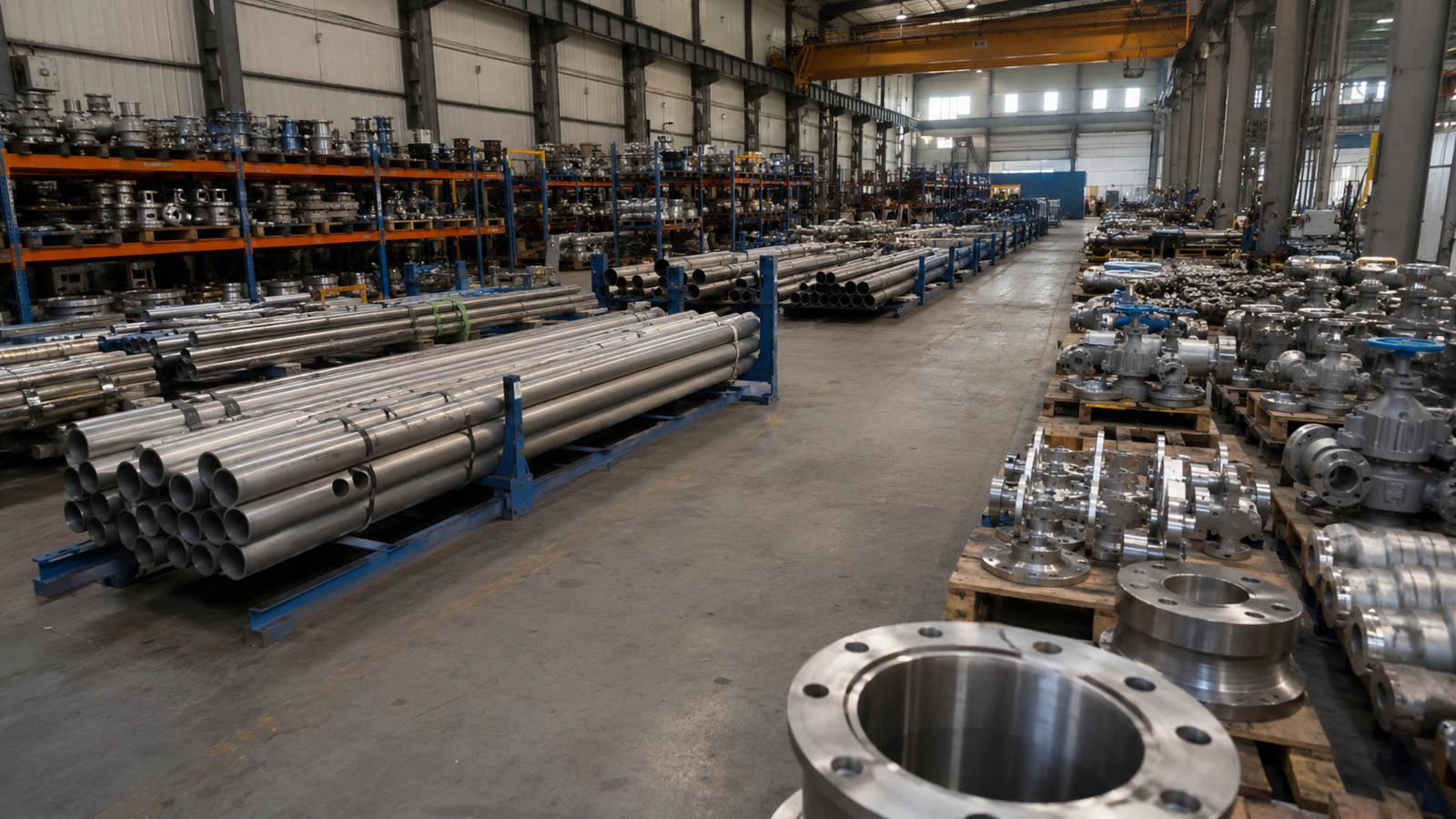
For manufacturers, the key question is not only “Is this the correct alloy grade?” A better question is “Is this alloy supplied in the right condition for this pump or valve component, machining process, corrosion environment, and service load?”
What Does Material Condition Mean?
Material condition refers to the actual state of the material as supplied or after processing. It includes more than the alloy name or UNS number.
For alloy bars and machined pump and valve parts, material condition may include:
- Chemical composition
- Melting and refining route
- Forging or rolling history
- Hot-worked or cold-worked condition
- Annealed, solution annealed, aged, or stress-relieved condition
- Grain structure
- Hardness level
- Mechanical properties
- Residual stress
- Surface finish
- Internal soundness
- Straightness and dimensional tolerance
- Inspection and testing status
- Heat number traceability
Two bars with the same alloy grade may not perform exactly the same if they have different heat treatment histories, cold work levels, grain structures, surface conditions, or inspection scopes.
Why Small Material Differences Can Create Big Problems
Machined pump and valve parts often work under combined mechanical and environmental stress. A pump shaft may face rotation, torque, bending, vibration, corrosion, and fatigue. A valve stem may face sealing stress, sliding wear, corrosion, and galling. Valve trim may face erosion, pressure drop, flow turbulence, and corrosive media.
In these applications, small differences in material condition can matter.
| Material Condition Factor | Possible Influence on Pump and Valve Parts |
|---|---|
| Heat treatment condition | Affects strength, hardness, ductility, corrosion behavior, and dimensional stability |
| Grain structure | May influence strength, toughness, fatigue behavior, creep behavior, and corrosion response |
| Residual stress | May contribute to distortion, cracking, fatigue, or stress corrosion cracking risk |
| Surface finish | Can affect wear, sealing, crack initiation, localized corrosion, and cleanliness |
| Cold work level | Can increase strength but may affect ductility, residual stress, and SCC susceptibility |
| Internal defects | May reduce fatigue life or cause machining and service problems |
| Dimensional tolerance | Affects machining allowance, fitting, sealing, alignment, and assembly |
| Traceability | Helps confirm whether the delivered material matches the order and test report |
Research on machined surface integrity and fatigue performance explains that fatigue cracks generally initiate from free surfaces and that surface integrity is closely related to fatigue performance. This is why machined surface condition should not be treated as a cosmetic detail.
Why Heat Treatment History Matters
Heat treatment can change microstructure, hardness, strength, ductility, corrosion behavior, and dimensional stability. For machined pump and valve parts, the supplied condition should match the final application and machining plan.
For example:
- A pump shaft may require a balance between strength, toughness, corrosion resistance, and fatigue resistance.
- A valve stem may need suitable hardness, straightness, surface finish, and resistance to galling or corrosion.
- Valve trim may need wear resistance, erosion resistance, corrosion resistance, and dimensional stability.
- Fasteners may need controlled strength, ductility, thread quality, and corrosion compatibility.
Heat treatment should not be assumed. Buyers should confirm whether the material is supplied as annealed, solution annealed, aged, stress relieved, cold worked, hot finished, or in another specified condition.
A study on heat treatment and corrosion resistance of 316L stainless steel shows that heat treatment can affect microstructural characteristics and corrosion behavior. Although each alloy system is different, the general lesson is important: heat treatment history can influence final material performance.
Why Residual Stress Should Not Be Ignored
Residual stress can be introduced by forging, rolling, drawing, welding, machining, grinding, rapid cooling, or improper heat treatment. It may not be visible, but it can affect machining stability and service performance.
In pump and valve parts, residual stress may contribute to:
- Distortion after machining
- Cracking during service
- Reduced fatigue performance
- Increased stress corrosion cracking risk
- Dimensional instability
- Unexpected movement during heat treatment or machining
AMPP explains that stress corrosion cracking is caused by the combined influence of tensile stress and a corrosive environment, and that the tensile stress may come from applied stress or residual stress. You can review this definition under stress corrosion cracking.
For critical parts, buyers may need to ask whether stress relief, controlled machining, or additional inspection is required.
Why Surface Finish Affects More Than Appearance
Surface finish is often overlooked when ordering alloy bars or machined parts. However, for pump and valve components, surface condition can influence sealing, wear, fatigue, corrosion, and cleanliness.
Surface-related risks may include:
- Crack initiation from machining marks
- Localized corrosion at pits, scratches, or rough areas
- Sealing problems on valve stems or trim
- Wear or galling in sliding contact areas
- Contamination in clean-service applications
- Reduced fatigue performance under cyclic load
Research on cutting surface integrity and fatigue properties notes that residual compressive stress can inhibit crack initiation and improve fatigue life, while residual tensile stress has the opposite effect. This supports the idea that surface integrity, not only bulk material strength, should be considered for machined components.
For pump and valve parts, buyers should specify surface requirements clearly, such as turned, peeled, ground, polished, machined, pickled, or passivated surface, depending on application.
Why Basic Specifications Are Not Enough
A material specification may confirm alloy grade, chemical composition, and mechanical properties. These are important, but they do not fully answer whether the material is suitable for a specific pump or valve component.
A basic specification may not fully explain:
- Whether the material condition matches the application
- Whether the heat treatment is correct
- Whether residual stress is controlled
- Whether surface finish meets the machining or sealing requirement
- Whether internal soundness was checked
- Whether the material is suitable for the corrosive environment
- Whether the material is suitable for cyclic load or vibration
- Whether testing was performed on the specific batch
- Whether the certificate matches the physical material
This is why buyers should connect the specification to the actual service condition, component function, and failure risk.
PREN Is Useful, but It Has Limits
For chloride-containing environments, buyers sometimes ask for PREN, or Pitting Resistance Equivalent Number. PREN can be useful for comparing the tendency of stainless steels and some nickel-containing alloys to resist pitting initiation in chloride service.
Nickel Institute explains that PREN is used to estimate relative resistance to pitting initiation. However, PREN is not a universal corrosion selection rule. The same source also notes that practical pitting resistance can be influenced by heat treatment, intermetallic phases, and inclusions.
For pump and valve parts, PREN should be treated as one screening tool, not a replacement for full corrosion review. It does not automatically predict performance in sulfuric acid, caustic solution, H₂S service, erosion-corrosion, high-temperature oxidation, or corrosion fatigue.
What Should Buyers Ask Suppliers About Material Condition?
A reliable supplier should be able to explain not only the alloy grade, but also the material condition, production route, testing, and documentation.
| Category | Questions to Ask | Why It Matters |
|---|---|---|
| Material grade | What is the alloy grade and UNS number? | Confirms basic material identity |
| Product standard | Which ASTM, ASME, EN, ISO, or customer standard applies? | Defines technical requirements |
| Heat treatment | Is the material annealed, solution annealed, aged, stress relieved, or cold worked? | Affects properties and machining behavior |
| Manufacturing route | Is the bar forged, hot rolled, cold drawn, peeled, ground, or machined? | Affects structure, tolerance, and surface condition |
| Grain structure | Is grain size or microstructure control required? | May matter for fatigue, toughness, corrosion, or high-temperature service |
| Residual stress | Is stress relief required before machining? | Helps reduce distortion or cracking risk |
| Surface finish | What surface condition is supplied? | Affects machining, sealing, wear, and corrosion risk |
| Mechanical properties | Are tensile strength, yield strength, elongation, hardness, or impact properties tested? | Confirms batch-specific mechanical performance |
| NDT | Can UT, PT, or other NDT be provided if required? | Helps detect internal or surface defects |
| Traceability | Can the material be traced by heat number? | Supports quality verification and problem solving |
| Certificate | Can MTC / EN 10204 3.1 or 3.2 be provided? | Helps verify order compliance |
A supplier who cannot explain material condition clearly may not be suitable for critical machined parts.
What Documents Should Buyers Request?
Documentation helps verify that the delivered material matches the purchase order and project requirements.
Common documents include:
- Material Test Certificate / Mill Test Report
- Heat number or batch number
- Chemical composition report
- Mechanical properties report
- Heat treatment condition
- Hardness report if required
- PMI report if required
- Ultrasonic testing report if required
- Liquid penetrant testing report if required
- Dimensional inspection report
- Surface inspection report
- Third-party inspection report if required
- Packing and marking records
For metallic products, EN 10204 Type 3.1 and Type 3.2 inspection documents are commonly used to define inspection documentation. Type 3.1 provides specific inspection results and is validated by the manufacturer’s authorized inspection representative independent of the manufacturing department. Type 3.2 includes validation by the manufacturer’s authorized inspection representative and the purchaser’s authorized inspection representative or a designated inspector, depending on the requirement.
However, buyers should still check whether the certificate matches the physical material. The heat number, grade, size, standard, test values, quantity, and markings should match the purchase order and delivered goods.
What Testing and Inspection May Be Needed?
Testing depends on product form, application risk, standard, and customer specification.
| Test / Inspection | Purpose |
|---|---|
| Chemical analysis | Confirms alloy composition |
| Mechanical testing | Confirms tensile strength, yield strength, elongation, hardness, or toughness |
| PMI testing | Helps verify alloy identity and major elements |
| Dimensional inspection | Confirms diameter, length, tolerance, straightness, and machining allowance |
| Visual inspection | Checks cracks, pits, dents, scale, surface damage, or contamination |
| Ultrasonic testing | Helps detect internal discontinuities in suitable bars or parts |
| Liquid penetrant testing | Helps reveal surface-breaking defects |
| Hardness testing | Supports wear, machining, strength, or sour service requirements |
| Microstructure examination | May be required for critical heat treatment or grain structure control |
| Third-party inspection | Adds independent verification for critical orders |
ASNT explains that NDT methods allow materials, components, and systems to be evaluated without causing harm or disruption. ASNT also explains that ultrasonic testing uses high-frequency sound waves to detect and measure discontinuities, while liquid penetrant testing reveals surface discontinuities in solid, nonporous materials.
Do Standards Confirm Material Condition?
Standards are important, but buyers should understand what each standard actually covers.
For example:
- ASTM material standards may define composition, mechanical properties, dimensions, and testing requirements.
- ASME standards may define design, pressure-temperature ratings, testing, or marking for certain equipment.
- EN 10204 defines inspection document types for metallic products.
- ISO 9001 defines quality management system requirements.
- ISO 15156 / NACE MR0175 may apply to materials used in H₂S-containing oil and gas environments.
ISO describes ISO 9001 as a globally recognized standard for quality management. It helps organizations establish, implement, maintain, and continually improve a quality management system. However, ISO 9001 should not be treated as proof that a specific batch of material is suitable for a specific pump or valve application.
The actual material condition, test results, certificate, surface quality, and service environment still need to be verified.
Hidden Costs of Ignoring Material Condition
Choosing a lower-cost material without checking material condition may create higher long-term cost. The purchase price is only one part of the total cost.
Possible hidden costs include:
- Extra machining time
- Rework due to distortion
- Premature wear
- Unexpected cracking
- Leakage or sealing problems
- Emergency replacement
- Unplanned maintenance
- Lost production time
- Customer complaints
- Warranty claims
- Safety or environmental risk
- Reputation damage
NIST’s report on economics of manufacturing machinery maintenance discusses maintenance costs and losses related to inadequate maintenance strategies in manufacturing. For pump and valve manufacturers, the practical lesson is similar: evaluate long-term risk and total cost, not only the initial material price.
Practical RFQ Checklist for Machined Pump and Valve Parts
Before sending an inquiry, buyers can prepare the following information:
- Application industry
- Pump or valve type
- Component name: shaft, stem, trim, sleeve, bushing, fastener, body part, or custom machined part
- Required alloy grade and UNS number if known
- Required standard: ASTM, ASME, EN, ISO, NACE/ISO, or customer specification
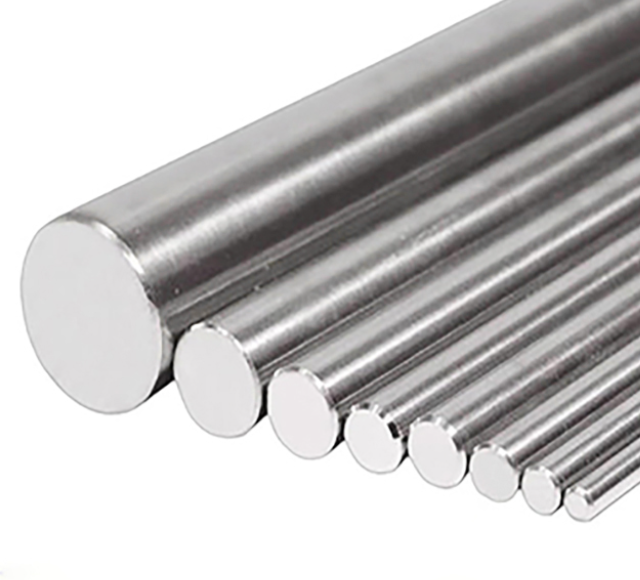
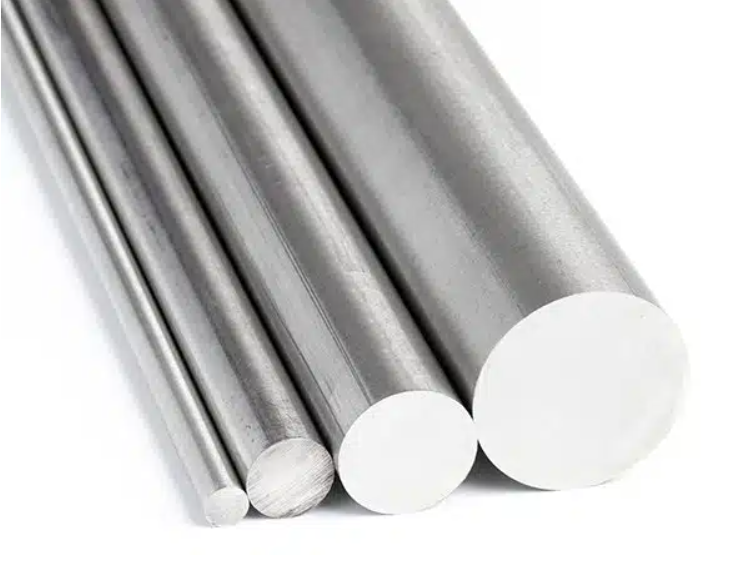
- Product form: round bar, square bar, hex bar, forged bar, machined blank, or finished part
- Diameter, length, tolerance, straightness, and machining allowance
- Required heat treatment condition
- Required hardness range if applicable
- Required surface condition: peeled, turned, ground, polished, machined, pickled, or passivated
- Operating medium: seawater, acid, alkali, brine, steam, H₂S, slurry, solvent, or mixed chemicals
- Temperature, pressure, flow velocity, vibration, wear, or fatigue conditions
- Previous failure mode if available
- Required certificate type, such as EN 10204 3.1 or 3.2
- Required testing: PMI, UT, PT, hardness, dimensional inspection, microstructure check, or third-party inspection
- Packing, marking, and delivery requirements
A clear RFQ helps the supplier confirm the correct material condition before production, machining, or shipment.
Conclusion
Material condition is not a minor detail for machined pump and valve parts. Alloy grade matters, but heat treatment, grain structure, residual stress, surface finish, dimensional control, inspection, and traceability can also influence performance.
For pump shafts, valve stems, trim, sleeves, bushings, fasteners, and custom machined parts, buyers should evaluate both the material grade and the supplied condition. When these details are confirmed before ordering, manufacturers can reduce material mismatch, machining problems, premature failure risk, and long-term sourcing cost.