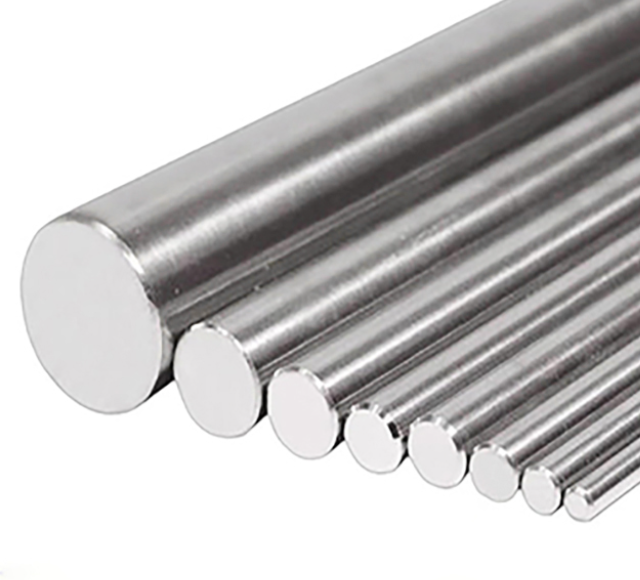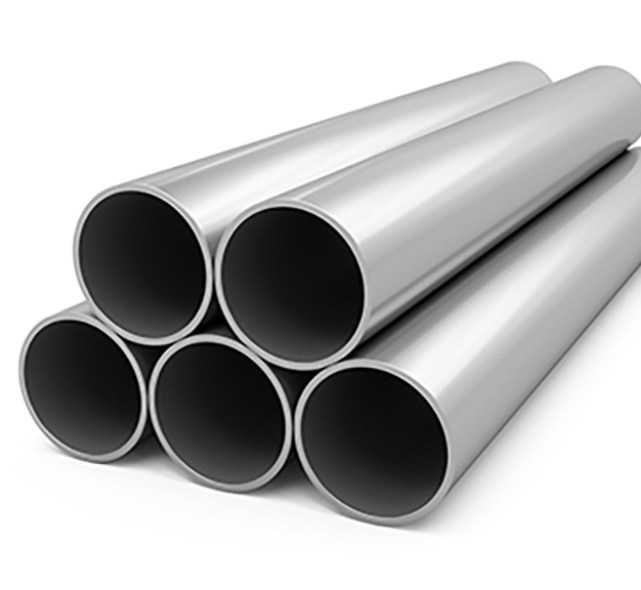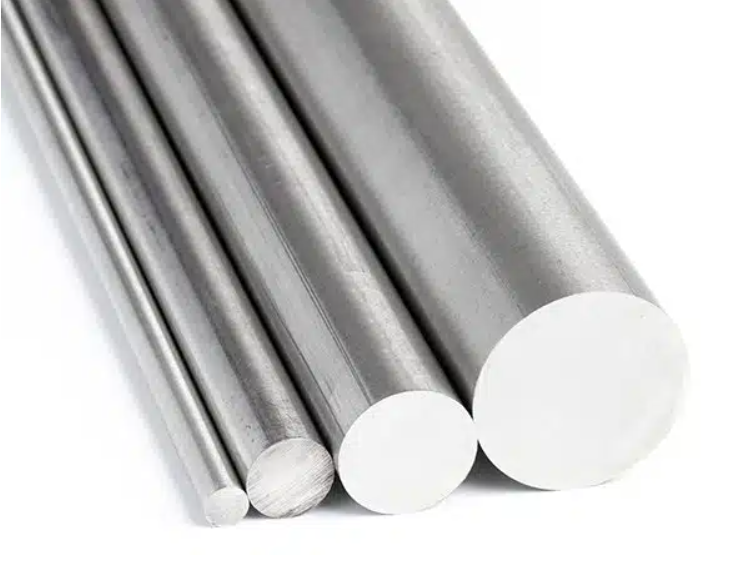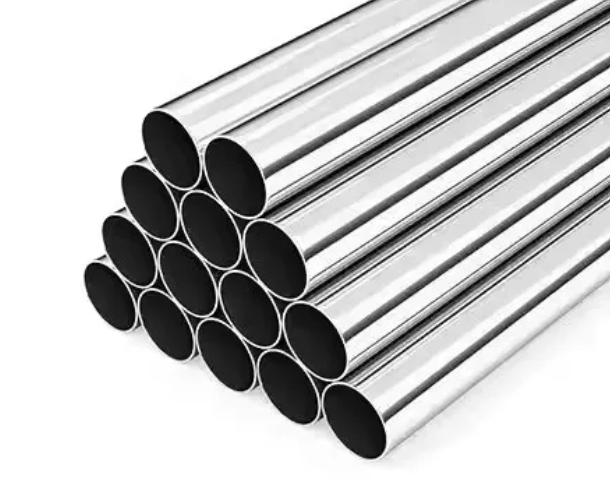

Mining acid leaching can expose equipment to aggressive acids, chlorides, fluorides, dissolved metal ions, elevated temperatures, pressure, slurry abrasion, deposits, welds and repeated shutdown cycles. Because these variables interact, neither alloy is universally better.
Quick answer: Hastelloy C276 is generally the stronger candidate where broad resistance to mixed oxidizing and reducing acids, chlorides, pitting and crevice corrosion is required. Titanium Grade 7 is generally considered where titanium is already compatible with the process but improved resistance to reducing acids and crevice-sensitive conditions is needed. Final selection should be based on the actual leach chemistry, temperature, slurry condition, equipment zone, fabrication route and validation testing.
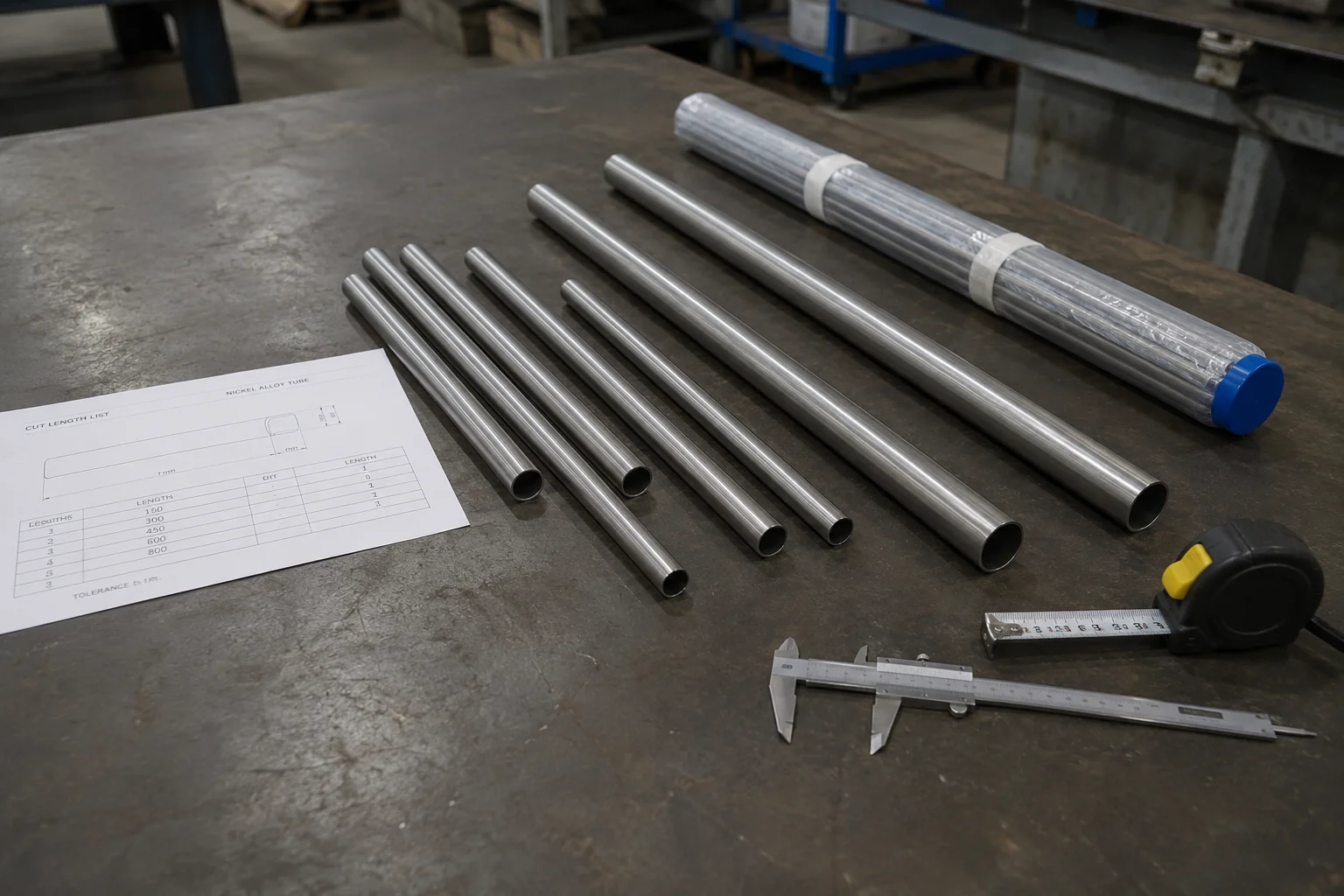
According to the HASTELLOY C-276 alloy technical data, the alloy's chromium, molybdenum and tungsten content supports broad corrosion resistance, including resistance to localized attack in many chloride- and halide-containing environments.
The TIMET corrosion-resistance guide for titanium notes that unalloyed titanium has limits in reducing acids and that palladium-containing grades can extend titanium's useful corrosion-resistance range in selected hydrochloric, sulfuric and phosphoric acid conditions.
The Nickel Institute overview of high-pressure acid leaching illustrates why severe nickel-laterite processing may require zone-specific materials strategies, including titanium-clad construction rather than a single solid alloy throughout the equipment.
At-a-Glance Selection Guide
The table below summarizes the main screening differences between Hastelloy C276 and Titanium Grade 7. It is not a final material approval. Actual leach chemistry, temperature, impurities, slurry conditions, equipment geometry, fabrication and validation requirements must still be reviewed.
Hastelloy C276 vs Titanium Grade 7
| Selection Factor | Hastelloy C276 Direction | Titanium Grade 7 Direction |
|---|---|---|
| Main alloy type | Nickel-chromium-molybdenum-tungsten alloy. | Commercially pure titanium with palladium addition. |
| UNS number | UNS N10276. | UNS R52400. |
| Primary selection advantage | Broad corrosion resistance in many severe chemical environments. | Improved titanium corrosion resistance in reducing acids and crevice-sensitive media. |
| Acid type | Often considered for mixed acids, chlorides, oxidizing/non-oxidizing acids and severe chemical streams. | Often considered where titanium is suitable but Grade 2 may not provide enough resistance. |
| Chloride / halide risk | Strong resistance to pitting and crevice corrosion in many chloride-containing environments. | Palladium addition improves crevice and reducing-acid resistance compared with unalloyed titanium. |
| Abrasive slurry | Corrosion resistance is strong, but slurry erosion must still be checked. | Corrosion resistance may be strong, but titanium is not automatically abrasion-proof. |
| Mechanical strength | Generally higher strength than CP titanium grades. | Similar physical/mechanical direction to CP titanium Grade 2; selected mainly for corrosion resistance, not maximum strength. |
| Density | Heavier nickel alloy. | Lower density titanium alloy. |
| Welding | Good weldability for a nickel alloy, but heat input and filler selection matter. | Weldable, but requires excellent shielding and cleanliness to avoid oxygen/nitrogen/hydrogen contamination. |
| Cost direction | High material and fabrication cost; lifecycle value depends on service performance and repair risk. | Palladium content and product availability can increase cost; lower density may reduce installed weight in some designs. |
| Typical product forms | Plate, sheet, strip, bar, pipe, tube, fittings, fabricated parts. | Plate, sheet, strip, pipe, tube, bar, fittings, clad plate, fabricated parts. |
Buyer Takeaway
Use Hastelloy C276 when broad chemical corrosion resistance is the priority. Use Titanium Grade 7 when titanium is suitable for the process but enhanced resistance to reducing acids, hot halides or crevice conditions is needed. In severe mining leaching, both should be validated against the real process media.
Why Material Data Sheets Cannot Tell the Whole Story
Material data sheets are useful, but they are only a starting point.
They usually provide typical chemistry, mechanical properties, physical properties and selected corrosion data. They may not reproduce your exact mining leach liquor, ore impurities, slurry abrasion, temperature fluctuation, weld condition or shutdown cycle.
ASTM G31 explains that laboratory immersion corrosion tests are influenced by test solution composition, temperature, gas sparging, fluid motion, specimen support, duration, cleaning method and interpretation of results. Source: ASTM G31 — Laboratory Immersion Corrosion Testing
Why Mining Acid Leaching Is More Complex Than a Datasheet
| Datasheet / Lab Condition | Real Mining Acid Leaching Condition |
|---|---|
| Fixed acid concentration. | Acid concentration may change with ore feed, reaction progress and dosing. |
| Fixed test temperature. | Temperature may fluctuate during startup, shutdown, process upset or heat transfer changes. |
| Clean solution. | Leach liquor may contain dissolved metals, chlorides, fluorides, ferric ions and other impurities. |
| No abrasive solids. | Slurry may contain abrasive ore particles. |
| No weld defects. | Real equipment has welds, heat-affected zones, bends, joints and repairs. |
| Short test duration. | Mining equipment may need long service intervals. |
| Simple coupons. | Real equipment has crevices, deposits, low-flow zones and galvanic contacts. |
| No mechanical stress. | Equipment may face vibration, pressure, agitation, thermal stress and erosion. |
Buyer Takeaway
Do not reject datasheets. Use them as screening tools, then verify with process-specific corrosion data, coupon testing, pilot testing or proven service experience.
How Do Acid Type and Chemistry Affect the Choice?
Mining acid leaching may involve sulfuric acid, hydrochloric acid, nitric acid, chloride leaching, ferric chloride systems, pressure acid leaching, atmospheric leaching, mixed acids or process-specific reagents.
The same material may perform very differently in different acids.
Acid Chemistry Comparison
| Process Chemistry | Main Risk | C276 Consideration | Titanium Grade 7 Consideration |
|---|---|---|---|
| Sulfuric acid leaching | General corrosion, temperature, oxidizing ions, slurry. | May be considered depending on concentration, temperature and impurities. | Titanium Grade 7 may be useful in selected reducing-acid conditions, but concentration and temperature must be checked. |
| Hydrochloric acid leaching | Strong reducing acid, chlorides, pitting/crevice risk. | C276 may be considered due to Ni-Cr-Mo-W chemistry and chloride resistance. | Grade 7 can improve titanium resistance compared with unalloyed grades, but hot/concentrated HCl still requires validation. |
| Ferric chloride / oxidizing chloride leach | Oxidizing chloride media, localized corrosion. | C276 is often a strong candidate for chloride pitting and crevice resistance. | Titanium can perform well in many oxidizing chloride systems, but crevices, pH and fluoride risk must be reviewed. |
| Fluoride-containing leach | Fluoride can be aggressive to titanium depending on pH and temperature. | C276 may be considered depending on full chemistry. | Titanium requires caution; fluoride can challenge titanium passivity. |
| High-pressure acid leach / HPAL | Hot acidic slurry, pressure, metal ions, autoclave conditions. | May be used in selected components, but the exact chemistry and abrasion risk matter. | Titanium and titanium-clad construction have strong history in HPAL autoclaves, but not every component should be solid titanium. |
| Mixed acid systems | Multiple corrosion mechanisms. | C276 often offers broad resistance, but testing is still needed. | Grade 7 may be useful only if the chemistry matches titanium’s corrosion envelope. |
| Spent acid / dirty leach liquor | Dissolved metals and impurities change corrosion behavior. | Evaluate with real solution data. | Evaluate with real solution data. |
A OneMine case notes that titanium/steel clad was selected for nickel laterite pressure leaching autoclaves and that titanium provides corrosion protection in that environment. Source: OneMine — Titanium Clad Autoclave Performance in Nickel Laterite Hydrometallurgy
Buyer Takeaway
Before comparing C276 and Grade 7, define the acid chemistry clearly. “Acid leaching” is not enough.
How Do Chlorides, Fluorides and Impurities Change the Decision?
Mining leach liquors can contain dissolved metal ions and impurity species that are not always included in standard corrosion tables.
Important chemistry details include:
- Chloride concentration
- Fluoride concentration
- Ferric / ferrous ratio
- Copper ions
- Oxygen or oxidizing potential
- Sulfates
- pH
- Dissolved solids
- Redox potential
- Temperature
- Slurry solids
- Cleaning chemicals
Impurity-Driven Risks
| Impurity / Condition | Why It Matters |
|---|---|
| Chlorides | Can promote pitting and crevice corrosion in susceptible alloys. |
| Fluorides | Can be harmful to titanium depending on pH, temperature and concentration. |
| Ferric ions | May change oxidizing potential and corrosion behavior. |
| Copper ions | May affect corrosion potential and passivity. |
| Low pH | Can challenge passive films and accelerate general corrosion. |
| High temperature | Often increases corrosion rate and may change passivity. |
| Deposits | Can create under-deposit corrosion or crevice-like chemistry. |
| Abrasive particles | Can remove passive films or protective layers and expose fresh metal. |
The ATI corrosion-resistant titanium alloy guide shows that palladium-alloyed commercially pure titanium grades have a broader crevice-corrosion resistance range than their unalloyed counterparts. The limits still depend on pH, temperature, halide concentration, deposits and crevice geometry.
The Titanium Alloy Guide describes Ti-0.15Pd Grade 7 as a corrosion-focused titanium grade for reducing acids and localized attack in hot halide media, with physical and mechanical properties broadly comparable to Grade 2 titanium.
Buyer Takeaway
Grade 7 titanium is not chosen because it is the strongest titanium. It is chosen because palladium improves corrosion resistance in specific severe environments.
What About Abrasion and Slurry Wear?
Mining acid leaching is not only chemical corrosion. Slurries may contain abrasive ore particles, precipitates or scale. Pumps, pipes, valves, agitators and bends may face combined corrosion and wear.
A review of materials selection in the mining industry notes that in slurry or dense-medium pipelines, impingement erosion can be a greater nuisance than corrosion, and replacement can involve both material and manpower costs as well as logistical problems. Source: SAIMM — Materials Selection in the Mining Industry
Abrasion Questions to Ask
| Question | Why It Matters |
|---|---|
| Is the stream clear solution or slurry? | Clear acid and abrasive slurry require different evaluation. |
| What is the solids content? | More solids can increase wear. |
| What is the particle hardness and size? | Hard, sharp particles can accelerate erosion. |
| What is the flow velocity? | High velocity can increase erosion-corrosion. |
| Are there bends, elbows or pump discharge zones? | Local turbulence can increase wear. |
| Are there shutdown deposits? | Deposits may create crevice or under-deposit corrosion. |
| Is the part static or moving? | Agitators, impellers and valve seats may need wear-resistant designs. |
| Is a lining or coating needed? | Sometimes a metal alloy alone is not enough. |
Buyer Takeaway
C276 and Titanium Grade 7 should not be judged by corrosion resistance only. Slurry abrasion may require lining, cladding, thicker wall, design change or a different wear-resistant material strategy.
How Do Welding and Fabrication Affect Performance?
A good alloy can fail if it is fabricated incorrectly.
Hastelloy C276 Fabrication
C276 is generally weldable, but heat input, filler-metal selection, interpass control, surface cleanliness and post-weld inspection still matter. The TWI guidance on welding nickel alloys emphasizes controlled welding procedures for nickel-chromium-molybdenum alloys. The governing WPS/PQR, design code and corrosion service should determine the actual parameters rather than a single universal heat-input limit.
Titanium Grade 7 Fabrication
Titanium welding requires strict shielding and cleanliness. The TWI guidance on welding titanium and its alloys identifies oxygen, nitrogen and hydrogen contamination as key weld-quality risks, making gas purity, trailing protection, joint cleanliness and procedure qualification especially important.
Fabrication Comparison
| Fabrication Factor | Hastelloy C276 | Titanium Grade 7 |
|---|---|---|
| Welding sensitivity | Requires nickel alloy welding control. | Very sensitive to oxygen, nitrogen and hydrogen contamination. |
| Shielding requirement | Standard nickel alloy welding shielding and procedure control. | High-quality inert shielding, backing gas and trailing shield may be required. |
| Heat input control | Important to limit HAZ effects and cracking risk. | Important to avoid contamination and preserve ductility. |
| Filler selection | Must match corrosion service and design code. | Must match titanium grade and service requirement. |
| Post-weld inspection | PT, RT, UT or corrosion review may be required. | Visual weld color, PT/RT, contamination control and procedure qualification matter. |
| Repair difficulty | Specialized nickel alloy welding skill needed. | Titanium repair can be more demanding because of shielding and cleanliness needs. |
Buyer Takeaway
When buying C276 or Grade 7 for leaching equipment, ask not only for material price. Ask how the part will be welded, inspected and documented.
Which Standards Should Buyers Confirm?
For mining acid leaching equipment, product form matters. The standard for plate is different from the standard for pipe, bar or tube.
Common Standards for Hastelloy C276 / UNS N10276
| Product Form | Common Standard | What It Covers |
|---|---|---|
| Rod / bar | ASTM B574 | Nickel-chromium-molybdenum alloy rod and bar for corrosive service, including UNS N10276. |
| Plate / sheet / strip | ASTM B575 | Nickel-chromium-molybdenum alloy plate, sheet and strip, including UNS N10276. |
| Seamless pipe / tube | ASTM B622 | Seamless nickel and nickel-cobalt alloy pipe and tube, including applicable C276 products. |
| Welded pipe | ASTM B619/B619M | Welded nickel and nickel-cobalt alloy pipe; confirm alloy, size, class and heat-treatment requirements. |
| Welded tube | ASTM B626 | Welded nickel and nickel-cobalt alloy tube for heat exchangers, condensers and general corrosive service. |
| Project code | ASME / EN / customer drawing | May define pressure design, welding, NDT, corrosion allowance and inspection requirements. |
ASTM B574 covers rod and bar of nickel-chromium-molybdenum alloys including UNS N10276, while ASTM B575 covers plate, sheet and strip. For welded product forms, ASTM B619/B619M covers welded pipe and ASTM B626 covers welded tube. Buyers should confirm the contractually required edition rather than relying only on a webpage label.
Common Standards for Titanium Grade 7 / UNS R52400
| Product Form | Common Standard | What It Covers |
|---|---|---|
| Plate / sheet / strip | ASTM B265 | Annealed titanium and titanium alloy strip, sheet and plate, including Grade 7 where specified. |
| Heat exchanger tube | ASTM B338 | Seamless and welded titanium tubes for surface condensers, evaporators and heat exchangers, including Grade 7. |
| Seamless pipe | ASTM B861 | Titanium and titanium alloy seamless pipe for general corrosion-resisting and elevated-temperature service. |
| Welded pipe | ASTM B862 | Titanium and titanium alloy welded pipe. |
| Bar / billet | ASTM B348/B348M | Annealed titanium and titanium alloy bars and billets, including Grade 7. |
| Fittings | ASTM B363 | Seamless and welded titanium and titanium alloy welding fittings. |
| Project code | ASME / EN / customer drawing | May define pressure design, welding, NDT, corrosion allowance and inspection requirements. |
ASTM B265 covers titanium strip, sheet and plate; ASTM B338 covers seamless and welded titanium tube for condensers, evaporators and heat exchangers; ASTM B861 covers seamless titanium pipe; and ASTM B348/B348M covers bars and billets. The product form and required edition must match the purchase order.
Buyer Takeaway
Do not order only by alloy name. Confirm UNS number, product form, ASTM/ASME/EN standard, dimensions, condition, inspection and certificate requirements.
How Should Buyers Validate Material Claims?
For severe acid leaching conditions, supplier claims should be verified with documents and application-specific data.
Validation Steps
| Step | What to Do | Why It Matters |
|---|---|---|
| 1. Define the leach environment | Acid type, concentration, temperature, pH, pressure, chloride/fluoride, ferric ions, slurry solids. | Material choice depends on real chemistry. |
| 2. Identify failure modes | General corrosion, pitting, crevice corrosion, SCC, erosion-corrosion, galvanic corrosion, weld attack. | Prevents one-property selection mistakes. |
| 3. Compare C276 and Grade 7 corrosion envelopes | Review supplier data, standards, corrosion guides and service history. | Helps avoid overgeneralized claims. |
| 4. Request process-specific corrosion data | Similar acid concentration, temperature, impurity level and slurry condition. | Generic data may not match mining operation. |
| 5. Consider ASTM G31 or coupon testing | Test in actual or simulated leach liquor. | Provides more relevant corrosion rate and attack morphology. |
| 6. Review abrasion separately | Check slurry velocity, solids, particle size and design geometry. | Corrosion-resistant metal may still wear. |
| 7. Verify welding procedure | WPS/PQR, filler, shielding, heat input, inspection. | Welds can become weak corrosion points. |
| 8. Verify MTR/MTC and traceability | Heat number, chemical composition, mechanical properties, standard compliance. | Confirms material identity. |
| 9. Use third-party testing if needed | ISO/IEC 17025 laboratory, independent inspection, PMI. | Useful for high-risk or first-time orders. |
| 10. Review lifecycle cost | Purchase price, fabrication, inspection, downtime, repair, replacement and lead time. | Avoids lowest-price selection mistakes. |
Important Caution About MTR/MTC
MTR/MTC can verify material identity and standard compliance, but it does not prove that the alloy will survive a specific acid leaching environment.
When contractually required, an EN 10204 Type 3.1 inspection certificate should identify the supplied material and report the applicable test results. Buyers should still check heat-number continuity across the certificate, product marking, inspection records and packing documents.
ISO 9001 addresses quality-management-system requirements, while ISO/IEC 17025 addresses laboratory competence. Neither certification substitutes for process-specific corrosion validation.
Buyer Takeaway
Documentation proves what material was supplied. Testing and service review help prove whether the material is suitable for your process.
How Should Buyers Compare Total Cost of Ownership?
Initial alloy price is only one part of the decision. For leaching equipment, total cost should include procurement, fabrication, inspection, installation, maintenance, downtime, replacement and inventory risk.
TCO Factors for Acid Leaching Equipment
| Cost Factor | Why It Matters |
|---|---|
| Material price | C276 and Grade 7 are both high-value materials. |
| Fabrication cost | Welding, forming, machining and inspection may differ significantly. |
| Lead time | Special alloy product forms and custom sizes may require planning. |
| Installation cost | Heavy equipment, cladding, welding and field repair all affect cost. |
| Maintenance | Cleaning, inspection and repair frequency matter. |
| Downtime | Unplanned shutdown may dominate the true cost. |
| Replacement frequency | A longer-lasting material may reduce total cost. |
| Testing cost | Coupon testing or pilot testing may be justified for severe environments. |
| Inventory strategy | Spare pipe, tube, bar or plate may reduce shutdown risk. |
| Documentation | Missing certificates may delay project acceptance. |
| Recycling / salvage | Nickel alloys and titanium may have residual scrap value. |
Buyer Takeaway
A higher upfront material price may be justified if it reduces repair, replacement, shutdown and quality risk. But over-specifying without real need can also waste budget.
Practical Selection Guide: C276 or Grade 7?
When Hastelloy C276 May Be a Strong Candidate
C276 may be worth evaluating when:
- The leach liquor contains mixed acids.
- Chlorides or halides are important.
- Pitting and crevice corrosion are major concerns.
- The environment includes both oxidizing and non-oxidizing acid conditions.
- A higher-strength nickel alloy product form is needed.
- The equipment requires plate, bar, pipe or tube in corrosive service.
- Welding and fabrication can be controlled by qualified procedures.
- The process includes chemical corrosion more than severe mechanical wear.
When Titanium Grade 7 May Be a Strong Candidate
Titanium Grade 7 may be worth evaluating when:
- Titanium is already considered suitable for the process.
- Grade 2 titanium may not provide enough resistance.
- Reducing acids or hot halide media require improved titanium corrosion resistance.
- Crevice corrosion resistance is a key concern.
- Lower density is beneficial.
- Titanium-clad construction or titanium internals are being considered.
- The process history supports titanium use.
- Welding shielding, cleanliness and inspection can be tightly controlled.
When Neither Should Be Chosen Without Further Testing
Further testing is important when:
- Fluoride concentration is uncertain.
- Slurry abrasion is severe.
- The process has high temperature and low pH.
- Chloride concentration is high and variable.
- Dissolved metal ions change from batch to batch.
- Deposits or crevices are unavoidable.
- There are pressure, fatigue or thermal cycling concerns.
- The equipment is critical and failure causes shutdown.
- There is no previous service history.
Buyer Takeaway
Do not ask “Which alloy is better?” Ask “Which alloy is better under my exact process conditions?”
RFQ Checklist for Mining Acid Leaching Materials
A strong RFQ should include process data, product form and inspection requirements.
RFQ Information to Provide
| RFQ Item | What to Specify |
|---|---|
| Application | Acid leaching tank, autoclave, pipe, tube, heat exchanger, agitator, pump, valve, liner, nozzle, support or fastener. |
| Material option | Hastelloy C276 / UNS N10276 or Titanium Grade 7 / UNS R52400. |
| Product form | Pipe, tube, bar, plate, sheet, strip, fitting, flange, fastener, clad plate or fabricated part. |
| Standard | ASTM B574, B575, B619/B619M, B622, B626, B265, B338, B348/B348M, B861, B862, ASME, EN or customer drawing. |
| Acid type | Sulfuric acid, hydrochloric acid, nitric acid, chloride leach, mixed acid, HPAL liquor, etc. |
| Acid concentration | Normal and maximum concentration. |
| Temperature | Normal, peak, startup/shutdown and cleaning temperature. |
| pH / redox | pH range, oxidizing/reducing condition, ferric/ferrous ratio if available. |
| Impurities | Chlorides, fluorides, ferric ions, copper ions, sulfates, dissolved metals, organics. |
| Pressure | Atmospheric, pressure leach, autoclave condition or pressure rating. |
| Slurry condition | Solids content, particle size, hardness, flow velocity, abrasion level. |
| Equipment design | Crevices, deposits, welds, bends, dead zones, liners, cladding or galvanic contact. |
| Fabrication | Welding, bending, machining, cladding, overlay, heat treatment or surface finish. |
| Inspection | PMI, UT, PT, RT, hydrostatic, dimensional report, surface inspection. |
| Testing | ASTM G31 immersion testing, actual-liquor coupon testing, pilot testing or another method selected for the expected failure mode. |
| Certificate | EN 10204 3.1 / 3.2, MTR/MTC, CoC, third-party inspection. |
| Quantity | Trial order, maintenance order, shutdown spare or project batch. |
| Lead time | Required delivery schedule and shutdown window. |
Example RFQ Message
We are evaluating Hastelloy C276 and Titanium Grade 7 for mining acid leaching equipment. Application: acid leach slurry pipe and tank internals. Acid: sulfuric acid with chloride and ferric ions. Temperature: 80–95°C, pH 1–2, slurry solids present, flow velocity 2–3 m/s, intermittent shutdown and deposit risk. Please quote suitable pipe/tube/bar/plate options with UNS number, ASTM standard, EN 10204 3.1 MTC, heat number traceability, PMI option, dimensional report, NDT availability, corrosion testing option, MOQ, lead time and packing details.
Common Mistakes Buyers Should Avoid
1. Comparing Only Alloy Names
Hastelloy C276 and Titanium Grade 7 are not interchangeable. Their corrosion envelopes are different.
2. Ignoring Acid Chemistry
Sulfuric acid, hydrochloric acid, chloride leach and mixed acid systems require different review.
3. Ignoring Fluoride Risk
Fluoride can be especially important for titanium selection.
4. Treating Corrosion and Abrasion as the Same Problem
An alloy may resist corrosion but still suffer slurry erosion.
5. Assuming Grade 7 Is a High-Strength Titanium Alloy
Grade 7 is mainly selected for corrosion resistance, not maximum strength.
6. Assuming C276 Solves Every Acid Problem
C276 is highly corrosion resistant, but erosion, crevice design, wrong welding and wrong environment can still cause problems.
7. Using Datasheets as Final Proof
Datasheets are screening tools. Severe mining service may require actual solution testing or field experience.
8. Ignoring Weld Quality
C276 and Grade 7 both require qualified welding procedures, inspection and cleanliness control.
9. Trusting MTC as Corrosion Proof
MTC verifies chemistry and mechanical properties. It does not guarantee acid leaching service life.
10. Choosing Only by Initial Price
Lifecycle cost, maintenance, downtime, lead time and replacement risk should be included.
FAQ: Hastelloy C276 vs Titanium Grade 7 for Mining Acid Leaching
1. Is Hastelloy C276 better than Titanium Grade 7 for acid leaching?
Not always. C276 may be better in many mixed acid and chloride-containing chemical environments, while Grade 7 may be better when titanium is suitable and improved resistance to reducing acids or crevice corrosion is needed.
2. Is Titanium Grade 7 stronger than Hastelloy C276?
No. Titanium Grade 7 is mainly selected for corrosion resistance. Its mechanical properties are closer to commercially pure titanium Grade 2. C276 commonly has higher specified tensile strength than commercially pure titanium grades, but the governing product standard and condition must be compared.
3. Why is palladium added to Titanium Grade 7?
Palladium improves titanium’s corrosion resistance in reducing acids and crevice-sensitive conditions.
4. Is Hastelloy C276 suitable for hydrochloric acid?
C276 is often considered for hydrochloric acid and chloride-containing environments, but suitability still depends on acid concentration, temperature, impurities and flow conditions.
5. Is Titanium Grade 7 suitable for sulfuric acid leaching?
It may be suitable in selected conditions, especially compared with unalloyed titanium, but sulfuric acid concentration, temperature and impurities must be reviewed.
6. What product forms are available for C276?
C276 can be supplied as plate, sheet, strip, bar, pipe, tube, fittings and fabricated parts depending on the required standard.
7. What product forms are available for Titanium Grade 7?
Grade 7 can be supplied as plate, sheet, strip, pipe, tube, bar, fittings, clad plate and fabricated parts depending on standard and availability.
8. Does MTR/MTC prove corrosion resistance?
No. MTR/MTC proves material identity, chemistry, mechanical properties and standard compliance. Corrosion suitability depends on the service environment.
9. Should buyers request corrosion testing?
For severe or uncertain acid leaching environments, ASTM G31 immersion testing, coupon testing, pilot testing or customer-specific corrosion testing may be useful.
10. What information should buyers send to suppliers?
Send acid type, concentration, temperature, pH, impurities, slurry solids, flow velocity, equipment design, product form, standard, size, inspection requirement and certificate requirement.
Conclusion
Selecting between Hastelloy C276 and Titanium Grade 7 for mining acid leaching requires a process-specific comparison.
C276 is a strong candidate where broad acid resistance, resistance to chloride-driven localized corrosion and nickel-alloy mechanical strength are important. Titanium Grade 7 is a strong candidate where titanium is suitable but enhanced resistance to reducing acids, hot halide media or crevice corrosion is needed.
Neither material should be selected only by datasheet claims or alloy name. Buyers should review acid chemistry, temperature, pH, impurities, slurry abrasion, welding, galvanic contact, equipment zone, inspection requirements and total cost of ownership.
For severe leaching environments, the safest approach is to define the process clearly, compare failure modes, verify MTR/MTC and standards, and use coupon testing or pilot testing when the risk is high.
Emily PIPE supplies nickel alloy tubes, nickel alloy bars, titanium alloy tubes and titanium alloy bars for global industrial applications. For a project-specific review, send the acid type, concentration, temperature, pH, chloride and fluoride levels, slurry condition, product form, size, drawing, inspection requirements and certificate requirements to emilymetalsh@163.com.