
How to Choose Alloy Tubes for Marine Cooling Heat Exchangers
Choosing alloy tubes for marine cooling heat exchangers is not a simple “best material” decision. Marine cooling systems may handle seawater, brackish water, polluted harbor water, cooling water with suspended solids, chlorinated seawater, biologically active seawater, warm discharge water, deposits, high flow velocity, stagnant zones, dissimilar metals, and cleaning chemicals.
A poor tube material choice may increase corrosion risk, leakage risk, heat-transfer loss, cleaning frequency, maintenance work, repair cost, downtime risk, or lifecycle cost. However, the solution is not simply to choose the most expensive alloy. Buyers should confirm the actual seawater condition, heat exchanger design, flow velocity, fouling risk, product standard, testing scope, supplier documentation, and lifecycle risk before ordering.
A review on heat exchanger corrosion explains that heat exchangers may suffer from pitting corrosion, crevice corrosion, stress corrosion cracking, corrosion fatigue, erosion-corrosion, and other corrosion-related problems: Corrosion and Corrosion Prevention in Heat Exchangers.
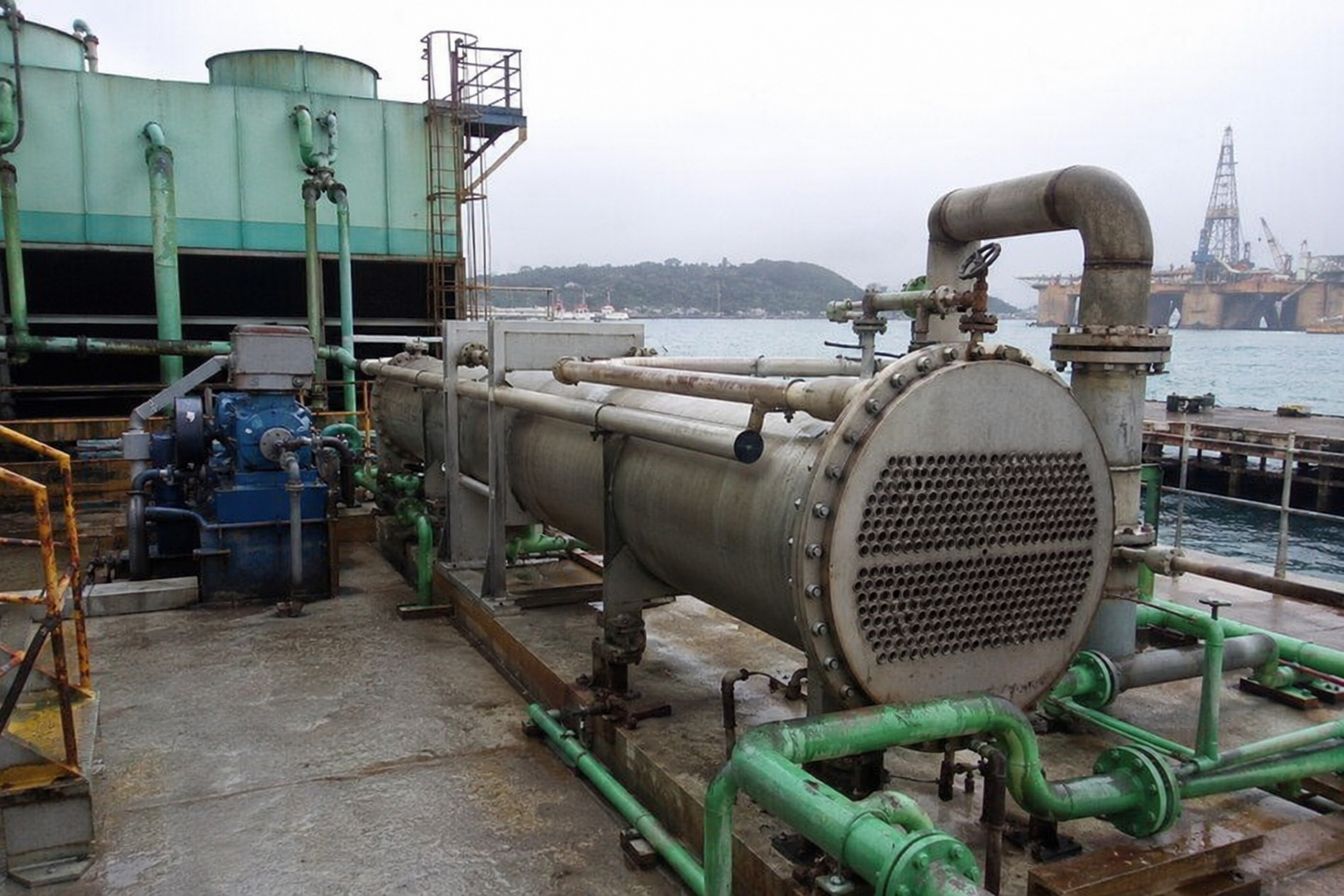
For engineers and procurement teams, the key question is not “Which alloy tube is best for seawater?” The better question is “Which alloy tube is suitable for this seawater source, this temperature, this flow velocity, this fouling condition, this tube sheet design, this standard, and this inspection requirement?”
Why Standard Alloy Choices Are Often Not Enough for Marine Use
Standard alloy choices are often not enough for marine cooling heat exchangers because seawater service is not one uniform environment. Tube performance depends on salinity, temperature, oxygen, pollutants, sulfides, suspended solids, biofouling, deposits, flow velocity, crevices, galvanic coupling, cleaning practice, and system design.
Copper Development Association guidance on copper alloys in seawater discusses how seawater corrosion behavior depends on alloy choice, flow, deposits, pollution, sulfides and system condition: Guidelines for the Use of Copper Alloys in Seawater.
This means buyers should not rely only on a material name such as “CuNi,” “titanium,” “duplex,” or “nickel alloy.” They need the real operating condition.
Key Marine Conditions Buyers Should Confirm
Before selecting alloy tubes, buyers should define the real seawater and operating environment.
| Factor | What to Confirm | Why It Matters |
|---|---|---|
| Seawater source | Open seawater, coastal seawater, harbor water, brackish water, treated seawater | Different sources contain different pollutants, biology and salinity |
| Salinity / chloride level | Normal, maximum, seasonal variation | Affects localized corrosion and material selection |
| Temperature | Inlet, outlet, maximum, cleaning and shutdown temperature | Higher temperature can change corrosion margin, scaling and fouling |
| Dissolved oxygen | Aerated, stagnant, deaerated or variable | Influences passive film behavior and corrosion mechanisms |
| Pollutants | Sulfides, ammonia, industrial effluent, hydrocarbons, organics, metals | Pollutants may change corrosion behavior |
| Suspended solids | Sand, silt, shells, debris or abrasive particles | Can contribute to erosion, deposits or inlet damage |
| Flow velocity | Low-flow, normal, high-flow, turbulent or stagnant | Affects biofouling, deposits and erosion-corrosion |
| Biofouling risk | Marine organisms, algae, bacteria, biofilm | Can reduce heat transfer and create under-deposit conditions |
| Deposits / scale | Marine growth, sludge, salts, corrosion products | Can create crevice-like environments |
| Tube sheet design | Expanded joints, welded joints, crevices, support plates | Affects crevice corrosion and inspection access |
| Dissimilar metals | Tube, tube sheet, baffles, shell, fasteners and piping | Galvanic compatibility should be reviewed |
| Cleaning method | Mechanical cleaning, chlorination, acid cleaning, biocide or backflushing | Cleaning can affect tube surface and corrosion behavior |
| Product standard | ASTM, ASME, EN, JIS, DNV, LR or project specification | Defines tube requirements and documentation |
| Inspection scope | ECT, hydrostatic test, dimensional inspection, surface inspection, third-party inspection | Helps verify product quality before installation |
A vague RFQ such as “marine heat exchanger tube” is usually not enough. The supplier needs the water chemistry, heat exchanger design and inspection requirements.
Seawater Is Not Always the Same
Not all seawater creates the same material risk. Open-ocean seawater, polluted harbor water, warm coastal seawater, brackish water and chlorinated seawater may behave differently.
For example, copper-nickel alloys are widely used in marine systems, but polluted seawater and sulfide-containing conditions require special attention. A paper on copper-nickel alloy pipes in polluted seawater states that corrosion rates can be much faster in polluted seawater and that corrosion resistance can be lost in the presence of sulfide ions and sulfur-containing substances: Corrosion Behavior of High-Strength C71500 Copper-Nickel Alloy in Polluted Seawater.
This does not mean CuNi is unsuitable for seawater. It means buyers should not select CuNi or any other alloy without checking the actual seawater condition.
Biofouling and Marine Growth Matter
Marine cooling heat exchangers can lose performance because of fouling and biofouling, even when the tube material has good corrosion resistance.
A U.S. Maritime Administration report notes that heat exchangers in seawater cooling systems are especially prone to reduced performance caused by biofouling because of their high surface areas, small openings and the low thermal conductivity of biofilms: Biofouling Prevention Demonstration on Seawater Cooling Systems.
Buyers should confirm:
- Is seawater filtered before entering the exchanger?
- Are marine organisms or biofilm expected?
- Is chlorination or another biocide used?
- What is the cleaning frequency?
- Can the tube bundle be mechanically cleaned?
- Can deposits form under low-flow conditions?
- Will fouling reduce heat-transfer efficiency?
- Can fouling create under-deposit or crevice-like corrosion?
Corrosion resistance alone does not guarantee clean heat-transfer surfaces.
Flow Velocity Can Create Different Risks
Flow velocity should be reviewed together with tube material and system design.
Low flow may allow deposits, sediment and biofouling to accumulate. Very high flow, turbulence, suspended solids or inlet impingement may increase erosion-corrosion or mechanical damage risk. Each material family has its own practical velocity range and system design limits.
Copper Development Association guidance on copper alloys in seawater discusses flow conditions and corrosion prevention considerations in seawater systems: Copper Alloys in Seawater: Avoidance of Corrosion.
Buyers should confirm:
- Normal flow velocity
- Maximum flow velocity
- Startup and shutdown flow
- Pump surge conditions
- Inlet turbulence
- Suspended solids
- Sand or silt content
- Flow distribution
- Dead zones
- Tube inlet protection
- Cleaning flow rate
Do not select a tube alloy only by seawater corrosion data in static conditions.
Titanium Tubes in Marine Cooling Heat Exchangers
Titanium is often considered for marine cooling heat exchangers because it has strong resistance in many seawater and chloride-containing environments.
A titanium corrosion manual states that titanium generally has very low corrosion rates in chloride environments, but also notes that crevice corrosion can be a limiting factor for titanium and its alloys in aqueous chloride environments: Corrosion Resistance of Titanium.
Titanium tubes may be considered for:
- Seawater coolers
- Condensers
- Evaporators
- Shipboard heat exchangers
- Offshore seawater systems
- Brackish water heat exchangers
- Chloride-rich cooling systems
- Selected high-corrosion marine service
ASTM B338 covers seamless and welded titanium alloy tubes for surface condensers, evaporators and heat exchangers: ASTM B338.
However, titanium should not be described as “risk-free.” Buyers should still confirm:
- Crevice areas
- Tube sheet material
- Galvanic coupling
- Fluoride or reducing acid contamination
- Deposits and marine growth
- Cleaning chemicals
- Flow velocity
- Tube expansion or welding method
- Handling and installation damage
- Grade requirement
- Inspection scope
Titanium is a strong candidate in many marine cooling systems, but it still requires application review.
Copper-Nickel Tubes in Marine Cooling Systems
Copper-nickel alloys such as 90/10 CuNi and 70/30 CuNi are widely used in marine seawater systems, including piping, condensers and heat exchangers.
ASTM B111 establishes requirements for seamless copper and copper-alloy tube and ferrule stock for use in surface condensers, evaporators and heat exchangers: ASTM B111.
Copper-nickel tubes may be considered because of:
- Marine service history
- Seawater corrosion resistance in suitable conditions
- Good thermal conductivity compared with many high-alloy materials
- Biofouling resistance in selected conditions
- Availability in condenser and heat exchanger tube forms
However, buyers should review:
- Polluted seawater
- Sulfide contamination
- Flow velocity
- Ammonia or industrial contamination
- Sand or solids
- Tube inlet erosion
- Biofouling control strategy
- Galvanic coupling
- Cleaning method
- Classification society or project standard requirements
CuNi is not a universal answer for every marine heat exchanger.
Nickel Alloy Tubes in Marine Cooling and Mixed Service
Nickel alloy tubes may be considered where seawater exposure is combined with acids, high temperature, mixed chemicals, severe crevice risk, or demanding corrosion requirements.
ASTM B163 covers seamless nickel and nickel alloy tubes for condenser and heat-exchanger service: ASTM B163.
Depending on the project, nickel alloy tube standards may include:
| Standard | Typical Scope | Common Relevance |
|---|---|---|
| ASTM B163 | Seamless nickel and nickel alloy tubes for condenser and heat-exchanger service | Nickel alloy heat exchanger tubes |
| ASTM B444 | UNS N06625 and related nickel-chromium-molybdenum seamless pipe and tube | Alloy 625 pipe and tube |
| ASTM B622 | Seamless pipe and tube of nickel and nickel-cobalt alloys | C-276, C-22 and related nickel alloy tubes |
| ASTM B829 | General requirements for nickel and nickel alloy seamless pipe and tube | General seamless nickel alloy tube requirements |
Useful references:
Nickel alloys should not be grouped as one material. Alloy 625, C-276, C-22, 825, 400 and other alloy families have different advantages and limitations.
Stainless Steel and Duplex Options
Stainless steels, duplex stainless steels and super duplex stainless steels may be considered in selected marine cooling applications. However, they should not be chosen only by strength or price.
Important review points include:
- Chloride level
- Temperature
- pH
- Oxygen
- Flow velocity
- Crevice areas
- Weld quality
- Residual stress
- SCC risk
- Sour or sulfide-containing seawater
- Classification rules
- Inspection requirements
AMPP explains that chloride stress corrosion cracking occurs in austenitic stainless steel under tensile stress in the presence of oxygen, chloride ions and high temperature: AMPP Stress Corrosion Cracking.
This means material strength alone is not enough. Chloride SCC risk, weld condition and operating environment should be reviewed.
Galvanic Compatibility Should Be Reviewed
Marine heat exchangers often combine different materials: tubes, tube sheets, shells, baffles, fasteners, pumps and piping may not be made from the same alloy.
If dissimilar metals are electrically connected in seawater, galvanic corrosion risk should be reviewed. AMPP notes that when dissimilar materials or alloys are coupled in seawater, the risk of galvanic corrosion should be considered: Galvanic Series in Seawater as a Function of Temperature and Flow Velocity.
Buyers should check:
- Tube material
- Tube sheet material
- Shell material
- Baffle material
- Fasteners
- Piping connections
- Gasket and sealing design
- Electrical continuity
- Coatings or linings
- Cathodic protection strategy
- Crevice geometry
A “correct” tube specification may still fail if the whole system design creates a galvanic or crevice problem.
Hidden Risks in Marine Tube Specifications
A tube may meet the requested alloy grade and dimensions, but hidden risks can remain.
| Hidden Risk | Why It Matters | What Buyers Should Check |
|---|---|---|
| Wrong service assumption | “Seawater” may mean open sea, harbor water, brackish water or polluted seawater | Ask for water analysis and site condition |
| Incomplete standard | Alloy grade is listed, but ASTM / EN / classification requirement is missing | Confirm product standard and inspection scope |
| Poor surface condition | Scratches, dents, contamination or scale may affect service | Require surface inspection and packing protection |
| Unclear heat treatment | Some alloys need controlled processing to achieve expected properties | Confirm heat treatment condition |
| Residual stress | Bending, welding or expansion may introduce stress | Confirm fabrication and installation method |
| Crevice design | Tube sheet joints and deposits may create local chemistry | Review tube-to-tube sheet design |
| Galvanic mismatch | Tube and tube sheet may be incompatible in seawater | Review material combination |
| Biofouling control missing | Fouling can reduce heat transfer and create deposits | Confirm cleaning and biocide plan |
| Testing not specified | ECT, hydrostatic test or third-party inspection may be omitted | Define testing before purchase |
| Certificate mismatch | MTC does not match heat number, size or PO | Verify documents against marking and order |
The purchase specification should define not only alloy grade, but also service assumptions, standards, testing and traceability.
How to Verify Supplier Claims
Supplier claims such as “marine grade,” “seawater resistant,” “excellent corrosion resistance,” “shipbuilding quality,” or “suitable for heat exchangers” should be verified with documents and application discussion.
Buyers should ask:
- Which alloy grade and UNS number are supplied?
- Which standard applies: ASTM B111, ASTM B338, ASTM B163, ASME, EN, JIS, DNV, LR or customer specification?
- Is the tube seamless or welded?
- What is the heat treatment condition?
- What seawater condition was used for the recommendation?
- Are sulfides, pollutants, oxygen, flow velocity, biofouling and cleaning chemicals considered?
- Are crevice corrosion, erosion-corrosion, SCC and galvanic effects reviewed?
- Can the supplier provide MTC / MTR for the actual heat number?
- Can the material be traced back to the melt or batch?
- Are ECT, hydrostatic test, dimensional inspection and surface inspection included?
- Can third-party inspection be arranged if required?
- Is classification society approval or inspection required for this project?
- Can the supplier explain where the proposed alloy should not be used?
A reliable supplier should explain limitations, not only advantages.
Classification Society and Marine Project Requirements
For marine and offshore projects, classification society requirements may apply depending on the vessel, equipment, project specification and end user requirements.
DNV states that manufacturers of metallic and non-metallic materials need to be approved when serving customers seeking DNV classification for ships or marine products: DNV Approval of Material Manufacturers.
Lloyd’s Register explains that its Rules for the Manufacture, Testing and Certification of Materials cover materials used for the construction, conversion, modification or repair of ships, other marine structures and associated machinery classed or intended for classification by LR: LR Certification of Materials.
Buyers should confirm early whether the project requires:
- DNV approval
- LR approval
- ABS, BV, CCS, RINA or other classification requirement
- Third-party inspection
- Witness testing
- Additional marking
- Special packing
- Document retention
- Approved manufacturer status
- Project-specific inspection and test plan
Do not assume classification approval is included unless it is written in the purchase order.
What Documents Should Buyers Request?
For alloy tubes used in marine cooling heat exchangers, buyers may request:
- Material Test Certificate / Mill Test Report
- EN 10204 Type 3.1 or Type 3.2 certificate if required
- Heat number or batch number traceability
- Chemical composition report
- Mechanical properties report
- Heat treatment record if required
- Dimensional inspection report
- Surface inspection report
- Eddy current testing report if required
- Hydrostatic or pneumatic test report if required
- PMI report if required
- Third-party inspection report if required
- Classification society certificate if required
- Packing and marking records
EN 10204 defines inspection documents for metallic products. Its preview explains that Type 3.1 and Type 3.2 certificates are based on specific inspection and traceability procedures: EN 10204 Inspection Documents.
Buyers should verify that certificates match the physical tubes: heat number, grade, standard, OD, wall thickness, length, test values, quantity, marking and purchase order.
Useful Testing and Inspection Methods
Testing requirements depend on alloy type, tube size, wall thickness, project standard and risk level.
| Test / Inspection | Purpose |
|---|---|
| Chemical analysis | Confirms alloy composition |
| Mechanical testing | Confirms tensile strength, yield strength, elongation or hardness if required |
| Dimensional inspection | Confirms OD, wall thickness, length, tolerance and straightness |
| Surface inspection | Checks scratches, dents, pits, cracks, scale or contamination |
| Eddy current testing | Commonly used for heat exchanger tube inspection |
| Hydrostatic / pneumatic testing | Helps verify pressure integrity when required |
| PMI testing | Helps verify alloy identity |
| Third-party inspection | Adds independent verification when required |
| Classification society inspection | Required when specified by marine project or class rules |
| Packing inspection | Helps prevent handling and transport damage |
ASNT explains that eddy current testing is commonly used to inspect heat exchanger tubes and detect wall-thickness changes or defects: ASNT Electromagnetic Testing.
ISO 9001 Is Useful, but Not Enough
ISO 9001 can support supplier evaluation, but it should not be treated as proof that a specific batch of alloy tubes is suitable for a specific marine cooling heat exchanger.
ISO explains that ISO 9001 is a globally recognized standard for quality management and helps organizations establish, implement, maintain and continually improve a quality management system: ISO 9001 Quality Management Systems.
For marine heat exchanger tube procurement, buyers should still verify:
- Alloy grade
- Product standard
- Heat number
- Chemical composition
- Mechanical properties
- Tube size and tolerance
- Surface condition
- Inspection reports
- MTC / MTR
- Classification requirement if applicable
- Packing condition
- Application compatibility
- Third-party inspection if required
Quality management certification is helpful, but batch-level material verification and service-condition review are still necessary.
Lifecycle Cost: Why Initial Price Is Not Enough
The lowest purchase price is not always the lowest lifecycle cost. In marine cooling heat exchangers, the real cost may include inspection, installation, cleaning, biofouling control, corrosion monitoring, leakage, tube plugging, repair, replacement tubes, downtime, lost heat-transfer efficiency, logistics risk and spare parts planning.
NIST’s Life Cycle Cost Manual explains that lifecycle cost is the total cost of owning, operating, maintaining and disposing of a system over a given study period: NIST Life Cycle Cost Manual.
When comparing tube options, buyers should consider:
- Initial tube cost
- Alloy grade
- Product standard
- Seamless or welded tube requirement
- Testing and inspection cost
- Documentation requirement
- Seawater chemistry
- Polluted seawater or sulfide risk
- Biofouling and cleaning cost
- Flow velocity and erosion risk
- Leakage consequence
- Retubing difficulty
- Downtime risk
- Lead time
- Packing and shipping protection
- Spare tube strategy
- Failure consequence
A higher-cost alloy may be more economical in severe service if it reduces leakage risk, cleaning burden, replacement frequency or inspection uncertainty. A lower-cost alloy may be acceptable in mild service. The correct decision depends on actual risk and lifecycle cost.
Practical RFQ Checklist for Marine Cooling Heat Exchanger Tubes
Before sending an inquiry, buyers can prepare the following information:
- Equipment type: marine cooler, seawater heat exchanger, condenser, evaporator, charge air cooler, lube oil cooler, jacket water cooler or custom unit
- Vessel / project type: ship, offshore platform, FPSO, desalination unit, marine engine system or coastal plant
- Tube side and shell side media
- Seawater source: open sea, coastal, harbor, brackish, polluted or treated seawater
- Salinity and chloride level
- Temperature: normal, maximum, cleaning and shutdown temperature
- Operating pressure and design pressure
- Flow velocity and turbulence
- Dissolved oxygen and aeration condition
- Sulfides, ammonia, industrial pollution, hydrocarbons, solids, sand or silt
- Biofouling and marine growth risk
- Cleaning method: chlorination, biocide, acid cleaning, mechanical cleaning or backflushing
- Heat exchanger design: straight tube, U-tube, tube sheet joint, welded or expanded joints
- Tube sheet material and galvanic compatibility
- Crevice areas, deposits or stagnant zones
- Required alloy grade and UNS number if known
- Required standard: ASTM B111, ASTM B338, ASTM B163, ASME, EN, JIS, DNV, LR or customer specification
- Seamless or welded tube requirement
- OD, wall thickness, length, tolerance and quantity
- Surface finish and internal cleanliness requirement
- Required testing: ECT, hydrostatic, pneumatic, PMI, dimensional, surface inspection or third-party inspection
- Classification society inspection or approval requirement
- Required certificate type: EN 10204 3.1 or 3.2
- Packing, end caps, marking and delivery requirement
A clear RFQ helps the supplier recommend a suitable alloy tube instead of quoting a general “marine heat exchanger tube.”
Conclusion
Marine cooling heat exchanger tube selection should be based on seawater chemistry, pollutants, biofouling, flow velocity, heat exchanger design, alloy family, product standard, testing scope, supplier documentation, classification requirements and lifecycle cost.