
How to Choose Corrosion-Resistant Tubes for Pharmaceutical Heat Exchangers
Choosing corrosion-resistant tubes for pharmaceutical heat exchangers is not just a material-grade decision. Pharmaceutical heat exchangers may handle product streams, purified water, WFI, clean steam, process fluids, cooling water, glycol, CIP chemicals, SIP steam, acids, alkalis, solvents, chlorides, pressure, temperature changes, and strict documentation requirements.
A poor tube selection may increase corrosion risk, leakage risk, cleaning difficulty, contamination risk, validation burden, downtime risk, replacement cost, or lifecycle cost. However, the solution is not simply to choose the most expensive alloy. Buyers should confirm the actual process media, product-contact requirement, cleaning protocol, heat exchanger design, tube standard, inspection scope, documentation, and lifecycle risk before ordering.
FDA 21 CFR 211.65 requires equipment surfaces that contact components, in-process materials, or drug products to be constructed so they are not reactive, additive, or absorptive in a way that could alter drug product quality: 21 CFR 211.65 Equipment Construction.
FDA 21 CFR 211.67 also requires equipment and utensils to be cleaned, maintained, and, where appropriate, sanitized or sterilized at suitable intervals to prevent malfunctions or contamination: 21 CFR 211.67 Equipment Cleaning and Maintenance.
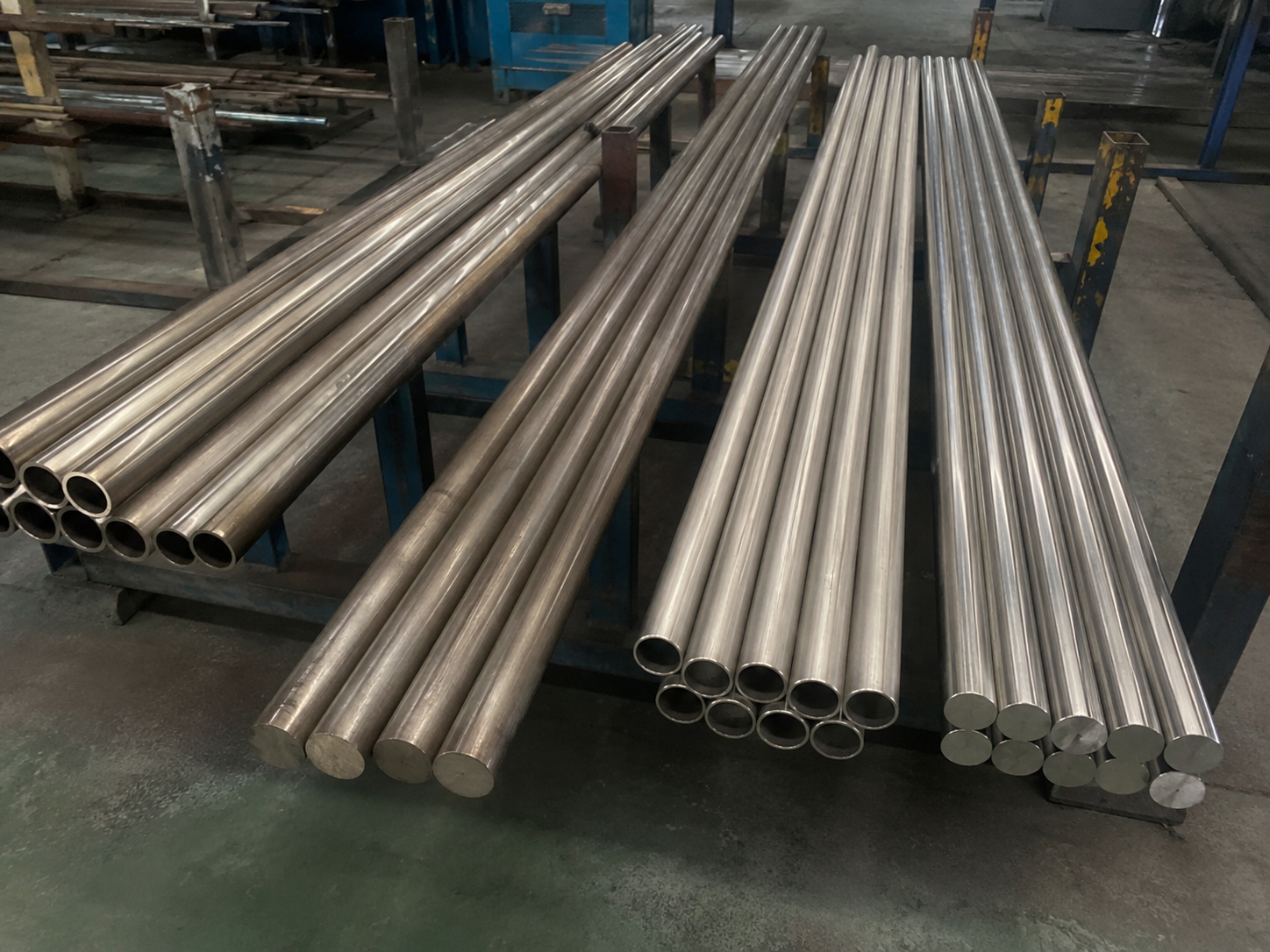
For engineers and procurement teams, the key question is not “Which tube is the most corrosion-resistant?” The better question is “Which tube material is suitable for this process fluid, this cleaning cycle, this surface requirement, this heat exchanger design, this documentation scope, and this compliance environment?”
Why Material Specifications Alone Are Not Enough
Material specifications are necessary, but they are not enough for pharmaceutical heat exchanger tube selection. A specification may define alloy grade, chemical composition, mechanical properties, dimensions, heat treatment, surface condition, and testing requirements. But it does not fully describe the real pharmaceutical process environment.
Buyers should confirm:
- Is the tube surface in direct product contact?
- Is the heat exchanger used for WFI, purified water, clean steam, product heating, product cooling, solvent service, or utility cooling?
- What media are on the tube side and shell side?
- What is the maximum operating temperature?
- What is the maximum operating pressure?
- What CIP chemicals are used?
- What SIP temperature and steam quality apply?
- Are chlorides, halides, acids, alkalis, solvents, or oxidizers present?
- What surface finish or Ra value is required?
- Is electropolishing required?
- Are welds, tube sheet joints, crevices, or dead zones present?
- What inspection, testing, and documentation are required?
ASME BPE covers requirements for the design of equipment used in bioprocessing, pharmaceutical and personal-care products industries, including materials, design, fabrication, inspections, testing and certification: ASME BPE Bioprocessing Equipment.
This is why tube selection should be based on service conditions, hygienic design, cleanability, documentation, and inspection—not only on a material name.
Product Side and Utility Side Must Be Separated
A pharmaceutical heat exchanger usually has at least two media: one on the tube side and one on the shell side. The material selection risk can be very different on each side.
| Side / Service | Common Media | Key Material Questions |
|---|---|---|
| Product side | Drug product, intermediate, buffer, solvent, organic acid, process fluid | Is the surface product-contact? Is the material non-reactive, non-additive and non-absorptive under the intended conditions? |
| WFI / purified water side | WFI, purified water, high-purity water | What surface finish, rouging control, cleaning and documentation are required? |
| Clean steam / SIP side | Clean steam, condensate, high-temperature cycles | Can the material and surface condition tolerate repeated thermal cycles and steam exposure? |
| Cooling water side | Cooling tower water, chilled water, process cooling water | Are chlorides, biocides, microbiological activity or deposits present? |
| CIP side | Caustic wash, acid rinse, oxidizing sanitizer, solvent cleaning | Are cleaning chemicals more aggressive than normal process media? |
| Utility side | Glycol, thermal fluid, plant steam, cooling water | What happens if leakage occurs between utility and product sides? |
Material selection should consider both normal operation and cleaning / sterilization conditions.
Is There One Best Corrosion-Resistant Tube for Every Pharmaceutical Use?
No. There is no single best corrosion-resistant tube for every pharmaceutical heat exchanger. The correct material depends on process media, product-contact requirement, temperature, pressure, CIP/SIP protocol, chlorides, acids, alkalis, solvents, surface finish, fabrication method, inspection scope, and lifecycle risk.
Different material families may be considered for different conditions.
| Material Family | Why Buyers May Consider It | Important Caution |
|---|---|---|
| 316L stainless steel | Widely used in hygienic and pharmaceutical systems; good general corrosion resistance in many clean services | May face pitting, crevice corrosion, rouging or chloride SCC risk under certain chloride, temperature, stagnant or stressed conditions |
| Duplex / super duplex stainless steel | Higher strength and improved chloride resistance in selected conditions | Hygienic design, weldability, surface finish, validation and product-contact suitability must be reviewed |
| Alloy 20 / 825 type alloys | May be reviewed for selected acid or chloride-containing service | Acid concentration, temperature, oxidizing / reducing condition and documentation must be checked |
| Alloy 625 | May be reviewed where strength and corrosion resistance are both required | Not universal; service chemistry, cost, availability and product standard must be confirmed |
| Alloy C-276 / C-22 type alloys | May be reviewed for aggressive chemical or mixed acid environments | Grade selection, welding, cleaning chemistry and cost must be reviewed |
| Titanium Grade 2 / Grade 7 / Grade 12 | May be reviewed for selected chloride-containing or high-purity water heat-transfer applications | Fluorides, reducing acids, crevice areas, galvanic effects and cleaning chemicals must be reviewed |
Nickel Institute notes that stainless steels, nickel alloys and other nickel-containing alloys are used extensively in chemical, pharmaceutical and petrochemical industries because of their corrosion resistance and mechanical properties: Nickel in Process Engineering.
Nickel Institute also describes Alloy C-276 as a well-known highly corrosion-resistant nickel alloy used for certain reducing acids and severe corrosive media: Nickel Alloys.
These references support material families as candidates, not automatic answers.
CIP and SIP Conditions Can Be More Important Than Normal Operation
Many pharmaceutical systems do not fail under normal product operation. The more demanding condition may be cleaning or sterilization.
Buyers should confirm:
- What CIP chemicals are used?
- What concentration is used?
- What is the CIP temperature?
- How long is the exposure time?
- How often does CIP occur?
- Is there acid rinse, caustic wash, oxidizing sanitizer or solvent cleaning?
- Is chloride present in cleaning water?
- What is the SIP temperature?
- How long is the system held under steam?
- Is clean steam dry, wet or carrying impurities?
- Are there stagnant zones after cleaning?
- Can residues concentrate in crevices or dead legs?
- Is passivation required after fabrication?
- Is electropolishing required?
A tube material should be reviewed across the full operating cycle, not only the production cycle.
Surface Finish, Cleanability and Hygienic Design Matter
In pharmaceutical heat exchangers, corrosion resistance is not the only concern. Cleanability, drainability, surface finish, weld quality and documentation may be equally important.
ASME BPE standardizes requirements for bioprocessing equipment and systems used where high purity and bioburden control are required. Its scope includes materials, design, fabrication, inspections, testing and certification: ASME BPE.
Buyers should confirm:
- Required surface finish
- Ra value
- Mechanical polishing requirement
- Electropolishing requirement
- Internal cleanliness
- Weld condition
- Dead-leg control
- Drainability
- Passivation requirement
- Tube sheet joint design
- Cleaning access
- Inspection method
- Documentation package
A material with good corrosion resistance may still be unsuitable if the surface condition, weld quality or hygienic design does not match the pharmaceutical process.
Common Corrosion and Failure Mechanisms to Review
Pharmaceutical heat exchanger tubes may face different corrosion and degradation mechanisms depending on process chemistry and cleaning cycles.
| Mechanism | Why It Matters | What Buyers Should Check |
|---|---|---|
| General corrosion | Uniform wall loss may reduce tube life | Process fluid, acid / alkali concentration, temperature |
| Pitting corrosion | Small pits can become leakage points | Chlorides, oxidizers, temperature, surface condition |
| Crevice corrosion | Can occur at tube sheet joints, deposits, gaskets or stagnant zones | Crevice design, deposits, cleaning residues |
| Chloride SCC | Cracking risk under tensile stress and chloride-containing environments | Chloride, temperature, residual stress, weld stress |
| Intergranular corrosion | May occur if heat treatment or fabrication is unsuitable | Alloy condition, welding, ASTM G28 if specified |
| Erosion-corrosion | Flow and particles may damage protective films | Flow velocity, suspended solids, turbulence |
| Under-deposit corrosion | Deposits may create localized chemistry | Fouling, cleaning frequency, dead zones |
| Rouging | Stainless steel water / steam systems may develop iron oxide films | WFI / clean steam conditions, passivation, maintenance |
| Galvanic corrosion | Dissimilar metals may interact in conductive fluids | Tube, tube sheet, fasteners and piping material compatibility |
AMPP defines stress corrosion cracking as cracking induced by the combined influence of tensile stress and a corrosive environment: AMPP Stress Corrosion Cracking.
ASTM G48 describes laboratory tests for comparing the resistance of stainless steels and related alloys to pitting and crevice corrosion initiation under specific ferric chloride test conditions: ASTM G48.
Testing is useful, but it should be selected according to the real application risk.
Important Tube Standards Buyers May Need to Confirm
When sourcing corrosion-resistant tubes for pharmaceutical heat exchangers, buyers should confirm the applicable product standard.
| Standard | Typical Scope | Common Relevance |
|---|---|---|
| ASTM B163 | Seamless nickel and nickel alloy tubes for condenser and heat-exchanger service | Nickel alloy heat exchanger tubes |
| ASTM B338 | Seamless and welded titanium alloy tubes for condensers, evaporators and heat exchangers | Titanium heat exchanger tubes |
| ASTM B622 | Seamless pipe and tube of nickel and nickel-cobalt alloys | C-276, C-22 and related nickel alloy seamless tubes |
| ASTM B444 | UNS N06625 and related nickel alloy seamless pipe and tube | Alloy 625 pipe and tube |
| ASME BPE | Bioprocessing equipment with high purity and hygienic requirements | Pharmaceutical / bioprocessing equipment design and documentation |
| EN 10204 | Metallic product inspection documents | MTC / inspection certificate requirements |
Useful references:
These standards help define product, design or documentation requirements. They do not prove that one tube material is suitable for every pharmaceutical heat exchanger.
How to Verify Supplier Claims
Supplier claims such as “pharma grade,” “high corrosion resistance,” “CIP resistant,” “SIP suitable,” “excellent for heat exchangers,” or “meets ASTM” should be verified with documents and application discussion.
Buyers should ask:
- Which alloy grade and UNS number are supplied?
- Which ASTM, ASME, EN, ISO or customer standard applies?
- Is the tube seamless or welded?
- What is the heat treatment condition?
- What surface finish is supplied?
- Is electropolishing required?
- Is the tube product-contact or utility-side only?
- What process media and cleaning chemicals were used for the recommendation?
- Are chlorides, halides, acids, alkalis, solvents and oxidizers considered?
- Are CIP and SIP cycles considered?
- Are pitting, crevice corrosion, SCC, rouging and under-deposit corrosion reviewed?
- Can the supplier provide MTC / MTR for the actual heat number?
- Can the material be traced back to the melt or batch?
- Are ECT, UT, hydrostatic test, dimensional inspection and surface inspection included?
- Can third-party inspection be arranged if required?
- Can the supplier explain where the proposed material should not be used?
A reliable supplier should explain limitations, not only advantages.
What Documents Should Buyers Request?
For corrosion-resistant tubes used in pharmaceutical heat exchangers, buyers may request:
- Material Test Certificate / Mill Test Report
- EN 10204 Type 3.1 or Type 3.2 certificate if required
- Heat number or batch number traceability
- Chemical composition report
- Mechanical properties report
- Heat treatment record if required
- Surface finish / Ra report if required
- Electropolishing record if required
- Passivation record if required
- Dimensional inspection report
- Surface inspection report
- Eddy current testing report if required
- Ultrasonic testing report if required
- Hydrostatic or pneumatic test report if required
- PMI report if required
- ASTM G48 or G28 report if specified
- Third-party inspection report if required
- Packing and marking records
EN 10204 defines inspection documents for metallic products. Type 3.1 is an inspection certificate in which the manufacturer declares that the products supplied comply with the order and provides test results: EN 10204 Inspection Documents.
Buyers should verify that the certificate matches the physical tubes: heat number, grade, standard, OD, wall thickness, length, test values, quantity, marking and purchase order.
Useful Testing and Inspection Methods
Testing requirements depend on product form, tube size, wall thickness, material grade, project standard and service risk.
| Test / Inspection | Purpose |
|---|---|
| Chemical analysis | Confirms alloy composition |
| Mechanical testing | Confirms tensile strength, yield strength, elongation or hardness if required |
| Dimensional inspection | Confirms OD, wall thickness, length, tolerance and straightness |
| Surface inspection | Checks scratches, pits, dents, cracks, scale or contamination |
| Surface roughness test | Confirms Ra value when required |
| PMI testing | Helps verify alloy identity |
| Eddy current testing | Commonly used for heat exchanger tube inspection |
| Ultrasonic testing | Helps detect discontinuities in suitable products |
| Hydrostatic / pneumatic testing | Helps verify pressure integrity when required |
| ASTM G48 | May support pitting / crevice corrosion comparison when specified |
| Third-party inspection | Adds independent verification for critical orders |
ASNT explains that eddy current testing is commonly used to inspect the condition of heat exchanger tubes and detect wall-thickness changes or defects: ASNT Electromagnetic Testing.
ASNT explains that ultrasonic testing uses high-frequency sound waves to detect and measure discontinuities in industrial components: ASNT Ultrasonic Testing.
ISO 9001 Is Useful, but Not Enough
ISO 9001 can support supplier evaluation, but it should not be treated as proof that a specific batch of tubes is suitable for a specific pharmaceutical heat exchanger.
ISO explains that ISO 9001 is a globally recognized quality management standard and helps organizations establish, implement, maintain and continually improve a quality management system: ISO 9001 Quality Management Systems.
For pharmaceutical heat exchanger tubes, buyers should still verify:
- Alloy grade
- Product standard
- Heat number
- Chemical composition
- Mechanical properties
- Tube size and tolerance
- Surface condition
- Surface finish requirement
- Inspection reports
- MTC / MTR
- Product-contact suitability
- Cleaning compatibility
- Third-party inspection if required
Quality management certification is helpful, but batch-level material verification and service-condition review are still necessary.
Lifecycle Cost: Why Initial Price Is Not Enough
The lowest purchase price is not always the lowest lifecycle cost. In pharmaceutical heat exchanger projects, the real cost may include inspection, documentation, validation support, installation, cleaning, sterilization, corrosion monitoring, leakage risk, product loss, downtime risk, replacement tubes, maintenance, spare parts and logistics.
NIST’s Life Cycle Cost Manual explains that lifecycle cost is the total cost of owning, operating, maintaining and disposing of a system over a given study period: NIST Life Cycle Cost Manual.
When comparing tube options, buyers should consider:
- Initial tube cost
- Alloy grade
- Product standard
- Surface finish requirement
- Testing and inspection cost
- Documentation requirement
- CIP/SIP compatibility
- Product-contact risk
- Cleaning and maintenance cost
- Leakage consequence
- Replacement difficulty
- Downtime risk
- Lead time
- Packing and shipping protection
- Spare tube strategy
- Failure consequence
A higher-cost alloy may be more economical in severe service if it reduces corrosion risk, inspection uncertainty, cleaning difficulty or replacement frequency. A lower-cost material may be acceptable in mild service. The correct decision depends on actual risk and lifecycle cost.
Practical RFQ Checklist for Pharmaceutical Heat Exchanger Tubes
Before sending an inquiry, buyers can prepare the following information:
- Equipment type: shell-and-tube heat exchanger, cooler, condenser, evaporator, WFI exchanger, clean steam condenser or custom unit
- Product-contact or utility-side application
- Tube side medium
- Shell side medium
- Process fluid chemistry
- Cooling water chemistry if applicable
- Chloride / halide level
- Acid, alkali, solvent or oxidizer exposure
- Operating temperature and maximum temperature
- Operating pressure and design pressure
- CIP chemicals, concentration, temperature and frequency
- SIP temperature, hold time and steam condition
- Cleaning water quality
- Surface finish / Ra requirement
- Electropolishing requirement if any
- Passivation requirement if any
- Heat exchanger design: straight tube, U-tube, tube sheet joint, welded or expanded joints
- Crevice areas, dead legs, drainability and cleanability concerns
- Required alloy grade and UNS number if known
- Required standard: ASTM B163, B338, B622, B444, ASME BPE, EN, ISO or customer specification
- Seamless or welded tube requirement
- OD, wall thickness, length, tolerance and quantity
- Heat treatment condition
- Required testing: ECT, UT, hydrostatic, pneumatic, PMI, G48, dimensional, surface inspection or third-party inspection
- Required certificate type: EN 10204 3.1 or 3.2
- Packing, end caps, cleanliness, marking and delivery requirement
A clear RFQ helps the supplier recommend a suitable corrosion-resistant tube instead of quoting a general “pharmaceutical heat exchanger tube.”
Conclusion
Corrosion-resistant tube selection for pharmaceutical heat exchangers should be based on process media, product-contact risk, CIP/SIP conditions, surface finish, hygienic design, alloy grade, product standard, testing scope, supplier documentation and lifecycle cost.