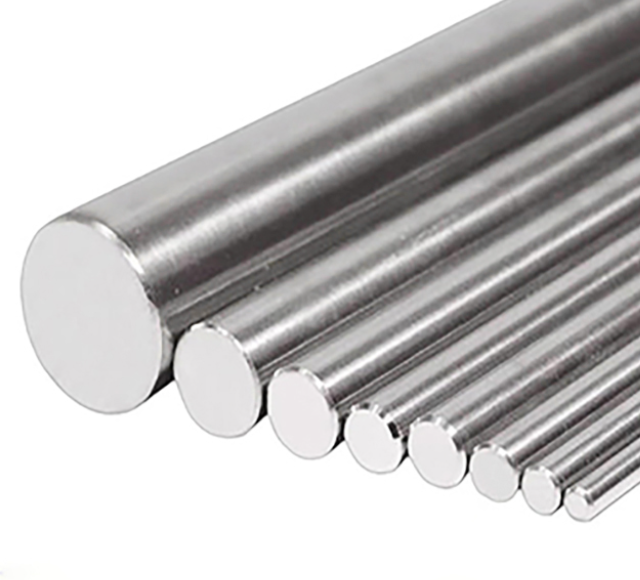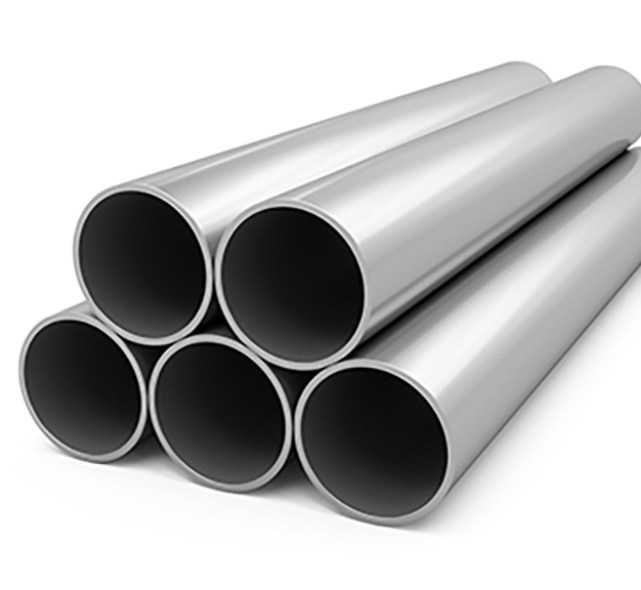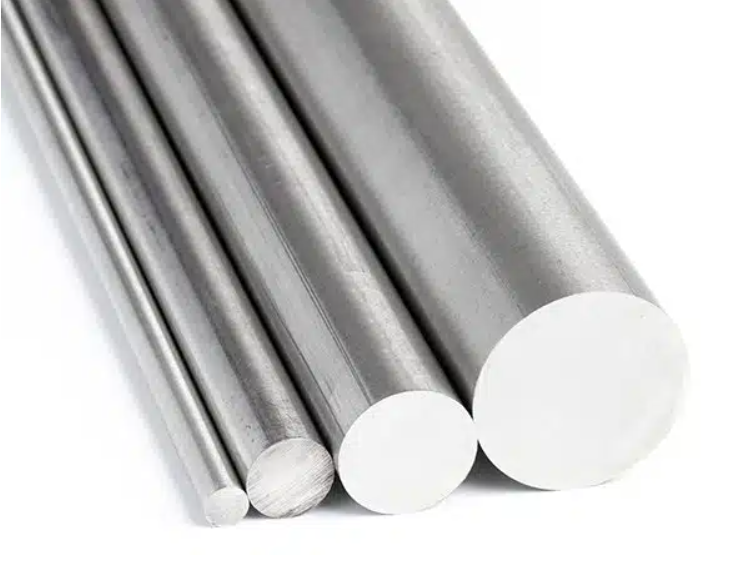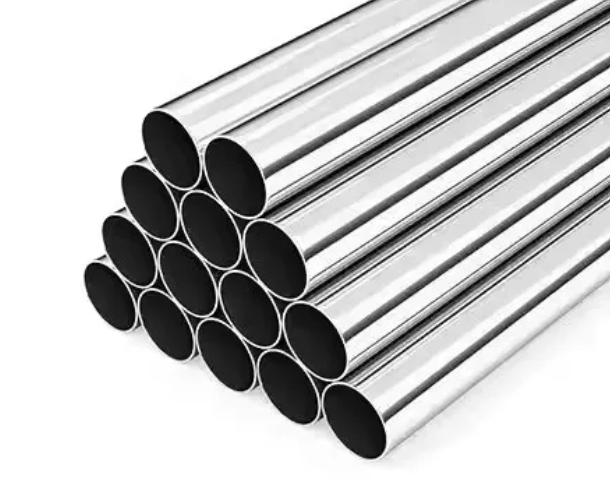

Machining Nickel and Titanium Alloys: What Buyers Should Confirm Before Ordering Tubes and Bars
Machining nickel and titanium alloys can be challenging because these materials are not ordinary steels or aluminum alloys. Their strength, heat resistance, corrosion resistance and low thermal conductivity may be useful in service, but these same properties can also affect machining, tool life, surface finish and production planning.
Before machining nickel alloy tubes, nickel alloy bars, titanium alloy tubes or titanium alloy bars, buyers should confirm the exact alloy grade, UNS number, product standard, heat treatment condition, hardness, size tolerance, straightness, surface condition, machining allowance, MTR/MTC, heat number and final application requirements. Nickel alloys such as Inconel can be difficult to machine because of work hardening, while Ti-6Al-4V has very low thermal conductivity, which contributes to its relatively poor machinability.
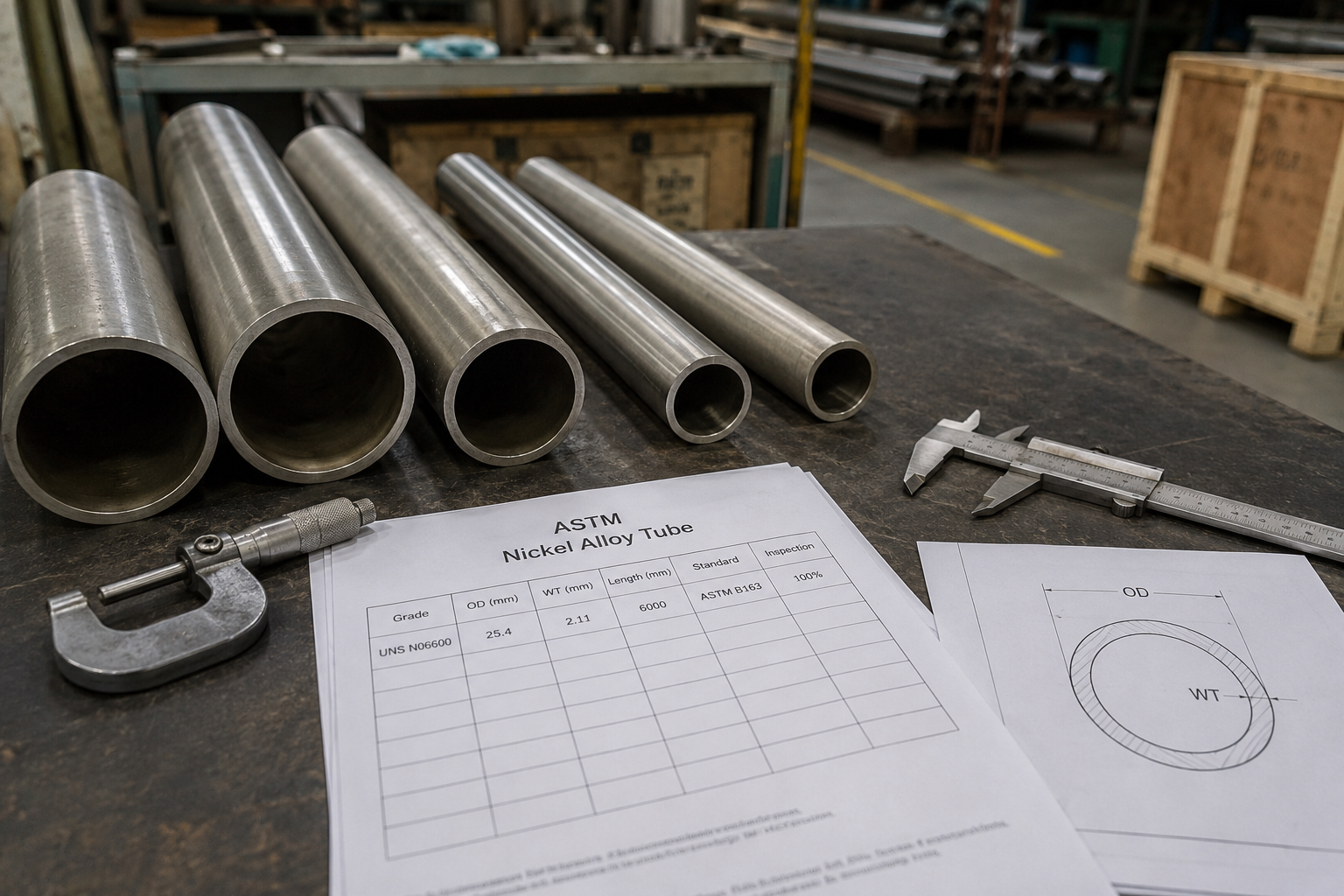
Successful machining starts before cutting begins. It starts with material selection, clear specifications, traceable documents and communication between the buyer, material supplier and machining shop.
This article explains what buyers should confirm before purchasing nickel or titanium alloy materials for machining.
Quick Checklist: What Should Buyers Confirm Before Machining?
| Item to Confirm | What Buyers Should Provide or Check | Why It Matters |
|---|---|---|
| Alloy Grade | Inconel 625, Inconel 718, Hastelloy C276, Titanium Grade 2, Titanium Grade 5, etc. | Different grades machine differently |
| UNS Number | N06625, N07718, N10276, R50400, R56400, etc. | Reduces grade confusion |
| Product Form | Tube, pipe, round bar, rod, billet, cut blank | Machining preparation depends on form |
| Product Standard | ASTM B637, ASTM B348, ASTM B444, AMS, ISO or customer standard | Defines material requirements |
| Heat Treatment Condition | Annealed, solution annealed, aged, stress relieved, cold worked | Strongly affects hardness and machinability |
| Hardness Range | HB, HRC, HV or project limit if required | Helps machining shop plan tooling |
| Size and Tolerance | OD, WT, diameter, length, straightness, ovality | Affects machining allowance and setup |
| Surface Condition | Pickled, polished, peeled, ground, black surface, bright finish | Affects first cutting pass and surface quality |
| Machining Allowance | Extra stock for turning, boring, facing, grinding or finishing | Prevents finished parts from being undersized |
| MTR/MTC | Actual chemistry, mechanical properties and standard compliance | Verifies batch-level material data |
| Heat Number | Same heat number on MTC, marking and packing list | Maintains traceability |
| Application | Aerospace, medical, chemical, marine, oil and gas, high-temperature | Determines surface integrity and inspection needs |
| Inspection Requirement | UT, PMI, dimensional report, hardness, third-party inspection if required | Reduces acceptance risk |
A vague request such as “nickel alloy bar for machining” is not enough for critical applications. The more complete the material information, the easier it is to plan machining and reduce risk.
Are All Nickel and Titanium Alloys the Same for Machining?
No. Nickel and titanium alloys are material families, not single materials. Each grade has its own chemistry, heat treatment, strength, hardness, thermal behavior and machining response.
Knowing the exact grade and supplied condition is fundamental. Inconel 718, Inconel 625, Hastelloy C276, Titanium Grade 2 and Ti-6Al-4V do not machine the same way. Even the same alloy can behave differently if it is annealed, cold worked, solution treated or aged.
Why Grade and Condition Matter
| Material / Condition | Machining Concern | Buyer Should Confirm |
|---|---|---|
| Inconel / Nickel Alloys | Work hardening, high cutting force, tool wear | Grade, heat treatment, hardness, machining allowance |
| Inconel 718 | High strength, precipitation-hardened condition, tool wear risk | Whether material is solution treated, aged or another condition |
| Inconel 625 | Corrosion-resistant nickel alloy with difficult machining behavior | Standard, condition, hardness, surface finish |
| Hastelloy C276 | Corrosion-resistant alloy; machining may require careful tool and coolant planning | Chemistry, condition, hardness, surface defects |
| Titanium Grade 2 | Lower strength than Grade 5 but still requires good heat control | Surface condition, cleanliness, dimensional tolerance |
| Ti-6Al-4V / Grade 5 | Low thermal conductivity and high strength-to-weight ratio | Grade, condition, hardness, surface integrity requirement |
| Titanium Grade 23 / ELI | Often used where cleanliness and documentation are important | ASTM/ISO/AMS requirement, MTR, surface condition |
Ti-6Al-4V is widely used in aerospace and biomedical applications, and its low thermal conductivity contributes to poor machinability. Inconel is also known as difficult to machine by traditional methods because of rapid work hardening.
What Material Properties Affect Machinability?
Machinability is influenced by more than hardness. Strength, work hardening, thermal conductivity, ductility, surface condition and heat treatment can all affect cutting performance.
| Property | Why It Matters in Machining | Buyer Should Check |
|---|---|---|
| Hardness | Higher hardness usually increases cutting force and tool wear | Hardness value or condition if required |
| Tensile Strength | High strength can increase cutting resistance | Tensile/yield values in MTR |
| Work Hardening | Rubbing or light cuts may harden the surface in some nickel alloys | Avoid vague machining assumptions |
| Thermal Conductivity | Low thermal conductivity keeps heat near the cutting zone | Cooling strategy and tool selection |
| Ductility | Can affect chip formation and burr formation | End-use and deburring requirement |
| Elastic Modulus | Lower modulus materials may deflect more during machining | Rigidity, support and tolerance |
| Surface Condition | Scale, pits, roughness or scratches may affect first-pass machining | Pickled, peeled, ground or polished condition |
| Heat Treatment | Aged or cold-worked material may machine differently from annealed material | Supplied condition and hardness |
| Internal Soundness | Internal flaws may affect critical machined parts | UT or other NDT if required |
| Straightness | Important for long bars, shafts and precision machining | Straightness tolerance |
Surface integrity refers to the surface condition after manufacturing or machining. It can affect part function, and machining variables can influence residual stress, roughness, cracks and other surface-layer characteristics.
Why Does the Final Application Affect Machining Requirements?
The machining plan should be connected to how the final part will be used. A part for aerospace, medical, chemical processing or marine service may need more than basic dimensional accuracy.
Application context helps determine the required surface finish, burr control, residual stress control, cleanliness, documentation and inspection level. A dimensionally correct part may still be unacceptable if surface integrity, traceability or material condition does not match the application.
Application-Based Machining Concerns
| Application | Buyer Concern | Machining / Material Requirement |
|---|---|---|
| Aerospace | Fatigue, traceability, surface integrity, strict documentation | Grade, heat treatment, AMS/ASTM standard, MTR, surface finish, NDT if required |
| Medical Equipment / Implants | Biocompatibility, cleanliness, burr control, surface condition | Titanium grade, certificate, surface quality, contamination control |
| Chemical Processing | Corrosion resistance and surface defects | Correct alloy, clean surface, no harmful contamination, MTC traceability |
| Marine Engineering | Chloride corrosion, galvanic compatibility, surface damage | Alloy selection, finish, clean packing, heat number control |
| Oil and Gas | Pressure, corrosion, fatigue, cracking risk | Mechanical properties, NDT, dimensional control, application review |
| High-Temperature Parts | Creep, oxidation, strength at temperature | Nickel alloy grade, heat treatment, stress-rupture data if required |
| Precision Machined Components | Tolerance, straightness, surface roughness | Machining allowance, bar straightness, diameter tolerance |
For titanium used in biomedical applications, titanium biocompatibility is closely related to corrosion resistance and surface characteristics. For corrosive or cyclic-load environments, buyers may also need to consider risks such as stress corrosion cracking or corrosion fatigue, depending on alloy, environment and stress.
What Can a Material Supplier Support — and What Should the Machining Shop Decide?
This is an important boundary for buyers. A material supplier can support material selection, documentation and supply condition, but the machining shop is responsible for the actual cutting process.
Responsibility Boundary
| Topic | Material Supplier Can Support | Machining Shop Should Decide |
|---|---|---|
| Alloy Selection | Grade, UNS number, standard and typical application review | Final approval based on part design |
| Material Condition | Annealed, solution annealed, aged, cold worked, hardness data | Whether condition is suitable for machining strategy |
| Documents | MTR/MTC, heat number, inspection reports | Whether extra incoming inspection is needed |
| Size and Allowance | OD, WT, diameter, length, cut-to-length blanks | Final machining allowance and fixture planning |
| Surface Condition | Pickled, polished, peeled, ground, bright or black surface | Final surface finish and surface roughness process |
| Inspection | UT, PMI, dimensional report if required | Final part inspection and dimensional acceptance |
| Packaging | End protection, anti-scratch packing, separate heats | Handling before machining |
| Cutting Parameters | General material information | Tooling, speed, feed, depth of cut, coolant, fixture and process route |
Buyers should not ask the material supplier to guarantee final machining results unless the supplier is also responsible for machining. Instead, buyers should ask the supplier for complete material data so that the machining shop can design the process correctly.
What Should Buyers Ask the Material Supplier Before Machining?
Clear communication with the material supplier helps the machining shop understand what material it will receive. It also helps avoid mismatch between material condition and machining plan.
Supplier Questions for Machining Preparation
| Category | Question to Ask | Why It Matters |
|---|---|---|
| Material Identity | What is the exact grade and UNS number? | Avoids grade substitution |
| Standard | Which ASTM, AMS, ISO, EN or customer standard applies? | Defines material acceptance |
| Heat Treatment | Is the material annealed, solution annealed, aged, stress relieved or cold worked? | Affects hardness and cutting behavior |
| Hardness | Can you provide actual or typical hardness data? | Helps machining shop plan tooling |
| MTR/MTC | Can you provide an MTR/MTC for the supplied heat? | Verifies actual chemistry and mechanical data |
| Heat Number | Will the heat number appear on material marking and packing list? | Supports traceability |
| Surface Condition | Is the material peeled, ground, pickled, polished or black surface? | Affects first cut and finish |
| Straightness | What straightness tolerance can be supplied? | Important for long bars and shafts |
| Cut Length | Can you provide cut-to-length blanks with machining allowance? | Reduces buyer-side cutting work |
| NDT | Is UT, ET or PMI available if required? | Supports critical part acceptance |
| Packing | How will material be protected from scratches and contamination? | Reduces receiving damage |
| Technical Support | Can you help review grade, standard, condition and certificate scope? | Reduces RFQ misunderstanding |
A Mill Test Report or Material Test Certificate certifies chemical and physical properties and states compliance with applicable standards. A heat number links the metal product to a specific batch or heat, allowing traceability to composition, manufacturing process and quality records.
What Standards and Documents Are Useful Before Machining?
Material standards and documents help buyers confirm that the material is suitable for the intended machining and final use.
| Standard / Document | Why It Matters |
|---|---|
| ASTM B637 | Covers precipitation-hardenable nickel alloy rods, bars, forgings and forging stock for moderate or high-temperature service; includes chemical analysis, heat treatment, tension, hardness and stress-rupture testing requirements |
| ASTM B348/B348M | Covers titanium and titanium alloy bars and billets; includes chemical composition and tensile property requirements |
| Mill Test Report / MTC | Certifies batch-level chemical and physical properties |
| Heat Number | Links material to a specific heat or batch |
| ISO 9001 | Quality management system standard; supports process management but does not replace batch-level material evidence |
| ISO/IEC 17025 | Sets requirements for testing and calibration laboratory competence, impartiality and consistent operation |
| Dimensional Report | Confirms OD, WT, diameter, length and tolerance |
| Hardness Report | Helps machining planning when hardness is critical |
| UT / PMI Report | Supports internal soundness and alloy identity checks if required |
For nickel alloy bars used in high-temperature or critical components, ASTM B637 may be relevant. For titanium alloy bars and billets, ASTM B348/B348M may be relevant. Buyers should still confirm the exact standard, edition and customer drawing requirements.
How Can Buyers Prepare for Common Machining Risks?
Nickel and titanium alloy machining risk should be managed before production begins. The buyer does not need to design the cutting process, but should provide the machining shop with complete material information.
Common Risks and Practical Controls
| Machining Risk | Why It Happens | Practical Control |
|---|---|---|
| Rapid Tool Wear | High strength, heat concentration, work hardening or tool-workpiece interaction | Confirm grade, hardness and condition; use suitable tooling plan |
| Heat Concentration | Low thermal conductivity, especially in titanium alloys | Plan coolant strategy and cutting parameters carefully |
| Work Hardening | Some nickel alloys harden during cutting if rubbed or cut improperly | Avoid vague machining assumptions; follow grade-specific recommendations |
| Built-Up Edge | Material can accumulate on the cutting edge under some conditions | Use proper speed, feed, tool geometry and lubrication strategy |
| Poor Surface Finish | Tool wear, chatter, built-up edge or wrong parameters | Confirm surface finish requirement and inspection method |
| Chatter / Vibration | Low rigidity, long overhang, material deflection | Use rigid setup and suitable machining allowance |
| Residual Stress | Machining heat, deformation or prior processing | Consider stress relief or finishing process if required |
| Microcracks / Surface Damage | Improper parameters or surface overheating | Control surface integrity for critical applications |
| Burrs | Ductile materials and cutting geometry | Define deburring and edge condition requirements |
| Wrong Material Condition | Heat treatment not clearly specified | Confirm condition and hardness before machining |
Built-up edge can affect surface finish and dimensional control because accumulated material changes tool geometry. Cutting fluid can help remove heat, reduce friction and reduce tool wear in production machining, but the coolant choice should still match the alloy, process and cleanliness requirement.
What Claims Should Buyers Verify Before Purchasing Material for Machining?
Material marketing claims should be checked carefully. A claim such as “easy to machine” or “superior machinability” is not enough unless it is supported by material condition, hardness, standard, data sheet or prior process experience.
Claims to Verify
| Supplier Claim | What Buyers Should Ask For |
|---|---|
| “Good machinability” | Compared with which alloy? In what condition? With what hardness? |
| “ASTM material” | Exact ASTM standard, grade, UNS number and MTR/MTC |
| “Titanium Grade 5” | UNS R56400, standard, heat treatment and chemistry |
| “Inconel 718” | UNS N07718, condition, hardness, standard and MTR |
| “Annealed material” | Heat treatment record or MTC condition |
| “Precision bar” | Diameter tolerance, straightness, surface finish and length tolerance |
| “Suitable for aerospace” | AMS/customer standard, traceability, special testing and approval |
| “Medical grade titanium” | Applicable ASTM/ISO standard, grade, cleanliness and certificate |
| “No defects” | Inspection method, UT/ET/visual report if required |
| “Third-party tested” | Test report, laboratory name, accreditation and sample identity |
A reliable supplier should be able to provide clear documents, not only general descriptions.
What Information Should Buyers Send to a Machining Shop?
The machining shop needs more than the alloy name. Providing complete information helps them plan tools, fixtures, cutting strategy, inspection and cost.
Machining Information Checklist
| Information | Example |
|---|---|
| Material Grade | Inconel 718, Inconel 625, Hastelloy C276, Titanium Grade 2, Ti-6Al-4V |
| UNS Number | N07718, N06625, N10276, R50400, R56400 |
| Material Form | Round bar, tube, pipe, billet, cut blank |
| Supplied Size | OD, WT, diameter, length |
| Heat Treatment | Annealed, solution annealed, aged, stress relieved |
| Hardness | Actual or required hardness |
| Surface Condition | Ground, peeled, polished, pickled, black surface |
| Final Part Drawing | Dimensions, tolerances, thread, holes, grooves, surface finish |
| Machining Allowance | Extra stock for turning, boring, facing or grinding |
| Critical Features | Sealing surface, fatigue-critical area, weld end, bearing surface |
| Application | Aerospace, medical, chemical, marine, oil and gas |
| Inspection Requirement | Dimensional, hardness, PMI, surface roughness, NDT |
| Documents | MTR/MTC, heat number, certificate type, test report |
Material suppliers and machining shops should work together when parts are critical, expensive or difficult to machine.
RFQ Checklist for Nickel and Titanium Alloy Materials for Machining
Buyers can use the following checklist when ordering materials that will be machined later.
| RFQ Item | What to Provide |
|---|---|
| Material Family | Nickel alloy or titanium alloy |
| Alloy Grade | Inconel 625, Inconel 718, Hastelloy C276, Titanium Grade 2, Titanium Grade 5 |
| UNS Number | N06625, N07718, N10276, R50400, R56400 |
| Product Form | Tube, pipe, round bar, billet, rod, cut blank |
| Standard | ASTM B637, ASTM B348, ASTM B444, AMS, ISO, EN or customer specification |
| Size | OD × WT, diameter, length, cut length |
| Machining Allowance | Extra material for final machining |
| Tolerance | Diameter, OD, WT, length, straightness, ovality |
| Heat Treatment | Annealed, solution annealed, aged, stress relieved, cold worked |
| Hardness Requirement | Required or maximum hardness if important |
| Surface Condition | Pickled, peeled, ground, polished, bright, black surface |
| Cut-to-Length Requirement | Fixed length, blank length, end condition |
| End Condition | As-cut, deburred, chamfered, faced, capped |
| Application | Aerospace, medical, chemical, marine, oil and gas, power generation |
| Testing | Chemical, tensile, hardness, UT, PMI, dimensional inspection |
| Certificate | MTR/MTC, EN 10204 3.1, EN 10204 3.2, CoC |
| Traceability | Heat number marking and packing list |
| Packaging | Wooden case, separate heats, anti-scratch protection, end caps |
| Delivery Terms | Quantity, Incoterms, destination, schedule |
A complete RFQ helps reduce misunderstanding, rework and machining delays.
How Can Emily PIPE Support Buyers Preparing for Machining?
Emily PIPE supplies nickel alloy tubes, nickel alloy bars, titanium alloy tubes and titanium alloy bars for global industrial customers. We support standard and customized specifications according to drawings, technical requirements and application environments.
For machining-related material supply, we can help review:
- nickel alloy and titanium alloy grade selection
- UNS number and equivalent grade confirmation
- ASTM / ASME / EN / ISO / AMS standard requirements
- tube OD, wall thickness, length and tolerance
- bar diameter, straightness, cut length and machining allowance
- heat treatment condition
- hardness and mechanical property requirements
- surface condition and end protection
- MTR/MTC and heat number traceability
- UT, PMI, hardness and dimensional inspection requirements
- cut-to-length blanks for machining preparation
- marking, packaging and export documentation
We recommend confirming grade, condition, hardness, tolerance and certificate requirements before ordering. This helps the machining shop receive material that matches the planned process.
Conclusion
Machining nickel and titanium alloys requires more than skilled cutting. It starts with correct material selection, clear grade identification, suitable heat treatment condition, traceable documents and complete supplier communication.
Nickel alloys may involve work hardening, high strength and tool wear risks. Titanium alloys may involve heat concentration, surface integrity requirements and strict cleanliness or traceability needs in critical applications. Buyers should not rely only on general material names such as “nickel alloy” or “titanium alloy.”
If you are sourcing nickel alloy tubes, nickel alloy bars, titanium alloy tubes or titanium alloy bars for machining, you can send us your material grade, UNS number, standard, size, heat treatment condition, hardness requirement, machining allowance, testing requirement and certificate type. Our team can help review the material scope and provide a quotation based on your project needs.