
How to Choose Nickel and Titanium Alloys for Working Conditions: A Buyer’s Guide
Are you trying to choose the right nickel alloy or titanium alloy for a demanding application? Many buyers ask for a quick material recommendation based on only temperature, pressure or corrosion resistance. However, material selection is rarely that simple.
Choosing a suitable alloy for specific working conditions requires a structured review of application environment, material properties, product form, standards, inspection requirements, availability and long-term risk. Material selection should consider performance goals, material properties, cost and working conditions, not only one basic parameter.
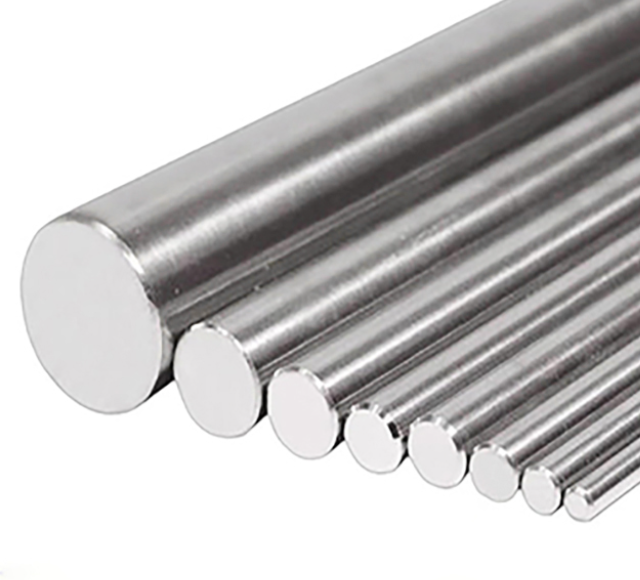
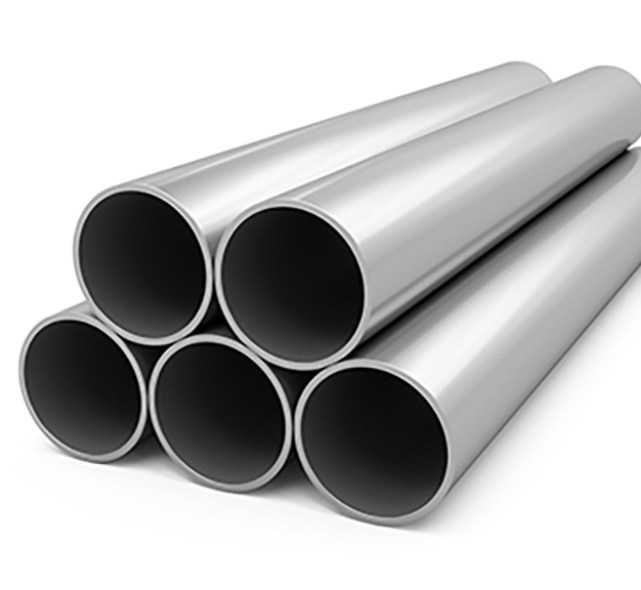
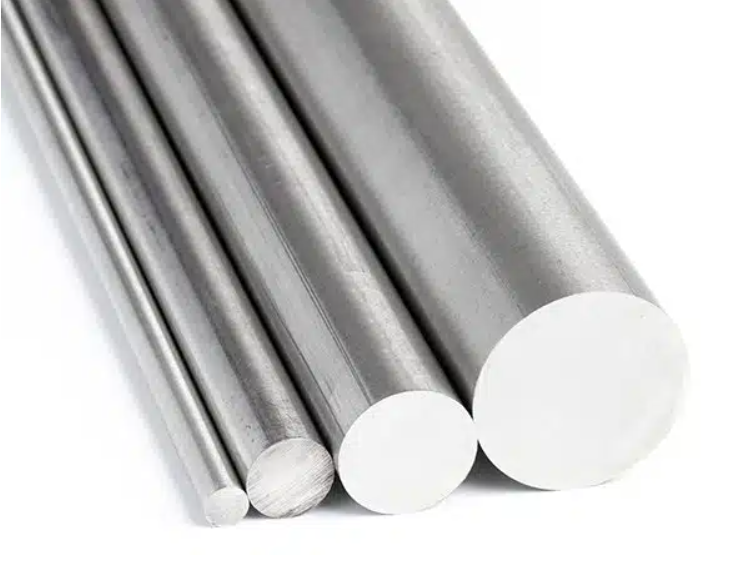
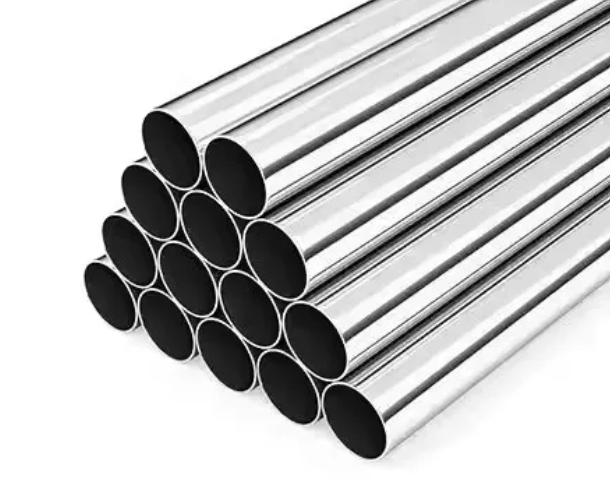
For nickel alloy tubes, nickel alloy bars, titanium alloy tubes and titanium alloy bars, a good material choice should answer more than:
What temperature and pressure can this material handle?
A better question is:
Which alloy grade, UNS number, product standard, condition, inspection scope and documentation package match the real service environment?
This article explains what buyers should confirm before asking a supplier to recommend nickel or titanium alloy materials.
Quick Answer: Why Is Material Recommendation Not a Simple One-Line Answer?
Material recommendation is not a one-line answer because working conditions are usually more complex than they appear.
| Buyer Input | Why It Is Not Enough | What Should Be Added |
|---|---|---|
| Temperature only | Temperature affects strength, oxidation, creep and thermal cycling differently | Continuous or cyclic temperature, exposure time, atmosphere |
| Pressure only | Pressure does not show corrosion, fatigue or vibration risk | Internal pressure, external load, stress cycles |
| Chemical name only | Corrosion depends on concentration, pH, temperature and impurities | Concentration, pH, chloride, oxygen, contaminants |
| “Corrosion resistant” only | Corrosion has many forms | Pitting, crevice corrosion, SCC, galvanic corrosion, erosion-corrosion |
| “High strength” only | Strength does not prove fatigue, creep or corrosion resistance | Load type, design stress, temperature, cycles |
| Alloy trade name only | Trade names can be used loosely | UNS number, ASTM / ASME / EN / ISO standard |
| Datasheet value only | Datasheet values may not represent your exact batch or condition | MTR/MTC, heat number, supplied condition |
| Lowest price only | Low initial cost may increase maintenance or replacement risk | Total cost, service life, downtime risk |
A supplier can help narrow the material options, but the final material selection should be approved by the project engineer, design team or end user according to the application requirements.
Why Are “Working Conditions” Not Enough for Material Selection?
Working conditions are important, but they must be complete and specific.
Temperature and pressure are only part of the selection process. Buyers should also define chemical exposure, concentration, pH, chloride level, oxygen level, flow velocity, stress, fatigue, vibration, fabrication method, welding, maintenance and expected service life.
Basic Conditions vs Complete Application Data
| Basic Information | Missing Risk if Used Alone | Better Information to Provide |
|---|---|---|
| 500°C temperature | Does not show exposure time, atmosphere or thermal cycling | Maximum/minimum temperature, continuous or cyclic service, gas/liquid environment |
| 200 bar pressure | Does not show stress cycles, fatigue or safety factor | Pressure range, pressure fluctuation, vibration, design code |
| Acid service | Acid type and concentration change corrosion behavior | Acid name, concentration, pH, impurities and temperature |
| Seawater service | Chloride, flow, deposits and galvanic contact matter | Chloride level, flow velocity, stagnant areas, contact metals |
| High strength needed | Strength alone does not prove corrosion or fatigue suitability | Yield strength, tensile strength, fatigue, temperature and corrosion review |
| Heat exchanger tube | Different media may attack different sides of tube | Tube-side media, shell-side media, temperature difference, flow and cleaning method |
| Medical equipment | Material grade alone may not be enough | Biocompatibility requirement, surface finish, cleanliness and certificate |
| Aerospace part | Application may require special standards and traceability | AMS / ASTM standard, heat treatment, NDT, documentation and approval process |
In passivated materials, corrosion resistance can be reduced if the passive film is damaged or cannot reform properly. This may lead to pitting corrosion, crevice corrosion or stress corrosion cracking under certain chemical or mechanical conditions. Corrosion and stress corrosion cracking are highly dependent on the alloy-environment-stress combination.
What Failure Modes Should Buyers Consider?
A material that looks suitable on a datasheet may still fail if the real failure mode was not considered.
Common Failure Modes
| Failure Mode | What It Means | Buyer Should Confirm |
|---|---|---|
| General Corrosion | Uniform material loss over the surface | Media, concentration, temperature, corrosion allowance |
| Pitting Corrosion | Localized small pits, often in chloride environments | Chloride level, oxygen, stagnant areas, surface condition |
| Crevice Corrosion | Local attack in gaps, deposits or shielded areas | Gaskets, deposits, tube supports, stagnant fluid |
| Stress Corrosion Cracking (SCC) | Cracking under tensile stress in a specific corrosive environment | Stress, residual stress, media, temperature |
| Galvanic Corrosion | Dissimilar metals connected in electrolyte corrode unevenly | Contact metals, electrolyte, insulation method |
| Erosion-Corrosion | Flow or particles remove protective surface and metal | Flow velocity, slurry, particles, turbulence |
| Fatigue | Crack initiation and growth under cyclic loading | Vibration, pressure cycles, rotating load |
| Creep | Slow deformation under long-term stress at elevated temperature | Temperature, load, exposure time |
| Oxidation / Scaling | Surface reaction at high temperature | Gas atmosphere, temperature, time |
| Hydrogen Embrittlement | Hydrogen-assisted loss of ductility in sensitive materials | Sour service, pickling, plating, hydrogen exposure |
| Fabrication-Related Failure | Welding, bending or machining affects performance | Heat treatment, residual stress, surface finish |
Fatigue is the initiation and propagation of cracks under cyclic loading. Creep is time-dependent deformation under long-term stress, especially at elevated temperature. These mechanisms show why material selection must consider time, stress and operating cycles, not only static strength.
How Do Specific Application Requirements Shape Material Choices?
Application requirements define which combination of properties is needed.
Different applications may require different balances of corrosion resistance, strength, creep resistance, fatigue resistance, weldability, machinability, cleanliness, surface finish, availability and certificate requirements.
Application-Based Selection Factors
| Application | Key Working Conditions | Material Selection Focus |
|---|---|---|
| Chemical Processing | Acids, alkalis, chlorides, solvents, temperature | Corrosion type, pH, concentration, compatibility |
| Oil and Gas | Pressure, sour service, chloride, erosion, fatigue | Strength, corrosion resistance, NDT, traceability |
| Marine Engineering | Seawater, chloride, flow, galvanic contact | Pitting, crevice corrosion, galvanic control |
| Heat Exchangers | Tube-side and shell-side media, temperature difference, flow | Tube material, wall thickness, surface condition |
| Aerospace | High strength, fatigue, temperature, strict traceability | Grade, heat treatment, AMS / ASTM standard, NDT |
| Power Generation | High temperature, pressure, steam, oxidation | Creep, oxidation resistance, pressure integrity |
| Medical Equipment | Biocompatibility, cleanliness, surface finish | Titanium grade, certificate, surface condition |
| Mining | Abrasion, slurry, corrosion, impact | Wear, corrosion, strength, maintenance interval |
| Nuclear | High reliability, documentation, corrosion and temperature | Standard, traceability, inspection, regulatory requirement |
Example: “Corrosion Resistance” Is Not Specific Enough
| Buyer Says | Supplier Still Needs to Know |
|---|---|
| “Need corrosion resistance” | What media? What concentration? What temperature? |
| “Used in acid” | Which acid? Oxidizing or reducing? pH? Impurities? |
| “Used in seawater” | Flowing or stagnant? Chloride level? Galvanic contact? |
| “Used in heat exchanger” | Tube-side and shell-side media? Cleaning method? Temperature difference? |
| “Used at high temperature” | How long? Under stress? In air, steam, vacuum or gas? |
| “Used under load” | Static load, cyclic load, vibration or impact? |
This is why a good material recommendation should start with application details, not only a material name.
Which Nickel Alloys May Be Considered?
The right nickel alloy depends on corrosion environment, temperature, strength and product form. The following table is only a starting point.
| Nickel Alloy | Common Buyer Interest | Selection Notes |
|---|---|---|
| Inconel 625 / UNS N06625 | Corrosion resistance, seawater, chemical processing, elevated temperature | Check ASTM B444 for seamless pipe/tube; confirm media, temperature and test scope |
| Inconel 718 / UNS N07718 | High strength, aerospace, high-stress parts | Confirm heat treatment, strength, fatigue and applicable bar/forging standard |
| Inconel 600 / UNS N06600 | High temperature, oxidation, furnace and process equipment | Confirm temperature, atmosphere and product form |
| Hastelloy C276 / UNS N10276 | Severe corrosion, chemical processing | Confirm acid type, chloride, temperature and product standard |
| Hastelloy C22 / UNS N06022 | Oxidizing/reducing media, chemical service | Confirm exact media and availability |
| Alloy 825 / UNS N08825 | Acid and chloride-containing environments | Confirm concentration, pH and temperature |
| Monel 400 / UNS N04400 | Marine, seawater and some chemical environments | Confirm galvanic contact and service media |
| Nickel 200 / UNS N02200 | Caustic or pure nickel requirement | Confirm chemical media and temperature limits |
For nickel alloy seamless pipe and tube such as UNS N06625, ASTM B444 covers nickel-chromium-molybdenum alloy pipe and tube products, including chemical, tensile, hydrostatic and nondestructive electric testing requirements.
Which Titanium Alloys May Be Considered?
Titanium alloys are often selected when buyers need corrosion resistance, low density, strength-to-weight ratio or biocompatibility. Final selection depends on grade, product form, standard and environment.
| Titanium Grade | Common Buyer Interest | Selection Notes |
|---|---|---|
| Titanium Grade 2 / UNS R50400 | General corrosion resistance, heat exchanger tubes, chemical and marine service | Common commercially pure titanium grade; confirm ASTM B338 for tubes or ASTM B348 for bars |
| Titanium Grade 5 / Ti-6Al-4V / UNS R56400 | Higher strength, aerospace, medical and structural parts | Confirm strength, heat treatment, standard and application approval |
| Titanium Grade 7 / UNS R52400 | More demanding corrosion conditions than Grade 2 in some applications | ASTM B338 lists Grade 7 as titanium with palladium addition; final selection should follow corrosion review |
| Titanium Grade 12 / UNS R53400 | Corrosion resistance and strength balance | Confirm media, temperature and product form |
| Titanium Grade 23 / Ti-6Al-4V ELI / UNS R56407 | Medical and critical applications | Confirm certificate, surface condition and applicable medical/aerospace standard |
ASTM B338 covers seamless and welded titanium and titanium alloy tubes for condensers, evaporators and heat exchangers. ASTM B348/B348M covers annealed titanium and titanium alloy bars and billets, including chemical composition and tensile property requirements.
What Role Do Standards Play in Material Selection?
Standards help define material scope, test requirements and acceptance criteria. However, a standard alone does not automatically prove that a material is suitable for every working condition.
| Standard / Document | Product or Purpose | Why It Matters |
|---|---|---|
| ASTM B444 | UNS N06625 and related nickel alloy seamless pipe and tube | Useful for Inconel 625-type pipe/tube orders |
| ASTM B338 | Seamless and welded titanium alloy tubes for condensers and heat exchangers | Useful for titanium heat exchanger tube orders |
| ASTM B348/B348M | Titanium and titanium alloy bars and billets | Useful for titanium bar/billet orders |
| ASTM / ASME / EN / ISO / AMS | Product, test or industry requirements | Defines procurement and acceptance scope |
| MTR / MTC | Batch-level material test certificate | Shows actual chemistry and mechanical data |
| Heat Number | Traceability identifier | Links physical material to batch records |
| ISO 9001 | Quality management system | Supports supplier process control |
| ISO/IEC 17025 | Testing and calibration laboratory competence | Supports confidence in test results |
A material standard should be combined with real application data and project requirements.
What Role Do Supply Chain and Long-Term Costs Play?
Material selection is not only a technical decision. It is also a practical procurement and lifecycle decision.
Initial material price is only one part of the decision. Availability, lead time, manufacturability, testing, certification, maintenance, downtime and replacement risk can all affect total project cost. Total cost of ownership considers direct and indirect costs beyond the initial purchase price.
Practical Commercial Factors
| Factor | Why Buyers Should Consider It |
|---|---|
| Availability | A theoretically ideal alloy may delay the project if it is not available |
| Lead Time | Special grades, sizes or certificates may require more production time |
| Minimum Order Quantity | Rare grades may require MOQ or mill run |
| Product Form | Tube, pipe, bar, billet or cut blank availability differs |
| Manufacturability | Some alloys or dimensions require more difficult processing |
| Testing Requirement | NDT, corrosion tests or third-party inspection can add cost and time |
| Certificate Requirement | EN 10204 3.1/3.2, MTC or customer approval affects document scope |
| Maintenance Cost | Lower initial price may create higher service cost if material is unsuitable |
| Replacement Risk | Downtime, disassembly and replacement may cost more than material price |
| Logistics | Export packing, shipping mode and destination affect final delivery |
A higher initial material cost may be justified when it reduces failure risk, replacement frequency or downtime.
How Can Buyers Verify Supplier Claims?
Supplier claims should be verified with standards, documents, test reports and traceability.
A Mill Test Report or Material Test Certificate certifies chemical and physical properties and states compliance with applicable standards. A heat number links a metal product to a specific batch or heat, supporting traceability to composition, manufacturing process and quality records.
Supplier Claim Verification Checklist
| Supplier Claim | What Buyers Should Ask For |
|---|---|
| “This alloy is suitable for your application.” | Which working conditions were reviewed? What failure modes were considered? |
| “ASTM material.” | Exact ASTM standard, grade, UNS number and product form |
| “Corrosion resistant.” | Resistant to which media, concentration and temperature? |
| “High-temperature material.” | Continuous or cyclic temperature? Under load? In what atmosphere? |
| “Medical grade titanium.” | Applicable standard, grade, certificate and surface condition |
| “Aerospace grade.” | AMS / ASTM / customer standard, heat treatment, traceability and approval |
| “In stock.” | Actual size, heat number, quantity, certificate and photos if needed |
| “Can provide certificate.” | MTR/MTC, EN 10204 3.1, EN 10204 3.2 or CoC? |
| “Tested material.” | Test type, report, laboratory and sample identity |
| “Equivalent grade.” | Written approval from buyer/project engineer if substitution is allowed |
ISO 9001 is a globally recognized quality management standard that helps organizations establish, implement, maintain and improve a QMS. ISO/IEC 17025 sets requirements for the competence, impartiality and consistent operation of testing and calibration laboratories.
What Should Buyers Tell the Supplier Before Asking for a Recommendation?
A good recommendation starts with good input.
Material Recommendation RFQ Checklist
| RFQ Item | Information to Provide |
|---|---|
| Material Family | Nickel alloy or titanium alloy |
| Current Material Used | If replacing an existing material, provide current grade and problem |
| Target Alloy Grade | If already known: Inconel 625, Hastelloy C276, Titanium Grade 2, etc. |
| UNS Number | N06625, N10276, R50400, R56400, etc. |
| Product Form | Tube, pipe, round bar, billet, cut blank |
| Standard | ASTM, ASME, EN, ISO, AMS or customer specification |
| Size | OD, WT, ID, diameter, length, tolerance |
| Operating Temperature | Maximum, minimum, continuous or cyclic |
| Pressure / Load | Internal pressure, external load, vibration, cyclic stress |
| Chemical Media | Chemical name, concentration, pH, chloride, oxygen, impurities |
| Flow Condition | Static, high velocity, slurry, particles, erosion risk |
| Contact Materials | Other metals in contact, galvanic corrosion risk |
| Expected Service Life | Design life or maintenance interval |
| Fabrication Process | Welding, bending, machining, heat treatment, forming |
| Surface Requirement | Pickled, polished, bright annealed, cleaned, ground |
| Testing Requirement | Chemical, tensile, hardness, UT, ET, PMI, corrosion test |
| Certificate Type | MTR/MTC, EN 10204 3.1, EN 10204 3.2, CoC |
| Inspection Requirement | Third-party inspection, dimensional report, packing photos |
| Commercial Requirement | Quantity, delivery schedule, Incoterms, destination |
If buyers do not provide these details, suppliers can only give a general suggestion, not a project-specific material recommendation.
Step-by-Step Material Selection Workflow
| Step | Action | Purpose |
|---|---|---|
| 1. Define the Application | Identify temperature, pressure, media, flow, stress and service life | Avoids choosing material by only one parameter |
| 2. Identify Failure Modes | Review corrosion, SCC, fatigue, creep, erosion, galvanic risk | Matches alloy to real risk |
| 3. Select Alloy Family | Compare nickel alloy, titanium alloy, stainless steel or other options | Narrows technical direction |
| 4. Choose Specific Grade | Confirm UNS number, trade name and equivalent grade | Avoids grade confusion |
| 5. Confirm Product Form | Tube, pipe, bar, billet or cut blank | Aligns with production and standard |
| 6. Confirm Standard | ASTM, ASME, EN, ISO, AMS or customer standard | Defines acceptance requirement |
| 7. Define Tests and Certificates | MTC, NDT, PMI, corrosion test, EN 10204 3.1/3.2 | Supports verification |
| 8. Review Supply Feasibility | Availability, MOQ, lead time, manufacturing complexity | Avoids project delay |
| 9. Compare Total Cost | Initial price, maintenance, replacement, downtime | Supports long-term decision |
| 10. Get Engineering Approval | Final review by project/design/end-user team | Confirms suitability for use |
This workflow helps buyers move from a vague material question to a clear, verifiable procurement requirement.
What Can Emily PIPE Support — and What Should the Buyer Decide?
A material supplier can support material selection, but should not replace the buyer’s engineering approval process.
| Topic | Emily PIPE Can Support | Buyer / Engineer Should Confirm |
|---|---|---|
| Alloy Options | Suggest nickel or titanium alloy options based on supplied conditions | Final material approval |
| Grade Identification | Confirm trade name, UNS number and equivalent grade | Whether substitution is acceptable |
| Standards | Review ASTM / ASME / EN / ISO / AMS requirements | Project code and design requirement |
| Product Form | Tube, pipe, bar, billet or cut blank supply options | Final part design |
| Size and Tolerance | OD, WT, diameter, length and tolerance capability | Design tolerance and fit |
| Documents | MTR/MTC, heat number, dimensional report, NDT report | Required certificate type |
| Testing | UT, ET, PMI, hydrostatic, hardness, tensile if required | Which tests are mandatory |
| Supply Feasibility | Stock, custom production, lead time and packing | Project schedule and budget |
| Application Review | Ask application questions and flag common risks | Final safety and performance decision |
This boundary keeps the recommendation practical and responsible.
FAQ: Choosing Nickel and Titanium Alloys
Can you recommend a material only by temperature and pressure?
Not reliably. Temperature and pressure are important, but chemical media, stress, corrosion type, fatigue, fabrication and service life should also be reviewed.
Is the most corrosion-resistant alloy always the best choice?
No. The best choice depends on the exact environment, product form, cost, availability, fabrication method and project risk. Over-specifying may increase cost and lead time without functional benefit.
Is a higher price alloy always better?
No. A higher-cost alloy may be justified in severe service, but it should be compared with actual application requirements and total cost of ownership.
Can MTC prove the alloy is suitable for my application?
No. MTC proves batch-level chemical and physical properties and standard compliance. It does not guarantee suitability for every operating environment.
What is the most important information for material selection?
The most important information includes chemical media, concentration, temperature, pressure, flow, stress, service life, product form, standard, tests and certificate requirements.
Can I use an equivalent grade?
Only if the project engineer or end user approves it. Equivalent names may not always mean identical chemistry, properties, product standard or certificate scope.
How Can Emily PIPE Help With Nickel and Titanium Alloy Selection?
Emily PIPE supplies nickel alloy tubes, nickel alloy bars, titanium alloy tubes and titanium alloy bars for global industrial customers. We support standard and customized specifications according to drawings, technical requirements and application environments.
For material selection projects, we can help review:
- nickel alloy and titanium alloy grade options
- UNS number and equivalent grade confirmation
- ASTM / ASME / EN / ISO / AMS standard requirements
- tube OD, wall thickness, length and tolerance
- bar diameter, length, straightness and surface condition
- heat treatment condition
- surface finish and packaging protection
- MTR/MTC and heat number traceability
- UT, ET, PMI, hydrostatic and dimensional inspection requirements
- EN 10204 3.1 / 3.2 certificate requirements
- third-party inspection coordination
- export packing and shipment documents
We recommend sharing the real operating environment at the RFQ stage, including temperature, pressure, chemical media, flow condition, stress, expected service life, required standard and inspection scope. This helps us prepare a more accurate material recommendation and quotation.
Conclusion
Choosing nickel or titanium alloys requires more than a quick material name. Buyers should define the environment, failure modes, standards, documents, supply feasibility and long-term cost before ordering.
If you are sourcing nickel alloy tubes, nickel alloy bars, titanium alloy tubes or titanium alloy bars for demanding working conditions, you can send us your material grade, UNS number, product form, size, operating temperature, pressure, chemical media, testing requirement, certificate type and expected delivery schedule. Our team can help review the material scope and provide a quotation based on your project needs.