
How to Check Nickel and Titanium Alloy Material Certificates: MTC, Heat Number and Traceability Guide
Are you worried about whether your nickel alloy or titanium alloy material certificate is reliable? For industrial projects, a certificate is not just a document for filing. It helps buyers verify material grade, chemical composition, mechanical properties, inspection scope, heat number traceability and standard compliance.
Checking the reliability of nickel and titanium alloy certificates means reviewing the certificate scope, heat number, material grade, UNS number, product form, applicable standard, actual test results, inspection documents and traceability between the physical material and the document. A Mill Test Report or Material Test Certificate certifies a metal product’s chemical and physical properties and states compliance with applicable standards, while a heat number links the metal product to a specific heat or batch.
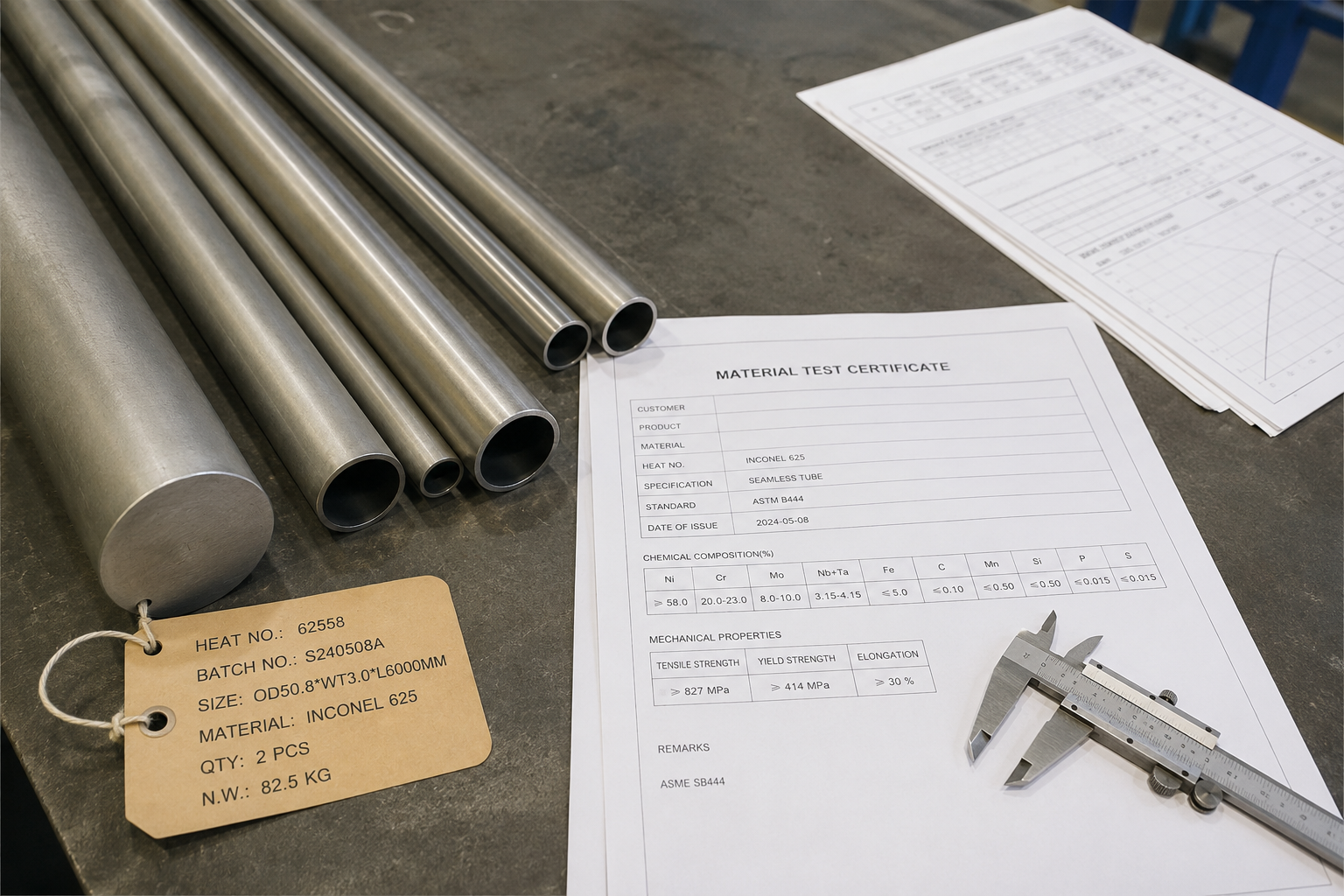
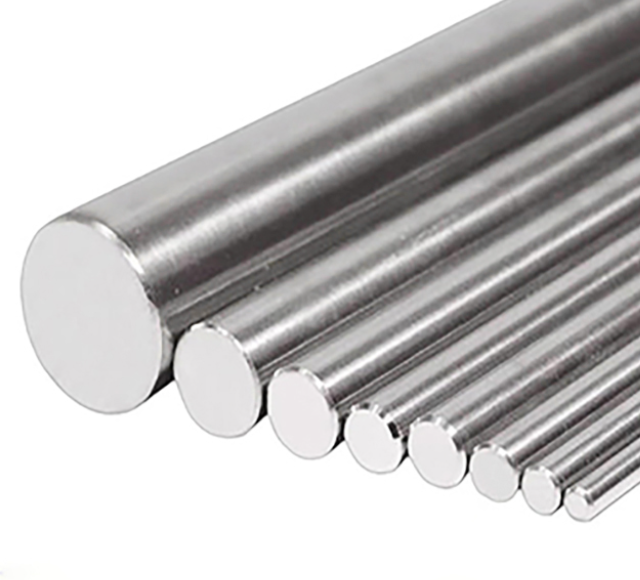
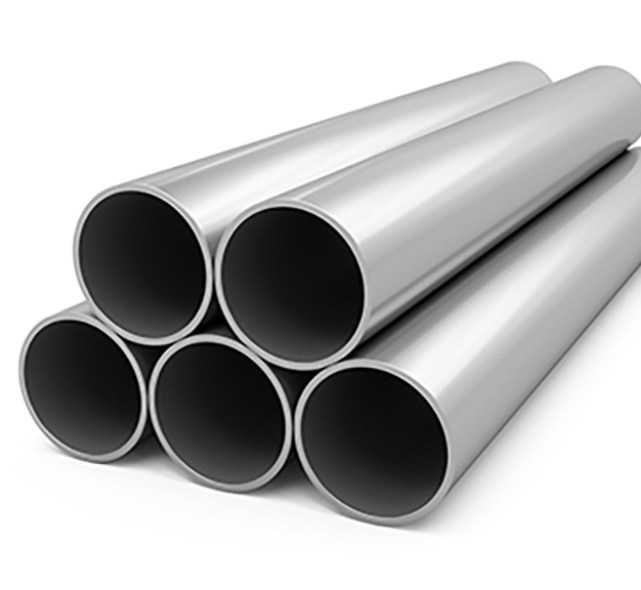
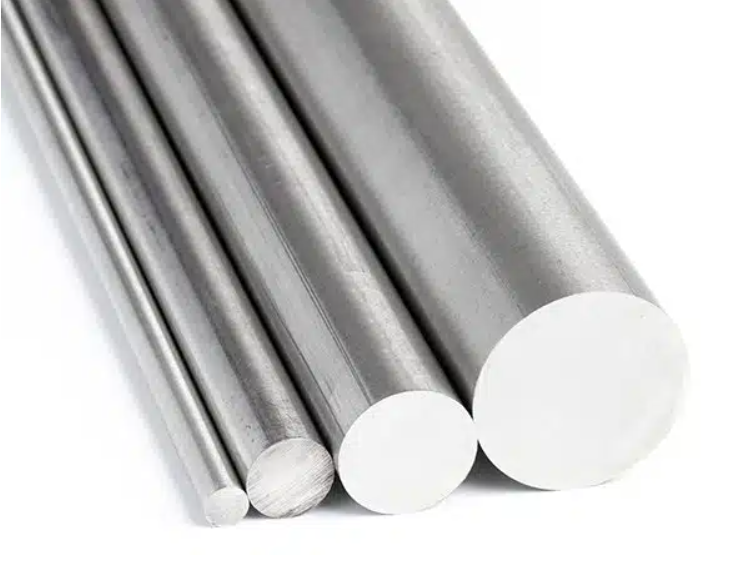
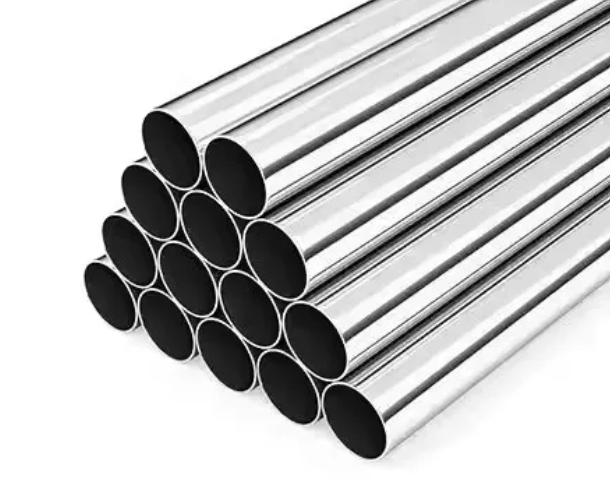
For nickel alloy tubes, nickel alloy bars, titanium alloy tubes and titanium alloy bars, certificate review should not stop at “certificate available.” Buyers should confirm whether the certificate actually matches the supplied material, the purchase order and the application requirement.
This guide explains what buyers should check before accepting nickel and titanium alloy certificates.
Quick Answer: What Makes a Material Certificate Reliable?
A reliable material certificate should be traceable, complete, consistent and relevant to the order.
| Certificate Check | What to Verify | Why It Matters |
|---|---|---|
| Material Grade | Inconel 625, Hastelloy C276, Monel 400, Titanium Grade 2, Titanium Grade 5 | Confirms the intended material family |
| UNS Number | N06625, N10276, N04400, R50400, R56400 | Reduces confusion between trade names and standards |
| Product Form | Tube, pipe, bar, billet, cut blank | Different forms may follow different standards |
| Standard | ASTM, ASME, EN, ISO, AMS or customer specification | Defines acceptance requirements |
| Heat Number | Must match material marking, bundle label and packing list | Supports batch traceability |
| Chemical Composition | Actual element values vs standard limits | Confirms grade identity |
| Mechanical Properties | Tensile strength, yield strength, elongation, hardness if required | Confirms tested properties |
| Heat Treatment Condition | Annealed, solution annealed, aged, stress relieved, cold worked | Affects final properties and application suitability |
| Test Results | Chemical, tensile, hardness, UT, ET, hydrostatic, PMI if required | Shows what was actually tested |
| Certificate Type | EN 10204 3.1, 3.2, MTR, MTC, CoC or other | Defines who issued or witnessed the certificate |
| Issuer / Signature | Manufacturer, authorized inspector or third-party inspector | Helps judge document authority |
| Order Match | PO number, size, quantity and specification | Confirms the certificate belongs to your order |
A certificate is useful only when it can be linked clearly to the actual material received.
Are Material Certificates Absolute Guarantees?
No. Material certificates are important evidence, but they are not absolute guarantees of future service performance.
A material certificate records test results for a defined material batch, heat or product lot under specific standards and test methods. It helps verify material compliance, but it does not automatically guarantee suitability for every working condition, fabrication process or long-term service environment.
What a Certificate Can and Cannot Prove
| Certificate Aspect | What It Can Support | What It Does Not Automatically Prove |
|---|---|---|
| Chemical Composition | Actual element values tested for the heat or batch | Future contamination after delivery or suitability for all environments |
| Mechanical Properties | Tensile strength, yield strength, elongation and hardness if tested | Fatigue life, creep life or performance in every application |
| Standard Compliance | Compliance with listed ASTM / ASME / EN / ISO / AMS requirements | Fitness for a specific end-use beyond the standard |
| Heat Treatment Condition | Condition stated on the certificate | Whether later fabrication changed the condition |
| NDT Results | UT, ET, PT or other test results if included | Absence of every possible defect outside the test scope |
| Hydrostatic Test | Pressure-tightness test if required and performed | Long-term pressure service life |
| PMI Result | Alloy identity verification if performed | Full mechanical or corrosion performance |
| Heat Number | Traceability to a heat or batch | Correct application selection by itself |
| Third-Party Witness | Independent inspection if included | Performance guarantee under all service conditions |
A certificate should be used together with engineering review, receiving inspection and project-specific requirements.
Which Certificate Details Matter Most for Your Project?
Not every number on a certificate has the same importance for every application. Buyers should first understand the application, then review the certificate.
Key MTC / MTR Fields to Check
| Field on Certificate | What Buyers Should Check |
|---|---|
| Supplier / Manufacturer Name | Who issued the certificate? Is it the mill, manufacturer, distributor or testing lab? |
| Buyer / PO Number | Does the certificate match your purchase order? |
| Material Grade | Is the grade exactly what was ordered? |
| UNS Number | Does the UNS number match the grade? |
| Product Form | Tube, pipe, bar, billet, plate or cut piece |
| Standard Number | ASTM B444, ASTM B338, ASTM B348/B348M, ASME, EN, AMS or other |
| Heat Number / Lot Number | Does it match material marking and packing list? |
| Size and Quantity | OD, WT, diameter, length, pieces or weight |
| Heat Treatment Condition | Annealed, solution annealed, aged, stress relieved or cold worked |
| Chemical Composition | Actual values must be within specification limits |
| Mechanical Properties | Tensile, yield, elongation, hardness if required |
| NDT / Test Results | UT, ET, hydrostatic, PMI, corrosion test if required |
| Inspection Standard / Method | Which test method was used? |
| Certificate Type | 3.1, 3.2, CoC, MTR, MTC or customer-specific |
| Signature and Date | Who approved it and when? |
| Revision / Amendment | Check if the certificate was revised or reissued |
The most important fields are the fields that connect the certificate to the physical material and to the purchase order.
How Should Buyers Match the Certificate to the Physical Material?
Certificate reliability depends on traceability. If the certificate cannot be matched to the actual tube or bar, the document loses much of its value.
The heat number, material marking, bundle label, packing list and MTC should be consistent. If any of these are missing or inconsistent, buyers should ask the supplier for clarification before accepting the material.
Traceability Check
| Traceability Item | What to Compare |
|---|---|
| MTC / MTR Heat Number | Must match heat number on material or bundle label |
| Material Marking | Grade, UNS, heat number, size if marked |
| Bundle Label | Heat number, size, quantity, package number |
| Packing List | Quantity, weight, heat number distribution |
| Purchase Order | Grade, size, standard, certificate type |
| Invoice / Shipping Documents | Quantity and product description |
| Inspection Photos | Marking and label photos before shipment |
| Third-Party Report | Should reference the same heat number or item numbers |
A good traceability chain looks like this:
Purchase Order → Production Batch / Heat Number → MTC → Material Marking → Packing List → Delivered Material
For critical projects, buyers should request material marking photos and packing list before shipment.
What Is EN 10204 3.1 and 3.2?
Many industrial buyers request EN 10204 3.1 or 3.2 certificates. These certificate types are commonly used for metallic products.
Common EN 10204 Certificate Types
| Certificate Type | General Meaning | Typical Use |
|---|---|---|
| EN 10204 2.1 | Declaration of compliance without test results | Low-risk or basic documentation |
| EN 10204 2.2 | Compliance statement with non-specific test results | General material supply |
| EN 10204 3.1 | Manufacturer inspection certificate with specific test results | Common for industrial alloy procurement |
| EN 10204 3.2 | Certificate involving manufacturer’s authorized inspection representative and purchaser-designated or independent inspector | Critical projects, pressure equipment, regulated or customer-specified inspection |
For many nickel and titanium alloy orders, EN 10204 3.1 is sufficient when the customer requires manufacturer test results. EN 10204 3.2 may be required when the project needs independent or customer-designated inspection.
Buyers should specify the certificate type before ordering, because changing from 3.1 to 3.2 after production may add time and inspection coordination.
Which Certificate Details Matter by Application?
Different applications require different certificate focus. A chemical process line and an aerospace part may not need the same review.
| Application Type | Certificate Details to Review | Why It Matters |
|---|---|---|
| Chemical Processing | Grade, UNS, chemical composition, corrosion-related tests if required | Confirms alloy identity and suitability review basis |
| Heat Exchangers | Tube standard, OD/WT, heat number, hydrostatic/ET/UT if required | Supports tube acceptance and pressure-related checks |
| Oil and Gas | Traceability, NDT, mechanical properties, hardness, PMI if required | Reduces material mix-up and acceptance risk |
| Marine / Offshore | Chemistry, surface condition, traceability, corrosion-related requirements | Supports chloride/seawater service review |
| Aerospace | AMS/ASTM standard, heat treatment, mechanical properties, NDT, full traceability | Supports strict quality and documentation requirements |
| Medical Equipment | Titanium grade, chemistry, surface condition, cleanliness and certificate | Supports material identity and regulatory documentation |
| High-Temperature Service | Heat treatment, tensile, hardness, creep/stress rupture if required | Confirms high-temperature-related data when specified |
| Machining Blanks | Grade, hardness, diameter tolerance, heat number, MTC | Supports machining and material verification |
If an application requires additional tests, buyers should list them in the purchase order. A standard MTC may not include every project-specific test.
Which ASTM Standards Are Relevant to Nickel and Titanium Alloy Certificates?
The correct standard depends on alloy grade, product form and application. Buyers should check whether the certificate references the right standard.
| Product Type | Useful Standard / Source | Why Buyers May Need It |
|---|---|---|
| Nickel Alloy Seamless Pipe / Tube | ASTM B444 | Covers UNS N06625, UNS N06852 and UNS N06219 cold-worked seamless pipe and tube; includes chemical, tensile, hydrostatic and nondestructive electric testing |
| Titanium Alloy Heat Exchanger Tubes | ASTM B338 | Covers seamless and welded titanium alloy tubes for condensers, evaporators and heat exchangers |
| Titanium Alloy Bars / Billets | ASTM B348/B348M | Covers annealed titanium and titanium alloy bars and billets, including chemical composition and tensile property requirements |
| Nickel Alloy Bars / Forgings | ASTM B637 | Covers precipitation-hardening and cold-worked nickel alloy bars, forgings and forging stock for moderate or high-temperature service |
| Other ASTM / ASME / EN / AMS Standards | Depends on grade, product form and industry | Should match the purchase order and application requirement |
A certificate that says “ASTM material” is not enough. Buyers should confirm the exact standard number, year/version, grade, UNS number and product form.
Can Buyers Rely Only on One Certificate?
For standard procurement, a complete and traceable MTC may be enough. For critical projects, buyers may need additional verification.
A certificate should be reviewed together with supplier transparency, material marking, heat number traceability, inspection reports and, when required, independent laboratory testing or third-party inspection. ISO/IEC 17025 is relevant when buyers need confidence in testing or calibration laboratory competence, impartiality and reliable results.
Additional Verification Methods
| Verification Method | What It Adds | When It Is Useful |
|---|---|---|
| Supplier Clarification | Explains certificate fields, test scope and product history | When data is unclear |
| Traceability Review | Matches heat number, marking, label and packing list | For all critical orders |
| Dimensional Inspection Report | Confirms size and tolerance | When dimensions are important |
| PMI Test | Verifies alloy identity | When material mix-up risk is high |
| UT / ET / PT Reports | Supports flaw detection within test scope | For tube, pipe or critical parts |
| Hydrostatic Test Report | Supports pressure-tightness requirement | For pressure-related tube/pipe orders |
| Third-Party Inspection | Independent verification | For high-value or regulated projects |
| ISO/IEC 17025 Lab Testing | Adds confidence in laboratory test competence | When independent testing is required |
ISO 9001 supports quality management system control, but it does not replace batch-level material certificates or inspection reports.
What Common Mistakes Do Buyers Make When Reading Certificates?
Many certificate problems come from misreading, incomplete review or missing traceability.
Common Certificate Review Mistakes
| Mistake | Why It Is Risky | Better Practice |
|---|---|---|
| Only checking the alloy name | Trade names can be confusing | Confirm UNS number and standard |
| Ignoring heat number | Certificate may not match physical material | Match heat number on MTC, label and packing list |
| Not checking standard version | Wrong standard may change acceptance scope | Confirm standard number and version/year if required |
| Confusing actual values with limits | Actual test values must be compared with specification limits | Review both actual results and required ranges |
| Ignoring units | MPa, ksi, %, HB, HRC or mm/inch errors can cause mistakes | Check all units carefully |
| Assuming MTC proves dimensions | MTC may not include actual dimensional results | Request dimensional report if needed |
| Assuming MTC proves application suitability | MTC does not simulate every service condition | Use engineering review for final suitability |
| Overlooking heat treatment condition | Properties depend on supplied condition | Check annealed, solution annealed, aged or cold worked condition |
| Not checking NDT scope | “Tested” may not mean all tests were performed | Confirm UT, ET, hydrostatic, PMI or PT if required |
| Accepting incomplete certificates | Missing results may hide nonconformity or wrong document scope | Ask for full certificate and clarification |
The key question is:
Does this certificate prove that this specific material, from this specific heat, meets my specific order requirements?
What Are Red Flags in a Material Certificate?
A certificate should be reviewed carefully when something looks inconsistent.
Certificate Red Flags
| Red Flag | Why It Matters |
|---|---|
| No heat number or lot number | Traceability is weak |
| Heat number does not match material marking | Certificate may not belong to the delivered material |
| No UNS number | Grade identity may be unclear |
| Wrong or vague standard | “ASTM material” without a specific standard is not enough |
| Missing chemical composition | Grade identity cannot be properly checked |
| Missing mechanical properties | Strength and ductility cannot be verified |
| Values outside specification limits | Material may not meet ordered standard |
| No certificate type | 3.1, 3.2, CoC or MTR scope is unclear |
| No issuer, signature or approval date | Document authority is unclear |
| Altered PDF or inconsistent formatting | May require verification with supplier |
| Certificate quantity does not match shipment | Order traceability issue |
| Different grade names on certificate and packing list | Possible document or material mix-up |
| Testing listed but no actual result shown | Inspection claim is incomplete |
| Third-party inspection required but not shown | Project requirement may not be met |
When these issues appear, buyers should not reject automatically without investigation, but they should ask for clarification before using the material.
Certificate Review Checklist for Nickel and Titanium Alloy Buyers
Use this checklist when reviewing material certificates for nickel alloy tubes, nickel alloy bars, titanium alloy tubes or titanium alloy bars.
| Checklist Item | Yes / No |
|---|---|
| Does the certificate show supplier or manufacturer name? | |
| Does it show buyer PO or order reference? | |
| Does the grade match the order? | |
| Does the UNS number match the grade? | |
| Does the product form match the order? | |
| Does the ASTM / ASME / EN / ISO / AMS standard match the PO? | |
| Does the certificate show heat number or lot number? | |
| Does the heat number match material marking and packing list? | |
| Does it show actual chemical composition values? | |
| Are chemical values within specification limits? | |
| Does it show actual mechanical property values? | |
| Are mechanical values within specification limits? | |
| Is heat treatment condition clearly stated? | |
| Are required tests listed with actual results? | |
| Is NDT / hydrostatic / PMI included if required? | |
| Is certificate type shown clearly? | |
| Is issuer, signature and date shown? | |
| Is third-party inspection included if required? | |
| Does the certificate quantity match shipment quantity? | |
| Are there any unexplained corrections or inconsistencies? |
This checklist helps buyers review certificates more systematically instead of only checking whether a document exists.
RFQ Checklist: What Certificate Requirements Should Buyers State Before Ordering?
Certificate requirements should be confirmed before production or shipment.
| RFQ Item | Information to Provide |
|---|---|
| Material Family | Nickel alloy or titanium alloy |
| Alloy Grade | Inconel 625, Hastelloy C276, Monel 400, Titanium Grade 2, Titanium Grade 5 |
| UNS Number | N06625, N10276, N04400, R50400, R56400 |
| Product Form | Tube, pipe, bar, billet, cut blank |
| Standard | ASTM B444, ASTM B338, ASTM B348/B348M, ASTM B637, ASME, EN, AMS or customer specification |
| Size | OD, WT, ID, diameter, length, tolerance |
| Heat Treatment | Annealed, solution annealed, aged, stress relieved, cold worked |
| Certificate Type | MTC/MTR, EN 10204 3.1, EN 10204 3.2, CoC |
| Required Tests | Chemical, tensile, hardness, UT, ET, hydrostatic, PMI, corrosion test |
| Dimensional Report | Required or not required |
| Surface Inspection | Required or not required |
| Heat Number Marking | On material, bundle label, packing list |
| Third-Party Inspection | Required or not required |
| Inspection Agency | SGS, BV, TÜV, Lloyd’s, customer-designated inspector or other |
| Document Language | English or bilingual |
| Document Delivery | Before shipment, with shipment, or after final inspection |
| Application | Chemical, marine, aerospace, medical, heat exchanger, oil and gas, power generation |
A clear RFQ prevents disputes about certificate scope after the material is ready.
FAQ: Nickel and Titanium Alloy Certificates
Is an MTC the same as a quality guarantee?
No. An MTC supports material verification by showing chemical and physical test results and standard compliance. It does not guarantee performance in every application.
Can an MTC prove material traceability?
It can support traceability if it includes a heat number and that heat number matches the physical material, marking, labels and packing list.
What is the difference between EN 10204 3.1 and 3.2?
EN 10204 3.1 is typically issued by the manufacturer with specific test results. EN 10204 3.2 involves additional independent or customer-designated inspection confirmation.
Does ISO 9001 mean every material certificate is correct?
No. ISO 9001 supports a quality management system. Buyers still need to review batch-level MTCs, heat numbers, inspection reports and order requirements.
When should buyers request third-party testing?
Third-party testing may be useful for critical applications, high-value orders, new suppliers, regulated projects or when certificate data is incomplete or unclear.
Can a certificate prove corrosion resistance?
A standard certificate can show alloy chemistry and required tests, but corrosion resistance depends on the actual service environment. Specific corrosion tests must be requested if needed.
Can a certificate prove dimensions?
Not always. A material certificate may not include actual measured dimensions. Buyers should request a dimensional inspection report when size tolerance is critical.
How Can Emily PIPE Support Certificate Review and Traceability?
Emily PIPE supplies nickel alloy tubes, nickel alloy bars, titanium alloy tubes and titanium alloy bars for global industrial customers. We support standard and customized specifications according to drawings, technical requirements and application environments.
For certificate-sensitive projects, we can help provide or coordinate:
- MTR / MTC for supplied material
- heat number traceability
- ASTM / ASME / EN / ISO / AMS standard confirmation
- chemical composition and mechanical property data
- dimensional inspection report if required
- UT, ET, PMI, hydrostatic and hardness testing if required
- EN 10204 3.1 / 3.2 certificate requirements
- third-party inspection coordination
- marking, labeling and packing list control
- certificate and packing document review before shipment
We recommend confirming certificate type, test scope, heat number marking and inspection requirements at the RFQ stage. This helps avoid document mismatch, shipment delay or receiving inspection problems.
Conclusion
A material certificate is valuable only when it is complete, traceable and relevant to the order. Buyers should check grade, UNS number, standard, heat number, actual test values and inspection scope before accepting nickel or titanium alloy materials.
If you are sourcing nickel alloy tubes, nickel alloy bars, titanium alloy tubes or titanium alloy bars and need MTC, heat number traceability, EN 10204 3.1/3.2, dimensional inspection or third-party inspection, you can send us your grade, UNS number, standard, size, certificate type and testing requirements. Our team can help review the documentation scope and provide a quotation based on your project needs.