
Custom Alloy Tube Lead Times: What Buyers Should Confirm Before Ordering
Are you wondering how long it will take to receive custom nickel alloy tubes or titanium alloy tubes? Many buyers want a simple delivery date, but custom alloy tube lead time depends on more than production speed.
Custom alloy tube lead time is not a fixed number. It depends on alloy grade, UNS number, product standard, stock availability, tube dimensions, quantity, production route, heat treatment, testing, inspection documents, third-party inspection and logistics. Lead time generally refers to the time between the start and completion of a process, and manufacturing lead time may include order preparation, queue time, setup time, run time, inspection time and movement or delivery time.
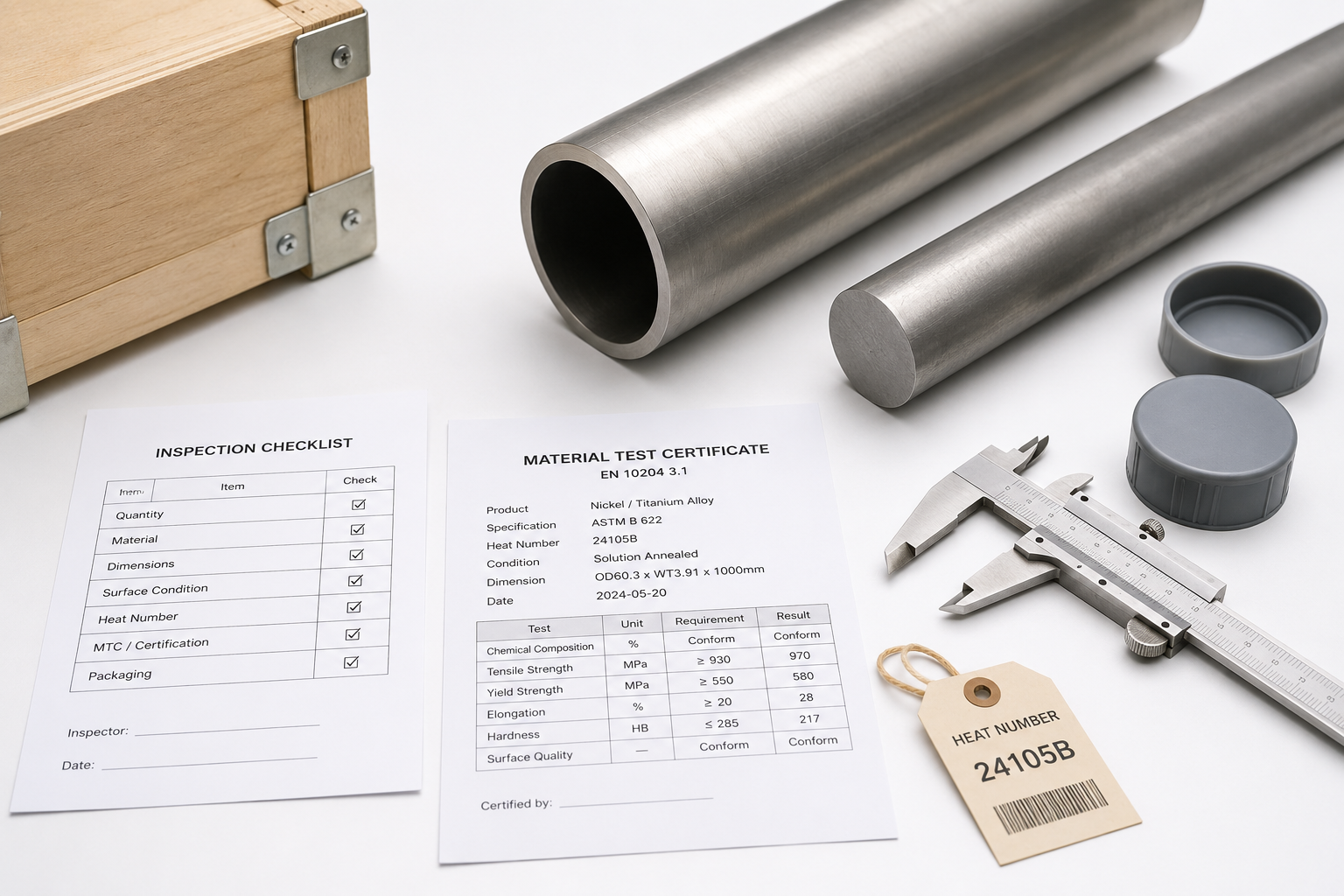
For buyers of nickel alloy tubes and titanium alloy tubes, asking “How many weeks?” is only the first step. A more useful question is:
What information does the supplier need to give me a reliable lead time?
This article explains the main factors that affect custom alloy tube delivery schedules and what buyers should confirm before placing an order.
Quick Answer: Why Do Custom Alloy Tube Lead Times Vary?
Lead time varies because custom alloy tubes may require raw material sourcing, production planning, forming, drawing, heat treatment, finishing, testing, documentation and export preparation.
| Lead Time Factor | Why It Matters | Buyer Should Confirm |
|---|---|---|
| Alloy Grade | Common grades may be easier to source; special grades may require mill scheduling | Grade, UNS number, equivalent grade acceptance |
| Stock Status | Stock tubes are faster than custom production | Finished stock, semi-finished stock or new production |
| Tube Size | OD, wall thickness and length affect tooling and process route | OD, WT, ID, length and tolerance |
| Quantity | Small orders may be affected by MOQ and setup; large orders need more raw material and line capacity | Quantity, batch size and split delivery option |
| Tolerance | Tight tolerances may require more drawing, sizing and inspection | OD, WT, length, straightness and ovality |
| Surface Finish | Pickling, polishing, bright annealing or cleaning adds process time | Required surface condition |
| Heat Treatment | Annealing, solution treatment or stress relief requires furnace scheduling | Required condition and certificate |
| Testing | Chemical, tensile, hardness, UT, ET, hydrostatic or PMI tests need scheduling and reporting | Required tests before quotation |
| Certificates | MTC, EN 10204 3.1/3.2, third-party inspection or customer approval may add review time | Certificate type and witness requirement |
| Logistics | Packing, export documents, sea/air freight and customs affect final arrival | Incoterms, destination and shipping mode |
A reliable lead time can only be estimated after the supplier understands the full technical and commercial scope.
Stock, Semi-Finished Stock, or Custom Production: What Is the Difference?
One of the biggest lead-time questions is whether the material already exists.
| Supply Situation | What It Means | Lead Time Impact |
|---|---|---|
| Finished Stock | Tube is already produced in the required grade, size and condition | Usually fastest; still needs inspection, packing and shipment |
| Near-Size Stock | Material exists but needs cutting, polishing, testing or size adjustment | Faster than full production but still needs processing |
| Semi-Finished Material | Hollow billet, mother tube or intermediate size exists | Production is shorter than starting from raw material |
| New Production | Raw material must be sourced and tube must be produced from the beginning | Longer schedule |
| Mill Run Required | Special grade or size requires planned raw material production | Usually the highest lead-time risk |
| Third-Party Witness Required | External inspector must witness testing or review documents | Adds coordination time |
Buyers should ask suppliers whether the quotation is based on finished stock, semi-finished stock or new production.
Does the Alloy Type Affect Production Time?
Yes. The alloy grade can affect sourcing, processing, heat treatment and testing.
Different alloy grades have different availability, production routes and processing requirements. For example, nickel alloy seamless pipe and tube may be supplied under standards such as ASTM B444, ASTM B163 or ASTM B622, while titanium heat exchanger tubes may follow ASTM B338. Each standard has its own product scope and test requirements.
Alloy Grade and Lead Time
| Alloy / Product Type | Why Lead Time May Change |
|---|---|
| Inconel 625 / UNS N06625 Tubes | May involve ASTM B444 requirements, heat treatment, hydrostatic and NDT scope |
| Inconel 600 / Alloy 600 Tubes | Standard size availability and production condition should be confirmed |
| Hastelloy C276 / UNS N10276 Tubes | Special corrosion-resistant grades may not always be available from stock |
| Alloy 825 Tubes | Size, standard and stock status affect schedule |
| Monel 400 Tubes | Availability depends on size, wall thickness and tube form |
| Titanium Grade 2 Tubes | Titanium heat exchanger tubes may involve ASTM B338 and specific test scope |
| Titanium Grade 5 / Ti-6Al-4V Tubes | Grade, size and certification requirements should be checked carefully |
| High-Temperature Nickel Alloy Tubes | Heat treatment and mechanical testing may add time |
ASTM B444 covers UNS N06625, UNS N06852 and UNS N06219 cold-worked seamless pipe and tube, including chemical testing, tensile testing, hydrostatic testing and nondestructive electric testing. ASTM B163 covers seamless nickel and nickel alloy condenser and heat-exchanger tubes. ASTM B622 covers seamless pipe and tube of nickel and nickel-cobalt alloys. ASTM B338 covers seamless and welded titanium alloy tubes for condensers, evaporators and heat exchangers.
How Do Tube Dimensions and Specifications Change the Schedule?
Tube dimensions directly affect tooling, forming, drawing, heat treatment, straightening, inspection and packaging.
OD, wall thickness, length, tolerance, straightness, ovality and surface finish can all affect production time. Very thin-wall tubes, very thick-wall tubes, long lengths, tight tolerances or special surface requirements usually need more process control and inspection.
Dimension-Related Lead Time Factors
| Specification | Why It Affects Lead Time |
|---|---|
| Outside Diameter (OD) | Special OD may require tooling or drawing schedule |
| Wall Thickness (WT) | Thin-wall tubes may require careful forming and inspection |
| Inside Diameter (ID) | Critical ID may need extra inspection or finishing |
| Length | Fixed lengths, long lengths or cut-to-length pieces affect handling and packing |
| Straightness | Tight straightness may require additional straightening and inspection |
| Ovality / Roundness | Critical fit or heat exchanger use may require tighter control |
| Length Tolerance | Precision cutting requires additional setup and measurement |
| Surface Roughness / Ra | Polishing or controlled finish adds processing time |
| End Condition | Deburred, chamfered, faced or capped ends add steps |
| Cleanliness | Oil-free, chip-free or special cleaned tubes require extra control |
Standard vs Tight Specification
| Requirement Level | Typical Impact |
|---|---|
| Standard size and tolerance | Easier to schedule and inspect |
| Non-standard OD or WT | May require special tooling or production planning |
| Very tight tolerance | May require more process steps and inspection |
| Special surface finish | Adds polishing, cleaning or pickling time |
| Custom cut length | Adds cutting, labeling and dimensional inspection |
| Critical application | May require extra review, testing or approval |
Buyers should clearly define which dimensions are critical and which can follow standard commercial tolerance.
Why Does Order Quantity Matter for Delivery Time?
Quantity affects MOQ, setup efficiency, raw material planning, production scheduling and inspection workload.
Small Orders
| Factor | Lead Time Impact |
|---|---|
| MOQ Requirement | Some grades or sizes may require minimum production quantity |
| Setup Time | Machine setup may be similar for small and large batches |
| Batch Scheduling | Small orders may be scheduled with similar products |
| Stock Availability | Small orders may be fast if finished stock exists |
| Special Testing | Even small quantities may need full inspection if required |
Large Orders
| Factor | Lead Time Impact |
|---|---|
| Raw Material Volume | More billet, mother tube or strip must be sourced |
| Production Slot | Larger runs need longer line time |
| Inspection Volume | More pieces require more inspection and documentation |
| Packing Volume | More bundle preparation and export packing |
| Split Shipment Option | Partial delivery may help the buyer start earlier |
A small order is not always faster, and a large order is not always slower. The key is whether material, tooling and production capacity are available.
What Role Do Heat Treatment and Post-Processing Play?
Custom alloy tubes often require more than forming and drawing. Heat treatment, surface finishing, cutting, cleaning and testing may be part of the real delivery schedule.
Common Post-Processing Steps
| Step | Why It May Add Time |
|---|---|
| Annealing | Requires furnace scheduling, temperature control and cooling |
| Solution Treatment | Required for some alloy conditions and applications |
| Stress Relief | May be required after forming or machining |
| Pickling | Removes oxide or surface scale |
| Polishing | Required for surface finish or cleanliness |
| Bright Annealing | Requires controlled atmosphere and specific equipment |
| Cut-to-Length | Adds cutting, deburring, labeling and inspection |
| Deburring / Chamfering | Needed for assembly, welding or safety |
| Straightening | Needed when straightness tolerance is important |
| Cleaning | Needed for fluid, medical, heat exchanger or critical applications |
Post-processing should be confirmed before quotation. If it is added after production starts, delivery time may change.
How Do Testing and Inspection Requirements Affect Lead Time?
Testing and inspection are often necessary, but they also require scheduling, execution, review and documentation.
Common Test and Inspection Items
| Test / Inspection | Why Buyers Request It | Lead Time Consideration |
|---|---|---|
| Chemical Analysis | Confirms alloy chemistry | Usually part of material certification |
| Tensile Test | Confirms tensile strength, yield strength and elongation | Requires sample preparation and reporting |
| Hardness Test | Confirms material condition | Adds inspection and reporting |
| Hydrostatic Test | Confirms pressure-tightness for tubes/pipes if required | Requires test setup and inspection |
| Eddy Current Test / ET | Detects surface or near-surface discontinuities in conductive tubes | Requires NDT scheduling |
| Ultrasonic Test / UT | Detects internal or wall-related discontinuities if required | Requires NDT equipment and operator |
| PMI | Confirms alloy identity | Adds inspection scope |
| Dimensional Inspection | Confirms OD, WT, length, straightness and tolerance | Adds measurement and reporting time |
| Surface Inspection | Checks scratches, pits, dents and finish | Adds visual review |
| Third-Party Inspection | Independent review or witness | Adds coordination time with inspector |
ASTM B444 and ASTM B622 both mention hydrostatic and nondestructive electric tests for covered nickel alloy pipe or tube products. ASTM B338 also includes ultrasonic, electromagnetic, hydrostatic or pneumatic testing requirements depending on tube type. Buyers should specify required testing before quotation.
Do Certifications and Documents Affect Lead Time?
Yes. Documents can affect lead time, especially when the project requires special certificate type, third-party witness or customer approval.
A Mill Test Report or Material Test Certificate certifies chemical and physical properties and states compliance with applicable standards. A heat number links the metal product to a specific batch or heat, supporting traceability to composition, manufacturing process and quality records.
Document and Certificate Checklist
| Document / Certificate | What It Supports | Lead Time Impact |
|---|---|---|
| MTR / MTC | Chemical and mechanical properties, standard compliance | Routine but still requires review and issue |
| EN 10204 3.1 | Manufacturer inspection certificate with test results | Requires complete batch data and document control |
| EN 10204 3.2 | Certificate involving independent or customer-designated inspection | May add inspector coordination time |
| Heat Number Traceability | Links material, MTC, marking and packing list | Requires controlled labeling and records |
| Dimensional Report | Actual OD, WT, length and tolerance results | Adds measurement and reporting time |
| NDT Report | UT, ET, PT or other inspection results | Adds test and report time |
| PMI Report | Alloy identity verification | Adds inspection step |
| Third-Party Inspection Report | Independent verification | Depends on inspector schedule |
| Packing List | Quantity, size, heat number distribution | Needed before shipment |
| Customer Approval Documents | Required by some project contracts | May add review cycle time |
ISO 9001 is a quality management standard that helps organizations establish, implement, maintain and improve a quality management system. ISO 13485 is specific to medical devices and focuses on quality management systems for regulatory purposes. ISO/IEC 17025 sets requirements for testing and calibration laboratory competence, impartiality and consistent operation.
Can Supplier Processes and Communication Change Delivery Dates?
Yes. Supplier process control and communication can affect lead-time reliability.
A supplier’s raw material planning, production scheduling, inspection workflow, quality control, document control and communication can all affect how predictable the delivery schedule is. Good communication cannot eliminate every delay, but it helps buyers understand risk early and plan better.
Supplier Process Factors
| Supplier Process | Why It Matters |
|---|---|
| Raw Material Planning | Determines how quickly production can start |
| Production Scheduling | Controls access to drawing, heat treatment and finishing equipment |
| Tooling Management | Special sizes may require tooling preparation |
| In-Process Inspection | Helps detect problems earlier |
| Quality Control | Reduces risk of rework and late rejection |
| Document Control | Prevents certificate and traceability delays |
| Packing Preparation | Protects tubes and prepares shipment |
| Export Coordination | Affects customs documents and logistics |
| Communication Updates | Helps buyers adjust project schedule if conditions change |
Questions Buyers Should Ask Suppliers
| Question | Why It Helps |
|---|---|
| Is this item in stock or custom production? | Clarifies lead-time basis |
| Is raw material already available? | Identifies sourcing risk |
| What process steps are included? | Separates production, testing, finishing and packing |
| Which tests are included in the quoted lead time? | Avoids late testing additions |
| Which certificate type is included? | Avoids document mismatch |
| Can partial shipment be arranged? | Helps urgent projects start earlier |
| What could change the lead time? | Makes risk visible |
| When will you provide status updates? | Improves project planning |
A realistic lead time is based on process clarity, not only a promised date.
How Can Buyers Reduce Lead-Time Risk?
Buyers cannot control every production factor, but they can reduce avoidable delays by preparing a complete RFQ.
Practical Lead-Time Control Tips
| Buyer Action | Why It Helps |
|---|---|
| Provide exact alloy grade and UNS number | Avoids grade confirmation delays |
| State the ASTM / ASME / EN / ISO standard | Defines product and test scope |
| Confirm OD, WT, length and tolerance clearly | Avoids size interpretation problems |
| Confirm quantity and acceptable split shipment | Helps production and logistics planning |
| Define heat treatment condition early | Avoids late furnace scheduling |
| List required tests before quotation | Prevents unexpected inspection delays |
| Define certificate type before order | Avoids document revision later |
| Ask about stock or semi-finished material | Identifies faster options |
| Approve drawings and documents quickly | Prevents review-cycle delays |
| Allow equivalent size or grade only if acceptable | Gives supplier flexibility when engineering permits |
| Plan buffer time for critical projects | Reduces risk from raw material or inspection delays |
The fastest lead time usually comes from clear requirements, available material and no late scope changes.
Lead-Time Risk Table for Custom Alloy Tubes
| Requirement | Lead-Time Risk Level | Why |
|---|---|---|
| Standard stock size, common grade | Lower | Material may already exist |
| Custom length only | Low to medium | Cutting and inspection are added |
| Special OD / WT | Medium to high | May require tooling or custom production |
| Thin-wall tube | Medium to high | More process control and inspection may be needed |
| Tight tolerance | Medium to high | Adds sizing, inspection and possible rework risk |
| Special surface finish | Medium | Adds finishing steps |
| Special heat treatment | Medium | Requires furnace scheduling |
| Full NDT and third-party inspection | Medium to high | Adds testing and coordination |
| Special alloy not in stock | High | Raw material sourcing may dominate lead time |
| EN 10204 3.2 or customer witness | High | Requires external coordination |
| Large quantity | Medium to high | More raw material, production and inspection volume |
| Late change after order | High | May require replanning or rework |
Buyers should discuss high-risk items at the RFQ stage, not after order confirmation.
RFQ Checklist for Custom Alloy Tube Lead Time
Use this checklist when requesting a lead time for nickel alloy tubes or titanium alloy tubes.
| RFQ Item | Information to Provide |
|---|---|
| Material Family | Nickel alloy or titanium alloy |
| Alloy Grade | Inconel 625, Inconel 718, Hastelloy C276, Alloy 825, Titanium Grade 2, Titanium Grade 5 |
| UNS Number | N06625, N07718, N10276, N08825, R50400, R56400 |
| Standard | ASTM B444, ASTM B163, ASTM B622, ASTM B338, ASME, EN, ISO, AMS or customer specification |
| Product Form | Seamless tube, welded tube, pipe, heat exchanger tube |
| Size | OD × WT × length |
| Tolerance | OD, WT, length, straightness, ovality |
| Quantity | Pieces, meters or kilograms |
| Heat Treatment | Annealed, solution annealed, stress relieved or other condition |
| Surface Condition | Pickled, polished, bright annealed, cleaned, ground |
| Cutting Requirement | Random length, fixed length, cut-to-length, deburred, chamfered |
| Testing Requirement | Chemical, tensile, hardness, hydrostatic, UT, ET, PMI, dimensional inspection |
| Certificate Type | MTR/MTC, EN 10204 3.1, EN 10204 3.2, CoC |
| Third-Party Inspection | Required or not required |
| Application | Heat exchanger, chemical processing, oil and gas, marine, aerospace, medical, power generation |
| Delivery Requirement | Required date, partial shipment, Incoterms, destination |
| Packaging Requirement | End caps, wooden case, separate heats, waterproof packing |
A complete RFQ helps the supplier give a realistic delivery schedule instead of a rough guess.
FAQ: Custom Alloy Tube Lead Times
How long does custom alloy tube production take?
There is no universal lead time. It depends on stock status, alloy grade, tube size, quantity, processing route, heat treatment, tests, certificate type and logistics.
Why do special nickel alloy tubes take longer?
Special nickel alloy tubes may require raw material sourcing, custom production, heat treatment, NDT, dimensional inspection and certificate preparation.
Are titanium alloy tubes faster or slower than nickel alloy tubes?
It depends on grade, size, stock availability and test requirements. Titanium heat exchanger tubes may follow ASTM B338, while nickel alloy tubes may follow ASTM B444, B163 or B622.
Does MTC affect lead time?
A standard MTC is often part of normal material documentation, but special certificate types, additional testing or third-party witness inspection can add time.
Does quantity affect delivery time?
Yes. Small orders may be affected by MOQ and setup scheduling, while large orders may require more raw material, production time, inspection and packing.
Can partial shipment reduce project delay?
Sometimes. If some tubes are ready earlier, partial shipment may help the buyer start installation or machining while the remaining quantity is still in production.
How Can Emily PIPE Support Custom Alloy Tube Lead-Time Planning?
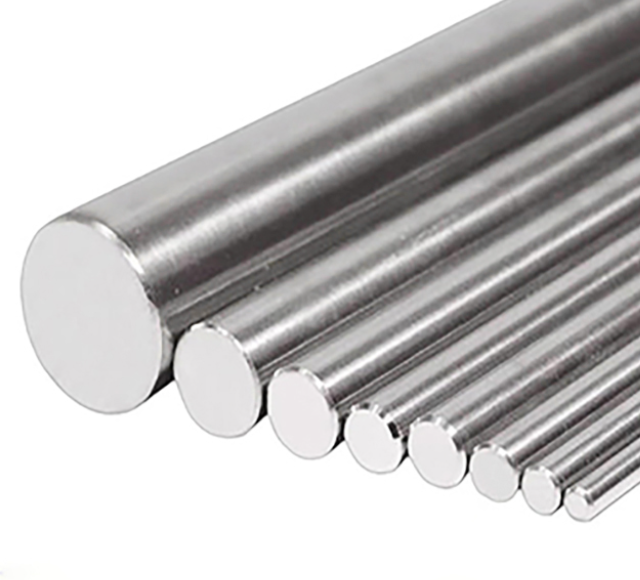
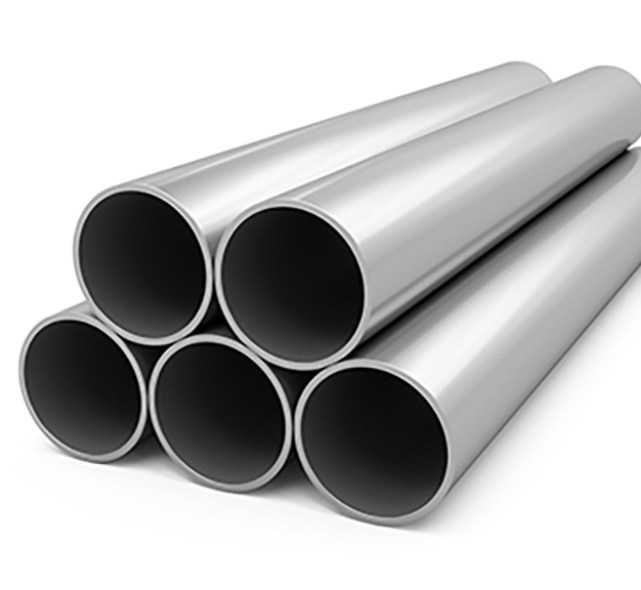
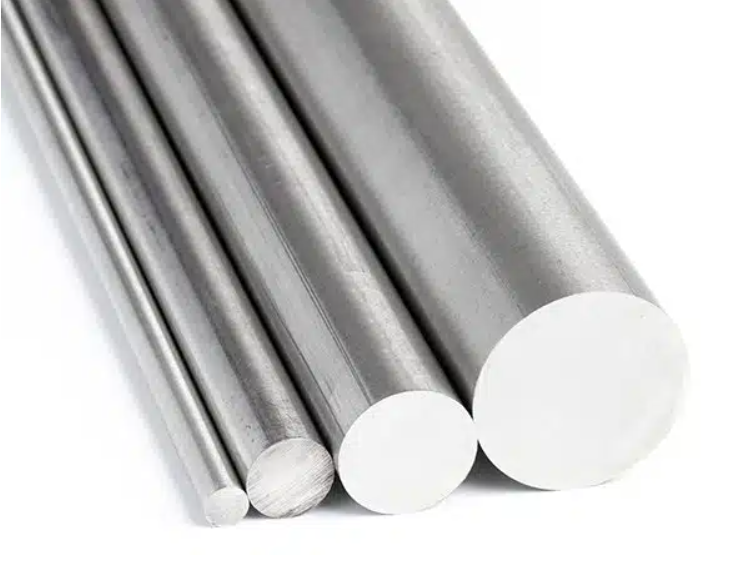
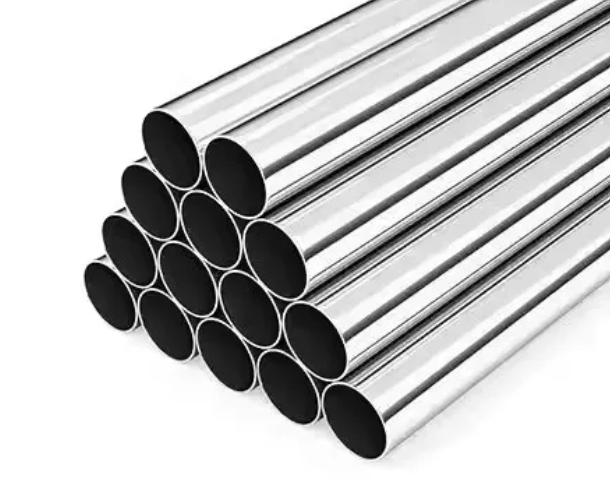
Emily PIPE supplies nickel alloy tubes, nickel alloy bars, titanium alloy tubes and titanium alloy bars for global industrial customers. We support standard and customized specifications according to drawings, technical requirements and application environments.
For custom alloy tube lead-time planning, we can help review:
- alloy grade and UNS number
- ASTM / ASME / EN / ISO / AMS standard requirements
- seamless or welded tube form
- OD, wall thickness, length and tolerance
- stock, semi-finished stock or custom production options
- heat treatment condition
- surface finish and cleaning requirements
- cut-to-length and end-finishing requirements
- MTR/MTC and heat number traceability
- UT, ET, hydrostatic, PMI and dimensional inspection requirements
- EN 10204 3.1 / 3.2 certificate requirements
- third-party inspection coordination
- packing, shipping mode and export documents
- partial shipment options when available
We recommend sharing the full technical requirement at the RFQ stage. This helps us confirm a realistic production schedule and reduce avoidable delays caused by missing information.
Conclusion
Custom alloy tube lead time depends on alloy grade, size, quantity, stock status, production route, testing, certificates and logistics. Clear RFQ details help buyers plan more accurately.
If you are sourcing custom nickel alloy tubes or titanium alloy tubes, you can send us your material grade, UNS number, standard, OD, wall thickness, length, quantity, heat treatment, test requirement, certificate type and delivery schedule. Our team can help review the production scope and provide a lead-time estimate based on your project needs.