
How Should Overseas Buyers Inspect Nickel and Titanium Alloy Materials After Delivery?
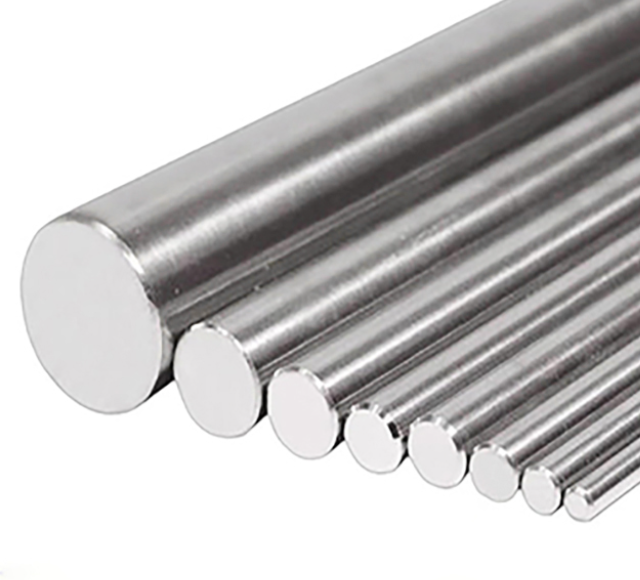
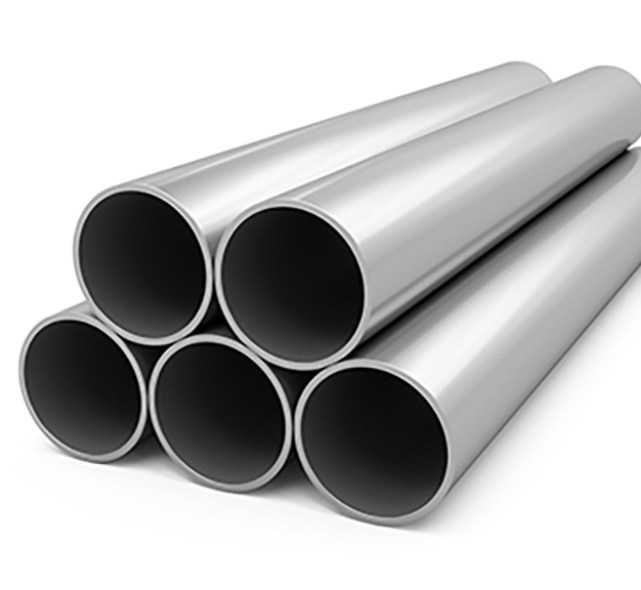
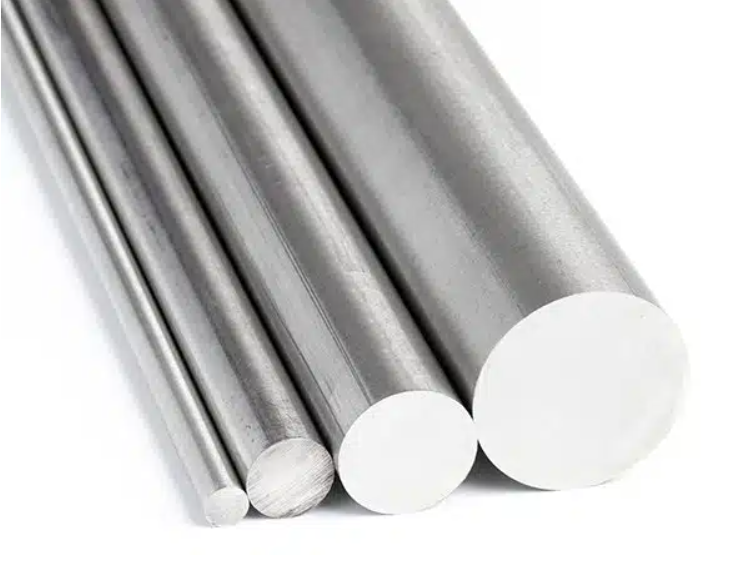
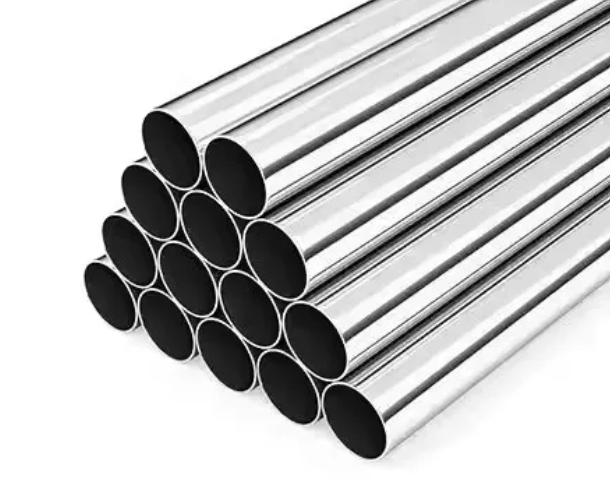
Are you an overseas buyer receiving nickel alloy or titanium alloy materials from an international supplier? Material inspection after delivery should not be limited to checking quantity and size. For alloy tubes and bars, buyers should also verify documents, heat number traceability, product marking, surface condition, dimensions, packaging condition, and application-specific inspection requirements.
For overseas buyers, effective inspection of nickel and titanium alloy materials means connecting the purchase order, material certificate, heat number, product marking, physical material, inspection reports, and final application requirements. A Mill Test Report or Material Test Certificate certifies a metal product’s chemical and physical properties and states compliance with applicable standards, while a heat number links the metal product to a specific batch or heat for traceability.
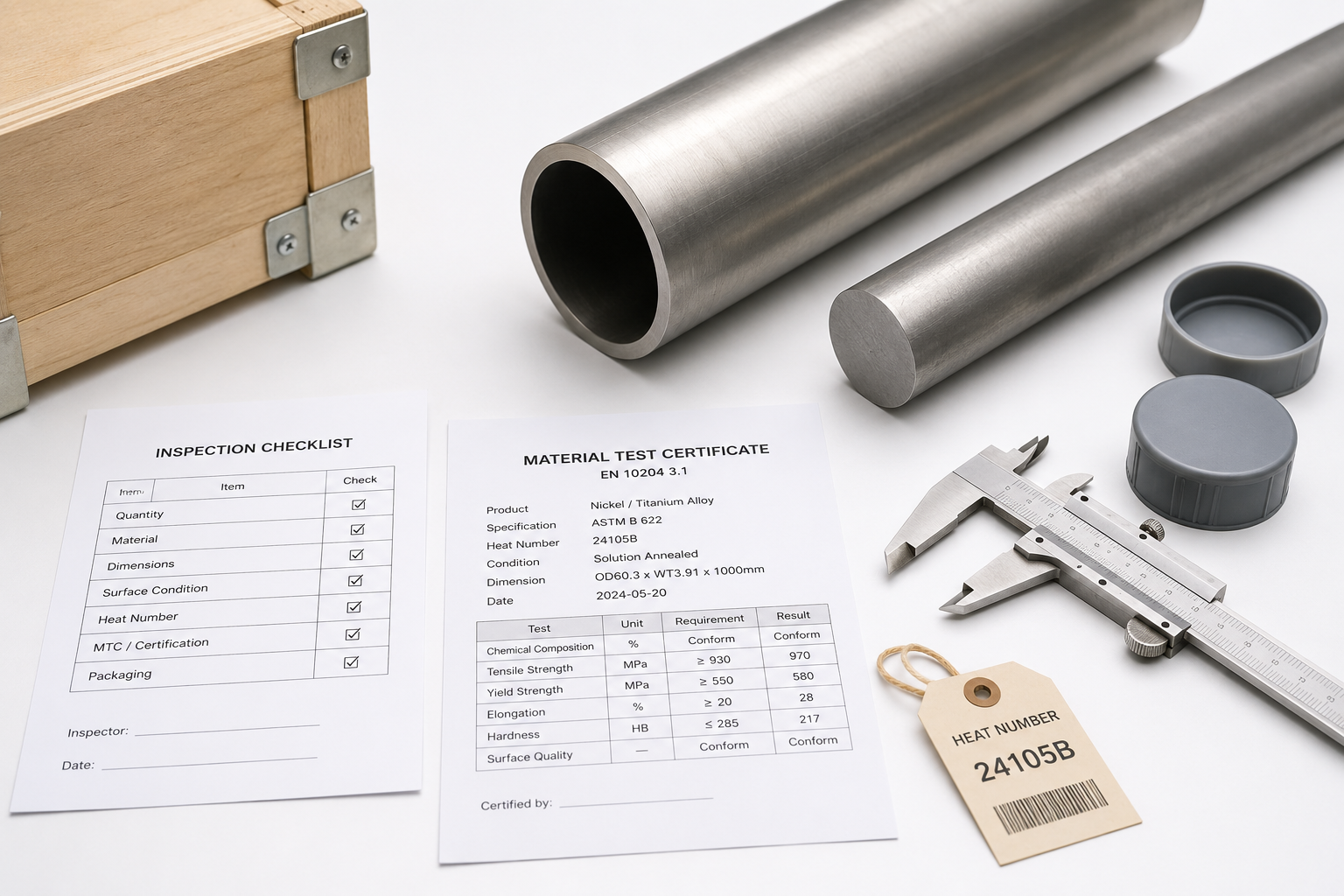
When we talk to overseas customers, one common concern is confidence. Buyers want to know whether the nickel alloy tube, nickel alloy bar, titanium alloy tube, or titanium alloy bar they receive is truly the material they ordered.
This confidence does not come from one document alone. It comes from matching the purchase order, quotation, packing list, product marking, MTR/MTC, heat number, physical material, and inspection results.
For overseas buyers, inspection should start before shipment and continue after delivery.
Quick Checklist: What Should Buyers Inspect After Delivery?
Before accepting alloy materials into production, inventory, machining, welding, or installation, buyers should review the following items.
| Inspection Item | What to Check | Why It Matters |
|---|---|---|
| Purchase Order Match | Grade, UNS number, standard, size, quantity, surface finish, documents | Confirms the shipment matches the agreed order |
| Material Grade | Inconel 625, Inconel 718, Hastelloy C276, Monel 400, titanium grade, etc. | Avoids wrong material use |
| UNS Number | N06625, N07718, N10276, N04400, R50400, R56400, etc. | Confirms exact material identity |
| Applicable Standard | ASTM, ASME, EN, ISO, AMS, customer specification | Defines product and testing requirements |
| MTR / MTC | Chemical composition, mechanical properties, heat treatment, standard compliance | Supports batch-level material verification |
| Heat Number | Heat number on MTR, label, marking and packing list | Confirms traceability |
| Product Marking | Grade, heat number, size, standard, batch number if applicable | Links physical material to documents |
| Dimensions | OD, wall thickness, diameter, length, straightness, tolerance | Confirms usability for machining or assembly |
| Surface Condition | Scratches, dents, cracks, contamination, oxidation, finish quality | Affects corrosion, fatigue, cleanliness and acceptance |
| Packaging Condition | Wooden case, plastic caps, waterproof film, anti-scratch protection | Confirms material was protected during transit |
| Quantity | Pieces, meters, weight, bundles, packing list | Avoids shortage or mismatch |
| NDT / Inspection Reports | UT, ECT, hydrostatic, PMI, dimensional report if required | Confirms required inspection was performed |
| Third-Party Inspection | SGS, BV, TUV, Lloyd’s, or customer-appointed inspector if required | Adds independent verification for critical orders |
This checklist is useful because many problems are not obvious from the material surface. A tube may look clean, but the MTC may not match the heat number. A bar may look correct, but the size tolerance or heat treatment condition may not meet the purchase order.
Are You Overlooking Hidden Constraints in Alloy Specifications?
Many buyers receive an MTC and only check chemical composition or tensile strength. These are important, but they may not tell the full story for every application.
When inspecting alloy materials, buyers should interpret specifications in the context of the real application. Chemical composition, tensile strength, hardness, grain size, microstructure, surface finish, heat treatment condition, and NDT results may all become important depending on the final use.
For example, two batches of the same alloy may meet the same chemical composition range, but still differ in heat treatment condition, grain size, surface finish, straightness, hardness, or internal quality depending on the production route.
A standard MTC may be enough for some general applications. But for critical applications, buyers may need additional reports, such as:
- ultrasonic testing report
- eddy current testing report
- hydrostatic test report
- PMI report
- hardness test report
- dimensional inspection report
- grain size report
- microstructure report
- corrosion test report
- alpha case inspection for certain titanium applications
- third-party inspection report
Why Basic Parameters Are Not Always Enough
| Specification Aspect | Basic Interpretation | Deeper Application Context |
|---|---|---|
| Chemical Composition | Confirms element percentages | May influence corrosion resistance, weldability, phase balance and processing behavior |
| Tensile Strength | Shows strength under tensile loading | Must be reviewed with temperature, fatigue, creep and actual load condition |
| Yield Strength | Indicates stress before permanent deformation | Important for pressure, load-bearing and design calculations |
| Hardness | Indicates indentation resistance | May relate to heat treatment, machinability, wear and brittleness risk |
| Elongation | Indicates ductility in tensile test | Important for bending, forming, toughness and fabrication |
| Grain Size | Sometimes requested as an additional test | May influence ductility, toughness, fatigue behavior and high-temperature performance |
| Surface Finish | Sometimes treated as appearance only | Can affect corrosion initiation, friction, fatigue and cleanliness |
| Microstructure | Often assumed correct unless specified | May reveal phase condition, inclusions, precipitates, or processing-related features |
| Heat Treatment Condition | Annealed, solution annealed, aged, stress relieved | Directly affects mechanical properties, corrosion behavior and machinability |
| Internal Quality | Usually checked by NDT if required | Important for bars, forgings, critical tubes and pressure-related parts |
Surface roughness can influence how a surface interacts with its environment and may create sites for cracks or corrosion. Surface integrity describes the surface condition after manufacturing and can significantly affect part function. For titanium alloys, alpha case is an oxygen-enriched surface layer that can be hard and brittle, and it may reduce performance and fatigue properties when present.
How Can Your Application Dictate Material Inspection Needs?
The same alloy material should not always be inspected with the same depth. A low-risk general industrial component may only require basic document review, visual inspection and dimensional check. A high-risk component may require more detailed inspection, traceability and testing.
The material inspection process should be matched to the final application. The more critical the application, the more carefully buyers should define acceptance criteria, documentation requirements, testing scope, traceability and third-party inspection before shipment.
For example:
- A titanium bar for general machining may need MTC review, dimension check and visual inspection.
- A titanium bar for medical or aerospace use may need stricter traceability, surface condition control, chemical composition, mechanical properties and additional inspection.
- A nickel alloy tube for low-risk fabrication may need MTC, dimensions and surface check.
- A nickel alloy tube for heat exchangers, pressure systems, chemical processing or marine systems may need hydrostatic test, eddy current test, ultrasonic test, PMI or third-party inspection depending on the project.
Inspection Level by Application Criticality
| Application Criticality | Typical Inspection Focus | Example Inspection Methods |
|---|---|---|
| Low-Risk General Use | Grade, quantity, size, visual condition, MTC match | Visual inspection, dimensional check, MTC review |
| Medium-Risk Equipment Use | Mechanical properties, surface condition, tolerance, basic NDT | Hardness test, PMI, UT, ECT, dimensional report |
| High-Risk Industrial Use | Traceability, internal quality, pressure integrity, corrosion-related risk | UT, ECT, hydrostatic test, PMI, corrosion test, third-party inspection |
| Regulated / Critical Use | Full documentation, heat traceability, approved standards, stricter acceptance criteria | MTR, EN 10204 3.1/3.2, destructive testing if required, microstructure, third-party inspection |
Ultrasonic testing is a nondestructive testing method used to detect internal flaws or characterize materials. Eddy-current testing is an electromagnetic nondestructive testing method used to detect and characterize surface and subsurface flaws in conductive materials.
What Should Buyers Check in MTR / MTC Documents?
The MTR or MTC is one of the most important documents in alloy material inspection. But buyers should not only check whether a certificate exists. They should check whether the certificate matches the actual delivered material.
MTR / MTC Review Checklist
| Item | What to Check |
|---|---|
| Supplier / Mill Name | Check whether the report clearly identifies the producer or issuing organization |
| Customer / Order Reference | Check PO number, order number, or project reference if included |
| Material Grade | Confirm alloy name and grade match purchase order |
| UNS Number | Confirm exact UNS number where applicable |
| Product Form | Tube, pipe, round bar, forged bar, billet, rod |
| Standard | ASTM, ASME, EN, ISO, AMS, or customer specification |
| Heat Number | Must match product marking, label and packing list |
| Chemical Composition | Confirm elements are within required standard limits |
| Mechanical Properties | Tensile strength, yield strength, elongation, hardness if required |
| Heat Treatment | Confirm annealed, solution annealed, aged, stress relieved or cold-worked condition |
| Testing Scope | Confirm required tests such as UT, ECT, hydrostatic, PMI, hardness |
| Certificate Type | EN 10204 3.1 or 3.2 if required |
| Signatures / Stamps | Check issuing authority, date and inspection statement |
| Language / Format | Ensure the document is clear for internal QA or project submission |
The heat number is especially important. If the MTC shows one heat number but the material marking shows another, the buyer should stop the acceptance process and ask the supplier to clarify.
Which Standards Help Overseas Buyers Inspect Alloy Materials?
Standards help buyers define what should be inspected and what documents should be supplied.
Common Standards and Their Inspection Value
| Product / Requirement | Example Standard | Why It Matters |
|---|---|---|
| Nickel Alloy Seamless Pipe / Tube | ASTM B444 | Covers UNS N06625 and related nickel alloy cold-worked seamless pipe and tube; includes chemical, tensile, hydrostatic and nondestructive electric testing |
| Nickel Alloy Bars / Forgings | ASTM B637 | Covers precipitation-hardenable nickel alloy rod, bar, forgings and forging stock; includes chemical analysis, heat treatment, tension, hardness and stress-rupture testing |
| Titanium Bars / Billets | ASTM B348/B348M | Covers titanium and titanium alloy bars and billets; includes chemical composition and tensile property requirements |
| Quality Management System | ISO 9001 | Supports quality management and process control, but does not replace batch-level material proof |
| Testing Laboratory Competence | ISO/IEC 17025 | Sets requirements for competence, impartiality and consistent operation of testing and calibration laboratories |
| Inspection Documents | EN 10204 3.1 / 3.2 where required | Helps define material inspection certificate type |
| Pre-Shipment Inspection | Pre-shipment inspection | Helps check goods, packaging, documents and compliance before shipment |
ISO 9001 is useful when evaluating a supplier’s quality management system, but it is not the same as batch-level material verification. Buyers still need MTR/MTC, heat number traceability, inspection reports and project-specific acceptance criteria.
For critical laboratory tests, buyers may request results from ISO/IEC 17025 accredited laboratories when project requirements justify it.
What Questions Should You Ask Your Alloy Material Supplier?
Effective supplier verification means asking for clear evidence, not only accepting verbal claims.
Key Questions to Ask Before and After Delivery
| Question to Ask Supplier | What It Reveals | Risk Reduced |
|---|---|---|
| Can you provide MTR/MTC for this exact heat? | Whether the document is batch-specific | Generic certificate risk |
| Can the heat number be found on material marking, label and packing list? | Traceability discipline | Material-document mismatch |
| Which standard is the material supplied to? | ASTM/ASME/EN/ISO/AMS compliance scope | Wrong standard risk |
| What tests are included in the order? | Chemical, tensile, hardness, UT, ECT, hydrostatic, PMI, corrosion test | Missing test risk |
| Is third-party inspection available before shipment? | Supplier cooperation and inspection readiness | Post-delivery dispute risk |
| Are the tests performed internally or by an external lab? | Testing source and reliability | Unclear test data risk |
| Is ISO/IEC 17025 lab testing available if required? | Laboratory competence for critical testing | Test credibility risk |
| What surface finish and packaging will be supplied? | Material protection and usability | Transit damage and surface rejection |
| How do you handle nonconforming material? | Supplier responsibility and claim process | Dispute and delay risk |
| Can you provide production and inspection photos before shipment? | Shipment readiness and visual confirmation | Wrong packing or marking risk |
| Can you provide dimensional inspection report? | Size and tolerance verification | Machining or assembly risk |
| Can you support EN 10204 3.1 or 3.2 if required? | Inspection document level | Project acceptance risk |
A transparent supplier should be able to explain the scope of the certificate, the testing method, the heat number traceability process and the inspection procedure.
Can You Spot Material Risks Before Delivery?
Waiting until the material arrives can be too late. Overseas buyers often face high return cost, customs complexity, production delays and communication gaps if problems are found only after delivery.
Many alloy material risks can be reduced before shipment through clear purchase order requirements, document review, pre-shipment inspection, production photos, packing confirmation and third-party inspection when required.
Risk Control Before Shipment
| Risk Category | Proactive Mitigation Strategy | Benefit for Buyer |
|---|---|---|
| Material Mismatch | Confirm grade, UNS number, standard and heat number before shipment | Reduces wrong-material risk |
| Document Error | Review draft MTC, packing list and invoice before shipment | Avoids customs and project documentation problems |
| Dimension Error | Request dimensional inspection report and photos | Reduces machining and assembly risk |
| Surface Defects | Request visual inspection photos and surface finish confirmation | Reduces rejection after delivery |
| Internal Defects | Require UT, ECT or other NDT before shipment if needed | Reduces critical quality risk |
| Packaging Damage | Confirm wooden case, caps, waterproof film, anti-scratch protection | Reduces transit damage risk |
| Quantity Error | Check packing list, bundle count, weight and piece count | Avoids shortage or mismatch |
| Late Delivery | Confirm production milestones, inspection date and shipment schedule | Improves planning and communication |
| Supplier Dispute | Define nonconformity handling in PO | Reduces claim uncertainty |
Pre-shipment inspection is a supply chain quality control method used to check goods before shipment and can include quality, packaging and documentation checks against specifications, contract or purchase order.
For alloy tubes and bars, a pre-shipment inspection may include:
- visual inspection
- dimension check
- marking check
- heat number verification
- packaging inspection
- packing list review
- MTC/MTR review
- NDT report review
- photo and video record
- third-party inspection if required
What Should Buyers Do Immediately After Delivery?
After delivery, buyers should inspect the shipment before cutting, machining, welding or installing the material.
Post-Delivery Inspection Procedure
| Step | What to Do |
|---|---|
| 1. Check Packaging | Look for broken wooden cases, water damage, loose bundles, missing caps or surface exposure |
| 2. Check Labels and Marking | Confirm grade, heat number, size, standard and quantity |
| 3. Match Documents | Compare PO, invoice, packing list, MTC/MTR and product marking |
| 4. Check Quantity | Count pieces, bundles, meters or weight |
| 5. Check Dimensions | Measure OD, wall thickness, diameter, length, straightness and tolerance |
| 6. Check Surface | Look for scratches, dents, pits, cracks, contamination, oxidation or wrong finish |
| 7. Review MTR/MTC | Confirm chemistry, mechanical properties, heat treatment and standard compliance |
| 8. Verify Heat Traceability | Match heat number across certificate, material marking and packing list |
| 9. Perform Incoming Tests If Needed | PMI, hardness, dimensional inspection, UT, ECT or third-party testing |
| 10. Quarantine Suspicious Material | Do not use material until mismatch is resolved |
| 11. Contact Supplier Promptly | Send clear photos, videos, documents and inspection records |
| 12. Record Findings | Keep inspection records for future quality tracking |
If material is cut or processed before inspection, it may become harder to identify the source of a problem or make a supplier claim.
What Should Buyers Do If There Is a Mismatch?
If a buyer finds a mismatch after delivery, the first step should not be immediate use or modification. The material should be separated and reviewed.
Mismatch Handling Procedure
| Problem Found | Recommended Action |
|---|---|
| Heat number does not match MTC | Quarantine material, photograph marking, ask supplier for clarification and corrected documents |
| Grade marking is missing | Stop use, request traceability documents, consider PMI testing |
| Dimensions are out of tolerance | Record measurements, compare with PO, confirm whether rework is possible |
| Surface damage is found | Photograph damage, check packaging, evaluate whether damage affects use |
| MTR data is incomplete | Request complete MTR/MTC or additional test report |
| Wrong standard is listed | Confirm whether the supplied material can meet the required standard before acceptance |
| Quantity mismatch occurs | Compare packing list, weight, bundle count and delivery photos |
| Packaging is damaged | Record photos before unpacking fully and notify supplier or insurer if needed |
| NDT report is missing | Do not use for critical service until required inspection is completed |
This process helps buyers keep evidence clear and avoid using uncertain material in production.
Common Red Flags in Alloy Material Inspection
Overseas buyers should pay attention to the following warning signs.
| Red Flag | Possible Risk |
|---|---|
| MTC does not show heat number | Weak traceability |
| Heat number on material does not match MTC | Possible document mismatch |
| Standard is missing from certificate | Unclear technical requirement |
| Chemical composition is incomplete | Unable to verify alloy grade |
| Mechanical properties are missing | Cannot confirm performance requirement |
| Surface finish differs from PO | Possible processing or usability problem |
| Product marking is missing | Traceability loss |
| Quantity does not match packing list | Shipment or packing error |
| Wooden case is damaged or wet | Transit damage risk |
| Supplier refuses third-party inspection | Verification risk for critical order |
| Certificate is generic, not batch-specific | Material cannot be confidently accepted |
| Test report lacks method, date or issuing party | Weak test credibility |
How Can Emily PIPE Support Overseas Buyers?
At Emily PIPE, we supply nickel alloy tubes, nickel alloy bars, titanium alloy tubes and titanium alloy bars for global industrial customers. We support standard and customized specifications according to drawings, technical requirements and application environments.
For overseas buyers, we can help provide and review:
- material grade and UNS number
- ASTM / ASME / EN / ISO / AMS standard
- product form, size and tolerance
- heat treatment condition
- surface finish
- MTR / MTC
- heat number traceability
- chemical and mechanical test data
- UT, ECT, hydrostatic, PMI and dimensional inspection when required
- EN 10204 3.1 or 3.2 documents when required
- third-party inspection support
- export packaging photos
- packing list and shipping documentation
We recommend confirming inspection requirements before production and shipment, not only after delivery. This helps reduce material mismatch, documentation disputes, packaging damage, delayed acceptance and project risk.
Conclusion
Inspecting alloy materials effectively means more than checking basic parameters. Overseas buyers should connect the material certificate, heat number, standard, product marking, physical condition and application requirements.
A reliable inspection process should include document review, heat number traceability, dimensional inspection, surface inspection, packaging check, NDT review and application-specific acceptance criteria.
The safest approach is to define inspection requirements in the purchase order, verify documents before shipment, inspect packaging and marking on arrival, and quarantine any material with unclear traceability or document mismatch.
If you are purchasing nickel alloy tubes, nickel alloy bars, titanium alloy tubes or titanium alloy bars from overseas suppliers, you can send us your material grade, size, standard, application environment, testing requirements and documentation needs. Our team can help prepare the correct material scope, inspection documents and export packaging plan for your project.